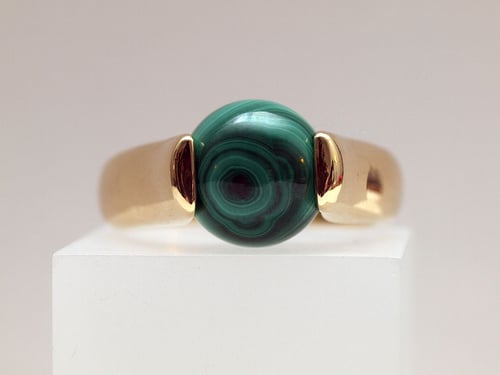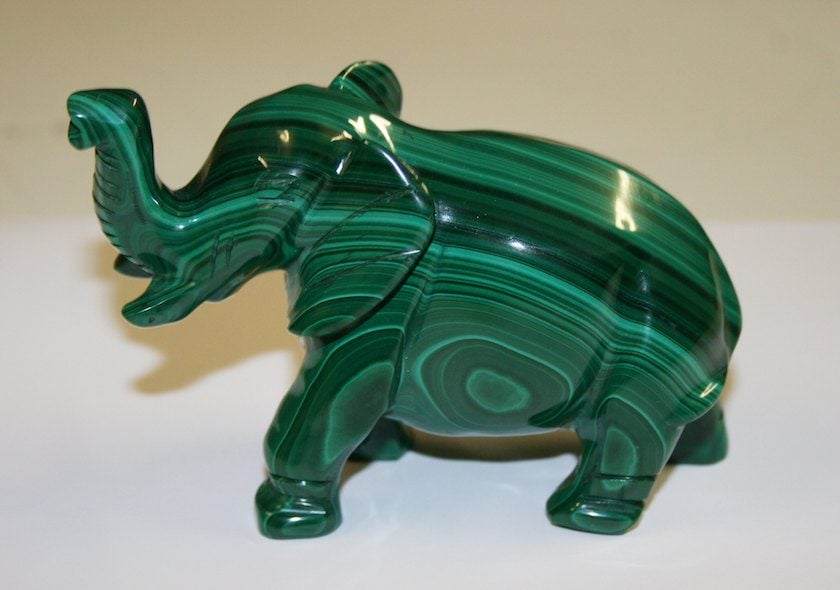

Malachite is a beautiful decorative stone. Its rich, patterned coloration in shades of green is unique among gems. Malachite's low hardness makes it easy to work, though it still takes a polish very well. These qualities, combined with ready availability, make malachite a popular choice for lapidary artistry.
5 Minute Read
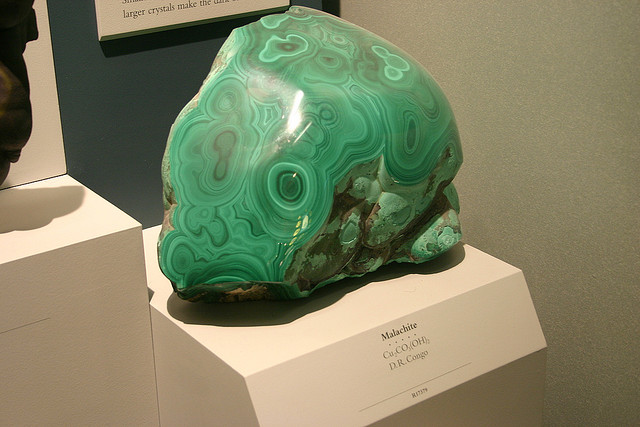
This vivid green gem gets its color from copper. Invariably associated with copper ore deposits, malachite ranks as a minor copper ore, with 58% copper content. Its recovery generally occurs, at least on a large scale, as a sidelight of copper mining.
Malachite's characteristic swirling and concentric band patterns are a result of its formation process. Technically, malachite is usually a "secondary mineral," which means it's created by a chemical reaction between minerals that have already formed, rather than by a simple one-step process. Malachite may form when water containing carbon dioxide or dissolved carbonate minerals interacts with preexisting copper-containing rocks or when solutions containing dissolved copper minerals interact with carbonate rocks. Malachite's swirls and bands reflect the waxing and waning of the solutions necessary for formation and the changes in their chemical content.
Cut from thick malachite stalactites, this polished two-sided slice shows remarkable color and banding. Katanga Copper Crescent, DR Congo, 9.8 x 9.7 x 0.9 cm, 320 grams. Video © Rob Lavinsky, mineralauctions.com. Used with permission.
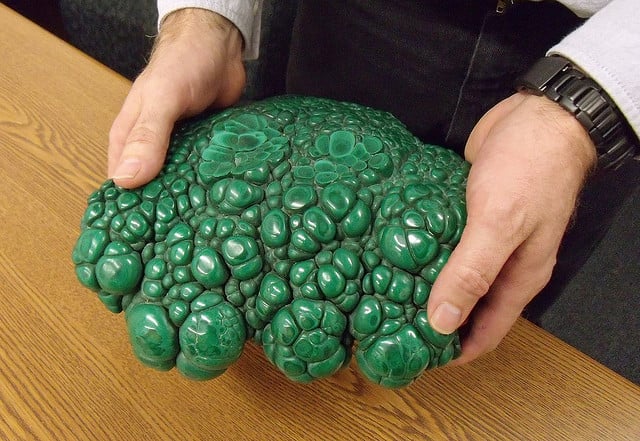
Most commonly, malachites occur in massive form as microcrystalline aggregates, in lumps, or as crust on other rocks.
Since malachite has a Mohs hardness of just 3.5 to 4.5, a somewhat brittle tenacity, and sensitivity to both heat and acids, it requires special care as a jewelry stone. Use protective settings if you want to wear this gem in rings, bracelets, or other jewelry that may receive rough treatment or constant wear. On the other hand, wearing it in earrings, brooches, pendants, and tie pins should pose no special problems.
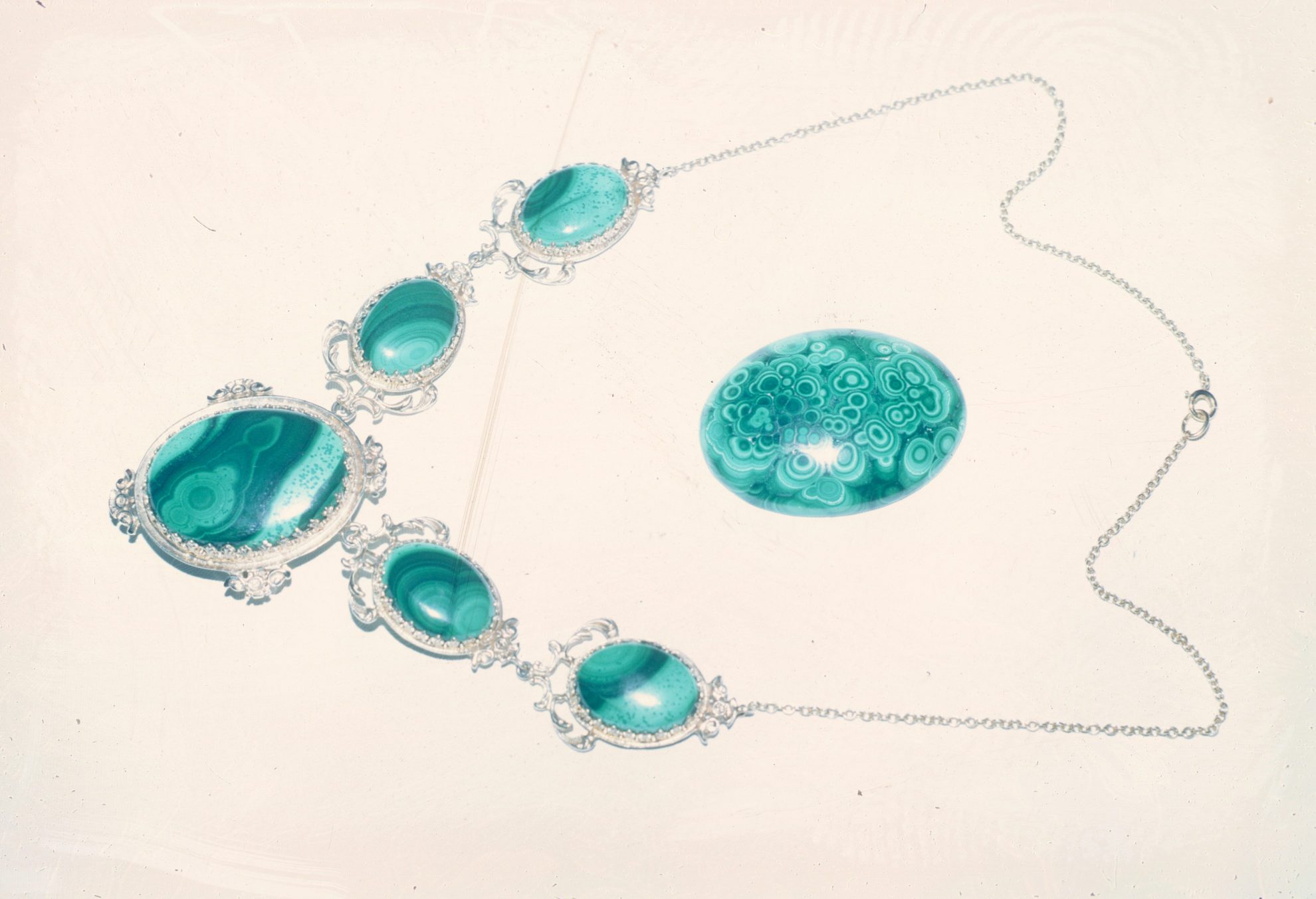
Although soft, malachites can take a polish very well. This has made them a popular choice for cabochons and beads as well as objets d'art. Lapidary artists use this stone extensively to make boxes, inlays, and carvings of all kinds. With great care, skilled artists can even turn malachite on a lathe to create goblets and candlesticks.
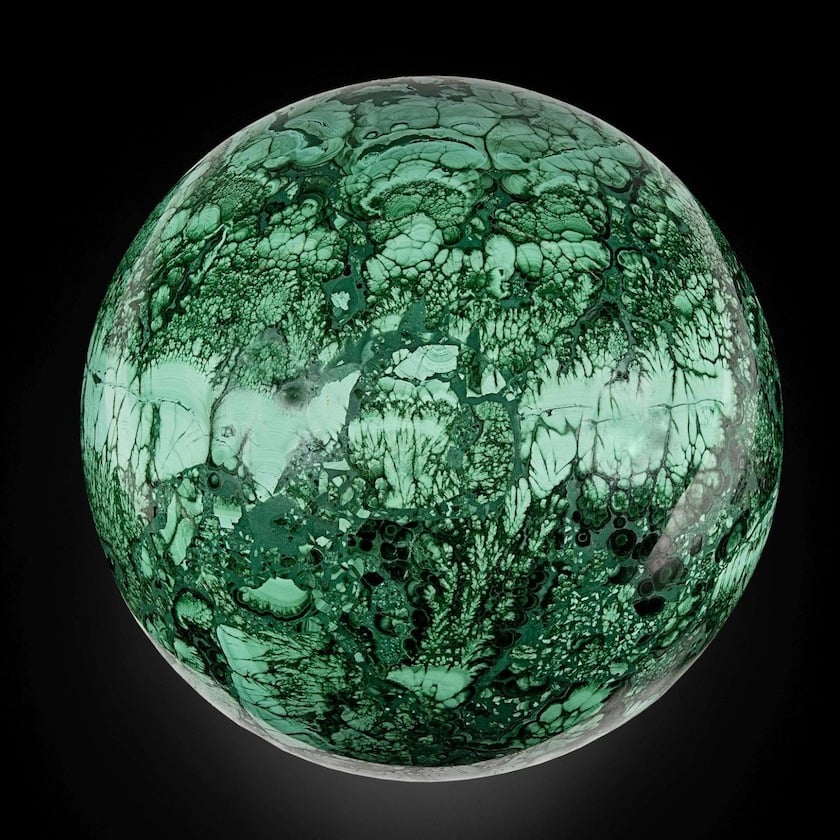
Facetable malachite crystals would be microscopic in size, since larger crystals are too opaque to let light through. Any faceted malachites larger than a ½ carat would be opaque.
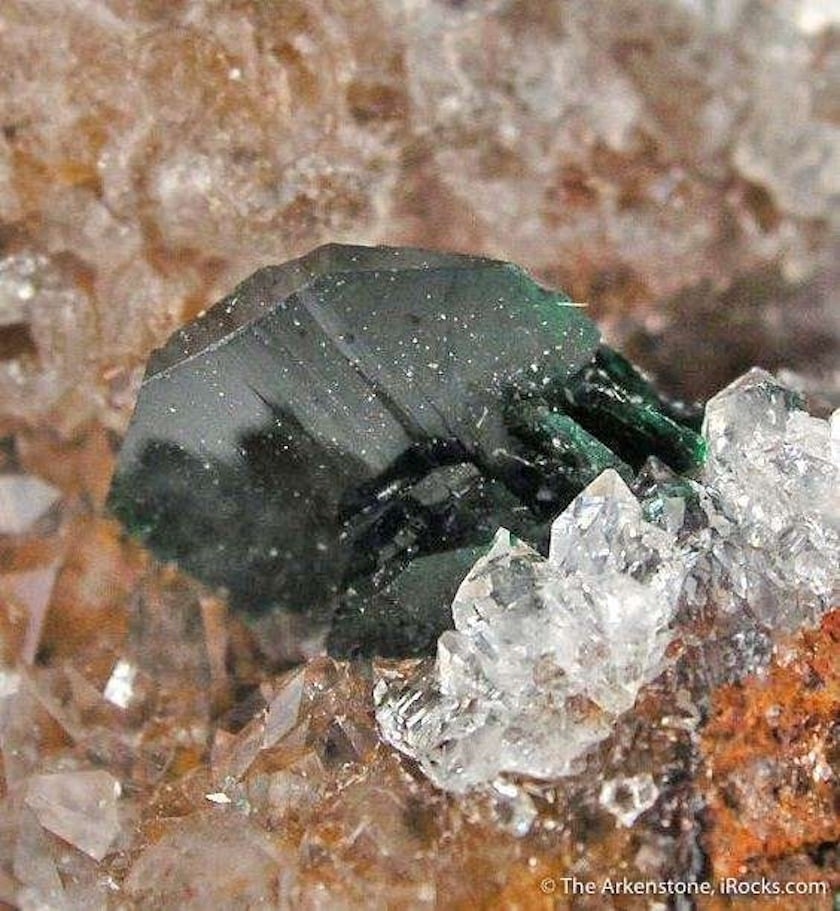
Some of the rarest and most desired malachite mineral crystal structures are: botryoidal masses, stalactites or slices cut from them, and pieces with splayed-out clusters of needle-like (acicular) crystals showing a velvety chatoyancy. Mineral collectors compete to acquire prime specimens in these formations.
These densely packed acicular malachites show a sparkly, chatoyant "cat's eye" effect when viewed from different angles. Katanga Copper Crescent, DR Congo, 5.7 x 5.6 x 4.3 cm. Video © Rob Lavinsky, mineralauctions.com. Used with permission.
Fibrous aggregates (packed masses of crystals) can also take a high polish.
Malachites sometimes form in combination with other copper-bearing minerals. Blue-green chrysocolla, dark blue azurite, or brick-red cuprite can create rocks of unsurpassed beauty when combined with malachite's forest green.
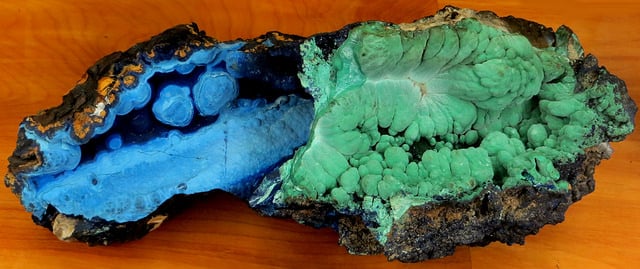
Malachites can appeal not only to gemstone enthusiasts but also to anyone interested in nature's mineralogical wonders.
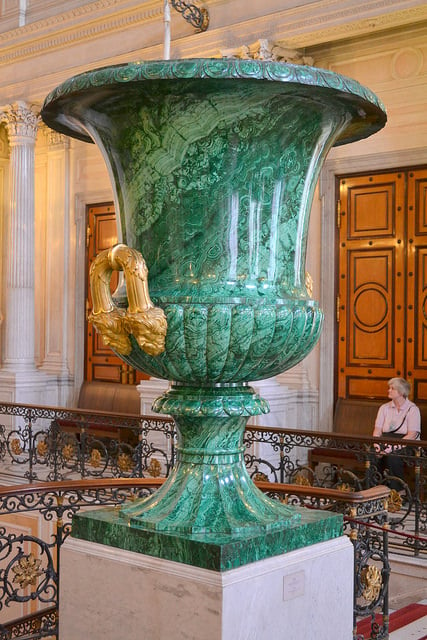
Many cultures throughout history have prized malachite. The green stone has been used in protective amulets since ancient times. Perhaps its greatest appreciators were the Russian royals of the 19th century. They had dining sets, huge sculptures, vases, and even paneling made from it. You can take a virtual tour of the celebrated "Malachite Room" in the Winter Palace at the Hermitage Museum in St. Petersburg, Russia.
The Victorians were great admirers of opaque jewelry stones, and malachite was one of their favorites. Victorian-era jewelers often used this material in small carvings, beads, and cabochons set in silver and, occasionally, gold.
Malachite may have been mined in Egypt as early as 4,000 BCE. The material was not only cut for jewelry and ornaments but also ground into pigment for painting and cosmetics. Not until the Industrial Revolution were synthetic pigments created that could rival its color. Restoration experts still use malachite pigment formulas for authenticity when conserving old paintings.
Unfortunately, malachite's beautiful color can also be hazardous.
The copper content of the dust released from grinding malachite makes it toxic to breathe. Workers involved in mining and cutting this stone should wear protective respiratory gear. For lapidaries, keeping the gem rough wet also keeps dust to a minimum.
Although working with malachites can pose health risks, wearing finished jewelry pieces or displaying carved objects or natural specimens should be safe.
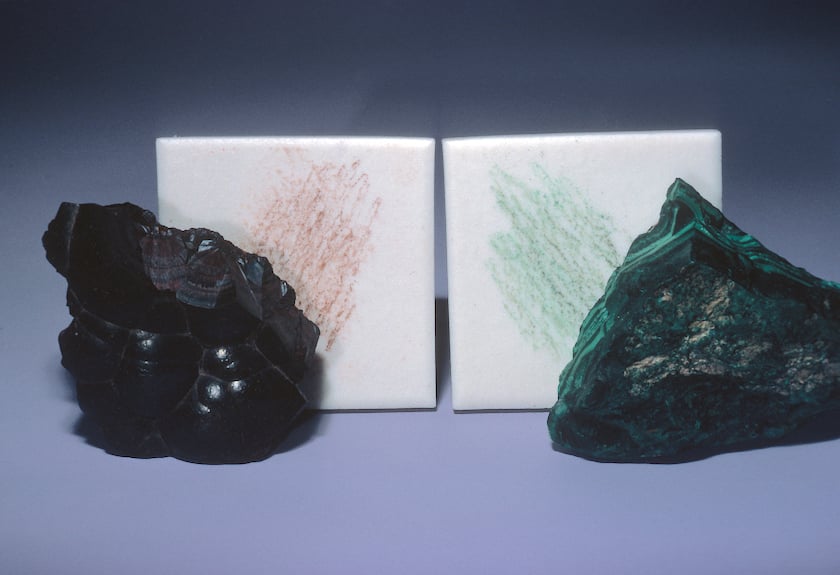
Please note: streak and acid tests are destructive procedures. They should only be used on finished pieces as last resorts for identification.
Although scientists have synthesized malachite for research purposes, this material isn't found commercially. The synthetic material costs far more than the abundant, natural mineral.
Malachites rarely receive any treatments. However, lower quality, less compact pieces may be stabilized with plastic resins or given a surface polish with wax.
The majority of malachite gem rough comes from the Democratic Republic of the Congo (formerly Zaire), Namibia, Russia and the American Southwest.
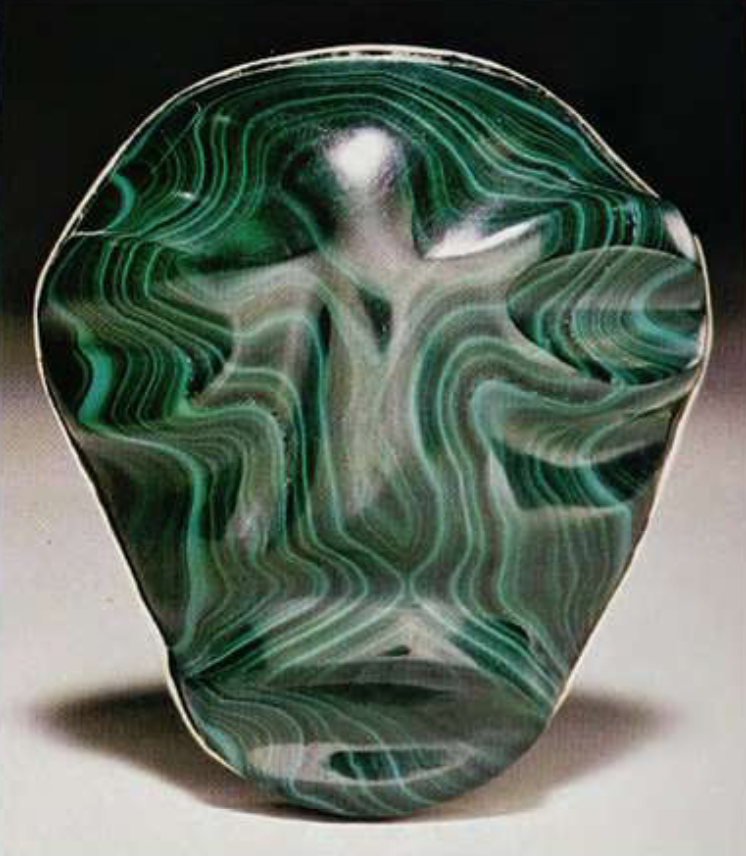
Cabochons and carvings from banded material can be virtually any size. Stalactites can occur up to several feet in length. Slabs have even been used as paneling in palaces. Facetable crystals are virtually nonexistent. Any cut gem would be very small (less than two carats), but massive aggregates can weigh tons.
Malachite requires gentle care. Mechanical cleaning methods, such as ultrasonic or steam cleaning, aren't recommended. Don't use any acidic cleaners on malachite jewelry.
Consult our gemstone jewelry care guide for recommended cleaning methods.


When you join the IGS community, you get trusted diamond & gemstone information when you need it.
This vivid green gem gets its color from copper. Invariably associated with copper ore deposits, malachite ranks as a minor copper ore, with 58% copper content. Its recovery generally occurs, at least on a large scale, as a sidelight of copper mining.
Malachite's characteristic swirling and concentric band patterns are a result of its formation process. Technically, malachite is usually a "secondary mineral," which means it's created by a chemical reaction between minerals that have already formed, rather than by a simple one-step process. Malachite may form when water containing carbon dioxide or dissolved carbonate minerals interacts with preexisting copper-containing rocks or when solutions containing dissolved copper minerals interact with carbonate rocks. Malachite's swirls and bands reflect the waxing and waning of the solutions necessary for formation and the changes in their chemical content.
Cut from thick malachite stalactites, this polished two-sided slice shows remarkable color and banding. Katanga Copper Crescent, DR Congo, 9.8 x 9.7 x 0.9 cm, 320 grams. Video © Rob Lavinsky, mineralauctions.com. Used with permission.
Most commonly, malachites occur in massive form as microcrystalline aggregates, in lumps, or as crust on other rocks.
Since malachite has a Mohs hardness of just 3.5 to 4.5, a somewhat brittle tenacity, and sensitivity to both heat and acids, it requires special care as a jewelry stone. Use protective settings if you want to wear this gem in rings, bracelets, or other jewelry that may receive rough treatment or constant wear. On the other hand, wearing it in earrings, brooches, pendants, and tie pins should pose no special problems.
Although soft, malachites can take a polish very well. This has made them a popular choice for cabochons and beads as well as objets d'art. Lapidary artists use this stone extensively to make boxes, inlays, and carvings of all kinds. With great care, skilled artists can even turn malachite on a lathe to create goblets and candlesticks.
Facetable malachite crystals would be microscopic in size, since larger crystals are too opaque to let light through. Any faceted malachites larger than a ½ carat would be opaque.
Some of the rarest and most desired malachite mineral crystal structures are: botryoidal masses, stalactites or slices cut from them, and pieces with splayed-out clusters of needle-like (acicular) crystals showing a velvety chatoyancy. Mineral collectors compete to acquire prime specimens in these formations.
These densely packed acicular malachites show a sparkly, chatoyant "cat's eye" effect when viewed from different angles. Katanga Copper Crescent, DR Congo, 5.7 x 5.6 x 4.3 cm. Video © Rob Lavinsky, mineralauctions.com. Used with permission.
Fibrous aggregates (packed masses of crystals) can also take a high polish.
Malachites sometimes form in combination with other copper-bearing minerals. Blue-green chrysocolla, dark blue azurite, or brick-red cuprite can create rocks of unsurpassed beauty when combined with malachite's forest green.
Malachites can appeal not only to gemstone enthusiasts but also to anyone interested in nature's mineralogical wonders.
Many cultures throughout history have prized malachite. The green stone has been used in protective amulets since ancient times. Perhaps its greatest appreciators were the Russian royals of the 19th century. They had dining sets, huge sculptures, vases, and even paneling made from it. You can take a virtual tour of the celebrated "Malachite Room" in the Winter Palace at the Hermitage Museum in St. Petersburg, Russia.
The Victorians were great admirers of opaque jewelry stones, and malachite was one of their favorites. Victorian-era jewelers often used this material in small carvings, beads, and cabochons set in silver and, occasionally, gold.
Malachite may have been mined in Egypt as early as 4,000 BCE. The material was not only cut for jewelry and ornaments but also ground into pigment for painting and cosmetics. Not until the Industrial Revolution were synthetic pigments created that could rival its color. Restoration experts still use malachite pigment formulas for authenticity when conserving old paintings.
Unfortunately, malachite's beautiful color can also be hazardous.
The copper content of the dust released from grinding malachite makes it toxic to breathe. Workers involved in mining and cutting this stone should wear protective respiratory gear. For lapidaries, keeping the gem rough wet also keeps dust to a minimum.
Although working with malachites can pose health risks, wearing finished jewelry pieces or displaying carved objects or natural specimens should be safe.
Please note: streak and acid tests are destructive procedures. They should only be used on finished pieces as last resorts for identification.
Although scientists have synthesized malachite for research purposes, this material isn't found commercially. The synthetic material costs far more than the abundant, natural mineral.
Malachites rarely receive any treatments. However, lower quality, less compact pieces may be stabilized with plastic resins or given a surface polish with wax.
The majority of malachite gem rough comes from the Democratic Republic of the Congo (formerly Zaire), Namibia, Russia and the American Southwest.
Cabochons and carvings from banded material can be virtually any size. Stalactites can occur up to several feet in length. Slabs have even been used as paneling in palaces. Facetable crystals are virtually nonexistent. Any cut gem would be very small (less than two carats), but massive aggregates can weigh tons.
Malachite requires gentle care. Mechanical cleaning methods, such as ultrasonic or steam cleaning, aren't recommended. Don't use any acidic cleaners on malachite jewelry.
Consult our gemstone jewelry care guide for recommended cleaning methods.



Malachite is a beautiful decorative stone. Its rich, patterned coloration in shades of green is unique among gems. Malachite’s low hardness makes it easy to work, though it still takes a polish very well. These qualities, combined with ready availability, make malachite a popular choice for lapidary artistry.
Malachite is abundant in its typical forms, so even the best specimens are modestly priced. Pieces showing an unusual crystal habit, distinctive pattern, or chatoyancy will have higher values. Rocks consisting of malachite and other colorful copper minerals in lovely combinations generally command higher prices than pure malachites. The value of carvings and ornamental objects hinges primarily on the size and artistry of the work.