Gem identification is part detective work, part art. Learn how gemologists can distinguish gem species and determine whether a stone is natural or synthetic.
4 Minute Read
Gem identification involves finding clues and eliminating possibilities. What kind of clues? The optical and physical properties of the gem. Each time I measure or observe one of these properties, the "suspect pool" of possible gems gets smaller. I keep gathering more information until I have a set of properties that can only belong to one gemstone.
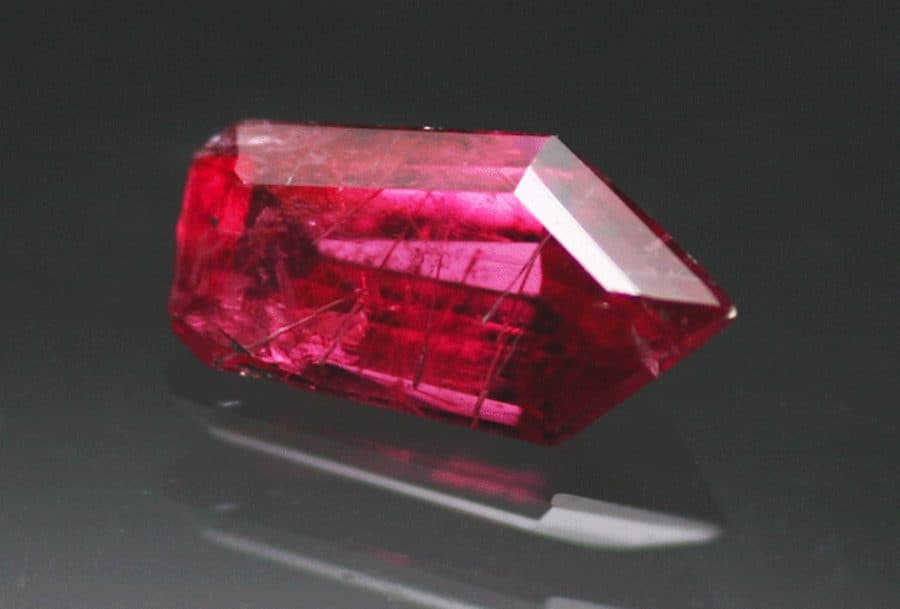
Let's say someone asks me to identify a red stone. ("Is this a ruby?" is the form that question usually takes). Now, I should know a ruby when I see one, right? Well, sometimes I can be pretty sure if it's a ruby or not just by a quick observation. However, I can't tell if it's natural or synthetic without a more detailed analysis.
Even if I'm pretty sure the gem is a ruby, I would still be reluctant to say so after just a quick look. I know there are hundreds of minerals that have been cut as gemstones for jewelry. Most of them can be red. Sometimes that's their primary color, sometimes it's a rarity, but color alone tells me nothing. If the gem is transparent, that cuts the list in half. That helps some, but there are still many possibilities.
To identify this red stone, I'm going to need something more useful than color and transparency. The most helpful information I can have are the properties known as refractive index and specific gravity. If I know one of these, the list of gems that could have that property is immediately reduced to a dozen or two. If I know both of these, the list may well be under ten possible gems.
Once I've narrowed the list down to a dozen or so, the next set of properties I'm likely to identify depends on what possibilities still exist. The choices I have include spectroscopic analysis, birefringence, optic sign, pleochroism, and reaction to ultraviolet light. The information I collect next depends on which properties would best narrow the remaining possibilities. For example, with one red gem, I may choose to learn its optic sign. With another stone, I may opt to determine the gem's reaction to ultraviolet light.
Such is the science of gemology. By taking enough measurements, I can start with a list of hundreds of possible minerals and, hopefully, systematically eliminate possibilities down to one.
There is a point where identifying gems becomes an art. The final determination is made by human observation, combined with knowledge and experience, rather than measurements taken with precision instruments. This is especially true when it comes to separating natural from synthetic gems. Most measurable physical and optical properties of a synthetic ruby will be identical to those of its natural counterpart. Distinguishing natural and synthetic stones involves observing inclusions in gems through a microscope. In some cases, this is simple and straightforward. In other cases, this requires judgment based on experience. Microscopic details can be subtle!
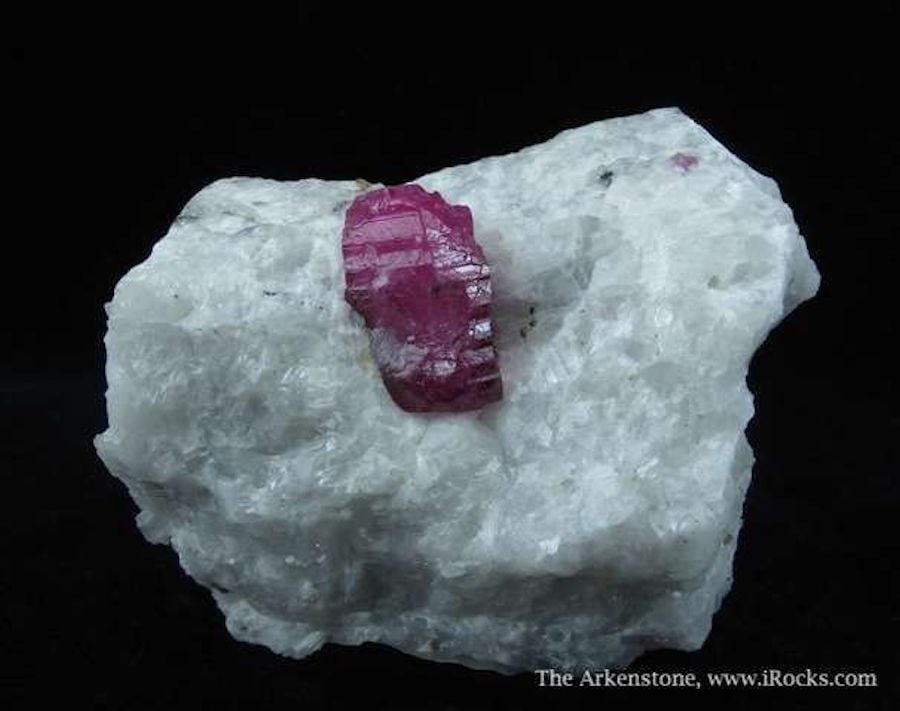
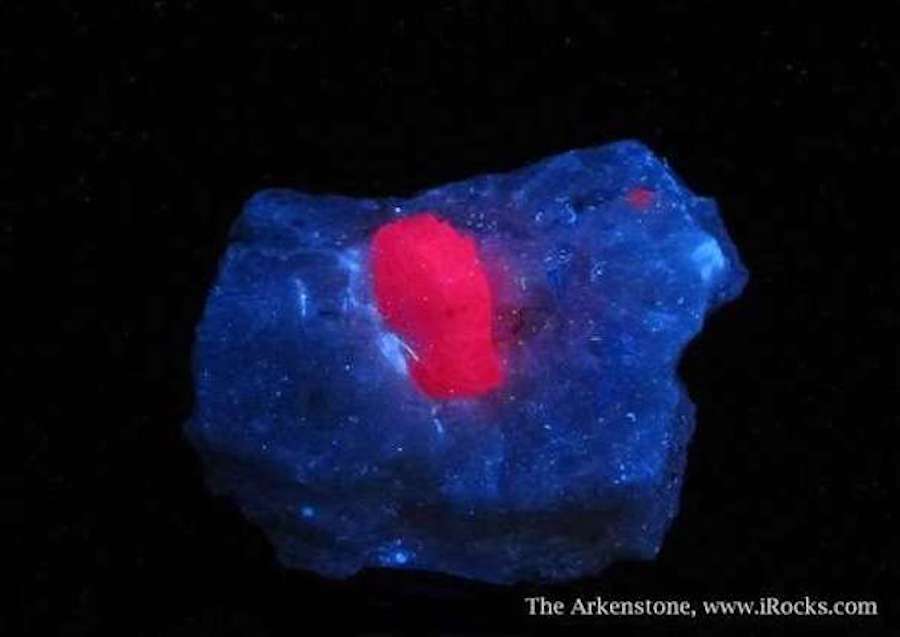
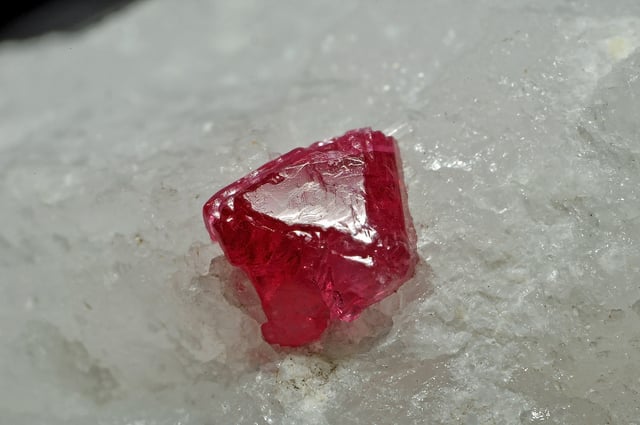
Testing a gem's reaction to ultraviolet (UV) light is one technique that can be used for gem identification. All rubies, both natural and synthetic, fluoresce under UV light. However, there are some slight differences in fluorescence between natural and synthetic rubies and even between stones sourced from different geographic locations. Ruby under natural and UV light, Jegdalek, Saroby, Afghanistan. © Rob Lavinsky, www.iRocks.com. Used with permission.
If you're a novice gemologist, I hope you've learned two things from this brief introduction. First, the basic procedure for gem identification involves ascertaining a gem's properties and narrowing your list of suspected identifications down to one. Second, and most importantly, a little knowledge can be a dangerous thing.
Learning gemology is a worthwhile endeavor. However, don't make an expensive decision about a gemstone based on limited knowledge. Whether you're a gemology student or a gemstone buyer, you should always be cautious about whom you trust for gem identification.
Most jewelers have limited experience with colored stones. If they have a Graduate Gemologist degree, that means they're well trained in methodology and the use of instruments. However, their training only covers the 100 or so gems that are most likely to show up in jewelry. While they may be able to identify the more common gems, they occasionally come across minerals outside the range of their experience and reference materials.
You can study gemology at a college or university. Of course, that will likely be very expensive and require a significant scheduling commitment. If you have the interest but not the time or the money, consider enrolling in the International Gem Society Certification Program. All the information you need is available online at the IGS Learning Center. You can proceed at your own pace without pressure and take the exams as often as you need. The program is also inexpensive.






When you join the IGS community, you get trusted diamond & gemstone information when you need it.
Gem identification involves finding clues and eliminating possibilities. What kind of clues? The optical and physical properties of the gem. Each time I measure or observe one of these properties, the "suspect pool" of possible gems gets smaller. I keep gathering more information until I have a set of properties that can only belong to one gemstone.
Let's say someone asks me to identify a red stone. ("Is this a ruby?" is the form that question usually takes). Now, I should know a ruby when I see one, right? Well, sometimes I can be pretty sure if it's a ruby or not just by a quick observation. However, I can't tell if it's natural or synthetic without a more detailed analysis.
Even if I'm pretty sure the gem is a ruby, I would still be reluctant to say so after just a quick look. I know there are hundreds of minerals that have been cut as gemstones for jewelry. Most of them can be red. Sometimes that's their primary color, sometimes it's a rarity, but color alone tells me nothing. If the gem is transparent, that cuts the list in half. That helps some, but there are still many possibilities.
To identify this red stone, I'm going to need something more useful than color and transparency. The most helpful information I can have are the properties known as refractive index and specific gravity. If I know one of these, the list of gems that could have that property is immediately reduced to a dozen or two. If I know both of these, the list may well be under ten possible gems.
Once I've narrowed the list down to a dozen or so, the next set of properties I'm likely to identify depends on what possibilities still exist. The choices I have include spectroscopic analysis, birefringence, optic sign, pleochroism, and reaction to ultraviolet light. The information I collect next depends on which properties would best narrow the remaining possibilities. For example, with one red gem, I may choose to learn its optic sign. With another stone, I may opt to determine the gem's reaction to ultraviolet light.
Such is the science of gemology. By taking enough measurements, I can start with a list of hundreds of possible minerals and, hopefully, systematically eliminate possibilities down to one.
There is a point where identifying gems becomes an art. The final determination is made by human observation, combined with knowledge and experience, rather than measurements taken with precision instruments. This is especially true when it comes to separating natural from synthetic gems. Most measurable physical and optical properties of a synthetic ruby will be identical to those of its natural counterpart. Distinguishing natural and synthetic stones involves observing inclusions in gems through a microscope. In some cases, this is simple and straightforward. In other cases, this requires judgment based on experience. Microscopic details can be subtle!
Testing a gem's reaction to ultraviolet (UV) light is one technique that can be used for gem identification. All rubies, both natural and synthetic, fluoresce under UV light. However, there are some slight differences in fluorescence between natural and synthetic rubies and even between stones sourced from different geographic locations. Ruby under natural and UV light, Jegdalek, Saroby, Afghanistan. © Rob Lavinsky, www.iRocks.com. Used with permission.
If you're a novice gemologist, I hope you've learned two things from this brief introduction. First, the basic procedure for gem identification involves ascertaining a gem's properties and narrowing your list of suspected identifications down to one. Second, and most importantly, a little knowledge can be a dangerous thing.
Learning gemology is a worthwhile endeavor. However, don't make an expensive decision about a gemstone based on limited knowledge. Whether you're a gemology student or a gemstone buyer, you should always be cautious about whom you trust for gem identification.
Most jewelers have limited experience with colored stones. If they have a Graduate Gemologist degree, that means they're well trained in methodology and the use of instruments. However, their training only covers the 100 or so gems that are most likely to show up in jewelry. While they may be able to identify the more common gems, they occasionally come across minerals outside the range of their experience and reference materials.
You can study gemology at a college or university. Of course, that will likely be very expensive and require a significant scheduling commitment. If you have the interest but not the time or the money, consider enrolling in the International Gem Society Certification Program. All the information you need is available online at the IGS Learning Center. You can proceed at your own pace without pressure and take the exams as often as you need. The program is also inexpensive.