
Learn the best techniques and tools for cutting rough stones. Making small pieces from big pieces is one of the most basic procedures in the lapidary arts.
9 Minute Read
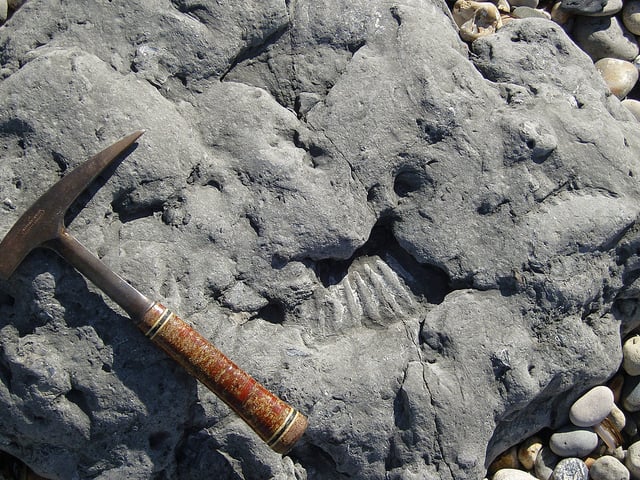
The quickest way to reduce a large rock to smaller pieces is with a rock hammer. As obvious as this sounds, many people slave over their saws when a few quick blows from a rock hammer would do the job. Although hammering rough doesn't allow precise control over the size pieces you get, it's much more accurate than the drop-it-off-a-cliff method. If the rock you're working on has a fracture, you can usually break it along that line.
Cutting a kerf in the stone will give you greater control. A kerf is a shallow saw cut, usually less than an inch deep. You can create a kerf almost anywhere you need it. Place a chisel or large screwdriver in the kerf and give it a solid blow with the hammer. The rock will split in two under the kerf. While the technique doesn't always yield a clean, straight split, it works surprisingly well.
Hammering is only useful for cabbing material of moderate value. You would never hammer an expensive piece of rough. The loss could amount to a considerable sum of money. Nor would you use this method on something fragile, like opal or calcite. Expanding existing fractures would reduce the useable areas and value of the material too much to be worth the savings in labor. For these materials, saws and tile nippers are best.
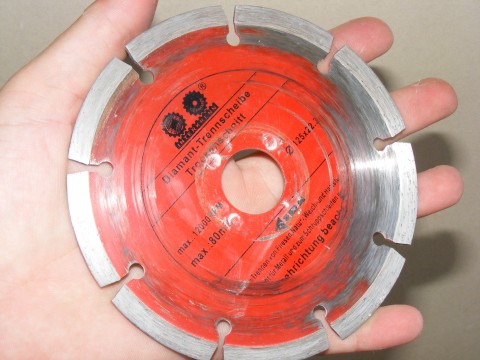
Lapidaries use slab and trim saws. The difference is the size blade they use. Trim saws have small, thin blades that remove a minimum of material. Slab saw blades are thicker because they are designed to do heavier cutting. Trim saws use 4" to 6" blades that run between .004" and .012" thick. Slab saw blades run from 6" to 36" with thickness of .025" to .200".
Diamond blades are like a revolving finger nail file. They won't cut fingers but will give you a creative manicure if you're not careful.
PLEASE NOTE: Very thin blades of .004" to .006" are the exceptions. At this size, THEY WILL CUT FINGERS.
They're also much easier to bend, or dish, than a heavier blade. Unless you're cutting very expensive material, using a slightly thicker blade is recommended.
Other than size, the main difference in price is the amount of diamond on the blade. How much you need depends on how often you're going to use it. A hobbyist who only cuts occasionally can get by with any of the good quality blades. These have the diamond abrasive rolled or bonded on. A professional who uses saws constantly would best be served with a sintered blade. Sintered means the rim has diamond throughout it, not just on the surface. Since there is more diamond in these blades, they cost considerably more. However, the value is there because they last so much longer.
Beware of very inexpensive blades. Some of them will only cut three or four stones. They're not worth the money.
Not all slab saws use diamond blades. Mud saws are an old-style tool still available as used equipment. A mud saw has no abrasive attached to the blade. Instead, the blade runs through a trough of abrasive, usually silicon carbide. This is the "mud." It carries some of the abrasive with it on each pass.
The primary advantage of a mud saw is economic. It costs much less than one with a diamond blade. The disadvantage is that it requires more maintenance. The abrasive breaks down with use. The saw must be shut down and recharged periodically. Properly set up and maintained, a mud saw is perfect for cutting rough stones.
When selecting and operating a saw, you need to make sure the stones are fed straight into the blade. If you feed the stone to the blade at an angle, it will bind and possibly bend, ruining an expensive blade. With new slab saws, this shouldn't be a problem. However, don't take feeding for granted with a used saw. Check the feed mechanism to make sure it runs perfectly parallel with the blade.
With trim saws, you feed the stone by hand. To do this properly, stand so your primary eye is in a direct line with the saw blade. This way, you can see if the blade starts to bend. This indicates you're not feeding the stone straight. Keep the table around the blade clear of debris. Bits of rock can deflect the stone. With small pieces, pressing them into a piece of cardboard and sliding the cardboard into the blade can help. (You might even want to embed your stones in wax or plaster sometimes).
In all cases, hold the stone against the table as you slide it forward. Nobody has ever recommended hand holding the stone as you feed it to the blade. It's simply too difficult to feed straight, and the chance of damaging the blade increases. That's what every saw manufacturer recommends.
However, when trimming facet rough, laying the stone on the table while feeding it in a direction that removes a bare minimum of unneeded material can be extremely difficult. The price of good quality facet rough tends to be quite high. Sawing off more than necessary is an expensive proposition.
As a rough dealer, I learned to feed stones into the blade by hand at whatever angle was best for preserving material. First, either find a line on the surface or mark the stone where it needs cutting. Now, the main trick is to keep your eye in line with the blade. Hold the marked line on the stone straight to the blade. Feed it gently and watch the saw blade constantly. If you see any bending, make a gentle but immediate adjustment.
Occasionally, you'll need to saw a kerf in a stone that's too large to feed through your saw. The only way to do this is to set one end of the rock on the table and one side on the blade. Then, gently rotate it forward until a suitable kerf is cut in place. Again, keep your eye in a straight line with the saw blade and make sure it doesn't bend. Do this at your own risk. If you don't have a keen eye, a steady hand, and an adequate attention span, you'll ruin your blade.
Trim saws will last and work well without any lubrication other than water. However, that's not recommended. At the minimum, you should add a rust preventative. These usually have lubricating properties as well.
Slab saws have much more stringent requirements. There are saw oils on the market that are excellent, if a bit expensive. If you're unsure what to use, get an oil that is specifically designed for lapidary use.
Lapidaries have used a variety of lubricating solutions over the years. There are water-soluble oils that are designed for use in machine shops. I know some people who like to use automotive anti-freeze. Bear in mind that all of these substances are toxic to breathe, and there is always mist when the saw is in operation. When setting up a saw, make sure there is adequate ventilation in your workspace. If you're using a flammable solution, outside is best. You certainly don't want fumes collecting in a closed room! I've seen some excellent workshops set up in carports or under awnings.
Before throwing out a blade because it no longer cuts, try cleaning it by sawing a common brick. Amazingly, this can extend the life of your blades. This removes tiny particles of grit that have accumulated between the diamonds. Harder stones, like agate, won't do the same job.
Periodically, you'll also need to clean the sump of your saw. Fortunately, it doesn't have much odor, because this one of the nastiest chores you'll ever undertake while gem cutting. You need a large can or bucket to hold the residue, scrapers, and rubber gloves to protect your hands. Open the valve or tip the saw to remove the lubricant. If you run it through a filter (coffee filters work), you can reuse the lubricant.
You'll need to manually scrape out a layer of sludge that will be left at the bottom. Any flat scraper will do, but a putty knife works particularly well for getting into corners. You don't have to remove every last bit of sludge. However, the more you get out, the longer it'll be between cleanings.
Now, you need to find a home for the mess you've removed from your saw. The stone residue is nicknamed "the plumber's best friend" because it takes so little to plug up a drain. So that method is out. Most likely, the residue will be mixed with a toxic petroleum product. Find a hazardous household waste disposal site near you or contact your waste collection service provider.
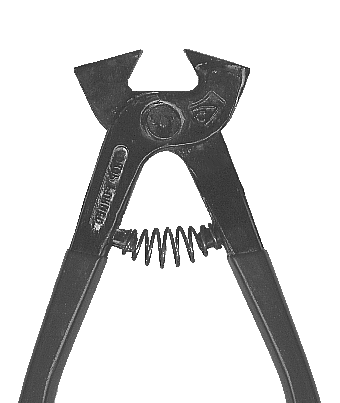
You can easily purchase tile nippers from any hardware store or online. You'll use nippers almost exclusively for removing small amounts of material from either facet rough or edges of cabbing material that's already been slabbed. Simply place the blade of the nippers on the area to be removed and squeeze. This is usually faster and more efficient than using a saw. There's no preparation or clean up afterwards.
On a fractured gem, you can press on the fracture with the nippers and cause it to finish splitting all the way through. This will save you more material than the most careful sawing, since the fracture may be a curved line. A saw can only cut in a straight line, and you'll always lose the width of the blade.
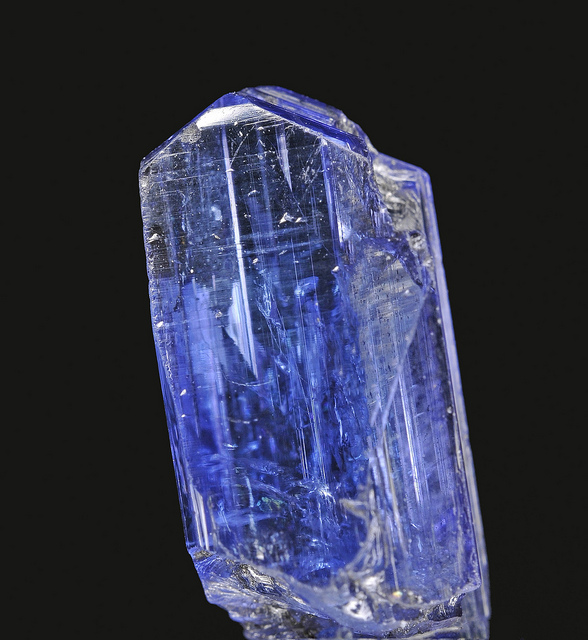
A pair of nippers is an excellent tool for preparing tanzanite for faceting, where removing fractured areas is a common procedure. With the nippers, you'll frequently get a large piece with maximum recovery and a smaller piece for melee. If you use a saw, the primary piece will be smaller, and you'll lose the small gem altogether. When the material is this valuable, it's all worth saving!
The coarse wheels on a cabbing unit are designed for cutting rough stones to a useful size and shape. A saw is faster for removing large amounts of material, but a grinding wheel will give you more control. You can cut curves with a wheel, while you're restricted to straight lines with a saw.
You must be careful when grinding delicate material. A coarse wheel that's ideal for jasper would shatter an opal. It can also open up dozens of fractures in stones with perfect cleavage. Always consider the stability of your gem before taking it to a grinding wheel. If you're in doubt, either practice on a piece of junk or start with a finer grade wheel.
Certainly, don't drop your opal off a cliff.







When you join the IGS community, you get trusted diamond & gemstone information when you need it.
The quickest way to reduce a large rock to smaller pieces is with a rock hammer. As obvious as this sounds, many people slave over their saws when a few quick blows from a rock hammer would do the job. Although hammering rough doesn't allow precise control over the size pieces you get, it's much more accurate than the drop-it-off-a-cliff method. If the rock you're working on has a fracture, you can usually break it along that line.
Cutting a kerf in the stone will give you greater control. A kerf is a shallow saw cut, usually less than an inch deep. You can create a kerf almost anywhere you need it. Place a chisel or large screwdriver in the kerf and give it a solid blow with the hammer. The rock will split in two under the kerf. While the technique doesn't always yield a clean, straight split, it works surprisingly well.
Hammering is only useful for cabbing material of moderate value. You would never hammer an expensive piece of rough. The loss could amount to a considerable sum of money. Nor would you use this method on something fragile, like opal or calcite. Expanding existing fractures would reduce the useable areas and value of the material too much to be worth the savings in labor. For these materials, saws and tile nippers are best.
Lapidaries use slab and trim saws. The difference is the size blade they use. Trim saws have small, thin blades that remove a minimum of material. Slab saw blades are thicker because they are designed to do heavier cutting. Trim saws use 4" to 6" blades that run between .004" and .012" thick. Slab saw blades run from 6" to 36" with thickness of .025" to .200".
Diamond blades are like a revolving finger nail file. They won't cut fingers but will give you a creative manicure if you're not careful.
PLEASE NOTE: Very thin blades of .004" to .006" are the exceptions. At this size, THEY WILL CUT FINGERS.
They're also much easier to bend, or dish, than a heavier blade. Unless you're cutting very expensive material, using a slightly thicker blade is recommended.
Other than size, the main difference in price is the amount of diamond on the blade. How much you need depends on how often you're going to use it. A hobbyist who only cuts occasionally can get by with any of the good quality blades. These have the diamond abrasive rolled or bonded on. A professional who uses saws constantly would best be served with a sintered blade. Sintered means the rim has diamond throughout it, not just on the surface. Since there is more diamond in these blades, they cost considerably more. However, the value is there because they last so much longer.
Beware of very inexpensive blades. Some of them will only cut three or four stones. They're not worth the money.
Not all slab saws use diamond blades. Mud saws are an old-style tool still available as used equipment. A mud saw has no abrasive attached to the blade. Instead, the blade runs through a trough of abrasive, usually silicon carbide. This is the "mud." It carries some of the abrasive with it on each pass.
The primary advantage of a mud saw is economic. It costs much less than one with a diamond blade. The disadvantage is that it requires more maintenance. The abrasive breaks down with use. The saw must be shut down and recharged periodically. Properly set up and maintained, a mud saw is perfect for cutting rough stones.
When selecting and operating a saw, you need to make sure the stones are fed straight into the blade. If you feed the stone to the blade at an angle, it will bind and possibly bend, ruining an expensive blade. With new slab saws, this shouldn't be a problem. However, don't take feeding for granted with a used saw. Check the feed mechanism to make sure it runs perfectly parallel with the blade.
With trim saws, you feed the stone by hand. To do this properly, stand so your primary eye is in a direct line with the saw blade. This way, you can see if the blade starts to bend. This indicates you're not feeding the stone straight. Keep the table around the blade clear of debris. Bits of rock can deflect the stone. With small pieces, pressing them into a piece of cardboard and sliding the cardboard into the blade can help. (You might even want to embed your stones in wax or plaster sometimes).
In all cases, hold the stone against the table as you slide it forward. Nobody has ever recommended hand holding the stone as you feed it to the blade. It's simply too difficult to feed straight, and the chance of damaging the blade increases. That's what every saw manufacturer recommends.
However, when trimming facet rough, laying the stone on the table while feeding it in a direction that removes a bare minimum of unneeded material can be extremely difficult. The price of good quality facet rough tends to be quite high. Sawing off more than necessary is an expensive proposition.
As a rough dealer, I learned to feed stones into the blade by hand at whatever angle was best for preserving material. First, either find a line on the surface or mark the stone where it needs cutting. Now, the main trick is to keep your eye in line with the blade. Hold the marked line on the stone straight to the blade. Feed it gently and watch the saw blade constantly. If you see any bending, make a gentle but immediate adjustment.
Occasionally, you'll need to saw a kerf in a stone that's too large to feed through your saw. The only way to do this is to set one end of the rock on the table and one side on the blade. Then, gently rotate it forward until a suitable kerf is cut in place. Again, keep your eye in a straight line with the saw blade and make sure it doesn't bend. Do this at your own risk. If you don't have a keen eye, a steady hand, and an adequate attention span, you'll ruin your blade.
Trim saws will last and work well without any lubrication other than water. However, that's not recommended. At the minimum, you should add a rust preventative. These usually have lubricating properties as well.
Slab saws have much more stringent requirements. There are saw oils on the market that are excellent, if a bit expensive. If you're unsure what to use, get an oil that is specifically designed for lapidary use.
Lapidaries have used a variety of lubricating solutions over the years. There are water-soluble oils that are designed for use in machine shops. I know some people who like to use automotive anti-freeze. Bear in mind that all of these substances are toxic to breathe, and there is always mist when the saw is in operation. When setting up a saw, make sure there is adequate ventilation in your workspace. If you're using a flammable solution, outside is best. You certainly don't want fumes collecting in a closed room! I've seen some excellent workshops set up in carports or under awnings.
Before throwing out a blade because it no longer cuts, try cleaning it by sawing a common brick. Amazingly, this can extend the life of your blades. This removes tiny particles of grit that have accumulated between the diamonds. Harder stones, like agate, won't do the same job.
Periodically, you'll also need to clean the sump of your saw. Fortunately, it doesn't have much odor, because this one of the nastiest chores you'll ever undertake while gem cutting. You need a large can or bucket to hold the residue, scrapers, and rubber gloves to protect your hands. Open the valve or tip the saw to remove the lubricant. If you run it through a filter (coffee filters work), you can reuse the lubricant.
You'll need to manually scrape out a layer of sludge that will be left at the bottom. Any flat scraper will do, but a putty knife works particularly well for getting into corners. You don't have to remove every last bit of sludge. However, the more you get out, the longer it'll be between cleanings.
Now, you need to find a home for the mess you've removed from your saw. The stone residue is nicknamed "the plumber's best friend" because it takes so little to plug up a drain. So that method is out. Most likely, the residue will be mixed with a toxic petroleum product. Find a hazardous household waste disposal site near you or contact your waste collection service provider.
You can easily purchase tile nippers from any hardware store or online. You'll use nippers almost exclusively for removing small amounts of material from either facet rough or edges of cabbing material that's already been slabbed. Simply place the blade of the nippers on the area to be removed and squeeze. This is usually faster and more efficient than using a saw. There's no preparation or clean up afterwards.
On a fractured gem, you can press on the fracture with the nippers and cause it to finish splitting all the way through. This will save you more material than the most careful sawing, since the fracture may be a curved line. A saw can only cut in a straight line, and you'll always lose the width of the blade.
A pair of nippers is an excellent tool for preparing tanzanite for faceting, where removing fractured areas is a common procedure. With the nippers, you'll frequently get a large piece with maximum recovery and a smaller piece for melee. If you use a saw, the primary piece will be smaller, and you'll lose the small gem altogether. When the material is this valuable, it's all worth saving!
The coarse wheels on a cabbing unit are designed for cutting rough stones to a useful size and shape. A saw is faster for removing large amounts of material, but a grinding wheel will give you more control. You can cut curves with a wheel, while you're restricted to straight lines with a saw.
You must be careful when grinding delicate material. A coarse wheel that's ideal for jasper would shatter an opal. It can also open up dozens of fractures in stones with perfect cleavage. Always consider the stability of your gem before taking it to a grinding wheel. If you're in doubt, either practice on a piece of junk or start with a finer grade wheel.
Certainly, don't drop your opal off a cliff.