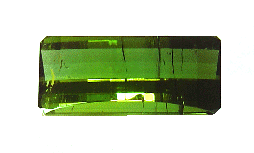
Gemstone Examination Lesson
Step 3: Practical Gemology Lesson 28 Back to syllabus While preparing this lesson in gemstone examination, I was in the process of professionally…
Step 3: Practical Gemology Lesson 28 Back to syllabus While preparing this lesson in gemstone examination, I was in the process of professionally…
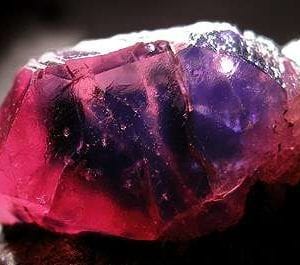
Step 3: Practical Gemology Lesson 29 Back to syllabus We’ve designed a series of realistic gem identification quizzes for gemology students.…
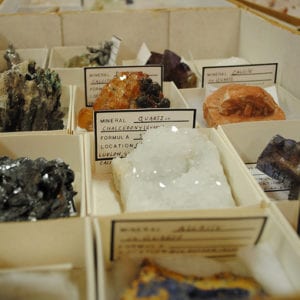
Step 3: Practical Gemology Lesson 30 Back to syllabus In this set of gemstone identification quizzes, I’m placing you in a familiar situation.…
By now, you know that gemstone identification is like detective work. As a gemologist, you gather clues and eliminate possibilities through a…
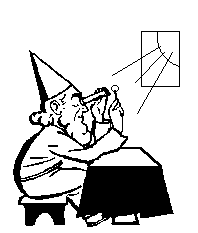
A dichroscope is one of the most useful instruments a gemologist can have. Its primary purpose is to determine the pleochroism of a gem. This can…
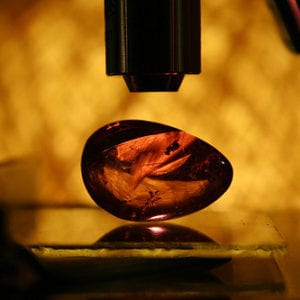
Sometimes, microscopic inclusions and color banding are the only way to distinguish natural from synthetic gems. This makes the microscope an…
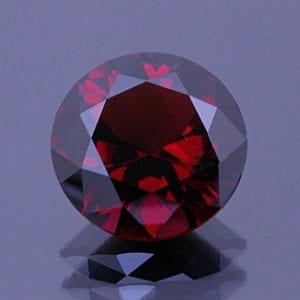
Step 3: Practical Gemology Lesson 3 Back to syllabus Sometimes, refractive index (RI) and specific gravity (SG) readings aren’t enough…
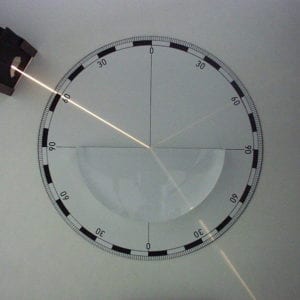
Step 3: Practical Gemology Lesson 4 Back to syllabus Gemstone identification is like detective work. You gather clues and eliminate suspects…
Step 3: Practical Gemology Lesson 6 Back to syllabus Optic character is another useful clue in gem identification. This property exists in every…
 IGS Become Member