
Streak testing is a destructive gemstone test rarely used by gemologists, but it is a standard diagnostic test for mineralogists. Most gems leave no streak. Learn which gems do and what colors they leave.
3 Minute Read
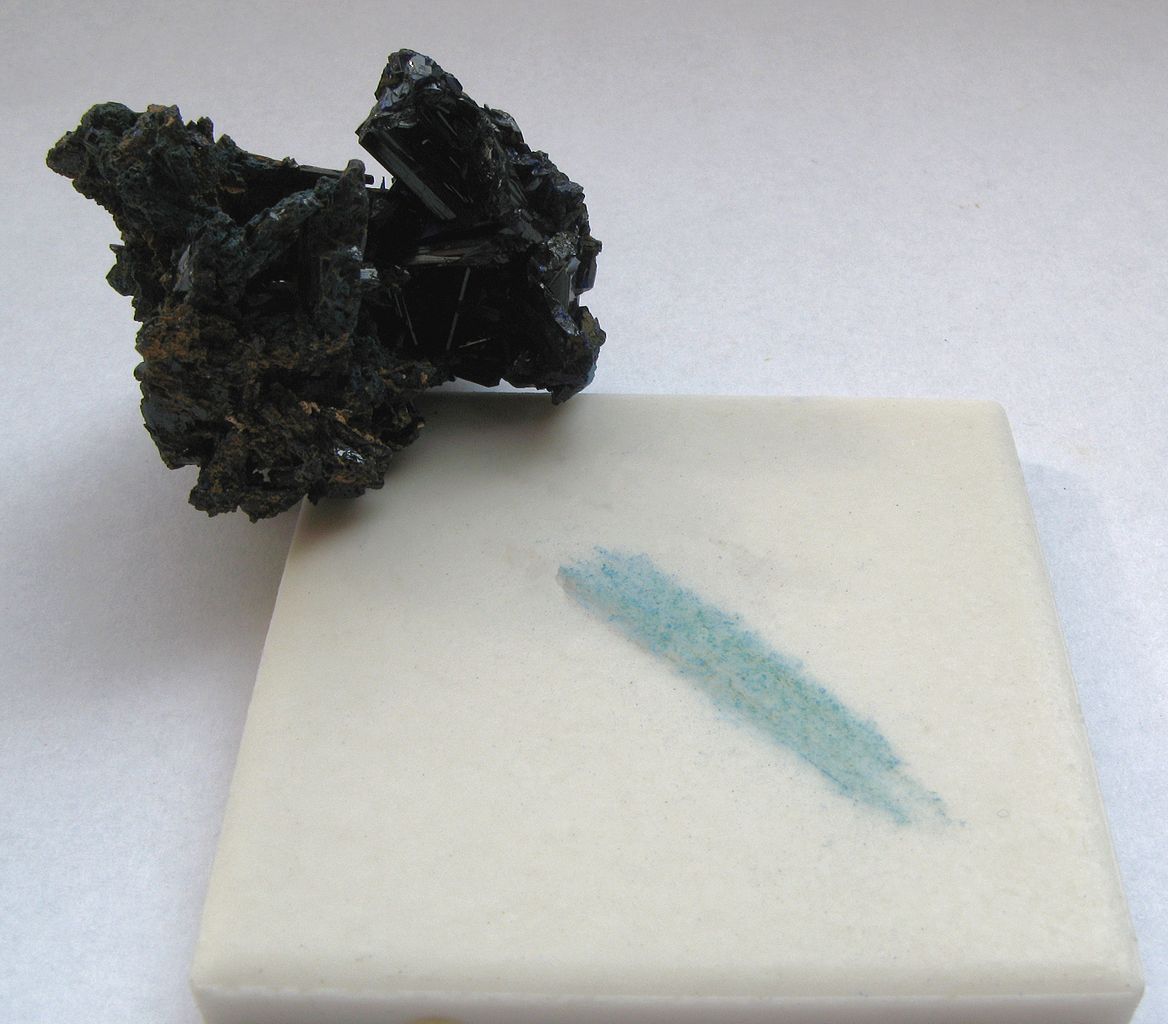
As you know, the gem colors we see come from selective absorption, the absorption and transmission of specific wavelengths of light. Gemologists can view this selective absorption through a spectroscope.
However, most gems get their color through the presence of trace elements or impurities in their chemical structure. These are known as allochromatic gems, such as corundum and beryl, and may show a variety of colors. Other gems get their colors through elements essential to their chemical structure that also act as coloring agents. These are known as idiochromatic gems, such as azurite and malachite, and occur in only one color.
Usually, allochromatic gems will leave a white or colorless streak no matter the impurities in their structure. For example, no matter what color of corundum — sapphire or ruby — you test, it should always leave a white streak. However, if the allochromatic gem has received additional coloring agents, such as a dye, it may leave a colored streak. You can test this by rubbing a piece against a ceramic tile. The bit of material that rubs off, the streak
…



When you join the IGS community, you get trusted diamond & gemstone information when you need it.
As you know, the gem colors we see come from selective absorption, the absorption and transmission of specific wavelengths of light. Gemologists can view this selective absorption through a spectroscope.
However, most gems get their color through the presence of trace elements or impurities in their chemical structure. These are known as allochromatic gems, such as corundum and beryl, and may show a variety of colors. Other gems get their colors through elements essential to their chemical structure that also act as coloring agents. These are known as idiochromatic gems, such as and , and occur in only one color.
…Usually, allochromatic gems will leave a white or colorless streak no matter the impurities in their structure. For example, no matter what color of corundum — sapphire or ruby — you test, it should always leave a white streak. However, if the allochromatic gem has received additional coloring agents, such as a dye, it may leave a colored streak. You can test this by rubbing a piece against a ceramic tile. The bit of material that rubs off, the streak

Streak testing is a destructive gemstone test rarely used by gemologists, but it is a standard diagnostic test for mineralogists. Most gems leave no streak. Learn which gems do and what colors they leave.


“I have never known or heard of an organization that offers so much for its members, and at such a low cost.”
— Ernest Roisch, Rainbow Rocks LTD
That's less than $0.01 per article. Get instant access to 1,700+ premium articles, courses, and gem pricing data.