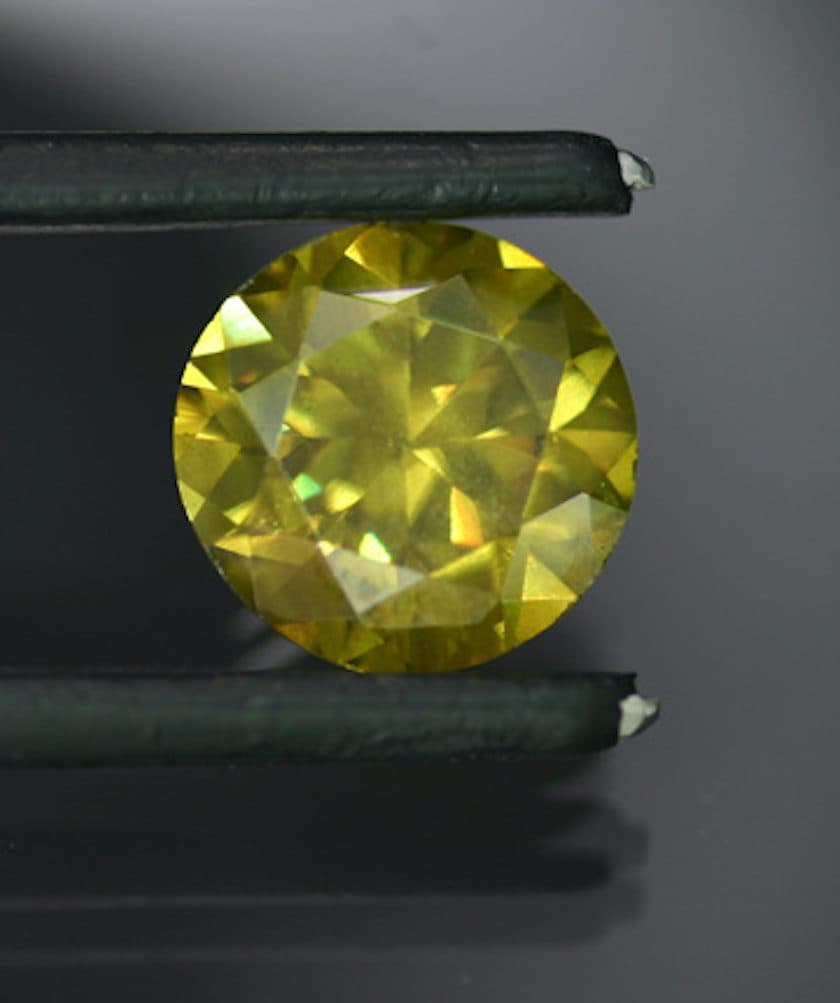
The optical properties of gems attract our eyes and can give a cut stone a unique character. However, gemstone physical properties are also important. They determine a gem's durability, guide faceters when they cut and set, and help us gemologists identify gemstones.
14 Minute Read
Specific gravity (SG) or density refers to how much something weighs in relation to its size. For example, a cubic centimeter of steel is much heavier than a cubic centimeter of styrofoam. SG is expressed as the relationship to an equivalent volume of water. For example, a gem with a specific gravity of 3 weighs three times as much as the same amount of water.
In gemology, the terms specific gravity and density are interchangeable.
| Gem | SG |
| Garnet | 3.40-4.25 |
| Corundum | 3.97-4.03 |
| Topaz | 3.53-3.56 |
| Diamond | 3.51-3.53 |
| Peridot | 3.27-3.48 |
| Tourmaline | 2.84-3.10 |
| Beryl | 2.66-2.80 |
| Quartz | 2.63-2.68 |
| Opal | 1.99-2.25 |
| Amber | 1.05-1.096 |
As you can see from the chart, few gems share the same SG range. This makes SG one of the most useful gemstone physical properties you can have for identification. However, measuring specific gravity is difficult and time consuming. Thus, you normally only conduct this test when necessary. (See “The Art and Science of Identifying Gemstones” for new identification procedures that don’t typically require SG testing).
When you’re buying and selling gems, knowing the SG of a gem can help you make the right choice.
For…



When you join the IGS community, you get trusted diamond & gemstone information when you need it.
Specific gravity (SG) or density refers to how much something weighs in relation to its size. For example, a cubic centimeter of steel is much heavier than a cubic centimeter of styrofoam. SG is expressed as the relationship to an equivalent volume of water. For example, a gem with a specific gravity of 3 weighs three times as much as the same amount of water.
In gemology, the terms specific gravity and density are interchangeable.
| Gem | SG |
| Garnet | 3.40-4.25 |
| Corundum | 3.97-4.03 |
| Topaz | 3.53-3.56 |
| Diamond |
| 3.51-3.53 |
| Peridot | 3.27-3.48 |
| Tourmaline | 2.84-3.10 |
| Beryl | 2.66-2.80 |
| Quartz | 2.63-2.68 |
| Opal | 1.99-2.25 |
| Amber | 1.05-1.096 |
As you can see from the chart, few gems share the same SG range. This makes SG one of the most useful gemstone physical properties you can have for identification. However, measuring specific gravity is difficult and time consuming. Thus, you normally only conduct this test when necessary. (See “The Art and Science of Identifying Gemstones” for new identification procedures that don’t typically require SG testing).
When you’re buying and selling gems, knowing the SG of a gem can help you make the right choice.
For…
The optical properties of gems attract our eyes and can give a cut stone a unique character. However, gemstone physical properties are also important. They determine a gem's durability, guide faceters when they cut and set, and help us gemologists identify gemstones.



“I have never known or heard of an organization that offers so much for its members, and at such a low cost.”
— Ernest Roisch, Rainbow Rocks LTD
That's less than $0.01 per article. Get instant access to 1,700+ premium articles, courses, and gem pricing data.