Blockchain tech can provide secure, digital transaction records. Can blockchain diamonds resolve ethical and legal issues related to sourcing and grading?
2 Minute Read
Blockchain is a form of distributed ledger technology. Simply put, it's a decentralized network of computers that each hold a ledger of transactions. Any computer can add a data block to the ledger (or chain — hence, "blockchain"). However, no one computer acts as the central authority. Instead, for a transaction to be added to the ledger, each computer must validate the transaction. This happens through cryptography. Once added to the ledger, a transaction is permanent and can't be erased.
Bitcoin is the most famous blockchain network, but blockchain isn't just for cryptocurrencies. Any piece of information can be added to the ledger as a data block. Many industries, such as financial services (banking), are excited about blockchain and its potential to speed up transactions, reduce costs, and improve data security. The diamond industry is now also exploring the possibilities of blockchain networks.
Blockchain may prove very useful for tracking the provenance of a diamond in a more transparent manner. Let's look at how that might work.
First, we need to identify the stakeholders in the diamond value chain. They include the following:
If each stakeholder formed part of a diamond-specific blockchain network, they could view important details about a specific diamond. For example, they could determine the diamond's source and attributes (cut, carat, color, and clarity), as well as the ownership of the diamond as it passed through different parties until finally reaching the jeweler. The stakeholders themselves add this information as data blocks to the blockchain as the diamond moves through their custody.
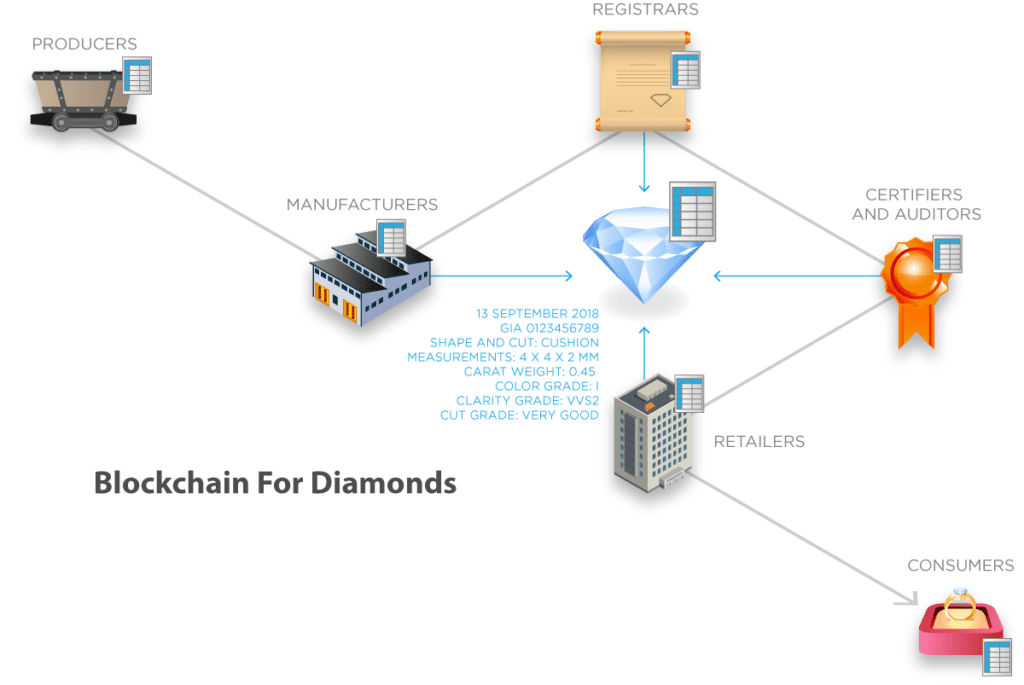
This information constitutes a "digital mirror" of the actual diamond and its certification. It might enable a consumer to more easily avoid purchasing an unethically sourced diamond. Here you can see the unique promise of blockchain: its associated technological functionalities and features enable real-time updates, greater transparency, and auditability.
If you want to learn more about the application of blockchain to the diamond industry, check out Everledger. This company has more than 2 million diamonds uploaded onto its platform. The De Beers corporation has created Tracr, its own blockchain platform for identifying and tracking diamonds. IBM is also developing its own platform, the TrustChain Initiative, which has been tested with diamonds from the Rio Tinto corporation.



When you join the IGS community, you get trusted diamond & gemstone information when you need it.
Blockchain is a form of distributed ledger technology. Simply put, it's a decentralized network of computers that each hold a ledger of transactions. Any computer can add a data block to the ledger (or chain — hence, "blockchain"). However, no one computer acts as the central authority. Instead, for a transaction to be added to the ledger, each computer must validate the transaction. This happens through cryptography. Once added to the ledger, a transaction is permanent and can't be erased.
Bitcoin is the most famous blockchain network, but blockchain isn't just for cryptocurrencies. Any piece of information can be added to the ledger as a data block. Many industries, such as financial services (banking), are excited about blockchain and its potential to speed up transactions, reduce costs, and improve data security. The diamond industry is now also exploring the possibilities of blockchain networks.
Blockchain may prove very useful for tracking the provenance of a diamond in a more transparent manner. Let's look at how that might work.
First, we need to identify the stakeholders in the diamond value chain. They include the following:
If each stakeholder formed part of a diamond-specific blockchain network, they could view important details about a specific diamond. For example, they could determine the diamond's source and attributes (cut, carat, color, and clarity), as well as the ownership of the diamond as it passed through different parties until finally reaching the jeweler. The stakeholders themselves add this information as data blocks to the blockchain as the diamond moves through their custody.
This information constitutes a "digital mirror" of the actual diamond and its certification. It might enable a consumer to more easily avoid purchasing an unethically sourced diamond. Here you can see the unique promise of blockchain: its associated technological functionalities and features enable real-time updates, greater transparency, and auditability.
If you want to learn more about the application of blockchain to the diamond industry, check out Everledger. This company has more than 2 million diamonds uploaded onto its platform. The De Beers corporation has created Tracr, its own blockchain platform for identifying and tracking diamonds. IBM is also developing its own platform, the TrustChain Initiative, which has been tested with diamonds from the Rio Tinto corporation.