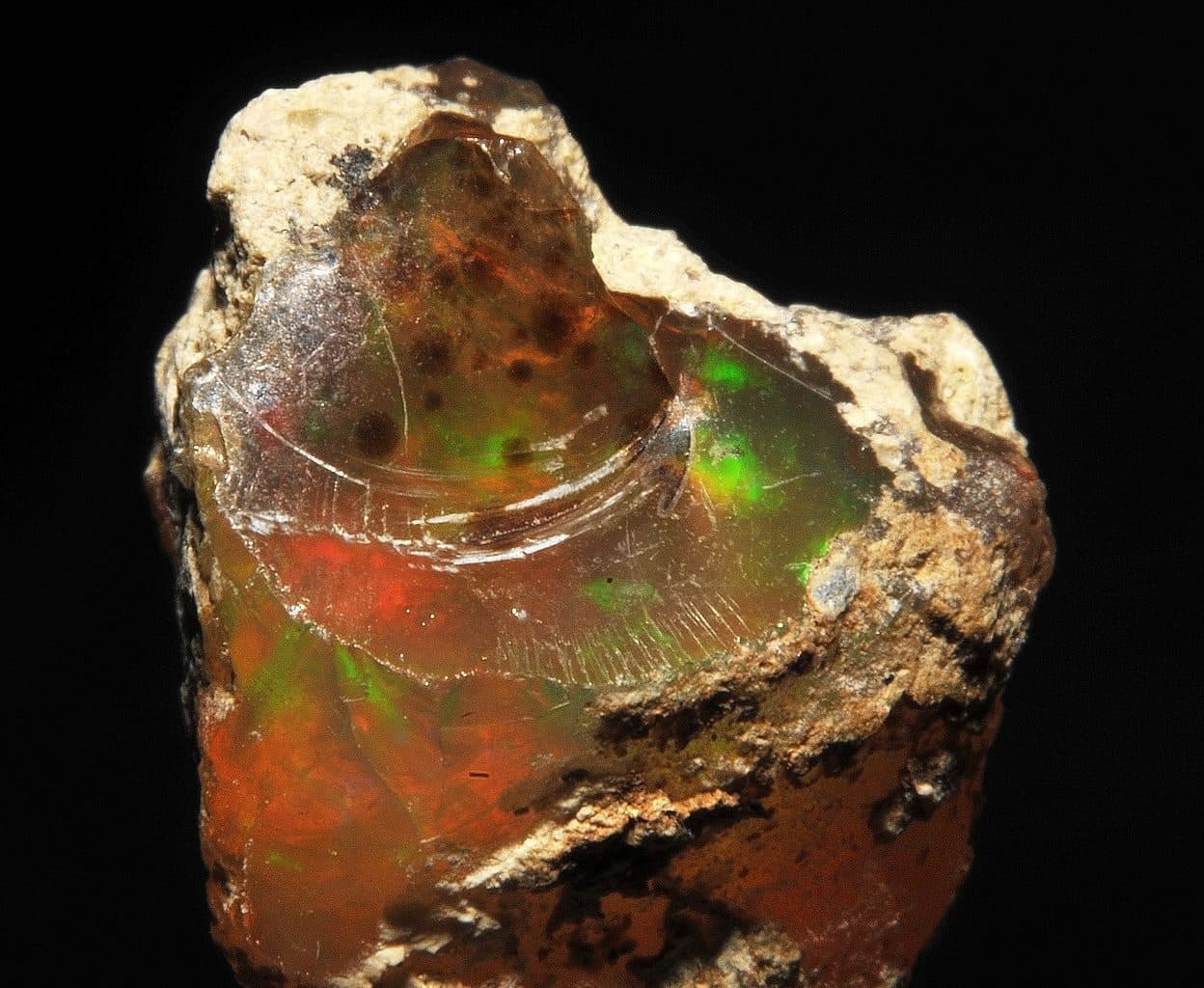
How Do Opals Form?
Curious about how opals form and show such stunning colors? Learn about the scientific theories behind opal formation and why some opals show a rainbow.
3 Minute Read
What is Opal?
Chemically speaking, opal is a form of hydrated silica, with the chemical formula SiO₂ · nH₂O. Unlike most gemstones, opal isn’t crystalline. That means the silica doesn’t form in a nice, neat crystal structure. Instead, it forms as microscopic, amorphous spheres. Think of opal micro-structure as more like balls of yarn than interlocking toy bricks.
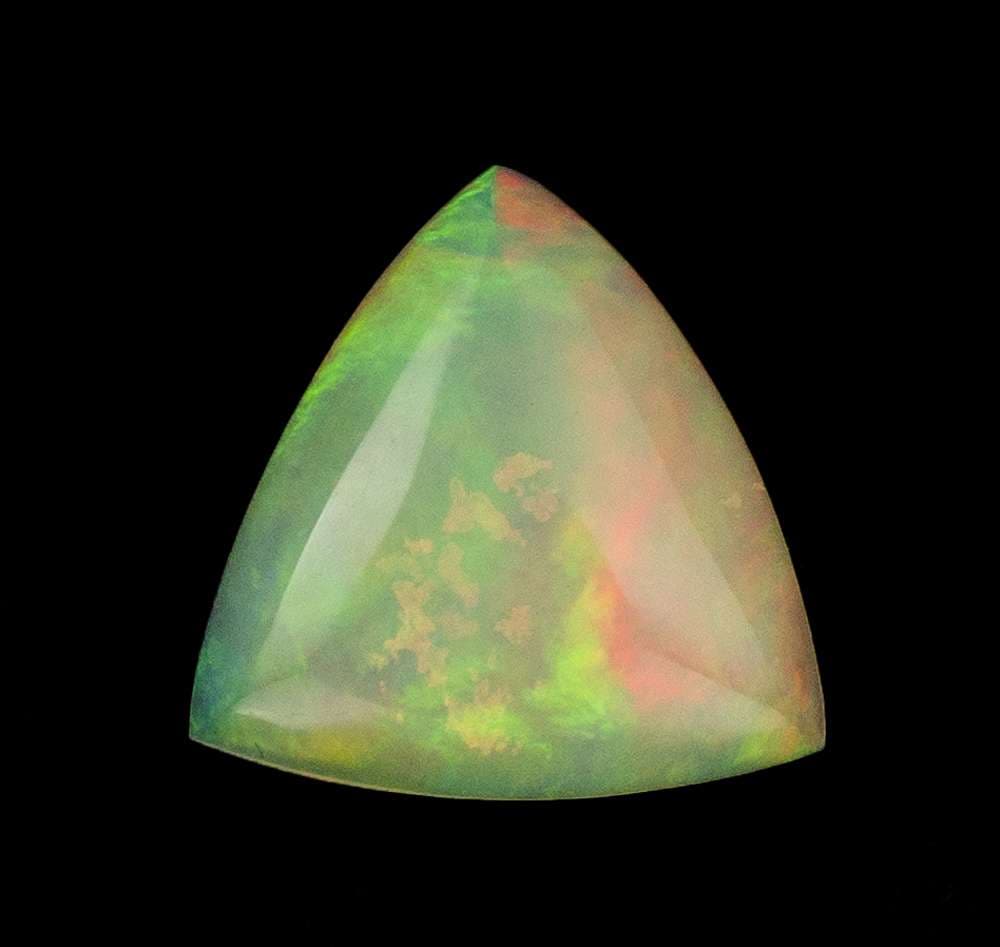
In gem-quality opal, the play of color arises from silica spheres with a uniform size and closely packed structure. Common opal or “potch,” in contrast, has silica spheres with a wide range of sizes jumbled together.
Under What Conditions do Opals Form?
Like any gemstone, opals need specific ingredients and geological conditions to form. In this case, there needs to be dissolved silica that comes out of solution and forms opal. First, water filters into the ground and dissolves quartz sand, becoming a silicic acid solution.
There are several theories about what happens next.
The most widely accepted theory involves seasonal changes to the groundwater table. According to this theory, groundwater near the surface evaporates seasonally, allowing a thin layer of opal to form in pores and seams in the rock. Over time, opal grows in these spaces in near-surface…
Related Articles
Opal Stones and Gems: Value, Price, and Jewelry Information
Opal and Pearl Care Guide
Understanding Gem Synthetics, Treatments, And Imitations, Part 4: Synthetic Gemstone Guide
Opal Buying Guide
Latest Articles

800 Years of Mogok: A Celebration in Tenuous Times
What is the Average Gemstone Faceting Yield?
Pyroxmangite Value, Price, and Jewelry Information
How to Identify Emerald Simulants and Synthetics
Never Stop Learning
When you join the IGS community, you get trusted diamond & gemstone information when you need it.