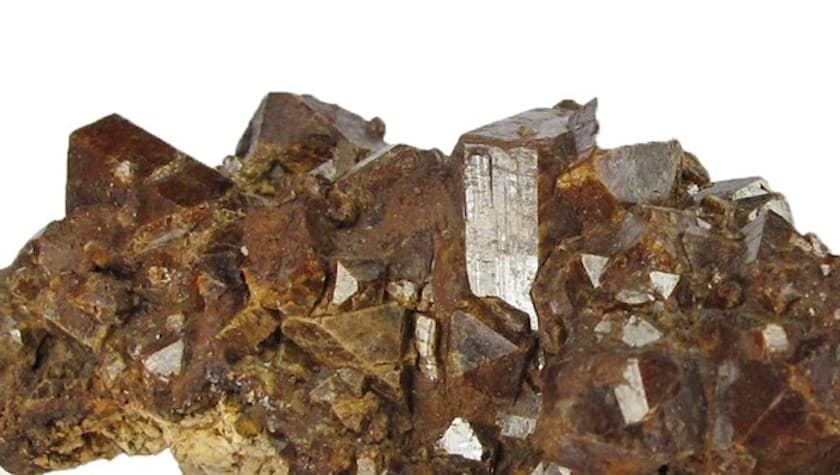
As a December birthstone, blue zircon is very popular. But are blue zircons natural? Learn how zircons form and get their colors.
8 Minute Read
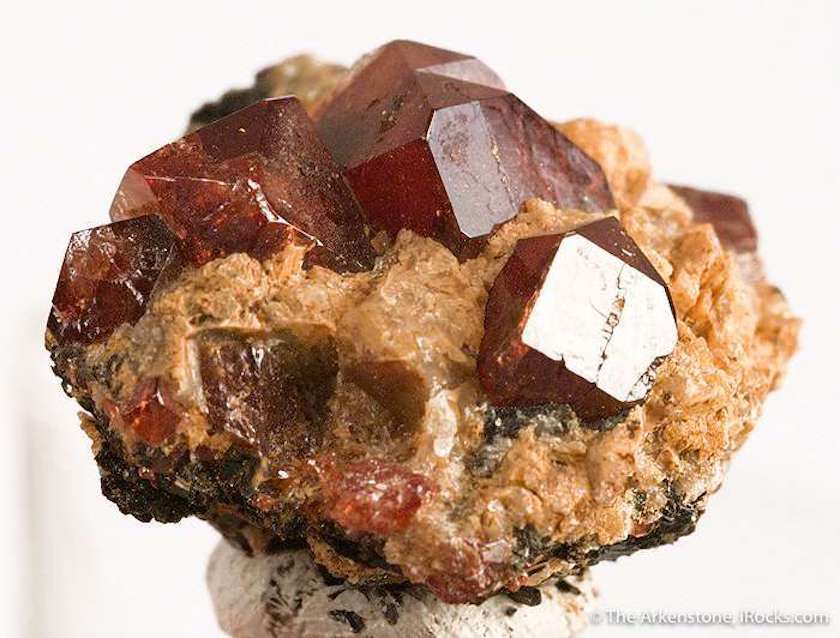
Zircons form in many geological environments, including igneous, metamorphic, and sedimentary rocks.
Zircon crystals of igneous origin have an extremely high melting point. They can form within silicic magma as it slowly cools. In this situation, the mineral baddeleyite will melt and provide zirconium (Zr), a necessary ingredient for zircon formation. Under metamorphic conditions, the zirconium in surrounding minerals like baddeleyite can leach out of the mineral and recrystallize into zircon when existing rocks partially melt.
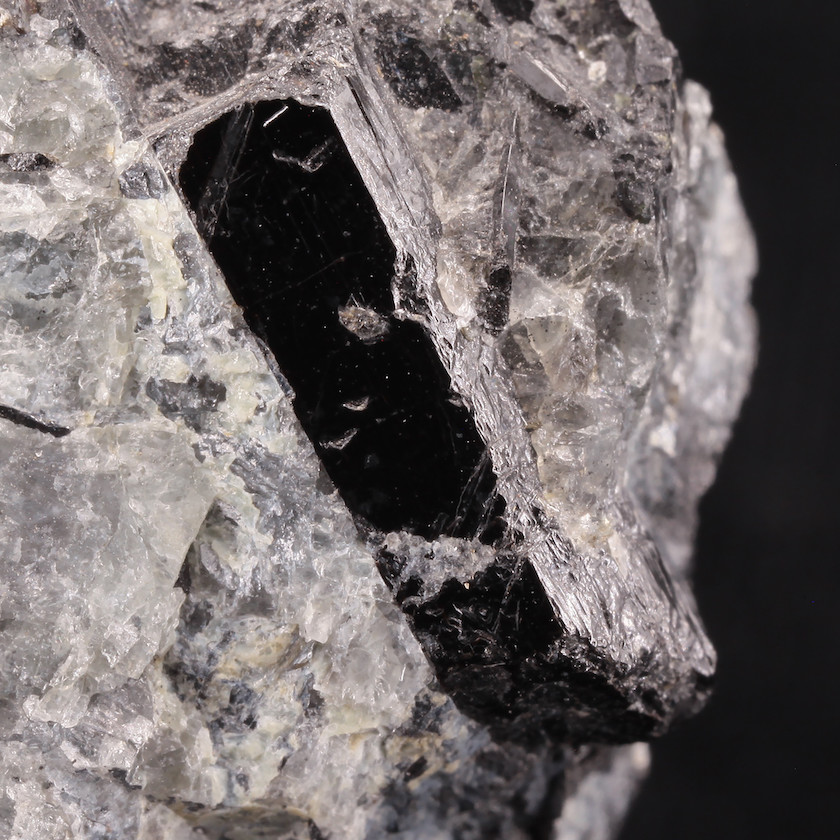
Secondary zircon stones can also recrystallize from liquified primary zircon or form a new outer layer on top of the older zircon crystal in a process termed “overgrowth.” Zircons with multiple layers may or may not show obvious zones.
Metamorphic zircon formation can lead to three distinct forms:


When you join the IGS community, you get trusted diamond & gemstone information when you need it.
Zircons form in many geological environments, including igneous, metamorphic, and sedimentary rocks.
Zircon crystals of igneous origin have an extremely high melting point. They can form within silicic magma as it slowly cools. In this situation, the mineral will melt and provide zirconium (Zr), a necessary ingredient for zircon formation. Under metamorphic conditions, the zirconium in surrounding minerals like baddeleyite can leach out of the mineral and recrystallize into zircon when existing rocks partially melt.
…Secondary zircon stones can also recrystallize from liquified primary zircon or form a new outer layer on top of the older zircon crystal in a process termed “overgrowth.” Zircons with multiple layers may or may not show obvious zones.
Metamorphic zircon formation can lead to three distinct forms:
As a December birthstone, blue zircon is very popular. But are blue zircons natural? Learn how zircons form and get their colors.


“I have never known or heard of an organization that offers so much for its members, and at such a low cost.”
— Ernest Roisch, Rainbow Rocks LTD
That's less than $0.01 per article. Get instant access to 1,700+ premium articles, courses, and gem pricing data.