Is Ammolite Expensive?
9 Minute Read
In the seas of the Paleozoic Era almost 400 million years ago, a squid-like creature with a spiral shell called ammonite evolved. Ammonites would prove to be highly successful marine animals that thrived through the Mesozoic Era until dying out with the dinosaurs 66 million years ago.
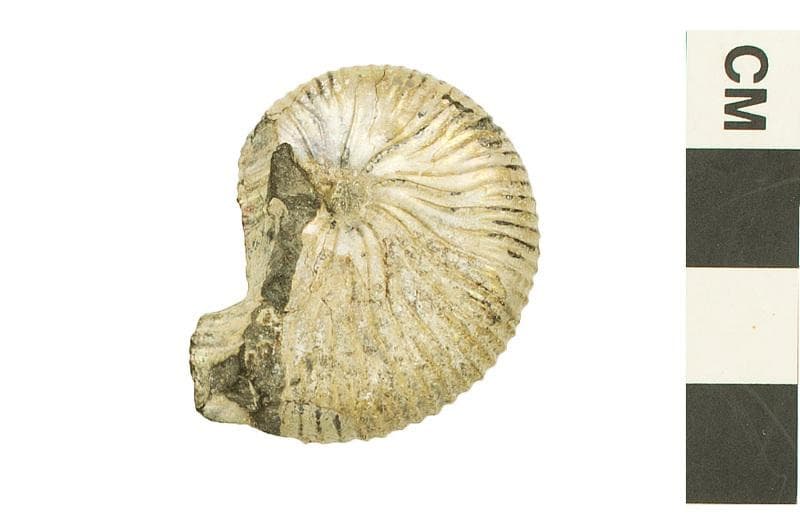
Considering that ammonites lived for hundreds of millions of years, it should come as no surprise that they are well represented in the fossil record. In a few places, the outer layer of the fossil was preserved in such a way that it is iridescent. When fragments of that iridescent ammonite shell are used as gemstones, they are called "ammolite".
The Canadian ammonite deposit in Lethbridge, Alberta contains the brightest and most colorful ammonites and ammolites in the world. This famous source has been actively mined by the company Korite since 1979. We spoke with co-owner and CEO Amarjeet Grewal about this exceptionally rare gem and would like to thank her for contributing to this article.

What Are Ammolites?
To understand what makes ammolites special, you need to be familiar with the fossilization process. Fossils dug up from the ground are not the bones of long-dead creatures. Instead, they are made of a variety of different minerals which slowly replaced each and every particle of an ancient skeleton.
When the material of the thin outer layer of ammonite shell has been substituted by aragonite particles, a bright iridescent layer is created. The intact ammonite fossil specimens with this shining rainbow-colored layer are called by the original name "ammonite". When ammonite shells are broken and crushed whilst underground, the smaller fragments that are recovered and used as gemstones are called "ammolites".
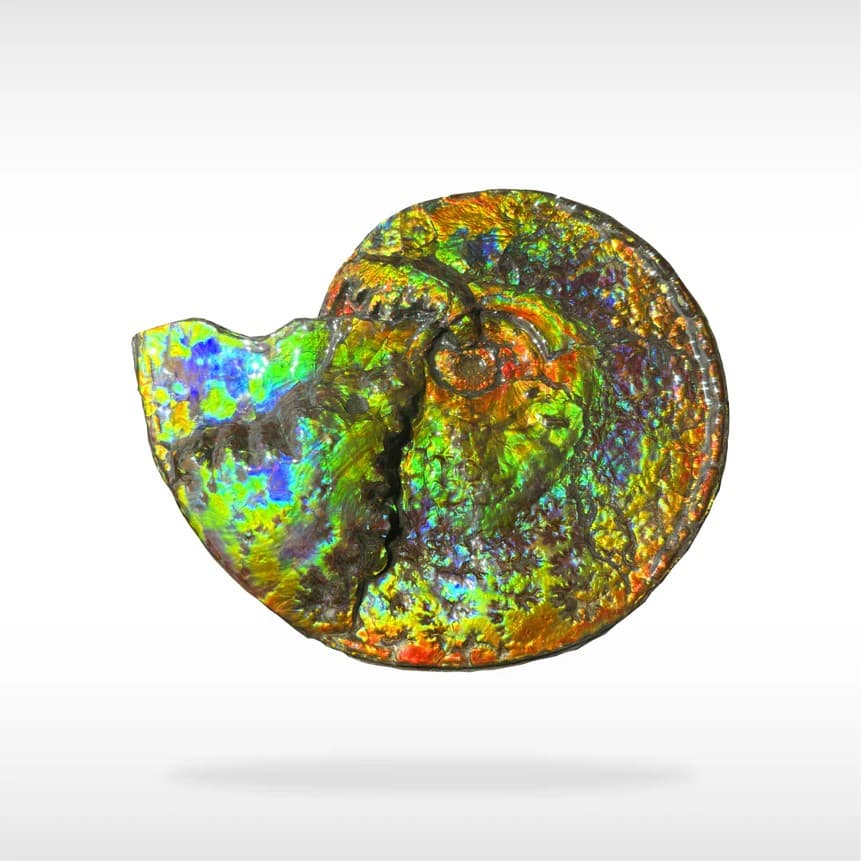
It is important to note that Korite does not create ammolites from whole ammonites. Rather, Grewal states that recovering unbroken fossils is the priority of the company - "if we can find an intact ammonite we try to preserve it. Should we find an ammonite that is at least 70% complete with 30% missing, we will try to find that 30% by exploring the immediate area. Our ammolite gem rough is found in the gem rough state. We do not break up specimens to get smaller gemstones."
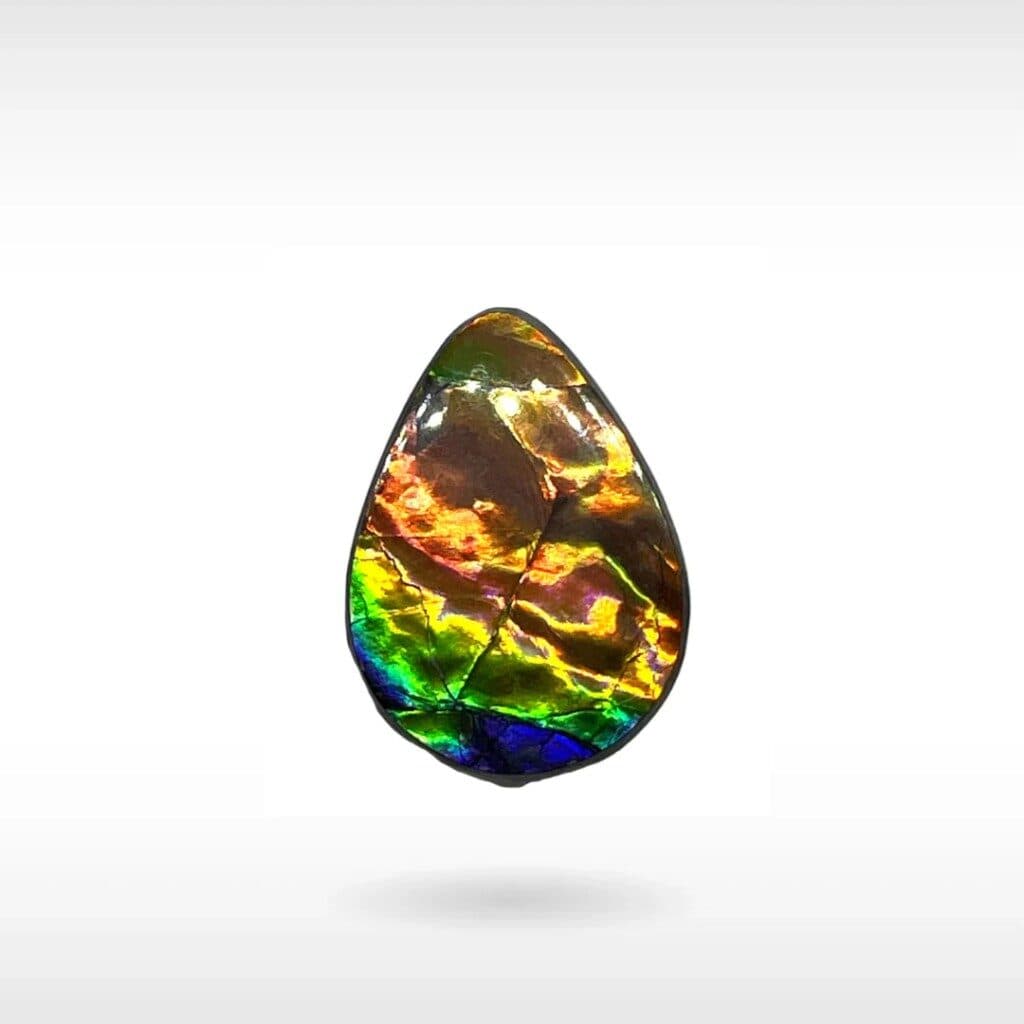
Only A Single Source of Ammolite Matters
Although ammonites are found all over the globe, very few locations have iridescent colored fossils. Grewal explained that ammolite from Madagascar maybe gray or brown while gems found in South Dakota in the United States are often a reddish or brownish. It is only the deposit in Lethbridge, Alberta, within the Bearpaw Formation mined by Korite that houses the exceptional multi-colored ammolites sought out by collectors.
Brilliance of Color Expression Is the Most Important Value Characteristic for Ammolite
When the experts at Korite examine and value individual ammolites, the factor that matters most is the brilliance of color expression. Regardless of the actual hue being expressed, it is the vibrancy and strength of the color(s) that has the most impact on value determination.
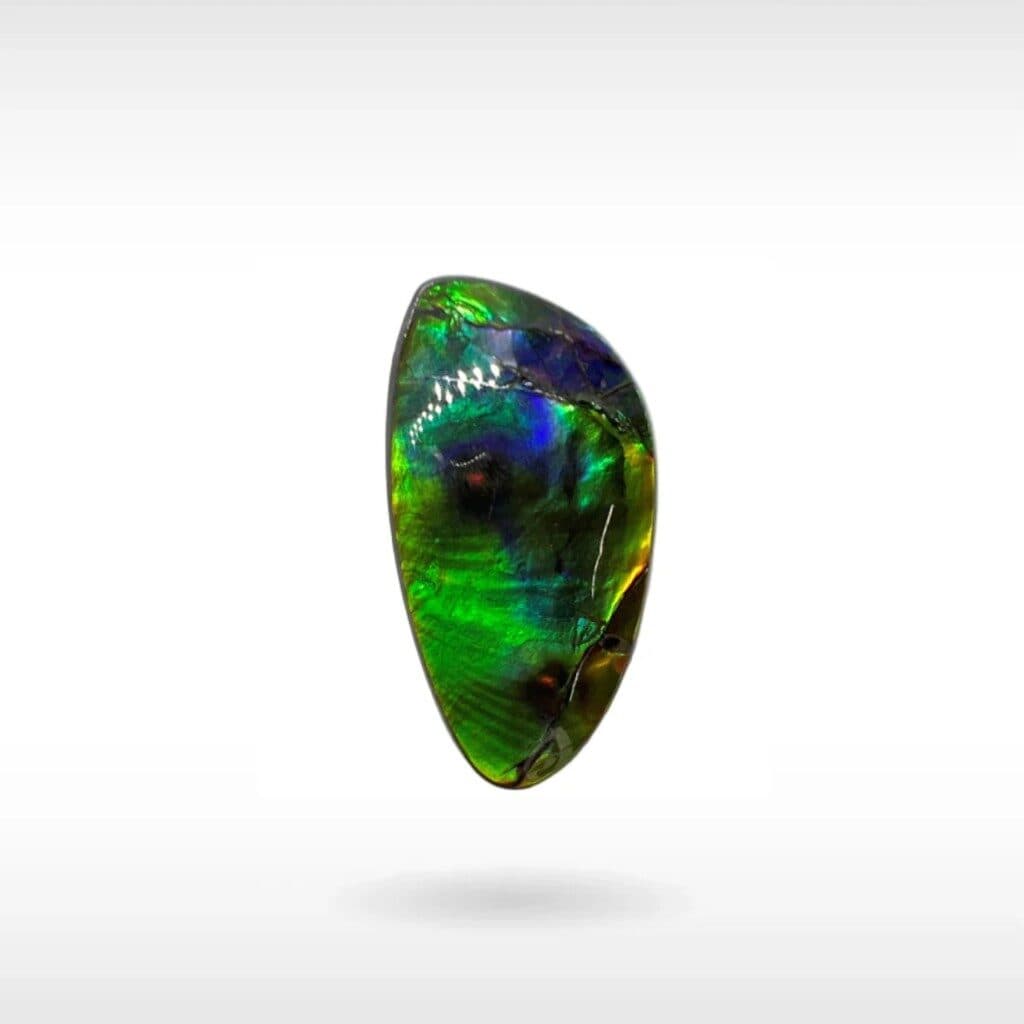
The Seven Color Gemstone
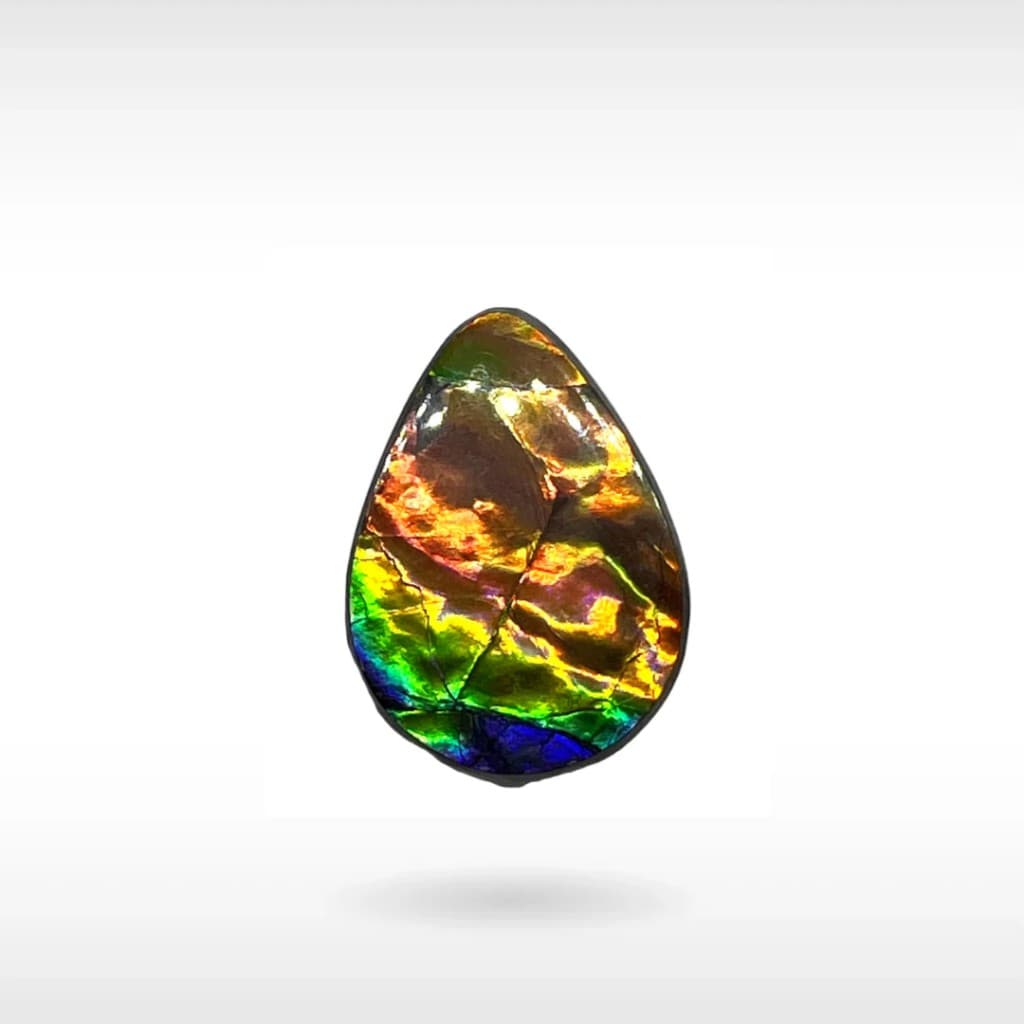
There are seven hues that ammolite can show: red, orange, yellow, green, blue, purple, and pink. The lower value ammolites show just one or two colors which have a dull brilliance while bright rainbow-colored examples fetch much higher prices.
Grewal explained that top colored blue and purple hues have historically been the rarest to uncover. However, she noted that the Lethbridge deposit has started to provide a limited number of bright pink ammolites that are greatly desired.
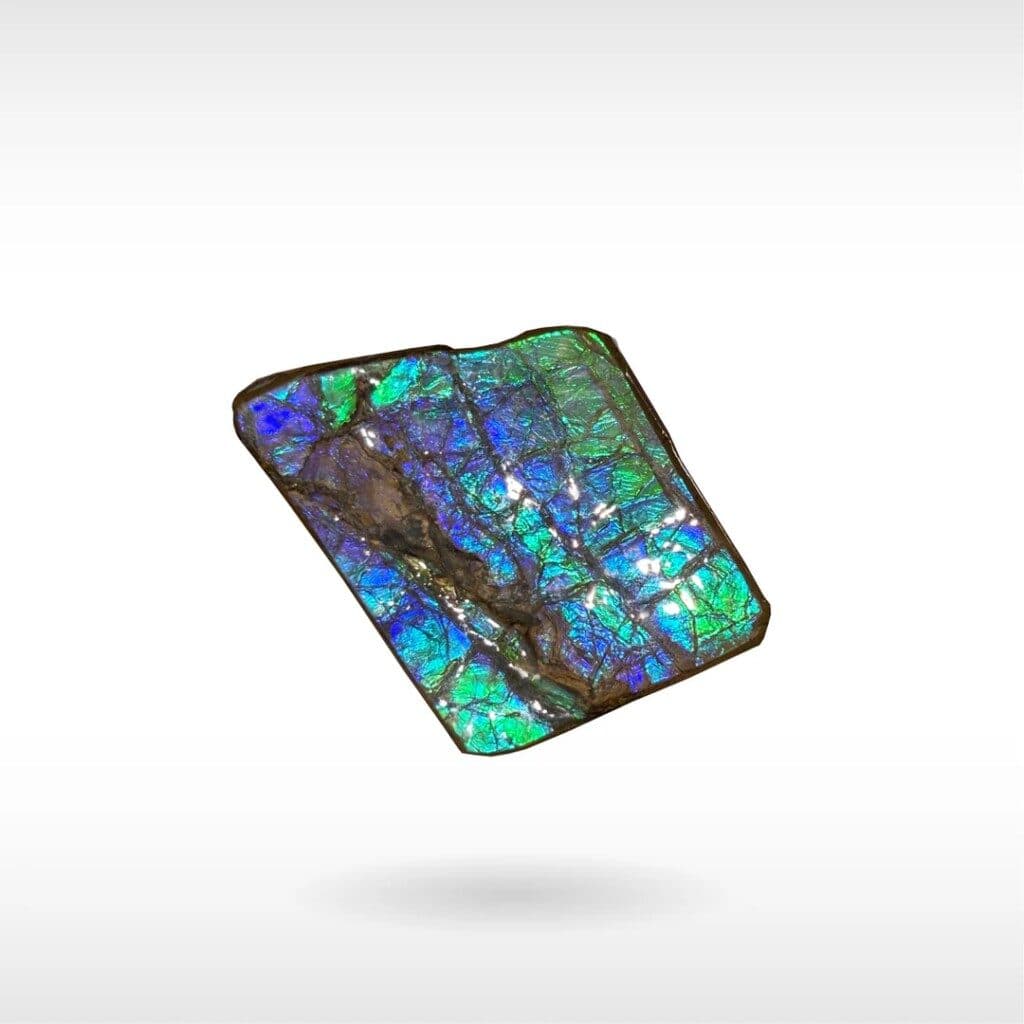
The GIA reports that industry professionals have developed a handful of trade names to describe various appearances of ammolites. If you see the term "sheet" describing the color, that means that there is minimal fracturing, and the color is spread out uniformly over a flat, relatively uninterrupted surface. Alternatively, "fractured" ammolites do have small cracks which create smaller cells of color expression that some liken to stained glass windows. There are also several informal terms describing the distribution of color including "dragon skin" which refers to a color expression that appears similar to reptilian scales and "paint brush" which looks like the strokes of a brush.
Clarity Features Add Character
The ammolites mined by Korite have been buried for about 70 million years. It should come as no surprise that the sheer weight of the overlaying stone and soil caused many of the fossils to crack. In fact, Grewal stated that finding a specimen or gem without any fracturing is practically unheard of.
As these lines are standard, they don't decrease the value of individual gems. Rather, Grewal says that attractively placed features are prized - "Lines are the natural characteristic of the gemstone. That is what adds value and character."
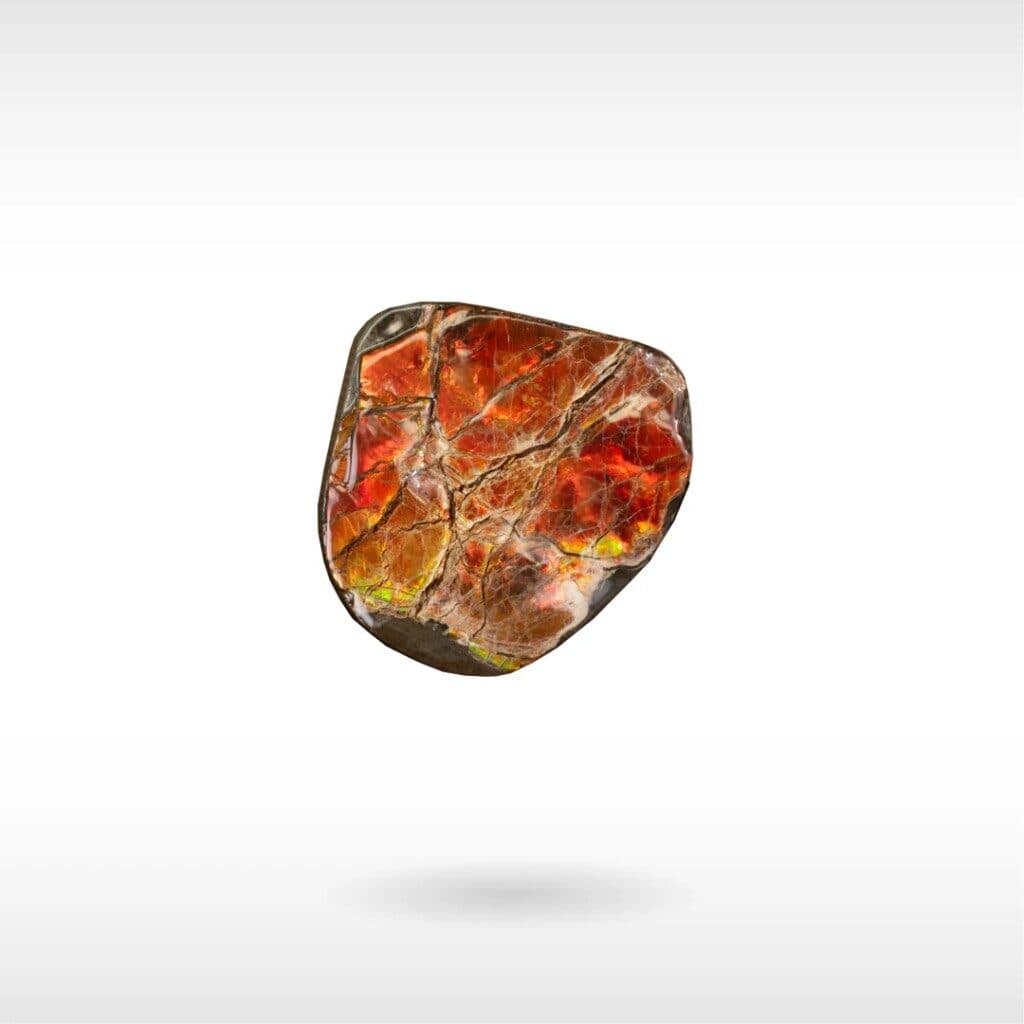
Size and Shape Do Effect Value, But Not by Much
Being buried under heavy ground for so long, larger ammolite pieces are rarer than smaller sized gems. As with other gemstones, rarity equals higher value and a large ammolite will be valued greater than a similar looking but smaller stone.
However, Grewal said that size has the least significant impact of the four primary characteristics. In fact, it is not unusual to find ammolites that have to be carefully shaved down in size so that they can be set in jewelry. "Rough gems are often between 2 and 2.2mm thick. That is our sweet spot. Some naturals are as thick as 3mm which makes them too heavy to be used as gemstones so we will shave down the back layer."
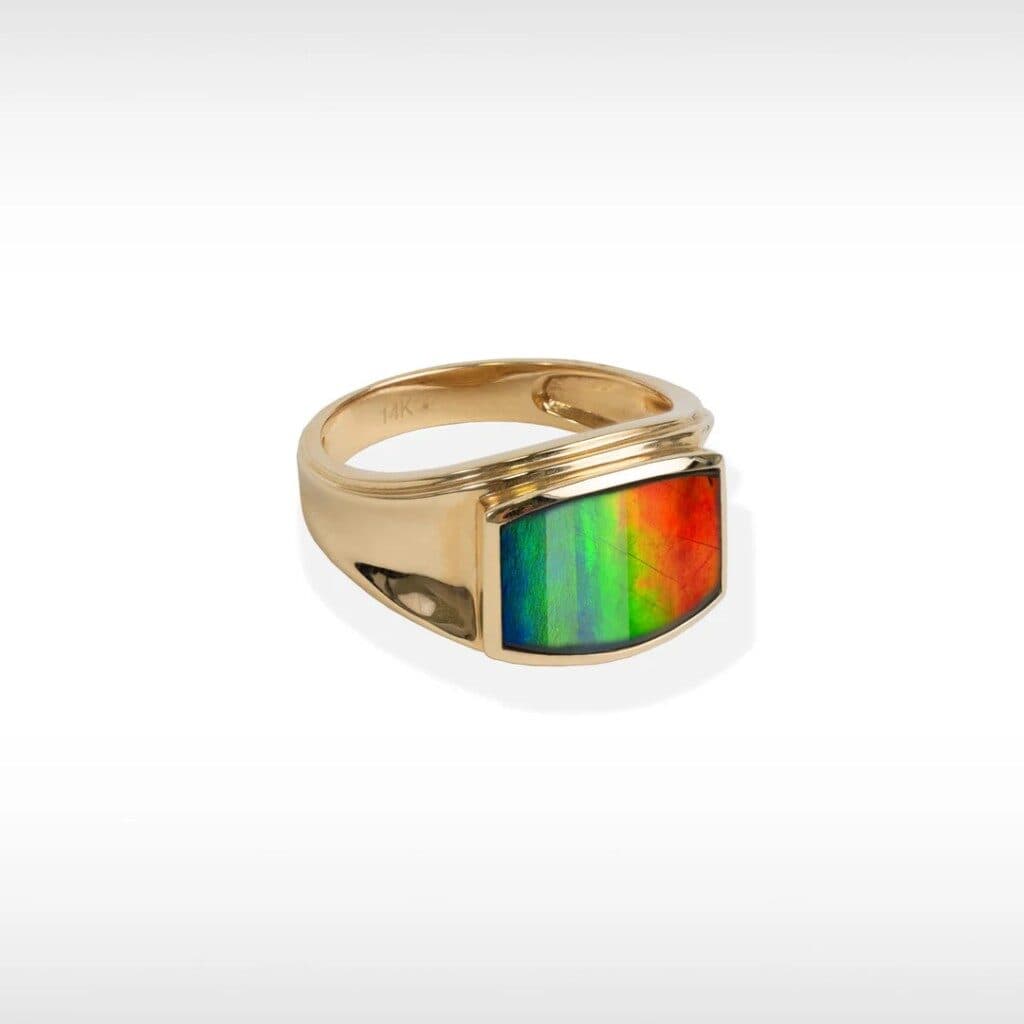
At the other end of the spectrum, ammolites that are so thin that durability becomes a concern may be made into a doublet featuring a clear upper layer made of something transparent like a synthetic quartz or synthetic spinel. This protects against both breakage as well as scratching which is a concern as ammolite falls low on the Mohs scale with a hardness of about 3.5. It is also possible for a hard base to be added to create a triplet gem. The GIA reports that ammolites that can be described as "sheet" in particular tend to be delicate and require reinforcement of some kind.
Freeform Cuts Are the Norm
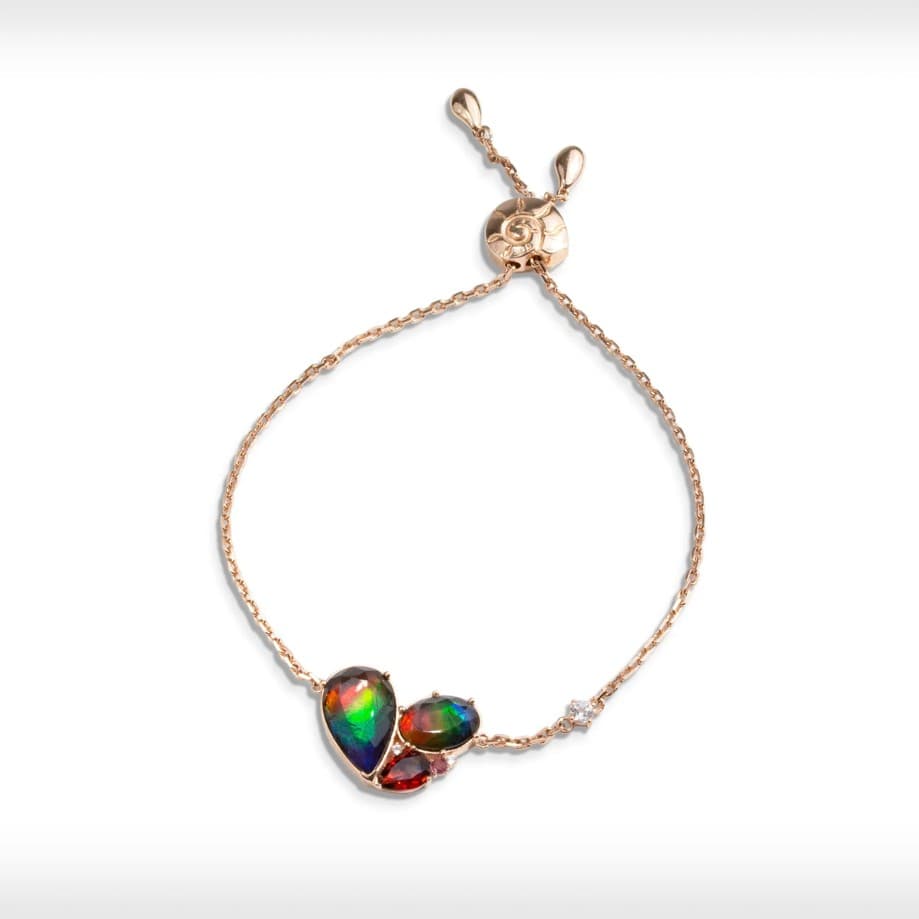
The primary goal of ammolite cutters is to maximize the color expression, not created calibrated gems with standard proportions. You are not going to find a collection of loose matched ammolites suitable to be fitted in a pre-made setting. Rather, the organically shaped stones are set in custom mountings created just for them.
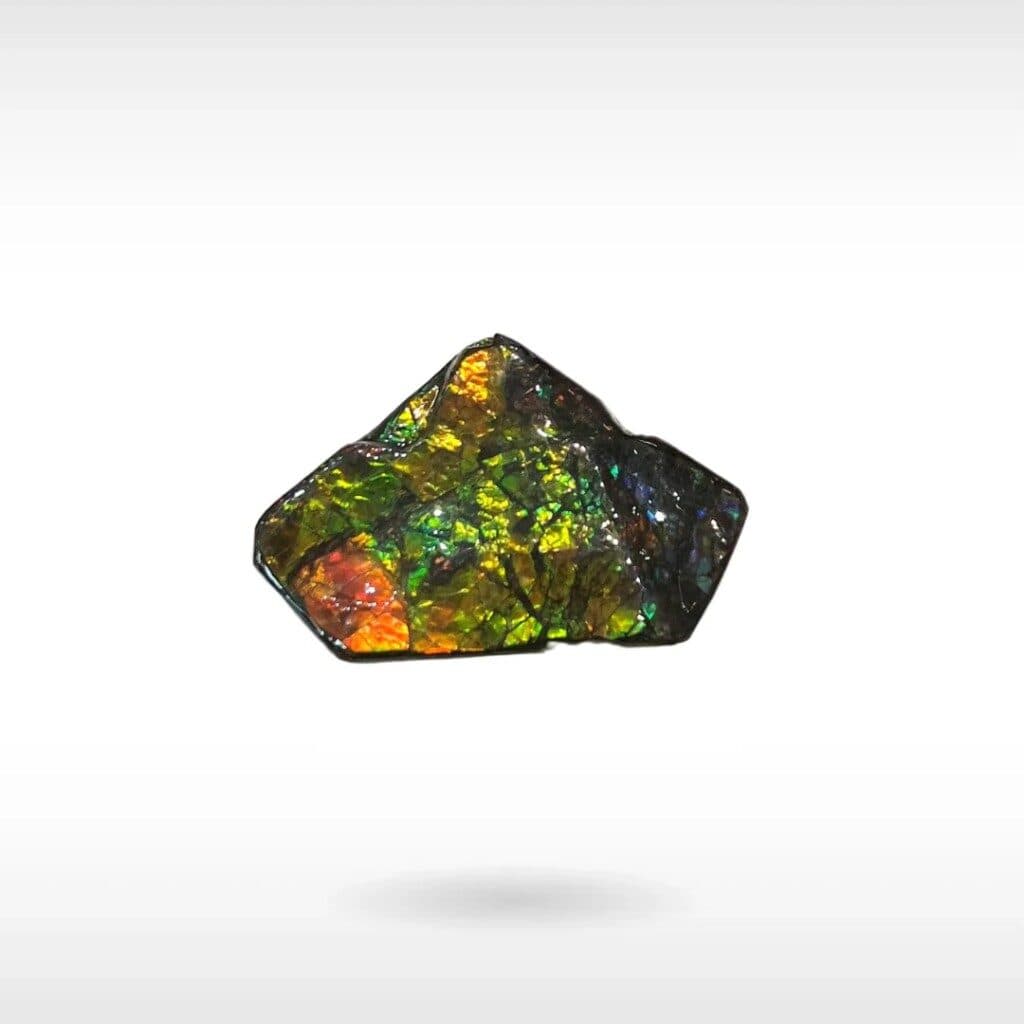
Grewal stated that about 80% of the gems recovered by Korite are set by their own jewelers and sold as finished jewelry. This percentage is significantly lower than it has been in past years as independent jewelers and jewelry brands have begun seeking out loose gems to be set in their own custom designs.
A Tale of Three Species
Three separate species of ammonite are recovered from the Bearpaw Formation - Placenticeras costatum, Placenticeras intercalare and Placenticeras meeki. As all of these creatures are from the same family, appearances are similar, but each species does have their own range of characteristics. For example, the surfaces of P. costatum and P. meeki are flattened and smooth. P. intercalare is the rarest variety, but it has unique "horns" which creates a texture on the surface of the ammonite which is considered highly desirable. Ammolites with this feature are assigned high values.
Ammolite Quality Grading Standards
It is extremely difficult to create and enforce a standardized, globally recognized grading system for gemstones, with diamonds being the notable exception. However, as the vast majority of ammolites are mined and processed by KORITE, their four-tiered quality grading system has come to be accepted by many jewelers who work with the material.
As we explored above, the characteristics that are considered when grading an ammolite are brilliance, color variety, and clarity. Here are the qualifications for each grade as detailed on the Korite website beginning with the most desirable.
- AAA - Stone will display 3 or more vibrant colors from any angle. Fine matrix lines may be present.
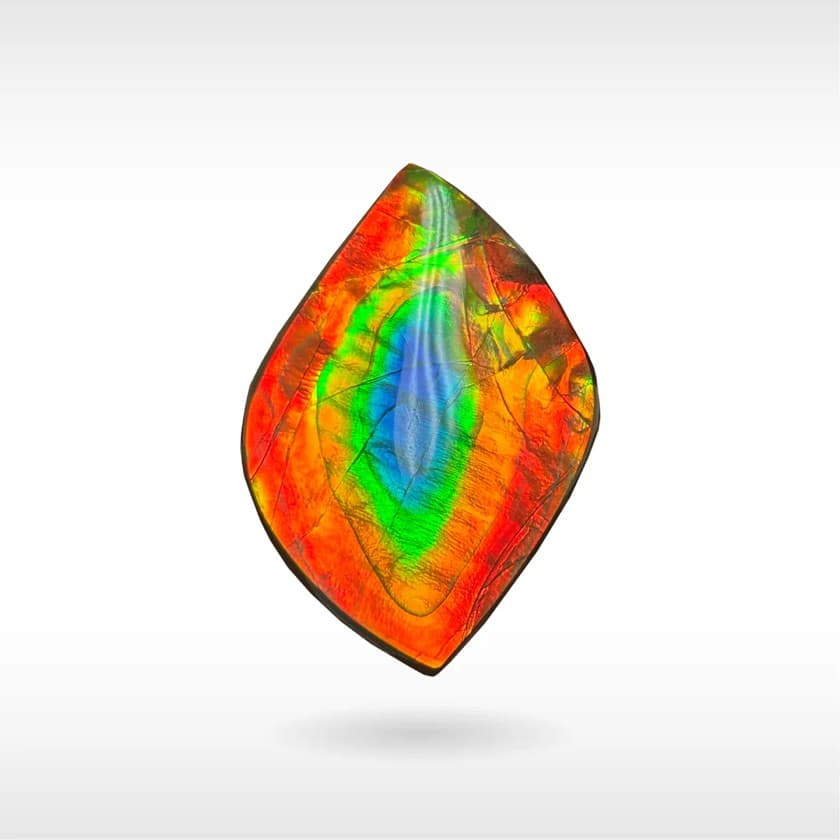
- AA - Stones will display 3 or more bright colors. Matrix lines may be present.
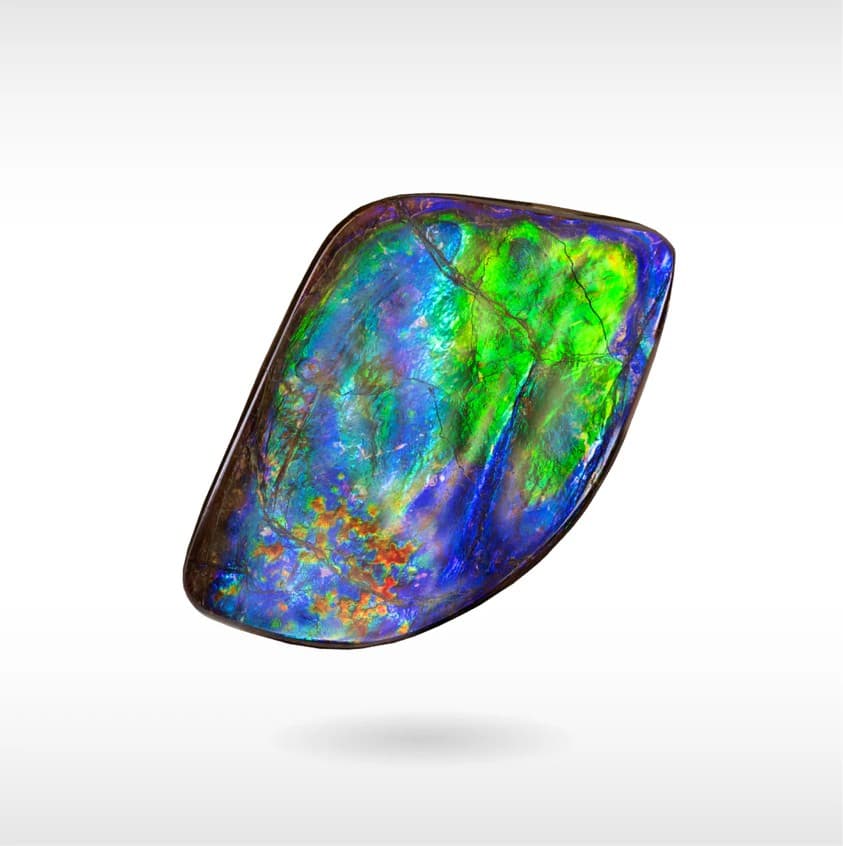
- A - Stones will display 2 or more colors in brighter tones than standard. Matrix lines may be present.
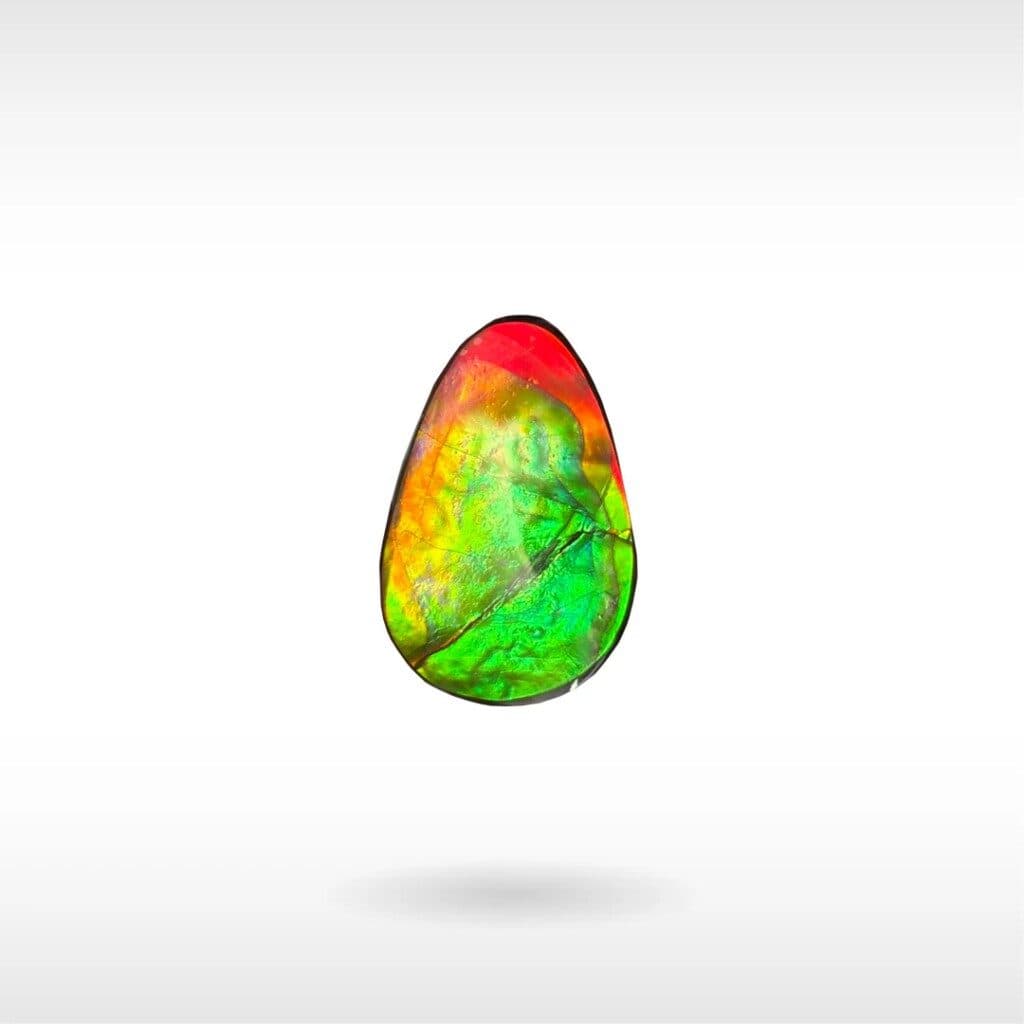
- Standard - Stones will display 1-2 colors and can often include matrix lines.
Every Korite ammolite is viewed by three different experienced graders to ensure consistency. Grewal noted that very few ammolites have the particular collection of qualities necessary to earn a AAA or AA rating. In fact, she says that only about 5% of their annual production are sorted into the two highest tiers combined. Those special gems are associated with the highest values.
Grewal cautioned that, since there is no governing body that enforces these standards, there are some sellers who use their own rating system. Unfortunately, some of these alternative grading standards utilize similar ranking labels like "AA" or "A+" which is confusing to buyers. When purchasing an ammolite from secondary seller, make sure that you understand the grading scale being used.
Korite Maintains a Stable Supply Chain Based on Public Interest
Korite has the ability to mine almost all year round, an impressive feat considering the harsh Canadian winters. However, the extent of their annual output is dictated not by environmental conditions, but by demand for the stone. Grewal said that the Covid pandemic greatly affected the ammolite industry, with few seeking out the niche gem. In lean years, only about half an acre was excavated. Alternatively, when interest in the gem is higher, Korite can mine up to three acres annually. Grewal said that they have received quite a bit of interest recently and are currently ramping up production.
As for how many ammolites are preserved in the Bearpaw Formation, no one is really sure about the magnitude of the hidden quantity. Grewal said that when she joined the Korite team in 1991, it was thought that there was only about fifteen years' worth of gems left in the ground. Now, more than thirty years later, there is no indication that the supply of ammonites and ammolites is running low, and Grewal is not concerned about the supply, stating "we are not going anywhere in our lifetime. There is nothing to worry about from that perspective."
Related Articles
Is Turquoise Expensive?
Risk Management and Gem Buying for Profit
Gemstone Buying for Profit: Budget and Basis
Gemstone Sourcing Guide
Latest Articles

800 Years of Mogok: A Celebration in Tenuous Times
What is the Average Gemstone Faceting Yield?
Pyroxmangite Value, Price, and Jewelry Information
How to Identify Emerald Simulants and Synthetics

Never Stop Learning
When you join the IGS community, you get trusted diamond & gemstone information when you need it.