Is Aquamarine Expensive?
7 Minute Read
Aquamarine gemstones are the physical embodiment of serenity. Exhibiting a gentle color of either pure blue or blended blue and green hues, the term "aquamarine" is Latin for "water of the sea" and ancient sailors believed that it had the power to tame the ocean's waves. This variety of beryl is also famous for its pristine clarity and large crystal size. Fortunately, aquamarines are a relatively common gemstone with abundant deposits found all over the world which helps to keep per-carat values both stable and affordable. With all of these factors at play, let's explore which most heavily influence the value of individual gems.
at Blue Nile
The Primary Value Characteristic for Aquamarine is Color Expression
In the world of gemology, the concept of color is split into three categories: hue, tone, and saturation. Hue is the most straightforward of the three, simply referencing the hue(s) that are expressed like blue or greenish blue. Tone describes how light or dark the gem appears while saturation levels define the intensity of the expression of the hue(s).
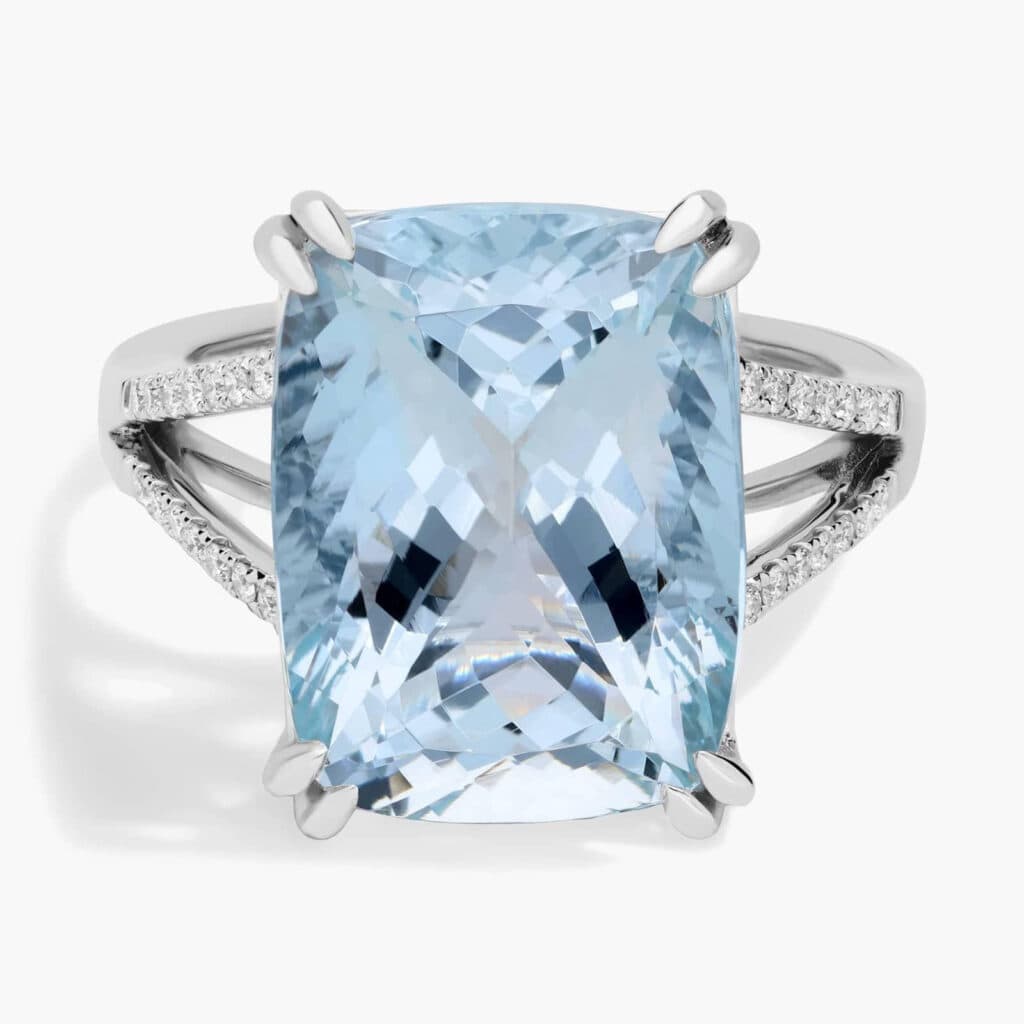
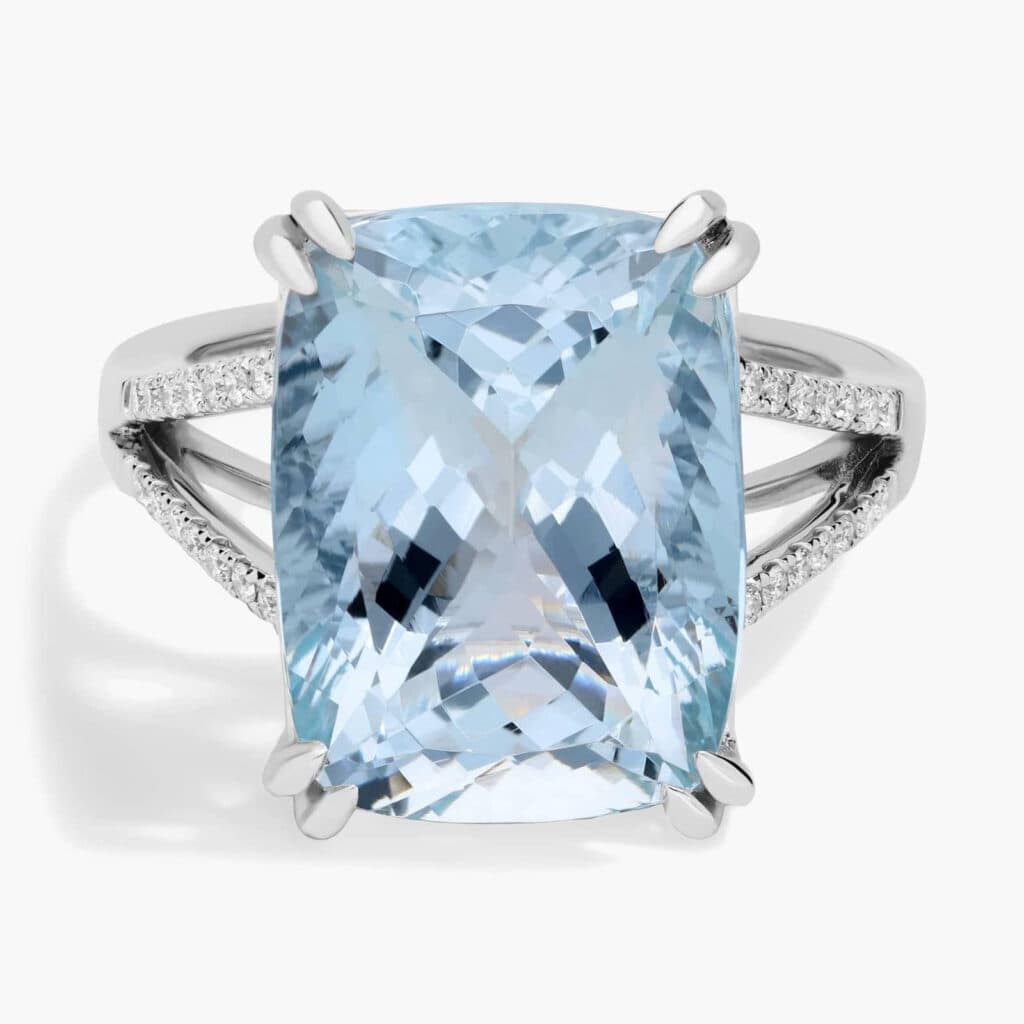
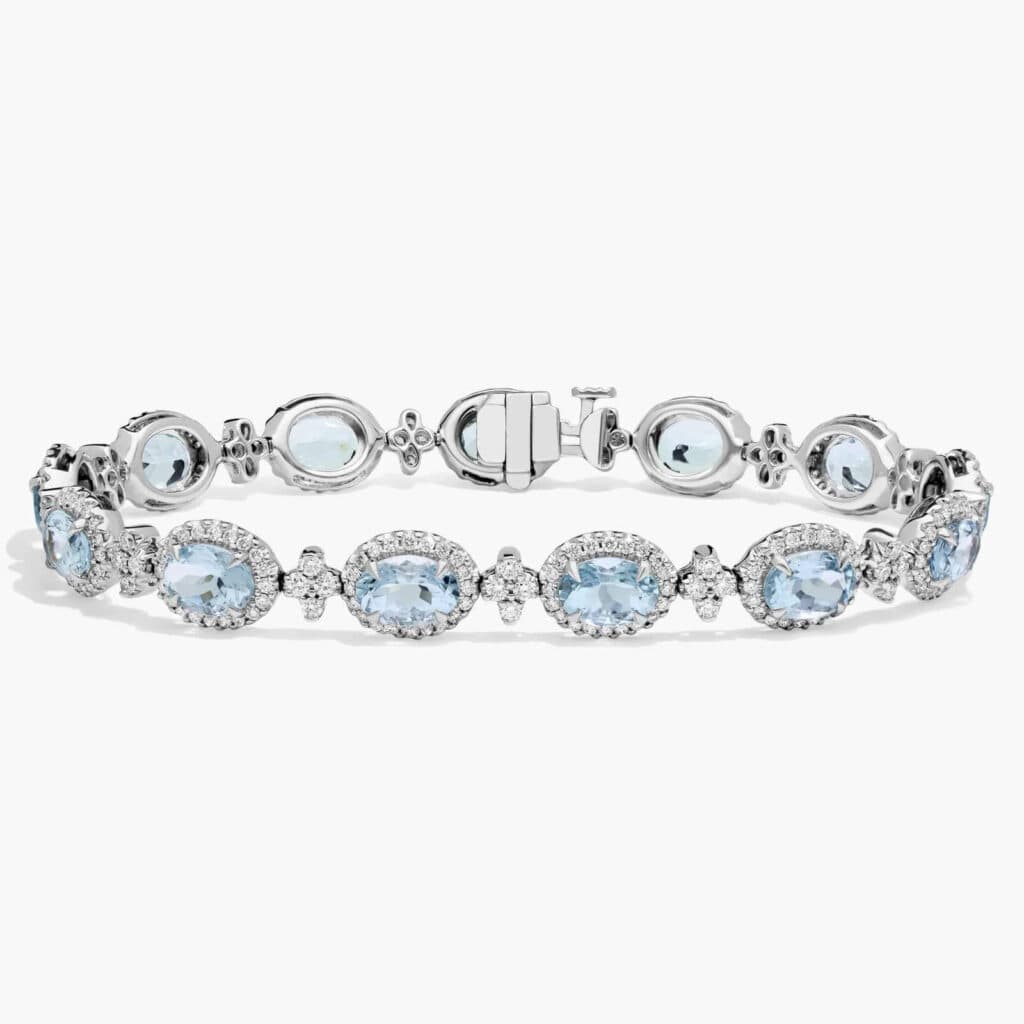
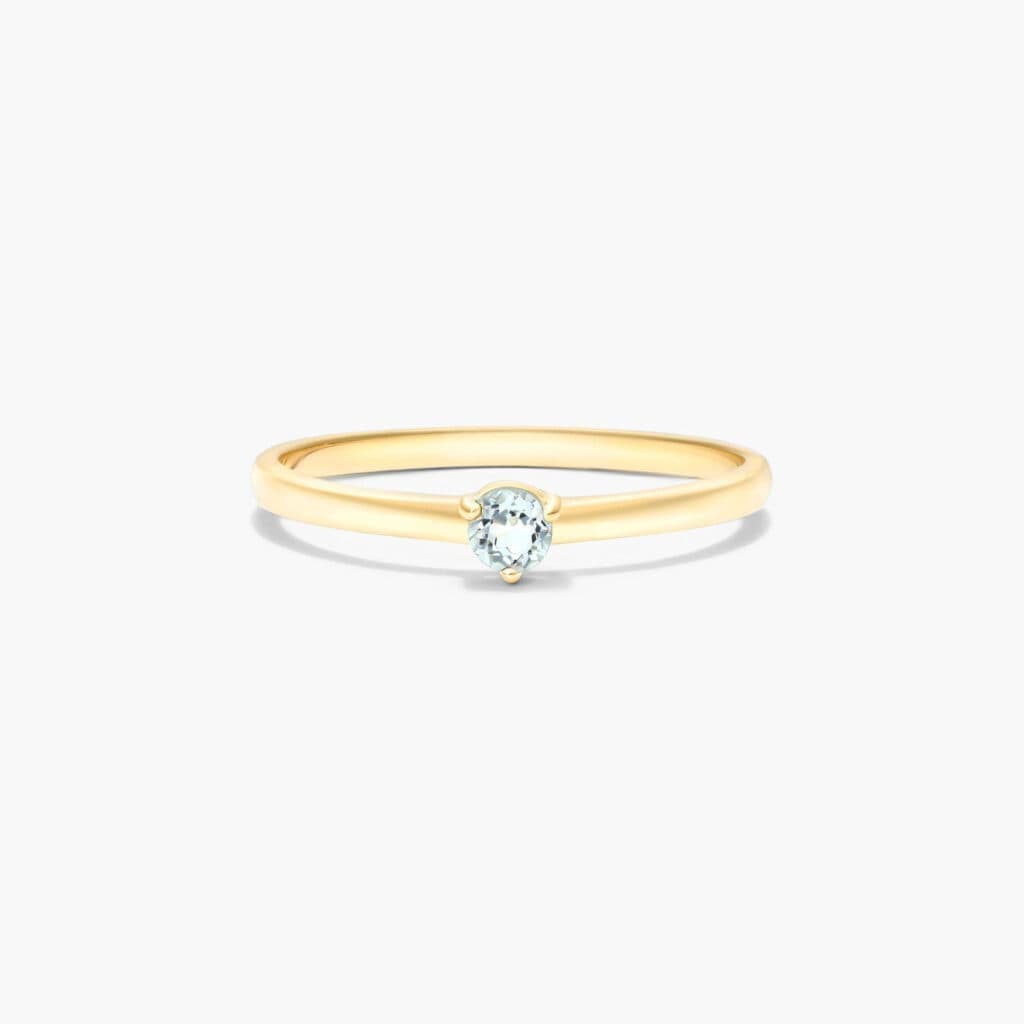
The appearance of aquamarine gems is, by nature, a gentle one. Neither the tone nor the saturation ever reaches what would be called a strong expression and the hue ranges from a pure blue to combination that is equal parts blue and green. The exact color that is most sought after and has the highest per-carat value is a moderately strong saturation paired with a medium-dark tone that shows pure blue to slightly greenish blue hue(s) which is evenly distributed throughout.
As the span of color expression is quite restricted, the value of individual gems is heavily affected by the slightest of differences. Aquamarines with tones and saturations that are too light or pale will cost much less than gems with more intensity. Considering that aquamarine is not rare, jewelers and collectors can afford to be highly selective and will sort through many gems to find the one stone with their favored combination of characteristics.
at Blue Nile
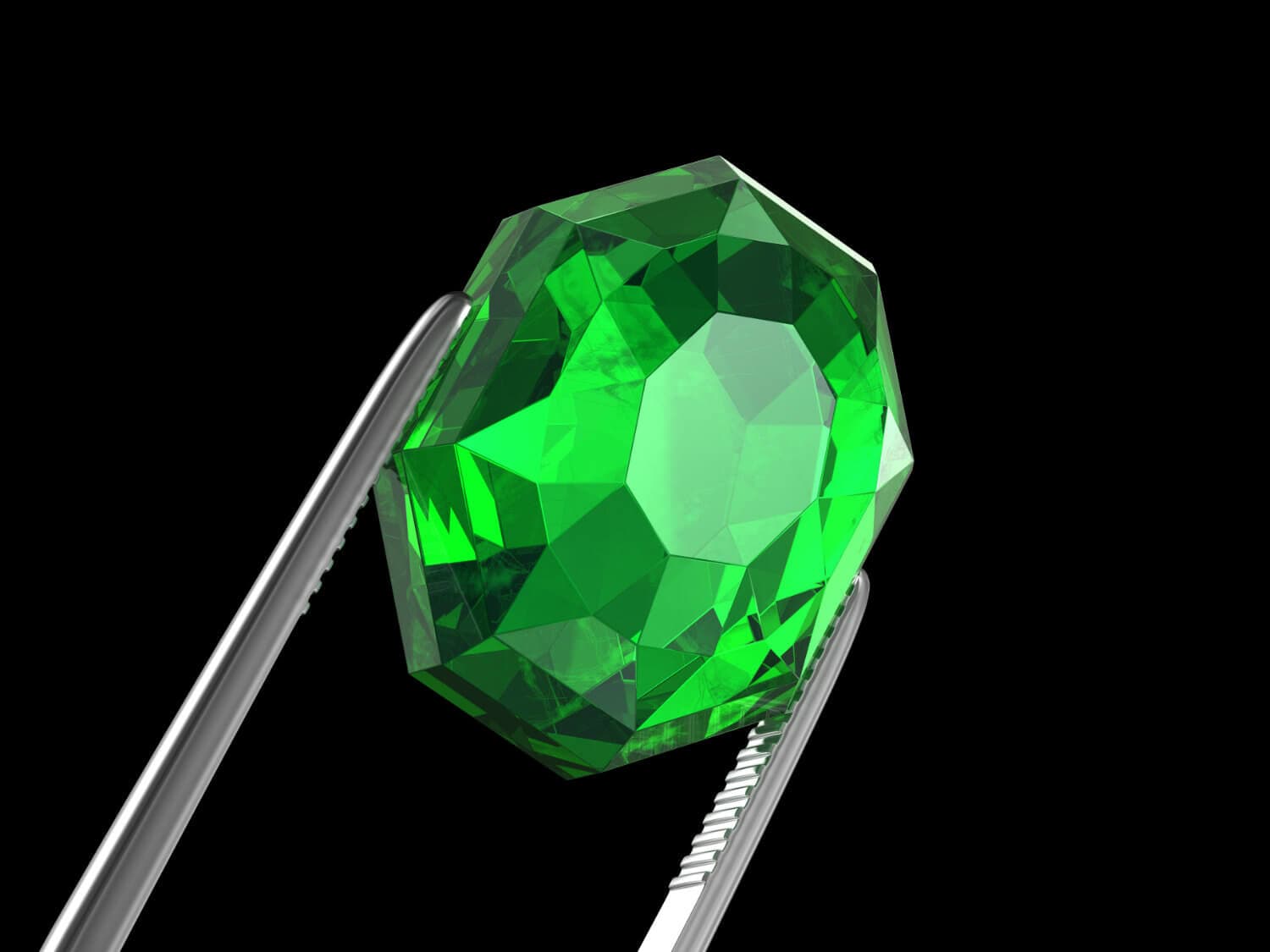
We should note that there is an upper limit to the tone of aquamarines which show a significant contribution of a green hue. When the tone becomes strong enough, the crystal can no longer be categorized as an aquamarine. Rather, it becomes an emerald, a mineralogical cousin of aquamarine. Deciding how gems whose tone lies close to that line are classified drastically affects the value of gemstones. A dark aquamarine will be valued significantly lower than a pale emerald.
at James Allen
Large Crystal Size Allows Cutters to Improve The Apparent Color Expression
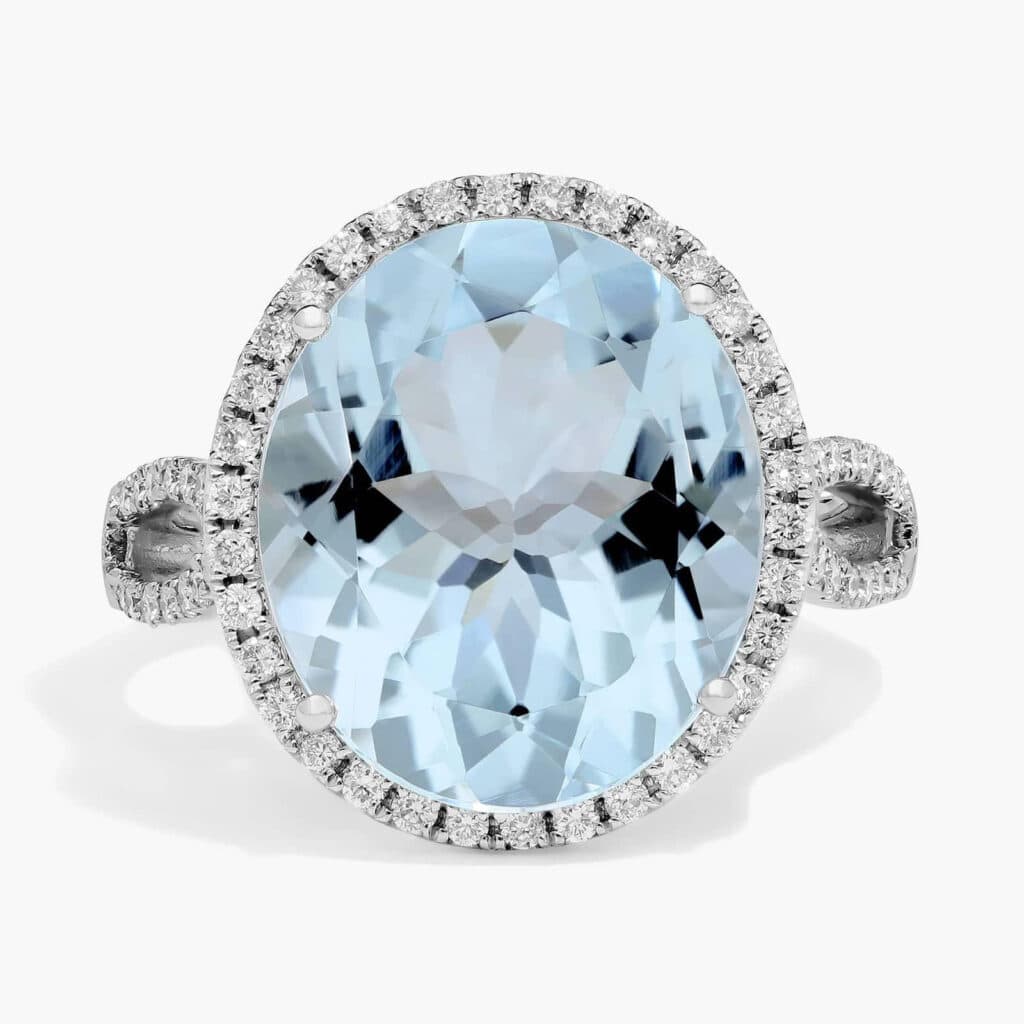
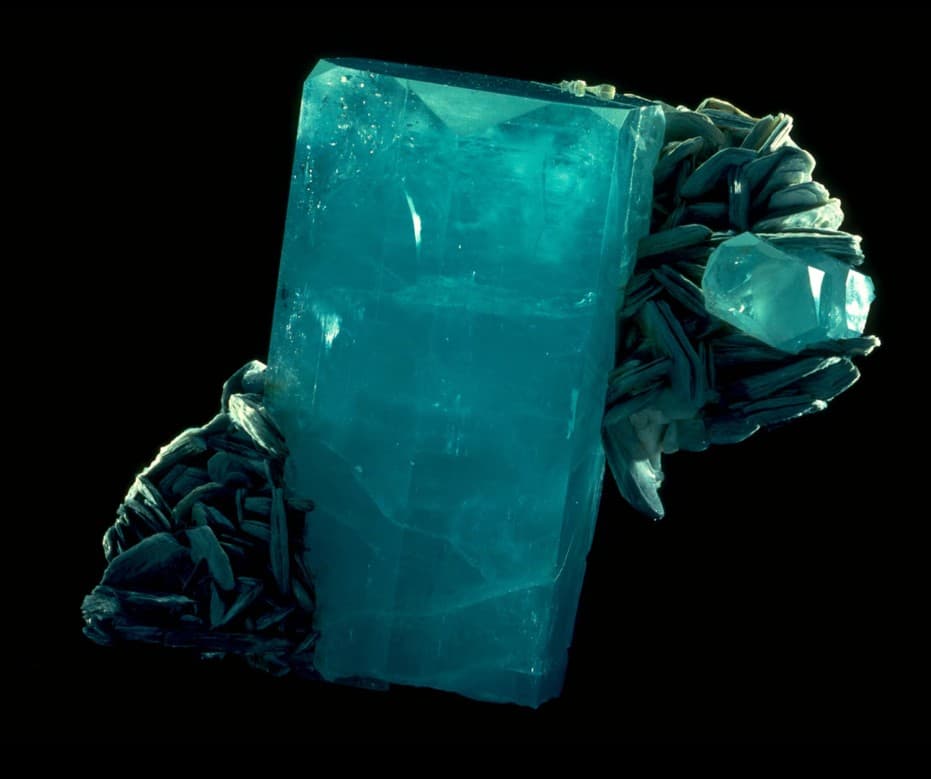
Aquamarine crystals can grow to very large sizes which grants a great deal of freedom to cutters. Gem-quality crystals weighing up to a hundred pounds can be carefully faceted into precision calibrated shapes, fashioned into large stones with unique outlines, and even carved into figurines. In fact, many aquamarine crystals have the potential to yield gemstones that are too large to be used in jewelry. A weight of twenty-five carats is usually the maximum size that faceted stones will be made into.
at Blue Nile
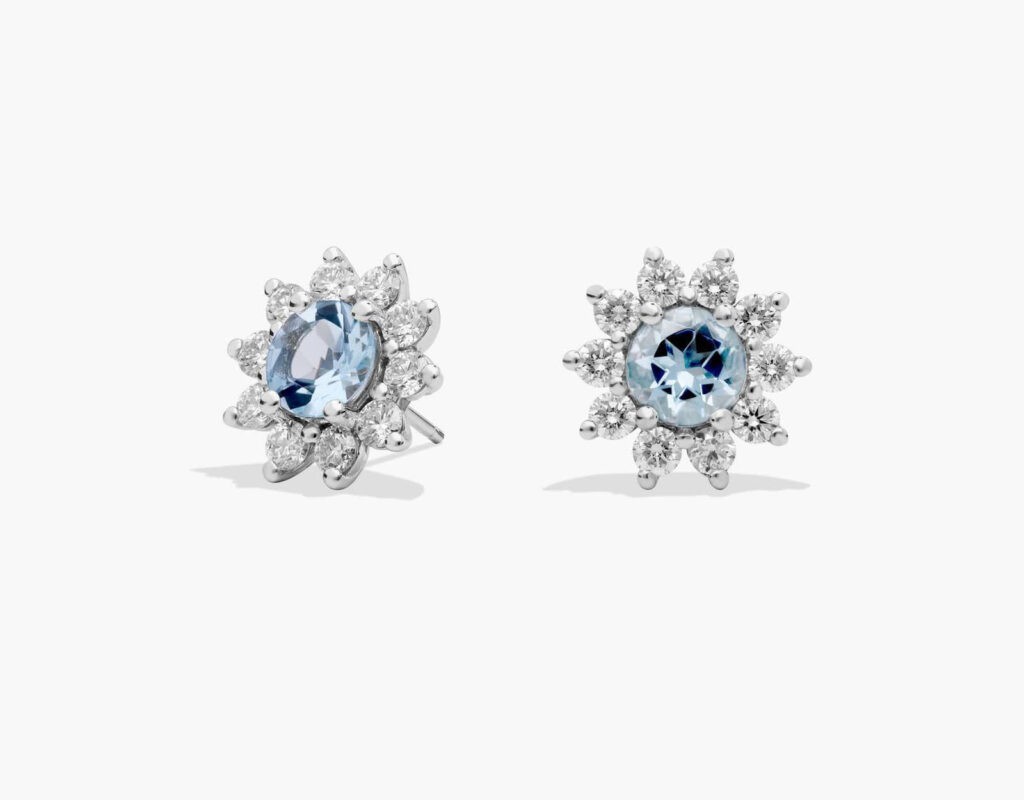
As large raw aquamarines are commonplace, the weight of an individual gemstone is not an important value characteristic. You will see small aquamarines of good color valued much higher than large paler stones. However, large raw crystals give cutters more options when faceting and a thoughtfully considered cut will influence the color expression.
at Blue Nile
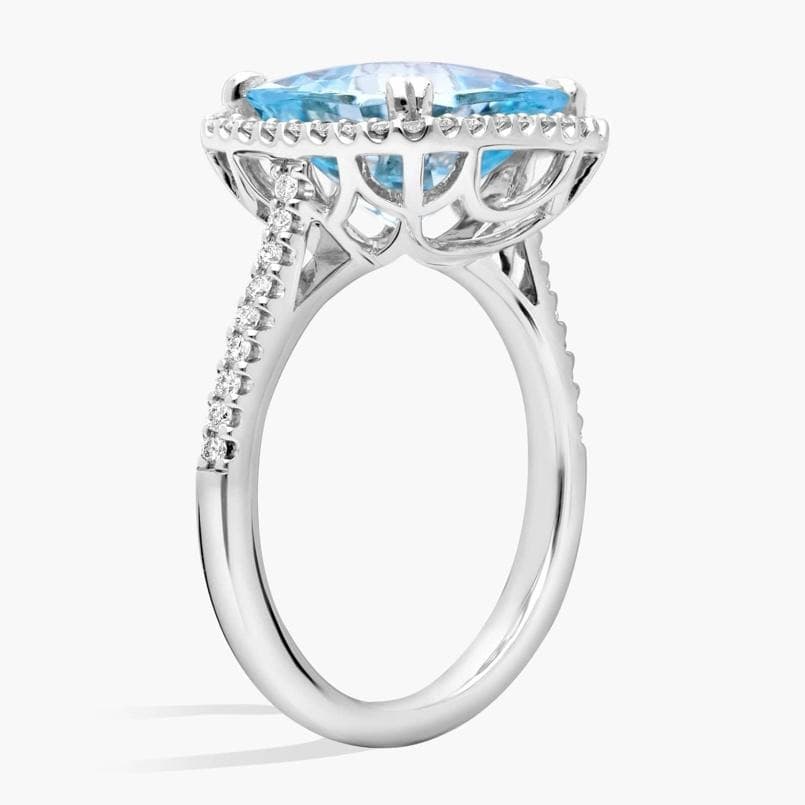
When crystals are pale, for example, cutters can choose to leave the depth larger than is typical which will concentrate color. Also, should the crystal have any undesirable color zoning, cutters can either work around it or orient the upper face of the gem so that the zoning is minimized. Aquamarine crystals are also pleochroic with one viewing direction showing a markedly paler color than the other so cutters will orient their gem so that the more concentrated color shows through the table facet.
at Blue Nile
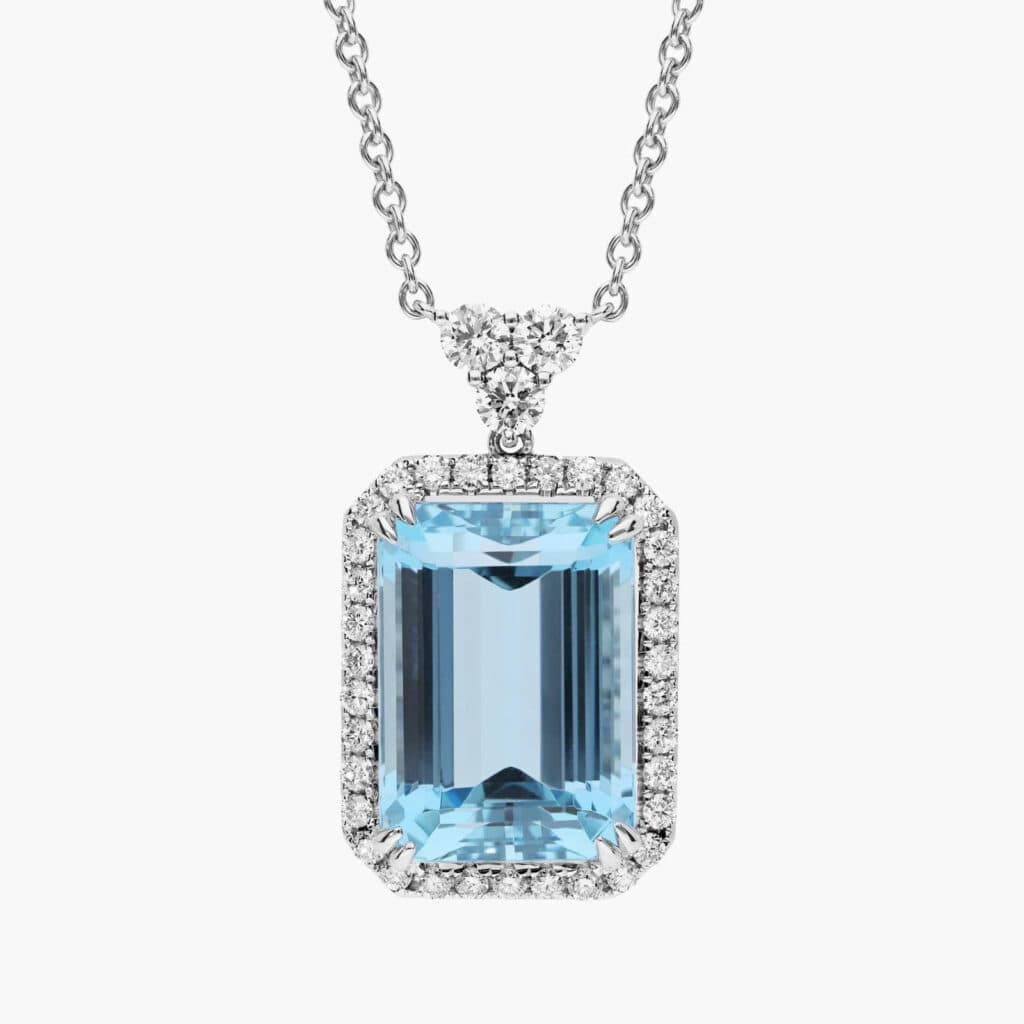
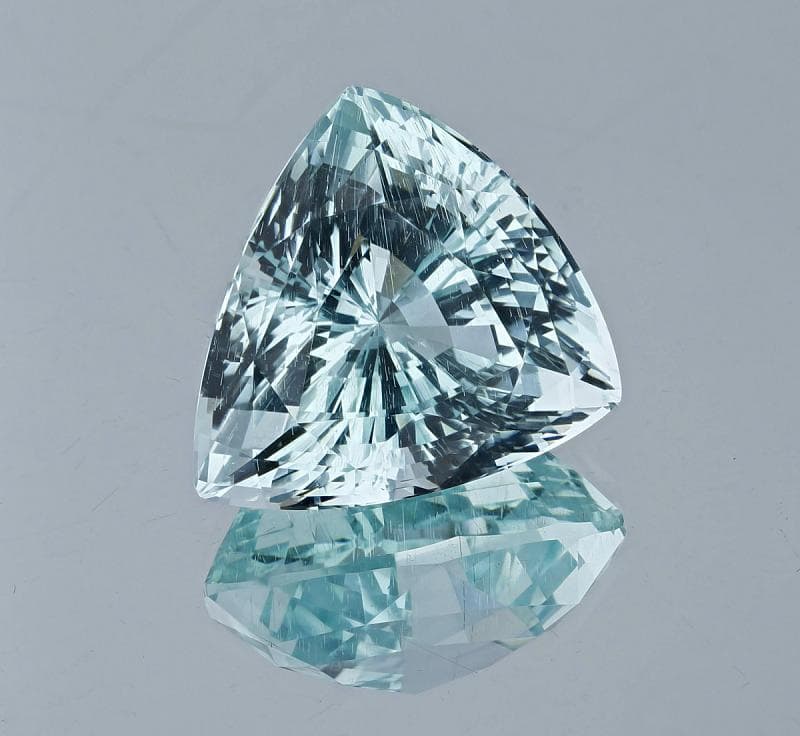
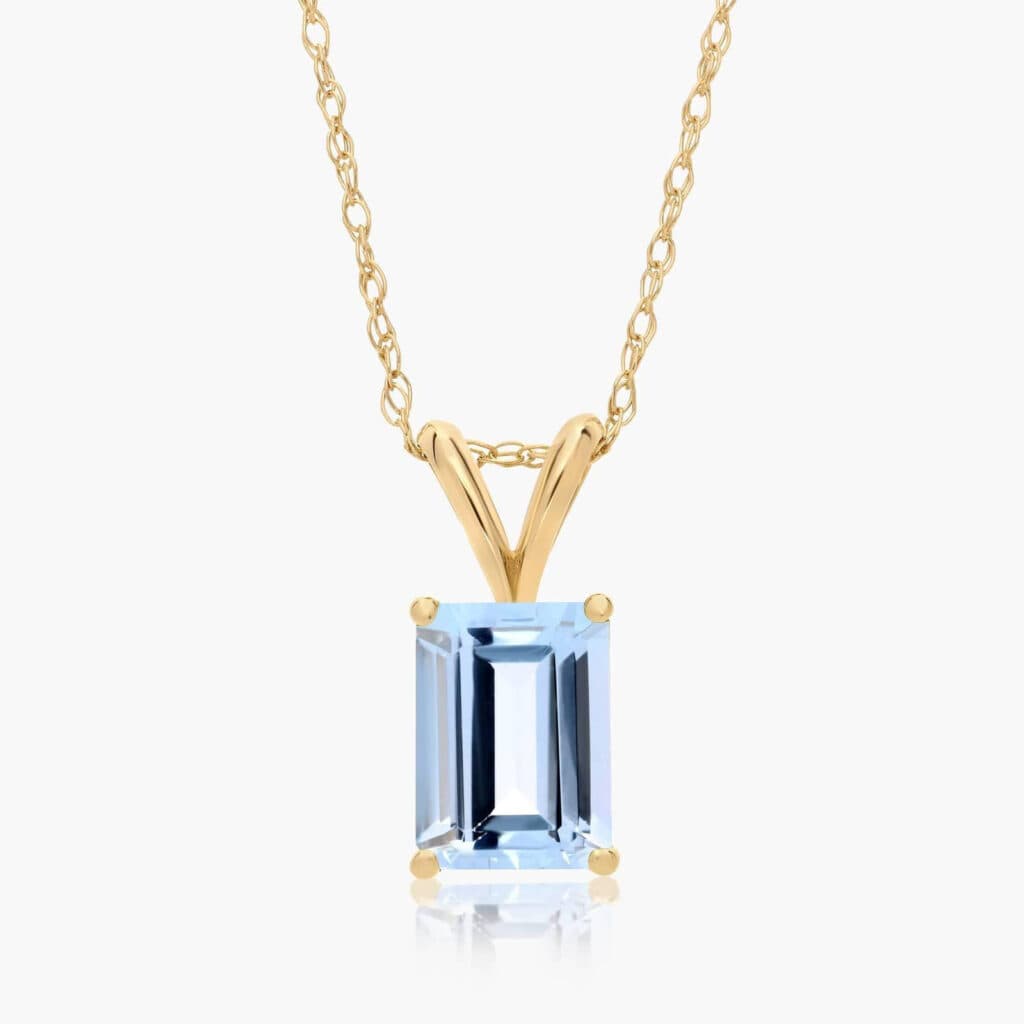
In order to create higher value stones, cutters will opt to sacrifice carat weight to achieve maximized color vibrancy. Round and oval cuts are the favored brilliant cuts while the long step facets of an emerald cut show off both size and clarity.
Collectors Seek Out Clean Stones
Unlike their emerald cousin which is famous for its often-elaborate clarity characteristics, aquamarines are usually eye-clean. There are two principal reasons for this: crystals naturally don't have many inclusions, and the availability of large sized crystals allows cutters to simply discard included material.
at James Allen
That is not to say that there is no place for gems with inclusions. There are some rare aquamarine crystals which have an abundance of liquid inclusions that are aligned so that an attractive cat's eye effect is created. Also, highly included material with clouded transparency can be fashioned into cabochons and artistic carvings as well as creative custom jewelry.
Some Aquamarine Deposits Have Distinctive Features That Are Desirable
There are thousands of aquamarine mines around the world, but you are not likely going to see provenance listed as the identity of individual aquamarine deposits doesn't significantly influence the value of a gem. That being said, some locations are associated with particular characteristics that do influence value.
Brazil - Many of the largest aquamarine crystals in the world are found in Brazil. Not only is the size of these gems impressive, but a high proportion have excellent clarity. Since they were discovered in the early nineteenth century, millions of carats of gem-quality aquamarine have been recovered. Although no official records are kept, it has been estimated that about 5% of the Brazilian aquamarine rough can be formed into top-quality gems with a dark blue color.
China - China has vast quantities of aquamarines that are known to be both small and pale. These gems tend to have low per-carat values and are most often found in commercial-grade jewelry.
Pakistan - Aquamarines with beautiful pristine clarity have been found in the mountains of Pakistan. These gems tend to be lightly colored with delicate blue or greenish blue hues, but there are some pockets with darker blue stones whose color is sometimes described as "inky blue".
African Nations - We spoke above about faceted aquamarine gems usually cut to be twenty-five carats or less for practical reasons. At the other end of the spectrum, since aquamarines have a soft color, gems weighing under five carats tend to be overly pale so finding small vibrant gems can be a challenge. However, the aquamarines from various African countries are known for their darker color expression which allows for small stones to retain an impactful appearance that buyers consider valuable. Madagascar, Mozambique, and Nigeria in particular are associated with dark aquamarine rough that can be cut to under five carats.
Heat Treatment is Routine
Aquamarines are one of many gemstones species whose appearance can often be improved with heat treatment. Specifically, heat enhances the blue hue while minimizing green and removing highly undesirable yellow and brown colors. Gems are heated to between about 482°F to 1292°F for varying lengths of time depending on the individual stone. Should any problematic liquid inclusions be present that might react negatively to the treatment, gems will be exposed to lower levels of heat over a shorter time span. Usually, cutters will facet gems before the heating process is performed.
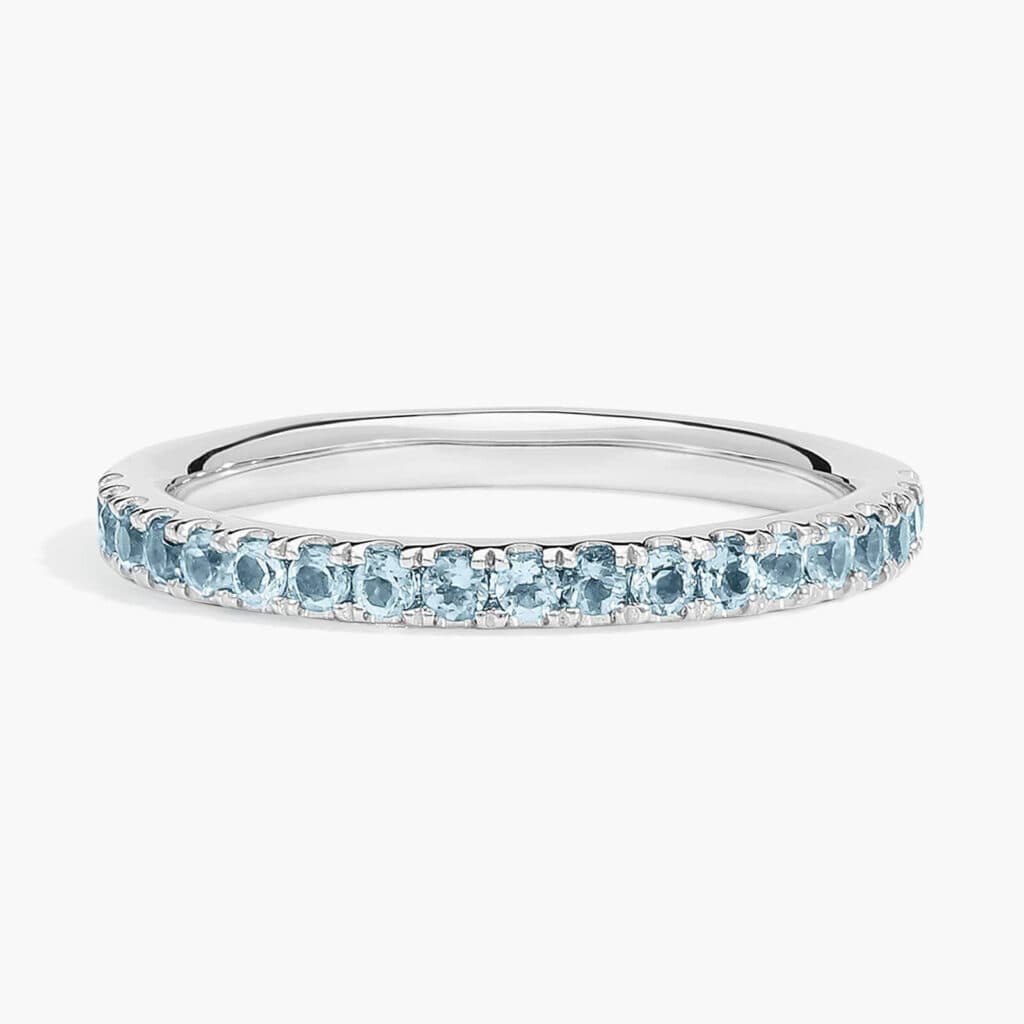
at Blue Nile
While heat treatment is considered standard practice and can add value, not all aquamarines gems are processed. There is a subset of buyers who prefer the blended green blue color, so some stones are left with their original, untreated state.
Related Articles
Product Review, Opal Smart Chart
Managing Your Time Horizon for Gem Buying and Selling
Top Five Gemstone Investments for 2025
Advice for Determining Gemstone Value
Latest Articles

800 Years of Mogok: A Celebration in Tenuous Times
What is the Average Gemstone Faceting Yield?
Pyroxmangite Value, Price, and Jewelry Information
How to Identify Emerald Simulants and Synthetics

Never Stop Learning
When you join the IGS community, you get trusted diamond & gemstone information when you need it.