5 Minute Read
On October 19, 2025, a brazen daylight raid at Paris's Louvre Museum stunned the world: in well under 10 minutes, thieves snatched eight pieces of the French Crown Jewels from the Galerie d'Apollon and vanished. The operation—quiet, fast, and ruthlessly efficient—has already entered the canon of legendary art crimes. Today, with arrests beginning but many questions unresolved, one mystery drives headlines and conspiracy theories alike: where are the jewels now?
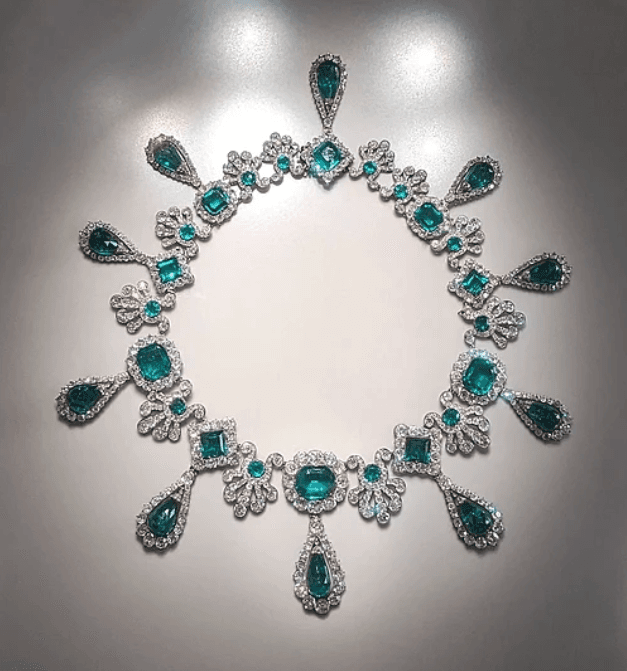
At roughly 9:30 a.m., during regular opening hours, four hooded intruders reached an upper-level Louvre window using a basket/furniture lift, forced their way inside, and moved straight to the Crown Jewels display. Within minutes, they cut or smashed cases, grabbed select items (including Napoleonic-era pieces linked to Empress Eugénie), and fled—reportedly using motorbikes to escape along the Seine. One spectacular artifact, Eugénie's emerald-and-diamond crown, was later recovered outside the museum—but damaged. The total value is widely estimated at ~$100-102 million (though the historical value is incalculable).
The Louvre closed for the day as forensic teams combed the Apollon Gallery, just a short corridor from the crowds that typically mass before the Mona Lisa. The stark lesson was immediate: even the best-known museum on earth can be hit—fast.
Authorities say eight pieces—high-profile, 19th-century pieces dense with diamonds, pearls, and colored stones—were selected. Their appeal to thieves is obvious: compact, high value, and globally recognizable. But jewelry also carries a dark advantage for criminals: unlike paintings, gems can be recut or broken up to launder identity and provenance. Gold, too, can be melted down. These facts, more than anything, fuel fears that pieces may already be altered beyond recovery.

In the immediate aftermath, the Louvre moved remaining jewels to the Bank of France for secure holding—an extraordinary step that underscores both the sensitivity of the collection and the museum's determination to avoid a repeat. At the political level, the heist sparked a security reckoning in France, drawing criticism across the spectrum and prompting renewed focus on modernization and staffing.
Scenario 1: Intact but Hidden.
High-notoriety jewels are famously hard to sell. Intact pieces could be parked in a private vault for years, re-entering the market far in the future via discreet intermediaries. This "deep freeze" strategy is common in major art crimes. INTERPOL listings and publicized images make immediate sale extremely risky.
Scenario 2: Broken Up or Recut.
The nightmare: the stones are cut out of the pieces and then repolished, recut, or reset to erase their origin. Diamonds and colored stones can be significantly modified so they can't be recognized; mounts can be melted for scrap. This path is brutal (all of the value is destroyed), but it's effective for laundering—especially if stones are moved through Eastern European or Middle Eastern hubs notorious for opaque gemstone flows. (Investigators in other cases have tracked similar routes.)
Scenario 3: The "Commission" Theory.
Less likely but endlessly discussed: a private commission by a high net worth individual, organized crime, or a hostile foreign government. A collector charmed by royal lore might sit on intact pieces indefinitely. Investigators usually view this as the exception, not the rule—but it can't be ruled out. (High-profile heists have seen both quick breakup and long-term hiding.)

Short answer: Authorities aren't saying—and may not know yet. The damaged emerald crown recovery suggests at least part of the haul was mishandled in flight or jettisoned to speed escape. Whether the remaining items are intact and hidden, already altered, or in transit remains the central question investigators are racing to answer.
Still, there's cautious optimism. Fast arrests often unlock networks—phones, vehicles, safe houses—that lead to stash points or fences. Combine that with INTERPOL's database and heightened customs scrutiny, and the odds of recovering at least some jewels improve over time. Major heist cases have seen dramatic returns months—or years—later.
Despite the speed and planning, the thieves did leave traces. Investigators gathered forensic evidence inside the gallery and from tools and vehicles linked to the escape. French anti-gang (BRB) and art-crime (OCBC) units coordinated with INTERPOL, which added the stolen jewels to its global Stolen Works of Art database within days—critical to flag attempts to move intact pieces.
Within a week, two suspects—both about 30, from the Paris suburbs—were arrested; one was intercepted at Charles de Gaulle Airport reportedly preparing to fly to Algeria. Authorities say the hunt for additional participants is ongoing. These arrests offer hope, but investigators have not (publicly) detailed any major recovery of the missing jewels.




When you join the IGS community, you get trusted diamond & gemstone information when you need it.

On October 19, 2025, a brazen daylight raid at Paris's Louvre Museum stunned the world: in well under 10 minutes, thieves snatched eight pieces of the French Crown Jewels from the Galerie d'Apollon and vanished. The operation—quiet, fast, and ruthlessly efficient—has already entered the canon of legendary art crimes. Today, with arrests beginning but many questions unresolved, one mystery drives headlines and conspiracy theories alike: where are the jewels now?
At roughly 9:30 a.m., during regular opening hours, four hooded intruders reached an upper-level Louvre window using a basket/furniture lift, forced their way inside, and moved straight to the Crown Jewels display. Within minutes, they cut or smashed cases, grabbed select items (including Napoleonic-era pieces linked to Empress Eugénie), and fled—reportedly using motorbikes to escape along the Seine. One spectacular artifact, Eugénie's emerald-and-diamond crown, was later recovered outside the museum—but damaged. The total value is widely estimated at ~$100-102 million (though the historical value is incalculable).
The Louvre closed for the day as forensic teams combed the Apollon Gallery, just a short corridor from the crowds that typically mass before the Mona Lisa. The stark lesson was immediate: even the best-known museum on earth can be hit—fast.
Authorities say eight pieces—high-profile, 19th-century pieces dense with diamonds, pearls, and colored stones—were selected. Their appeal to thieves is obvious: compact, high value, and globally recognizable. But jewelry also carries a dark advantage for criminals: unlike paintings, gems can be recut or broken up to launder identity and provenance. Gold, too, can be melted down. These facts, more than anything, fuel fears that pieces may already be altered beyond recovery.
In the immediate aftermath, the Louvre moved remaining jewels to the Bank of France for secure holding—an extraordinary step that underscores both the sensitivity of the collection and the museum's determination to avoid a repeat. At the political level, the heist sparked a security reckoning in France, drawing criticism across the spectrum and prompting renewed focus on modernization and staffing.
Scenario 1: Intact but Hidden.
High-notoriety jewels are famously hard to sell. Intact pieces could be parked in a private vault for years, re-entering the market far in the future via discreet intermediaries. This "deep freeze" strategy is common in major art crimes. INTERPOL listings and publicized images make immediate sale extremely risky.
Scenario 2: Broken Up or Recut.
The nightmare: the stones are cut out of the pieces and then repolished, recut, or reset to erase their origin. Diamonds and colored stones can be significantly modified so they can't be recognized; mounts can be melted for scrap. This path is brutal (all of the value is destroyed), but it's effective for laundering—especially if stones are moved through Eastern European or Middle Eastern hubs notorious for opaque gemstone flows. (Investigators in other cases have tracked similar routes.)
Scenario 3: The "Commission" Theory.
Less likely but endlessly discussed: a private commission by a high net worth individual, organized crime, or a hostile foreign government. A collector charmed by royal lore might sit on intact pieces indefinitely. Investigators usually view this as the exception, not the rule—but it can't be ruled out. (High-profile heists have seen both quick breakup and long-term hiding.)
Short answer: Authorities aren't saying—and may not know yet. The damaged emerald crown recovery suggests at least part of the haul was mishandled in flight or jettisoned to speed escape. Whether the remaining items are intact and hidden, already altered, or in transit remains the central question investigators are racing to answer.
Still, there's cautious optimism. Fast arrests often unlock networks—phones, vehicles, safe houses—that lead to stash points or fences. Combine that with INTERPOL's database and heightened customs scrutiny, and the odds of recovering at least some jewels improve over time. Major heist cases have seen dramatic returns months—or years—later.
Despite the speed and planning, the thieves did leave traces. Investigators gathered forensic evidence inside the gallery and from tools and vehicles linked to the escape. French anti-gang (BRB) and art-crime (OCBC) units coordinated with INTERPOL, which added the stolen jewels to its global Stolen Works of Art database within days—critical to flag attempts to move intact pieces.
Within a week, two suspects—both about 30, from the Paris suburbs—were arrested; one was intercepted at Charles de Gaulle Airport reportedly preparing to fly to Algeria. Authorities say the hunt for additional participants is ongoing. These arrests offer hope, but investigators have not (publicly) detailed any major recovery of the missing jewels.