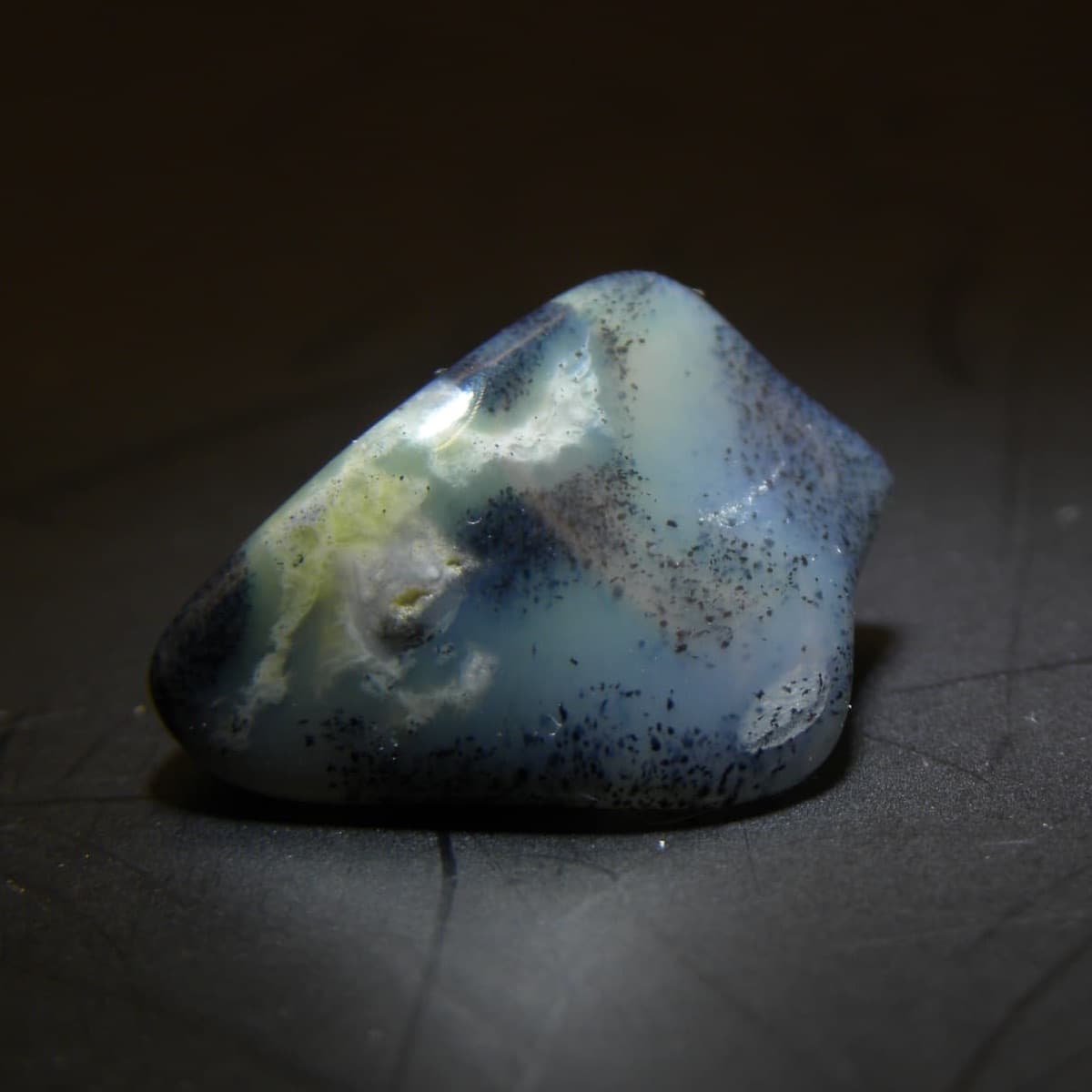
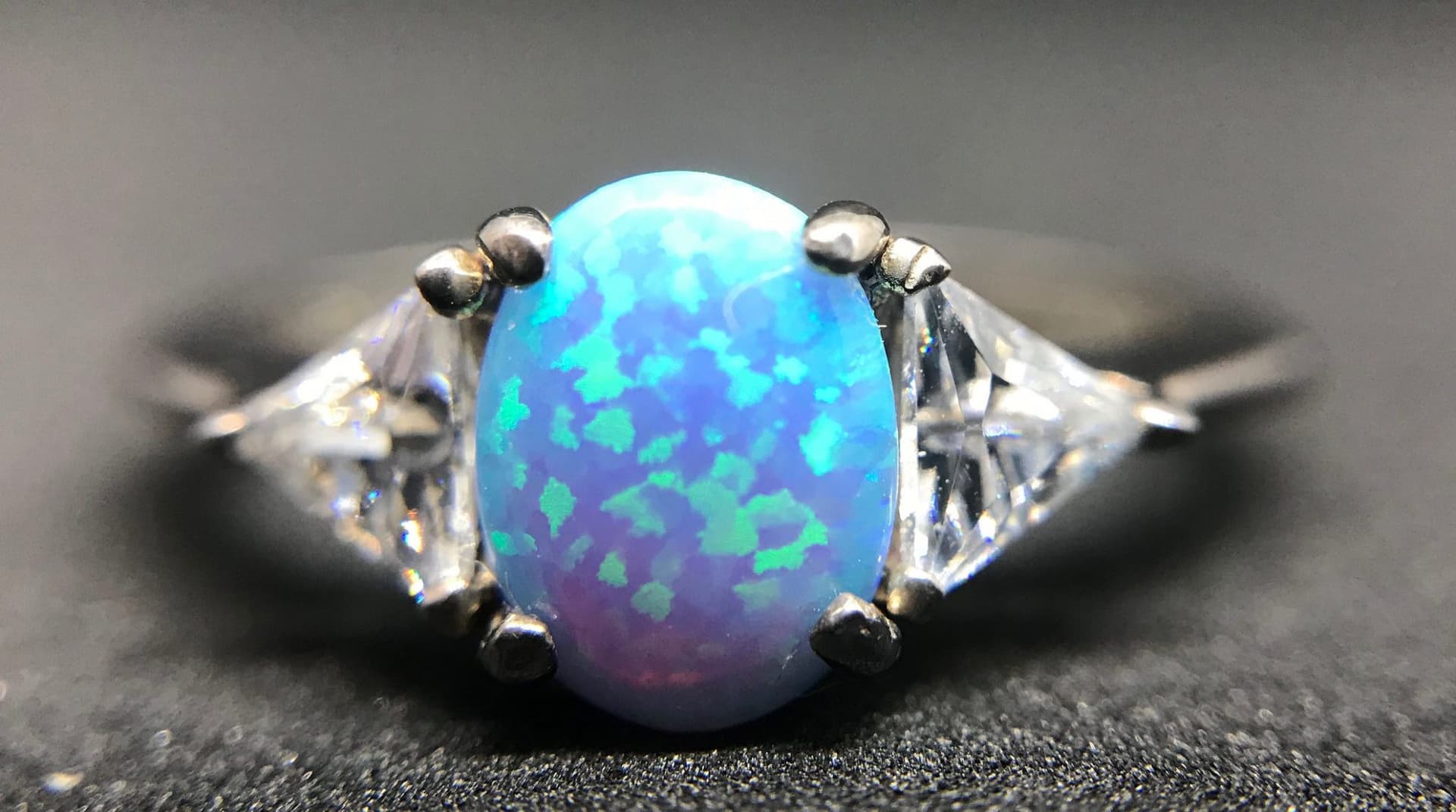
Distinguishing synthetic opal from a mined gem is a vital skill for opal dealers. Learn about five different types of lab-made opal and what they look like.
3 Minute Read
Synthetic opal is opal that’s made in a laboratory. It has the same chemical and physical properties as natural, mined opal. That means that synthetic opal is real opal.
In this article, we’ll cover synthetic opals. However, if you think your specimen isn’t genuine mined material, you’ll need to consider opal simulants as well. These are non-opal materials that look like opal.
As with any gemstone, it’s important to know whether the material is mined or lab-made. This distinction has a significant impact on price. Furthermore, if you’re a vendor, you must know the origins of the gemstone in order to give an honest description of your wares and comply with FTC guidelines. Synthetic opals can be very beautiful, but it’s important that customers understand what they’re buying.
After the discovery of opal’s structure, which consists of nano-scale spheres, scientists sought to replicate its beauty in the lab.
In 1974, Pierre Gilson, who was responsible for introducing other synthetic gemstones such as turquoise and lapis lazuli, began to market synthetic opal.
These synthetics have columns of color easily visible, even to the naked eye. If the opal cabochon surface lies…

When you join the IGS community, you get trusted diamond & gemstone information when you need it.
Synthetic opal is opal that’s made in a laboratory. It has the same chemical and physical properties as natural, mined opal. That means that synthetic opal is real opal.
In this article, we’ll cover synthetic opals. However, if you think your specimen isn’t genuine mined material, you’ll need to consider opal simulants as well. These are non-opal materials that look like opal.
As with any gemstone, it’s important to know whether the material is mined or lab-made. This distinction has a significant impact on price. Furthermore, if you’re a vendor, you must know the origins of the gemstone in order to give an honest description of your wares and comply with FTC guidelines. Synthetic opals can be very beautiful, but it’s important that customers understand what they’re buying.
After the discovery of opal’s structure, which consists of nano-scale spheres, scientists sought to replicate its beauty in the lab.
In 1974, Pierre Gilson, who was responsible for introducing other synthetic gemstones such as and , began to market synthetic opal.
These synthetics have columns of color easily visible, even to the naked eye. If the opal cabochon surface lies…

Distinguishing synthetic opal from a mined gem is a vital skill for opal dealers. Learn about five different types of lab-made opal and what they look like.

“I have never known or heard of an organization that offers so much for its members, and at such a low cost.”
— Ernest Roisch, Rainbow Rocks LTD
That's less than $0.01 per article. Get instant access to 1,700+ premium articles, courses, and gem pricing data.