6 Minute Read
Pearls are among the most recognizable gems in the world, yet they're also among the most misunderstood. Questions about authenticity are common, particularly as imitation pearls have become increasingly sophisticated and online advice has made pearl identification seem deceptively simple.
A quick search will reveal dozens of suggested tests, from rubbing pearls against your teeth to checking for imperfections on the surface. While some of these methods can offer useful clues, there is no single test that can definitively prove whether a pearl is genuine. In reality, pearl authentication relies on evaluating multiple characteristics and, in some cases, using specialized laboratory equipment to examine what lies beneath the surface.
Before discussing authentication methods, it's important to understand what people mean when they ask whether a pearl is real.
Many consumers assume that a real pearl must be a natural pearl, but that's not the case. Natural pearls form entirely without human intervention when a mollusk deposits layers of nacre around an irritant over time. Because this process occurs by chance, natural pearls are exceptionally rare today.
Most pearls sold in modern jewelry are cultured pearls. These are also genuine pearls, but the formation process begins with the assistance of a pearl farmer who introduces a nucleus or mantle tissue into the mollusk. The pearl then develops naturally as layers of nacre accumulate.
"The most common misconception we encounter is that cultured pearls aren't real pearls," says Lauren Greenberg, GIA-certified pearl expert at The Pearl Source. "In reality, cultured pearls are genuine pearls. The difference is simply that the pearl-growing process has been initiated by a pearl farmer rather than occurring entirely by chance in nature."
Imitation pearls are the only category that are not true pearls. Rather than forming inside a mollusk, they are manufactured from materials such as glass, plastic, or shell and coated to resemble nacre.
For most buyers, the challenge isn't distinguishing cultured pearls from natural pearls. More often, it's determining whether a pearl is genuine at all or simply an imitation.
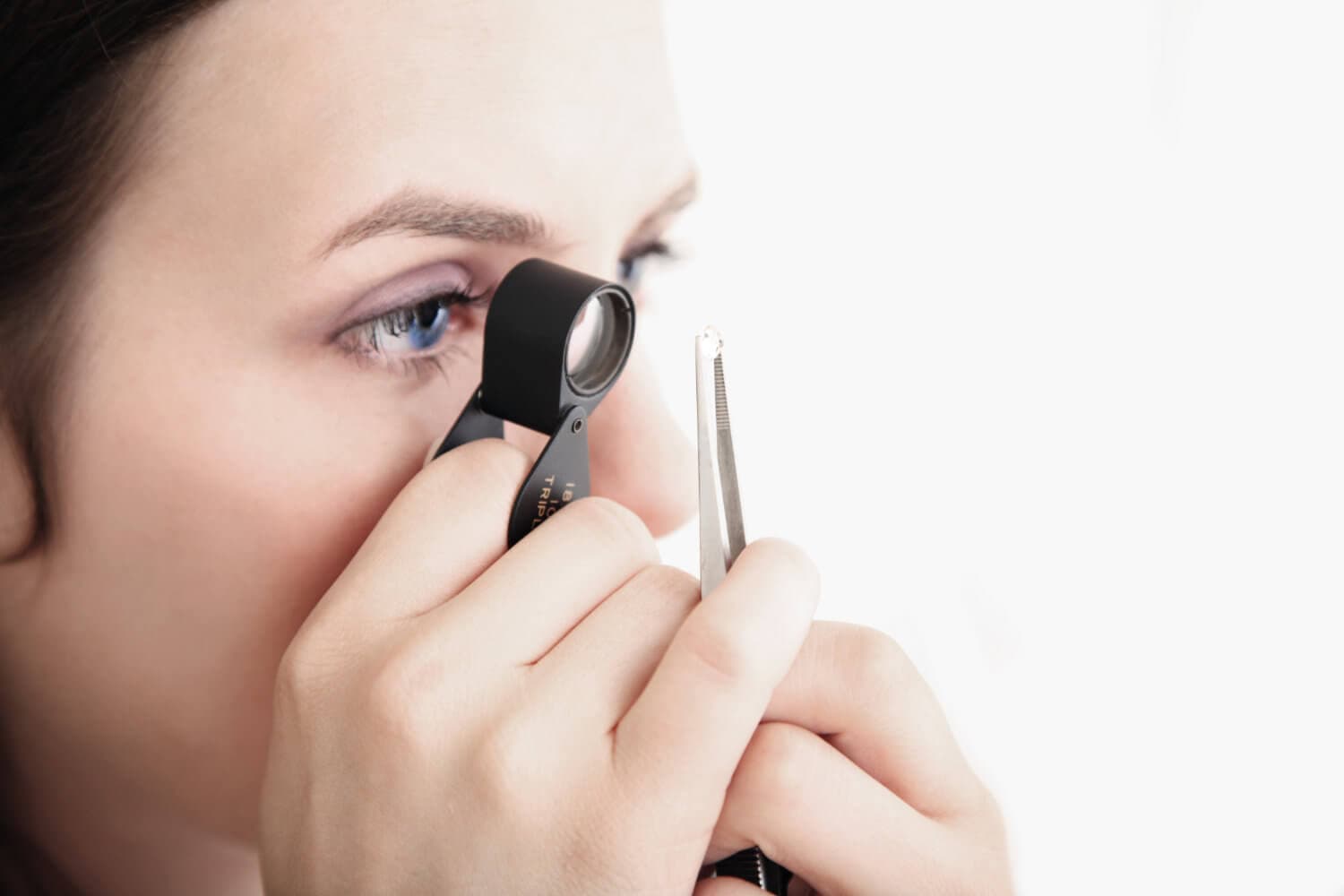
The first step in pearl identification is usually a careful visual examination. While appearance alone rarely provides a definitive answer, it can reveal valuable clues and can help identify pearl quality.
One of the most important characteristics is luster. Genuine pearls display a depth and complexity that comes from layers of nacre interacting with light. Rather than appearing shiny only on the surface, they often seem to glow from within.
Surface quality can also be informative. Although high-quality pearls may appear remarkably clean, genuine pearls are rarely perfectly uniform under magnification. Small growth features, subtle variations, or minor surface characteristics are often present.
Drill holes can provide another clue. On genuine pearls, nacre typically appears continuous around the opening. On some imitation pearls, the coating may chip or reveal a different material underneath.
While these observations can help separate genuine pearls from obvious imitations, they are not foolproof. High-quality imitation pearls can be surprisingly convincing, which is why professionals rarely rely on appearance alone.
Perhaps the best-known pearl test is the tooth test. The idea is simple: gently rub the pearl against the edge of a tooth and pay attention to the texture.
Genuine pearls often feel slightly gritty because nacre is made up of microscopic crystalline platelets. Imitation pearls tend to feel smoother. There is real science behind this observation, which explains why the test has remained popular for generations.
However, the tooth test has significant limitations. Surface treatments and coatings can influence the result, and the test cannot determine whether a pearl is natural or cultured. At best, it may help distinguish some genuine pearls from inexpensive imitations.
For that reason, gemologists generally view it as a useful clue rather than a reliable method of authentication.
When certainty is required, gemologists often turn to X-radiography. Unlike visual examination, X-rays reveal the internal structure of a pearl without causing damage.
Natural pearls typically display concentric growth structures throughout the gem. Bead-nucleated cultured pearls often reveal a distinct central nucleus surrounded by layers of nacre. Imitation pearls show entirely different internal characteristics that reflect their manufactured construction.
This internal evidence is particularly important because natural and cultured pearls can sometimes appear remarkably similar from the outside. In many cases, even experienced professionals cannot determine a pearl's origin through visual examination alone.
For valuable pearls, antique jewelry, or pearls represented as natural, X-ray analysis remains the most reliable method of verification.
Many buyers assume that a certificate automatically means a pearl is rare or valuable. In reality, a certificate is simply a record of findings made by a qualified gemological laboratory.
Depending on the issuing organization, a pearl report may identify whether a pearl is natural or cultured, whether it formed in freshwater or saltwater environments, whether treatments are present, and what observations were made during examination.
Certificates become particularly important when natural origin affects value. Because natural pearls are significantly rarer than cultured pearls, independent laboratory confirmation is often essential when a pearl is represented as natural.
For most cultured pearl jewelry, however, a certificate is less important than consumers sometimes assume. The pearl's quality, condition, and overall characteristics often matter more than the presence of a report.
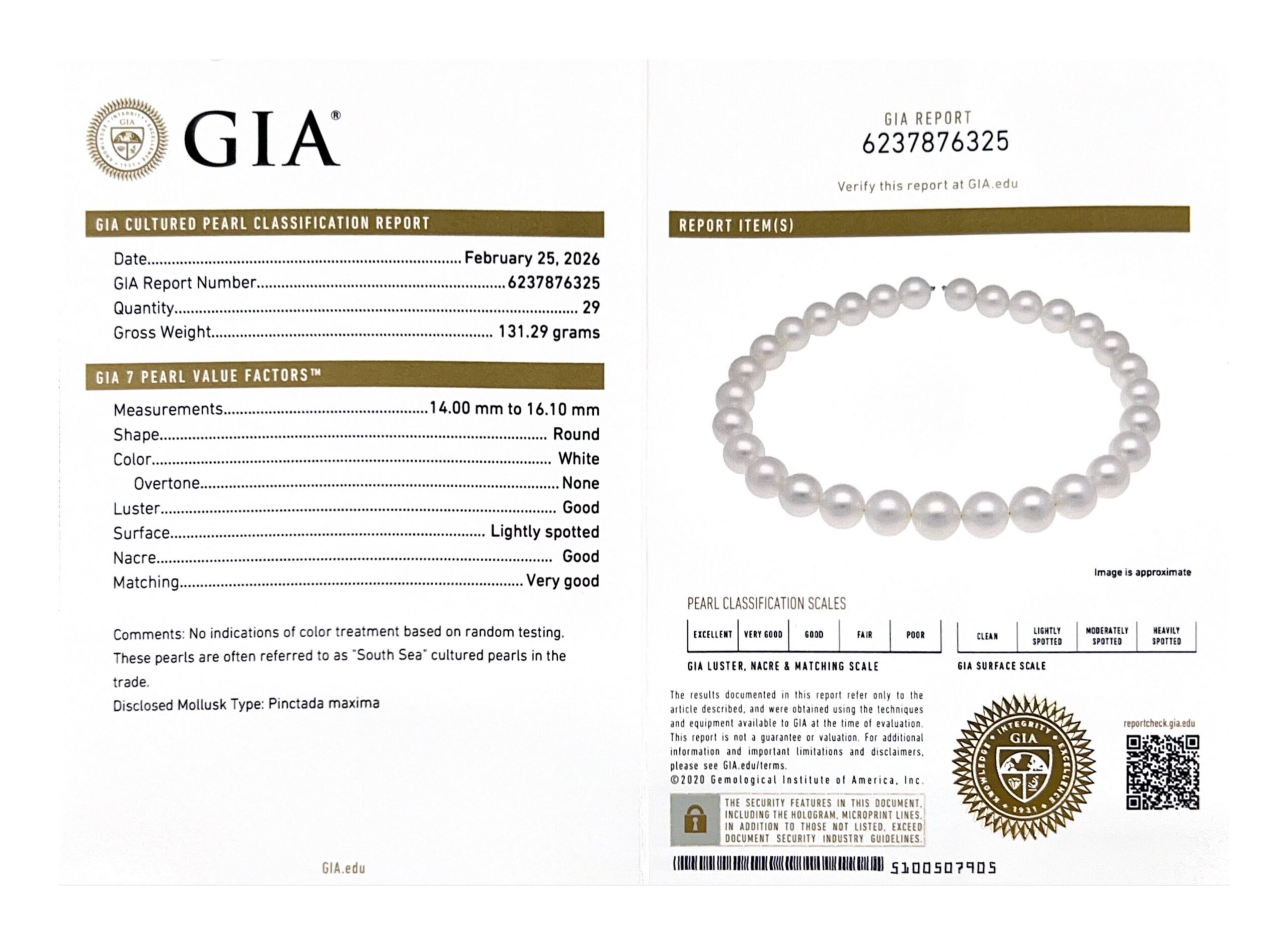
Two of the best-known organizations are the Gemological Institute of America (GIA) and Pearl Science Laboratory (PSL). GIA is widely recognized across the jewelry industry and is often used for high-value pearls and estate jewelry.
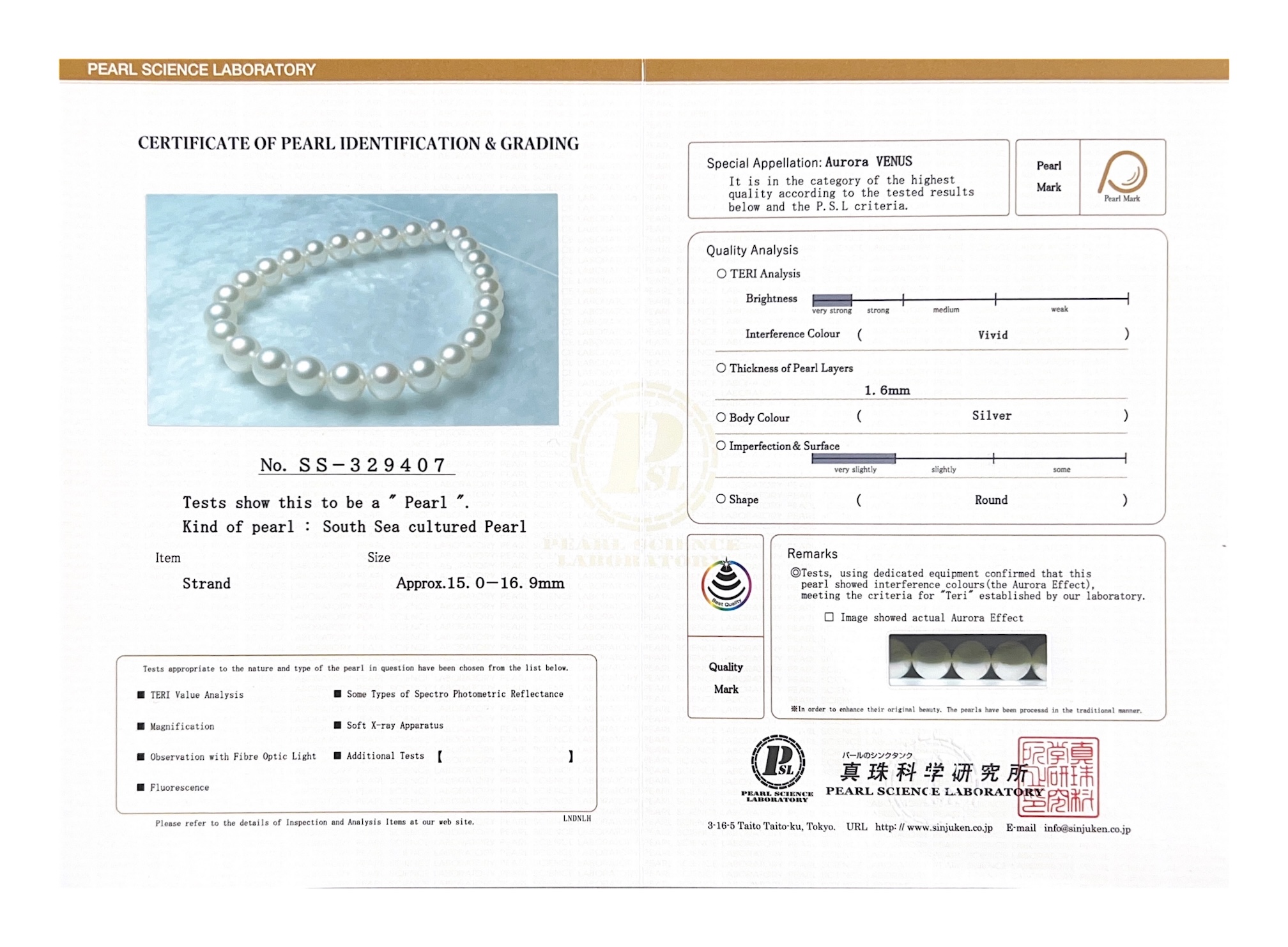
PSL specializes in pearl testing and is highly respected within the pearl industry for its advanced analysis and grading reports.
A common misconception is that certified pearls are automatically worth more. In reality, the certificate does not create value; it verifies characteristics that may already contribute to a pearl's rarity or desirability. For example, a report confirming that a pearl is natural can significantly affect pricing because natural pearls are far rarer than cultured pearls.
If you're buying… | Is a certificate recommended? |
Everyday cultured pearl jewelry | Usually not necessary |
Fine cultured pearl jewelry | Optional, but can provide additional confidence |
Estate or antique pearl jewelry | Recommended |
Pearls represented as natural | Strongly recommended |
"Many customers assume a certificate automatically means a pearl is higher quality," says Lauren Greenberg. "In reality, the report is a tool for verification. The most important question is what information the certificate is actually confirming and whether that information matters for the type of pearl you're purchasing."
Several myths continue to circulate despite advances in pearl farming and gemological testing. One common misconception is that perfectly round pearls must be fake. While perfectly round pearls were once extraordinarily rare, modern cultivation techniques have made them much more common, particularly among high-quality cultured pearls.
Another myth suggests that all real pearls must have obvious imperfections. While minor surface characteristics are common, some genuine pearls display remarkably clean surfaces.
Perhaps the most persistent misunderstanding is the belief that cultured pearls are somehow less authentic than natural pearls. From a gemological perspective, both are genuine pearls formed by living mollusks. The difference lies in how the process begins, not in whether the resulting pearl is real.
Pearl authentication is rarely as simple as a single test or observation. While visual inspection and traditional methods can provide useful clues, the most reliable identifications are based on multiple forms of evidence and, when necessary, professional laboratory analysis.
For most consumers, the key takeaway is that cultured pearls are genuine pearls. Once that distinction is understood, the conversation becomes less about whether a pearl is real and more about understanding exactly what type of pearl it is and how its characteristics influence its rarity and value.

When you join the IGS community, you get trusted diamond & gemstone information when you need it.
Pearls are among the most recognizable gems in the world, yet they're also among the most misunderstood. Questions about authenticity are common, particularly as imitation pearls have become increasingly sophisticated and online advice has made pearl identification seem deceptively simple.
A quick search will reveal dozens of suggested tests, from rubbing pearls against your teeth to checking for imperfections on the surface. While some of these methods can offer useful clues, there is no single test that can definitively prove whether a pearl is genuine. In reality, pearl authentication relies on evaluating multiple characteristics and, in some cases, using specialized laboratory equipment to examine what lies beneath the surface.
Before discussing authentication methods, it's important to understand what people mean when they ask whether a pearl is real.
Many consumers assume that a real pearl must be a natural pearl, but that's not the case. Natural pearls form entirely without human intervention when a mollusk deposits layers of nacre around an irritant over time. Because this process occurs by chance, natural pearls are exceptionally rare today.
Most pearls sold in modern jewelry are cultured pearls. These are also genuine pearls, but the formation process begins with the assistance of a pearl farmer who introduces a nucleus or mantle tissue into the mollusk. The pearl then develops naturally as layers of nacre accumulate.
"The most common misconception we encounter is that cultured pearls aren't real pearls," says Lauren Greenberg, GIA-certified pearl expert at The Pearl Source. "In reality, cultured pearls are genuine pearls. The difference is simply that the pearl-growing process has been initiated by a pearl farmer rather than occurring entirely by chance in nature."
Imitation pearls are the only category that are not true pearls. Rather than forming inside a mollusk, they are manufactured from materials such as glass, plastic, or shell and coated to resemble nacre.
For most buyers, the challenge isn't distinguishing cultured pearls from natural pearls. More often, it's determining whether a pearl is genuine at all or simply an imitation.
The first step in pearl identification is usually a careful visual examination. While appearance alone rarely provides a definitive answer, it can reveal valuable clues and can help identify pearl quality.
One of the most important characteristics is luster. Genuine pearls display a depth and complexity that comes from layers of nacre interacting with light. Rather than appearing shiny only on the surface, they often seem to glow from within.
Surface quality can also be informative. Although high-quality pearls may appear remarkably clean, genuine pearls are rarely perfectly uniform under magnification. Small growth features, subtle variations, or minor surface characteristics are often present.
Drill holes can provide another clue. On genuine pearls, nacre typically appears continuous around the opening. On some imitation pearls, the coating may chip or reveal a different material underneath.
While these observations can help separate genuine pearls from obvious imitations, they are not foolproof. High-quality imitation pearls can be surprisingly convincing, which is why professionals rarely rely on appearance alone.
Perhaps the best-known pearl test is the tooth test. The idea is simple: gently rub the pearl against the edge of a tooth and pay attention to the texture.
Genuine pearls often feel slightly gritty because nacre is made up of microscopic crystalline platelets. Imitation pearls tend to feel smoother. There is real science behind this observation, which explains why the test has remained popular for generations.
However, the tooth test has significant limitations. Surface treatments and coatings can influence the result, and the test cannot determine whether a pearl is natural or cultured. At best, it may help distinguish some genuine pearls from inexpensive imitations.
For that reason, gemologists generally view it as a useful clue rather than a reliable method of authentication.
When certainty is required, gemologists often turn to X-radiography. Unlike visual examination, X-rays reveal the internal structure of a pearl without causing damage.
Natural pearls typically display concentric growth structures throughout the gem. Bead-nucleated cultured pearls often reveal a distinct central nucleus surrounded by layers of nacre. Imitation pearls show entirely different internal characteristics that reflect their manufactured construction.
This internal evidence is particularly important because natural and cultured pearls can sometimes appear remarkably similar from the outside. In many cases, even experienced professionals cannot determine a pearl's origin through visual examination alone.
For valuable pearls, antique jewelry, or pearls represented as natural, X-ray analysis remains the most reliable method of verification.
Many buyers assume that a certificate automatically means a pearl is rare or valuable. In reality, a certificate is simply a record of findings made by a qualified gemological laboratory.
Depending on the issuing organization, a pearl report may identify whether a pearl is natural or cultured, whether it formed in freshwater or saltwater environments, whether treatments are present, and what observations were made during examination.
Certificates become particularly important when natural origin affects value. Because natural pearls are significantly rarer than cultured pearls, independent laboratory confirmation is often essential when a pearl is represented as natural.
For most cultured pearl jewelry, however, a certificate is less important than consumers sometimes assume. The pearl's quality, condition, and overall characteristics often matter more than the presence of a report.
Two of the best-known organizations are the Gemological Institute of America (GIA) and Pearl Science Laboratory (PSL). GIA is widely recognized across the jewelry industry and is often used for high-value pearls and estate jewelry.
PSL specializes in pearl testing and is highly respected within the pearl industry for its advanced analysis and grading reports.
A common misconception is that certified pearls are automatically worth more. In reality, the certificate does not create value; it verifies characteristics that may already contribute to a pearl's rarity or desirability. For example, a report confirming that a pearl is natural can significantly affect pricing because natural pearls are far rarer than cultured pearls.
If you're buying… | Is a certificate recommended? |
Everyday cultured pearl jewelry | Usually not necessary |
Fine cultured pearl jewelry | Optional, but can provide additional confidence |
Estate or antique pearl jewelry | Recommended |
Pearls represented as natural | Strongly recommended |
"Many customers assume a certificate automatically means a pearl is higher quality," says Lauren Greenberg. "In reality, the report is a tool for verification. The most important question is what information the certificate is actually confirming and whether that information matters for the type of pearl you're purchasing."
Several myths continue to circulate despite advances in pearl farming and gemological testing. One common misconception is that perfectly round pearls must be fake. While perfectly round pearls were once extraordinarily rare, modern cultivation techniques have made them much more common, particularly among high-quality cultured pearls.
Another myth suggests that all real pearls must have obvious imperfections. While minor surface characteristics are common, some genuine pearls display remarkably clean surfaces.
Perhaps the most persistent misunderstanding is the belief that cultured pearls are somehow less authentic than natural pearls. From a gemological perspective, both are genuine pearls formed by living mollusks. The difference lies in how the process begins, not in whether the resulting pearl is real.
Pearl authentication is rarely as simple as a single test or observation. While visual inspection and traditional methods can provide useful clues, the most reliable identifications are based on multiple forms of evidence and, when necessary, professional laboratory analysis.
For most consumers, the key takeaway is that cultured pearls are genuine pearls. Once that distinction is understood, the conversation becomes less about whether a pearl is real and more about understanding exactly what type of pearl it is and how its characteristics influence its rarity and value.