Is Citrine Expensive?
4 Minute Read
They say that yellow and orange are the colors of happiness and creativity. Fortunately, there are many gemstones in this color range on the market to choose from, but the reigning champion is the citrine. Citrine checks all the boxes when it comes to desirable qualities - it has beautiful color expression, sparkling clarity, and is abundant enough to maintain affordable per-carat values. Here are the qualities to consider when shopping for citrine.
at Angara
Color is the Principal Value Characteristic of Citrine
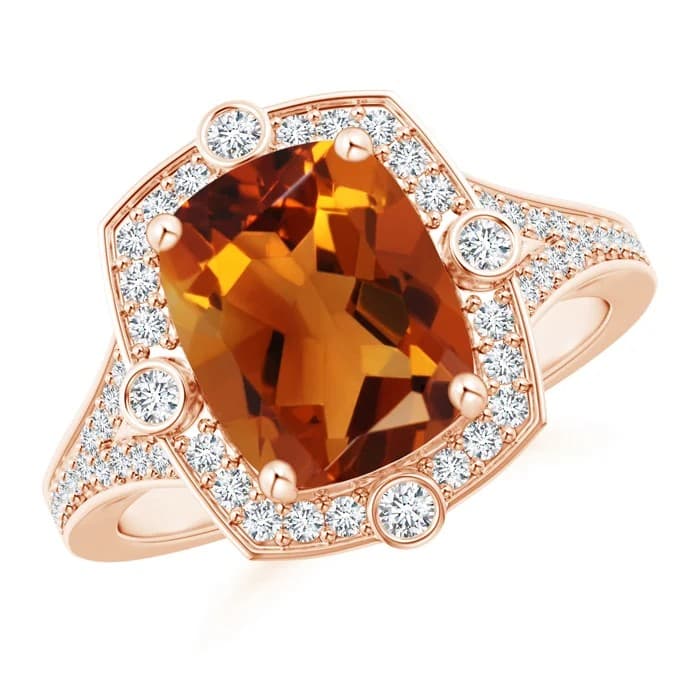
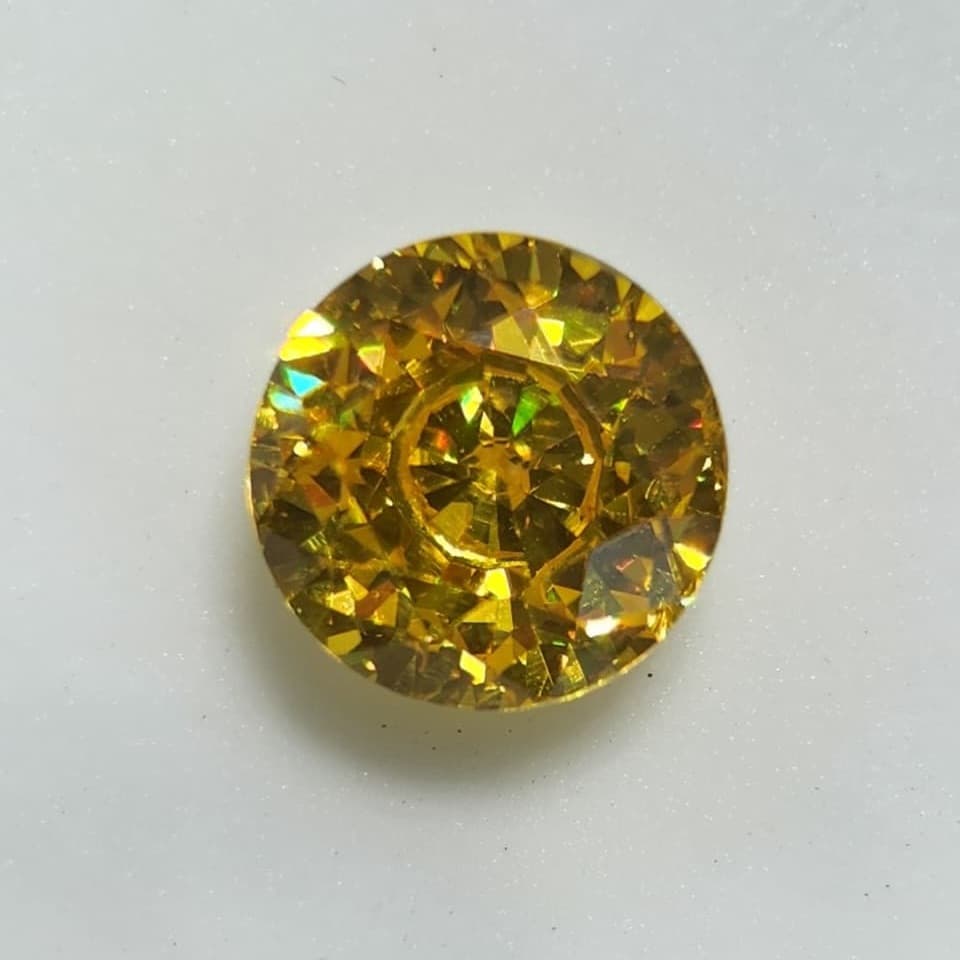
Nothing affects the price of an individual citrine gemstone more than the quality of its color expression. The full range of color spans from orangy red, reddish orange, yellowish orange, to pure yellow. Any of these colors can include a minor degree of brown.
Interestingly, while many gemstones have a specific color that is valued the highest, a relatively large swath of the potential colors of citrines are considered to be fine quality. The most valuable citrine is a pure yellow through reddish orange all the way to an orangy red which has little to no brown. What matters more than the hue(s) themselves is the color saturation. Richly colored golden gems are always much more valuable than watery or pale stones. Even small citrines weighing a fraction of a carat are expected to be well saturated.
at Angara
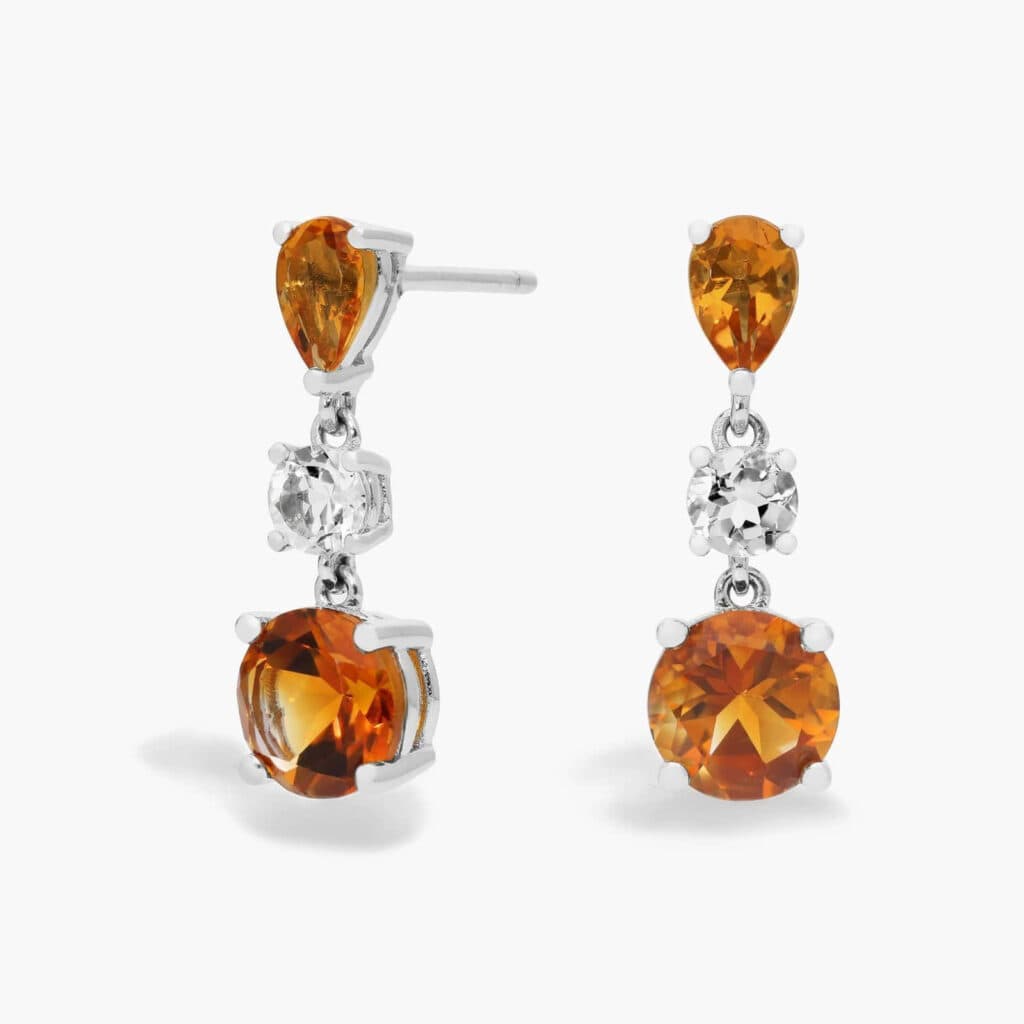
When shopping for citrine jewelry, remember to follow your personal preferences. Market trends show that most buyers prefer citrines with a darker color that is a warm reddish or brownish orange.
at Blue Nile
Also, fine citrine never has visible color zoning. Gems that show varying levels of color saturation are discounted heavily.
Citrine Should Be Eye-Clean
Most citrine has eye-clean clarity with clean transparency. That means no spots or cloudiness are present. Gems that do have noticeable clarity features are often not faceted, but instead made into lower-cost cabochons, beads, or artistic carvings.
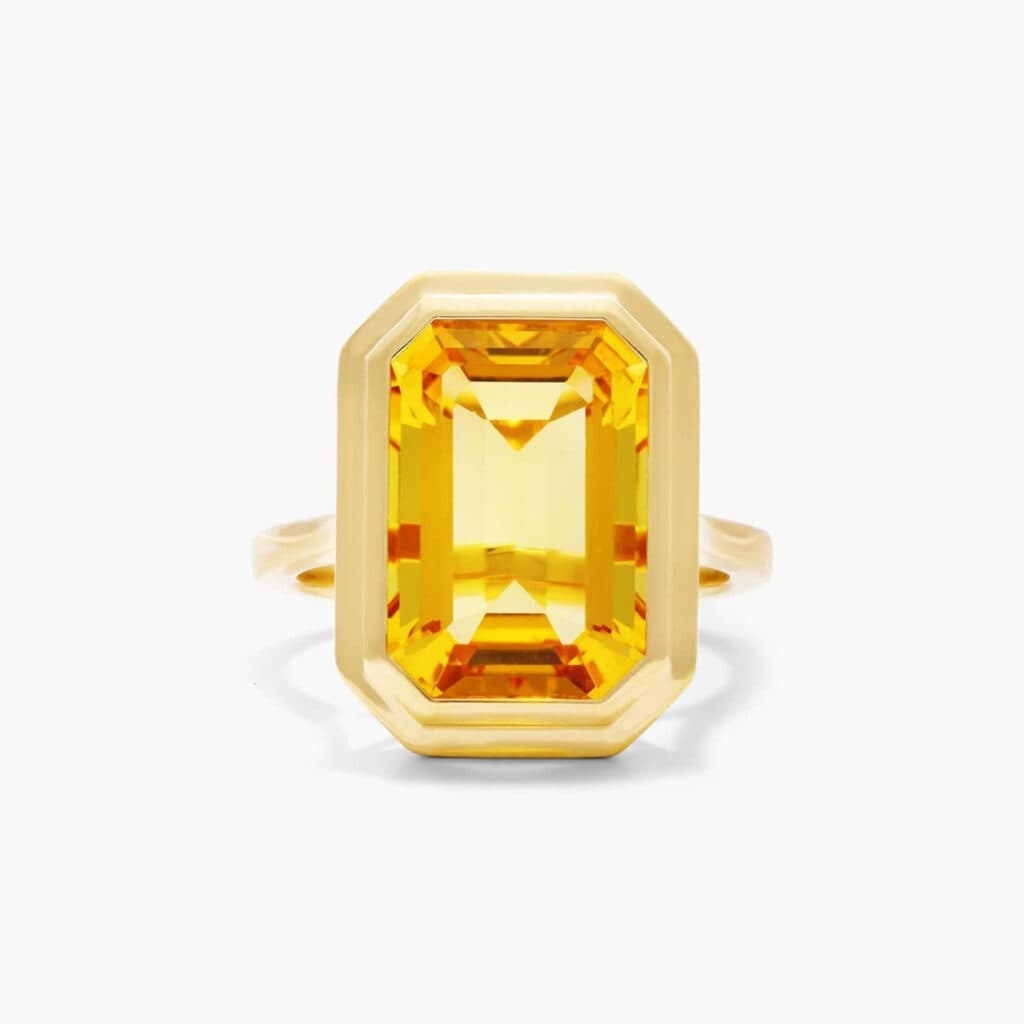
from Blue Nile
Size Isn't a Concern, So the Quality of the Cut Matters
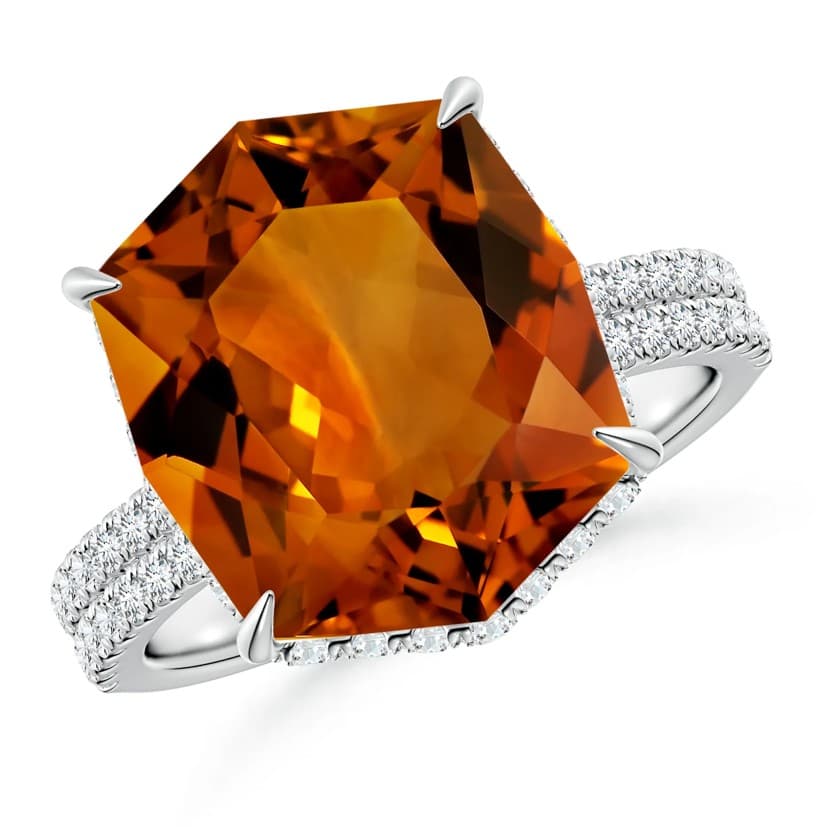
Citrine crystals can grow to extraordinary sizes. In fact, many of the largest faceted transparent gemstones ever created are citrines. The largest carat weight that jewelers typically work with is twenty to twenty-five carats. Anything bigger than that is too chunky and heavy to be practical.
Because crystals frequently grow large enough to yield stones of that maximum size, overall carat weight has a relatively small impact on valuation. Yes, a large citrine will often be priced higher than a similar-looking smaller gem, but that difference is minor compared to other gemstone varieties.
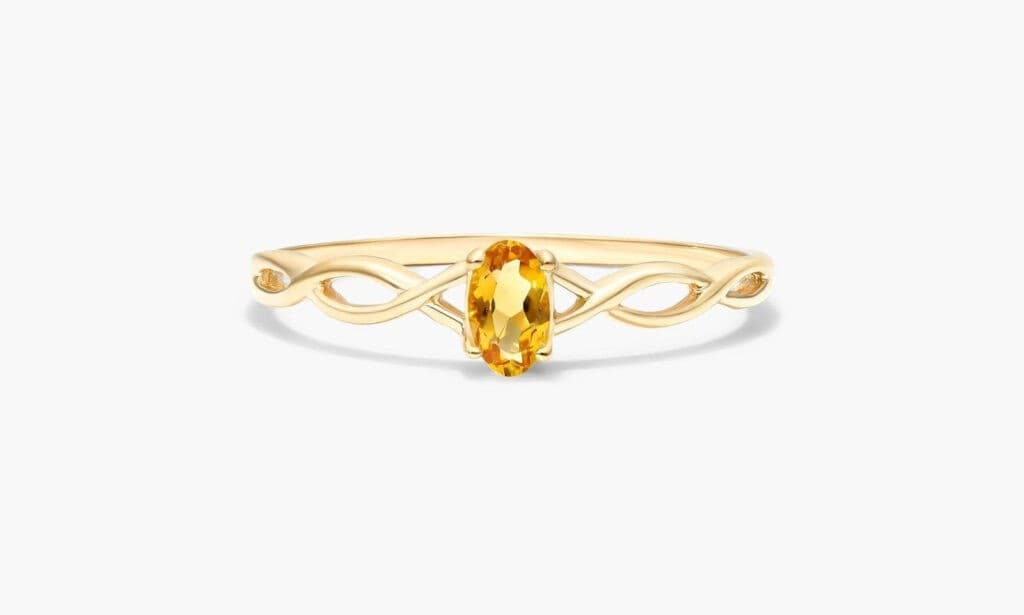
at Blue Nile
Since cutters don't have to worry about weight retention, the quality of the faceting is expected to be high. Calibrated shapes in all sizes and shapes should be perfectly matched with the standard proportions. It is also possible for skilled artisans to carve citrines to create beautiful fantasy cuts. Whether you are shopping for matched melee or large twenty-plus carat stones, they should all be well cut.
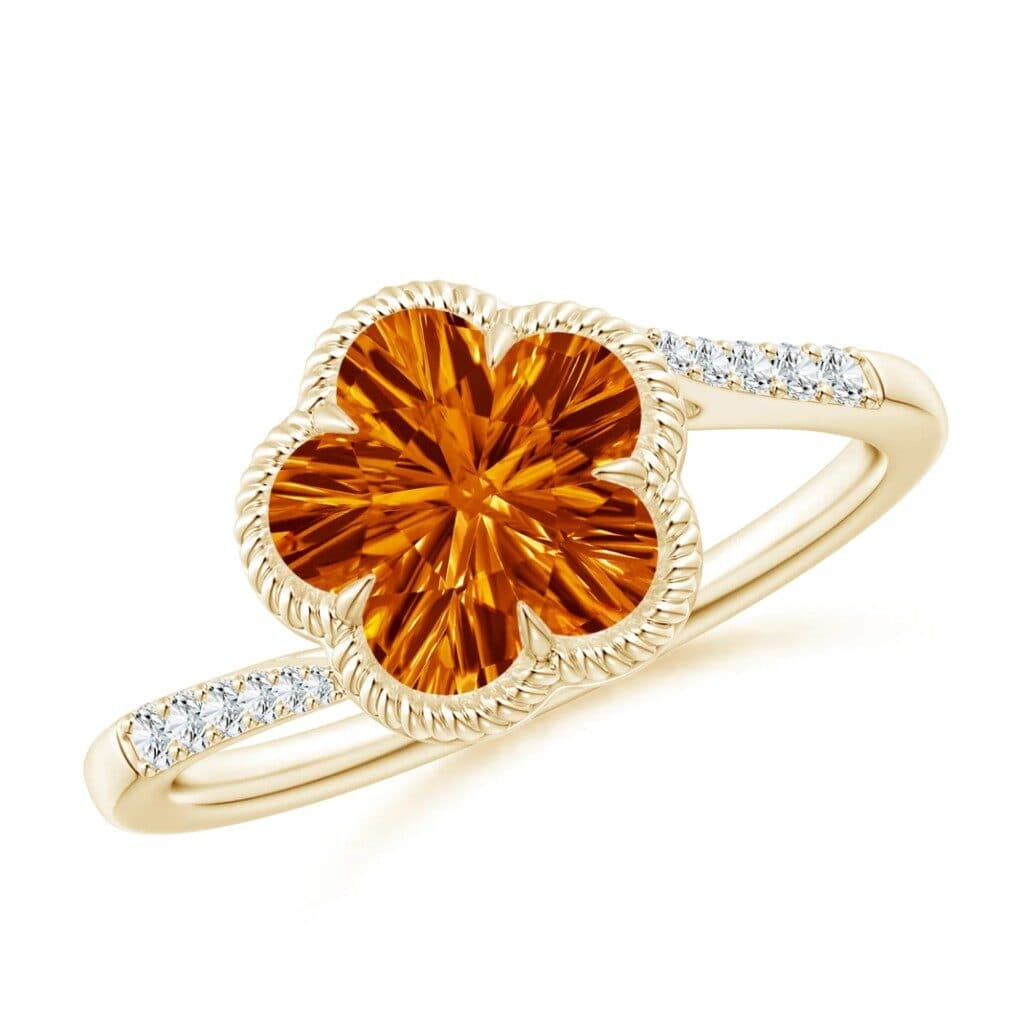
at Angara
Natural Citrine is Rare, So Why is There So Much on The Market?
The ample availability of faceted citrine on the market is deceptive in that natural, unprocessed citrine is relatively scarce. A high proportion of the citrine used in jewelry actually started as purple amethyst that was too pale to be valuable. When such amethysts are exposed to heat treatment, their color changes from a light lavender to the yellow, orange, brown, and red hues of citrine. Heat treatment works because citrine and amethyst are closely related quartz varieties.
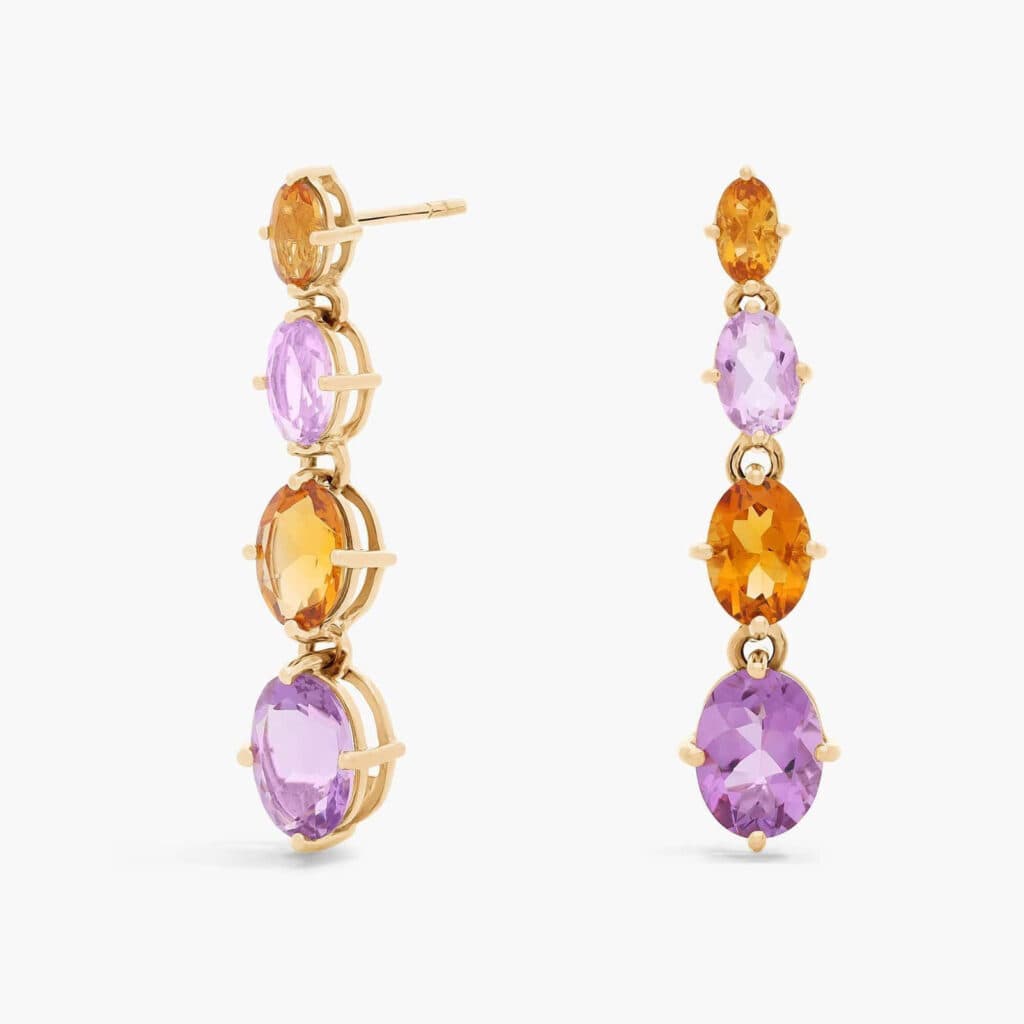
at Blue Nile
There are massive deposits of amethyst all over the world, so gem sellers are not shy about taking what is considered lower-quality crystals and heating them to alter the color. It turns out that there is enough amethyst being mined to fill the supply chain for both amethyst and citrine. Both of these quartz gems are affordable and prices are stable.
As heat treatment is so common, it does not negatively impact value. Shopping for citrine, it is safe to assume that gems are treated unless it is explicitly stated that they are not.
Related Articles
Is Cordierite Expensive?
Does Homeowners Insurance Cover Gems and Jewelry?
Marketing Your Gems Online
Is Aquamarine Expensive?
Latest Articles

800 Years of Mogok: A Celebration in Tenuous Times
What is the Average Gemstone Faceting Yield?
Pyroxmangite Value, Price, and Jewelry Information
How to Identify Emerald Simulants and Synthetics
Never Stop Learning
When you join the IGS community, you get trusted diamond & gemstone information when you need it.