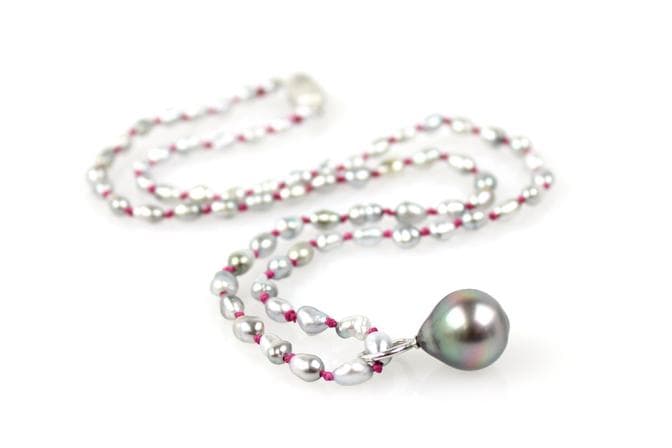
Not all pearls are perfectly round and white. Learn about keshi pearls and soufflé pearls, which can form as cultured pearl byproducts.
4 Minute Read
Certain byproducts can form over the course of pearl cultivation, such as the shell and the meat of the mollusk. In some cases, this can include a pearl that forms in an unexpected manner.
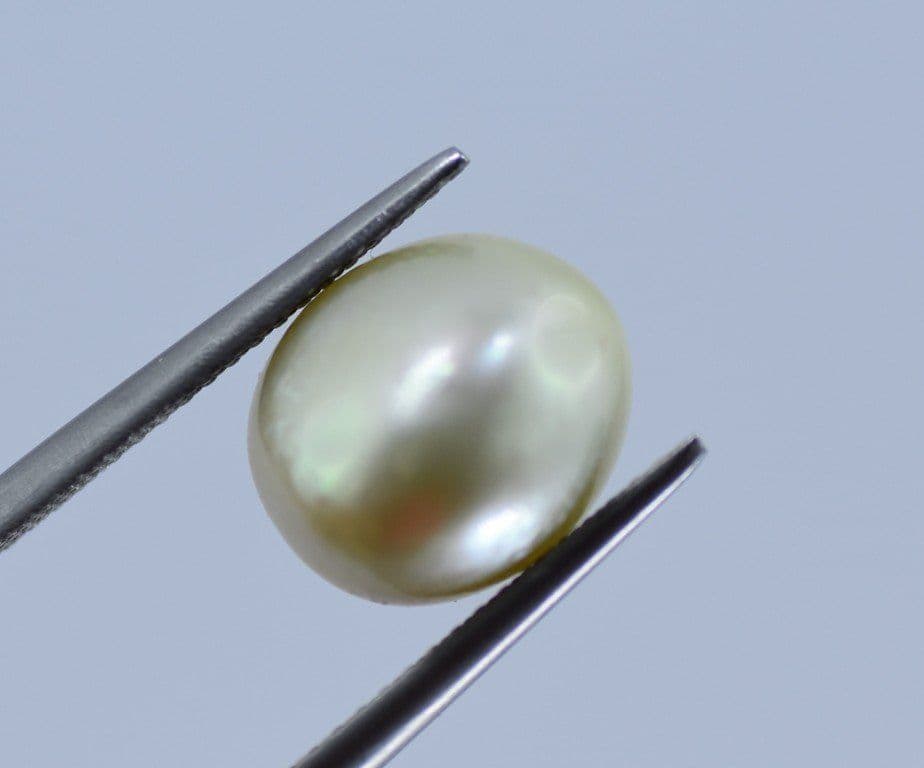
Keshi pearls and soufflé pearls are two kinds of marketable cultured pearl byproducts. (Keshi pearls can also be created deliberately). They make perfect options for beautiful, affordable, and unique pearl jewelry.
Keshi pearls can develop when a mollusk rejects the bead nucleus intended to stimulate the growth of a cultured pearl. When this occurs, sometimes a piece of mantle tissue that accompanied the bead remains in the mollusk. A pearl sac may form around this tissue and ultimately yield a pearl. However, without the bead nucleus, these pearls are usually small and baroque, not the valuable round shapes pearl farmers typically intend to grow.
Keshi pearls can form in any nucleated mollusk and range in size from 1 to 10 mm. However, smaller sizes are more common, with most in the 1 to 4 mm range.
Composed entirely of nacre layers, keshi pearls have remarkable luster. In this…


When you join the IGS community, you get trusted diamond & gemstone information when you need it.
Certain byproducts can form over the course of pearl cultivation, such as the shell and the meat of the mollusk. In some cases, this can include a pearl that forms in an unexpected manner.
Keshi pearls and soufflé pearls are two kinds of marketable cultured pearl byproducts. (Keshi pearls can also be created deliberately). They make perfect options for beautiful, affordable, and unique pearl jewelry.
Keshi pearls can develop when a mollusk rejects the bead nucleus intended to stimulate the growth of a cultured pearl. When this occurs, sometimes a piece of mantle tissue that accompanied the bead remains in the mollusk. A pearl sac may form around this tissue and ultimately yield a pearl. However, without the bead nucleus, these pearls are usually small and baroque, not the valuable round shapes pearl farmers typically intend to grow.
Keshi pearls can form in any nucleated mollusk and range in size from 1 to 10 mm. However, smaller sizes are more common, with most in the 1 to 4 mm range.
Composed entirely of nacre layers, keshi pearls have remarkable luster. In this…

Not all pearls are perfectly round and white. Learn about keshi pearls and soufflé pearls, which can form as cultured pearl byproducts.



“I have never known or heard of an organization that offers so much for its members, and at such a low cost.”
— Ernest Roisch, Rainbow Rocks LTD
That's less than $0.01 per article. Get instant access to 1,700+ premium articles, courses, and gem pricing data.