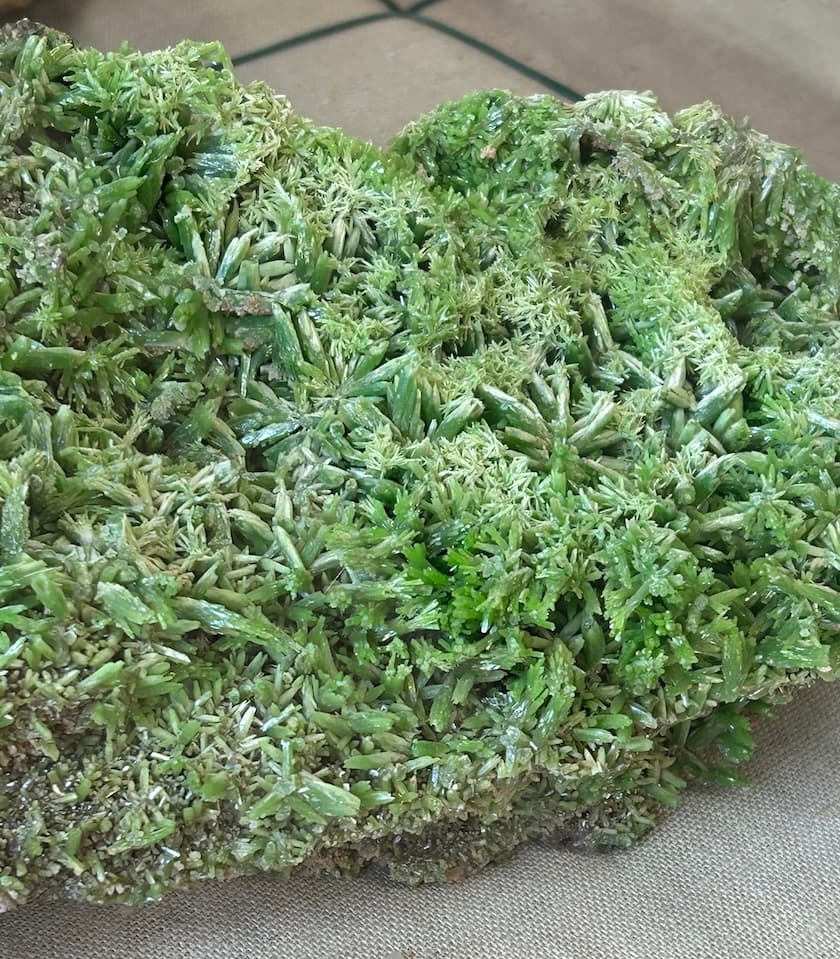
Although phosphates and other mineral classes are rare, they still have species with important uses. Learn how to identify these minerals.
14 Minute Read
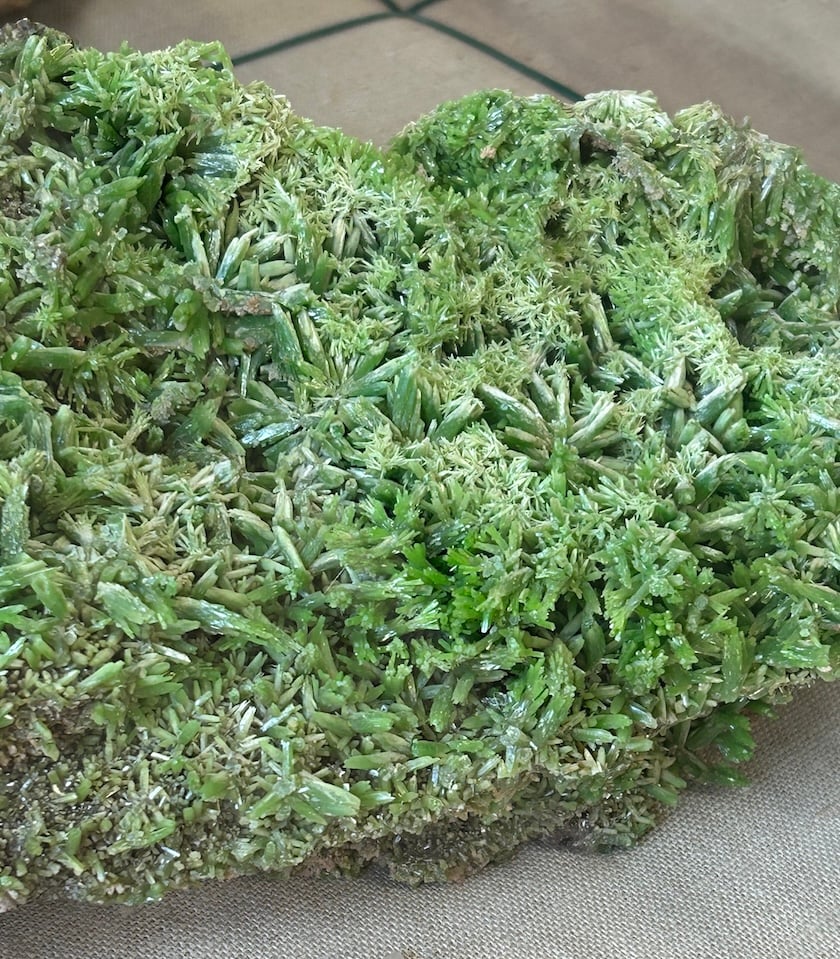
Phosphates, arsenates, vanadates, wolframates, molybdates, chromates, nitrates, and borates may contain only a few or, in some cases, only one mineral of note. In particular, nitrates and borates have seldom interested gemologists. Nevertheless, it is essential for mineralogists to understand these mineral classes.
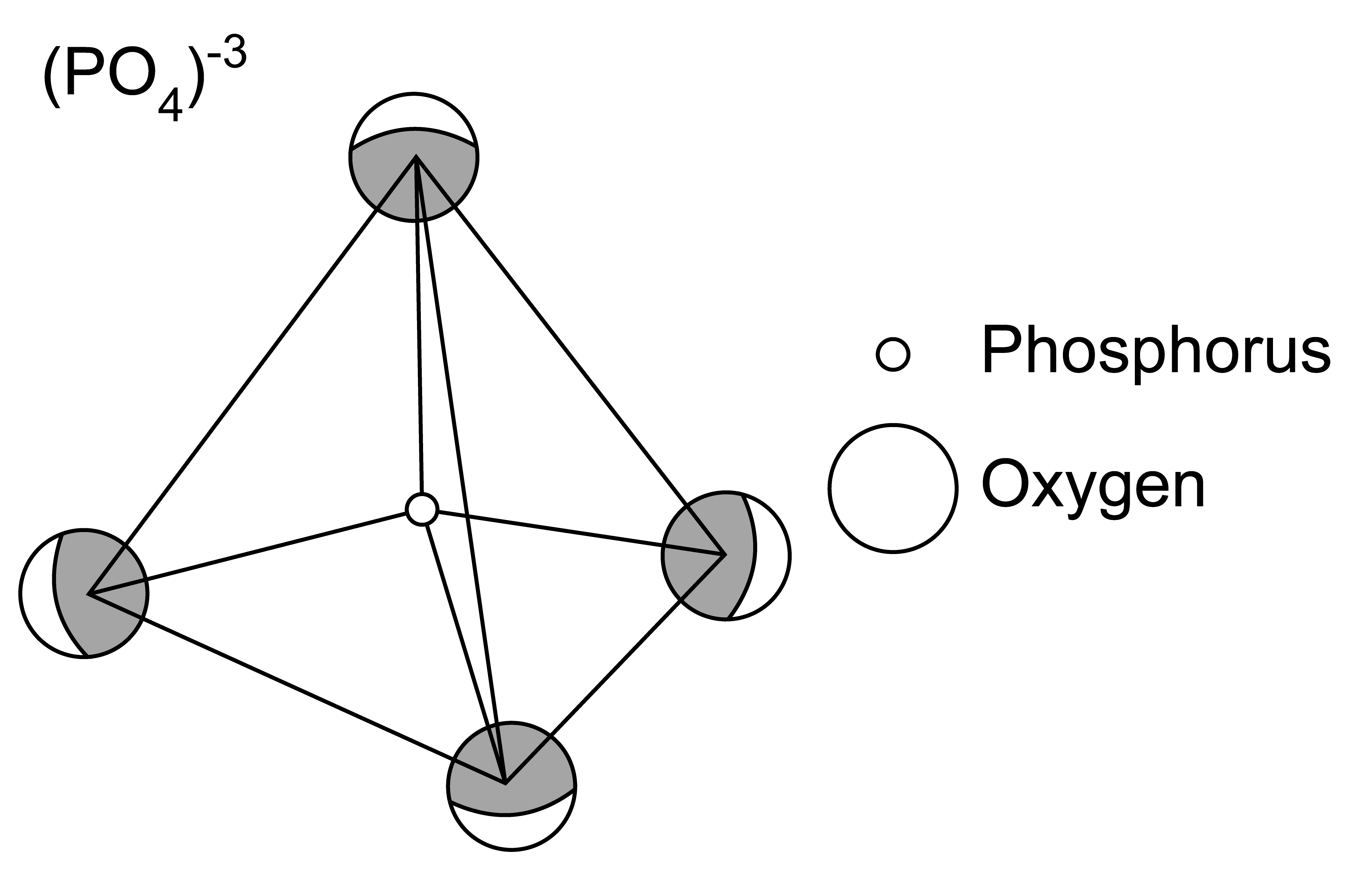
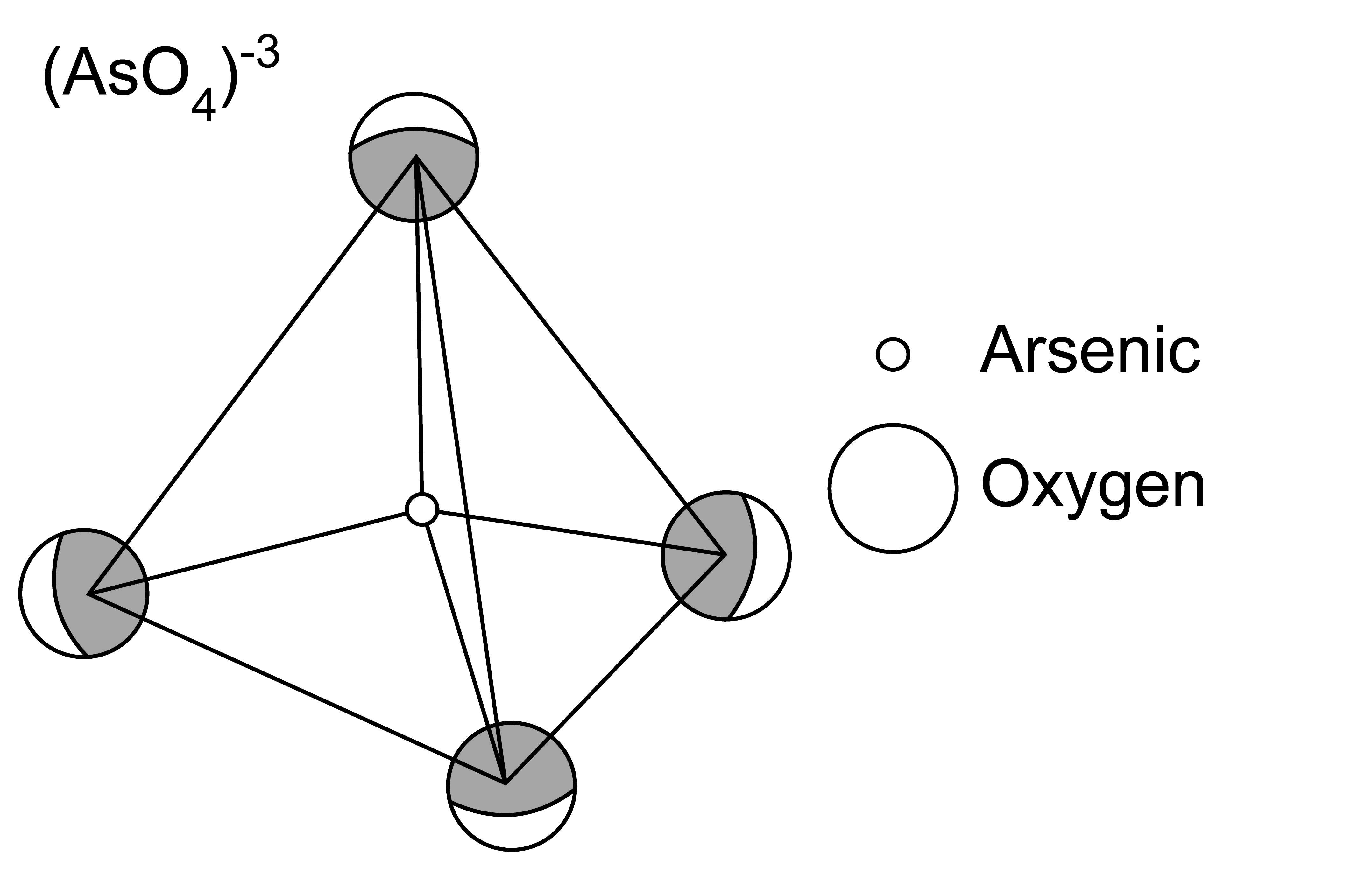
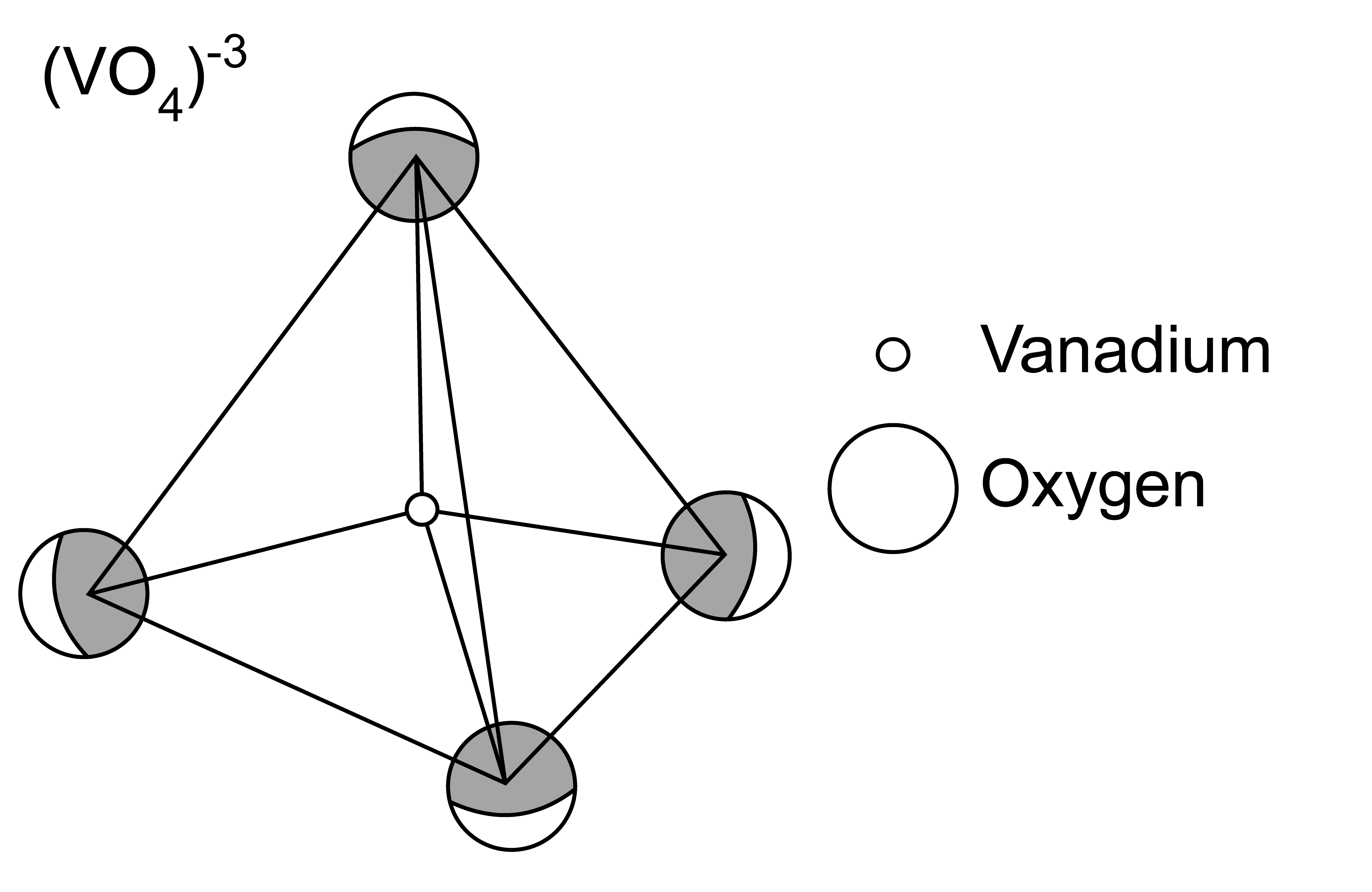
Phosphates, arsenates, and vanadates are mineral classes with complex anions of (PO4)3-, (AsO4)3-, and (VO4)3-, respectively. Anion complexes occur in tetrahedral coordination, meaning each atom of phosphorus, arsenic, and vanadium is surrounded by four oxygen atoms.
These three groups are usually studied together because P5+, As5+, and V5+ can substitute for each other easily. They sometimes form solid solution series, like pyromorphite (Pb5(PO4)3Cl), mimetite (Pb5(AsO4)3Cl), and vanadinite (Pb5(VO4)3Cl). The main cations of these mineral classes are Fe,
…


When you join the IGS community, you get trusted diamond & gemstone information when you need it.
Phosphates, arsenates, vanadates, wolframates, molybdates, chromates, nitrates, and borates may contain only a few or, in some cases, only one mineral of note. In particular, nitrates and borates have seldom interested gemologists. Nevertheless, it is essential for mineralogists to understand these mineral classes.
Phosphates, arsenates, and vanadates are mineral classes with complex anions of (PO4)3-, (AsO4)3-, and (VO4)3-, respectively. Anion complexes occur in tetrahedral coordination, meaning each atom of phosphorus, arsenic, and vanadium is surrounded by four oxygen atoms.
These three groups are usually studied together because P5+, As5+, and V5+ can substitute for each other easily. They sometimes form solid solution series, like pyromorphite (Pb5(PO4)3Cl), mimetite (Pb5(AsO4)3Cl), and vanadinite (Pb5(VO4)3Cl). The main cations of these mineral classes are Fe,
Although phosphates and other mineral classes are rare, they still have species with important uses. Learn how to identify these minerals.
“I have never known or heard of an organization that offers so much for its members, and at such a low cost.”
— Ernest Roisch, Rainbow Rocks LTD
That's less than $0.01 per article. Get instant access to 1,700+ premium articles, courses, and gem pricing data.