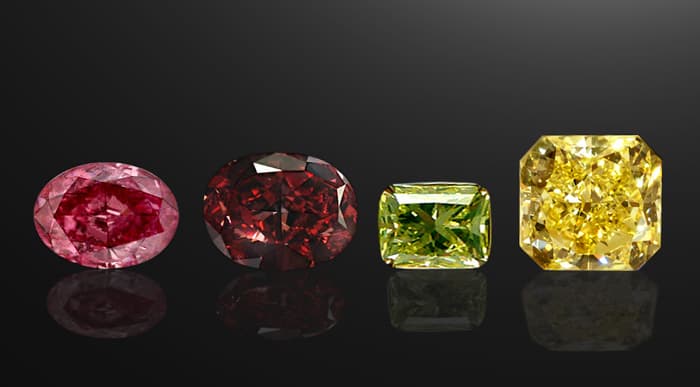
Looking at fancy colored diamonds? Discover unique diamond colors with our guide and learn how the pricing of these gems can vary.
8 Minute Read
Are you fascinated by the world of colored diamonds? This guide takes you through everything you need to know about these rare treasures, from how they form to what makes them so valuable.
In this article, you will:
Just like their colorless counterparts, fancy colored diamonds form naturally from carbon deep beneath the Earth's surface at temperatures exceeding 1000 degrees Celsius over millions of years. These diamonds develop their extraordinary colors through rare changes to their chemical structure during formation, which alters how they reflect light and influences the colors we perceive.
Gemologists evaluate and price diamonds of color using the traditional Four Cs: cut, clarity, carat, and color. While cut, clarity, and carat assessments follow standard diamond grading principles, the color grading system for diamonds differs significantly from that used for colorless stones.
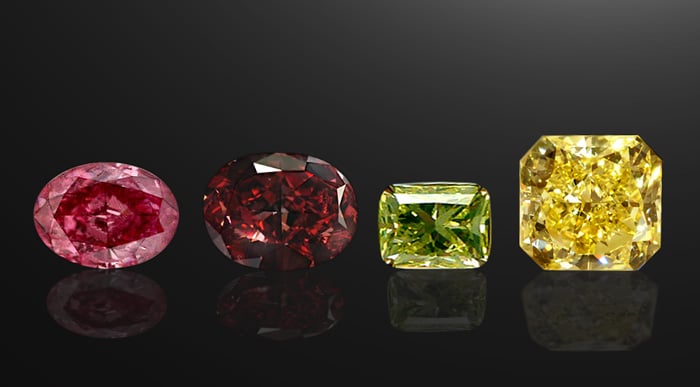
The intensity of the color determines the grade, with rankings from least to most saturated as follows: faint, very light, light, fancy light, fancy, fancy intense, fancy vivid, fancy dark, and fancy deep. Generally, deeper and more intense colors command higher prices in the diamonds market.
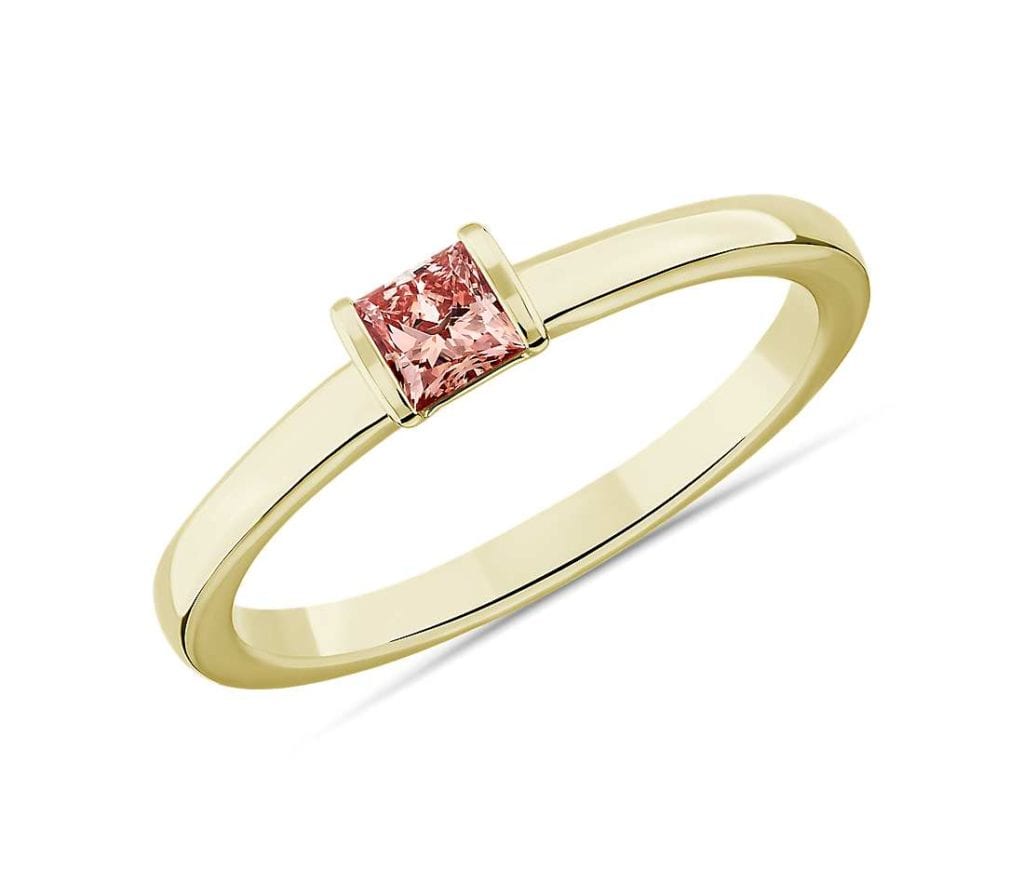
Red diamonds represent the ultimate rarity in the colored diamond world, with only 20-30 known to exist worldwide. These extraordinary gems develop their breathtaking crimson color through an extremely rare process during formation that alters the crystal structure, causing light to interact differently than with colorless diamonds.
On average, red diamonds command prices exceeding $1 million per carat, making them the most valuable colored diamonds by weight. The largest red diamond ever sold at auction weighed 5.11 carats and fetched a total of $8 million, representing approximately $1.6 million per carat.
Collectors and investors seeking these exceptional rarities can explore options at retailers like Blue Nile, which offers a selection of colored diamonds including some of these extraordinary specimens.
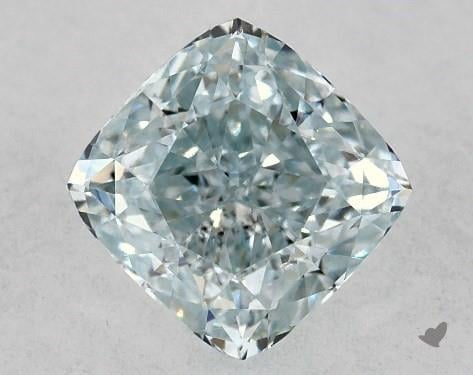
Blue diamonds derive their mesmerizing color from the element boron, which substitutes for some carbon atoms within the diamond crystal structure. This unique composition can produce everything from subtle blue tints to deep, rich azure hues that captivate collectors worldwide.
The average medium-toned 1-carat blue diamond can cost approximately $200,000, with prices increasing significantly with color intensity and size. The most expensive blue diamond ever sold at auction was a 14.2-carat fancy vivid blue specimen, which achieved $3.9 million per carat for a total price of $57.5 million.
This impressive figure seems modest in comparison to the estimated value of the famous Hope Diamond, currently housed at the Smithsonian Institution. The famous blue diamond weighs 45.2 carats and has an estimated value of $250 million. Blue Nile offer a diverse selection of these blue treasures with 360-degree viewing technology.
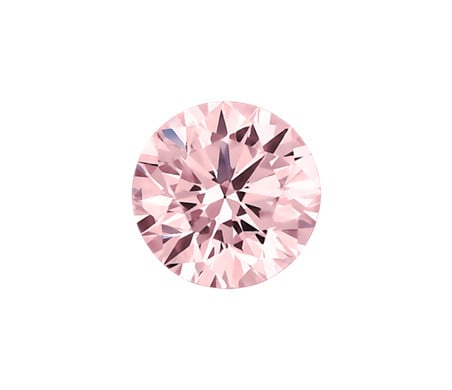
Pink diamonds rank among the rarest diamonds, with most originating from a single source: the Argyle mine in Australia. Although their rarity compares to that of blue diamonds, pink diamonds often command higher prices due to strong demand for their romantic, delicate coloration.
The price per carat for pink diamonds varies considerably based on size, color intensity, and clarity. This wide variation means pink diamond prices can range from $10,000 to over $700,000 per carat for exceptional specimens.
The most celebrated pink diamond, known as the "Pink Star," weighs an impressive 59.6 carats and sold for $71.2 million in 2017, representing approximately $1.19 million per carat. This record-breaking sale demonstrates the extraordinary value collectors place on these rose-colored treasures.
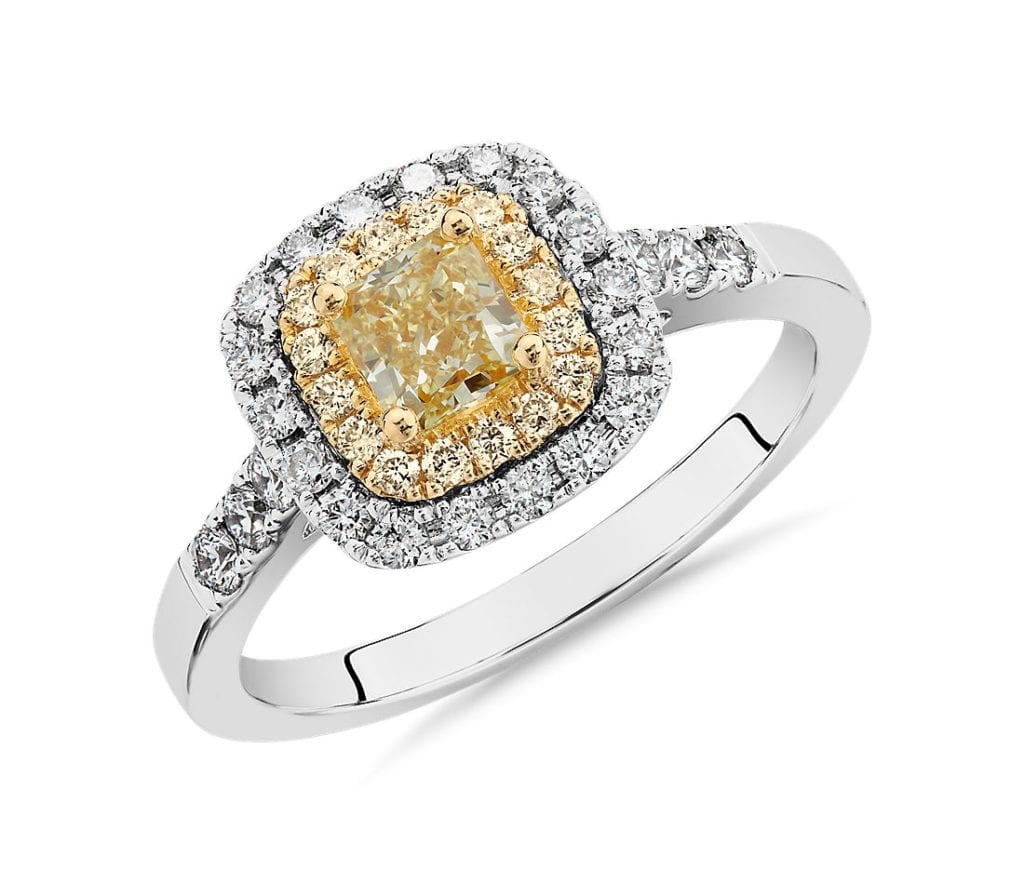
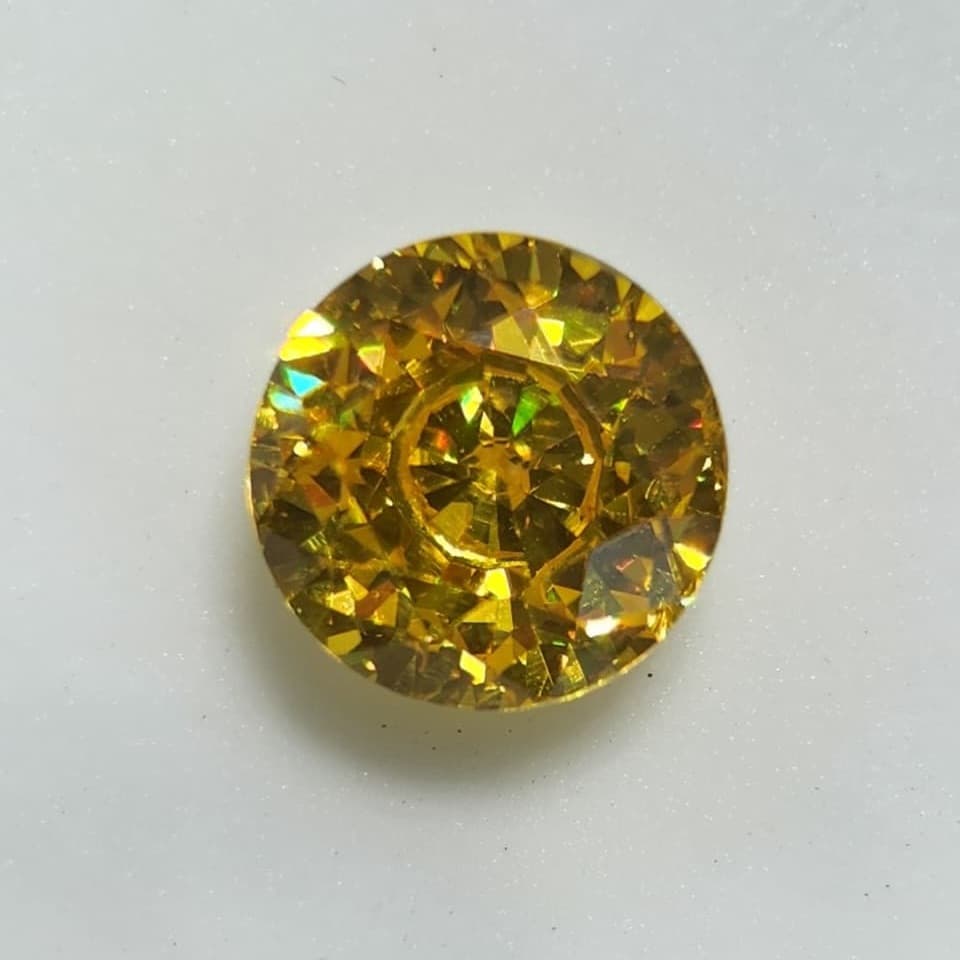
Yellow and brown diamonds constitute more than half of the colored diamond market. Though still rare compared to colorless diamonds, their relatively lower price point and striking appearance have made yellow diamonds the most sought-after colored diamonds among consumers.
Due to their greater availability, yellow diamonds typically cost significantly less per carat than other colored diamonds. Some light yellow diamonds may even be priced below comparable colorless diamonds of similar size and quality.
The extreme rarity of natural colored diamonds makes them prohibitively expensive for many consumers, but lab-grown colored diamonds provide a more accessible alternative. These created diamonds possess identical physical and optical properties to mined diamonds but are produced in controlled laboratory environments.
This combination of affordability and sustainability makes lab-grown colored diamonds an increasingly popular choice for consumers. Retailers like Blue Nile offer extensive collections of lab-grown diamonds suitable for creating stunning and environmentally responsible jewelry.
Colored diamonds have the same carbon composition as colorless diamonds but contain trace elements or structural anomalies that create their unique colors. These variations occur in only 0.1% of all diamonds, making colored diamonds extremely rare.
Red diamonds are the most expensive colored diamonds per carat, often exceeding $1 million per carat due to their extreme rarity. Only 20-30 natural red diamonds are known to exist worldwide.
Fancy colored diamonds are graded using the Four Cs (cut, clarity, carat, and color) like colorless diamonds. However, their color is evaluated based on hue (primary and secondary colors), tone, and saturation. The color intensity scale ranges from faint to fancy vivid, with more intense colors commanding higher prices.
Rare colored diamonds, particularly those with intense colors and larger sizes, have historically appreciated in value. Blue, pink, and red diamonds have shown strong investment performance, though market conditions can vary. Lab-grown diamonds are more affordable but typically don't appreciate in value like natural stones.
Both have identical physical and chemical properties. Gemological laboratories can distinguish them using specialized equipment that detects subtle growth patterns and inclusions characteristic of each formation process.
The Argyle mine in Australia was famous for pink diamonds before closing in 2020. Blue diamonds come primarily from mines in South Africa, India, and Australia. Yellow diamonds are found in several locations worldwide, with significant sources in Africa and Russia.

When you join the IGS community, you get trusted diamond & gemstone information when you need it.
Are you fascinated by the world of colored diamonds? This guide takes you through everything you need to know about these rare treasures, from how they form to what makes them so valuable.
In this article, you will:
Just like their colorless counterparts, fancy colored diamonds form naturally from carbon deep beneath the Earth's surface at temperatures exceeding 1000 degrees Celsius over millions of years. These diamonds develop their extraordinary colors through rare changes to their chemical structure during formation, which alters how they reflect light and influences the colors we perceive.
Gemologists evaluate and price diamonds of color using the traditional Four Cs: cut, clarity, carat, and color. While cut, clarity, and carat assessments follow standard diamond grading principles, the color grading system for diamonds differs significantly from that used for colorless stones.
The intensity of the color determines the grade, with rankings from least to most saturated as follows: faint, very light, light, fancy light, fancy, fancy intense, fancy vivid, fancy dark, and fancy deep. Generally, deeper and more intense colors command higher prices in the diamonds market.
Red diamonds represent the ultimate rarity in the colored diamond world, with only 20-30 known to exist worldwide. These extraordinary gems develop their breathtaking crimson color through an extremely rare process during formation that alters the crystal structure, causing light to interact differently than with colorless diamonds.
On average, red diamonds command prices exceeding $1 million per carat, making them the most valuable colored diamonds by weight. The largest red diamond ever sold at auction weighed 5.11 carats and fetched a total of $8 million, representing approximately $1.6 million per carat.
Collectors and investors seeking these exceptional rarities can explore options at retailers like Blue Nile, which offers a selection of colored diamonds including some of these extraordinary specimens.
Blue diamonds derive their mesmerizing color from the element boron, which substitutes for some carbon atoms within the diamond crystal structure. This unique composition can produce everything from subtle blue tints to deep, rich azure hues that captivate collectors worldwide.
The average medium-toned 1-carat blue diamond can cost approximately $200,000, with prices increasing significantly with color intensity and size. The most expensive blue diamond ever sold at auction was a 14.2-carat fancy vivid blue specimen, which achieved $3.9 million per carat for a total price of $57.5 million.
This impressive figure seems modest in comparison to the estimated value of the famous Hope Diamond, currently housed at the Smithsonian Institution. The famous blue diamond weighs 45.2 carats and has an estimated value of $250 million. Blue Nile offer a diverse selection of these blue treasures with 360-degree viewing technology.
Pink diamonds rank among the rarest diamonds, with most originating from a single source: the Argyle mine in Australia. Although their rarity compares to that of blue diamonds, pink diamonds often command higher prices due to strong demand for their romantic, delicate coloration.
The price per carat for pink diamonds varies considerably based on size, color intensity, and clarity. This wide variation means pink diamond prices can range from $10,000 to over $700,000 per carat for exceptional specimens.
The most celebrated pink diamond, known as the "Pink Star," weighs an impressive 59.6 carats and sold for $71.2 million in 2017, representing approximately $1.19 million per carat. This record-breaking sale demonstrates the extraordinary value collectors place on these rose-colored treasures.
Yellow and brown diamonds constitute more than half of the colored diamond market. Though still rare compared to colorless diamonds, their relatively lower price point and striking appearance have made yellow diamonds the most sought-after colored diamonds among consumers.
Due to their greater availability, yellow diamonds typically cost significantly less per carat than other colored diamonds. Some light yellow diamonds may even be priced below comparable colorless diamonds of similar size and quality.
The extreme rarity of natural colored diamonds makes them prohibitively expensive for many consumers, but lab-grown colored diamonds provide a more accessible alternative. These created diamonds possess identical physical and optical properties to mined diamonds but are produced in controlled laboratory environments.
This combination of affordability and sustainability makes lab-grown colored diamonds an increasingly popular choice for consumers. Retailers like Blue Nile offer extensive collections of lab-grown diamonds suitable for creating stunning and environmentally responsible jewelry.
Colored diamonds have the same carbon composition as colorless diamonds but contain trace elements or structural anomalies that create their unique colors. These variations occur in only 0.1% of all diamonds, making colored diamonds extremely rare.
Red diamonds are the most expensive colored diamonds per carat, often exceeding $1 million per carat due to their extreme rarity. Only 20-30 natural red diamonds are known to exist worldwide.
Fancy colored diamonds are graded using the Four Cs (cut, clarity, carat, and color) like colorless diamonds. However, their color is evaluated based on hue (primary and secondary colors), tone, and saturation. The color intensity scale ranges from faint to fancy vivid, with more intense colors commanding higher prices.
Rare colored diamonds, particularly those with intense colors and larger sizes, have historically appreciated in value. Blue, pink, and red diamonds have shown strong investment performance, though market conditions can vary. Lab-grown diamonds are more affordable but typically don't appreciate in value like natural stones.
Both have identical physical and chemical properties. Gemological laboratories can distinguish them using specialized equipment that detects subtle growth patterns and inclusions characteristic of each formation process.
The Argyle mine in Australia was famous for pink diamonds before closing in 2020. Blue diamonds come primarily from mines in South Africa, India, and Australia. Yellow diamonds are found in several locations worldwide, with significant sources in Africa and Russia.

Click On The Coupons Below to Save Money on Your Jewelry!
*See website for exclusions and restrictions.