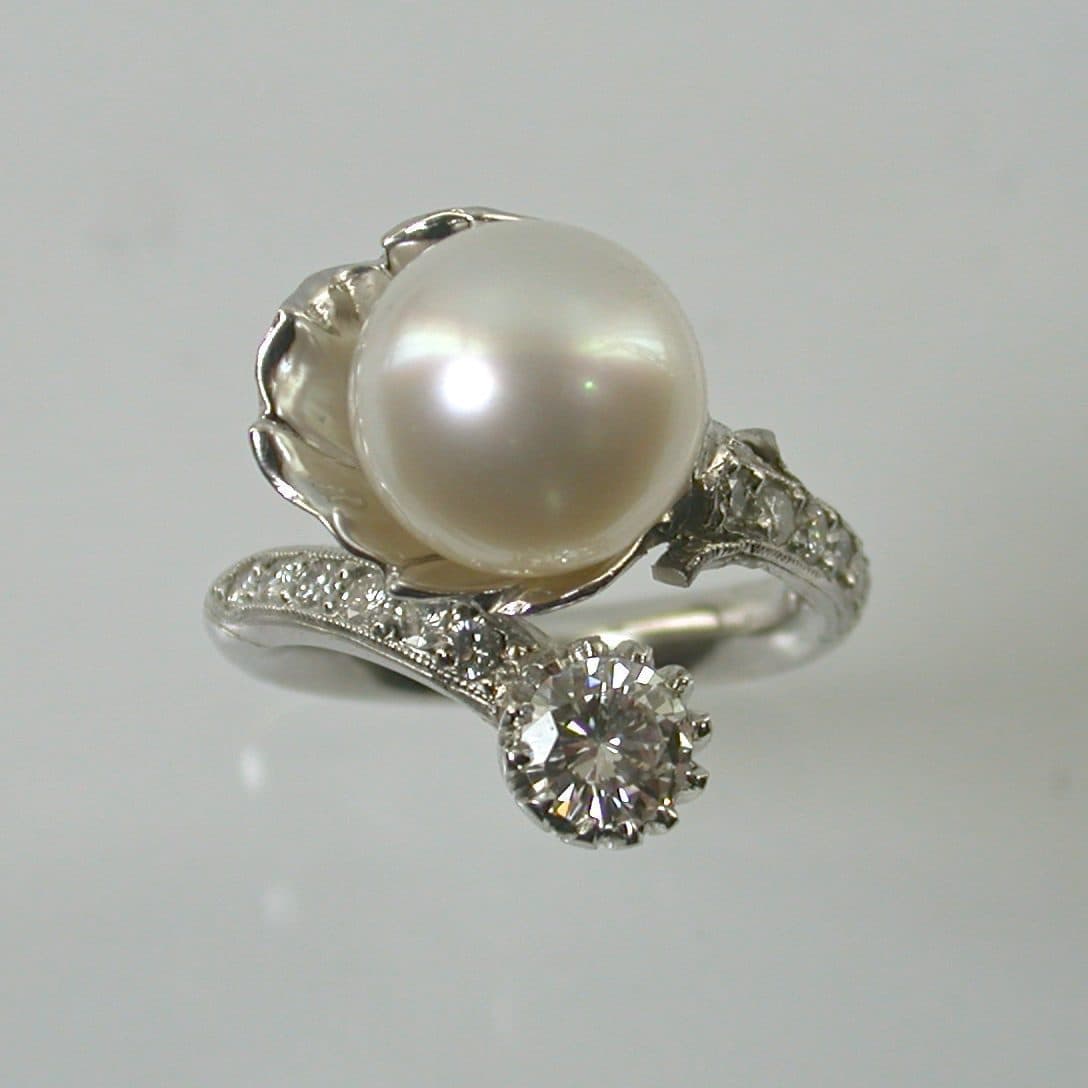
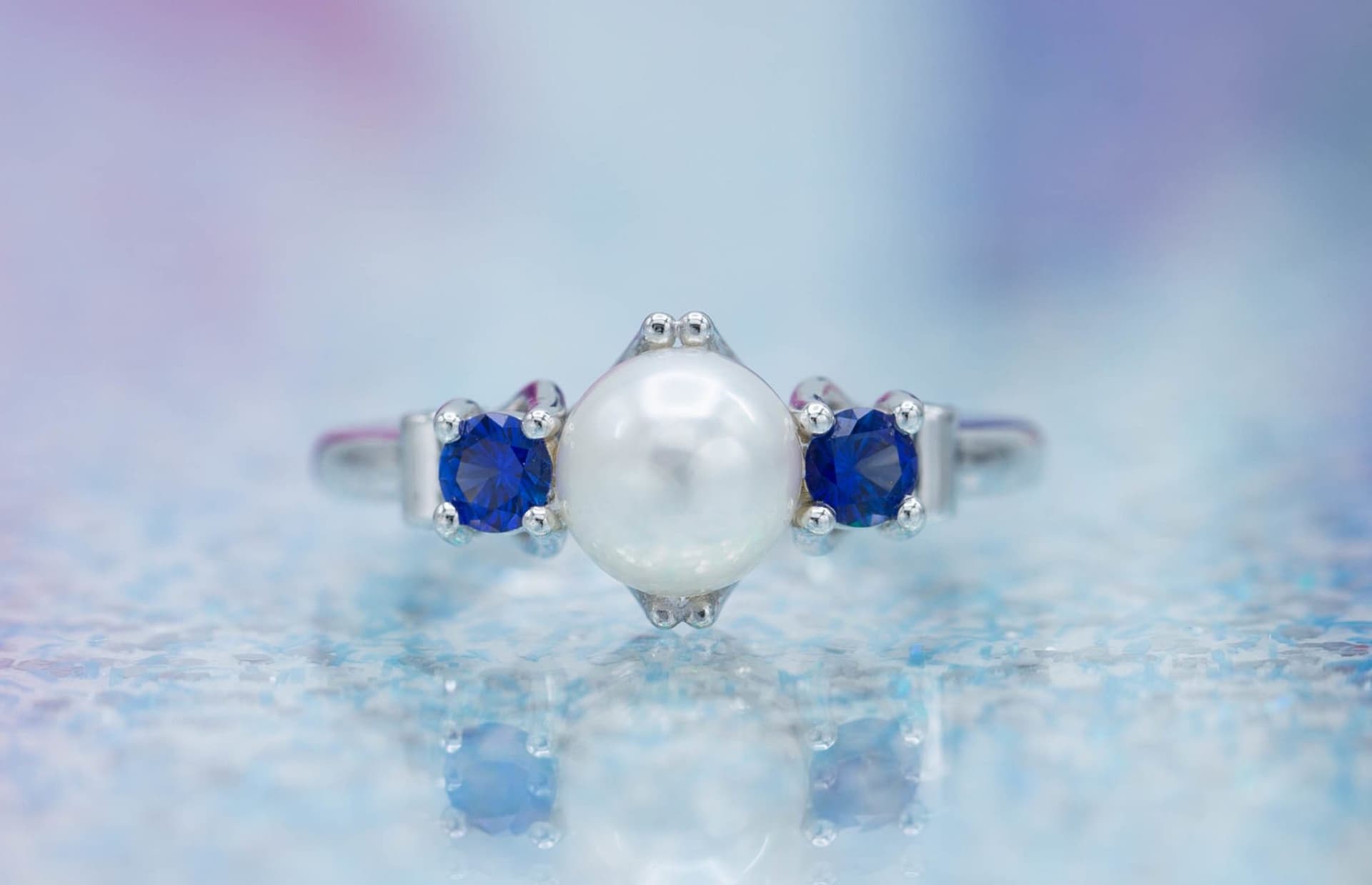
With thick nacre and large sizes, South Sea pearls really stand out when compared to other pearl types. Learn more about these white and golden pearls.
5 Minute Read
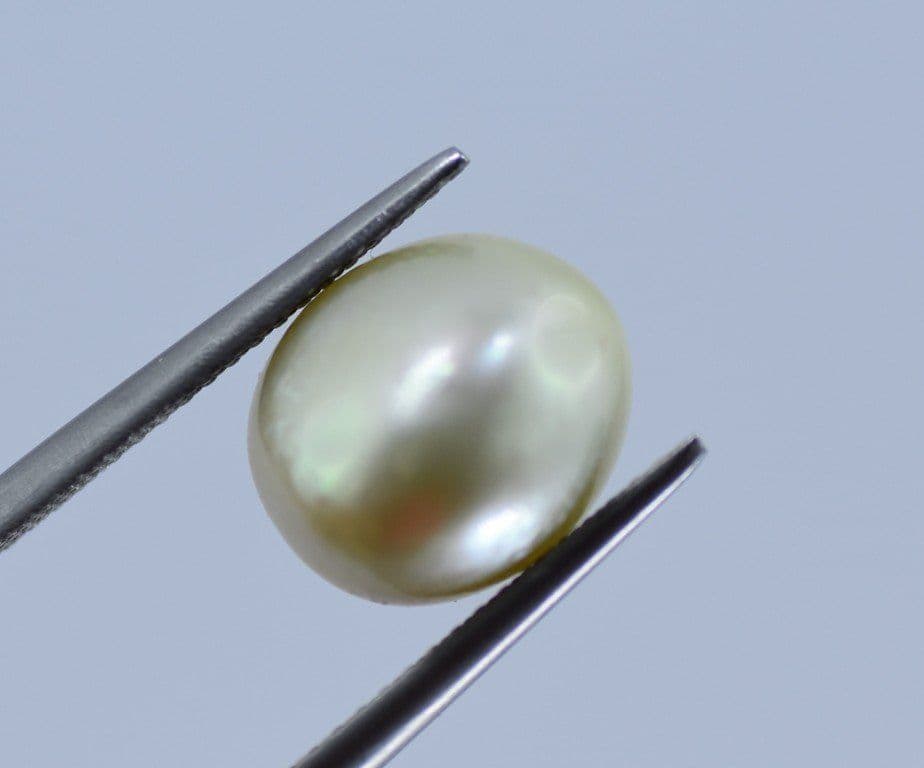
Traditionally, any cultured pearls grown in the waters south of Japan were considered South Sea pearls. Now, the term applies only to white and golden pearls grown in Pinctada maxima oysters.
This saltwater mollusk can reach very large sizes. In the wild, specimens 30 cm across weighing 5 kg are not unheard of. Because of their large size, they can accept large bead nuclei and produce very large pearls, from 8 to 20 mm.
The northwest coast of Australia produces most of the world’s white South Sea pearls, while production in the Philippines focuses on the golden variety. Indonesia also produces large numbers of South Sea pearls in both colors. The white-lipped Pinctada maxima produces white pearls, while the gold-lipped variety produces golden pearls.
Although cultured blister pearl operations in Australia began as early as 1906, they didn’t successfully cultivate whole pearls until after World War II. In fact, the Australian government passed a law in 1912 prohibiting any cultured pearl operations in an effort to prevent competition for the natural pearl industry. Nevertheless, once the cultured pearl industry boomed in Japan, it was clear that was the way forward.
In 1957,…


When you join the IGS community, you get trusted diamond & gemstone information when you need it.
Traditionally, any cultured pearls grown in the waters south of Japan were considered South Sea pearls. Now, the term applies only to white and golden pearls grown in Pinctada maxima oysters.
This saltwater mollusk can reach very large sizes. In the wild, specimens 30 cm across weighing 5 kg are not unheard of. Because of their large size, they can accept large bead nuclei and produce very large pearls, from 8 to 20 mm.
The northwest coast of Australia produces most of the world’s white South Sea pearls, while production in the Philippines focuses on the golden variety. Indonesia also produces large numbers of South Sea pearls in both colors. The white-lipped Pinctada maxima produces white pearls, while the gold-lipped variety produces golden pearls.
Although cultured blister pearl operations in Australia began as early as 1906, they didn’t successfully cultivate whole pearls until after World War II. In fact, the Australian government passed a law in 1912 prohibiting any cultured pearl operations in an effort to prevent competition for the natural pearl industry. Nevertheless, once the cultured pearl industry boomed in Japan, it was clear that was the way forward.
In 1957,…

With thick nacre and large sizes, South Sea pearls really stand out when compared to other pearl types. Learn more about these white and golden pearls.


“I have never known or heard of an organization that offers so much for its members, and at such a low cost.”
— Ernest Roisch, Rainbow Rocks LTD
That's less than $0.01 per article. Get instant access to 1,700+ premium articles, courses, and gem pricing data.