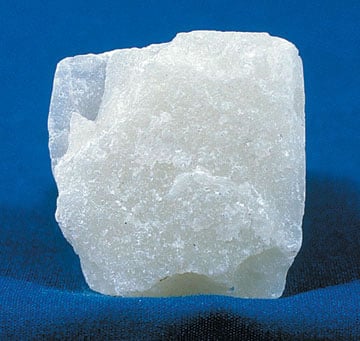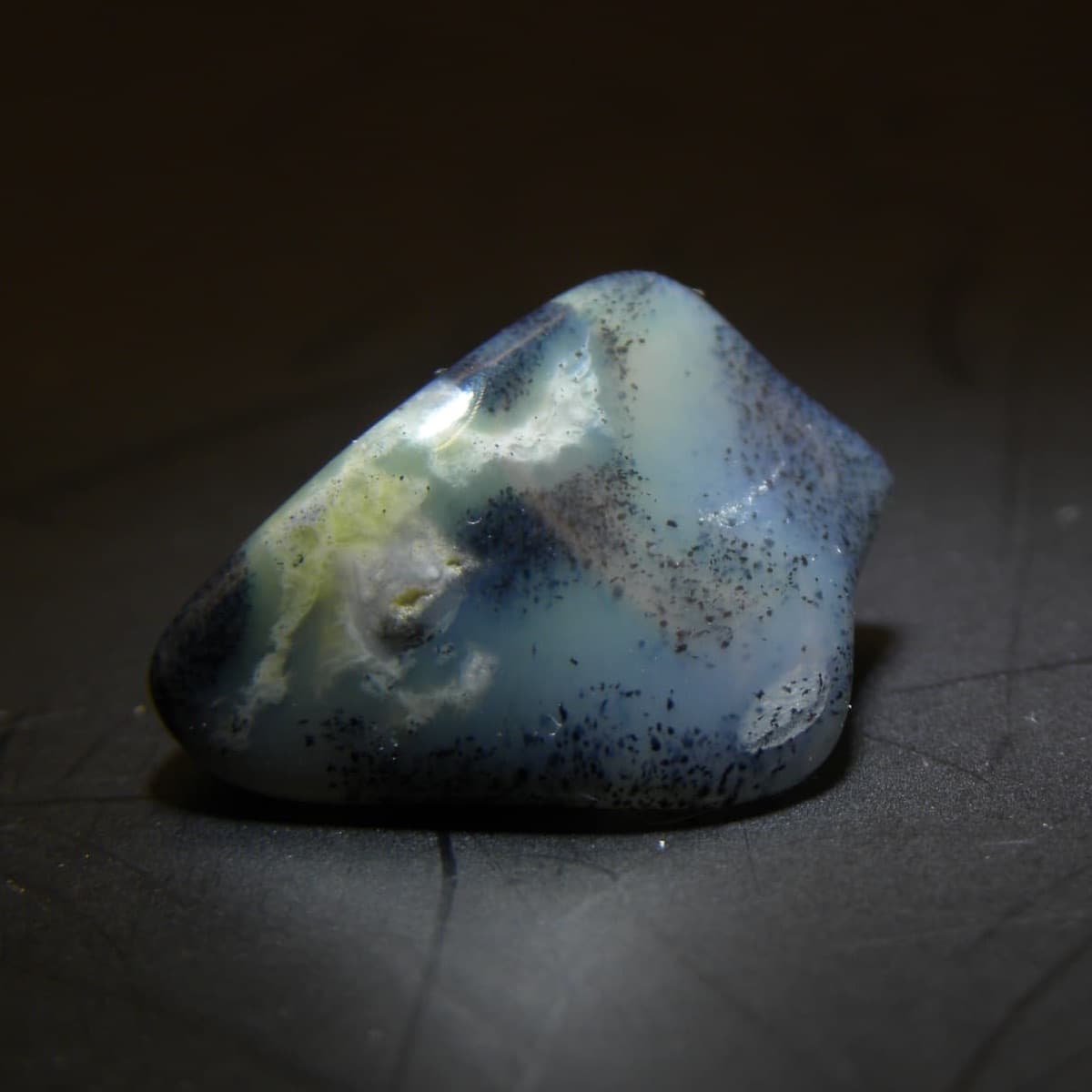
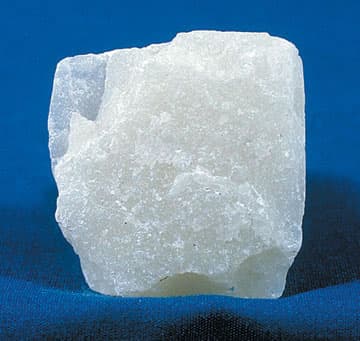
An overview on Talc Jewelry and Gemstones. Covers details and essential information on the physical properties and characteristics of Talc gemstones.
TALC(=SOAPSTONE =STEATITE)
Optics: Monoclinic: a=1.539—1.550; β=1.589—1.594; γ= 1.589—l.600.
Triclinic: a= 1.545; β=1.584; γ= 1.584.
Biaxial {—), 2V=30° in monoclinic.
Shadow edge at 1.54.
Occurrence: In hydrothermally altered ultrabasic rocks and thermally altered siliceous dolomites. Worldwide occurrence, sometimes in large beds, often associated with serpentines.
Many localities in the United States, especially Vermont, New Hampshire, Massachusetts, Virginia, North Carolina, Georgia, California.
Lake Nyasa, Central Africa; India: China." Australia; Zimbabwe; Canada: USSR.
Egypt: ancient deposit.
Comments: Steatite may be slightly harder than talc, due to impurities. Talc itself is often pseudomorphous after other minerals. Massive talc is easy to carve and is widely used for this purpose.
Talc has a greasy feel.
Name: Talc is from the Arabic word talk or talq, the name of the mineral. Steatite is from the Latin steatis, a type of stone, derived from the Greek word steatos, meaning fat.

When you join the IGS community, you get trusted diamond & gemstone information when you need it.
TALC(=SOAPSTONE =STEATITE)
Optics: Monoclinic: a=1.539—1.550; β=1.589—1.594; γ= 1.589—l.600.
Triclinic: a= 1.545; β=1.584; γ= 1.584.
Biaxial {—), 2V=30° in monoclinic.
Shadow edge at 1.54.
Occurrence: In hydrothermally altered ultrabasic rocks and thermally altered siliceous dolomites. Worldwide occurrence, sometimes in large beds, often associated with serpentines.
Many localities in the United States, especially Vermont, New Hampshire, Massachusetts, Virginia, North Carolina, Georgia, California.
Lake Nyasa, Central Africa; India: China." Australia; Zimbabwe; Canada: USSR.
Egypt: ancient deposit.
Comments: Steatite may be slightly harder than talc, due to impurities. Talc itself is often pseudomorphous after other minerals. Massive talc is easy to carve and is widely used for this purpose.
Talc has a greasy feel.
Name: Talc is from the Arabic word talk or talq, the name of the mineral. Steatite is from the Latin steatis, a type of stone, derived from the Greek word steatos, meaning fat.

An overview on Talc Jewelry and Gemstones. Covers details and essential information on the physical properties and characteristics of Talc gemstones.