11 Minute Read
Regardless of personal opinions, it is an undeniable fact that the demand for synthetic diamonds has increased exponentially since they first gained a foothold in the market less than a decade ago. The growth has been so staggering that it sent the diamond industry, which was previously kept very stable in terms of yearly yield and per-carat values, into a tailspin.
Many natural diamond industry experts predicted that the wider diamond marketplace would follow the same path as the colored gemstone market after their synthetics were first introduced in the early years of the twentieth century - the market would split cleanly into two halves, with expensive natural stones at one end and low-cost synthetics on the other.
This scenario is a desired reality as it alleviates public confusion and anxiety surrounding the issue; lab-grown stones would have their place, and the natural diamond market would stabilize. However, despite so much attention directed to the matter, this hasn't happened. In fact, more people are choosing to purchase synthetic diamonds even if they can afford the natural product. This begs the question, "What is the difference between lab-grown colored gems and lab-grown diamonds?"
We asked both diamond and colored stone dealers at the 2025 JCK show, and the 2026 Tucson AGTA and GJX gem shows for their opinions regarding this issue.
Natural diamond sellers provided the same answer that they have repeated for years, that natural diamonds are a rare luxury item while synthetics are a mass-produced, low-value commodity. Interestingly, colored stone specialists offered a more nuanced perspective, pointing out fundamental differences between colorless diamonds and colored gemstone varieties.
First, some background information - natural and synthetic diamonds have the same chemical makeup and physical properties, so they look and act the same.
The difference is their origin, and it is up to the buyer whether they feel that natural origin is a sufficient reason to warrant paying significantly more.
Ari Jain, an eighth-generation natural diamond merchant and CEO of House of Diamonds, is active on social media explaining that he feels the difference in origin is indeed important - "lab-grown diamonds are wholesaling for under $40 per carat, that's mass production. A natural diamond is a billion-year miracle of the earth."
Jain is certainly correct that the volume of synthetic diamonds has skyrocketed, with millions of carats now being produced and sold in a single year. With so much output, scientists have refined their growing methodology to the point where most synthetic diamonds can be inexpensively produced as huge crystals that have perfect clarity and excellent color (most falling in the colorless group with D, E, and F grades).
What results is a product that is predictably uniform. Moreover, synthetic diamonds are increasingly difficult to identify. The newest synthetic stones require advanced testing to determine their origin.
Interestingly, when we spoke with Rajat Karnawat of Lotus Colors, Inc., a company that treats mined diamonds to induce color, at last year's JCK show, he shared that many of his customers struggle to understand why they should pay more for naturals when synthetics look exactly the same - "in the last several years as labs became more mainstream, customers did not know the difference between those and naturals. We had to educate our buyers. It is still hit or miss if they understand."
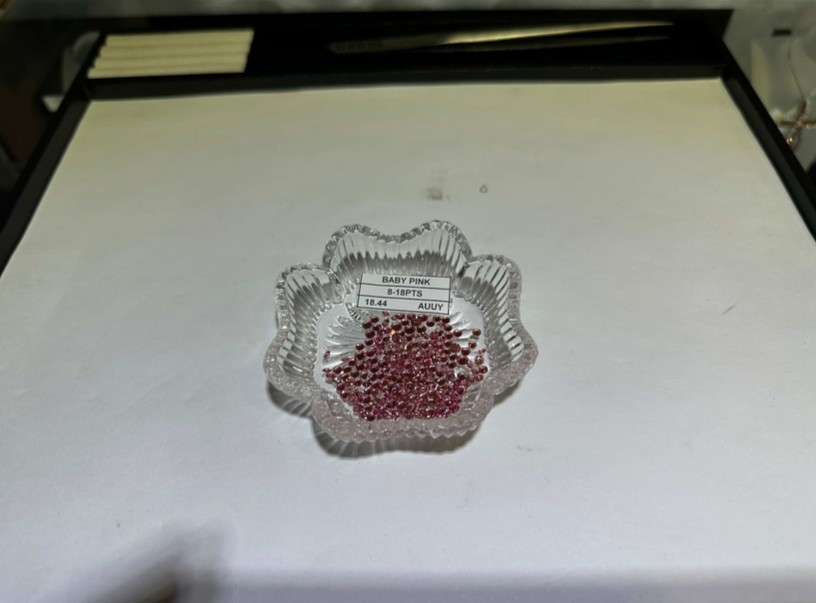
Some of the "magic", as Jain called it, of natural diamonds is the effort and care that it takes to mine, process, and then, if necessary, find mates for multi-stone jewelry projects. Natural diamond rough also requires a great deal of planning. Cutters must consider the placement of any clarity features within the crystal and account for color zoning. This laborious process certainly deserves recognition and appreciation, and natural diamond advocates cite it as a central difference between the natural product and the man-made alternative.
Like House of Diamonds, Aashu Diamonds Inc. (IG aashu_diamonds_inc) sells exclusively natural diamonds. At the JCK show, representative Yagnikkumar Pansuriya scoffed at synthetics, saying, "There is always a difference between natural products and knockoffs." He argued that the markets of natural and synthetic diamonds have already achieved a high degree of separation - "there are those who want to spend money and those who don't. The mass production costs are getting cheaper every day." Yet, this does not explain why the synthetic market continues to attract more buyers, affecting the per-carat values of naturals.
Searching for additional insight from a different angle, we spent time speaking with various natural colored stone sellers at AGTA and discovered that they do have more to say about the issue.
They cited a few reasons that, in their opinion, the history of the synthetic colored gemstones cannot be used to predict the behavior of the synthetic diamonds at all.
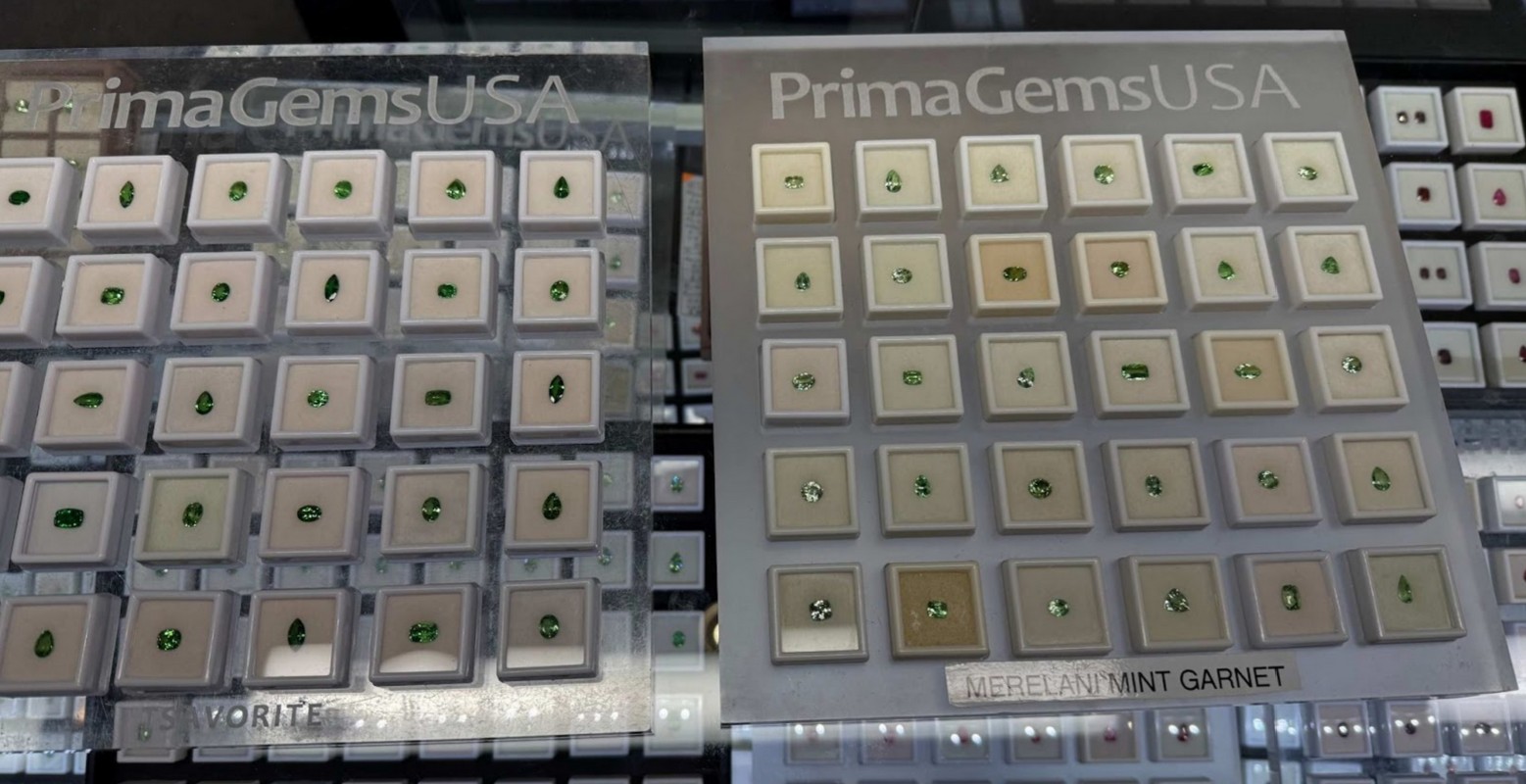
We first approached Sam Sulimanov, founder of Samuel Sylvio Designs. Sulimanov argued that colorless diamonds and colored gemstones are entirely different products that are evaluated and valued by different standards - "When you consider individual colored gems (which each have a distinct appearance), you have to think about origin, cut, color, treatments, zoning, inclusions, and so forth. There are no rules (or standard proportions) for cutting. Rather, it is the color expression and inclusions that dictate how that is done. Each stone is interesting and has a story. If you like the particular story told by a specific gem, you buy that gem. Colorless diamonds have no story."
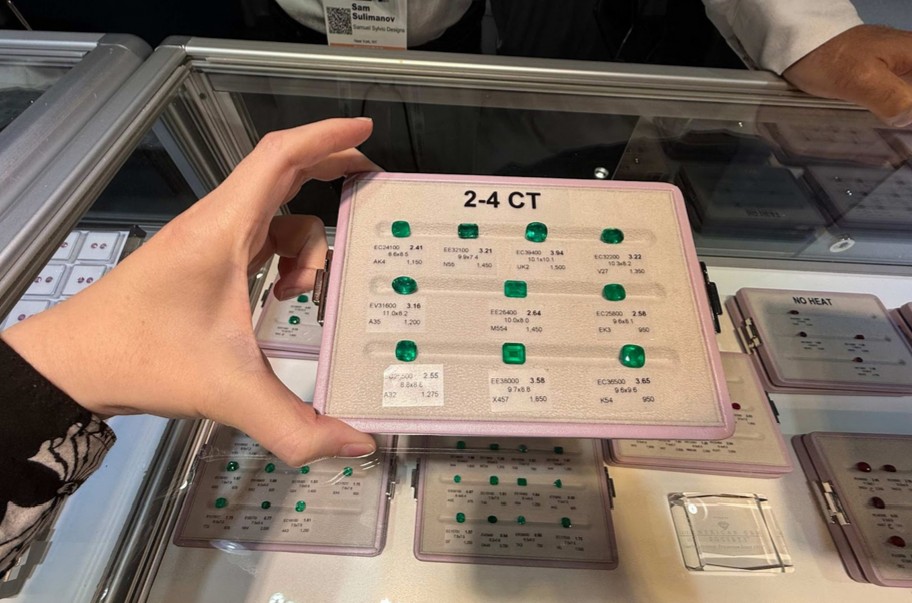
To support his argument, Sulimanov pointed out that there is no standard colored gemstone grading system that matches the famous "4C's" of diamond grading.
Being able to match stones based on just four parameters, he said, speaks to a lack of individuality. Moreover, Sulimanov pointed to the global per-carat pricing system for diamonds, which has no counterpart in the colored gem industry - "Diamonds have highly regulated per-carat prices. We don't. With colored gemstones, you are paying for a feeling, a character that speaks to you".
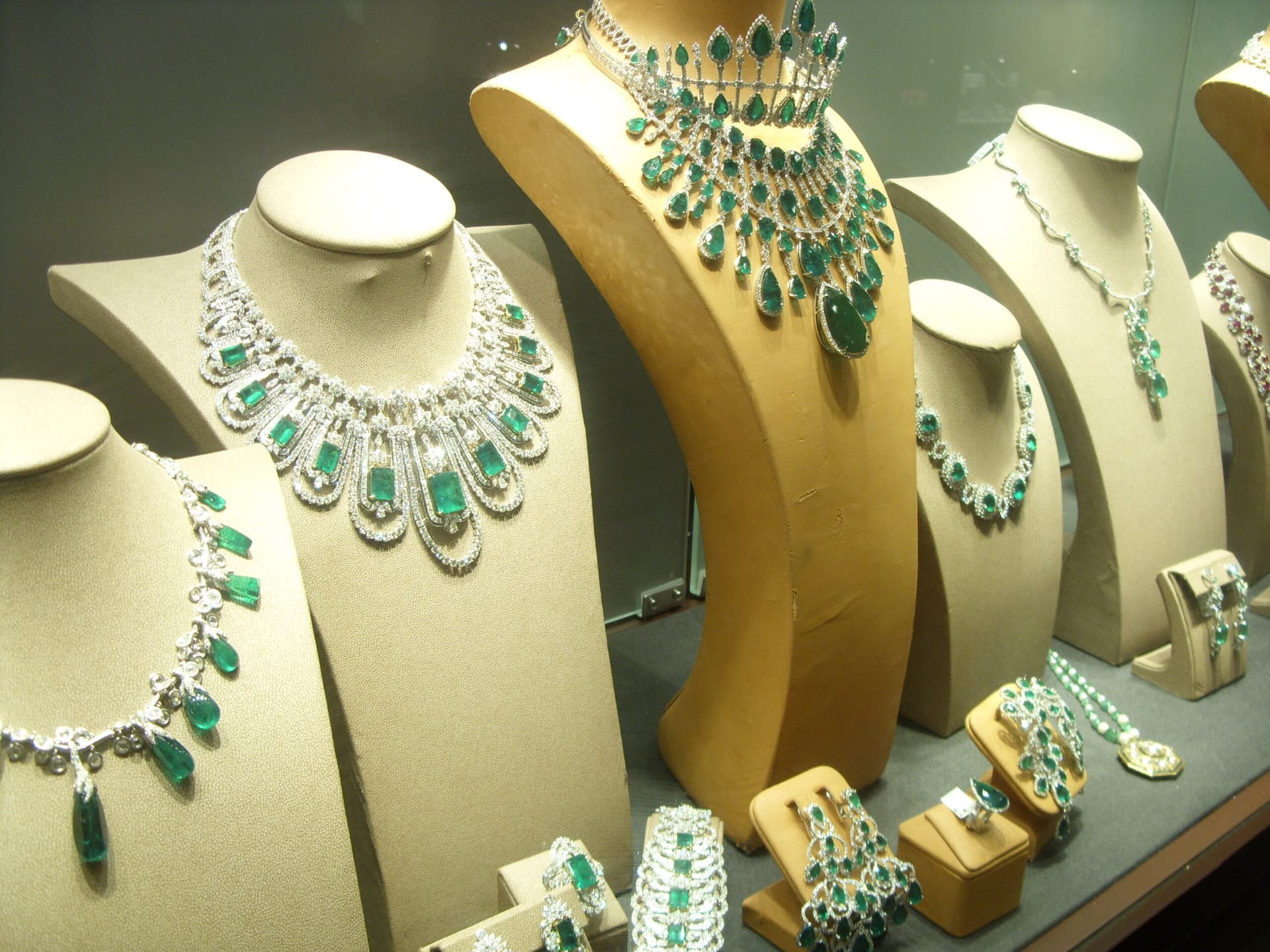
In an effort to bolster sales of their natural colorless diamond jewelry, some sellers have started to add designs that feature colored gemstones. The rationale behind this move is that people trust that high-quality colored gemstone jewelry features natural stones.
So, while you cannot tell if a diamond is natural or synthetic with a visual inspection, the presence of colored gems alongside them indicates that the piece as a whole is of fine quality with natural stones. Unfortunately, Sulimanov says that some of the diamond sellers who are joining this trend are making purchases before gaining a sufficient understanding of the colored gemstone market. Hurried purchases, he said, can result in dealers overpaying for colored gemstones.
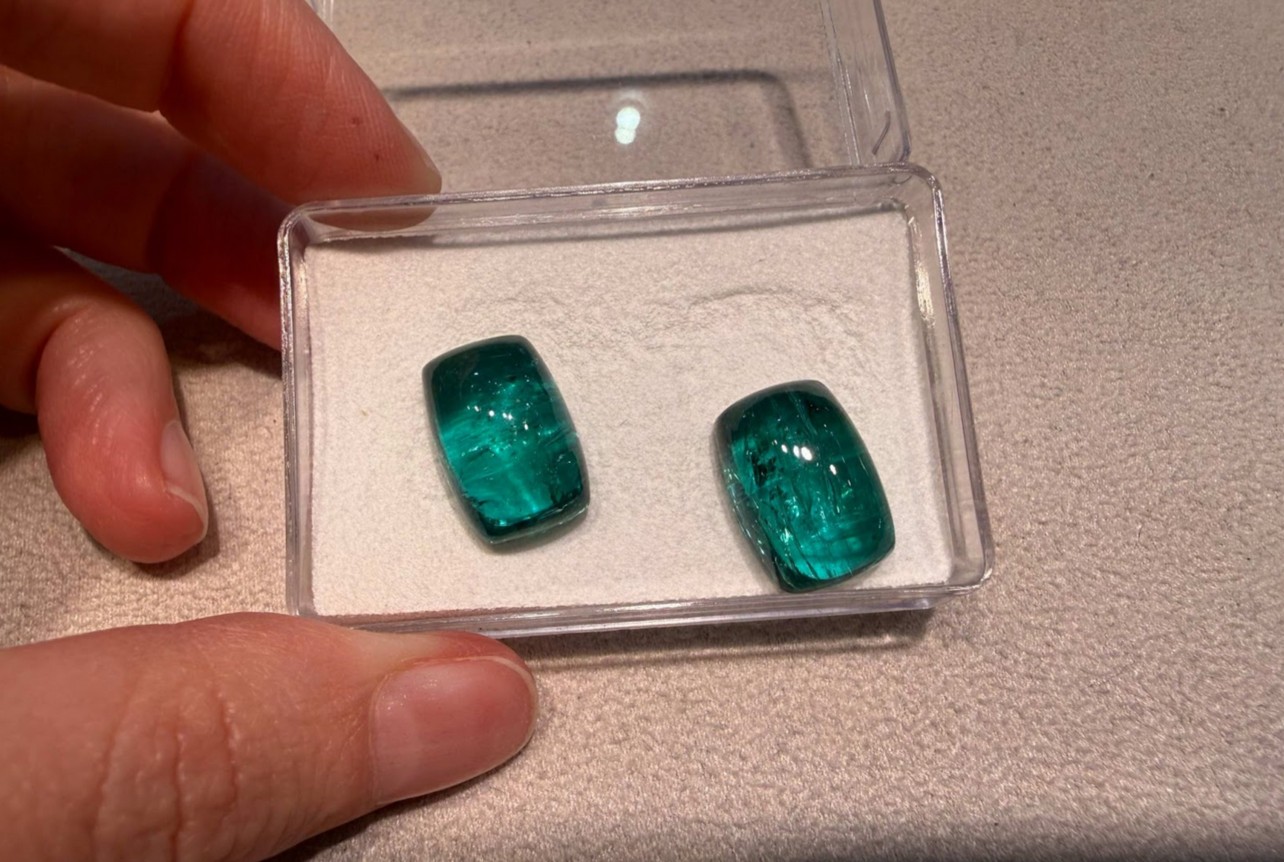
So, it is unfair to expect the synthetic diamond market to follow the same path as the synthetic colored gemstone market did because synthetic colored gems don't look like naturals.
Natural colored gems are distinct from each other across many different characteristics beyond the 4Cs. This inherent variation makes uniform synthetic colored gems relatively easy to identify with basic gemological equipment.
Alternatively, natural and synthetic colorless diamonds look exactly the same. The detriment of this is that separating natural from synthetic stones often can't be done without specialized testing technology. This forces buyers to place trust in sellers that they are, in fact, purchasing natural gems.
We were fortunate to speak with Wendi Mayerson, recently hired by Gemological Science International (GSI) in New York as their Chief Gemology Officer, who offered insight into both the history of synthetic colored gemstones and how their marketplace differs from diamonds.
Mayerson explained that the issue of synthetic gemstones was born in the early years of the twentieth century after Auguste Verneuil succeeded in making the world's first synthetic ruby in 1902. Just a short time later, in 1905, growers were synthesizing rubies with annual yields of millions of carats. Shortly thereafter, man-made versions of blue sapphire and spinel became available.
The discovery of mass-produced synthetic gemstones, Mayerson said, was very well-timed. The popular jewelry aesthetic in the 1920's and 30's was the Art Deco style, which featured lots of small colored gemstones that were calibre-cut with perfectly matched hues of deep saturation. In addition to being less expensive than natural gems, synthetics were a fantastic choice for this style because of their deep, uniform color and the ability to cut them to exact specifications. "Synthetics," Mayerson said, "had found their place."
As for why these early synthetic colored gems did not destabilize the natural gem market to the same degree as synthetic diamonds have, Mayerson offered an interesting explanation - "The colored gemstone industry is different from the colorless diamond industry because buyers of colored gems have always had options with multiple gemstones looking like each other.
For example, emeralds, tsavorites, and demantoid garnets, and even some tourmalines are all green stones with overlapping ranges of color expression." She argues that this reality gave colored gemstone buyers, at least on an unconscious level, a flexible outlook because they are used to having a choice. Natural colorless diamonds have no competition - there simply are no natural colorless gemstones with the level of brilliance and dispersion inherent in diamonds.
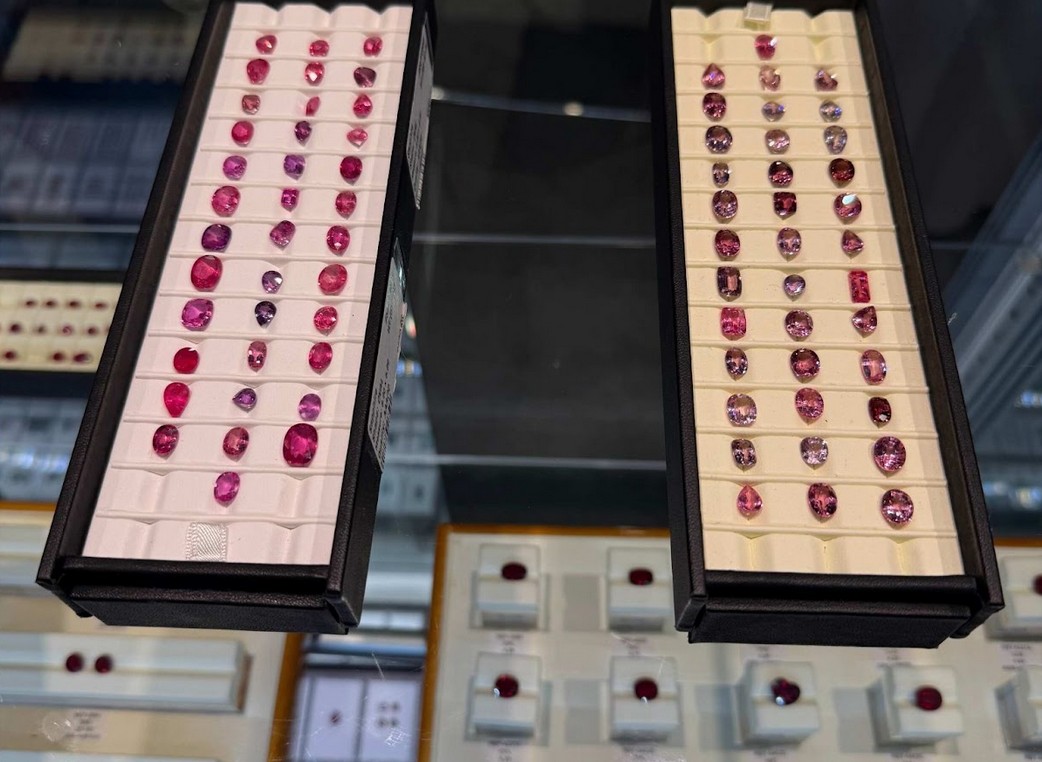
Additionally, Mayerson echoed the sentiment that you cannot understate the importance of being able to easily identify synthetic gems.
Colored gemstones can be made via several methods, all of which leave behind identifiable markers, namely unusual inclusions or growth patterns. Illustrating her point, she singled out flux-grown gems that can contain fragments of that flux and flame-fusion gems that often have curved striae. Both of these growing methods are very often recognizable by a gemologist working with standard tools of the trade.
It is worthwhile to mention here that it is not just buyers who may be hesitant to purchase expensive diamond jewelry advertised as natural; those involved in the estate jewelry space now have to consider that diamond jewelry brought to them that has been made since about 2009 may be set with lab-grown gems they can't identify without sending to a professional laboratory.
Depending on the item, the expense of testing may not make sense. Yet, if a store purchases a synthetic stone thinking that it is natural and subsequently sells it to a customer who has the piece tested and finds that it is indeed a low-cost synthetic, the store is responsible for the mistake.
Mayerson said that the most challenging task for all gemologists trying to separate natural from lab-grown diamonds is analyzing jewelry that features melee diamonds. With clean, colorless, tiny diamonds set in jewelry, not only does the mounting often limit the gemologist's view of the diamond for testing, but often the characteristics that help laboratories separate lab-grown from natural diamonds have been cut away, leaving little to no evidence of their origins.
As a result, multiple advanced testing machines are required to check other properties of the diamonds in question. Also required are gemologists with extensive experience and specific subject matter knowledge to properly interpret the data from the advanced testing machines.
Specifically, Mayerson said that the laboratory gemologists at GSI use a variety of advanced spectroscopic instruments to make the separation.
For most diamonds, there is no magic black box that separates natural diamonds from lab-grown. Some pieces received by the lab are mounted with hundreds of tiny diamonds weighing as little as 0.003 carats. To resolve this challenge, GSI works directly with advanced testing machine manufacturers to create specialized machines that can accommodate jewelry items.
In summary, our discussions with trade professionals shed light on the crucial differences between synthetic colored gemstones and synthetic diamonds, which highlights why the colored gemstone marketplace was better able to absorb synthetics without going into crisis.
The most important point was that synthetic colored gems always stood out as their own unique product that could be separated from naturals by gemologists and even some educated buyers. Also, the observation that colored gem buyers might be more relaxed with options because they are accustomed to having multiple choices based on color is an intriguing thought.
Unfortunately, the issues that have led to anxiety surrounding the synthetic colorless diamond market do not have a clear solution. It will continue that certainty about a diamond's origins will require advanced testing at a laboratory. Disclosure about the results of such testing, such an integral part of the gems and jewelry world, is absolutely essential to retain public trust.
The other issue with diamonds is that the "story," as Sulimanov said, isn't apparent. Jain argues that natural diamonds certainly do have their own magical tale, but buyers have to want to own gems with that story, even if other people can't tell that the wearer paid more for it.
What is certain is that the wider diamond market, including both naturals and synthetics, will continue to be a dynamic place.
It seems that the production costs of diamond synthetics continue to decrease while the quality of the product increases. This is opening up an entirely new space for custom-cut synthetic diamonds where the total yield of rough is not a concern. As for other possible changes the future holds for the industry, we will have to keep watching!


When you join the IGS community, you get trusted diamond & gemstone information when you need it.
Regardless of personal opinions, it is an undeniable fact that the demand for synthetic diamonds has increased exponentially since they first gained a foothold in the market less than a decade ago. The growth has been so staggering that it sent the diamond industry, which was previously kept very stable in terms of yearly yield and per-carat values, into a tailspin.
Many natural diamond industry experts predicted that the wider diamond marketplace would follow the same path as the colored gemstone market after their synthetics were first introduced in the early years of the twentieth century - the market would split cleanly into two halves, with expensive natural stones at one end and low-cost synthetics on the other.
This scenario is a desired reality as it alleviates public confusion and anxiety surrounding the issue; lab-grown stones would have their place, and the natural diamond market would stabilize. However, despite so much attention directed to the matter, this hasn't happened. In fact, more people are choosing to purchase synthetic diamonds even if they can afford the natural product. This begs the question, "What is the difference between lab-grown colored gems and lab-grown diamonds?"
We asked both diamond and colored stone dealers at the 2025 JCK show, and the 2026 Tucson AGTA and GJX gem shows for their opinions regarding this issue.
Natural diamond sellers provided the same answer that they have repeated for years, that natural diamonds are a rare luxury item while synthetics are a mass-produced, low-value commodity. Interestingly, colored stone specialists offered a more nuanced perspective, pointing out fundamental differences between colorless diamonds and colored gemstone varieties.
First, some background information - natural and synthetic diamonds have the same chemical makeup and physical properties, so they look and act the same.
The difference is their origin, and it is up to the buyer whether they feel that natural origin is a sufficient reason to warrant paying significantly more.
Ari Jain, an eighth-generation natural diamond merchant and CEO of House of Diamonds, is active on social media explaining that he feels the difference in origin is indeed important - "lab-grown diamonds are wholesaling for under $40 per carat, that's mass production. A natural diamond is a billion-year miracle of the earth."
Jain is certainly correct that the volume of synthetic diamonds has skyrocketed, with millions of carats now being produced and sold in a single year. With so much output, scientists have refined their growing methodology to the point where most synthetic diamonds can be inexpensively produced as huge crystals that have perfect clarity and excellent color (most falling in the colorless group with D, E, and F grades).
What results is a product that is predictably uniform. Moreover, synthetic diamonds are increasingly difficult to identify. The newest synthetic stones require advanced testing to determine their origin.
Interestingly, when we spoke with Rajat Karnawat of Lotus Colors, Inc., a company that treats mined diamonds to induce color, at last year's JCK show, he shared that many of his customers struggle to understand why they should pay more for naturals when synthetics look exactly the same - "in the last several years as labs became more mainstream, customers did not know the difference between those and naturals. We had to educate our buyers. It is still hit or miss if they understand."
Some of the "magic", as Jain called it, of natural diamonds is the effort and care that it takes to mine, process, and then, if necessary, find mates for multi-stone jewelry projects. Natural diamond rough also requires a great deal of planning. Cutters must consider the placement of any clarity features within the crystal and account for color zoning. This laborious process certainly deserves recognition and appreciation, and natural diamond advocates cite it as a central difference between the natural product and the man-made alternative.
Like House of Diamonds, Aashu Diamonds Inc. (IG aashu_diamonds_inc) sells exclusively natural diamonds. At the JCK show, representative Yagnikkumar Pansuriya scoffed at synthetics, saying, "There is always a difference between natural products and knockoffs." He argued that the markets of natural and synthetic diamonds have already achieved a high degree of separation - "there are those who want to spend money and those who don't. The mass production costs are getting cheaper every day." Yet, this does not explain why the synthetic market continues to attract more buyers, affecting the per-carat values of naturals.
Searching for additional insight from a different angle, we spent time speaking with various natural colored stone sellers at AGTA and discovered that they do have more to say about the issue.
They cited a few reasons that, in their opinion, the history of the synthetic colored gemstones cannot be used to predict the behavior of the synthetic diamonds at all.
We first approached Sam Sulimanov, founder of Samuel Sylvio Designs. Sulimanov argued that colorless diamonds and colored gemstones are entirely different products that are evaluated and valued by different standards - "When you consider individual colored gems (which each have a distinct appearance), you have to think about origin, cut, color, treatments, zoning, inclusions, and so forth. There are no rules (or standard proportions) for cutting. Rather, it is the color expression and inclusions that dictate how that is done. Each stone is interesting and has a story. If you like the particular story told by a specific gem, you buy that gem. Colorless diamonds have no story."
To support his argument, Sulimanov pointed out that there is no standard colored gemstone grading system that matches the famous "4C's" of diamond grading.
Being able to match stones based on just four parameters, he said, speaks to a lack of individuality. Moreover, Sulimanov pointed to the global per-carat pricing system for diamonds, which has no counterpart in the colored gem industry - "Diamonds have highly regulated per-carat prices. We don't. With colored gemstones, you are paying for a feeling, a character that speaks to you".
In an effort to bolster sales of their natural colorless diamond jewelry, some sellers have started to add designs that feature colored gemstones. The rationale behind this move is that people trust that high-quality colored gemstone jewelry features natural stones.
So, while you cannot tell if a diamond is natural or synthetic with a visual inspection, the presence of colored gems alongside them indicates that the piece as a whole is of fine quality with natural stones. Unfortunately, Sulimanov says that some of the diamond sellers who are joining this trend are making purchases before gaining a sufficient understanding of the colored gemstone market. Hurried purchases, he said, can result in dealers overpaying for colored gemstones.
So, it is unfair to expect the synthetic diamond market to follow the same path as the synthetic colored gemstone market did because synthetic colored gems don't look like naturals.
Natural colored gems are distinct from each other across many different characteristics beyond the 4Cs. This inherent variation makes uniform synthetic colored gems relatively easy to identify with basic gemological equipment.
Alternatively, natural and synthetic colorless diamonds look exactly the same. The detriment of this is that separating natural from synthetic stones often can't be done without specialized testing technology. This forces buyers to place trust in sellers that they are, in fact, purchasing natural gems.
We were fortunate to speak with Wendi Mayerson, recently hired by Gemological Science International (GSI) in New York as their Chief Gemology Officer, who offered insight into both the history of synthetic colored gemstones and how their marketplace differs from diamonds.
Mayerson explained that the issue of synthetic gemstones was born in the early years of the twentieth century after Auguste Verneuil succeeded in making the world's first synthetic ruby in 1902. Just a short time later, in 1905, growers were synthesizing rubies with annual yields of millions of carats. Shortly thereafter, man-made versions of blue sapphire and spinel became available.
The discovery of mass-produced synthetic gemstones, Mayerson said, was very well-timed. The popular jewelry aesthetic in the 1920's and 30's was the Art Deco style, which featured lots of small colored gemstones that were calibre-cut with perfectly matched hues of deep saturation. In addition to being less expensive than natural gems, synthetics were a fantastic choice for this style because of their deep, uniform color and the ability to cut them to exact specifications. "Synthetics," Mayerson said, "had found their place."
As for why these early synthetic colored gems did not destabilize the natural gem market to the same degree as synthetic diamonds have, Mayerson offered an interesting explanation - "The colored gemstone industry is different from the colorless diamond industry because buyers of colored gems have always had options with multiple gemstones looking like each other.
For example, emeralds, tsavorites, and demantoid garnets, and even some tourmalines are all green stones with overlapping ranges of color expression." She argues that this reality gave colored gemstone buyers, at least on an unconscious level, a flexible outlook because they are used to having a choice. Natural colorless diamonds have no competition - there simply are no natural colorless gemstones with the level of brilliance and dispersion inherent in diamonds.
Additionally, Mayerson echoed the sentiment that you cannot understate the importance of being able to easily identify synthetic gems.
Colored gemstones can be made via several methods, all of which leave behind identifiable markers, namely unusual inclusions or growth patterns. Illustrating her point, she singled out flux-grown gems that can contain fragments of that flux and flame-fusion gems that often have curved striae. Both of these growing methods are very often recognizable by a gemologist working with standard tools of the trade.
It is worthwhile to mention here that it is not just buyers who may be hesitant to purchase expensive diamond jewelry advertised as natural; those involved in the estate jewelry space now have to consider that diamond jewelry brought to them that has been made since about 2009 may be set with lab-grown gems they can't identify without sending to a professional laboratory.
Depending on the item, the expense of testing may not make sense. Yet, if a store purchases a synthetic stone thinking that it is natural and subsequently sells it to a customer who has the piece tested and finds that it is indeed a low-cost synthetic, the store is responsible for the mistake.
Mayerson said that the most challenging task for all gemologists trying to separate natural from lab-grown diamonds is analyzing jewelry that features melee diamonds. With clean, colorless, tiny diamonds set in jewelry, not only does the mounting often limit the gemologist's view of the diamond for testing, but often the characteristics that help laboratories separate lab-grown from natural diamonds have been cut away, leaving little to no evidence of their origins.
As a result, multiple advanced testing machines are required to check other properties of the diamonds in question. Also required are gemologists with extensive experience and specific subject matter knowledge to properly interpret the data from the advanced testing machines.
Specifically, Mayerson said that the laboratory gemologists at GSI use a variety of advanced spectroscopic instruments to make the separation.
For most diamonds, there is no magic black box that separates natural diamonds from lab-grown. Some pieces received by the lab are mounted with hundreds of tiny diamonds weighing as little as 0.003 carats. To resolve this challenge, GSI works directly with advanced testing machine manufacturers to create specialized machines that can accommodate jewelry items.
In summary, our discussions with trade professionals shed light on the crucial differences between synthetic colored gemstones and synthetic diamonds, which highlights why the colored gemstone marketplace was better able to absorb synthetics without going into crisis.
The most important point was that synthetic colored gems always stood out as their own unique product that could be separated from naturals by gemologists and even some educated buyers. Also, the observation that colored gem buyers might be more relaxed with options because they are accustomed to having multiple choices based on color is an intriguing thought.
Unfortunately, the issues that have led to anxiety surrounding the synthetic colorless diamond market do not have a clear solution. It will continue that certainty about a diamond's origins will require advanced testing at a laboratory. Disclosure about the results of such testing, such an integral part of the gems and jewelry world, is absolutely essential to retain public trust.
The other issue with diamonds is that the "story," as Sulimanov said, isn't apparent. Jain argues that natural diamonds certainly do have their own magical tale, but buyers have to want to own gems with that story, even if other people can't tell that the wearer paid more for it.
What is certain is that the wider diamond market, including both naturals and synthetics, will continue to be a dynamic place.
It seems that the production costs of diamond synthetics continue to decrease while the quality of the product increases. This is opening up an entirely new space for custom-cut synthetic diamonds where the total yield of rough is not a concern. As for other possible changes the future holds for the industry, we will have to keep watching!