Are Emeralds Expensive?
9 Minute Read
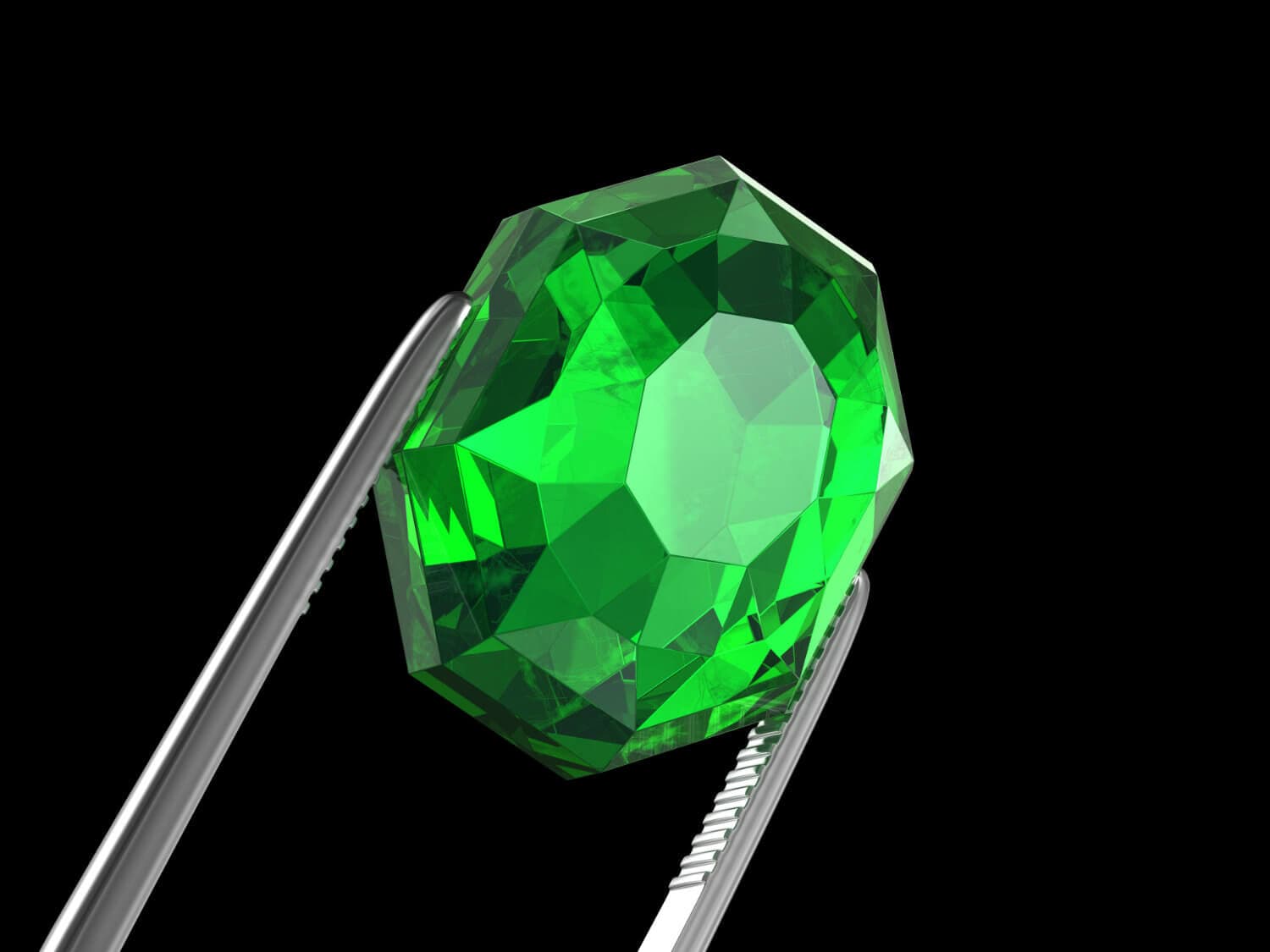
Emeralds are more than just a pretty stone. They set the standard for the best green color in the world. Are you looking at a lush forest? You might describe the foliage as a kaleidoscope of emerald greens. Maybe a person you love has green irises. You might say that you get lost when gazing into their emerald eyes. Indeed, emeralds are the most famous of all the transparent green stones. Archaeological evidence shows that humans actively mined them as far back as 3500 BCE. Today, their popularity remains, and emeralds are part of the exclusive "Big Three" gemstone group alongside rubies and sapphires.

The value of emeralds has an enormous range. Small commercial-quality stones can be quite affordable, while the best gemstones can command per-carat values well into the six figures. With so much money at stake, educated buyers know that the slightest variation in color, clarity, cut, size, geographic origin, and treatment can make a huge difference in the ultimate price tag.
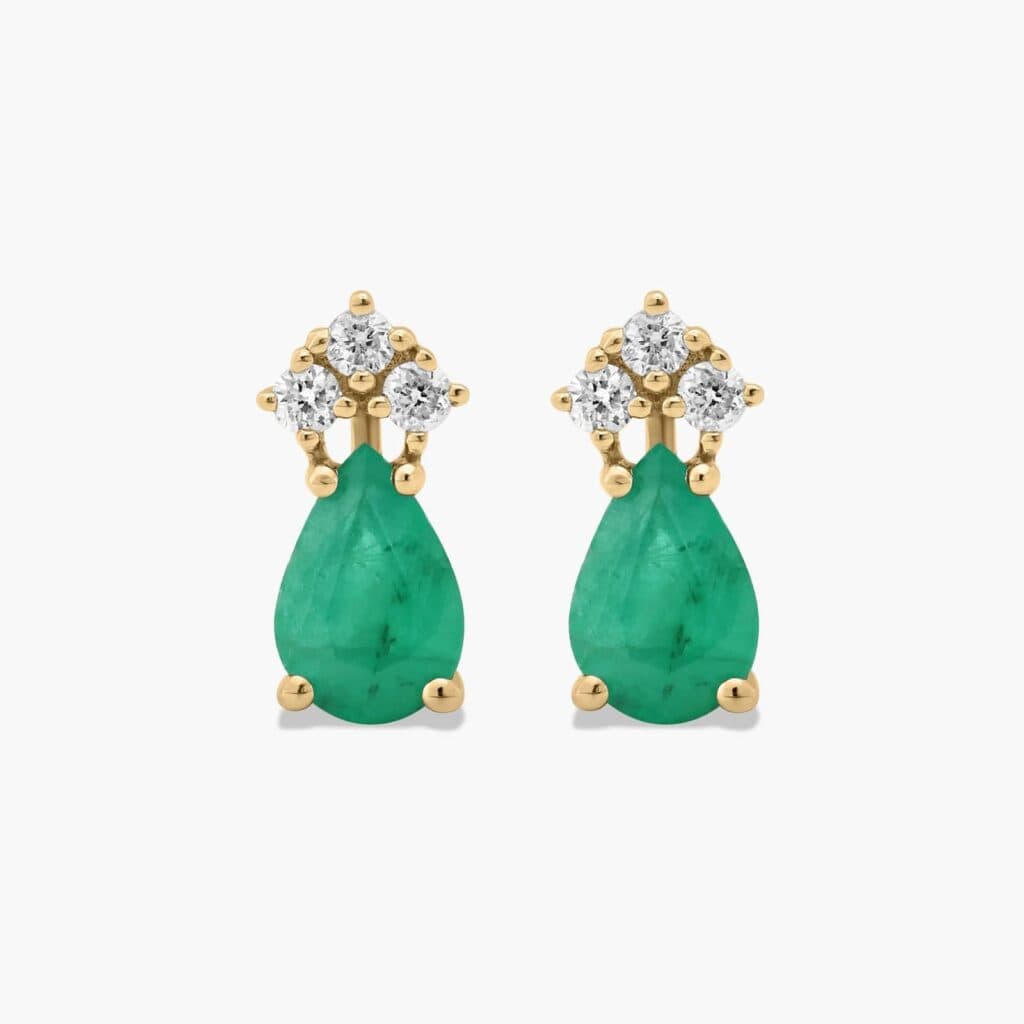
at Blue Nile
Color Dictates the Value Range of Emeralds
By far, the most important value characteristic of emeralds is color. This is no mistake. The human eye evolved to distinguish more individual shades of green than any other color. Also, because the wavelengths of green sits in the center of our visible color range, our eyes process it with the least amount of strain. This means that we are anatomically built to appreciate all of the beautiful subtlety of emerald color expression.
For a gem whose color matters so much, it can be surprising that the acceptable color range for emeralds is quite narrow. In terms of hue, emeralds can be a very strongly bluish green, bluish Green, very slightly bluish Green, and Green. Tone can range from 4 (medium light) to 7 (dark) and saturation from 3 (very slightly grayish/brownish) to 5 (strong). Gems that have tone or saturation scores lower than the acceptable range are not called emerald. Instead, they are considered to be significantly less valuable "green beryl".
at Ritani
The specific shade of green that is considered the most valuable is a bluish green to green, with a medium to medium-dark tone and strong to vivid saturation. The color expression across the stone must be perfectly uniform with no patches of color zoning. Should any of these parameters be even marginally off, the per-carat value drops drastically.
Emerald Deposits Have Reputations for Color Expression
With such a high percentage of an emerald's value hinging on color, experts have developed trade names to describe distinctive shades. Interestingly, these trade names refer to the location of famous emerald deposits. It is very important to understand that, while these deposits are famous for the color that is named for them, there is overlap. Color alone is not enough to make an origin determination. When you hear emerald being described by a geographic name, always inquire if that is referring to the origin of the stone, its color expression, or both.
When the Spanish conquistadors arrived in South America in the 16th century, they quickly found that the region now called Colombia contained beautiful emeralds. When exported back to Spain, the color of these gems quickly gained a reputation as being more beautiful than any other emerald gem previously seen. To this day, emeralds with that most highly prized color of bluish green to green, with a medium to medium-dark tone and strong to vivid saturation, are called "Colombian" emeralds. Being the golden standard, the emeralds from Colombia are valued at a premium even if they don't display that precise color.
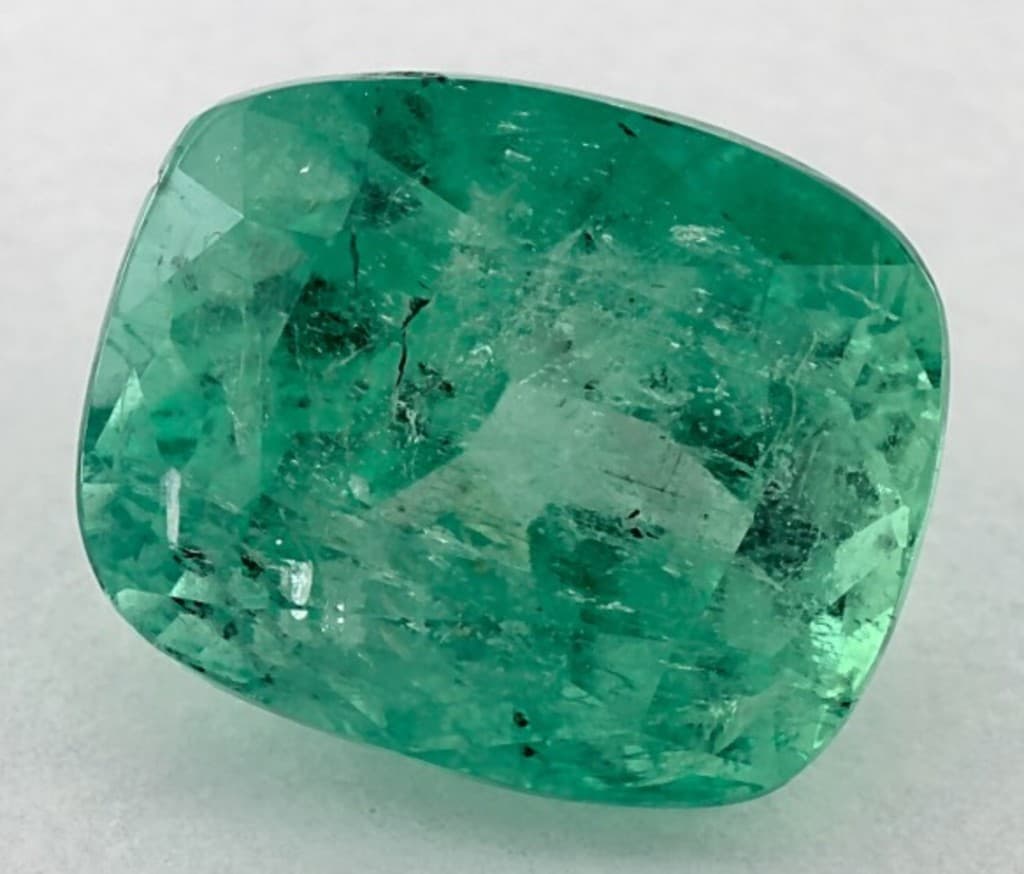
at James Allen
There are three other emerald sources that have features distinctive enough to be used as a trade name. "Brazilian" emeralds found just East of Colombia are known to have a gentler color with lower tone and saturation scores. The first emeralds found in Zambia were known to be small and dark. However, attractive stones were recovered from the Kafubu Area, and mining began in earnest in the 1970's. These "Zambian" emeralds tend to have slightly more blue than Colombian stones and may be a bit darker. They also may have superior clarity. Lastly, emeralds from the "Sandawana" mines in Mberengwa District of Zimbabwe, to the Southeast of Zambia, have gained a reputation for having especially bright color in spite of being relatively small. In terms of value, Brazilian, Zambian, and Sandawana emeralds have overlapping values.
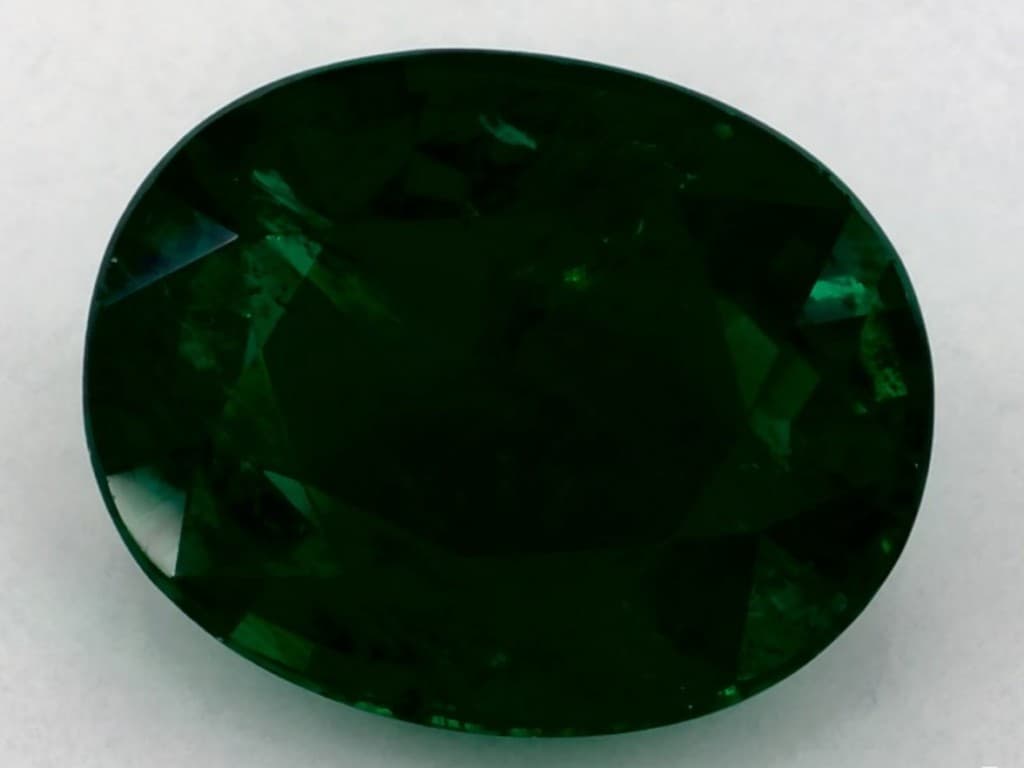
Having Personal Preferences Is OK!
While the different colors of emeralds from different deposits have similar value ranges, those familiar with emeralds often have a favorite color. It is not unusual for dealers to intentionally cultivate relationships with individuals who are associated with particular deposits or countries to sell their emeralds exclusively, just because they have a positive personal response to those gems.
This is a good lesson that applies to the whole of the gem world - just because some feature of a gemstone is more expensive than others doesn't necessarily mean that it is superior. If you like a lower-priced quality, like a lower tone in emeralds, be happy that you can find well-priced merchandise and wear it with pride!
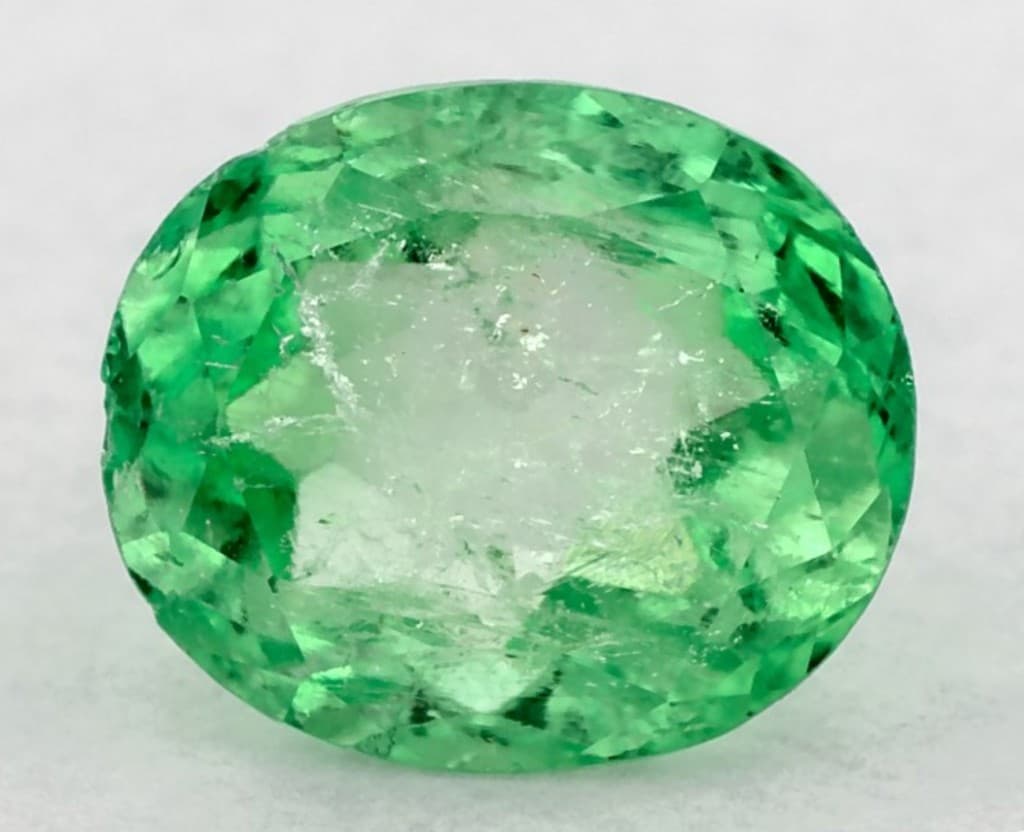
at James Allen
Visible Clarity Features are Welcomed, As Long As Transparency Is Not Muddied
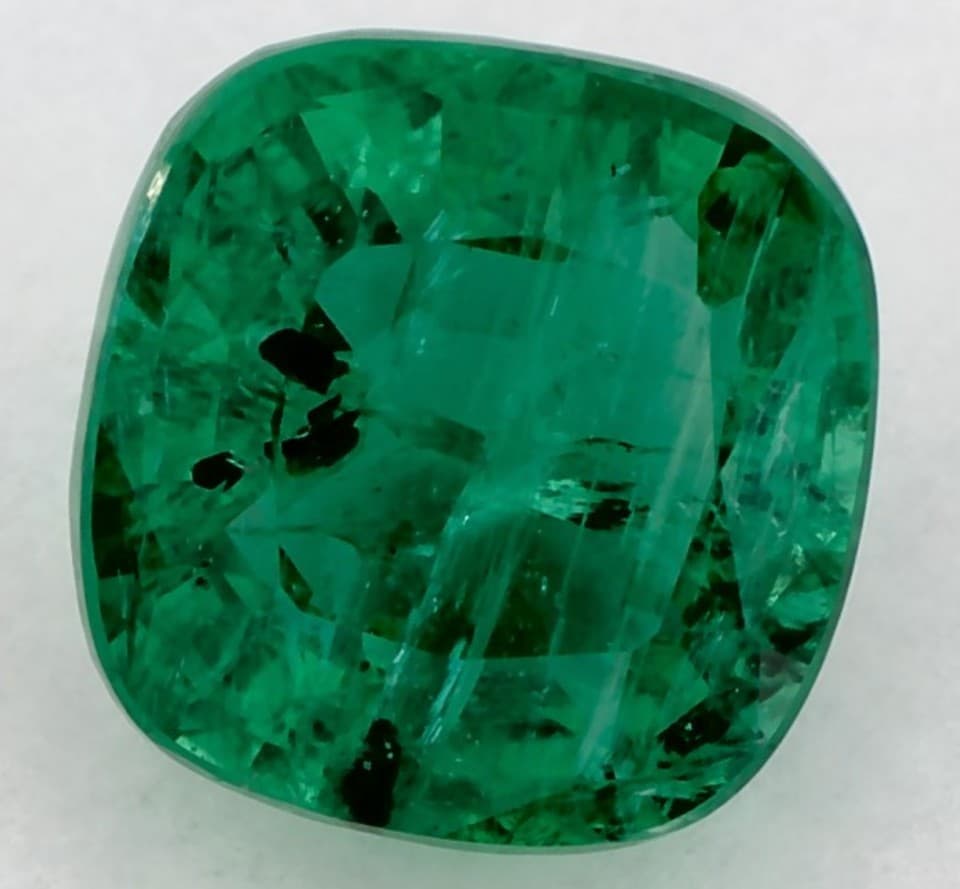
Emeralds stand apart from many other transparent gemstones in that visible clarity characteristics are embraced. While the presence of a single tiny crystal or feather can knock another gemstone down into a significantly lower price range, emeralds whose clarity imperfections are well balanced throughout the stone are prized. In fact, the visible inclusions in emeralds are affectionately called a "jardin", the French word for garden, referring to the association between emeralds and the environment.
The extreme rarity of eye-clean emeralds automatically makes them very expensive stones. Large emeralds with good color and complete eye-clean clarity easily sit at the top of the value range. However, the vast majority of emeralds have visible internal features made up of fractures, liquid inclusions, crystals, and other "imperfections". These give each stone its own special personality.
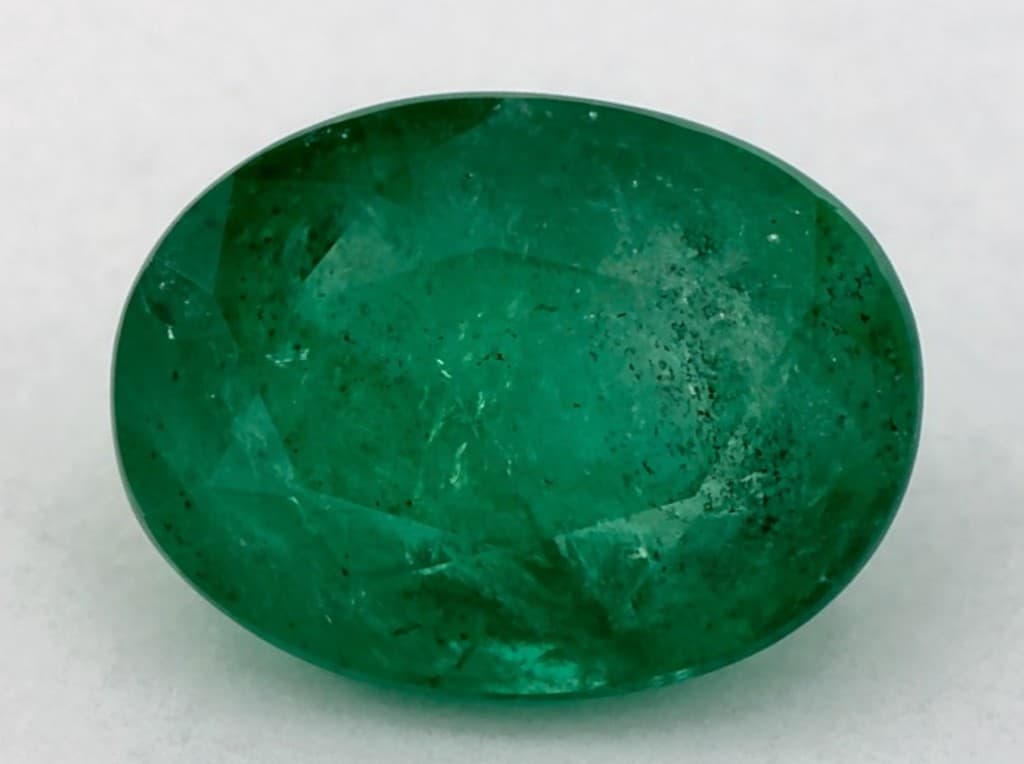
at James Allen
Gemologists classify emeralds into three categories based on their clarity: lightly, moderately, and heavily included. The value trend shows that gems with fewer clarity features are more valuable than stones with more. But the number of inclusions is not the only consideration; value is also based on how such inclusions are distributed. Buyers want gems whose jardin is spread evenly and do not cloud overall transparency. After eye-clean stones, the most highly-priced emeralds have sparkling transparency with delicate and well-defined jardin.
at James Allen
The Vast Majority of Emeralds are Treated
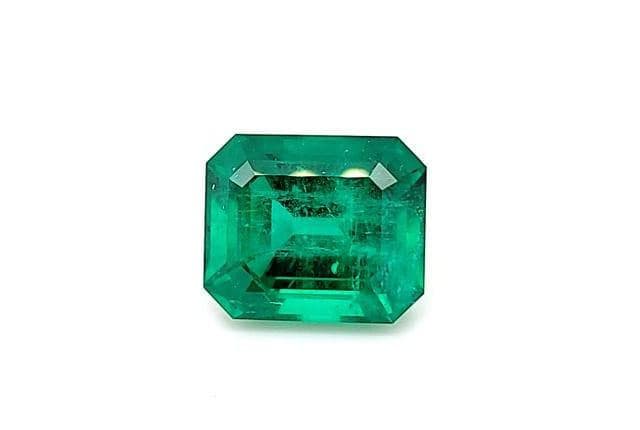
When the internal fractures reach the surface of an emerald, they can be filled with an oil or resin to reduce their appearance. This extremely common practice is called "fracture-filling" or "oiling", and it improves both clarity and transparency without impacting value. Being used so frequently, it is safe to assume that any stone you see has been fracture-filled. Any non-treated emeralds are advertised as such and are very valuable. Large, untreated emeralds are often sold at auction.
at Ritani
The GIA quantifies the level of emerald fracture-filling into three tiers: minor, moderate, and significant. Stones that require only minor oiling are valued higher than gems that need significant fracture-filling for a few reasons. Firstly, the natural appearance of the gem has been minimally altered, which is always preferable. Secondly, emeralds that have many surface-reaching fractures are, by nature, less durable than gems with fewer cracks.
It is important to understand that fracture-filling is not a permanent treatment. The filler can be reduced or completely removed if cleaned incorrectly or exposed to a solvent like acetone.
Usually, the oil or resin used is colorless, affecting the expression of clarity and transparency only. If a green dye is added, it greatly reduces the value of the stone because it affects the most important value characteristic - color. This is considered a deceptive practice and is frowned upon.
They Call It The "Emerald-Cut" For a Reason
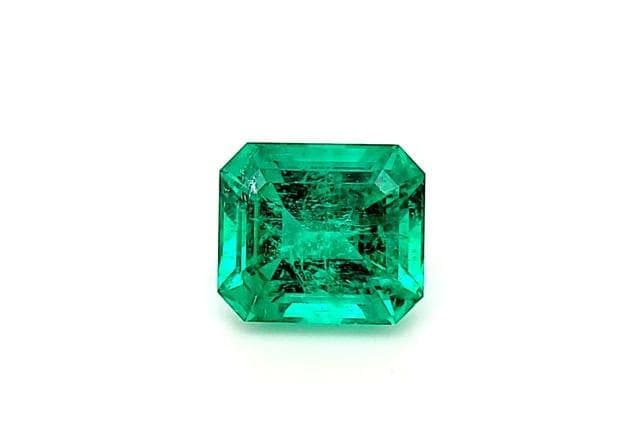
The properties of raw emerald crystals are such that they can be manipulated in almost any direction. This allows for almost any shape to be created. However, as the value of emeralds is their even color expression and refined jardin, step cuts featuring long facets that do not create reflections are most desired. The famous "emerald-cut" with a square or rectangular outline paired with long, parallel facets is the most common shape you will see.
at James Allen
Skilled cutters can maximize the value of an emerald by emphasizing positive features and minimizing detrimental attributes. Crystals with a pale color can be cut so that they have additional depth, which will concentrate the hue. Alternatively, dark crystals can be lightened by faceting them into a shallow shape. Cutters also have to consider the location and size of clarity features. They need to orient the stone to maximize durability. Excessive faceting can leave fractures exposed and vulnerable to chipping. This is another reason that step cuts are popular.
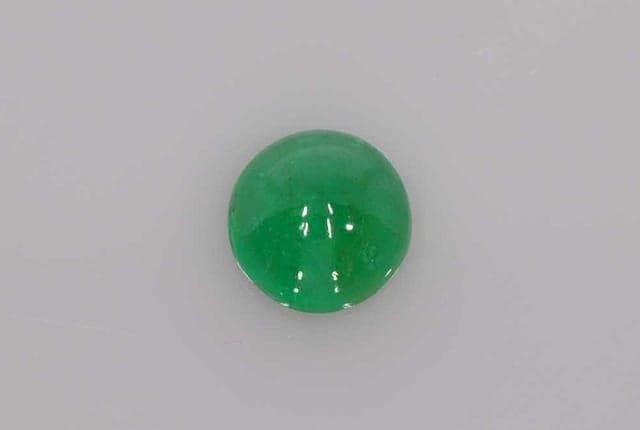
Gems that are so densely included that they are not strong enough to be faceted are usually molded into a rounded cabochon.
at James Allen
Emeralds Come In Many Sizes
Emeralds are part of the mineral group beryl, which is famous for its potentially large crystal size. Museum collections contain emerald crystals weighing hundreds of carats. Yet, recall that some emerald deposits like Sandawana contain smaller stones that weigh a fraction of a carat.
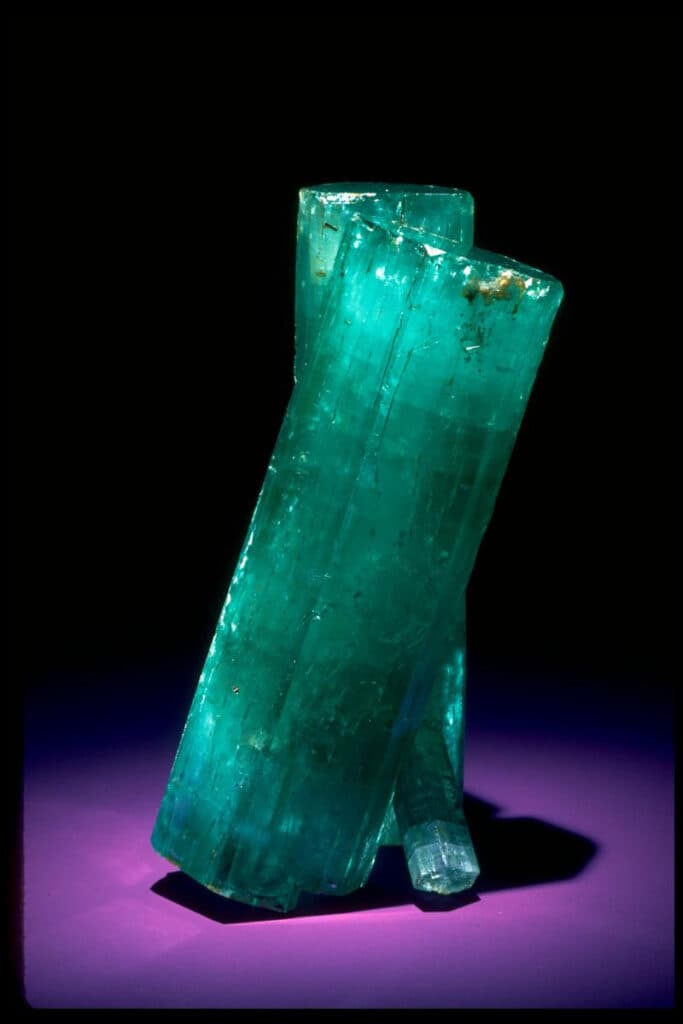
With such a wide range of sizes, you can find emeralds weighing from tiny 0.02 cts. up to substantial gems that are fifteen carats and greater. You can shop for emeralds in calibrated sizes beginning at just a few millimeters, costing just a few dollars. As sizes increase, so does value. Fine-quality emeralds weighing ten carats can command five-figure per-carat price tags, while anything bigger is very expensive.
Related Articles
Gemstone Certificates
Is Cordierite Expensive?
Jewelry Investment Pieces: Which Gemstones Hold Value Over Time?
Is Morganite Expensive?
Latest Articles

800 Years of Mogok: A Celebration in Tenuous Times
What is the Average Gemstone Faceting Yield?
Pyroxmangite Value, Price, and Jewelry Information
How to Identify Emerald Simulants and Synthetics

Never Stop Learning
When you join the IGS community, you get trusted diamond & gemstone information when you need it.