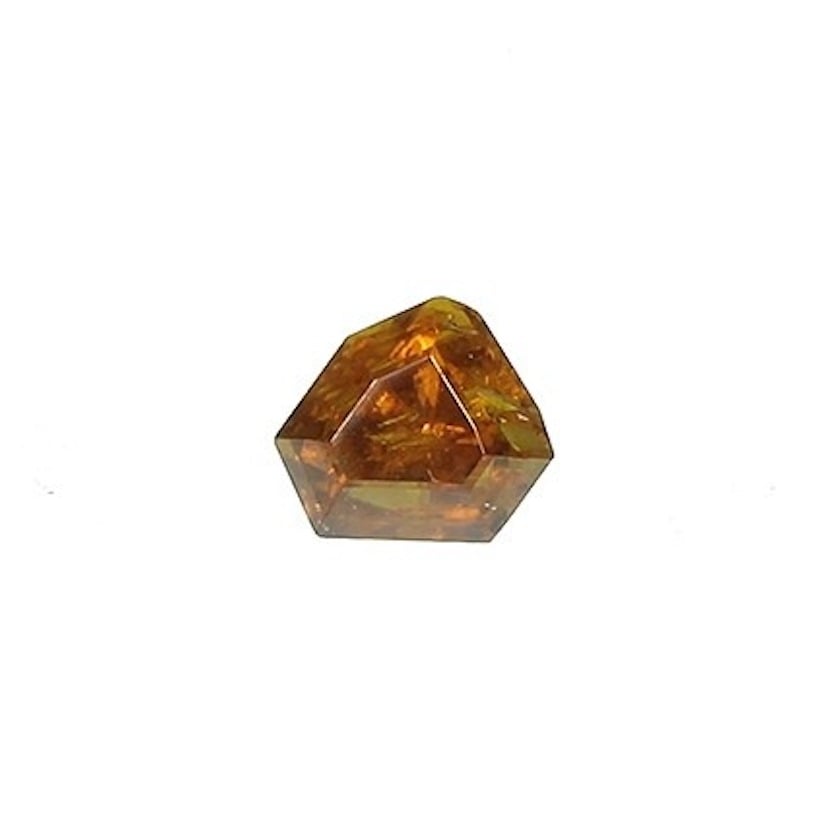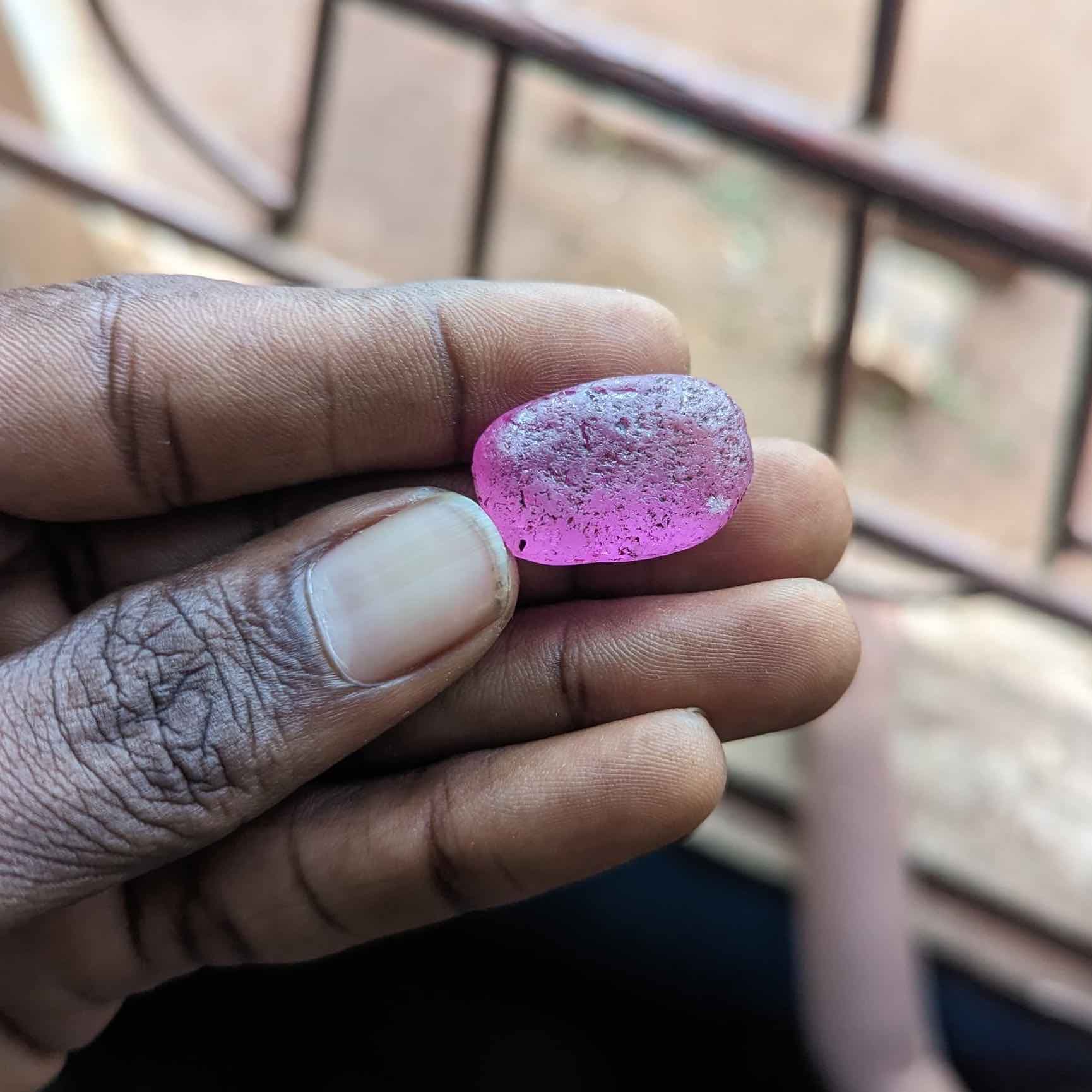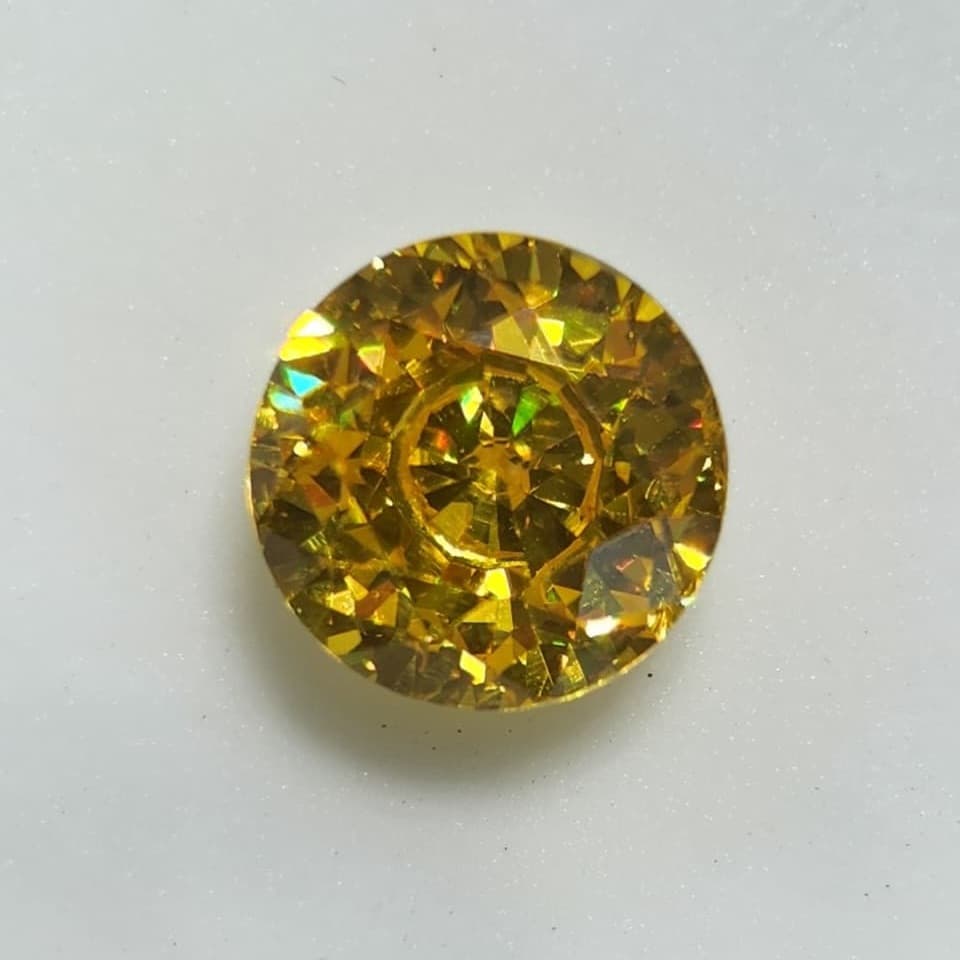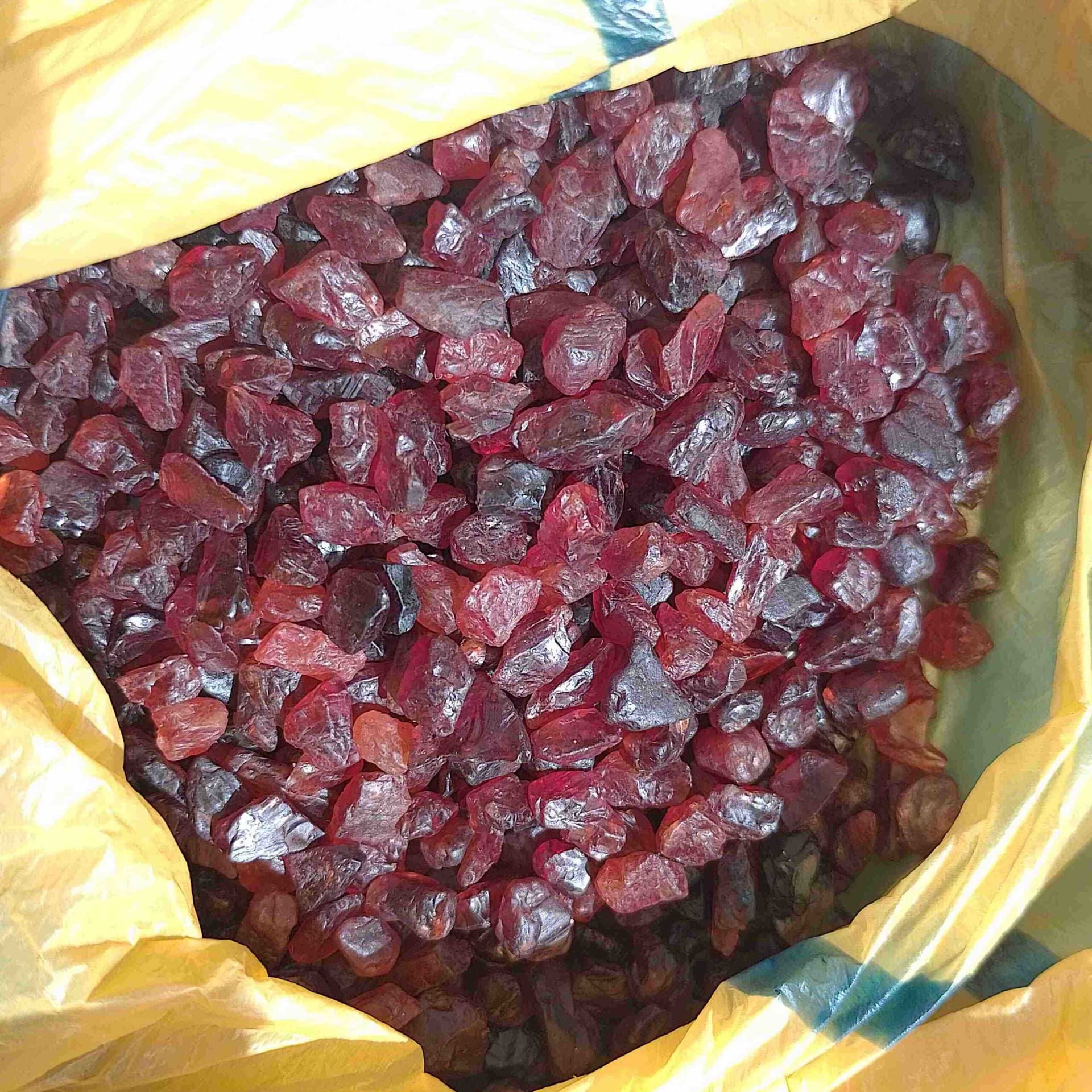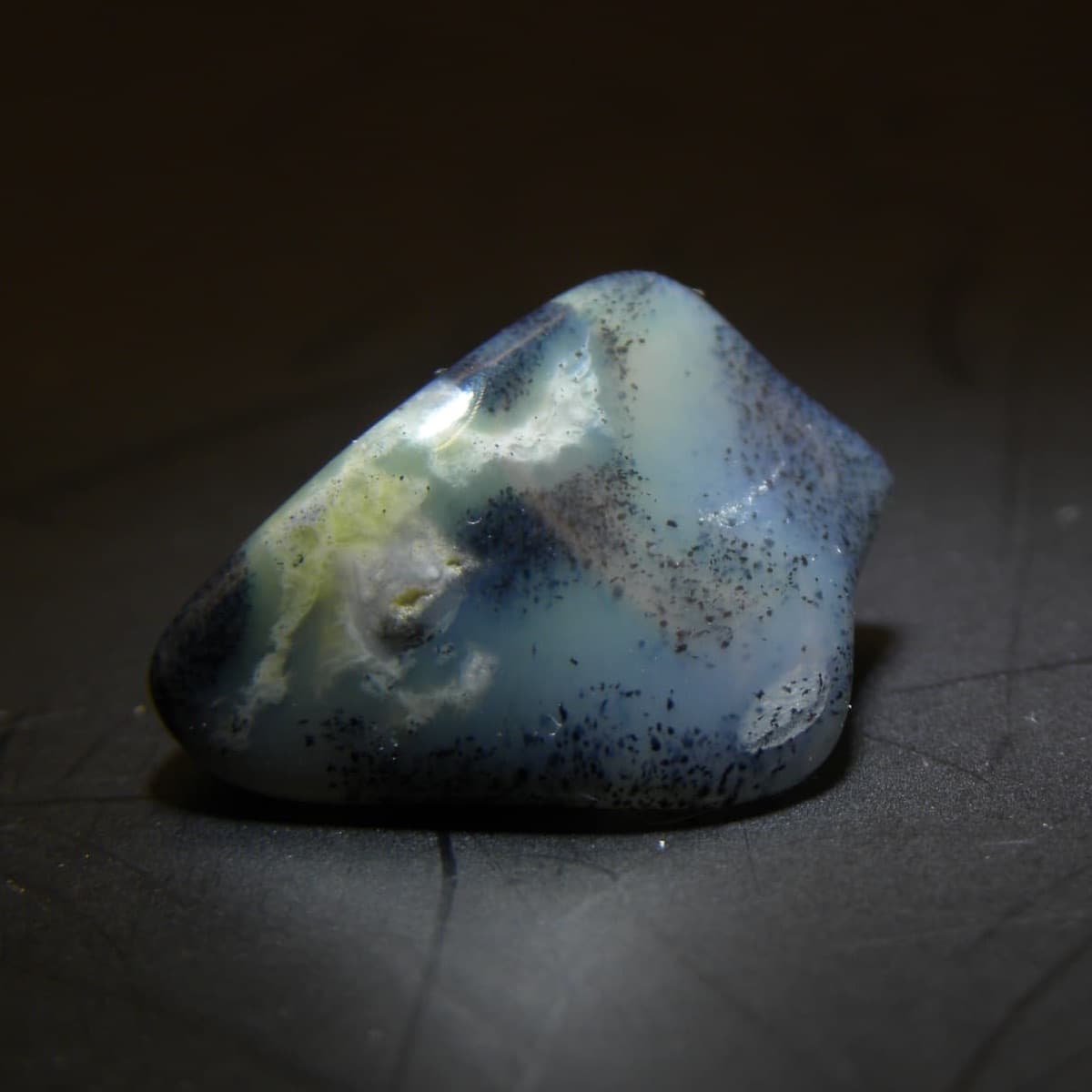
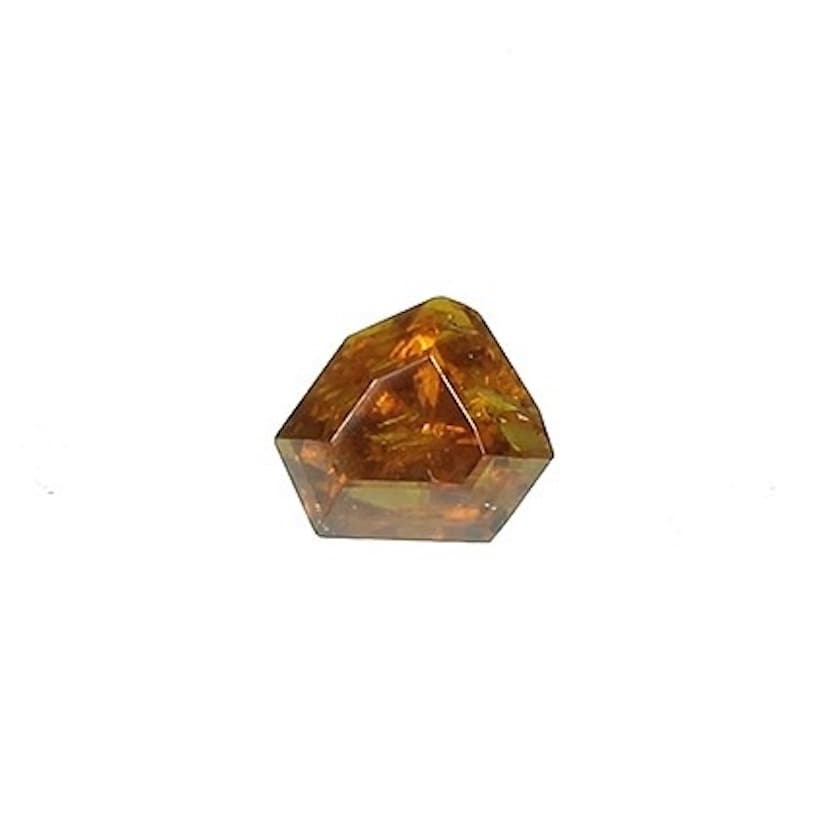
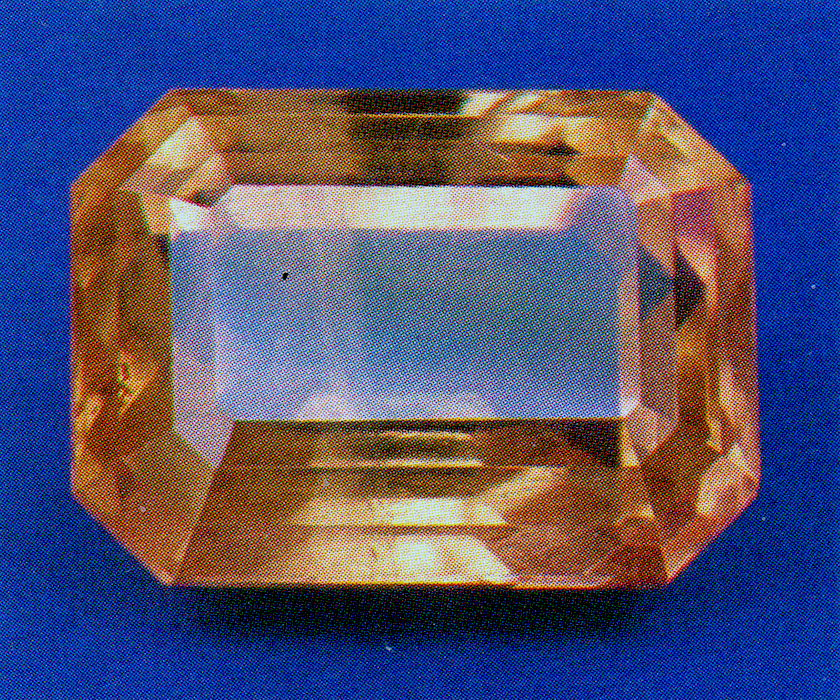
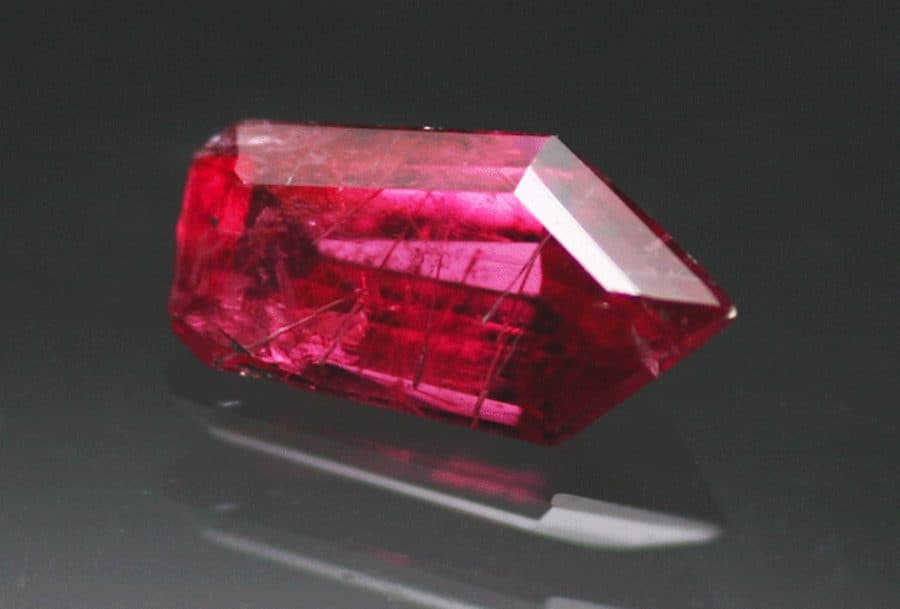
Pale pink and brownish red bustamite can make a very attractive faceted gem. However, stones in large sizes are rare and difficult to cut.
2 Minute Read
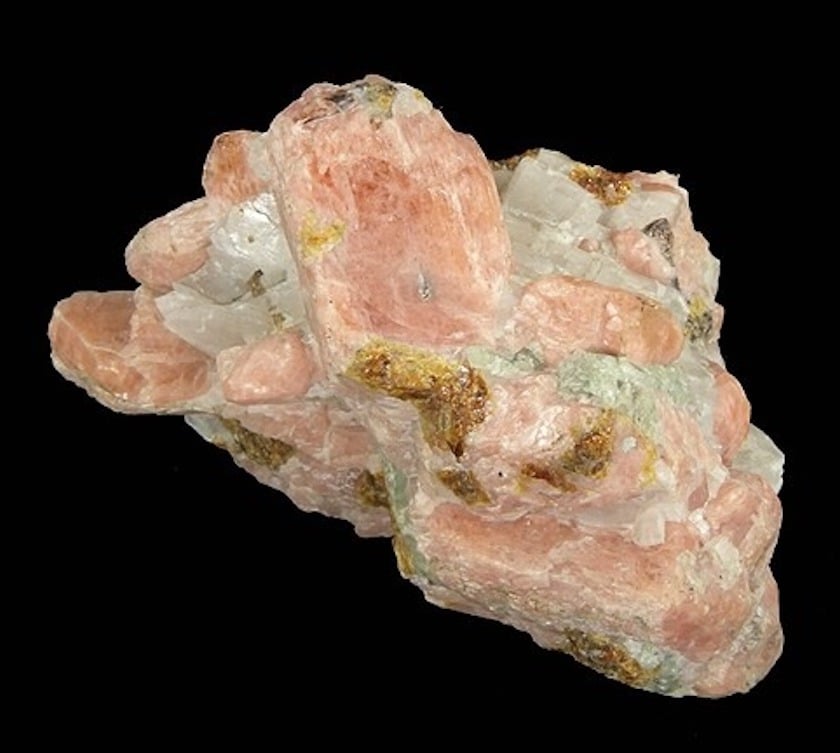
Bustamites are better suited for gem collections than jewelry collections. With a hardness of 5.5 to 6.5 and perfect and good cleavage planes in two directions, bustamite is susceptible to scratches and breaks. The cleavage planes also make it difficult to cut, so you will seldom find faceted bustamite gems for sale. Rarely, fibrous bustamite rough may yield fine cat's eye cabochons.
Pink bustamites will also lose their color when exposed to sunlight. If you do have bustamite jewelry, make sure to use protective settings and reserve them for occasional wear.
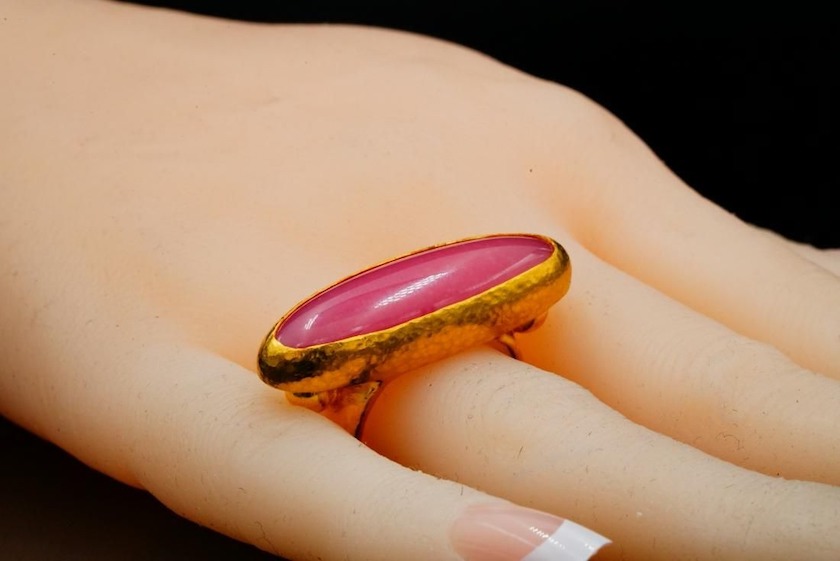
Bustamites and rhodonites share many gemological properties, may look alike, and can occur in the same locations. (In fact, the material first identified as bustamite in 1826 turned out to be a mixture of rhodonite and johannsenite instead of a unique mineral).
Both of these gemstones prove challenging to facet, so gemologists won't encounter either very often. (Of the two, however, rhodonites are cut more frequently). Nevertheless, the following tests are the easiest ways to separate these gems:
Although not diagnostic, bustamites tend to have paler colors than rhodonites.
There are no known lab-created bustamites or treatments for natural stones.
Franklin and Sterling Hill, New Jersey, USA produce fine bustamite crystals.
Broken Hill, New South Wales, Australia produces gem-quality material with a high manganese (Mn) content. It forms in crystals up to 2 x 10 cm in size and has the following properties: SG = 3.41; 2V = 39°; a = 1.688, β = 1.699, γ = 1.703; birefringence = 0.015.
Other notable gem-quality sources include the following:
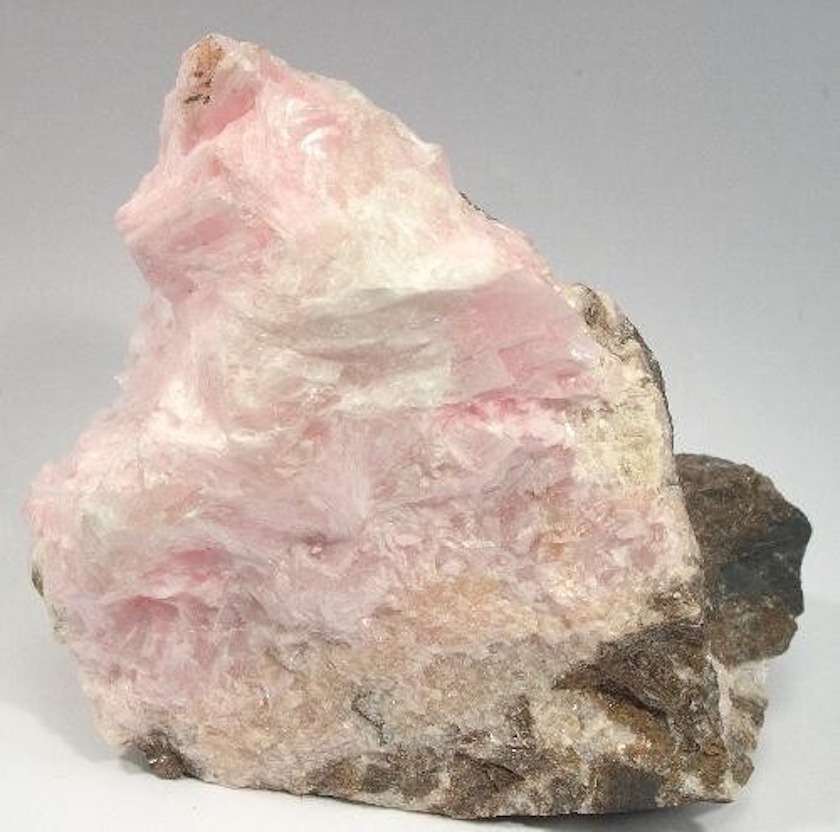
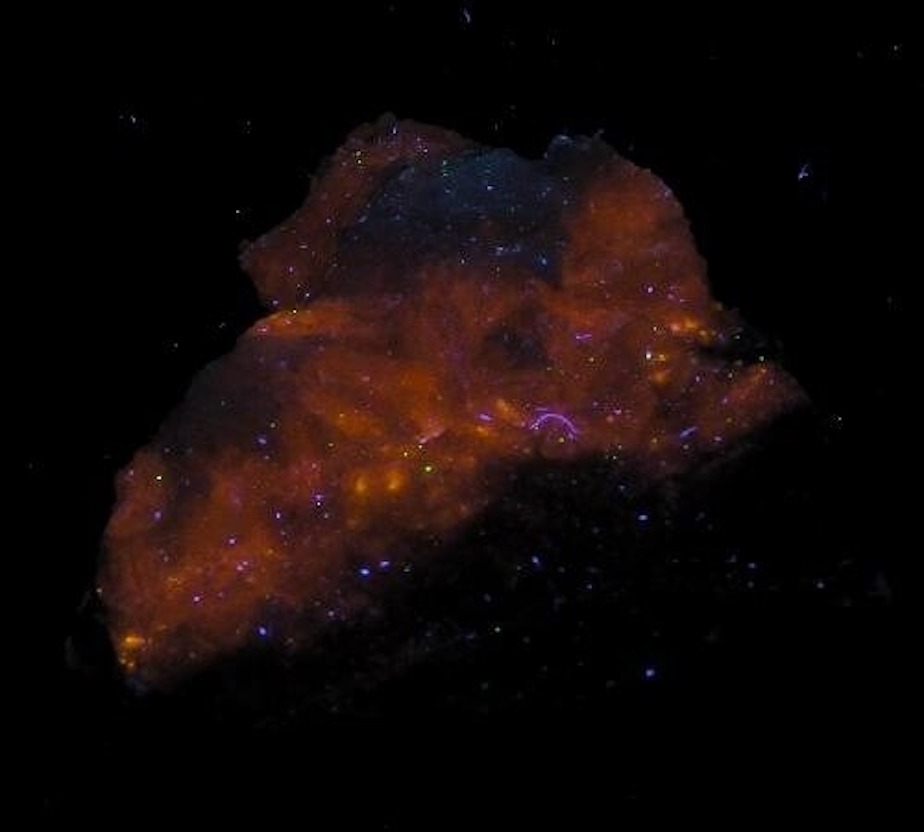
Bustamite crystal under white and ultraviolet light, Wessel's Mine, Hotazel, Kalahari manganese fields, Northern Cape Province, South Africa. 6.5 x 5.7 x 3.4 cm. © Rob Lavinsky, mineralauctions.com. Used with permission.
Faceted bustamites weigh less than 5 carats and usually range from 1 to 2 carats. Any faceted gems over 2 carats would make considered rare collector's items. Cat's eye cabochons can weigh up to 5 carats.
Clean your bustamites only with a soft brush, mild detergent, and warm water. Store them separately from other stones to avoid contact scratches and keep them out of direct sunlight. Consult our gemstone jewelry cleaning guide for more recommendations.

When you join the IGS community, you get trusted diamond & gemstone information when you need it.
Bustamites are better suited for gem collections than jewelry collections. With a hardness of 5.5 to 6.5 and perfect and good cleavage planes in two directions, bustamite is susceptible to scratches and breaks. The cleavage planes also make it difficult to cut, so you will seldom find faceted bustamite gems for sale. Rarely, fibrous bustamite rough may yield fine cat's eye cabochons.
Pink bustamites will also lose their color when exposed to sunlight. If you do have bustamite jewelry, make sure to use protective settings and reserve them for occasional wear.
Bustamites and rhodonites share many gemological properties, may look alike, and can occur in the same locations. (In fact, the material first identified as bustamite in 1826 turned out to be a mixture of rhodonite and johannsenite instead of a unique mineral).
Both of these gemstones prove challenging to facet, so gemologists won't encounter either very often. (Of the two, however, rhodonites are cut more frequently). Nevertheless, the following tests are the easiest ways to separate these gems:
Although not diagnostic, bustamites tend to have paler colors than rhodonites.
There are no known lab-created bustamites or treatments for natural stones.
Franklin and Sterling Hill, New Jersey, USA produce fine bustamite crystals.
Broken Hill, New South Wales, Australia produces gem-quality material with a high manganese (Mn) content. It forms in crystals up to 2 x 10 cm in size and has the following properties: SG = 3.41; 2V = 39°; a = 1.688, β = 1.699, γ = 1.703; birefringence = 0.015.
Other notable gem-quality sources include the following:
Bustamite crystal under white and ultraviolet light, Wessel's Mine, Hotazel, Kalahari manganese fields, Northern Cape Province, South Africa. 6.5 x 5.7 x 3.4 cm. © Rob Lavinsky, mineralauctions.com. Used with permission.
Faceted bustamites weigh less than 5 carats and usually range from 1 to 2 carats. Any faceted gems over 2 carats would make considered rare collector's items. Cat's eye cabochons can weigh up to 5 carats.
Clean your bustamites only with a soft brush, mild detergent, and warm water. Store them separately from other stones to avoid contact scratches and keep them out of direct sunlight. Consult our gemstone jewelry cleaning guide for more recommendations.


Pale pink and brownish red bustamites can make very attractive faceted gems. However, stones in large sizes are rare and difficult to cut.