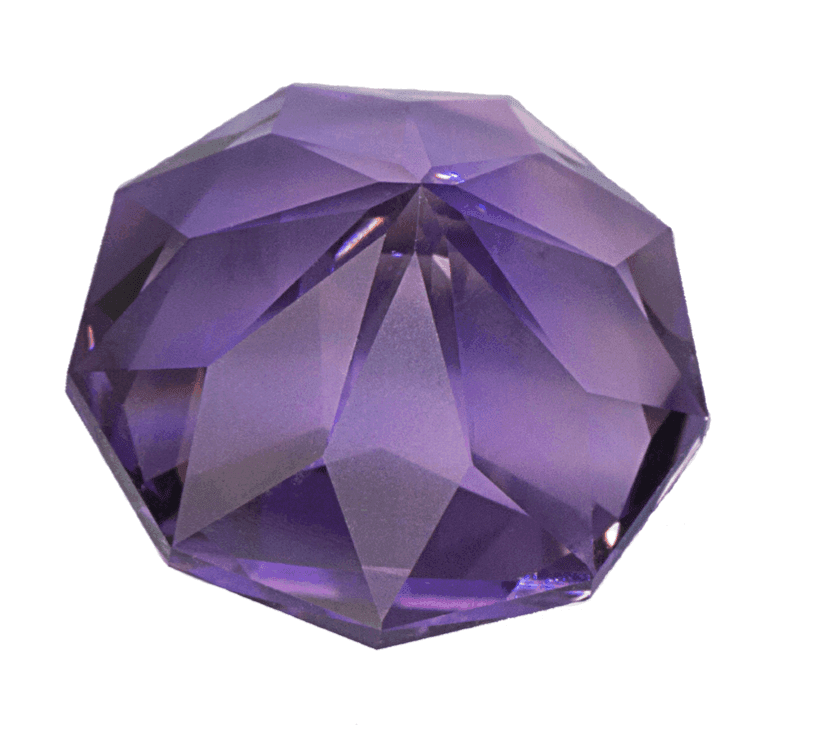
The Three Muses gemstone is a faceting design based on the number 3. These notes, diagrams, and instructions will show you how to cut your own gem.
2 Minute Read
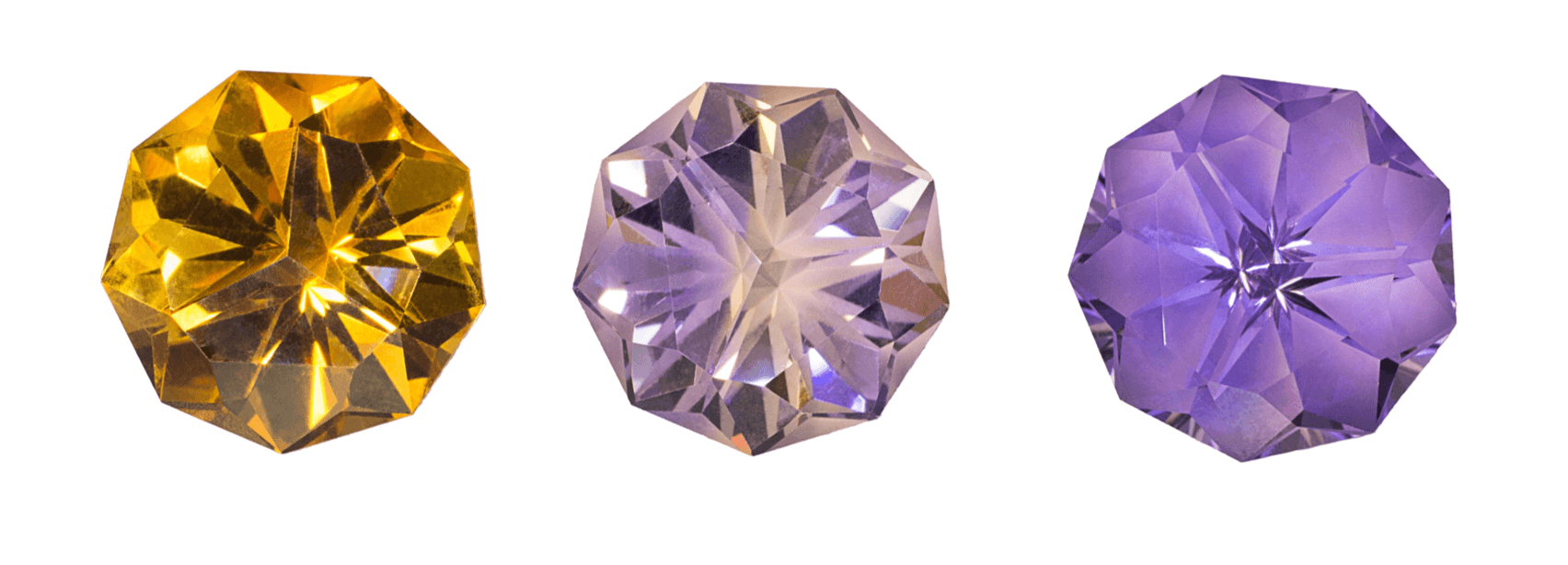
I've been playing with this design for over a year. It started with my inclination to do something with the number three. This desire stems from being a father of triplets.
My journey went through several stages. First, a three-sided stone seemed too edgy. Then, I rejected a three main facet pavilion after viewing it in GemRay. It had poor light return. Finally, I chose the option of combining/replacing the table with three low-angle facets.
I was very happy with the new design. I cut it in several types of gemstone material with increasingly progressive designs. After several escalating designs (each becoming more complex, up to 171 facets), I stopped designing and cutting variations on my triplet theme. The process of designing and selling this motif was fun and profitable. It became a favorite with my clients. The process was also educational because I could explore the nature of "variations on a theme."
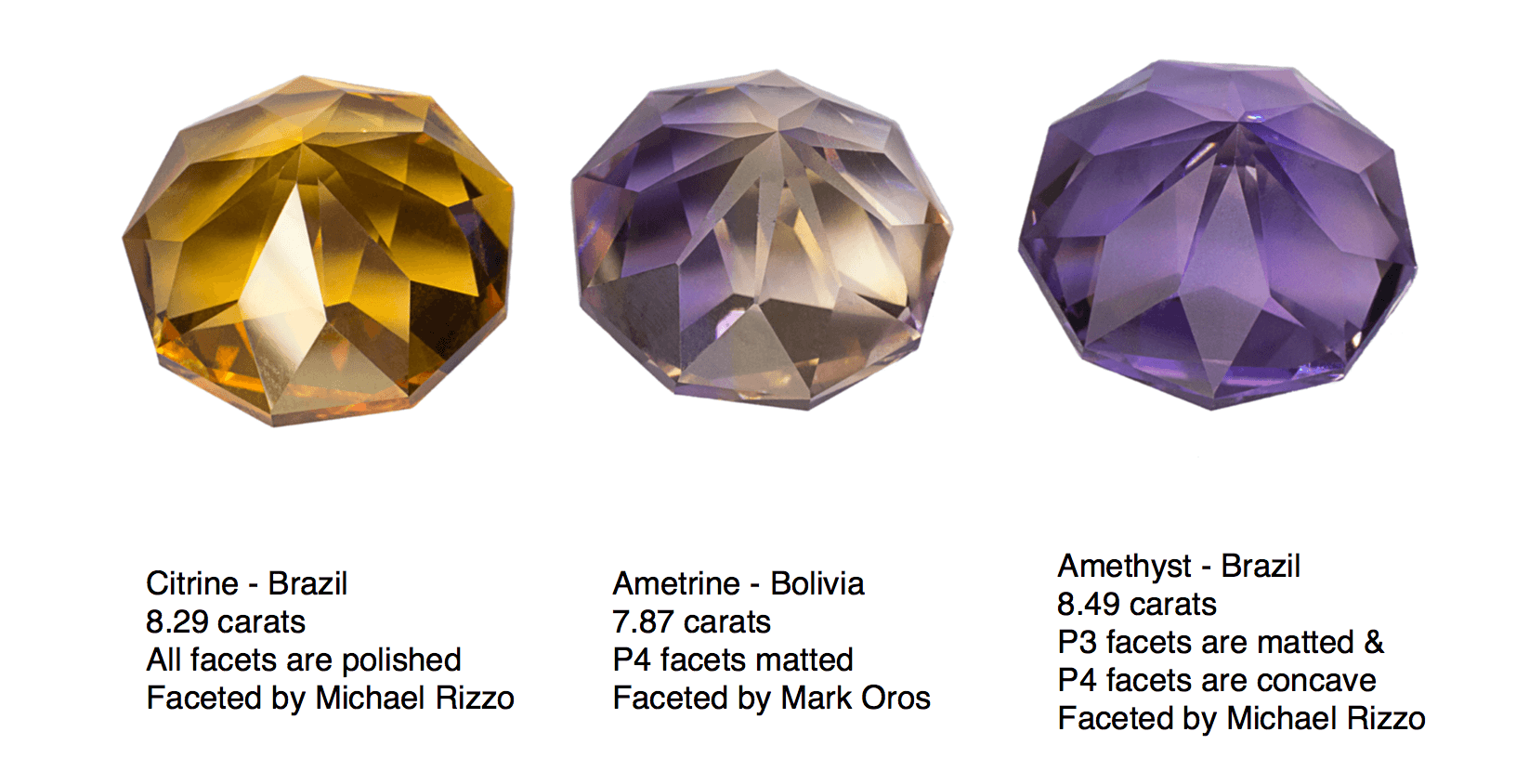
I wanted to share the enjoyment I felt exploring the Three Muses gemstone design. So, for this article, I fired up GemCad and revisited this old friend. On reflection, I saw how serious the design became over its various iterations and decided to scale back the complexity and number of facets. I wanted to accomplish three things with the new design:
After about thirty minutes of creativity on GemCad and GemRay, I was able to produce a gemstone design that I thought was beautiful as well as fun to cut. It starts with a somewhat traditional star cut on the pavilion and goes to a rather unusual crown, going from nine break facets to a tier of six facets, and then two tiers of three facets with no traditional table. I used quartz as the gemstone material when creating the design because I wanted to cut large natural gemstones in several colors without excessive costs.
I hope that you have as much fun cutting the Three Muses gemstone design as I had creating it.
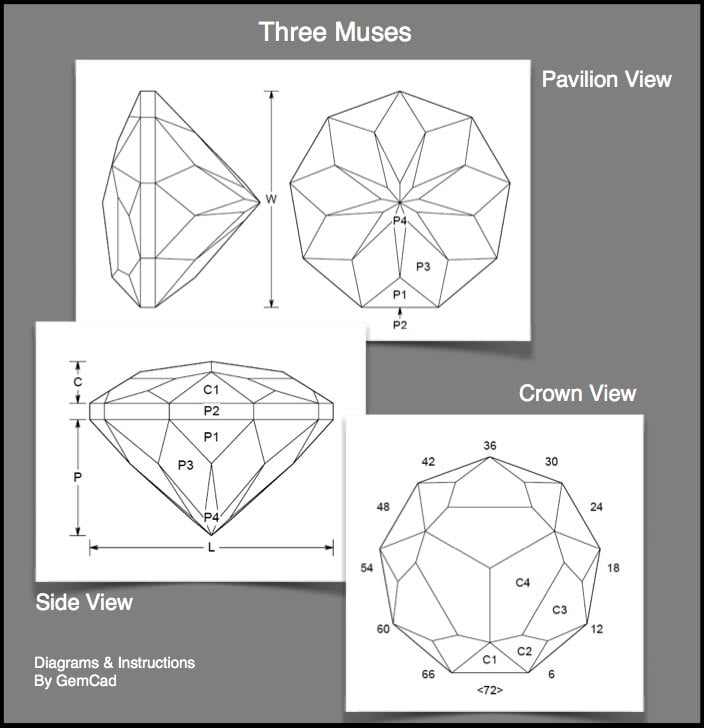
1. Cut P1 to a temporary center-point at 53° on 72 - 08 - 16 - 24 - 32 - 40 - 48 - 56 - 64
2. Cut P2 to set stone size at 90° on 72 - 08 - 16 - 24 - 32 - 40 - 48 - 56 - 64
3. Cut P3 to meet girdle at 44° on 04 - 12 - 20 - 28 - 36 - 44 - 52 - 60 - 68
4. Cut P4 to meet P1 & P3 at 41° on 72 - 08 - 16 - 24 - 32 - 40 - 48 - 56 - 64
1. Cut C1 to set girdle depth at 43° on 72 - 08 - 16 - 24 - 32 - 40 - 48 - 56 - 64
2. Cut C2 to meet girdle at 32° on 06 - 18 - 30 - 42 - 54 - 66
3. Cut C3 to meet girdle at 24° on 12 - 36 - 60
4. Cut C4 to meet C1 at 14° on 12 - 36 - 60


When you join the IGS community, you get trusted diamond & gemstone information when you need it.
I've been playing with this design for over a year. It started with my inclination to do something with the number three. This desire stems from being a father of triplets.
My journey went through several stages. First, a three-sided stone seemed too edgy. Then, I rejected a three main facet pavilion after viewing it in GemRay. It had poor light return. Finally, I chose the option of combining/replacing the table with three low-angle facets.
I was very happy with the new design. I cut it in several types of gemstone material with increasingly progressive designs. After several escalating designs (each becoming more complex, up to 171 facets), I stopped designing and cutting variations on my triplet theme. The process of designing and selling this motif was fun and profitable. It became a favorite with my clients. The process was also educational because I could explore the nature of "variations on a theme."
I wanted to share the enjoyment I felt exploring the Three Muses gemstone design. So, for this article, I fired up GemCad and revisited this old friend. On reflection, I saw how serious the design became over its various iterations and decided to scale back the complexity and number of facets. I wanted to accomplish three things with the new design:
After about thirty minutes of creativity on GemCad and GemRay, I was able to produce a gemstone design that I thought was beautiful as well as fun to cut. It starts with a somewhat traditional star cut on the pavilion and goes to a rather unusual crown, going from nine break facets to a tier of six facets, and then two tiers of three facets with no traditional table. I used quartz as the gemstone material when creating the design because I wanted to cut large natural gemstones in several colors without excessive costs.
I hope that you have as much fun cutting the Three Muses gemstone design as I had creating it.
1. Cut P1 to a temporary center-point at 53° on 72 - 08 - 16 - 24 - 32 - 40 - 48 - 56 - 64
2. Cut P2 to set stone size at 90° on 72 - 08 - 16 - 24 - 32 - 40 - 48 - 56 - 64
3. Cut P3 to meet girdle at 44° on 04 - 12 - 20 - 28 - 36 - 44 - 52 - 60 - 68
4. Cut P4 to meet P1 & P3 at 41° on 72 - 08 - 16 - 24 - 32 - 40 - 48 - 56 - 64
1. Cut C1 to set girdle depth at 43° on 72 - 08 - 16 - 24 - 32 - 40 - 48 - 56 - 64
2. Cut C2 to meet girdle at 32° on 06 - 18 - 30 - 42 - 54 - 66
3. Cut C3 to meet girdle at 24° on 12 - 36 - 60
4. Cut C4 to meet C1 at 14° on 12 - 36 - 60