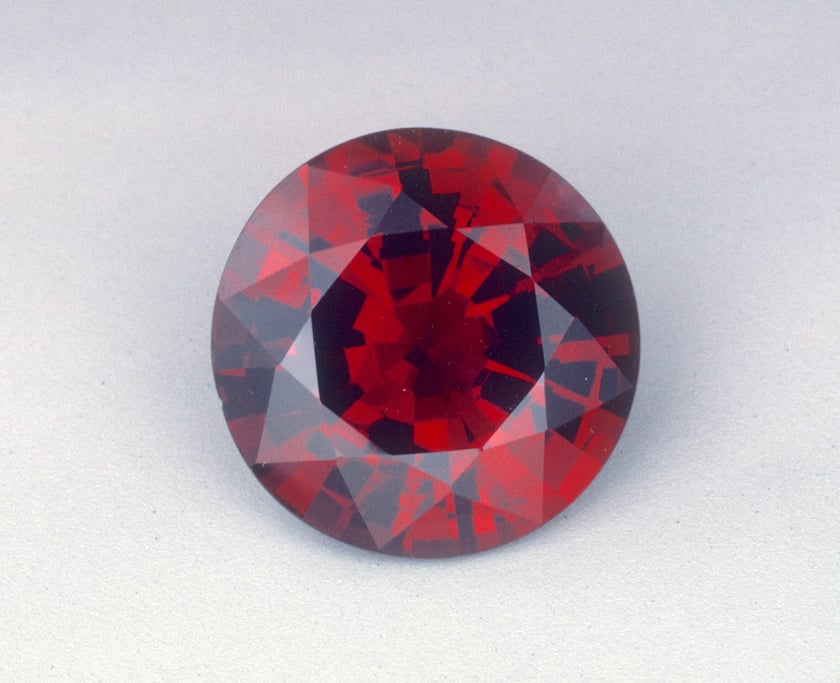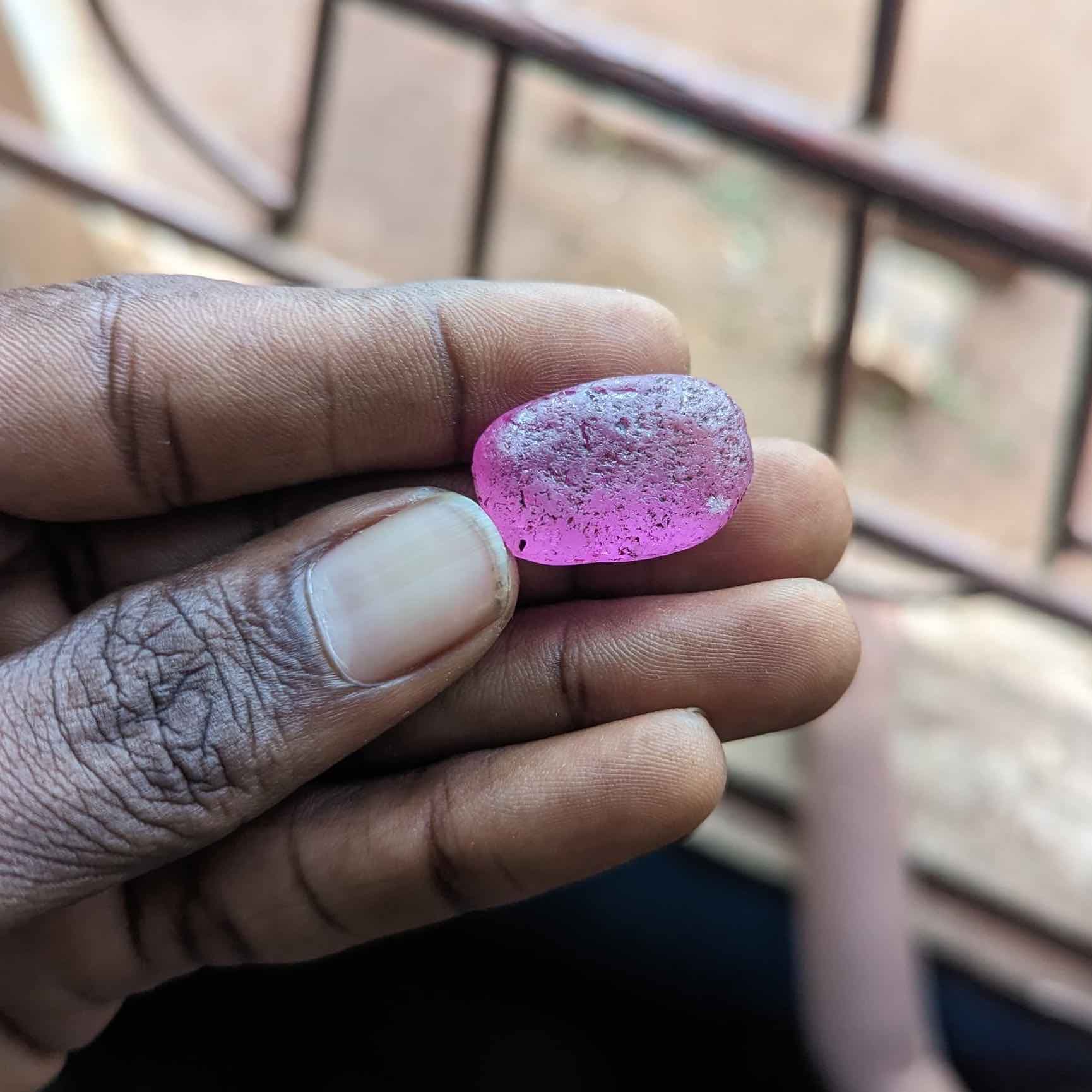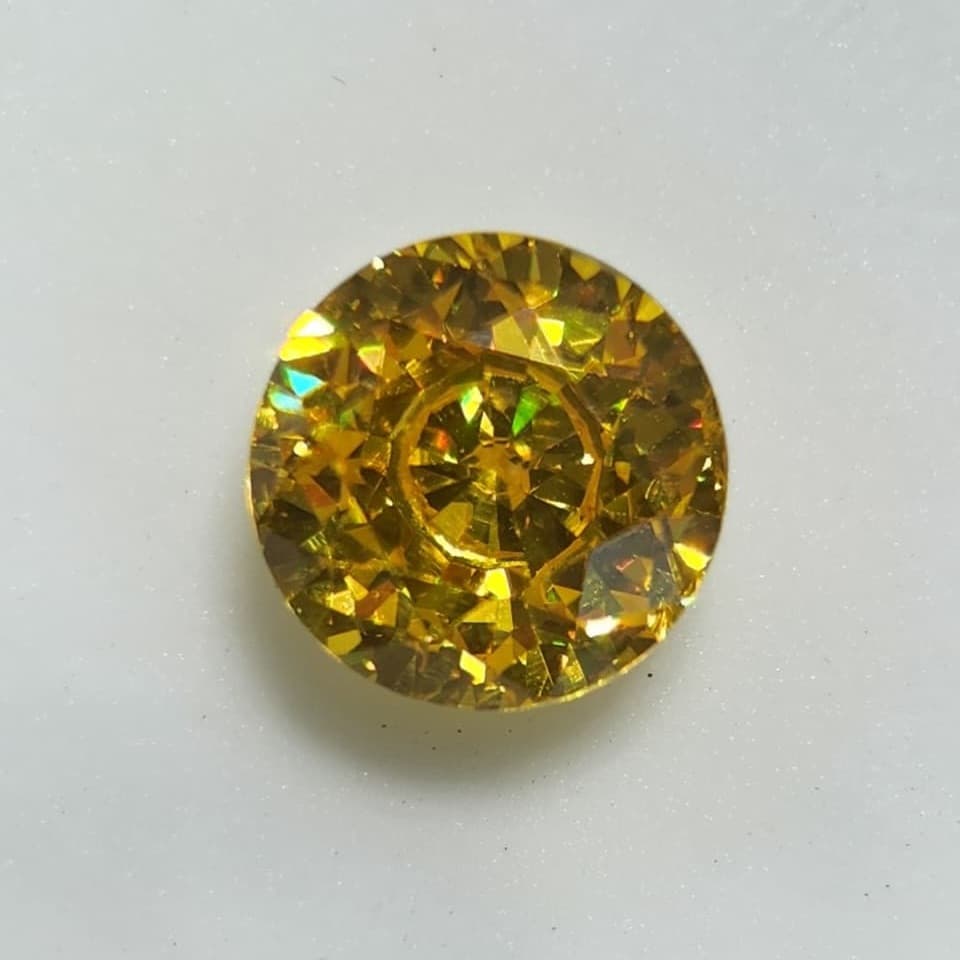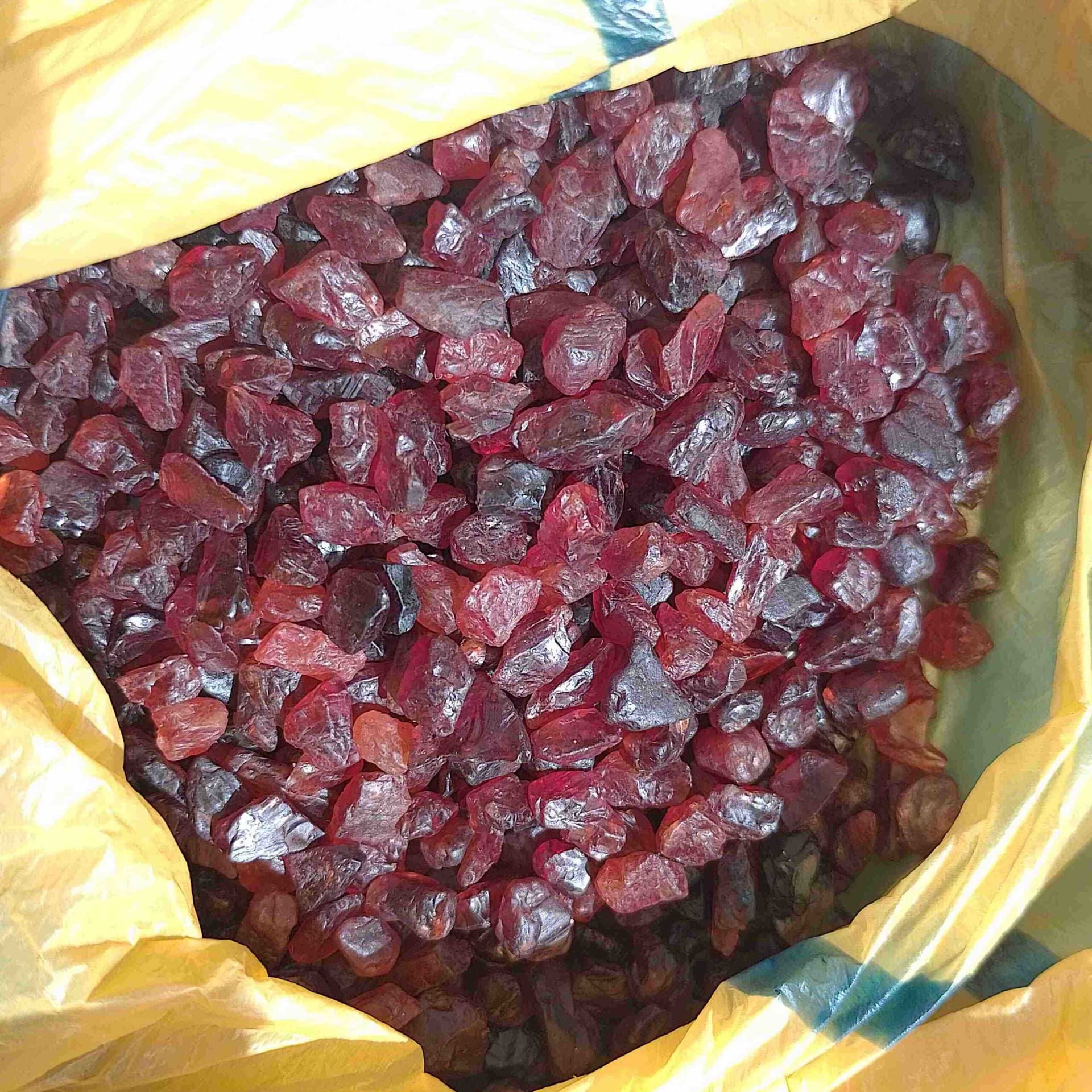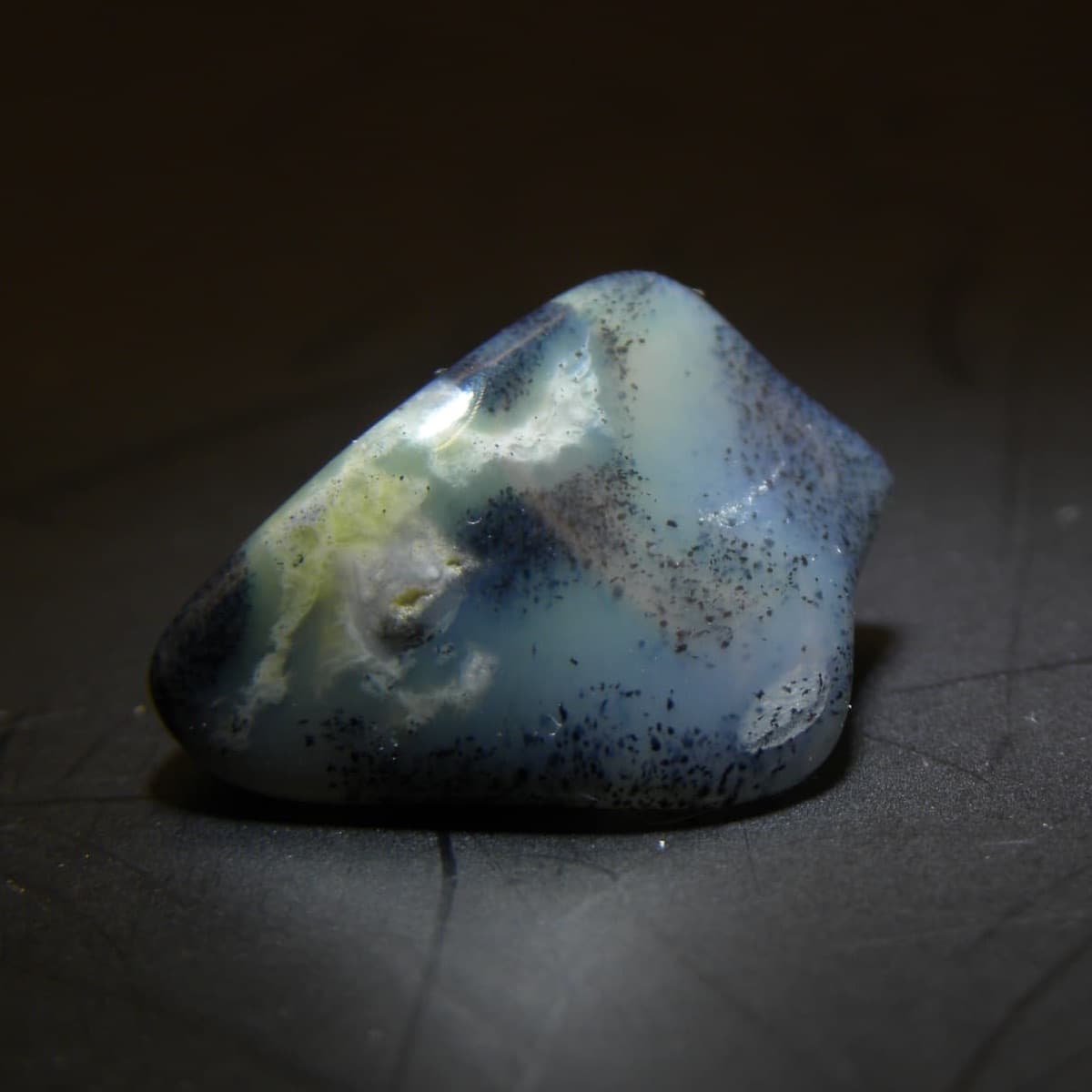

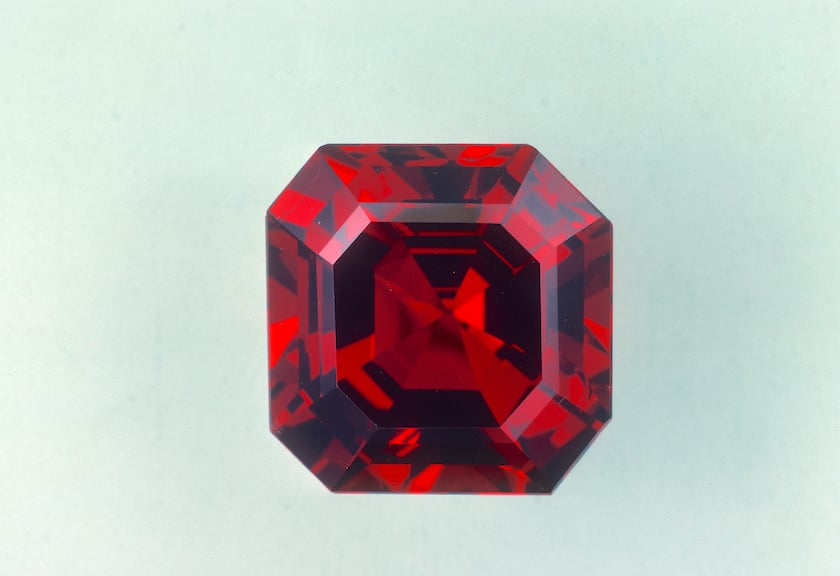
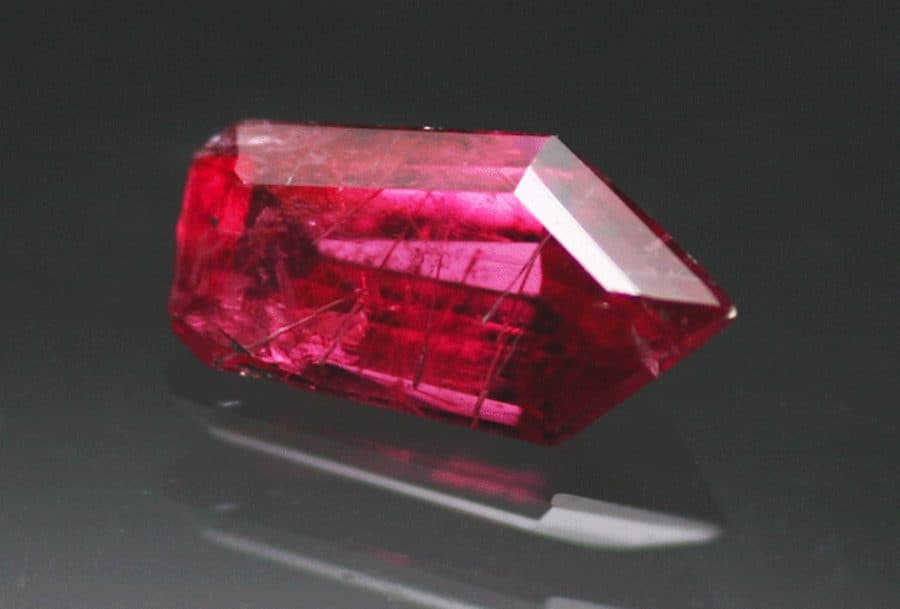
Although long known best for being misidentified as ruby, the spinel gem is beautiful in its own right. Its colors, durability, and relative affordability make it an excellent jewelry stone.
12 Minute Read
The gemstone known as spinel is actually one species in a group of related minerals known as the spinel subgroup. They are all isometric aluminum oxides with magnesium, iron, zinc, and traces of other elements. Some of the other minerals in the group are gahnite, galaxite, hercynite, and magnetite.
The spinel species itself is the only group member commonly worked by gem cutters and worn as a jewelry stone. The other members typically appear too dark for jewelry use. (Of course, adventurous faceters may cut them as curiosities).
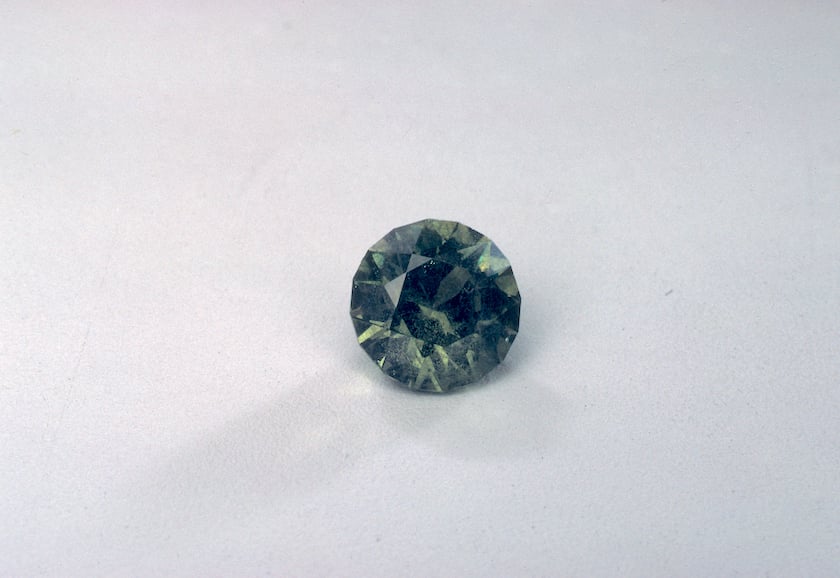
A solid-state solution exists between spinel (MgAl2O4) and gahnite (ZnAl2O4). The intermediate species is known as gahnospinel ([Mg, Zn]Al2O4).
Unlike most solid-state series (like garnet), the pure end-member species occur much more frequently than blends.
| Species | Formula | Refractive Index (RI) | Specific Gravity (SG) | Color |
| Spinel | MgAl2O4 | 1.719 | 3.55-3.63 | All but pure green and yellow |
| Gahnite | ZnAl2O4 | 1.805 | 4.0-4.62 | Deep green |
| Gahnospinel | (Mg, Zn)Al2O4 | 1.725 -1.753+ | 3.58-4.06 | Blue to dark blue |
| Galaxite | MnAl2O4 | 1.92 | 4.04 | Deep red to black |
| Hercynite | FeAl2O4 | 1.835 | 4.4 | Black, dark colors |
| Magnetite | Fe2+Fe3+2O4 | 2.52 | 5.2 | Black to brownish gray |
Picotite is a magnesium and chromium-bearing variety of hercynite with dark green to black colors and an SG of 4.42.
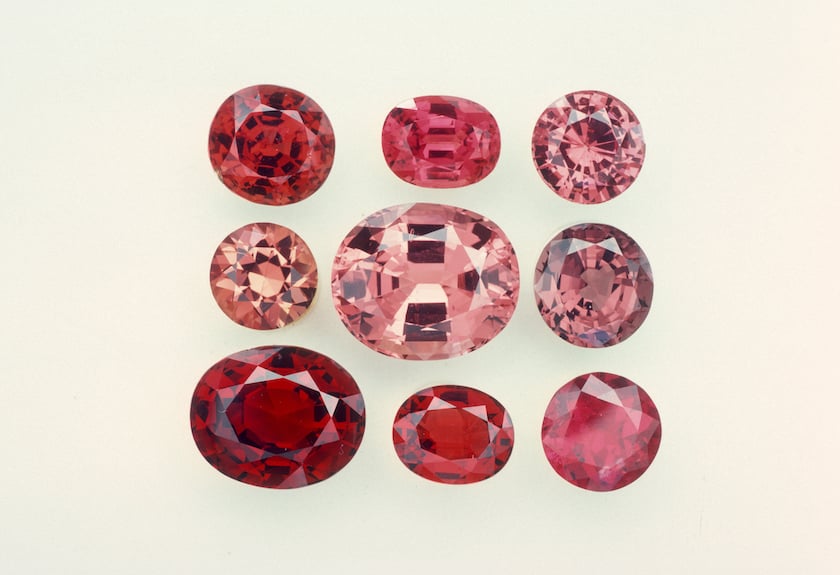
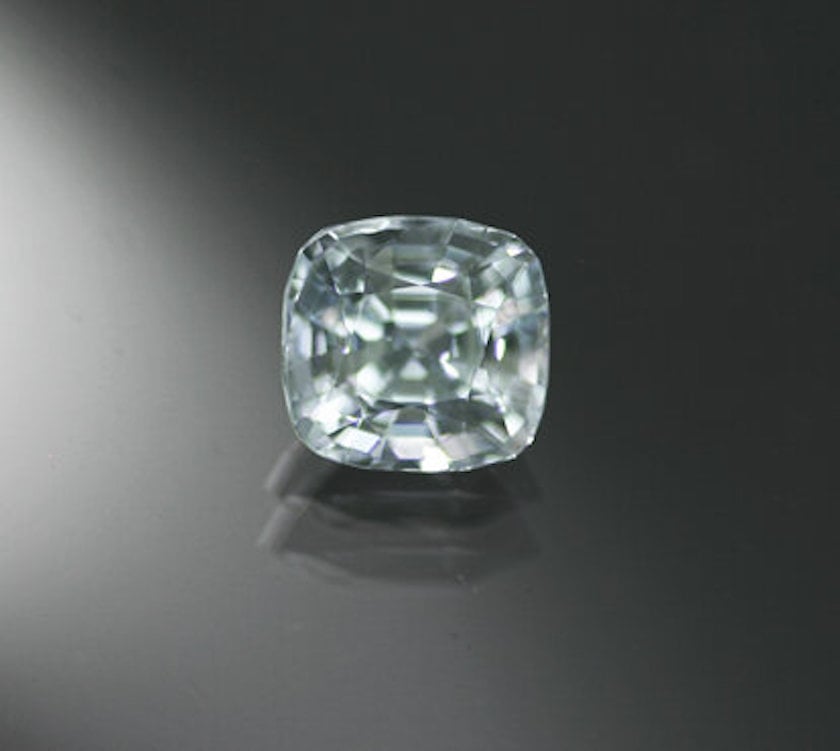
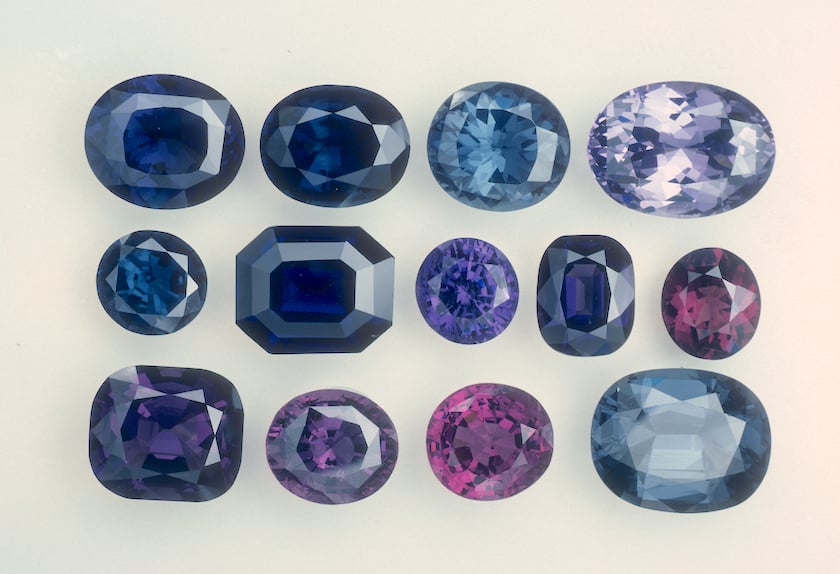
Natural spinels range from strong, deep colors to very light pastels and come in all shades of pink, lavender, red, red-orange, purple, blue, and even black. Colorless spinels occur very rarely. Only pure green and yellow spinels appear absent in nature.
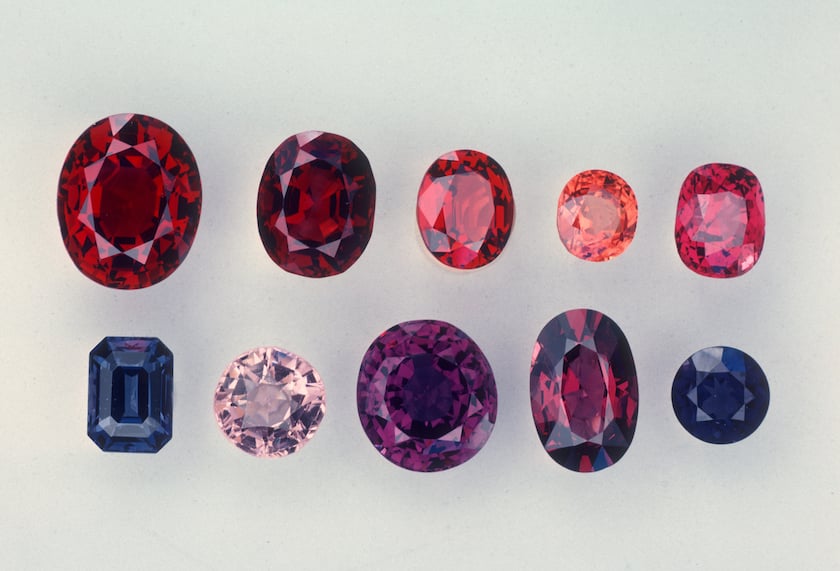
Spinels are usually referred to by their color. Historically, red spinels are the most celebrated. Today, cobalt blue spinels and pink spinels are growing in popularity.
Spinels are allochromatic gemstones. This means that color in spinels comes from the presence of trace elements acting as chromophores. Spinels free of trace elements appear colorless. Chromium, iron, and cobalt are the most common chromophores in spinel.
Consult our article on how spinels form for more information on chromophores and coloration.
Most popular jewelry stones, such as beryl (emerald, aquamarine, etc.), corundum (ruby and sapphire), quartz, and topaz, are allochromatic. In these cases, the chromophore trace elements rarely enter the mineral's chemical makeup. Thus, their natural colorless varieties occur most frequently and have less value than their colorful counterparts. Spinel is an exception. Although laboratories can grow colorless spinels by the bucketful, the underground environment where spinels naturally grow seldom keeps out chromophore trace elements. This makes natural colorless spinel a rare and valuable collector's gem.
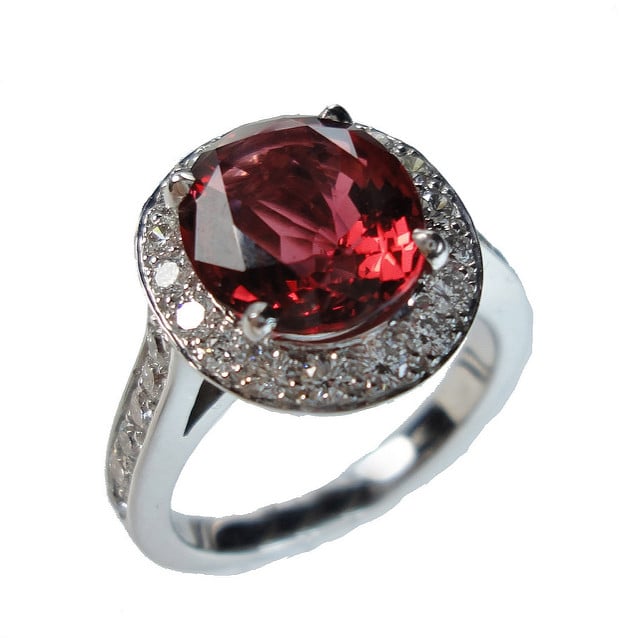
Among natural gemstones, only alexandrite, ruby, sapphire, and diamond exceed spinel in hardness (7.5 to 8). Spinels have excellent resistance to scratches. Furthermore, unlike those other gems, they also lack cleavage. This gives spinels superior resistance to blows. Spinels also have a high refractive index, which means well-cut and polished gems will have excellent brilliance regardless of color. Spinels make ideal stones for any type of jewelry, including engagement rings and other pieces intended for daily wear. You will also find spinels usually have considerably lower prices than alexandrites, rubies, sapphires, and diamonds.

Despite these favorable qualities, spinels remain relatively unknown as jewelry stones, especially when compared to rubies and sapphires. However, as more information comes to light about the extensive and invasive enhancements lower-grade ruby and sapphire receive to "pump up" their color or clarity, educated consumers have come to appreciate spinel's natural beauty. The natural spinels on today's market are almost all untreated. Their relatively modest prices, availability in nearly any color, and suitability for jewelry make them even more inviting.
In 2016, spinels were added to the list of modern birthstones as an August option.
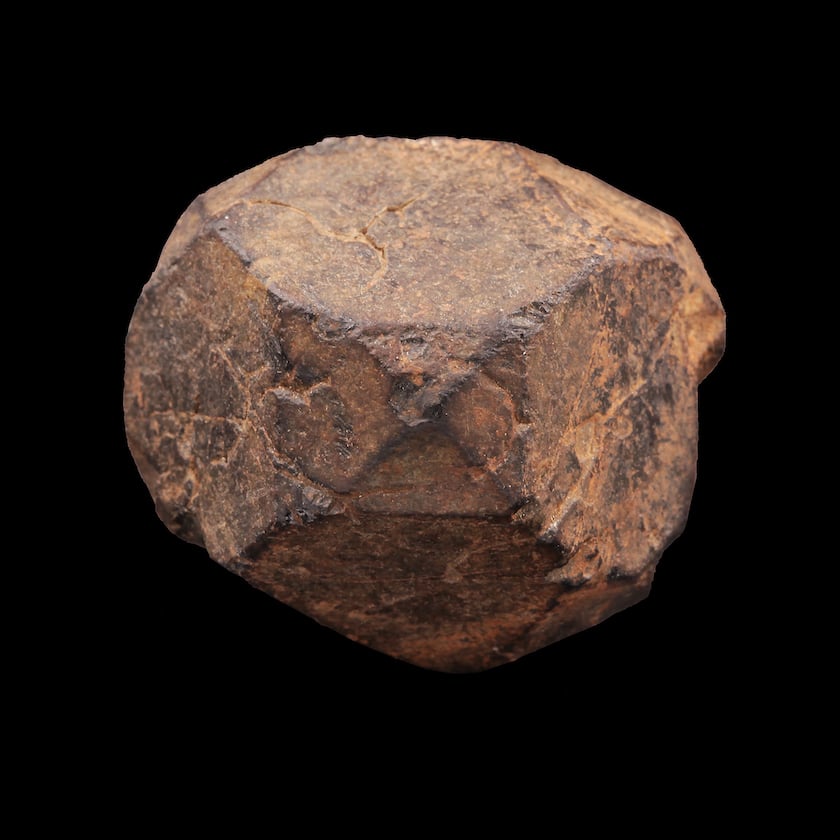
Ceylonite and pleonaste are ferroan (Fe2+ bearing) spinel varieties with very dark colors. Ceylonite has little to no ferric iron (Fe3+). Pleonaste often shows complex crystallographic combinations of octahedrons with dodecahedron and cubic forms. (All these shapes can form within the isometric or cubic crystal system).
Faceters occasionally cut 4-rayed star stones from gray or grayish blue to black spinels from Myanmar. If oriented along the 3-fold symmetry axis of the crystal (parallel to the edges of an octahedral face), such material might yield a 6-rayed star stone.
Some spinels may appear grayish blue or violet in daylight but show an amethyst-like purple in incandescent light. These color-change stones are quite rare and usually small. Some spinels from Sri Lanka change from violet in daylight to reddish violet due to the presence of Fe, Cr, and V.
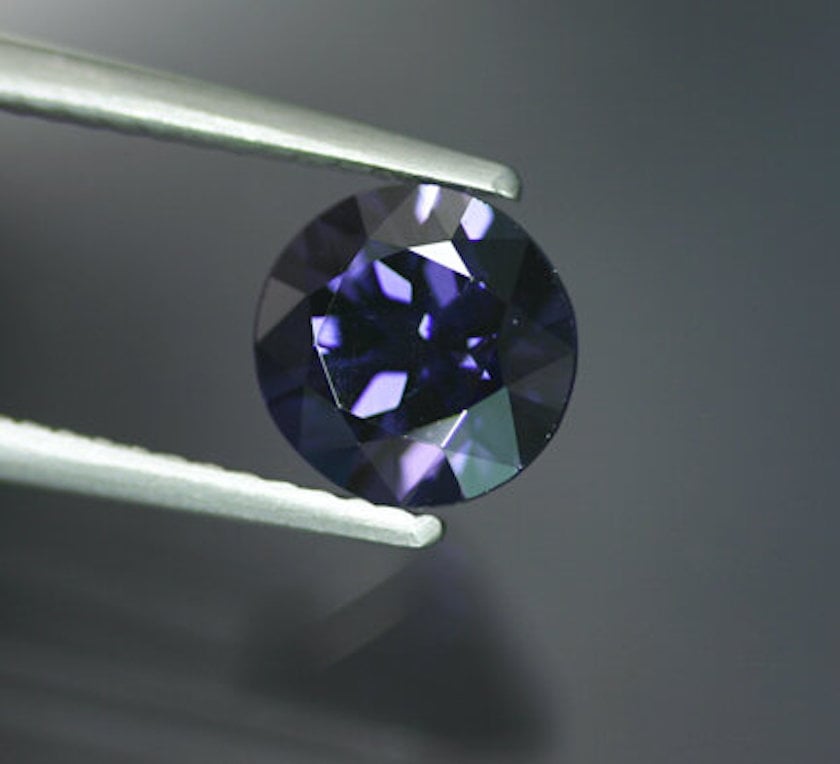
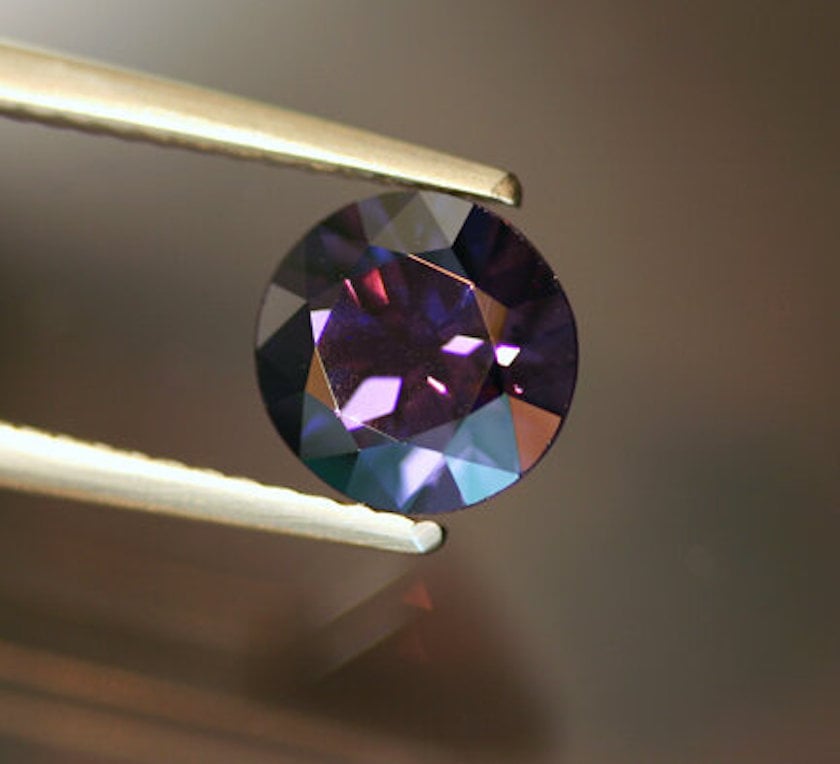
This round brilliant-cut spinel changes color from dark blueish violet to purple. 2.51 cts, 8 mm, Sri Lanka. © The Gem Trader. Used with permission.
The refractive index of spinel gemstones varies with color. The following values are generally observed:
Spinels have very distinctive absorption spectra useful for identification. They vary by color.
Pale blue, mauve, violet, and purple spinels have a similar spectrum to blue but weaker.
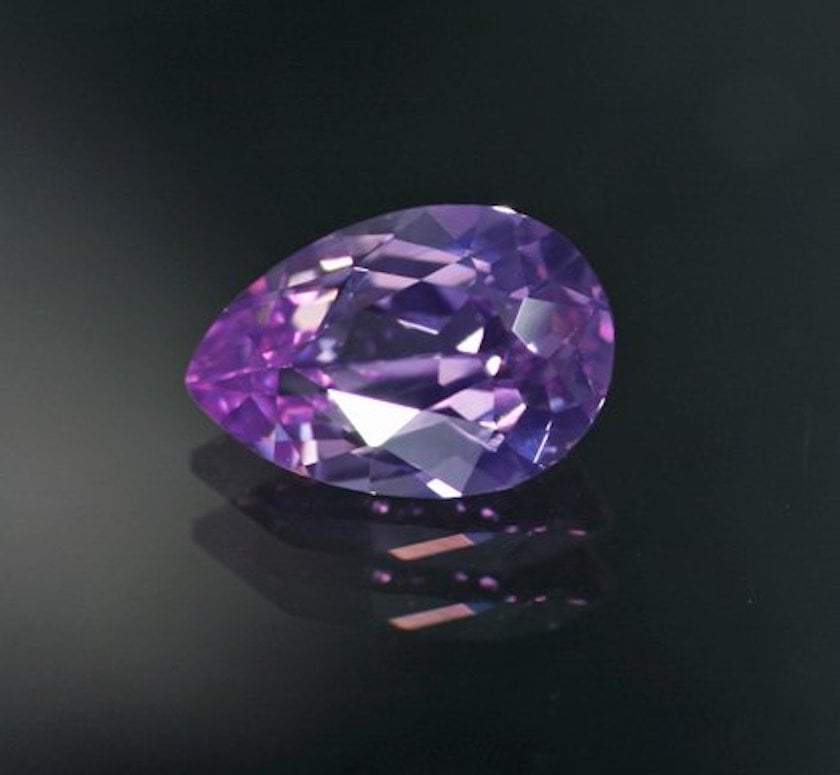
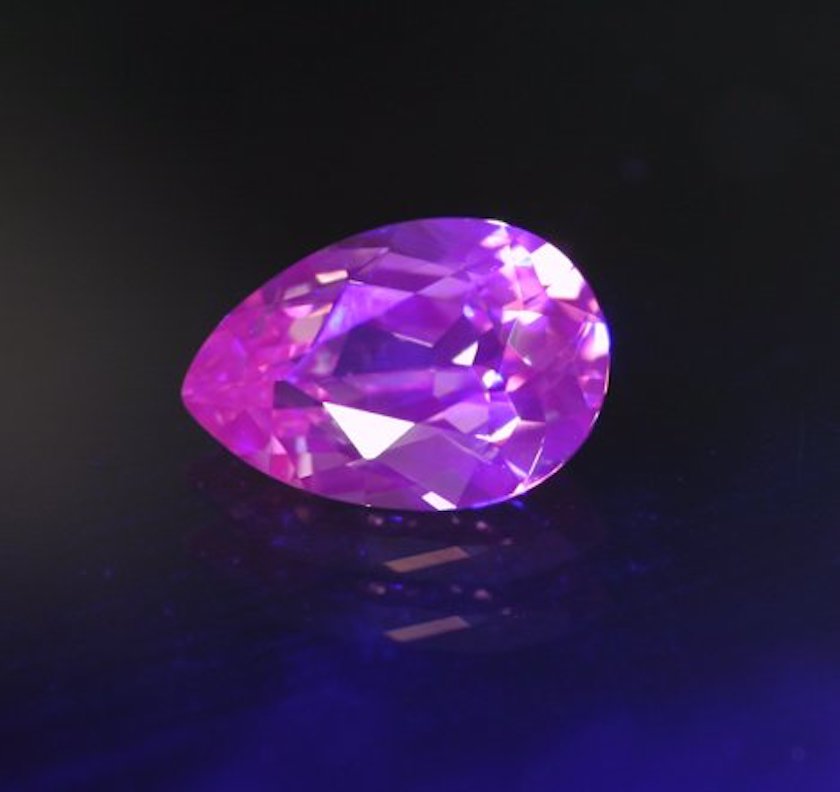
This purplish pink, brilliant pear-cut spinel shows intense fluorescence in LW UV light. 1.55 cts, 8 x 5.1 mm, Luc Yen, Vietnam. © The Gem Trader. Used with permission.
The GIA classifies spinels as Type II clarity gemstones, which means they're usually included. Although the highest-valued spinels are usually eye-clean, most spinels contain inclusions visible only through magnification and some visible to the naked eye. Some inclusions are distinctive and can help gemologists identify spinels as well as distinguish natural from synthetic spinels.
Rows of octahedral-shaped inclusions are one of the most distinctive inclusions of natural spinels. These may be octahedral crystals of other minerals, including other spinel-subgroup members such as magnetite, or octahedral-shaped cavities.
Consult our article on inclusions in spinels for more information.
Spinels have been synthesized since the 19th century. Manufacturers can use flame fusion, flux, and the Czochralski methods to produce gem-quality spinels. Synthetic or lab-created spinels are inexpensive and frequently used in birthstone jewelry and class rings. Synthetic spinels can show so many colors that they simulate other well-known and expensive gemstones more often than natural spinels.
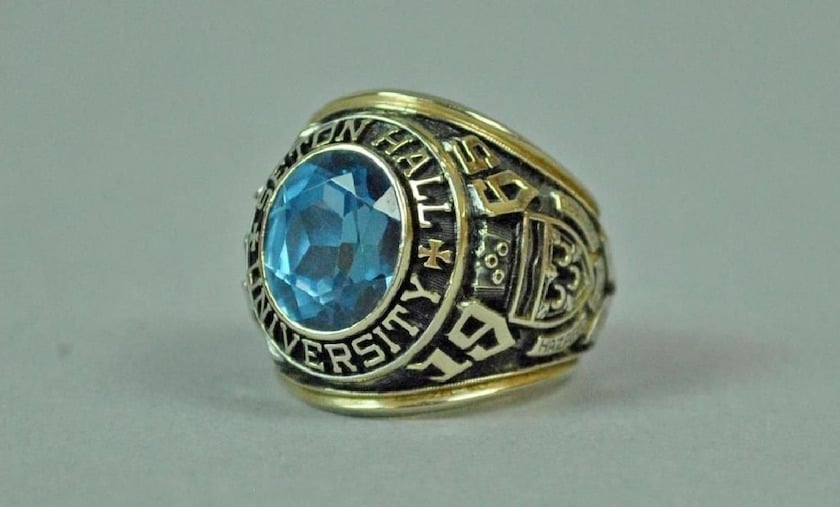
Most colorless spinels in jewelry are likely of synthetic origin. These gems make passable and affordable diamond simulants, especially in small sizes, but gemologists can easily distinguish them from actual diamonds.
Star spinels can also be synthesized. However, the star effect may appear too perfect and straight compared to natural star spinels.
Consult our article on identifying synthetic spinels for more information.
Natural spinels seldom receive gemstone treatments or enhancements. Heating, one of the most common treatments, doesn't reliably improve spinel colors. In fact, heating may make some spinels look worse. Gemologists have recently reported diffusion treatments used to create entirely artificial body colors in spinels.
On the other hand, spinels may receive heating as well as fracture-filling treatments to improve their clarity. However, the effects of fracture filling aren't permanent. These clarity treatments are rare.
Synthetic spinels may be quench crackled to simulate natural fractures.
Consult our article on treated spinels for more information.
Although scientifically recognized as a mineral species distinct from corundum in the late 18th century, natural spinel is still discussed mainly in "ruby-like" or "sapphire-like" terms. Popularly, it's judged in terms of how well it approximates the appearance or simulates other more famous and expensive gemstones. This is also true of synthetic spinels. Furthermore, since synthetics are much more common in jewelry than natural spinels, many consumers may be unaware that natural spinel even exists.
What makes natural spinels desirable as jewelry stones — their durability, colors, and affordability — also makes synthetic spinels desirable as gemstone simulants.
Synthetic spinel's capacity to imitate other gemstones extends beyond rough passing from labs to faceters. Manufacturers have found creative ways to utilize synthetic spinels as lookalikes.
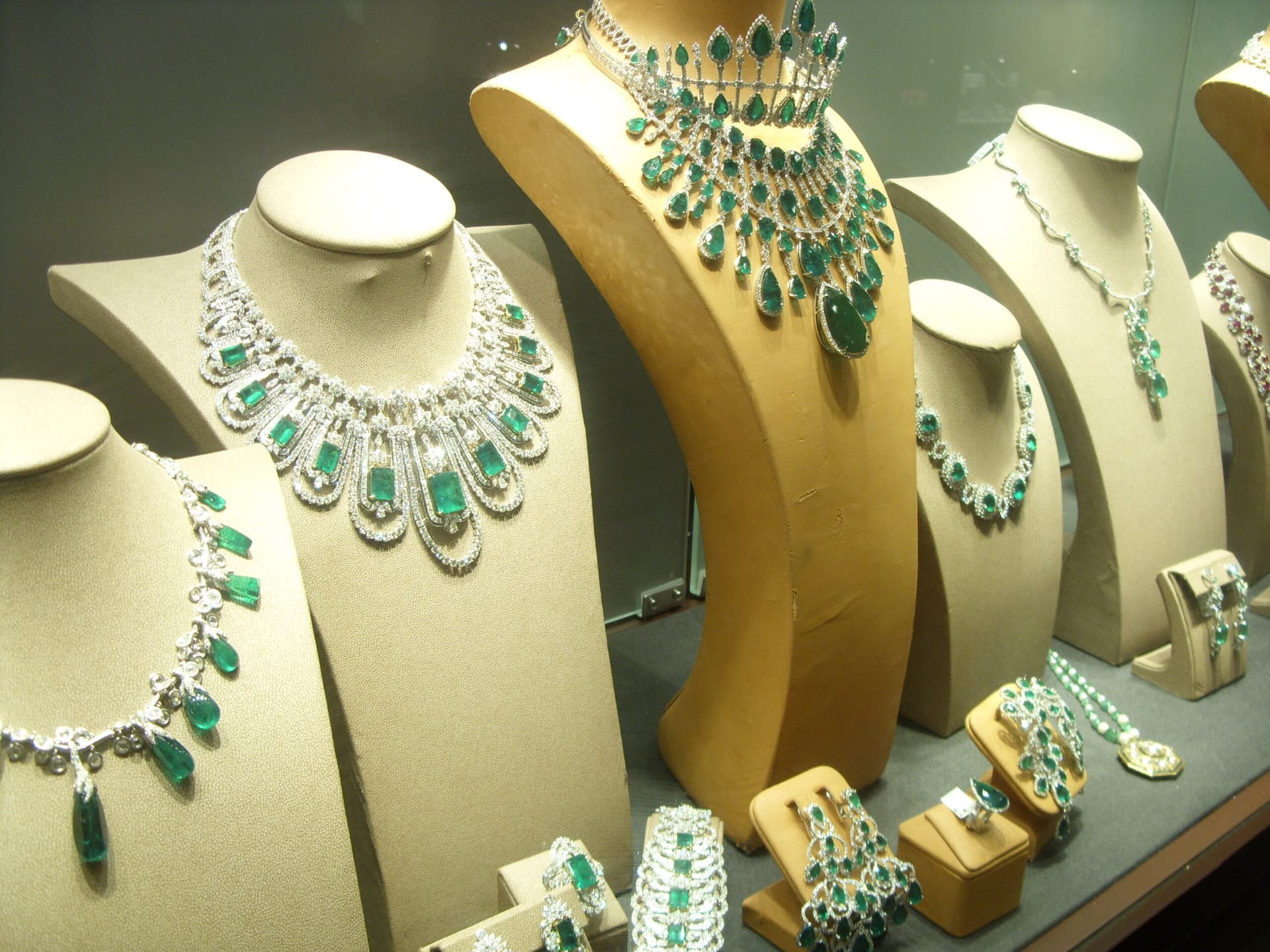
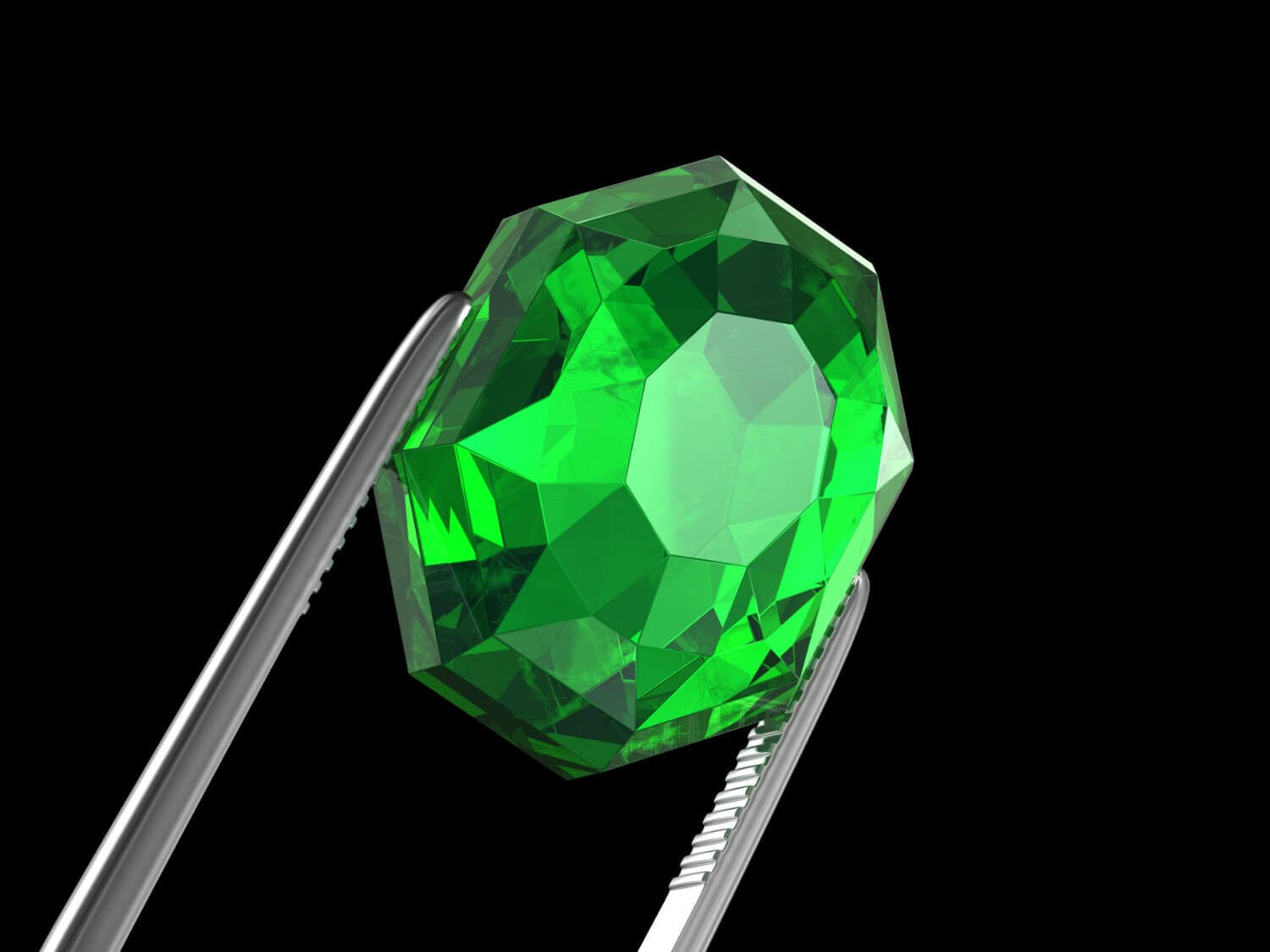
Assembled doublets and triplets made with lab-created spinels can approximate dark green colors not found in natural spinels. In this case, a lab-made colorless spinel crown and pavilion are glued together with green glue. These triplets make passable emerald simulants, especially when mounted.
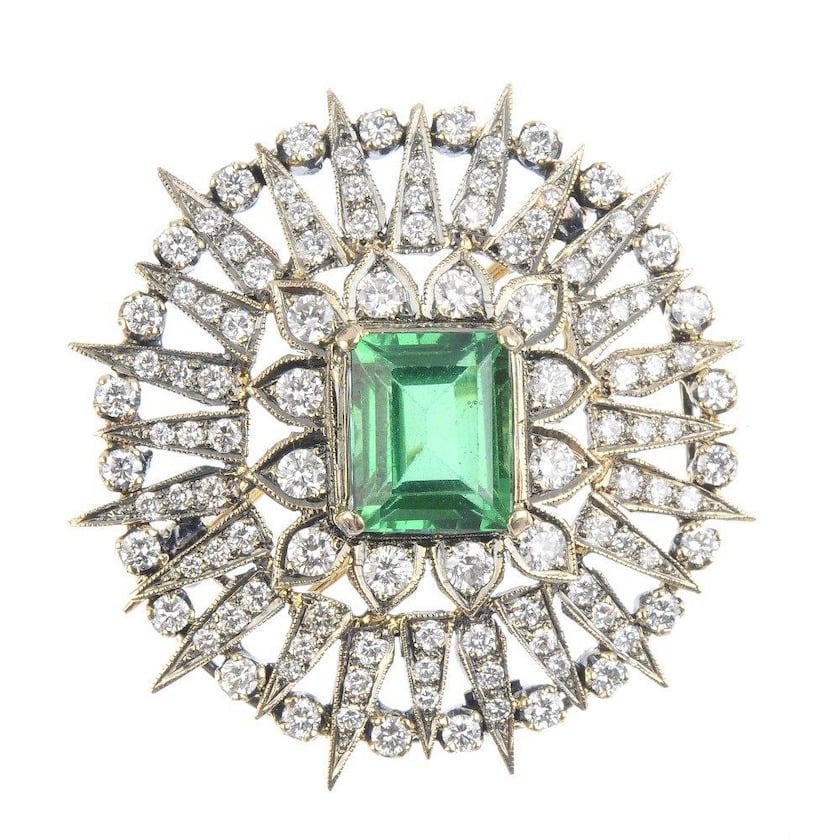
Star spinels (or other gems with asterism) can be imitated by adding a metallic foil with scribing to the back of a synthetic spinel cab.
Consult our article on assembled gemstones for more information.
Manufacturers can also create a very authentic-looking moonstone imitation from synthetic spinel. Colorless synthetic spinels are reheated long enough for some alumina (Al2O3) to separate into tiny corundum crystals. This creates a cloudiness that resembles the unique adularescence — the wispy, billowy, light-wave effect — of moonstone.
Synthetic spinel can also be used in the creation of imitation lapis lazuli. Synthetic spinels are sintered (finely powdered, heated, and then pressed into a solid), sometimes with real gold added to simulate the pyrite inclusions characteristic of natural lapis. You can generally spot this imitation because of the intensity of its color and an unnatural reddishness.
Spinel mining methods vary. One or more miners with straw baskets can sluice stream gravels. Larger teams can also work together, with operators using backhoes and hydraulic hoses to remove overburden from long-buried stream beds and supply water for gem separation by a small crew.
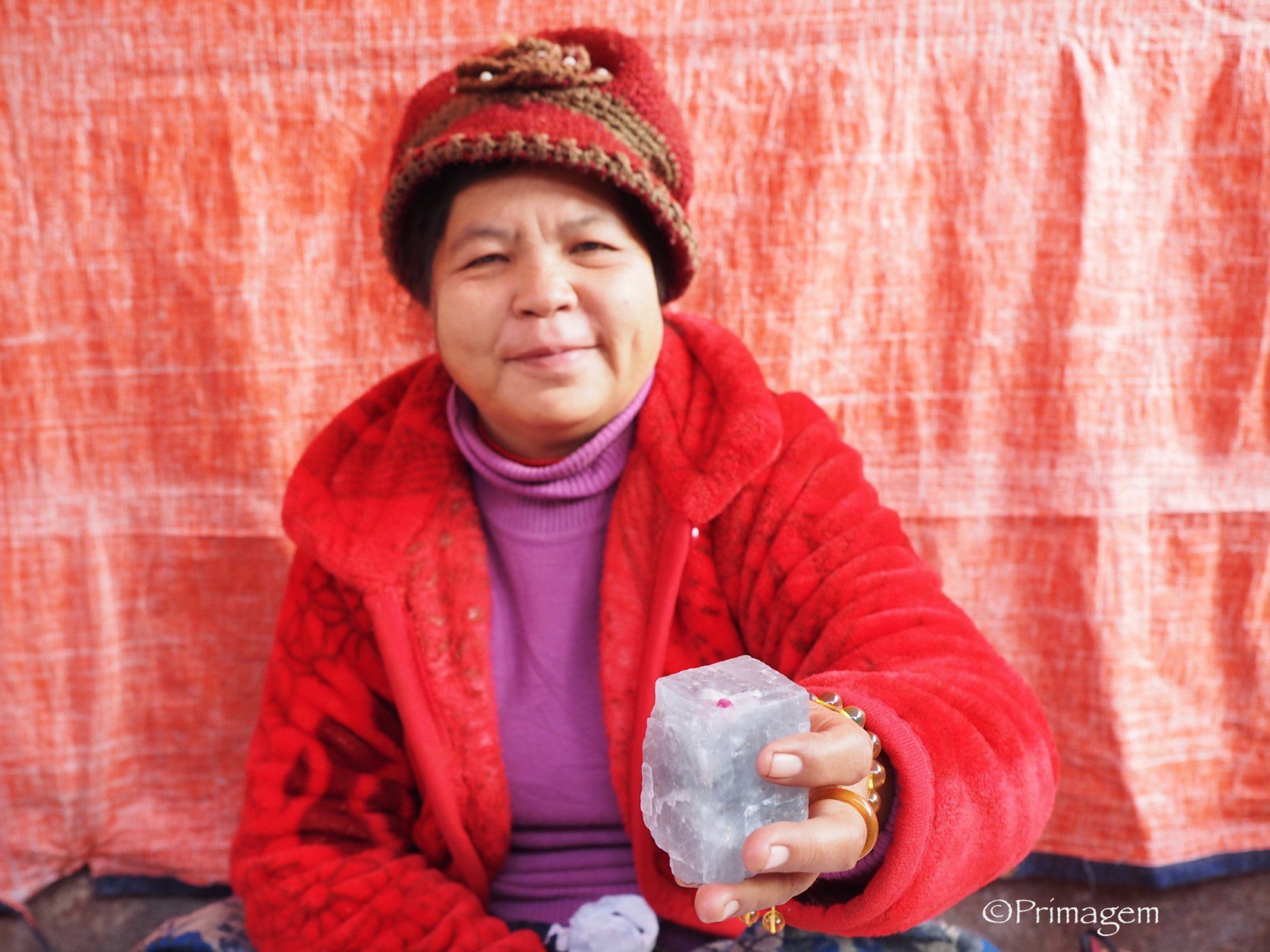
Though spinels form in hard rock deposits, miners usually don't extract them from those locations. Instead, they recover spinels from alluvial or placer deposits where eroded material washed downstream. These "gem gravels" may also contain other species besides spinel. The rough-and-tumble action of the stream smoothed these gem crystals into rounded shapes and removed much of the included and fractured parts. As a result, this easily recovered alluvial rough provides great spinels for faceting.
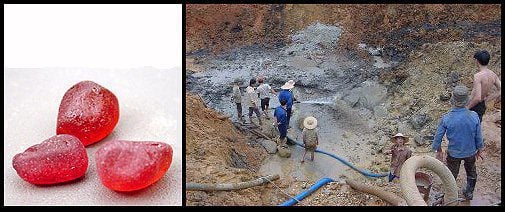
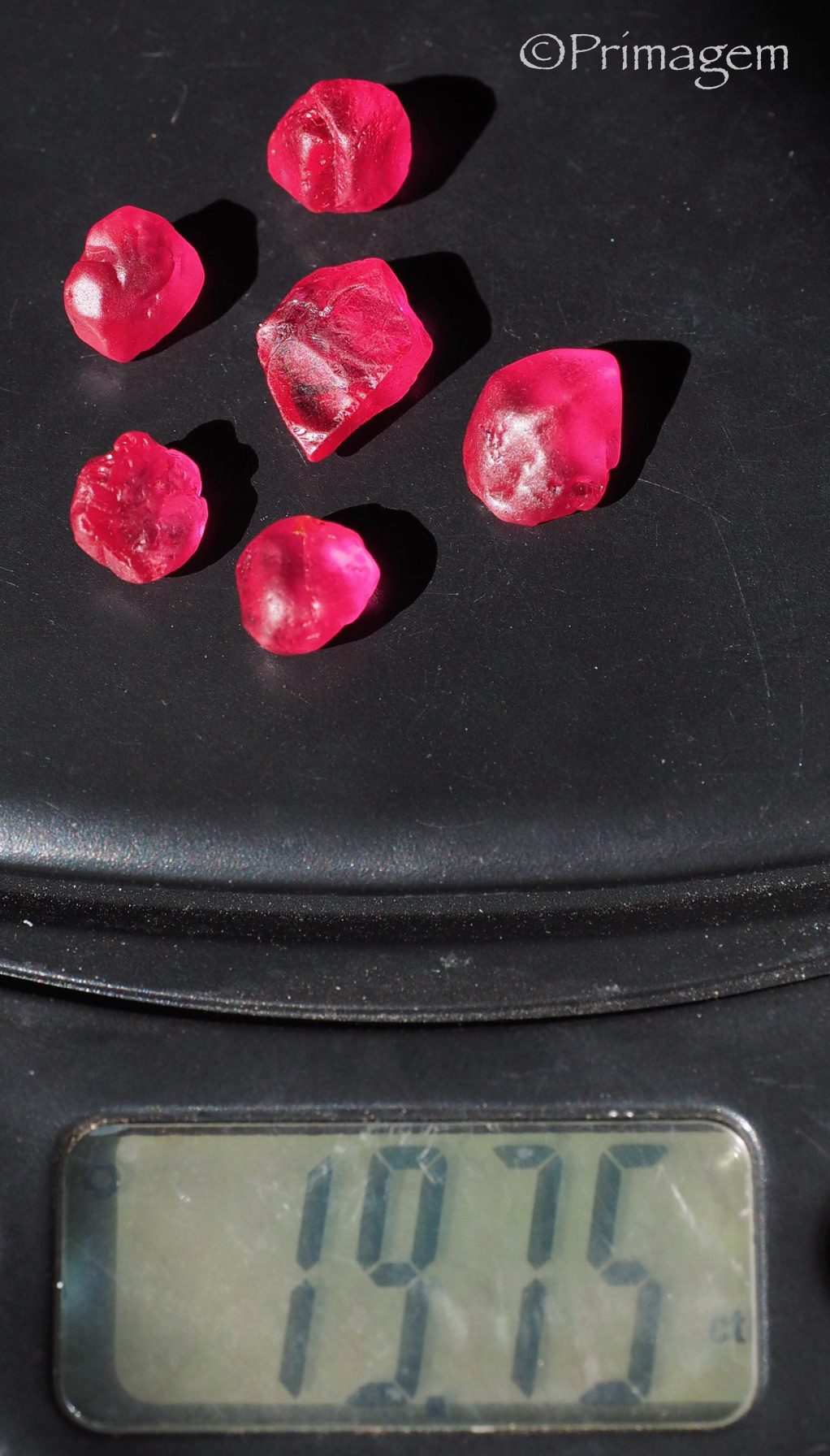
Spinels occur on every continent, even Antarctica. However, the traditional sources of gem-quality spinel are Afghanistan, Myanmar, and Sri Lanka. These nations remain significant producers.
Other notable sources of gem-quality spinels include the following locations:
Sources of gahnite include Australia, Brazil, New Zealand, and Sweden.
Madagascar also produces a gemmy blue gahnite. Jemaa, Nigeria produces fine blue gahnite, SG = 4.40-4.59, RI = 1.793.
Japan produces galaxite.
Today, finding finished spinels that weigh more than five carats is difficult. However, historically, finished spinels well over 100 carats are well-known.
The association of spinels with rubies has a long history. The so-called "Balas rubies" coveted by European royalty from the Middle Ages until the 19th century were actually spinels. Although Medieval Arab, Indian, and other scholars distinguished these gems from "true rubies," they were still popularly considered a type of ruby for centuries.
Since the scientific distinction of spinels and corundum as separate species in the late 18th century, the awareness of spinel as a gemstone has grown slowly among gem enthusiasts. However, the historical connection with corundum, especially ruby, continues to affect consumer perceptions of spinel.
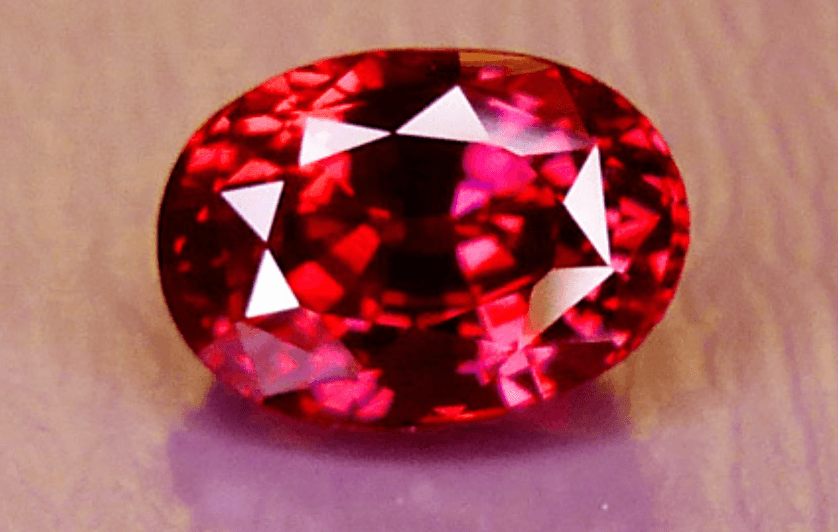
You may encounter spinels with deep red color sold as "ruby spinels" or "spinel rubies." Describing a spinel's color as "ruby red" or "ruby-like" may lead to misunderstandings, since the term "ruby" has strong connotations of high value and prestige. To take things further and describe a spinel as a "ruby spinel" wrongly implies it's a type of ruby. Gemologists should avoid using using "ruby" as a color description as well as terms like "ruby spinels" and "spinel rubies."
Use the term "balas rubies" only in discussions of gemstone history, not as a means to describe or sell spinels. "Balas rubies" isn't an acceptable current trade name.
In two very unusual cases of another gemstone being falsely described as a spinel, red or green garnets are sometimes called "Arizona spinels," and almandines are sometimes called "candy spinels."
Spinels require no special cleaning or care instructions. Consult our gemstone jewelry cleaning guide for more information.





When you join the IGS community, you get trusted diamond & gemstone information when you need it.
The gemstone known as spinel is actually one species in a group of related minerals known as the spinel subgroup. They are all isometric aluminum oxides with magnesium, iron, zinc, and traces of other elements. Some of the other minerals in the group are gahnite, , , and .
The spinel species itself is the only group member commonly worked by gem cutters and worn as a jewelry stone. The other members typically appear too dark for jewelry use. (Of course, adventurous faceters may cut them as curiosities).
A solid-state solution exists between spinel (MgAl2O4) and gahnite (ZnAl2O4). The intermediate species is known as gahnospinel ([Mg, Zn]Al2O4).
Unlike most solid-state series (like garnet), the pure end-member species occur much more frequently than blends.
| Species | Formula | Refractive Index (RI) | Specific Gravity (SG) | Color |
| Spinel | MgAl2O4 | 1.719 | 3.55-3.63 | All but pure green and yellow |
| Gahnite | ZnAl2O4 | 1.805 | 4.0-4.62 | Deep green |
| Gahnospinel | (Mg, Zn)Al2O4 | 1.725 -1.753+ | 3.58-4.06 | Blue to dark blue |
| Galaxite | MnAl2O4 | 1.92 | 4.04 | Deep red to black |
| Hercynite | FeAl2O4 | 1.835 | 4.4 | Black, dark colors |
| Magnetite | Fe2+Fe |
Picotite is a magnesium and chromium-bearing variety of hercynite with dark green to black colors and an SG of 4.42.
Natural spinels range from strong, deep colors to very light pastels and come in all shades of pink, lavender, red, red-orange, purple, blue, and even black. Colorless spinels occur very rarely. Only pure green and yellow spinels appear absent in nature.
Spinels are usually referred to by their color. Historically, red spinels are the most celebrated. Today, cobalt blue spinels and pink spinels are growing in popularity.
Spinels are allochromatic gemstones. This means that color in spinels comes from the presence of trace elements acting as chromophores. Spinels free of trace elements appear colorless. Chromium, iron, and cobalt are the most common chromophores in spinel.
Consult our article on how spinels form for more information on chromophores and coloration.
Most popular jewelry stones, such as beryl (emerald, aquamarine, etc.), corundum (ruby and sapphire), quartz, and topaz, are allochromatic. In these cases, the chromophore trace elements rarely enter the mineral's chemical makeup. Thus, their natural colorless varieties occur most frequently and have less value than their colorful counterparts. Spinel is an exception. Although laboratories can grow colorless spinels by the bucketful, the underground environment where spinels naturally grow seldom keeps out chromophore trace elements. This makes natural colorless spinel a rare and valuable collector's gem.
Among natural gemstones, only alexandrite, ruby, sapphire, and diamond exceed spinel in hardness (7.5 to 8). Spinels have excellent resistance to scratches. Furthermore, unlike those other gems, they also lack cleavage. This gives spinels superior resistance to blows. Spinels also have a high refractive index, which means well-cut and polished gems will have excellent brilliance regardless of color. Spinels make ideal stones for any type of jewelry, including engagement rings and other pieces intended for daily wear. You will also find spinels usually have considerably lower prices than alexandrites, rubies, sapphires, and diamonds.
Despite these favorable qualities, spinels remain relatively unknown as jewelry stones, especially when compared to rubies and sapphires. However, as more information comes to light about the extensive and invasive enhancements lower-grade ruby and sapphire receive to "pump up" their color or clarity, educated consumers have come to appreciate spinel's natural beauty. The natural spinels on today's market are almost all untreated. Their relatively modest prices, availability in nearly any color, and suitability for jewelry make them even more inviting.
In 2016, spinels were added to the list of modern birthstones as an August option.
Ceylonite and pleonaste are ferroan (Fe2+ bearing) spinel varieties with very dark colors. Ceylonite has little to no ferric iron (Fe3+). Pleonaste often shows complex crystallographic combinations of octahedrons with dodecahedron and cubic forms. (All these shapes can form within the isometric or cubic crystal system).
Faceters occasionally cut 4-rayed star stones from gray or grayish blue to black spinels from Myanmar. If oriented along the 3-fold symmetry axis of the crystal (parallel to the edges of an octahedral face), such material might yield a 6-rayed star stone.
Some spinels may appear grayish blue or violet in daylight but show an amethyst-like purple in incandescent light. These color-change stones are quite rare and usually small. Some spinels from Sri Lanka change from violet in daylight to reddish violet due to the presence of Fe, Cr, and V.
This round brilliant-cut spinel changes color from dark blueish violet to purple. 2.51 cts, 8 mm, Sri Lanka. © The Gem Trader. Used with permission.
The refractive index of spinel gemstones varies with color. The following values are generally observed:
Spinels have very distinctive absorption spectra useful for identification. They vary by color.
Pale blue, mauve, violet, and purple spinels have a similar spectrum to blue but weaker.
This purplish pink, brilliant pear-cut spinel shows intense fluorescence in LW UV light. 1.55 cts, 8 x 5.1 mm, Luc Yen, Vietnam. © The Gem Trader. Used with permission.
The GIA classifies spinels as Type II clarity gemstones, which means they're usually included. Although the highest-valued spinels are usually eye-clean, most spinels contain inclusions visible only through magnification and some visible to the naked eye. Some inclusions are distinctive and can help gemologists identify spinels as well as distinguish natural from synthetic spinels.
Rows of octahedral-shaped inclusions are one of the most distinctive inclusions of natural spinels. These may be octahedral crystals of other minerals, including other spinel-subgroup members such as magnetite, or octahedral-shaped cavities.
Consult our article on inclusions in spinels for more information.
Spinels have been synthesized since the 19th century. Manufacturers can use flame fusion, flux, and the Czochralski methods to produce gem-quality spinels. Synthetic or lab-created spinels are inexpensive and frequently used in birthstone jewelry and class rings. Synthetic spinels can show so many colors that they simulate other well-known and expensive gemstones more often than natural spinels.
Most colorless spinels in jewelry are likely of synthetic origin. These gems make passable and affordable diamond simulants, especially in small sizes, but gemologists can easily distinguish them from actual diamonds.
Star spinels can also be synthesized. However, the star effect may appear too perfect and straight compared to natural star spinels.
Consult our article on identifying synthetic spinels for more information.
Natural spinels seldom receive gemstone treatments or enhancements. Heating, one of the most common treatments, doesn't reliably improve spinel colors. In fact, heating may make some spinels look worse. Gemologists have recently reported diffusion treatments used to create entirely artificial body colors in spinels.
On the other hand, spinels may receive heating as well as fracture-filling treatments to improve their clarity. However, the effects of fracture filling aren't permanent. These clarity treatments are rare.
Synthetic spinels may be quench crackled to simulate natural fractures.
Consult our article on treated spinels for more information.
Although scientifically recognized as a mineral species distinct from corundum in the late 18th century, natural spinel is still discussed mainly in "ruby-like" or "sapphire-like" terms. Popularly, it's judged in terms of how well it approximates the appearance or simulates other more famous and expensive gemstones. This is also true of synthetic spinels. Furthermore, since synthetics are much more common in jewelry than natural spinels, many consumers may be unaware that natural spinel even exists.
What makes natural spinels desirable as jewelry stones — their durability, colors, and affordability — also makes synthetic spinels desirable as gemstone simulants.
Synthetic spinel's capacity to imitate other gemstones extends beyond rough passing from labs to faceters. Manufacturers have found creative ways to utilize synthetic spinels as lookalikes.
Assembled doublets and triplets made with lab-created spinels can approximate dark green colors not found in natural spinels. In this case, a lab-made colorless spinel crown and pavilion are glued together with green glue. These triplets make passable emerald simulants, especially when mounted.
Star spinels (or other gems with asterism) can be imitated by adding a metallic foil with scribing to the back of a synthetic spinel cab.
Consult our article on assembled gemstones for more information.
Manufacturers can also create a very authentic-looking moonstone imitation from synthetic spinel. Colorless synthetic spinels are reheated long enough for some alumina (Al2O3) to separate into tiny corundum crystals. This creates a cloudiness that resembles the unique adularescence — the wispy, billowy, light-wave effect — of moonstone.
Synthetic spinel can also be used in the creation of imitation lapis lazuli. Synthetic spinels are sintered (finely powdered, heated, and then pressed into a solid), sometimes with real gold added to simulate the pyrite inclusions characteristic of natural lapis. You can generally spot this imitation because of the intensity of its color and an unnatural reddishness.
Spinel mining methods vary. One or more miners with straw baskets can sluice stream gravels. Larger teams can also work together, with operators using backhoes and hydraulic hoses to remove overburden from long-buried stream beds and supply water for gem separation by a small crew.
Though spinels form in hard rock deposits, miners usually don't extract them from those locations. Instead, they recover spinels from alluvial or placer deposits where eroded material washed downstream. These "gem gravels" may also contain other species besides spinel. The rough-and-tumble action of the stream smoothed these gem crystals into rounded shapes and removed much of the included and fractured parts. As a result, this easily recovered alluvial rough provides great spinels for faceting.
Spinels occur on every continent, even Antarctica. However, the traditional sources of gem-quality spinel are Afghanistan, Myanmar, and Sri Lanka. These nations remain significant producers.
Other notable sources of gem-quality spinels include the following locations:
Sources of gahnite include Australia, Brazil, New Zealand, and Sweden.
Madagascar also produces a gemmy blue gahnite. Jemaa, Nigeria produces fine blue gahnite, SG = 4.40-4.59, RI = 1.793.
Japan produces galaxite.
Today, finding finished spinels that weigh more than five carats is difficult. However, historically, finished spinels well over 100 carats are well-known.
The association of spinels with rubies has a long history. The so-called "Balas rubies" coveted by European royalty from the Middle Ages until the 19th century were actually spinels. Although Medieval Arab, Indian, and other scholars distinguished these gems from "true rubies," they were still popularly considered a type of ruby for centuries.
Since the scientific distinction of spinels and corundum as separate species in the late 18th century, the awareness of spinel as a gemstone has grown slowly among gem enthusiasts. However, the historical connection with corundum, especially ruby, continues to affect consumer perceptions of spinel.
You may encounter spinels with deep red color sold as "ruby spinels" or "spinel rubies." Describing a spinel's color as "ruby red" or "ruby-like" may lead to misunderstandings, since the term "ruby" has strong connotations of high value and prestige. To take things further and describe a spinel as a "ruby spinel" wrongly implies it's a type of ruby. Gemologists should avoid using using "ruby" as a color description as well as terms like "ruby spinels" and "spinel rubies."
Use the term "balas rubies" only in discussions of gemstone history, not as a means to describe or sell spinels. "Balas rubies" isn't an acceptable current trade name.
In two very unusual cases of another gemstone being falsely described as a spinel, red or green garnets are sometimes called "Arizona spinels," and almandines are sometimes called "candy spinels."
Spinels require no special cleaning or care instructions. Consult our gemstone jewelry cleaning guide for more information.





| 2.52 |
| 5.2 |
| Black to brownish gray |
Spinel has often been confused for ruby or sapphire. But this durable gemstone, which is rarer than a diamond, is gaining popularity due to its color, durability, and more affordable price point.