Specific Gravity Testing Part 4: Refining Your Specific Gravity Testing Techniques
Factors like liquid temperature and inclusions can affect a gem's density reading. These specific gravity testing techniques can improve your accuracy.
4 Minute Read
Choosing Liquids for Specific Gravity Testing
Distilled Water
You can use any liquid for your tests. Water is used frequently. However, don’t use tap water. Its density or specific gravity isn’t constant and is always higher than distilled water. Note that the temperature correction table below refers to pure, distilled water, which you can find in any supermarket. If you use distilled water, you can minimize the surface tension by adding a bit of liquid soap or detergent. Two or three drops in a quart or liter won’t make a significant difference in the density of the water.
Toluene
For the most accurate results, use toluene. Its surface tension is much lower than water’s. B. W. Anderson, founder and first director of the Gem Identification Laboratory of the London Chamber of Commerce, recommends the use of toluene in his book, Gem Testing. Keep in mind that toluene is a solvent. Therefore, don’t use it with delicate or porous gems, such as pearls and turquoise, or stones with fracture fillings or glued doublets. (Editor’s Note: Toluene is also toxic. Follow the safety instructions for this product).
Know
…
Related Articles
Buying Gems: Test Your Identification Skills
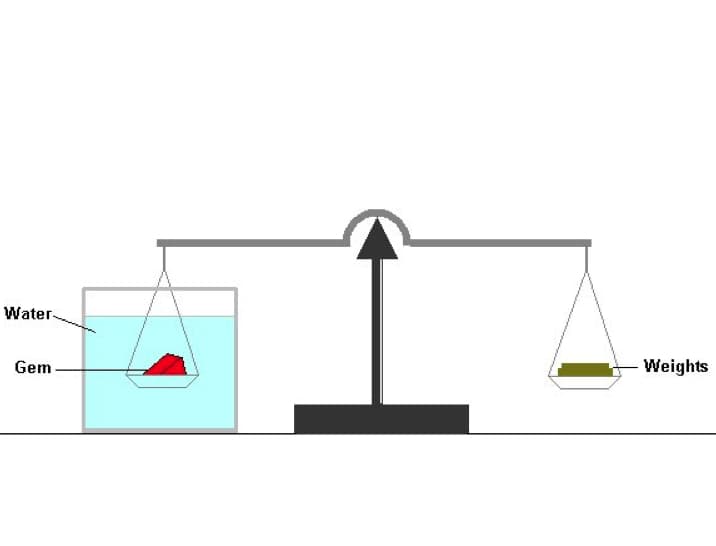
Specific Gravity Testing Part 2: Using a Balance Scale or a Hanneman Specific Gravity Scale
Destructive Gemstone Testing
Diamond Testing Tools: A Brief History and Review
Latest Articles

800 Years of Mogok: A Celebration in Tenuous Times
What is the Average Gemstone Faceting Yield?
Pyroxmangite Value, Price, and Jewelry Information

How to Identify Emerald Simulants and Synthetics

Never Stop Learning
When you join the IGS community, you get trusted diamond & gemstone information when you need it.