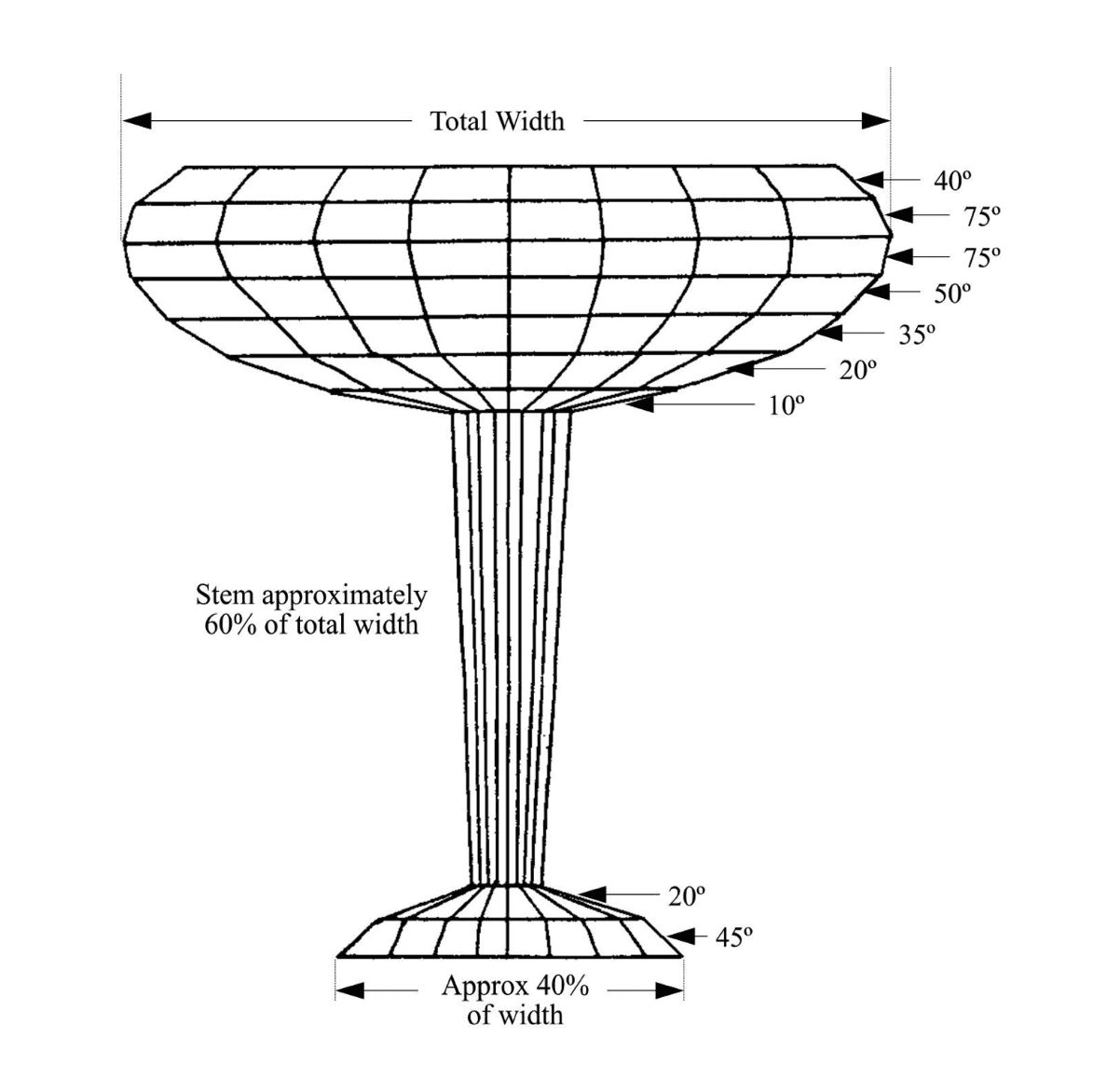
Part 6 of Trevor Hannam's “Faceting Made Easy” features gemstone design cuts, like the Champagne Glass, that novices can try after the standard brilliant.
7 Minute Read
Note: This is a six-part edited version of Trevor Hannam’s Faceting Made Easy, a general introduction to faceting and a guide for learning to cut a standard brilliant gem. Part 6 includes the gemstone design cuts section as well as the bibliography. The International Gem Society thanks Mr. Hannam for permission to post his work.
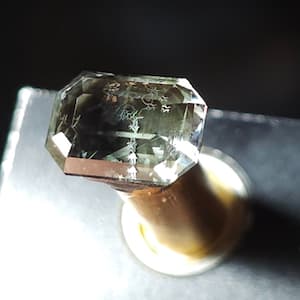
The emerald cut is basically designed for medium to dark colored stones or those with a low refractive index (RI). Although the depth of this gemstone design will enhance lighter colored stones, it does nothing for brilliance or scintillation.
Angles shown are for quartz. The best gemstone proportion ratio is 1.5 to 1.
Cut the midway and corner facets with a 1,200 lap. Polish in reverse order.
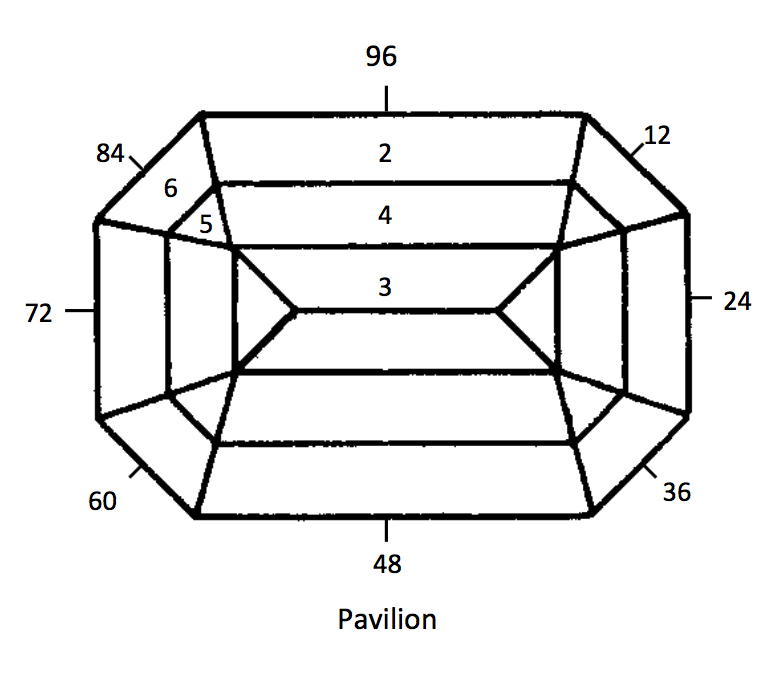
Polish in reverse order.
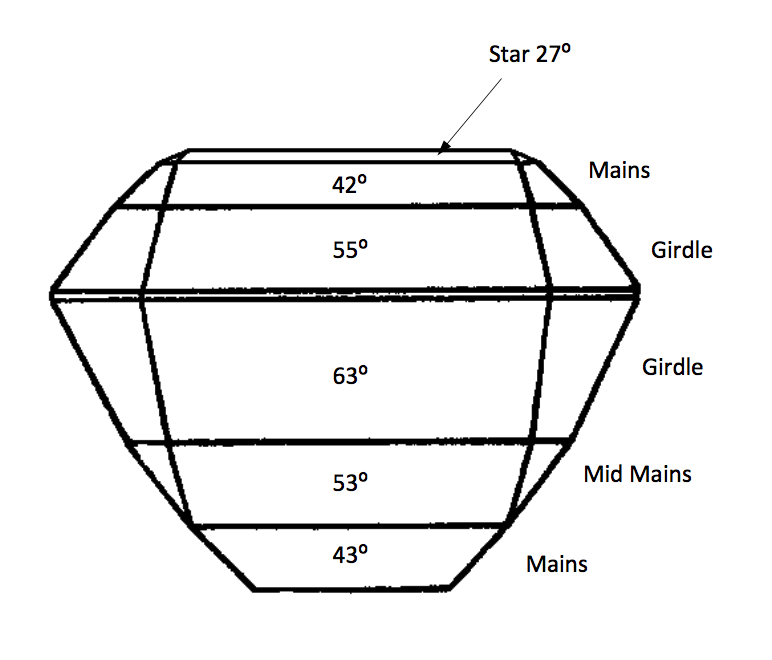
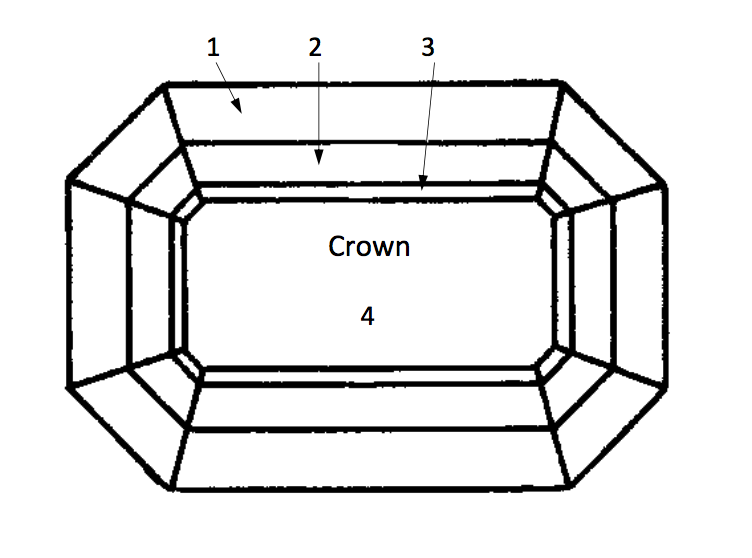
Table (4), use 45° angle dop. Set it up parallel with the lap surface. Then, set angle to 90°. Cut and polish.
…


When you join the IGS community, you get trusted diamond & gemstone information when you need it.

Note: This is a six-part edited version of Trevor Hannam’s Faceting Made Easy, a general introduction to faceting and a guide for learning to cut a standard brilliant gem. Part 6 includes the gemstone design cuts section as well as the bibliography. The International Gem Society thanks Mr. Hannam for permission to post his work.
The emerald cut is basically designed for medium to dark colored stones or those with a low refractive index (RI). Although the depth of this gemstone design will enhance lighter colored stones, it does nothing for brilliance or scintillation.
Angles shown are for quartz. The best gemstone proportion ratio is 1.5 to 1.
Cut the midway and corner facets with a 1,200 lap. Polish in reverse order.
Polish in reverse order.
Table (4), use 45° angle dop. Set it up parallel with the lap surface. Then, set angle to 90°. Cut and polish.
…

Part 6 of Trevor Hannam's “Faceting Made Easy” features gemstone design cuts, like the Champagne Glass, that novices can try after the standard brilliant.

“I have never known or heard of an organization that offers so much for its members, and at such a low cost.”
— Ernest Roisch, Rainbow Rocks LTD
That's less than $0.01 per article. Get instant access to 1,700+ premium articles, courses, and gem pricing data.