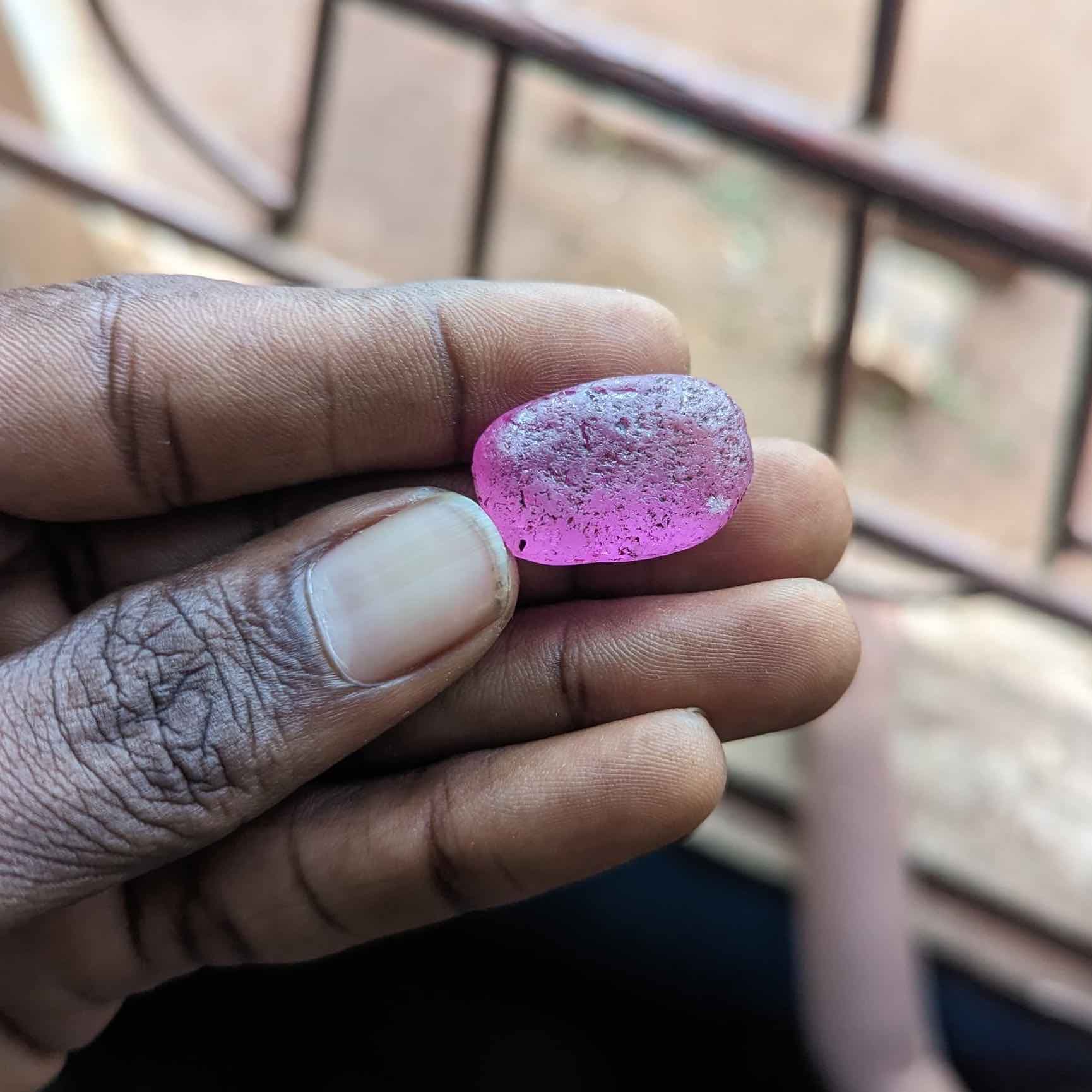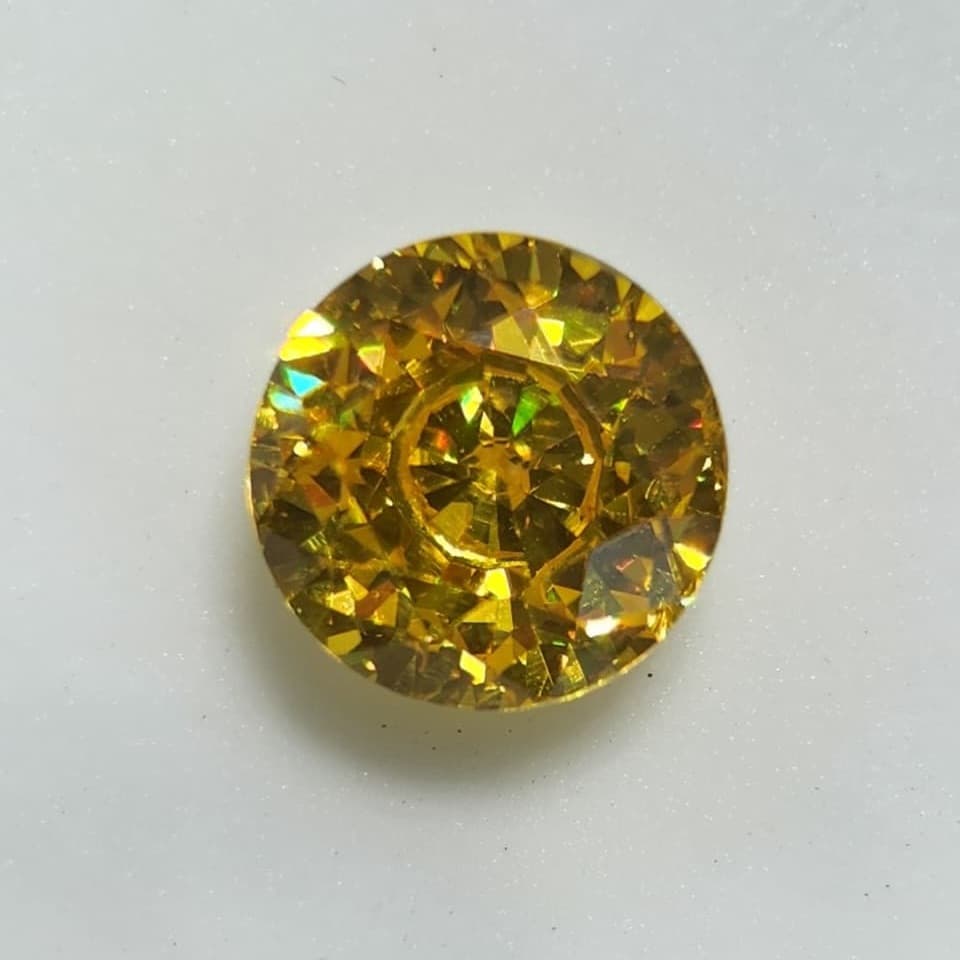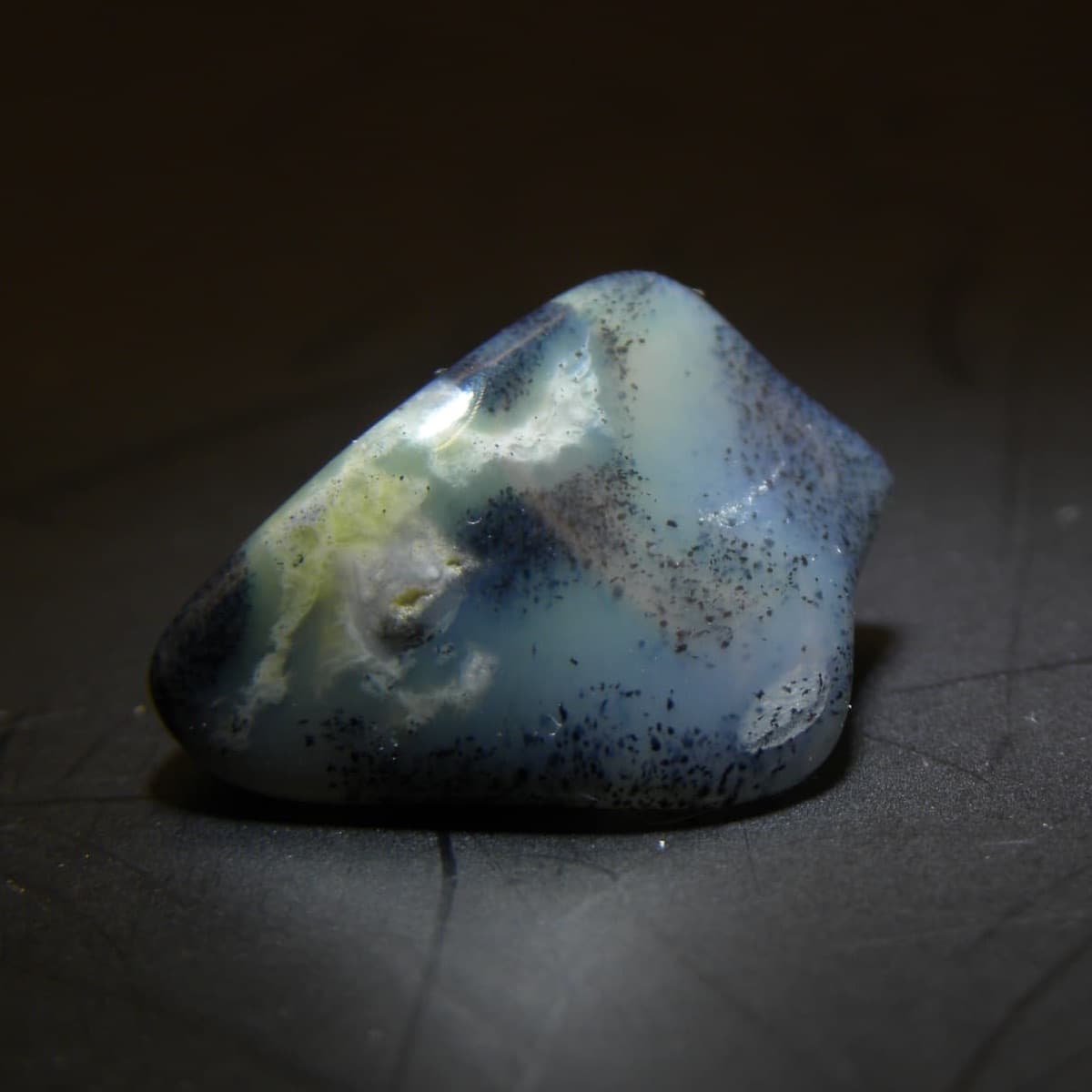

Two of the trickiest gemstone separations to make are scapolite from citrine and apatite from tourmaline. Learn some tips for distinguishing these gems.
2 Minute Read
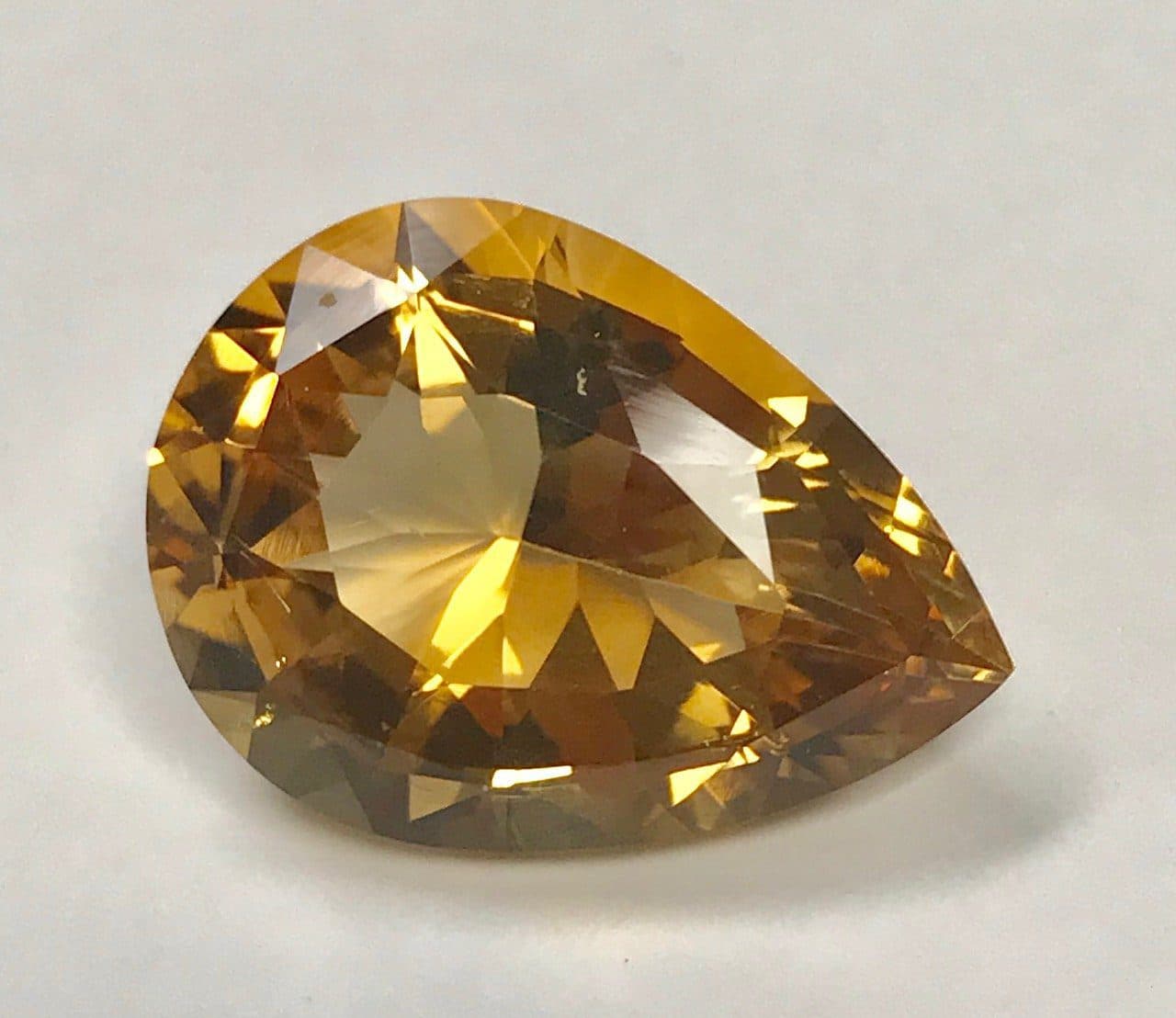
Say you were given a light yellow gem to examine. Your basic refractive index (RI) test yielded two readings on the table 90° apart. The results were 1.545 and 1.552. A polariscope reading confirms what your refractometer results indicated: the stone is uniaxial.
When you review your gemological references, you’ll get a long list of possible matches with these characteristics, so you move on to other tests. Other easy-to-find information is the ultraviolet (UV) reaction and pleochroism. First, you find the stone is inert to UV, both long and shortwave. That applies to both scapolite and citrine, so it’s no help. You check for pleochroism and find it’s weak, pale yellow to yellow. Now the only stone that meets these characteristics is quartz.
The near hits don’t include scapolite because the pleochroism for scapolite is moderate to strong. If your eyes are fatigued, it’s easy to make this kind of mistake, especially if you’re looking at two shades of the same hue.
Another mistake made in difficult gemstone separations is to assume that you’ve measured the full birefringence of the stone. Scapolite almost always has more birefringence than quartz. Had you been confused about its…

When you join the IGS community, you get trusted diamond & gemstone information when you need it.
Say you were given a light yellow gem to examine. Your basic refractive index (RI) test yielded two readings on the table 90° apart. The results were 1.545 and 1.552. A polariscope reading confirms what your refractometer results indicated: the stone is uniaxial.
When you review your gemological references, you’ll get a long list of possible matches with these characteristics, so you move on to other tests. Other easy-to-find information is the ultraviolet (UV) reaction and pleochroism. First, you find the stone is inert to UV, both long and shortwave. That applies to both scapolite and citrine, so it’s no help. You check for pleochroism and find it’s weak, pale yellow to yellow. Now the only stone that meets these characteristics is quartz.
The near hits don’t include scapolite because the pleochroism for scapolite is moderate to strong. If your eyes are fatigued, it’s easy to make this kind of mistake, especially if you’re looking at two shades of the same hue.
Another mistake made in difficult gemstone separations is to assume that you’ve measured the full of the stone. Scapolite almost always has more birefringence than quartz. Had you been confused about its…
Two of the trickiest gemstone separations to make are scapolite from citrine and apatite from tourmaline. Learn some tips for distinguishing these gems.

“I have never known or heard of an organization that offers so much for its members, and at such a low cost.”
— Ernest Roisch, Rainbow Rocks LTD
That's less than $0.01 per article. Get instant access to 1,700+ premium articles, courses, and gem pricing data.