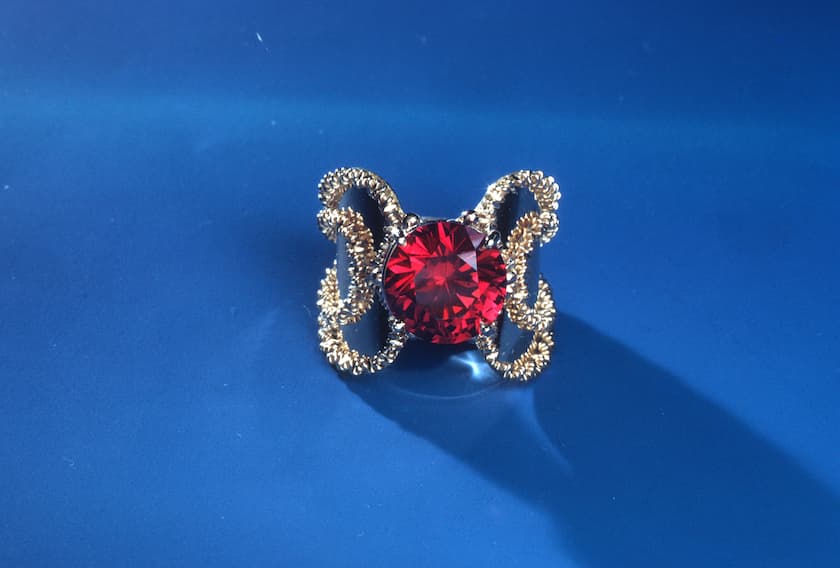
Although you can't weigh a gemstone in a jewelry setting, you can get a close approximation of the gem weight by determining its volume.
2 Minute Read
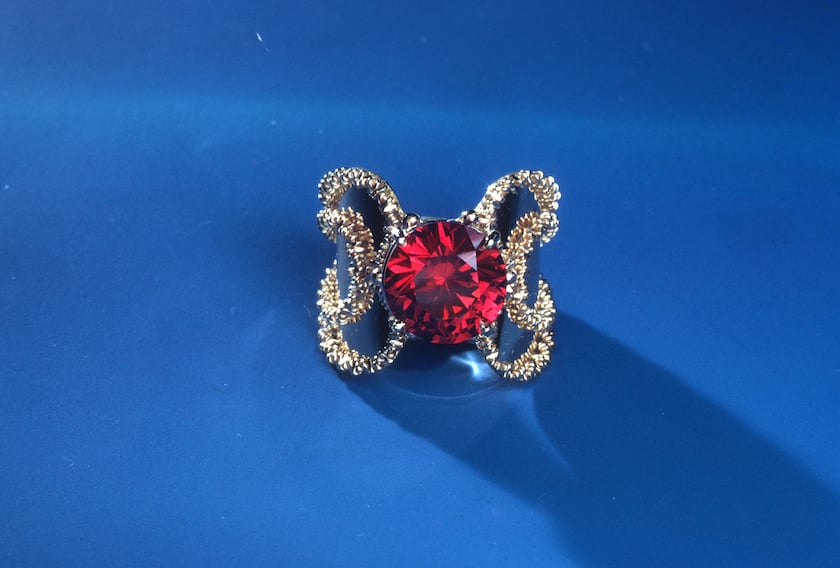
Apply the proper formula for the gem based on its cut. The following formulas assume you're dealing with well-proportioned gems with a medium/thin girdle. If that's not the case, you'll have to adjust your results. See Step 4 below.
For all cuts except rounds and rectangular cushions, calculate the diameter as the average of the diagonal, length, and width.
Weight estimates are in carats.
Diameter ✕ diameter ✕ depth ✕ SG ✕ 0.0018
Diameter ✕ diameter ✕ depth ✕ SG ✕ 0.0020
Diameter ✕ diameter ✕ depth ✕ SG ✕ 0.0024
Diameter ✕ diameter ✕ depth ✕ SG ✕ 0.0018
Diameter ✕ diameter ✕ depth ✕ SG ✕ 0.0023
Diameter ✕ diameter ✕ depth ✕ SG ✕ 0.0024
Length ✕ width ✕ depth ✕ SG ✕ 0.0026
Length ✕ width ✕ depth ✕ SG ✕ 0.0025
Length ✕ width ✕ depth ✕ SG ✕ 0.0026
Diameter ✕ diameter ✕ depth ✕ SG ✕ 0.0022 (NOTE: diameter = average of length and width)
Length ✕ width ✕ depth ✕ SG ✕ 0.0018
Length ✕ width ✕ depth ✕ SG ✕ 0.0021
Length ✕ width ✕ depth ✕ SG ✕ 0.0017
Length ✕ width ✕ depth ✕ SG ✕ 0.0018
Flat-bottomed cabs actually range from 0.0023 to 0.0029. Those with a bottom bulge range from 0.0024 to 0.0030. As a general rule, use the following formulas:
Length ✕ width ✕ depth ✕ SG ✕ 0.0026
Length ✕ width ✕ depth ✕ SG ✕ 0.0029
If the stone you're examining isn't well-proportioned or has a very thin or thick girdle, adjust your gem weight estimate as follows:
Use an average of the girdle thickness. Don't base your reading on a bulge at the top of a heart or the point of a gem.
A long culet due to steep pavilion angles can add up to 5%.

When you join the IGS community, you get trusted diamond & gemstone information when you need it.
Apply the proper formula for the gem based on its cut. The following formulas assume you're dealing with well-proportioned gems with a medium/thin girdle. If that's not the case, you'll have to adjust your results. See Step 4 below.
For all cuts except rounds and rectangular cushions, calculate the diameter as the average of the diagonal, length, and width.
Weight estimates are in carats.
Diameter ✕ diameter ✕ depth ✕ SG ✕ 0.0018
Diameter ✕ diameter ✕ depth ✕ SG ✕ 0.0020
Diameter ✕ diameter ✕ depth ✕ SG ✕ 0.0024
Diameter ✕ diameter ✕ depth ✕ SG ✕ 0.0018
Diameter ✕ diameter ✕ depth ✕ SG ✕ 0.0023
Diameter ✕ diameter ✕ depth ✕ SG ✕ 0.0024
Length ✕ width ✕ depth ✕ SG ✕ 0.0026
Length ✕ width ✕ depth ✕ SG ✕ 0.0025
Length ✕ width ✕ depth ✕ SG ✕ 0.0026
Diameter ✕ diameter ✕ depth ✕ SG ✕ 0.0022 (NOTE: diameter = average of length and width)
Length ✕ width ✕ depth ✕ SG ✕ 0.0018
Length ✕ width ✕ depth ✕ SG ✕ 0.0021
Length ✕ width ✕ depth ✕ SG ✕ 0.0017
Length ✕ width ✕ depth ✕ SG ✕ 0.0018
Flat-bottomed cabs actually range from 0.0023 to 0.0029. Those with a bottom bulge range from 0.0024 to 0.0030. As a general rule, use the following formulas:
Length ✕ width ✕ depth ✕ SG ✕ 0.0026
Length ✕ width ✕ depth ✕ SG ✕ 0.0029
If the stone you're examining isn't well-proportioned or has a very thin or thick girdle, adjust your gem weight estimate as follows:
Use an average of the girdle thickness. Don't base your reading on a bulge at the top of a heart or the point of a gem.