Every jewelry maker needs a place to work. Before investing in a jeweler’s workbench, learn about the features, models, and accessories you should look for.
1 Minute Read
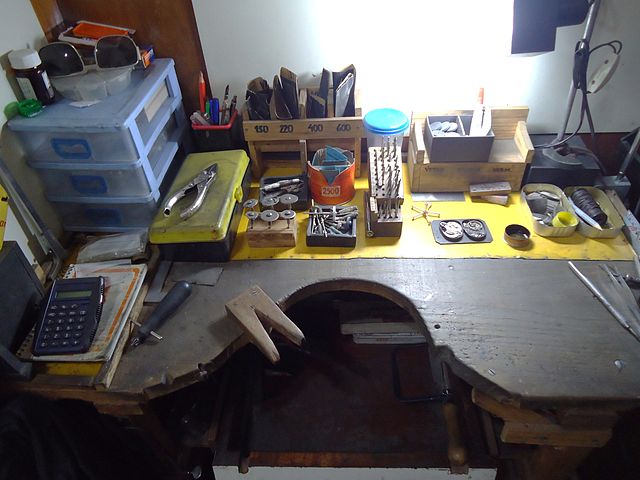
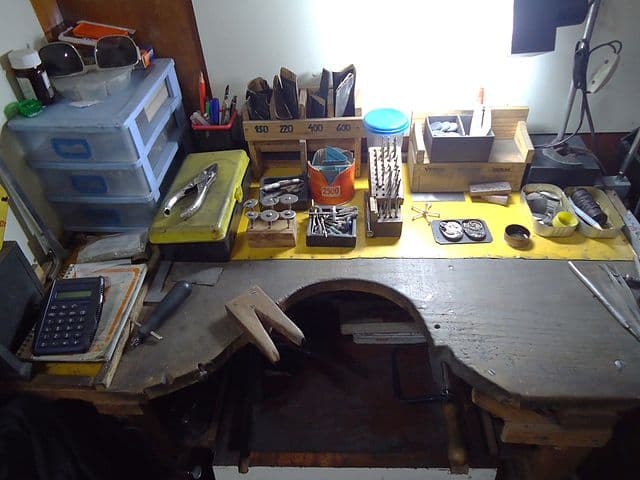
Every jeweler needs a place to work. Investing in a jeweler's workbench is a wise decision.
Jeweler's workbenches sit higher than regular workbenches. This helps prevent hunching and subsequent back problems.
A jeweler's workbench typically includes the following features:
You may need to notch the bench pin that comes with your bench. Use your saw with a heavy blade to do this.
If you're just starting out or doing light jewelry work, you can find reasonably priced, well-reviewed benches on Amazon and Gesswein. These feature three drawers and one aluminum-lined drawer to catch metal filings. They also include pullout armrests on each side of the bench pin to steady yourself while working.
Gesswein also offers a heavier bench with locking drawers. A pullout shelf under the bench pin makes a great place to keep tools handy. This bench also has centered metal squares for hammering, so you won't need a separate metal hammering block. There are also pull-out armrests on each side.
Gesswein has a well-rated professional bench. It features 15 drawers, six on each side of the bench plus one locking drawer and two for catching filings. The bench pin mounting and fittings are steel. This bench also has a pullout shelf under the bench pin and pullout armrests on each side.
If you have a sturdy table as your workspace, you may only need a mini workbench. Amazon offers a mini jeweler's bench with a tray for filings. You can place it on top of your table.
Since you'll need to keep your tools easily accessible and organized, consider getting some bench accessories. Desktop holders and caddies for pliers and tweezers, needle files, and flex shaft accessories, as well as magnetic wall-mounted holders, will come in handy.


When you join the IGS community, you get trusted diamond & gemstone information when you need it.
Every jeweler needs a place to work. Investing in a jeweler's workbench is a wise decision.
Jeweler's workbenches sit higher than regular workbenches. This helps prevent hunching and subsequent back problems.
A jeweler's workbench typically includes the following features:
You may need to notch the bench pin that comes with your bench. Use your saw with a heavy blade to do this.
If you're just starting out or doing light jewelry work, you can find reasonably priced, well-reviewed benches on Amazon and Gesswein. These feature three drawers and one aluminum-lined drawer to catch metal filings. They also include pullout armrests on each side of the bench pin to steady yourself while working.
Gesswein also offers a heavier bench with locking drawers. A pullout shelf under the bench pin makes a great place to keep tools handy. This bench also has centered metal squares for hammering, so you won't need a separate metal hammering block. There are also pull-out armrests on each side.
Gesswein has a well-rated professional bench. It features 15 drawers, six on each side of the bench plus one locking drawer and two for catching filings. The bench pin mounting and fittings are steel. This bench also has a pullout shelf under the bench pin and pullout armrests on each side.
If you have a sturdy table as your workspace, you may only need a mini workbench. Amazon offers a mini jeweler's bench with a tray for filings. You can place it on top of your table.
Since you'll need to keep your tools easily accessible and organized, consider getting some bench accessories. Desktop holders and caddies for pliers and tweezers, needle files, and flex shaft accessories, as well as magnetic wall-mounted holders, will come in handy.