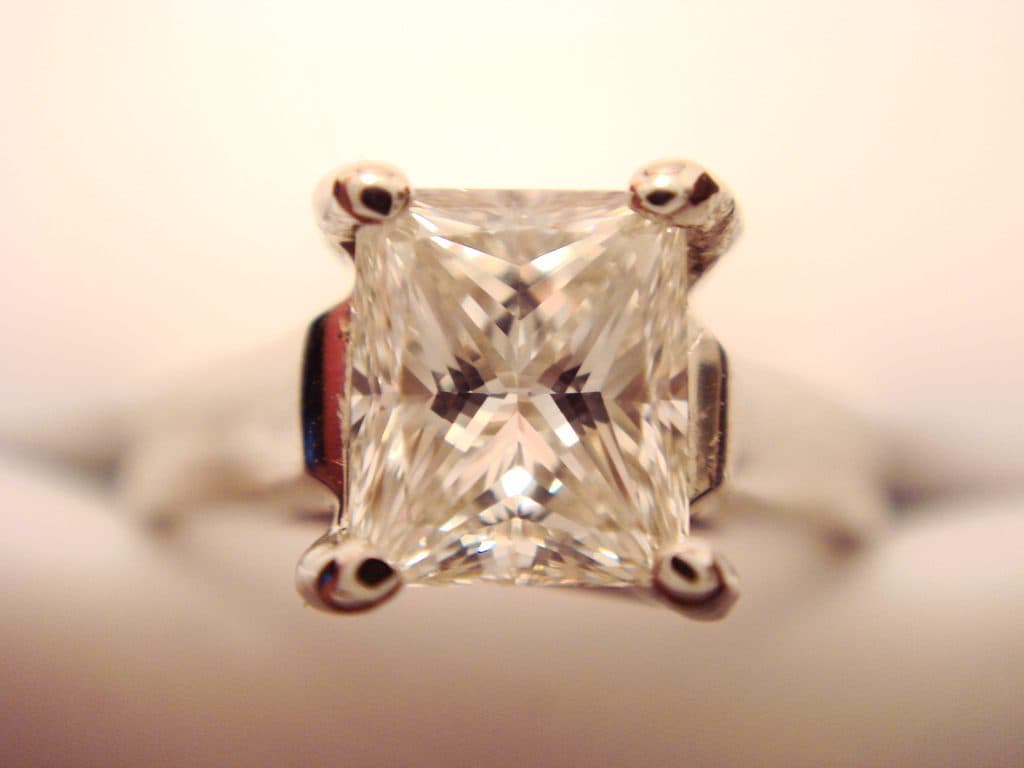
What constitutes a princess cut? Jeff Graham examines a variety of diamonds sold as examples of this design and identifies their overall characteristics.
1 Minute Read
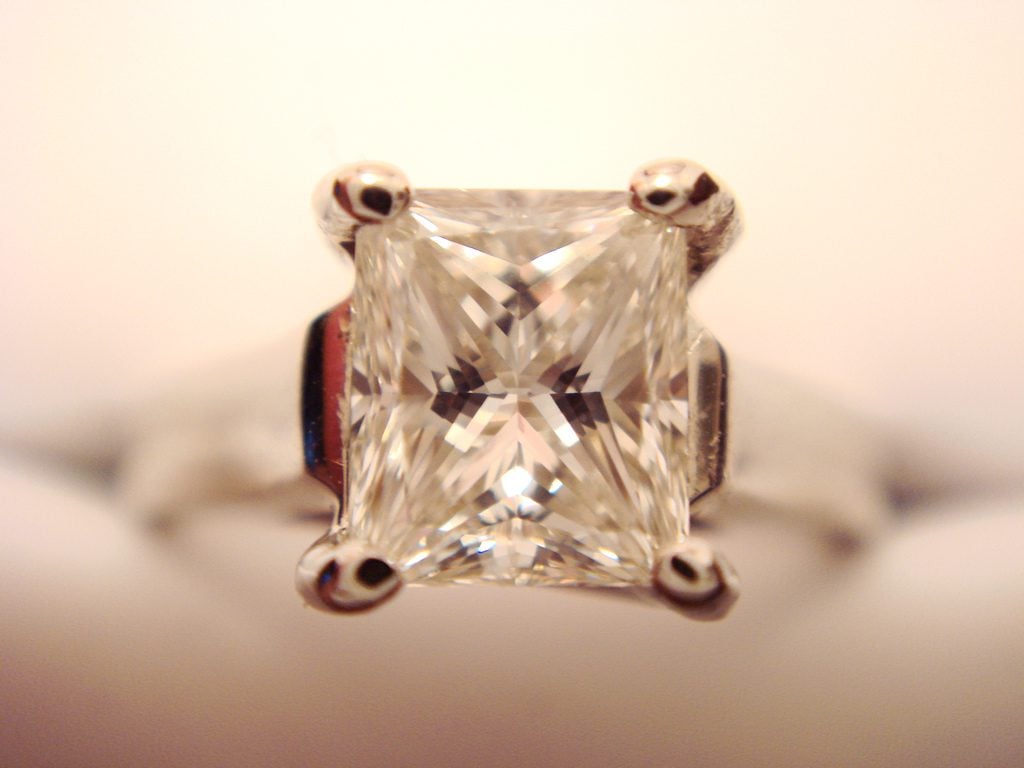
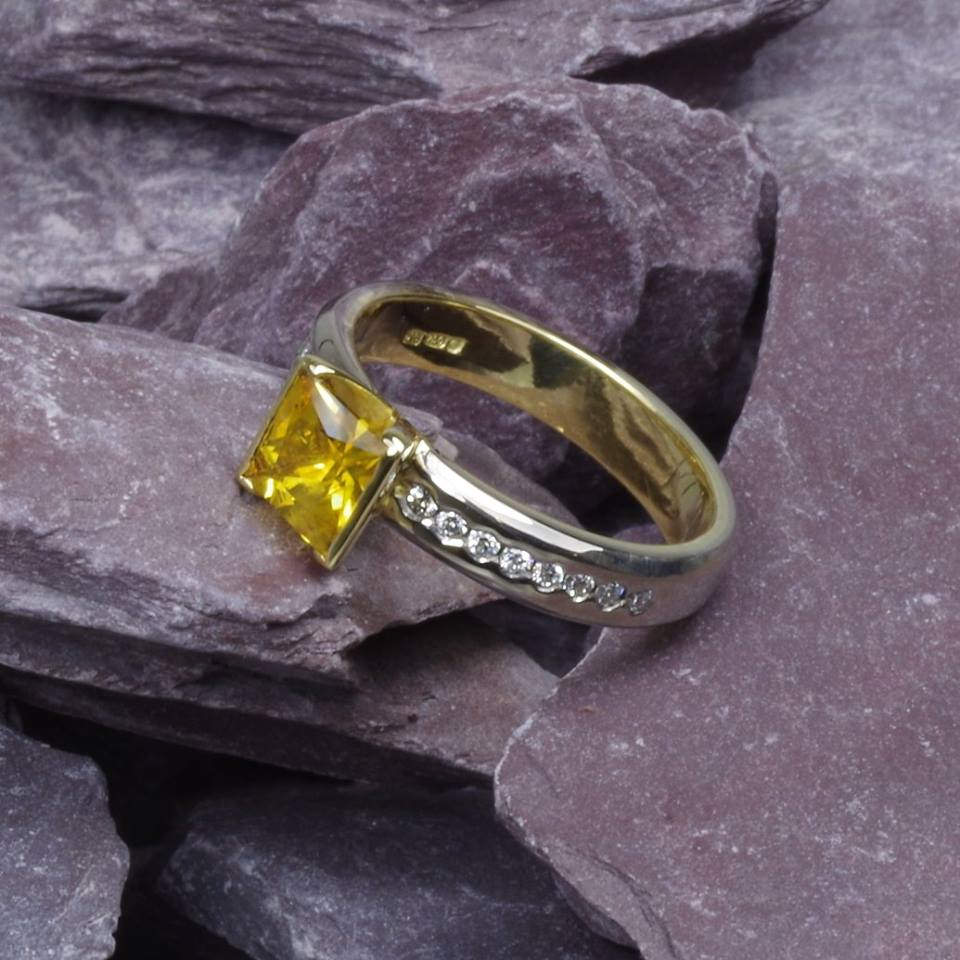
There appears to be some confusion over what exactly constitutes a princess cut and what it really looks like. This design began as a diamond cut, so I spoke with several friends in the diamond trade. We looked at a lot of cut diamonds sold as princess cuts.
Other than having square or modified square shapes, several of these diamonds had designs with no relation to each other.
However, as we continued our examination, one design became prevalent overall. It had the following characteristics:
All the stones we examined had very large (70% plus) tables.
According to Eric Bruton, FGA, the author of Diamonds, A. Nagy, a London cutter, introduced the princess cut in 1960. It was intended as an economical cut for flat diamond crystals.
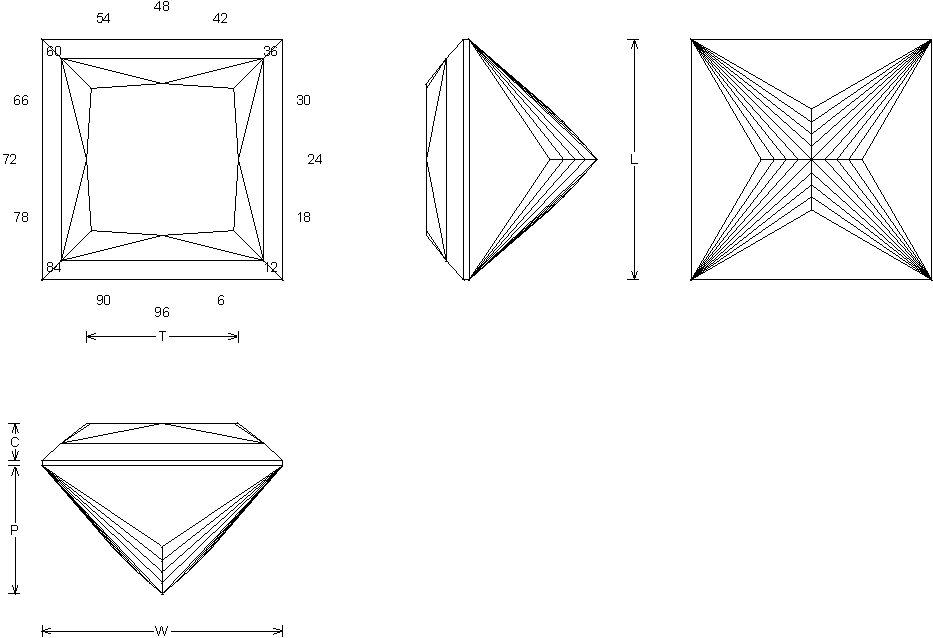
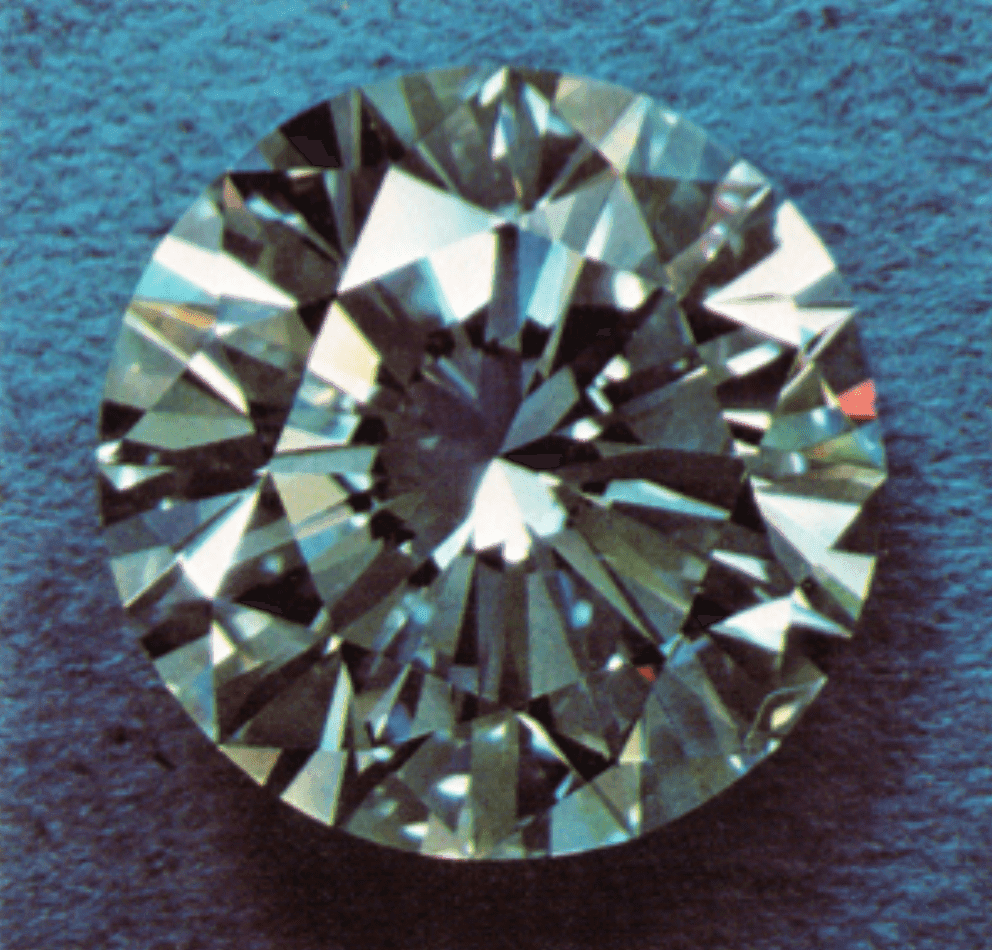
My diamond trade friends and I think a princess cut looks like the design below. I'm not sure if this is exactly what the original cut looked like. However, it is certainly what people in the diamond trade are calling a princess cut.
Due to the angles involved, this design won't cut with much brilliance in most colored gemstones. Zircons may be an exception. (Perhaps not surprisingly, since zircons have a long history of use as diamond simulants).
If you'd like something like princess cuts for colored gems, consider the Gram Princess or Gram Prince. For these designs, I modified the traditional cut to suit the lower refractive indices of most colored gems.



When you join the IGS community, you get trusted diamond & gemstone information when you need it.
There appears to be some confusion over what exactly constitutes a princess cut and what it really looks like. This design began as a diamond cut, so I spoke with several friends in the diamond trade. We looked at a lot of cut diamonds sold as princess cuts.
Other than having square or modified square shapes, several of these diamonds had designs with no relation to each other.
This article is also a part of our Diamond Specialist Certification Course, in the unit Grading Diamonds.
However, as we continued our examination, one design became prevalent overall. It had the following characteristics:
All the stones we examined had very large (70% plus) tables.
According to Eric Bruton, FGA, the author of Diamonds, A. Nagy, a London cutter, introduced the princess cut in 1960. It was intended as an economical cut for flat diamond crystals.
My diamond trade friends and I think a princess cut looks like the design below. I'm not sure if this is exactly what the original cut looked like. However, it is certainly what people in the diamond trade are calling a princess cut.
Due to the angles involved, this design won't cut with much brilliance in most colored gemstones. Zircons may be an exception. (Perhaps not surprisingly, since zircons have a long history of use as diamond simulants).
If you'd like something like princess cuts for colored gems, consider the Gram Princess or Gram Prince. For these designs, I modified the traditional cut to suit the lower refractive indices of most colored gems.