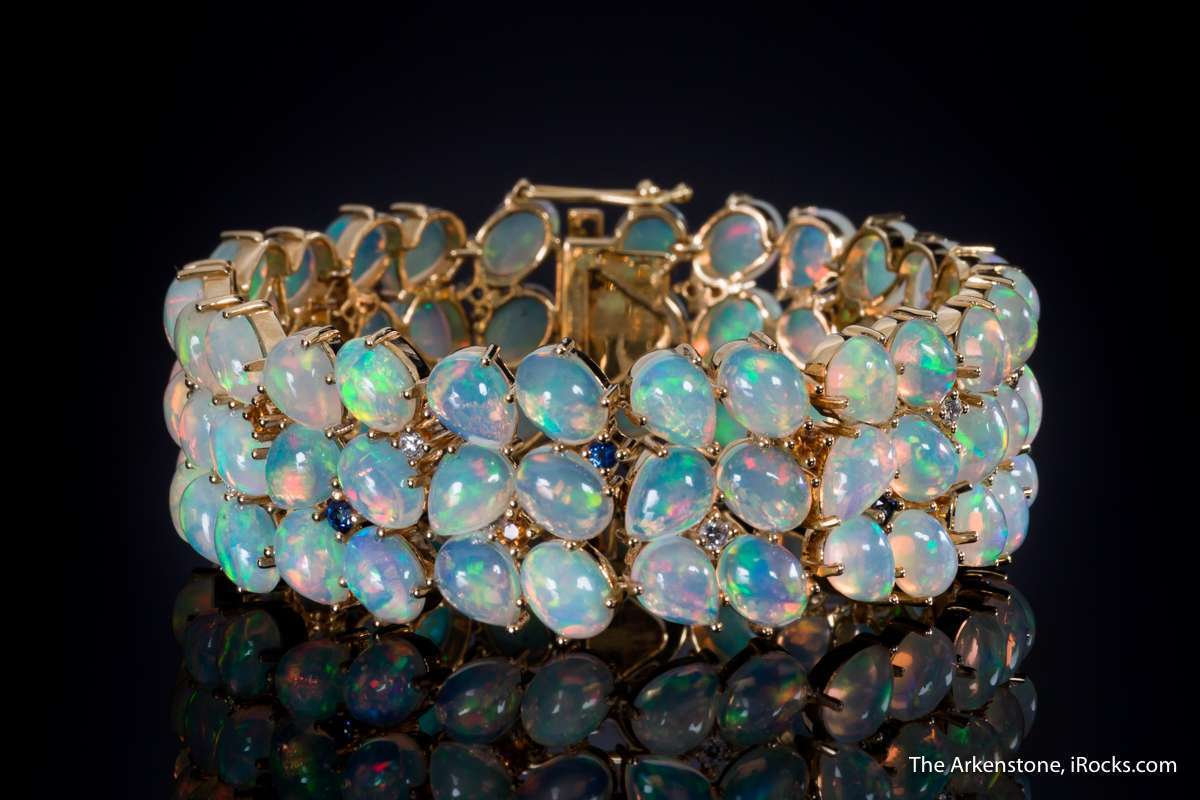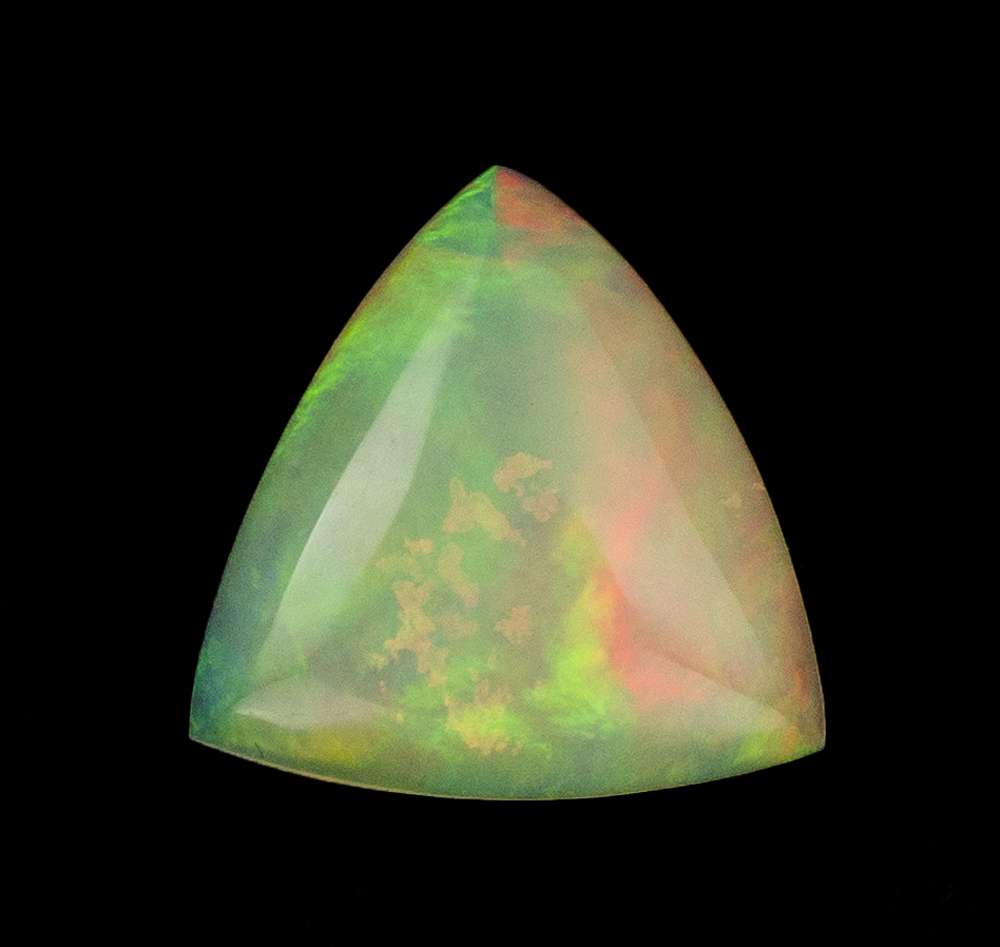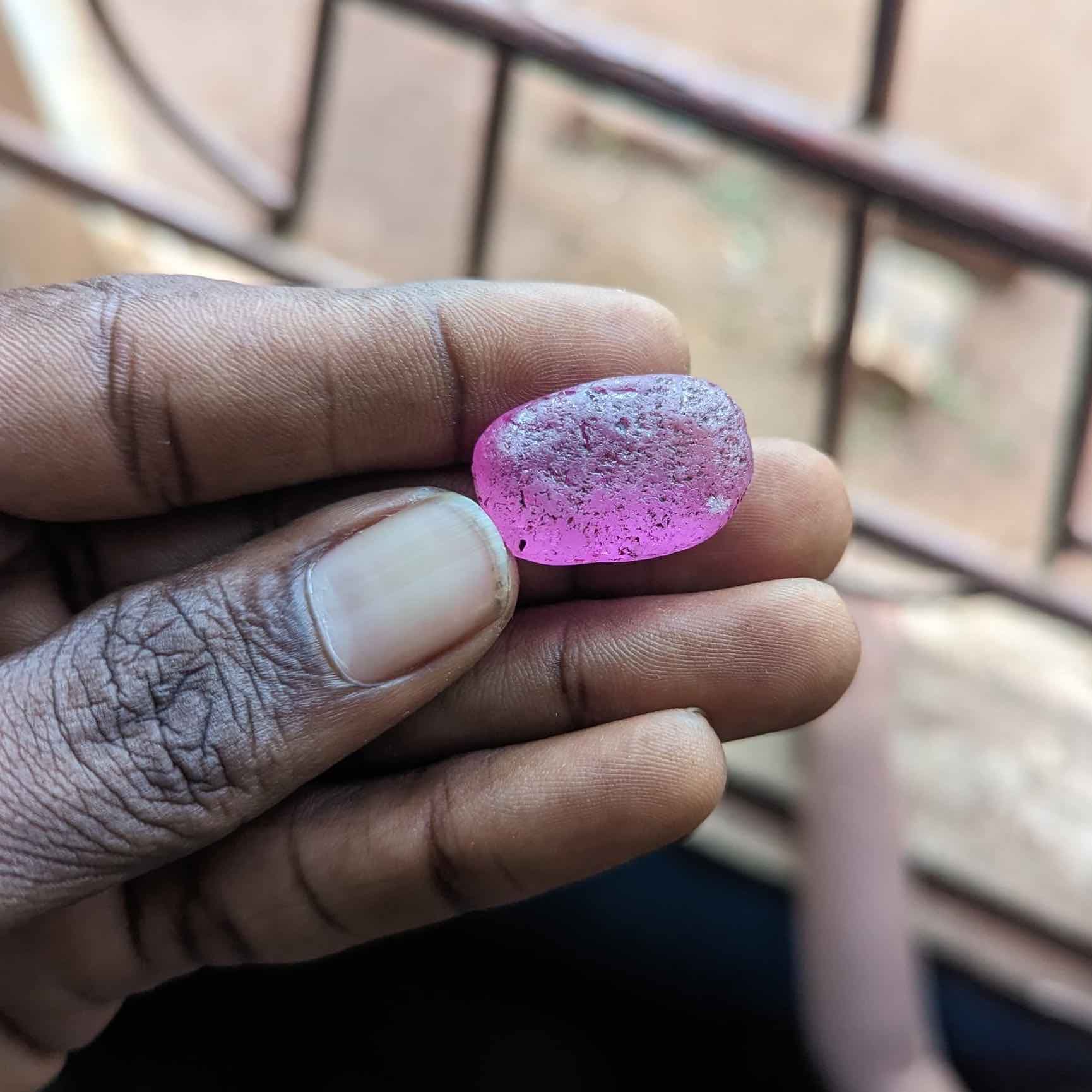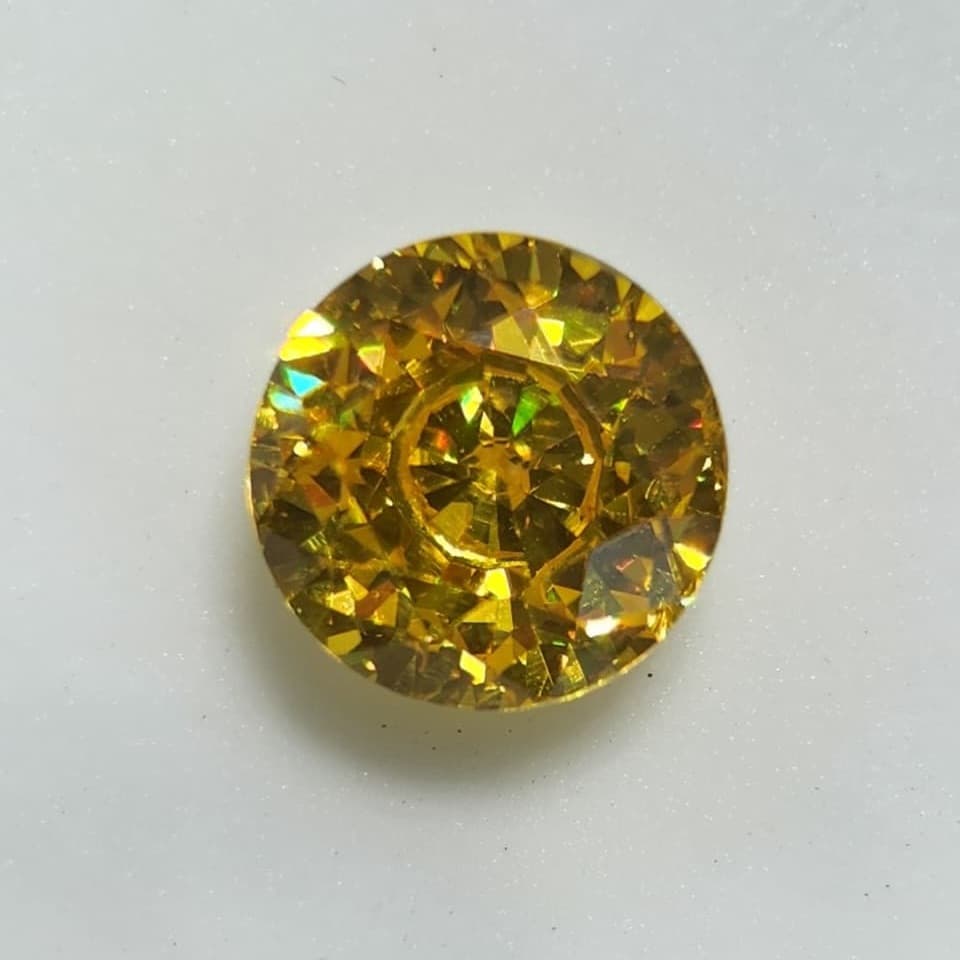
Opals are in a class by themselves. As a species, opal is so unique it has its own descriptive vocabulary. More than any other gem, each opal is distinctly individual. Opals are also the most delicate gemstones commonly worn and require special care.
16 Minute Read
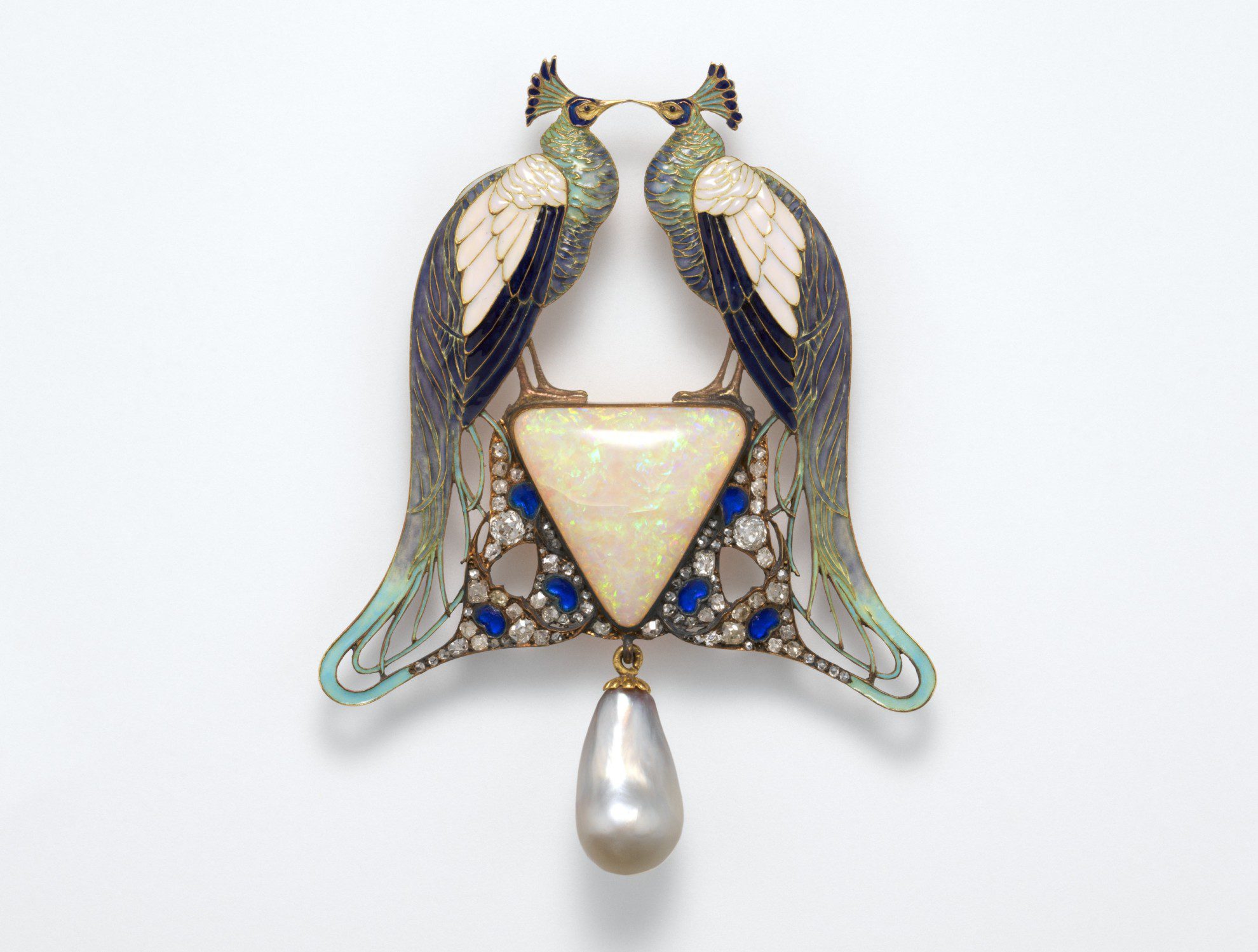
For thousands of years, people have mined and treasured opals. These striking stones are the traditional October birthstone and have inspired a rich body of folklore. (So rich, in fact, opal gems have been considered both the luckiest and unluckiest stones you can wear). Nevertheless, some scholars believe many ancient references to opal may actually have been to other gems, such as the iridescent iris agate.
Opals can be shattered or damaged beyond repair much more easily than other popular gemstones. In addition to being sensitive to moisture and changes in temperature, they have a hardness of only 5.5 to 6.5, which makes them very susceptible to scratching. Opals aren't recommended for ring stones, unless the stone is placed in a protective setting or a triplet or reserved for occasional wear.
However, if you take the appropriate precautions, opal gems can make unique, exquisite jewelry pieces.
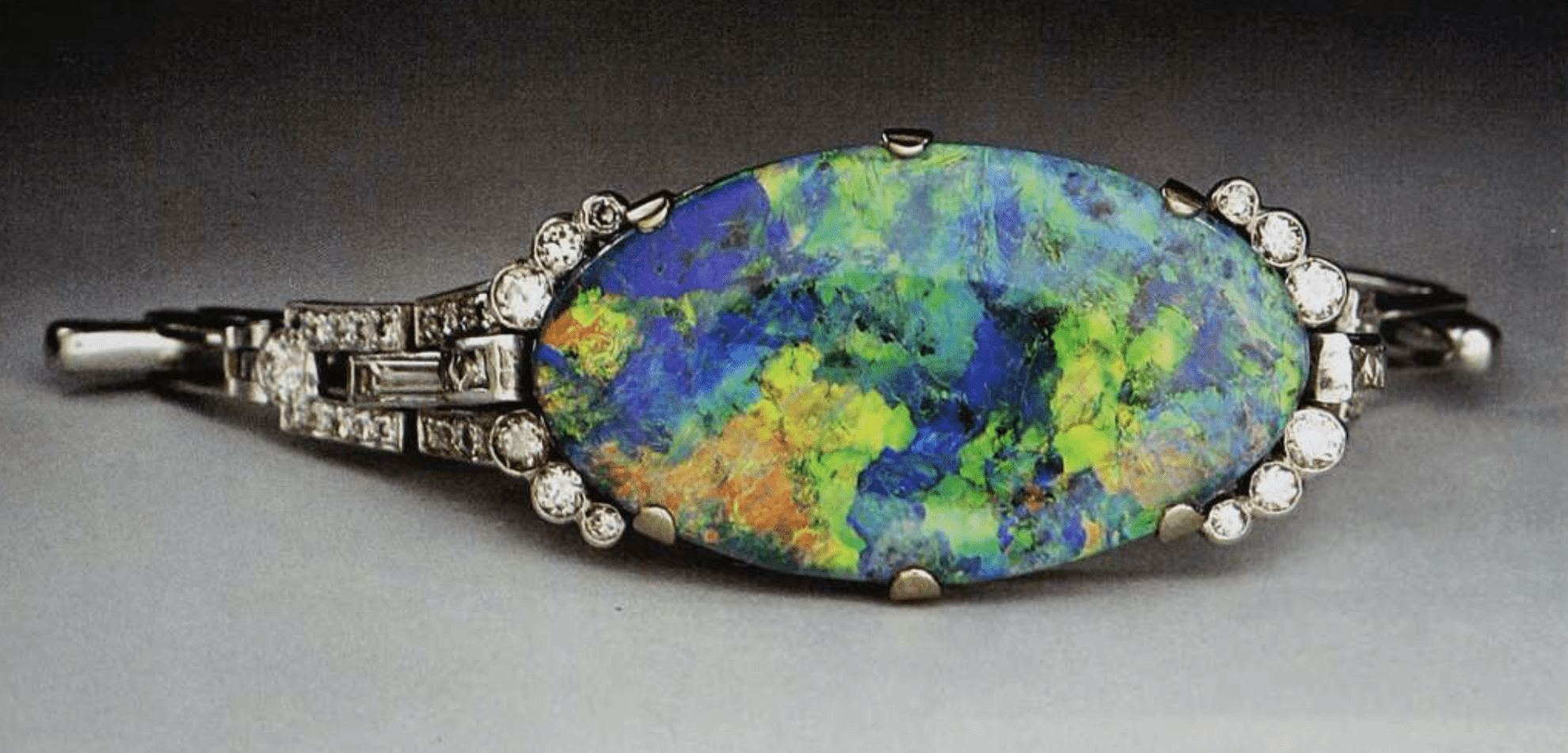
Opal is an amorphous form of silica, chemically similar to quartz, but containing 3% to 21% water within its mineral structure. Gem grade opals usually have 6% to 10% water content.
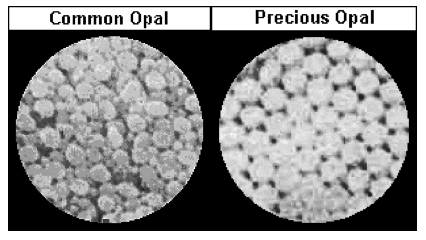 Opal is a sedimentary stone. Under the proper conditions, water percolates through the earth, becoming rich in dissolved silicates. When water enters a cavity, it deposits the silicates as microscopic spheres, forming opals.
If the spheres are uniform in size and shape and neatly stacked, they will diffract light. These stones are called precious opals. If the spheres are random in size, shape, and arrangement, the results are common opals.
Common opals can have an opaque or glassy appearance with a waxy luster. Seldom cut, these stones come in a wide range of colors. Common opals are often fluorescent.
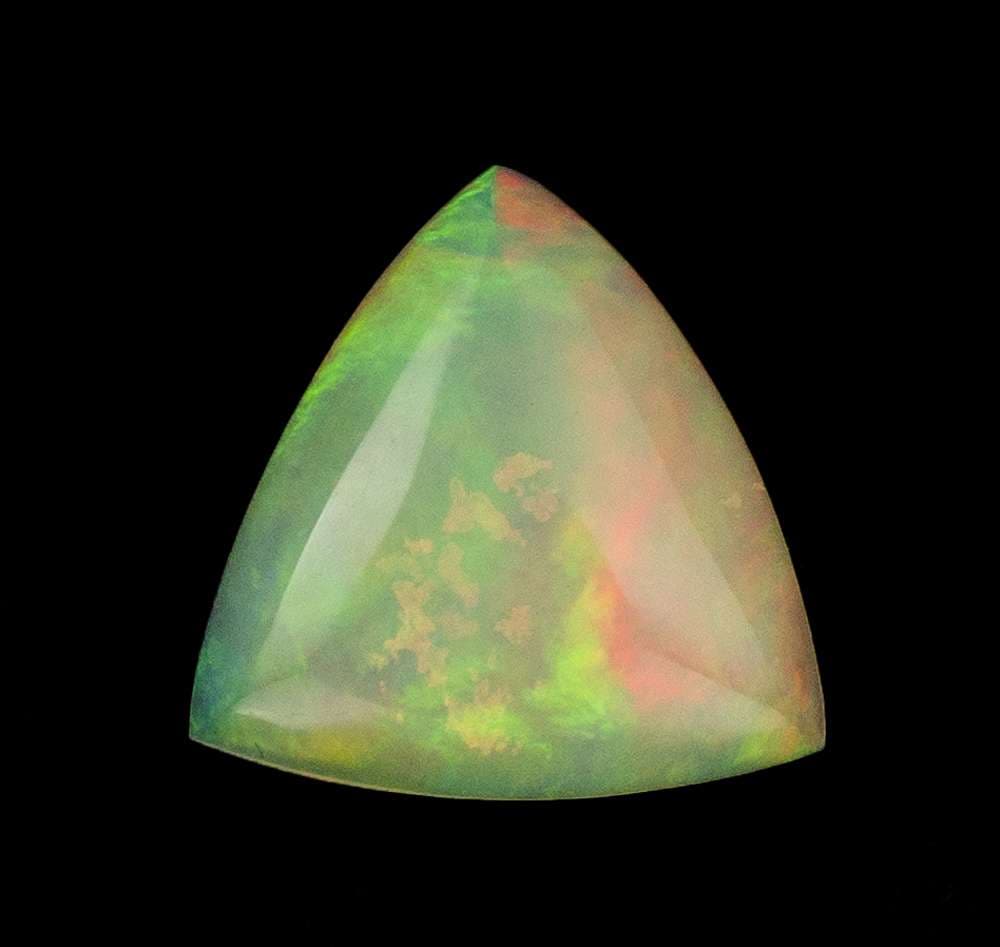
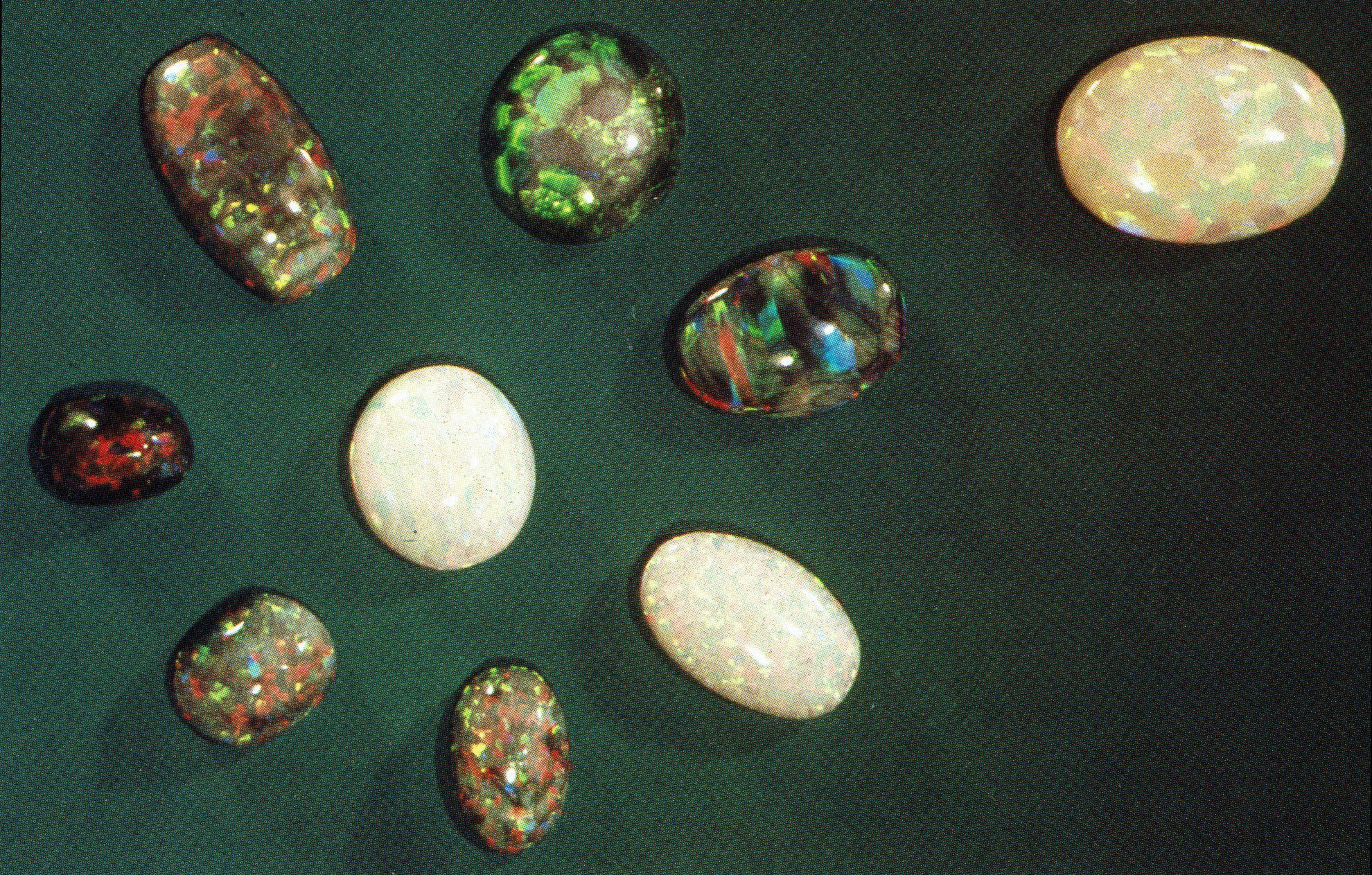
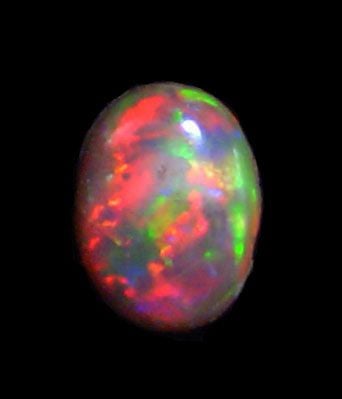
Precious opals, also known as "noble opals," display fire or play of colors.
Opal's characteristic fire, or play of colors, was long thought to be the result of iridescence. However, with the advent of scanning electron microscopes, we now know it's a result of diffraction. This phenomenon of flashing or moving colors due to diffraction isn't related to the body color of the opal.
The particular colors seen in an opal's fire depend on the size of the spheres and the angle of viewing. For example, black opal gets its color from volcanic ash, but inclusions have nothing to do with the play of color. That is due entirely to the tiny silicate spheres. They must be smaller than 1,500 angstroms (Å) for blue and violet colors, but no larger than 3,500 Å to produce oranges and reds. To put that in perspective, 20,000 spheres are about the size of the period at the end of this sentence. (An angstrom is one ten-billionth of a meter).
Please note that the term "fire" typically refers to a gemstone's dispersion. While it's acceptable to refer to an opal's play of color as fire, it's not acceptable to refer to gemstone dispersion as "play of fire." Only opals show play of color.
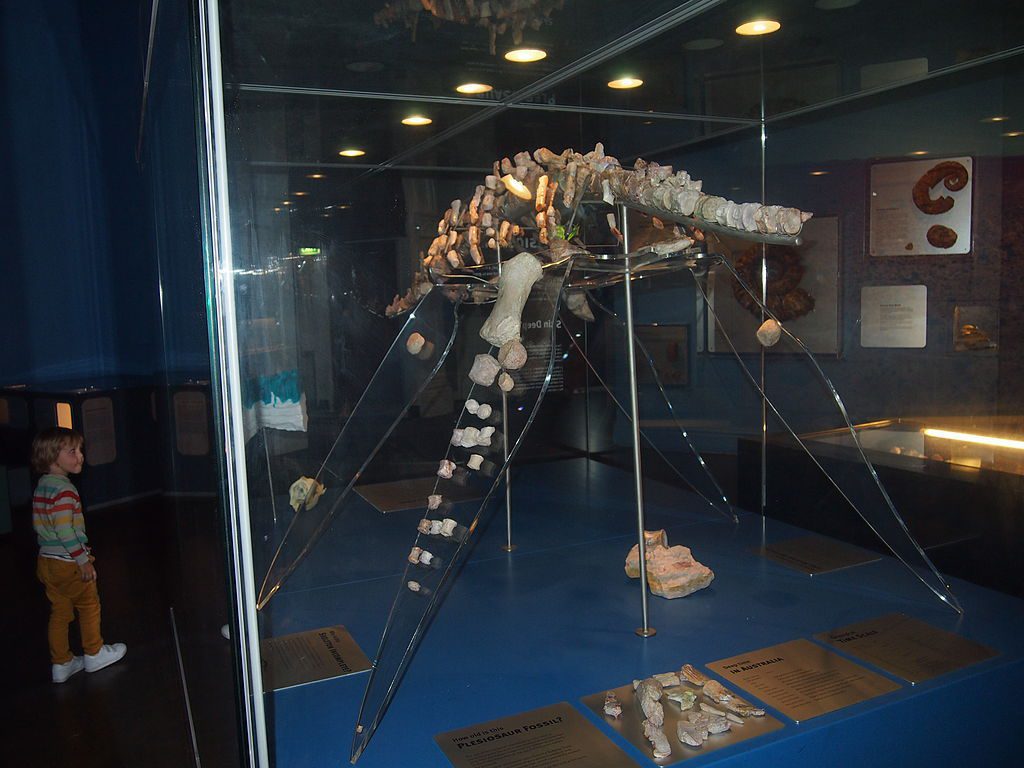
Since opals grow by filling in cavities in the earth, sometimes they take the shapes of pieces of wood, bone, and seashells buried in the ground. In effect, opal replaces these organic materials. These opals are called pseudomorphs, materials with shapes unrelated to their chemical content.
Opalized wood is also called xylopal or zeasite.
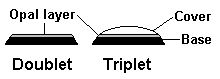 Gem cutters can take opal pieces too thin to use as a solid gemstones and assemble them into doublets and triplets.
A doublet consists of a thin layer of precious opal glued to a black base. A triplet adds a transparent quartz cap and makes a good ring stone, because the hard quartz keeps the softer opal from scratching.
While purists prefer common opal for the base material, jewelers use many black materials, including old phonograph records.
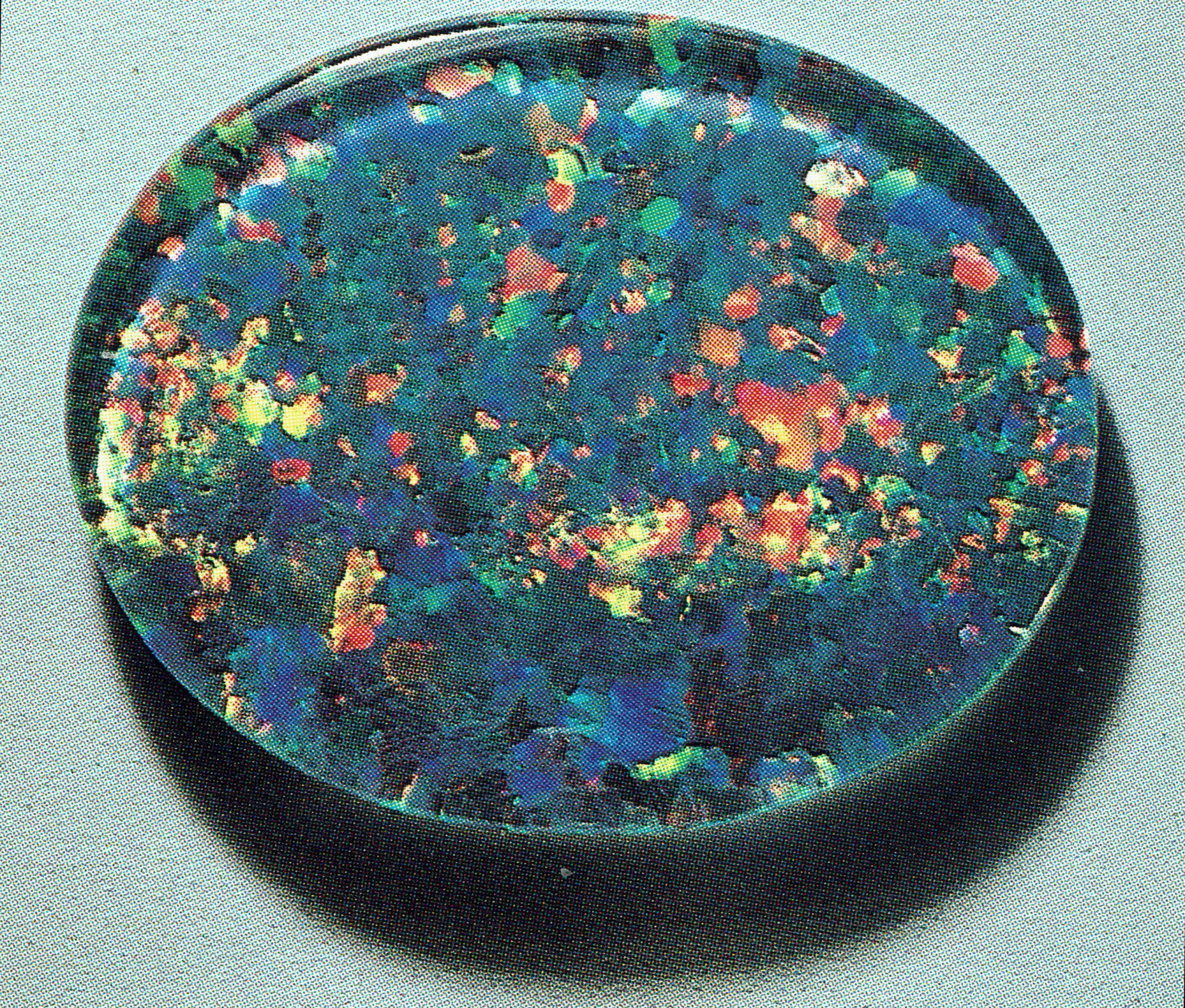
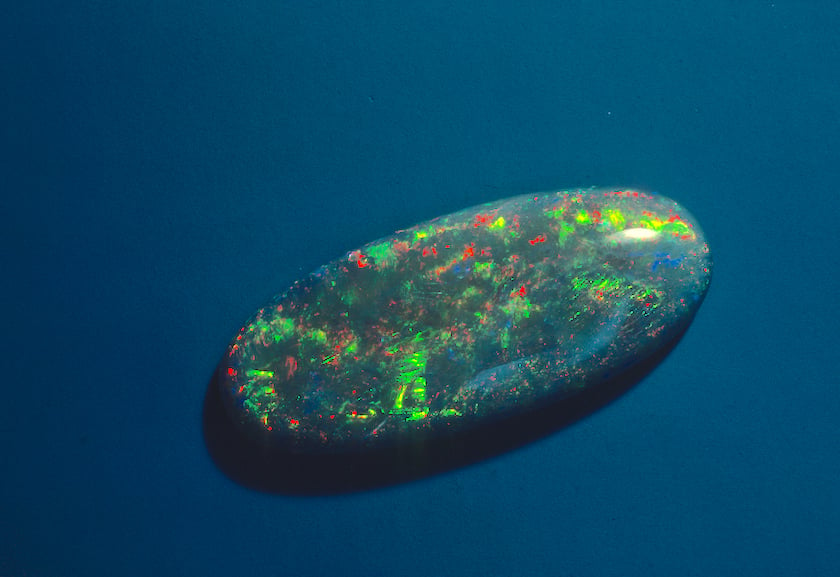
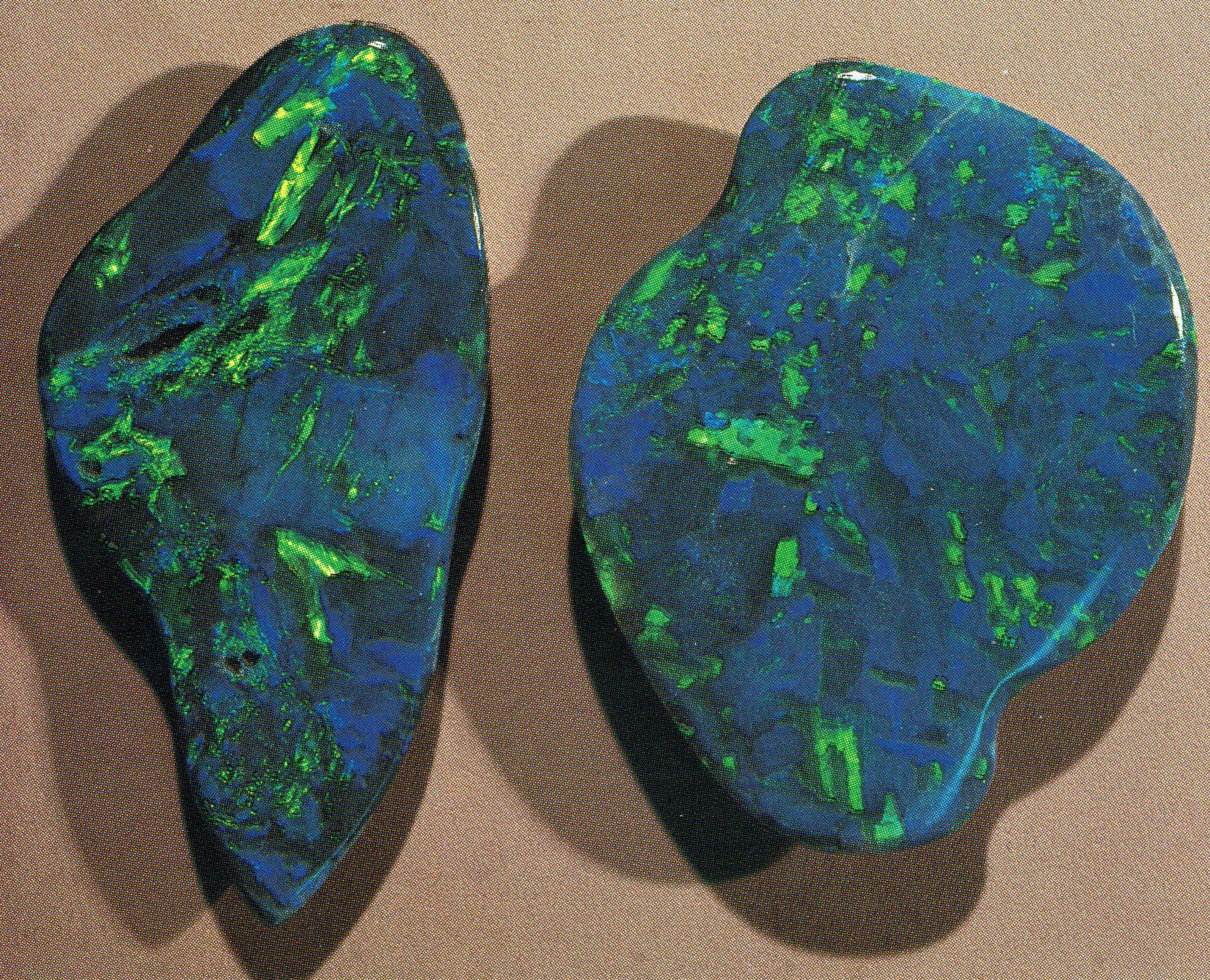
Black opals have a black body color with fire, which is often spectacular against a dark background. Body colors can also be very dark bluish, greenish, or brownish. Please note that the term "black opal" may also refer to black potch (inferior opal material) covered with a thin layer of crystal opal, which lets the black show through later.
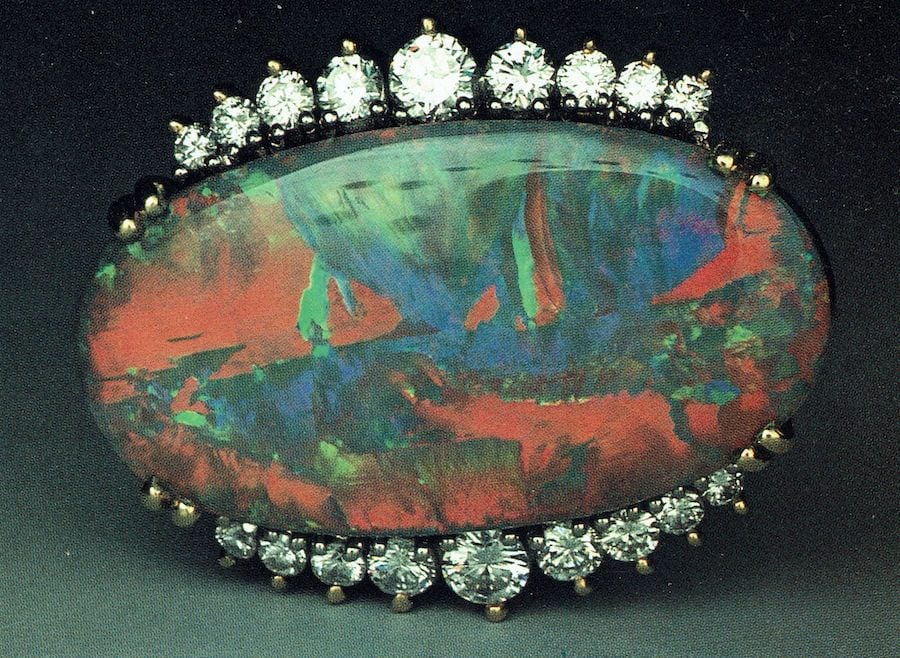
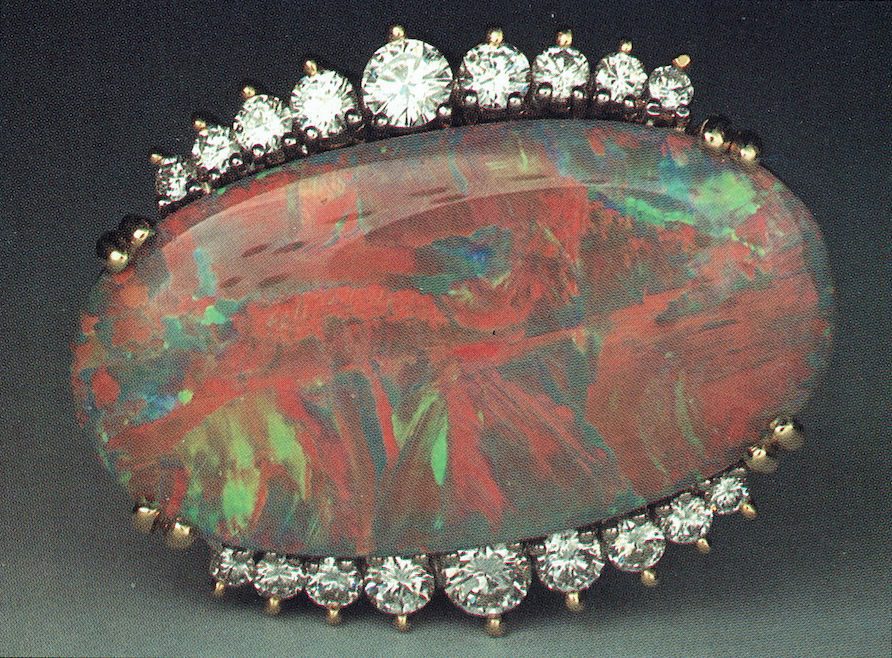
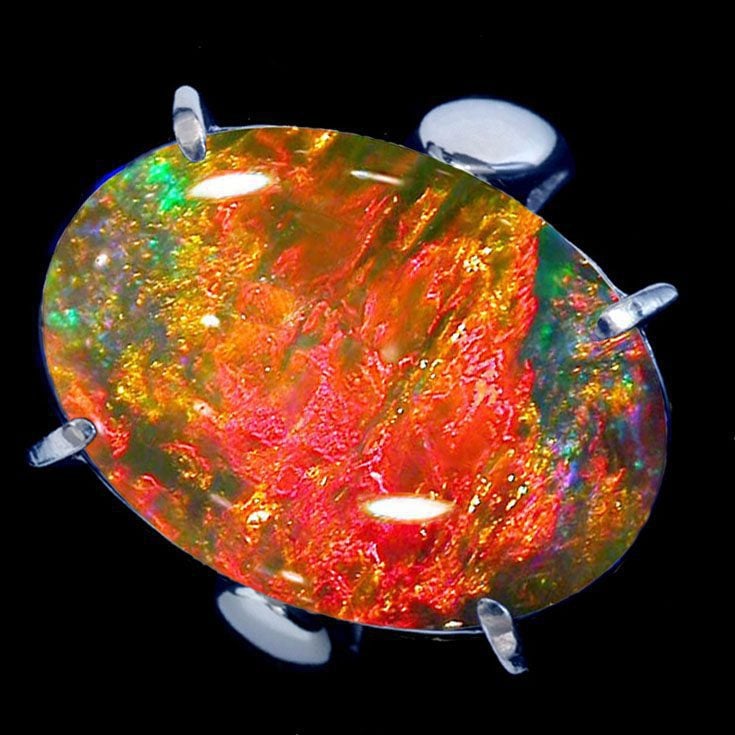
A black opal from Australia, illuminated from two positions. (Stone in ring approximately 10 cts). Photo © Joel E. Arem, PhD, FGA. Used with permission.
Gray or semi-black opal has light to dark body color with fire.
White body color with fire.
A transparent or colorless body that may have fire in it.
Colorless and transparent to semi-transparent in transmitted light, crystal opals have a rich play of colors in reflected light. Black crystal opals are transparent to semi-transparent with dark body color and play of color.
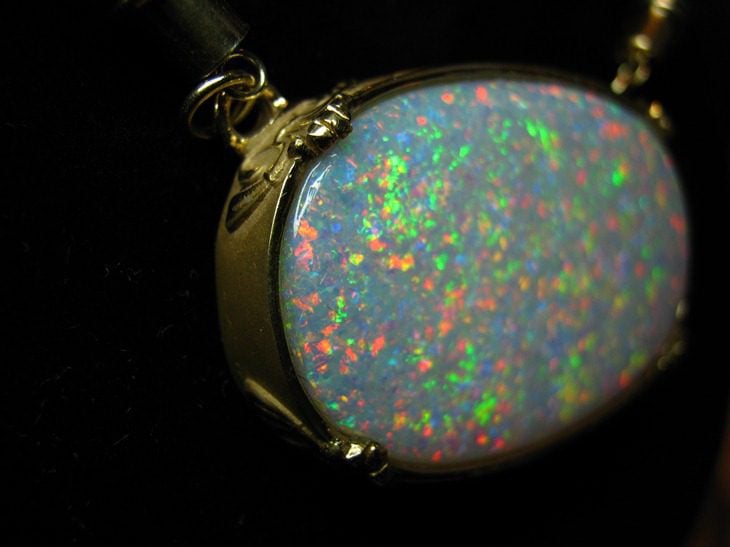
These translucent, milk white stones may also have yellowish or greenish color.
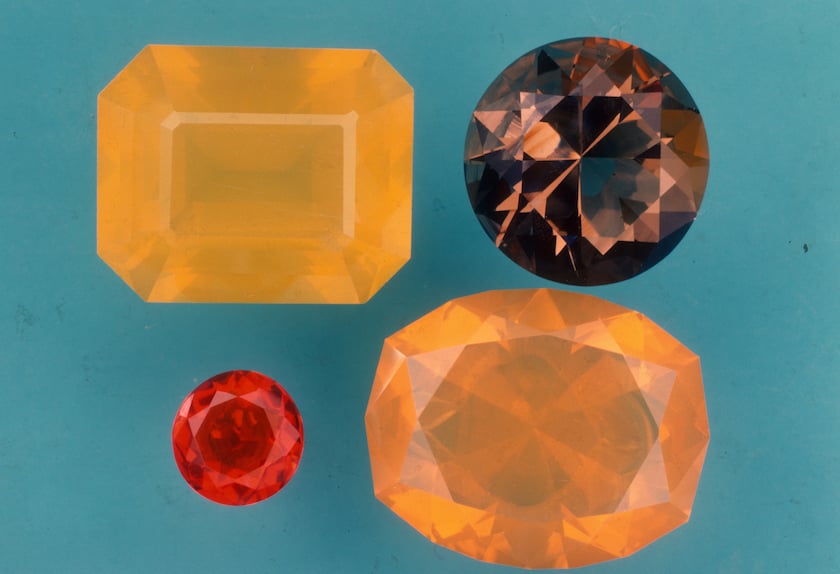
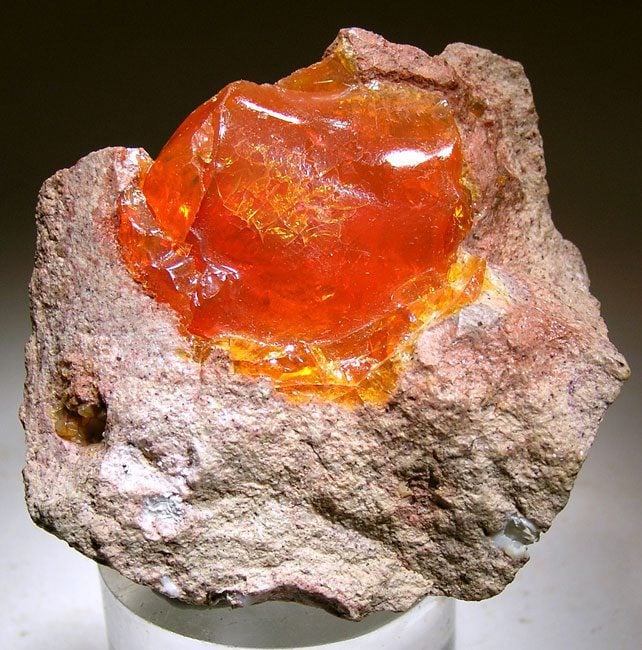
Translucent to transparent with a yellow, orange, or red body color, these stones may or may not display a play of colors. The "fire" in their name refers to their body color, not to play of color. These stones are also called Mexican or sun opals.
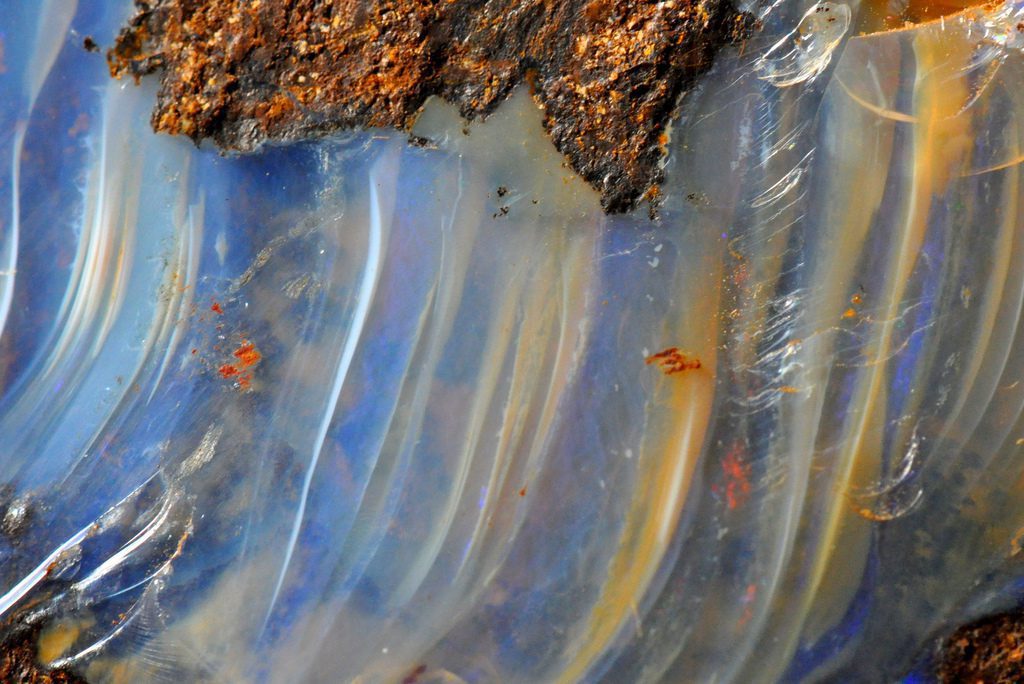
Thin seams of opal that form in ironstone, these gems come in many colors and show dazzling fire, backed by their brown ironstone matrix.
Very rare, contraluz opals are usually found in Mexico but have also been found in Australia. These transparent opals show a play of color in both transmitted and reflected light.
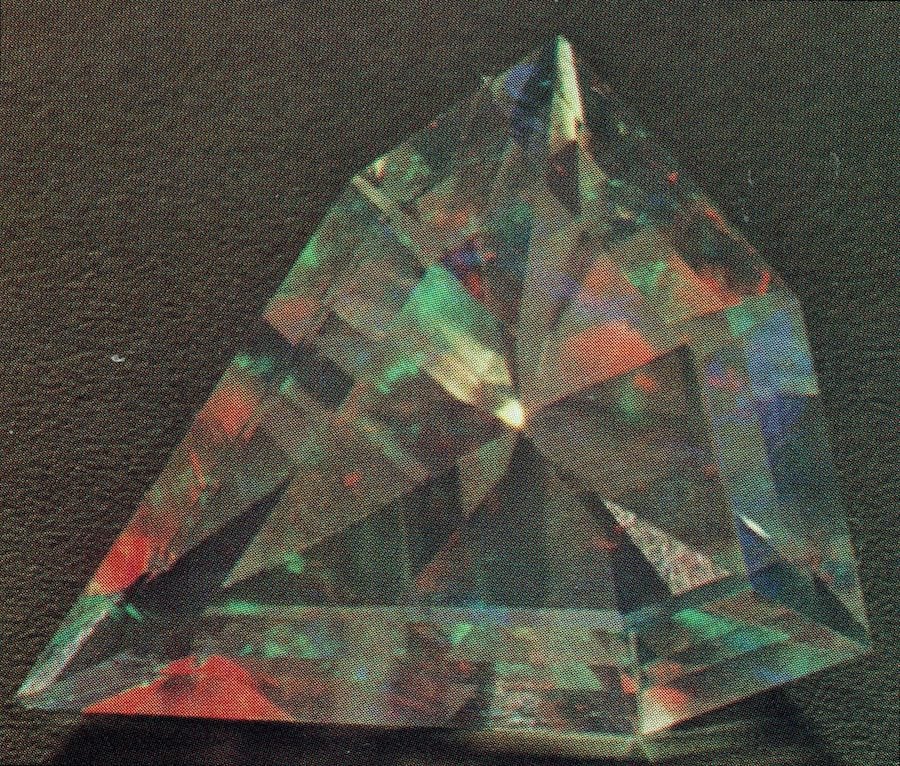
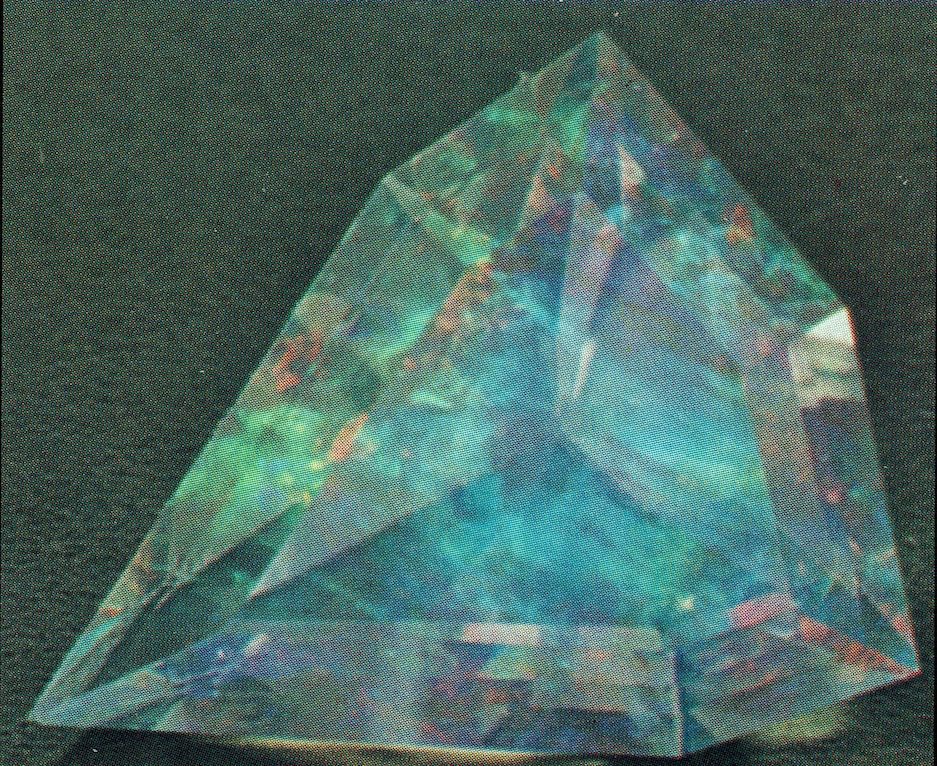
A contraluz opal from Mexico, illuminated from front and back (approximately 4 cts). Photo © Joel E. Arem, PhD, FGA. Used with permission.
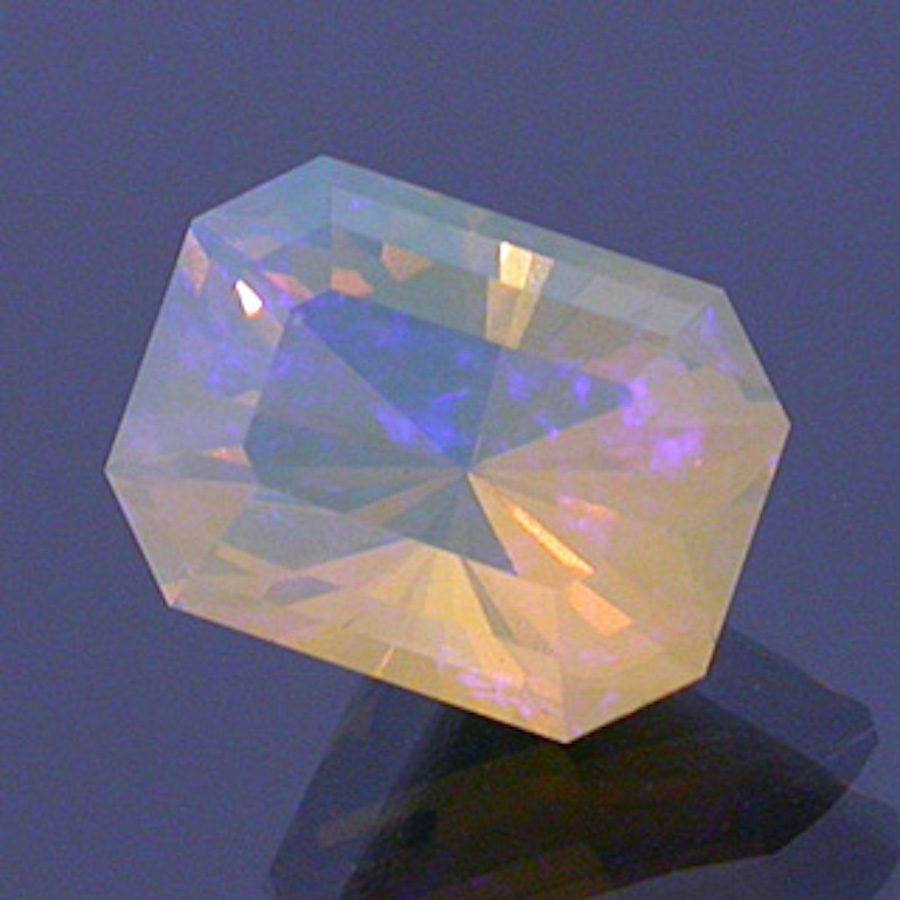
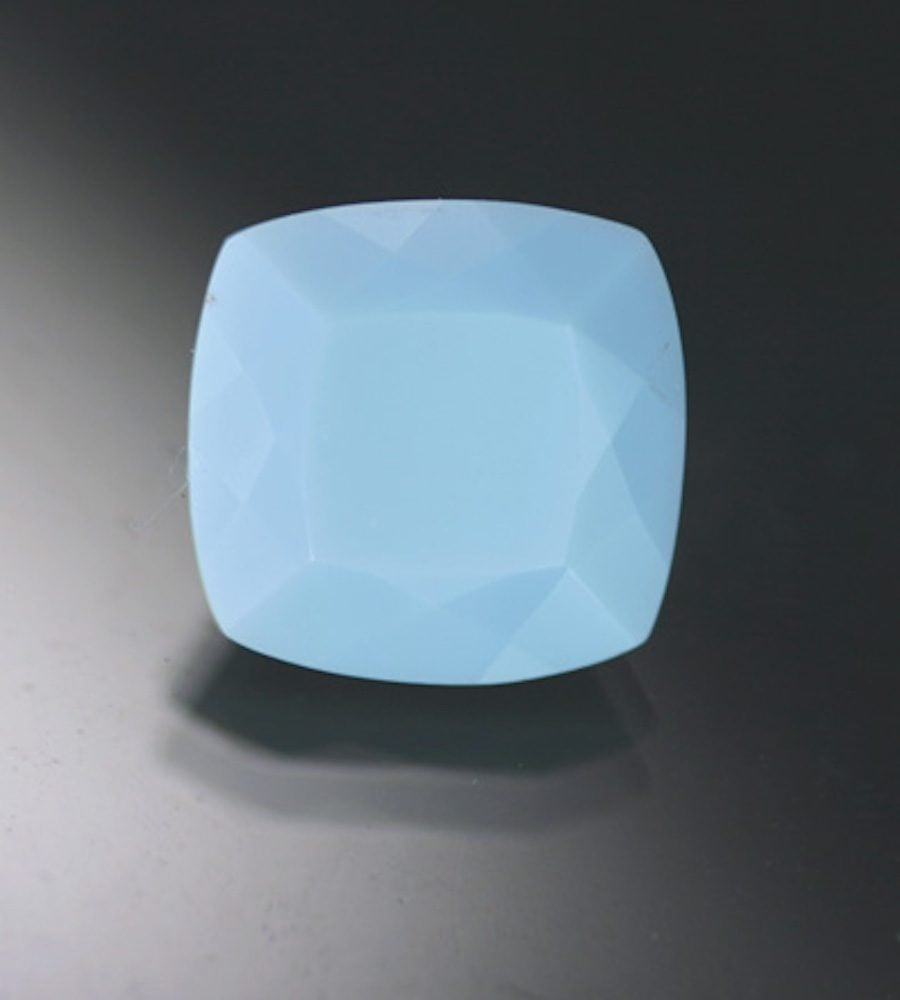
Hyalites or jelly opals are transparent to translucent, colorless or white, with a glassy luster and little to no play of color.
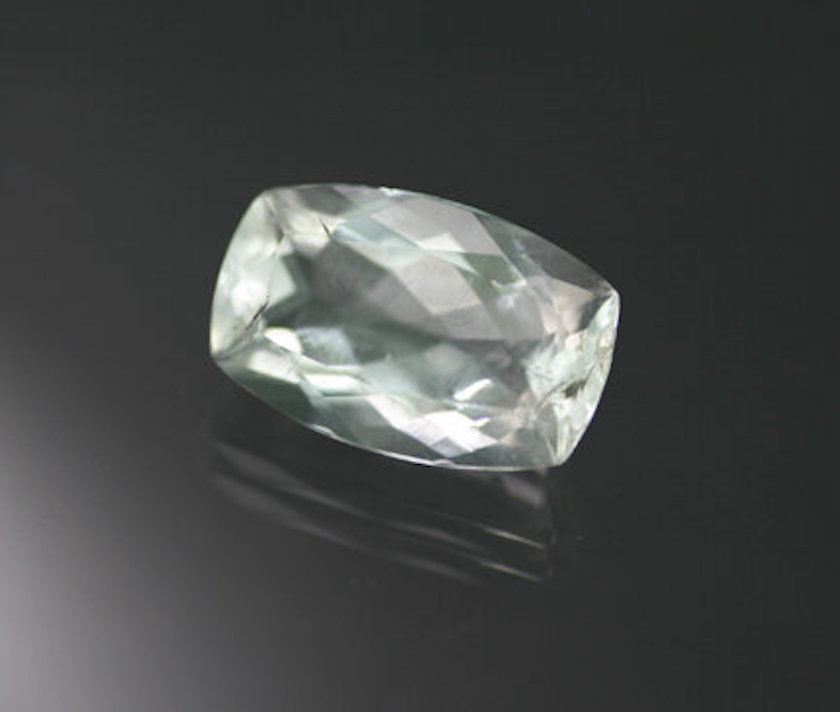
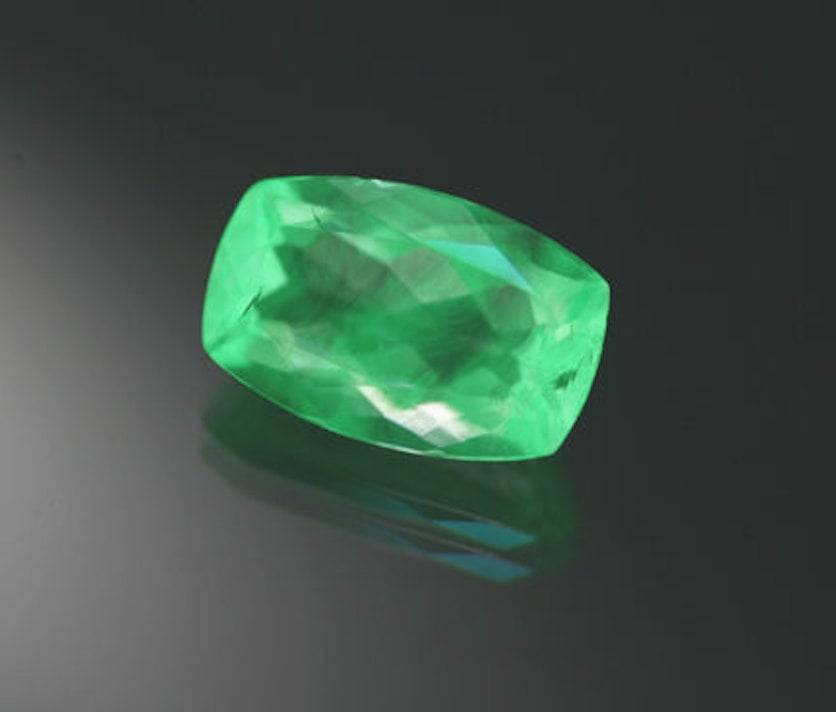
This brilliant cushion-cut, colorless hyalite lacks any play of color. However, it does have an interesting feature. It has a very strong green reaction to SW UV and even shows a slight yellow-green reaction in daylight. 7.08 cts, 16.9 x 10.9 mm, Brazil. © The Gem Trader. Used with permission.
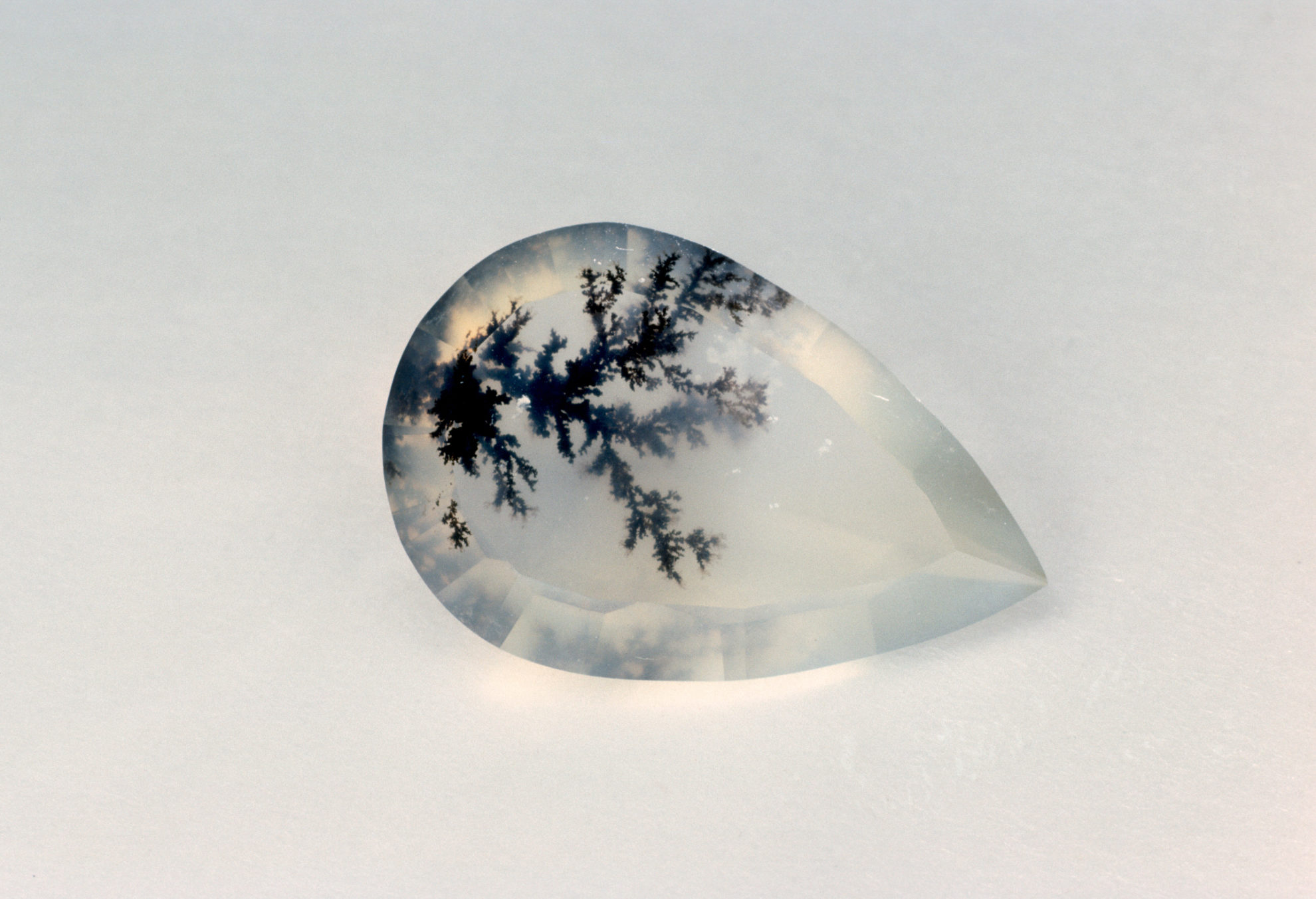
White to brownish and opaque, moss opals contain dendritic inclusions that resemble moss.
Light-colored and opaque, hydrophane opals become transparent and show a play of color when soaked in water or oil. Sometimes they're called "magic stones."
Siliceous sinter or geyserite is glassy opal that forms around hot springs and geysers. These massive formations aren't faceted for jewelry.
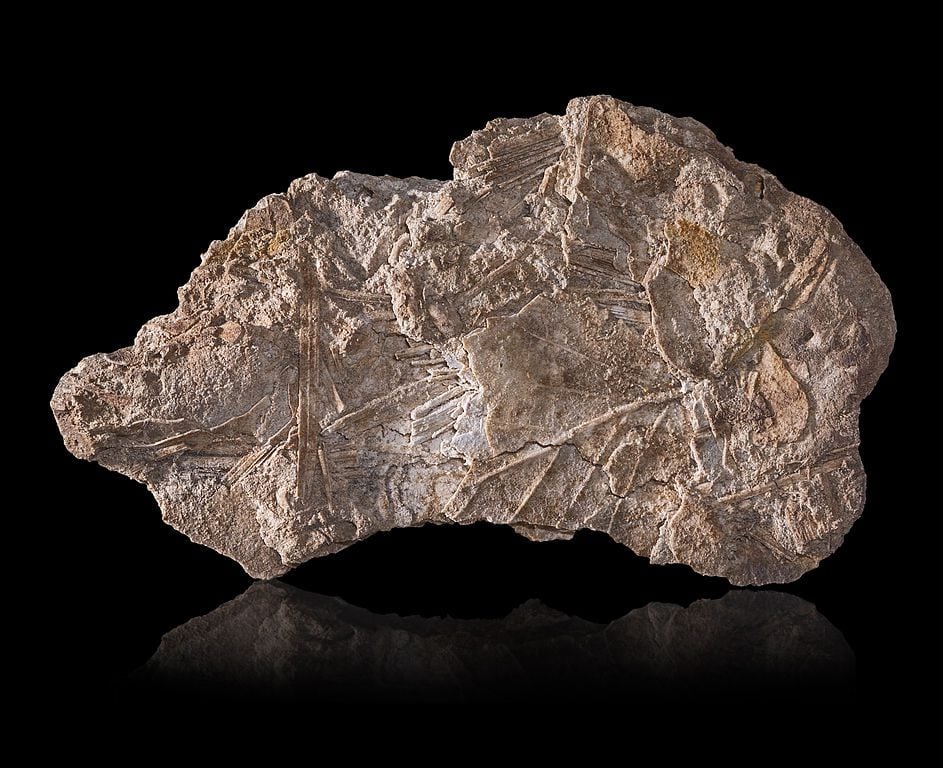
Tripoli or diatomaceous earth consists of fine-grained, powdery masses of opal or the siliceous remains of microscopic marine animals called diatoms. This material is often used in polishing agents and fillers.
Often bluish white, translucent to opaque, and very porous, cacholong opals resemble porcelain. This stone, also called kalmuck agate opal, will actually stick to your tongue.
These reddish brown and opaque opals resemble jaspers.
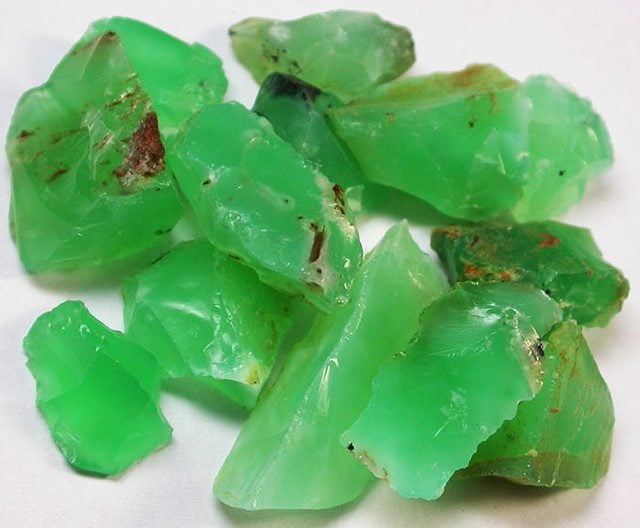
These green to yellowish green, translucent to opaque, common opals resemble chrysoprase. Chrysopal refers to a golden green variety.
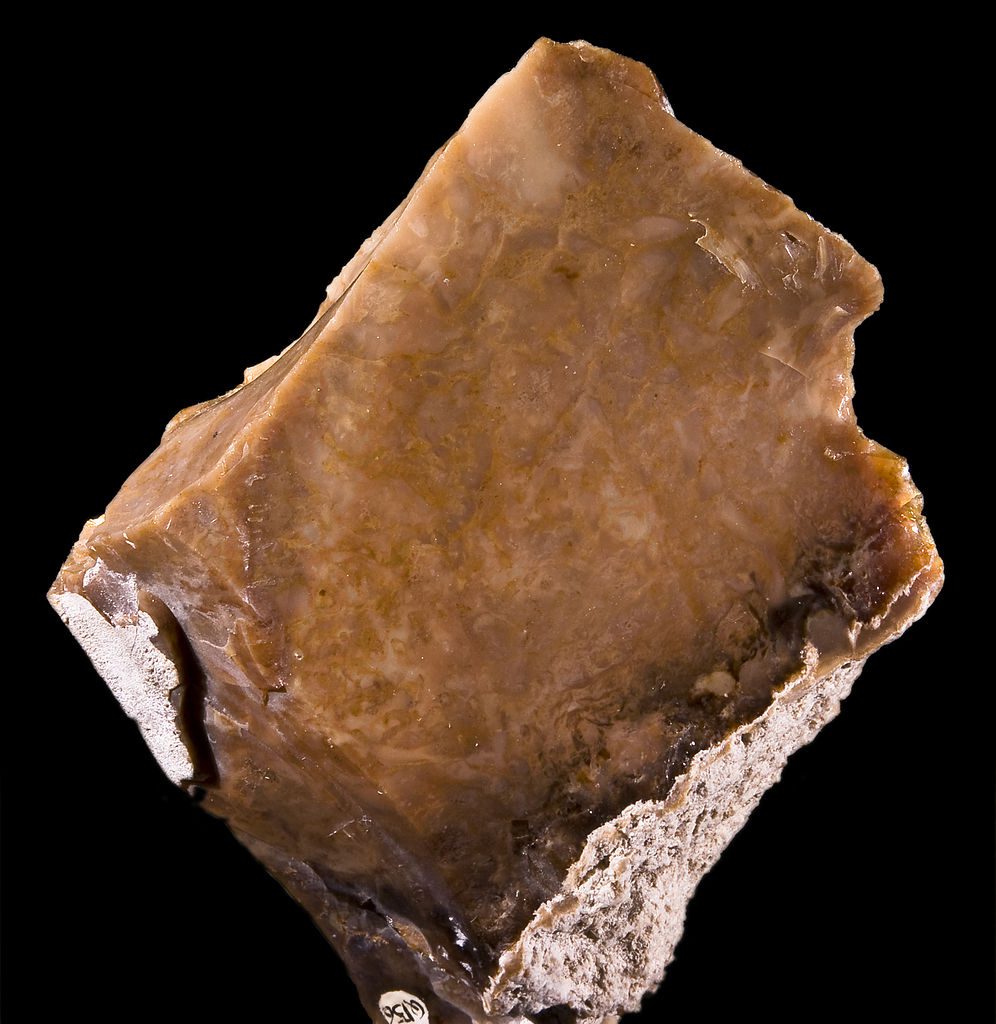
An opaque gray to brown opal with a concretionary structure.
An opaline (opal-like) silica found in the joints of some bamboo.
Semi-transparent to translucent with a moving, billowy light effect, girasol opals resemble moonstones.
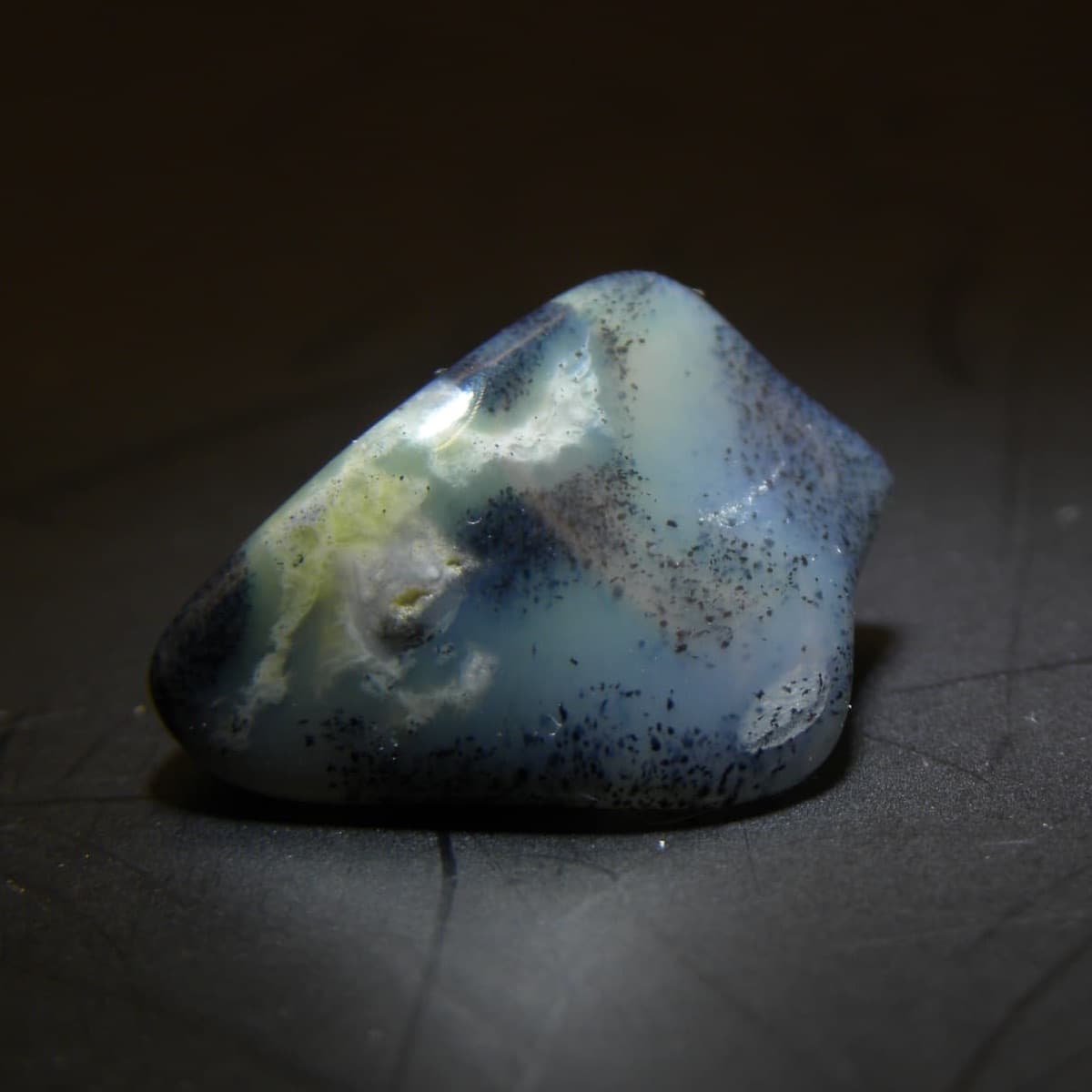
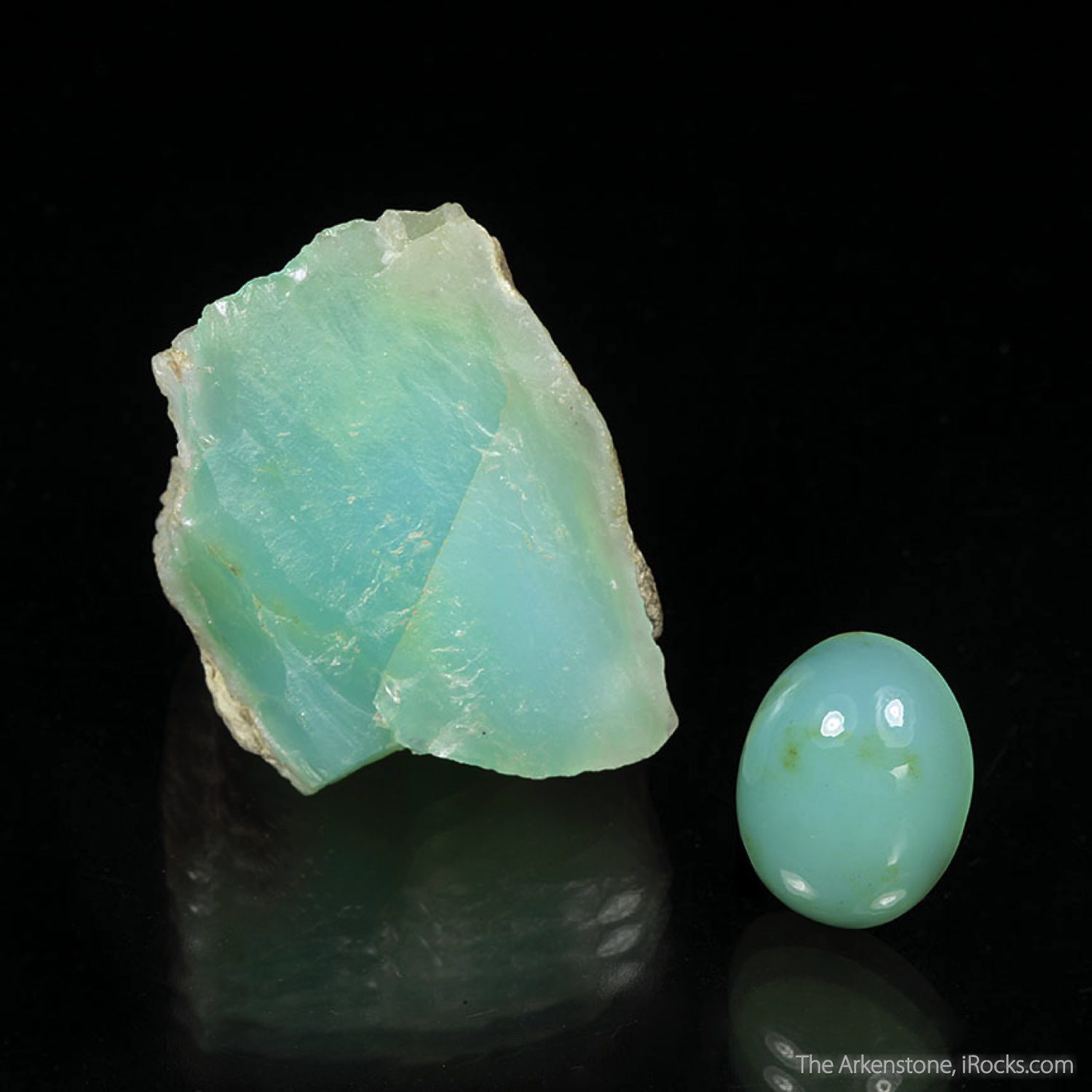
These opals get their blue color from finely disseminated inclusions of chrysocolla, a copper phyllosilicate mineral.
Sometimes refers to brown, common opals.
Yellowish brown common opals with a waxy to resinous luster.
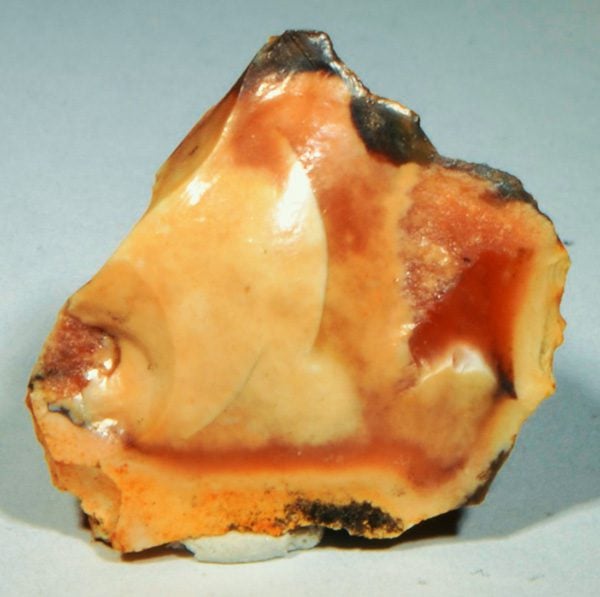
Red to yellow common opals.
Composed of quartz, opal, and pyrite, these gems occur in the state of Louisiana.
These opals have small black or brown spherical inclusions resembling fish roe and an over play of color.
Yellowish opals with a waxy luster.
Extremely rare, the asterism or star effect these opals display is caused by imperfections in the arrangement of their silicate spheres. Thus, their star effect differs from that of other gems such as sapphires, caused by inclusions.
The term "opalite" usually refers to a plastic or glass opal simulant. However, there is a variety of natural opal sometimes called opalite. This common variety of opal comes in green, lavender, or purple colors and can also show a cat's eye. To avoid confusion, don't refer to this opal variety as "opalite," due to the name's strong association with simulants.
Opal may also fluoresce brownish. Black opal is generally inert. Fire opal luminesces greenish brown. Common opal often fluoresces green. Natural opals may also have phosphorescence.
Descriptions of opal gems are as broad as the human imagination. The patterns seen in opals may resemble stained glass windows, butterflies, birds, and other natural and human-made forms. The most commonly used terms include the following:
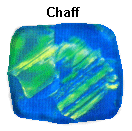 | Chaff, thin, linear bands of color. |
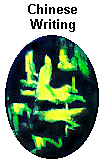 | Chinese writing resembles Asian script. Usually in gold and green, somewhat rare. |
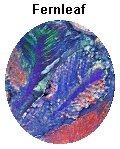 | Fern leaf lacy patterns resemble a fern leaf. Mostly in larger green gems, rarely red. |
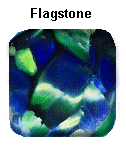 | Flagstone features large, broad patches of color, set close together. Much like harlequin, only with larger patterns. Rare and highly valued. |
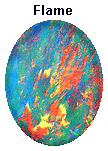 | Flame opal, bands or streaks of red fire that move across the surface. |
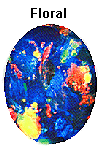 | Floral, a variety of repeated designs and colors, reminiscent of floral dress material. |
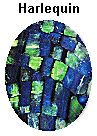 | Harlequin or mosaic, close-set broad patches with angular play of color. Highly desirable, adds considerable value. |
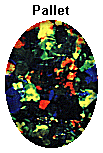 | Palette has a variety of colors, resembling an artist's paint palette. |
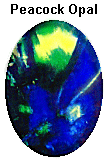 | Peacock opal, predominantly green and blue play of color, with some resemblance to a peacock tail. |
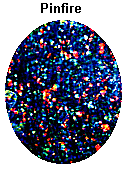 | Pinfire or pinpoint, very small areas of fire set close together. Common and one of the less valuable patterns. |
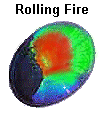 | Rolling fire, a rare phenomenon where the fire moves across the surface rather than flashing on and off. |
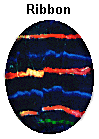 | Ribbon, slightly curved, parallel bands of color. Usually parallel and on black or dark base. Rare. |
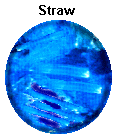 | Straw resembles flattened straws, crisscrossing each other. Rare. |
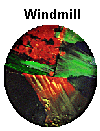 | Windmill, a pattern of fire that radiates around a central point. Very rare. |
Flash opal is a play of color that quickly flashes off and on as the stone is moved.
These stones have alternating layers of precious and common opal. In chatoyant or cat's eye opal, the color play is concentrated in the form of an eye or band.
Matrix opal consists of specks of precious opal in a rock matrix, usually sandstone. This type of opal is often dyed black to enhance the color play. Ironstone opal forms in a hard, brown, compact type of sandstone.
Matrix opal may also consist of layers or stringers of opal in a rock matrix. Also called mass opal.
Also gold opal (gold fire), blue opal (bluish fire), lechosos opal (green colors).
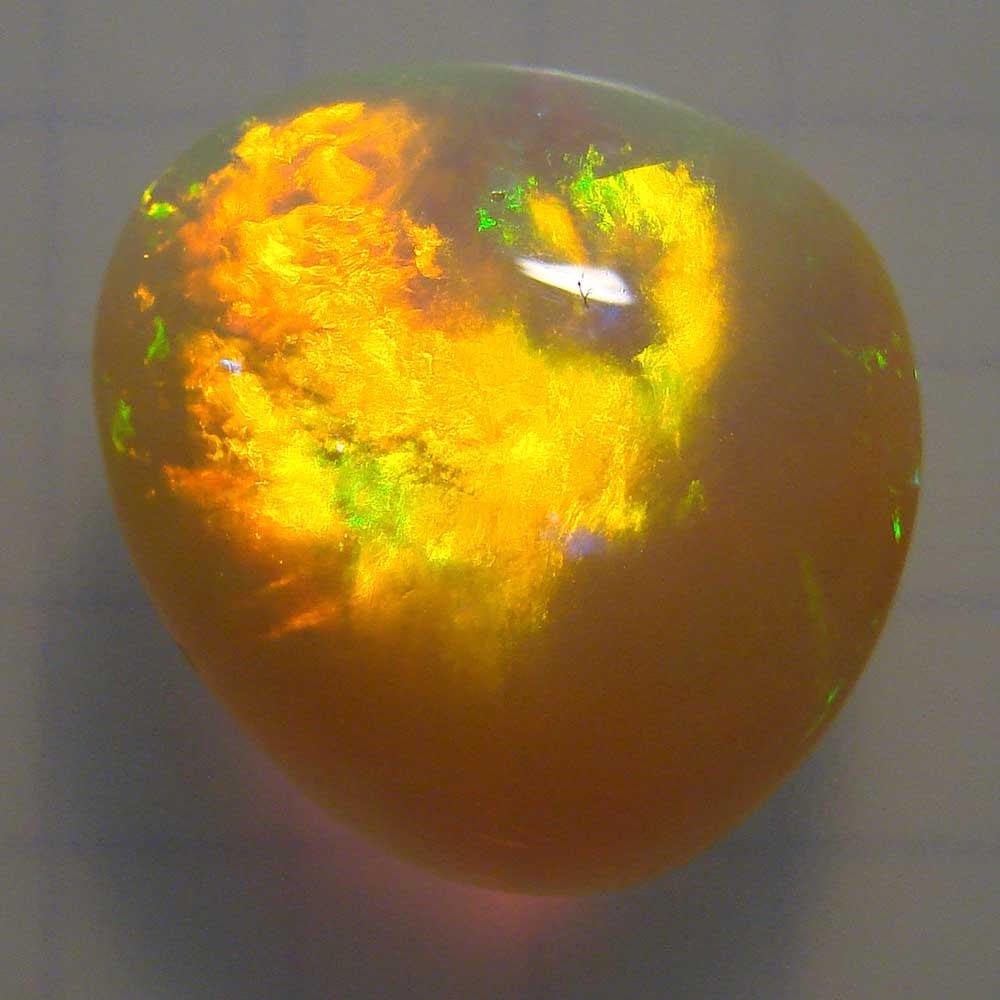
Synthetic or lab-created opals are real opals, but they're grown in laboratories instead of underground. They undergo the same formation processes, only at an accelerated rate in controlled settings.
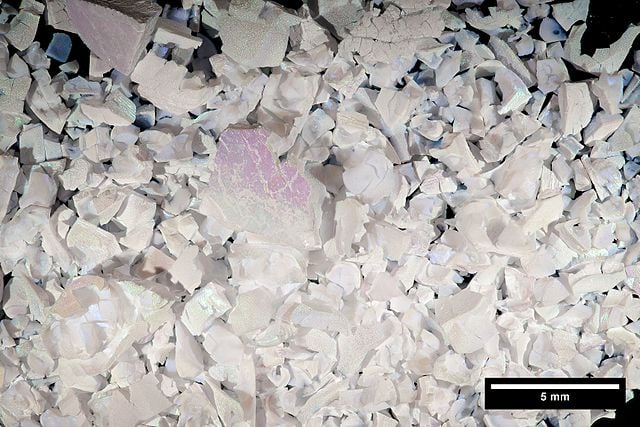
Synthetic opals may show a strong display of color, usually in a mosaic pattern. With high magnification and top or backlighting, you can find a cellular, scale-like, snake skin, or chicken wire structure in the pattern. Under high magnification with transmitted light, synthetics may show a dendritic structure.
Synthetic opals don't phosphoresce. They may also stick to the tongue. Synthetic white opal can show columnar structures from the side.
For more information on different varieties of synthetics, read our guide to synthetic opals.
Unlike lab-created opals, imitations only simulate the appearance of opals. These imitations are typically made from plastic or glass.
Plastic imitations or simulants are soft and can be probed with a sharp needle. They don't phosphoresce.
Glass simulants typically contain glass bubbles and swirl marks. They also don't phosphoresce. Their specific gravity (SG) and refractive index (RI) are usually higher than natural opal.
Vendors may treat low-quality opals to improve their appearance (and increase their prices). Although these processes may create beautiful gems, some of these enhancements may not last long. All of these enhancements should be disclosed before any sale. For more information, consult our guide to detecting opal treatments.
Improves play of color, disguises crazing. Common, but stability poor for oil and wax. Detectable with a hot point test. Plastic usually requires major lab equipment.
Gives appearance of black opal, disguises crazing. Somewhat common with excellent stability. Detectable because the treated pieces have too low SG values and the concentration of color in cracks. May require major lab equipment.
Darkens body color. Common, but only poor to fair stability. Detectable through magnification and low SG (may float in water until it absorbs enough to sink). Loses play of color when wet but returns when dry. Unusually low RI, 1.38 to 1.39.
Darkens body color. Common with good stability. Magnification shows black concentrations.
Hydrophane opals will absorb water and chemicals, which can have a negative effect on their appearance. Keep them dry and away from all sources of contamination.
Australia is the best known opal-producing area in the world. However, the deposits have been worked so intensely that they're becoming depleted. Fewer miners are now working the opal fields compared to 10 years ago, and new discoveries are rare. These factors, plus worldwide demand, place tremendous pressure on opal prices.
The first discoveries of the modern Australian opal trade probably occurred around 1850, but Queensland yielded major finds around 1872.
Australia produces various types of opals:
Major finds of Australian opal are best known from specific localities, including the following:
Opal occurs in sandstone in Piaui Slate, northern Brazil, and also near Manaus, northern Brazil. The material is white and fiery and sometimes resembles good-quality Australian white opal. It ranks perhaps as the most durable opal, low in water and not heat sensitive. (Dr. Joel Arem reports seeing a cut gem held for 30 seconds over a candle flame with no adverse effects). The material seems to be abundant, and much of it is shipped to Hong Kong where it's cut and sold, often as Australian opal.
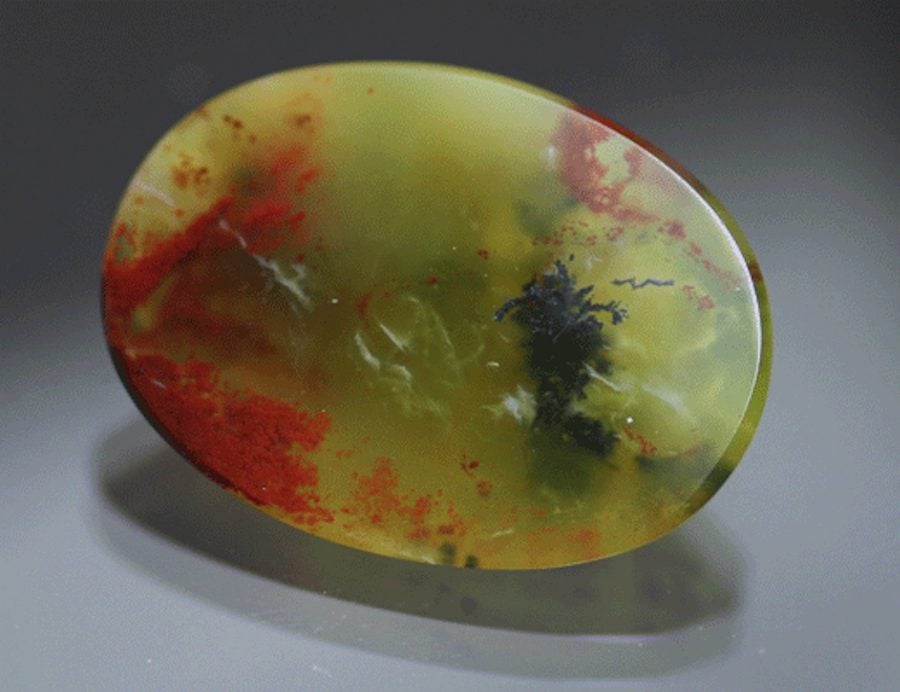
A source known in Ancient Roman times, near the village of Červenica (formerly in Hungary), produces opal as seams in grayish brown andesite rock. This opal has a mosaic of strong colors and appears very attractive against a milky white background color. Much of this is harlequin-patterned opal.
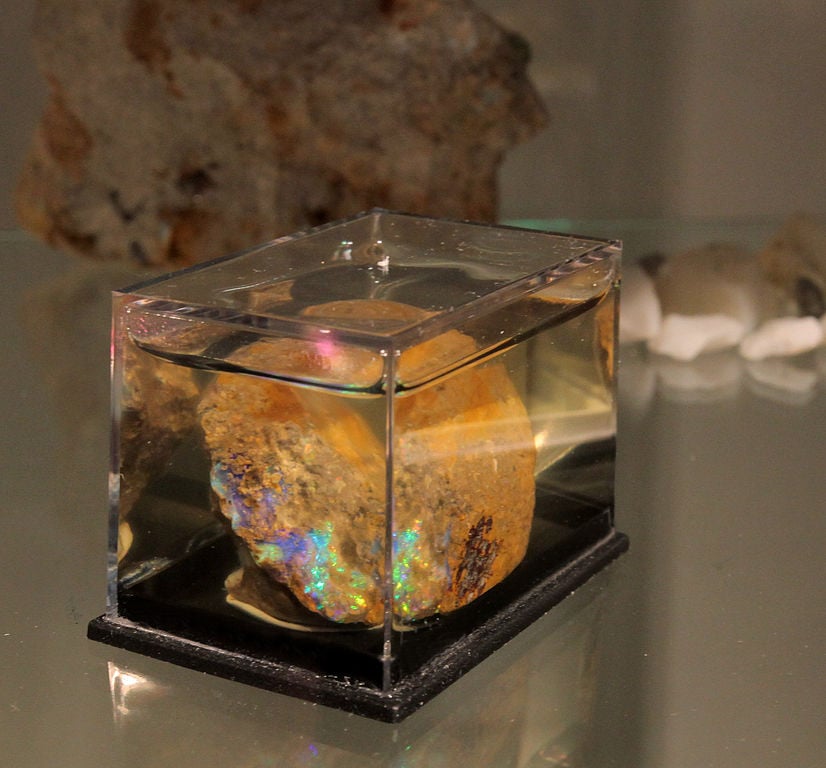
An ancient source of opals, Ethiopia has also had recent discoveries of precious opal in 1994 and 2008. The opal found near the town of Wegel Tena displays a remarkable play of color.
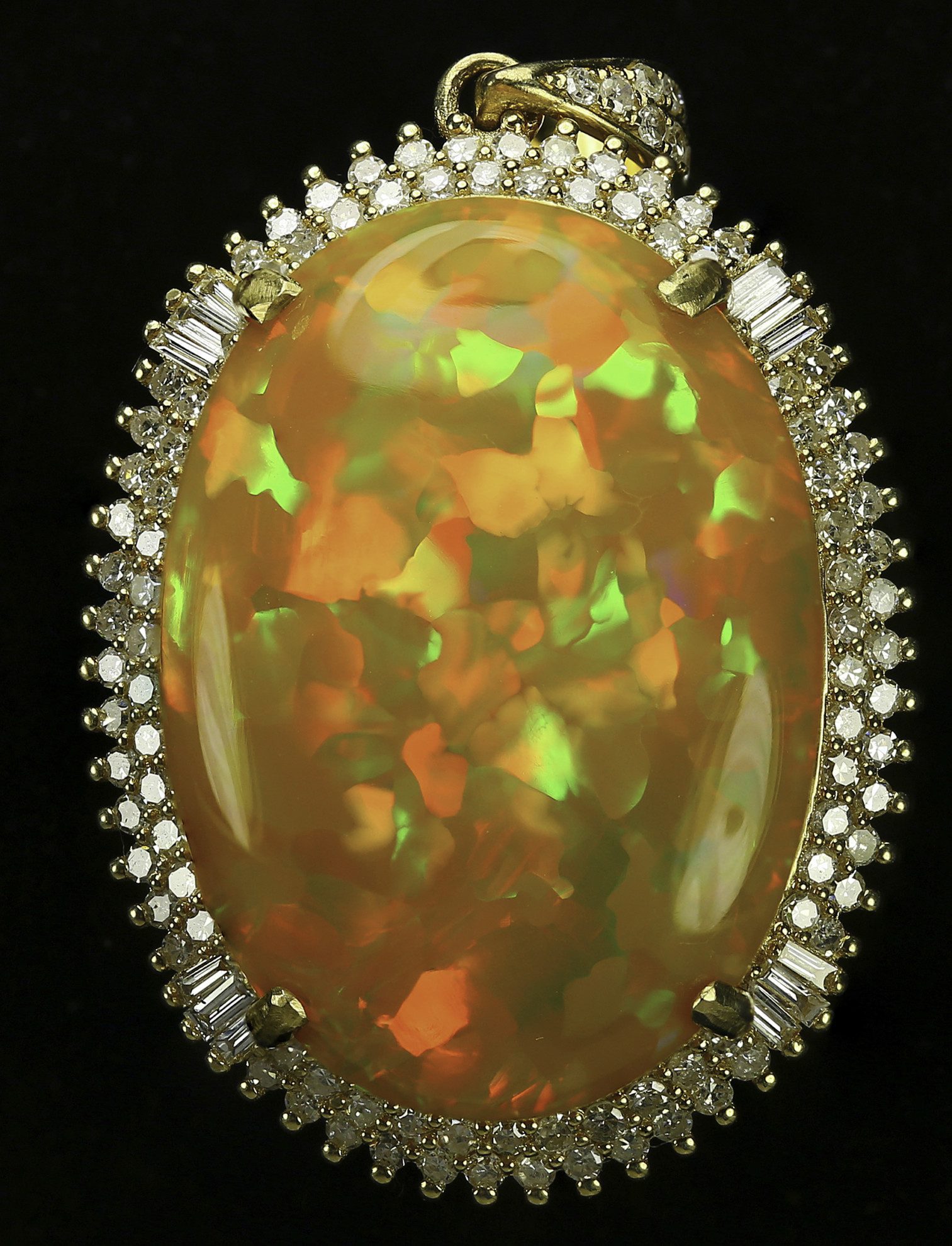
Deposits known since before 1843, perhaps much older than that. Occurs as veins in dark reddish to black trachyte rock. White opal contrasts strongly with the dark-colored matrix. Pieces not large, seldom very spectacular.
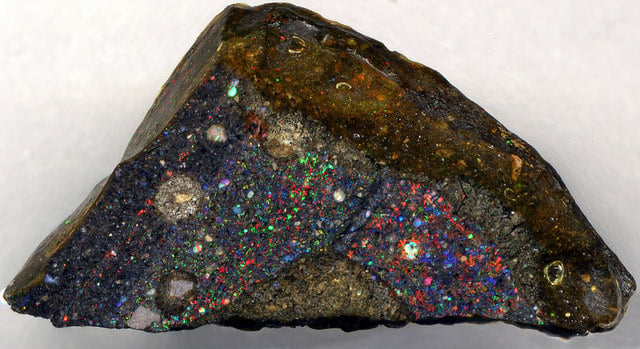
Very little known material, as thin seams in dark rock. Much of it is water opal and resembles material from Mexico. The white opal resembles poor-grade Australian. Indonesia produces some very unusual black opal that consists of reddish flecks of color swimming in a translucent but very dark brown body. Most gems are very small (less than 10 carats) from this locality, and production is very small.
Mexican opal occurs in siliceous volcanic lavas, in cavities, and in many localities. Yellow and red fire opal comes from a trachyte porphyry at Zimapan in Hidalgo. Hyalite and precious opal that is completely transparent, colorless, and rich in fire occurs at San Luis Potosi. Queretaro is also a well-known opal-producing locality. Fine Mexican opal is very rare in large sizes (over 50 carats) but is among the most beautiful.
Green prase opal, colored by nickel.
Nickeliferous opal resembling chrysoprase occurs in Tanzania, associated with brown limonite. The RI (1.452) is lower than that of chrysoprase (1.535), as is the gravity (2.125 versus 2.620). Stone sizes tend to be small.
Discovered around 1900 in Virgin Valley, Humboldt County, Nevada, opal occurs here as cracks and seams in opalized wood. Magnificent but very hydrous, this opal has a strong tendency to crack due to loss of water when exposed to the air. Whole skeletons of extinct animals have been replaced by fine precious opal at this locality. Similar opal occurs in Idaho.
Spencer, Idaho has produced star opals.
Other opal sources in the United States include Arizona, Louisiana, Oregon, and Wyoming.
Other notable sources of opal gems include the following:
A few large and fine specimens, both opal gems and rough, have received individual names, like diamonds. Some of the most well-known pieces include the following:
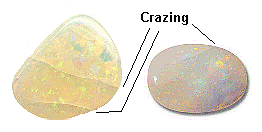 Opals are delicate but well worth the extra care. They have a great sensitivity to changes in temperature as well as a "crazing" tendency, which means they can easily develop cracks or "craze" as they dehydrate. (Cracks on the surface are called "checking").
Opals kept in water must be dried carefully before cutting.
Sometimes opals in rings can become chalk white and lifeless. This may be due to a network of scratches on the opal surface that destroys the polish and dulls the color play, but a simple re-polishing can usually correct this.
Consult our care guide for opals for cleaning, setting, and storage recommendations.


When you join the IGS community, you get trusted diamond & gemstone information when you need it.
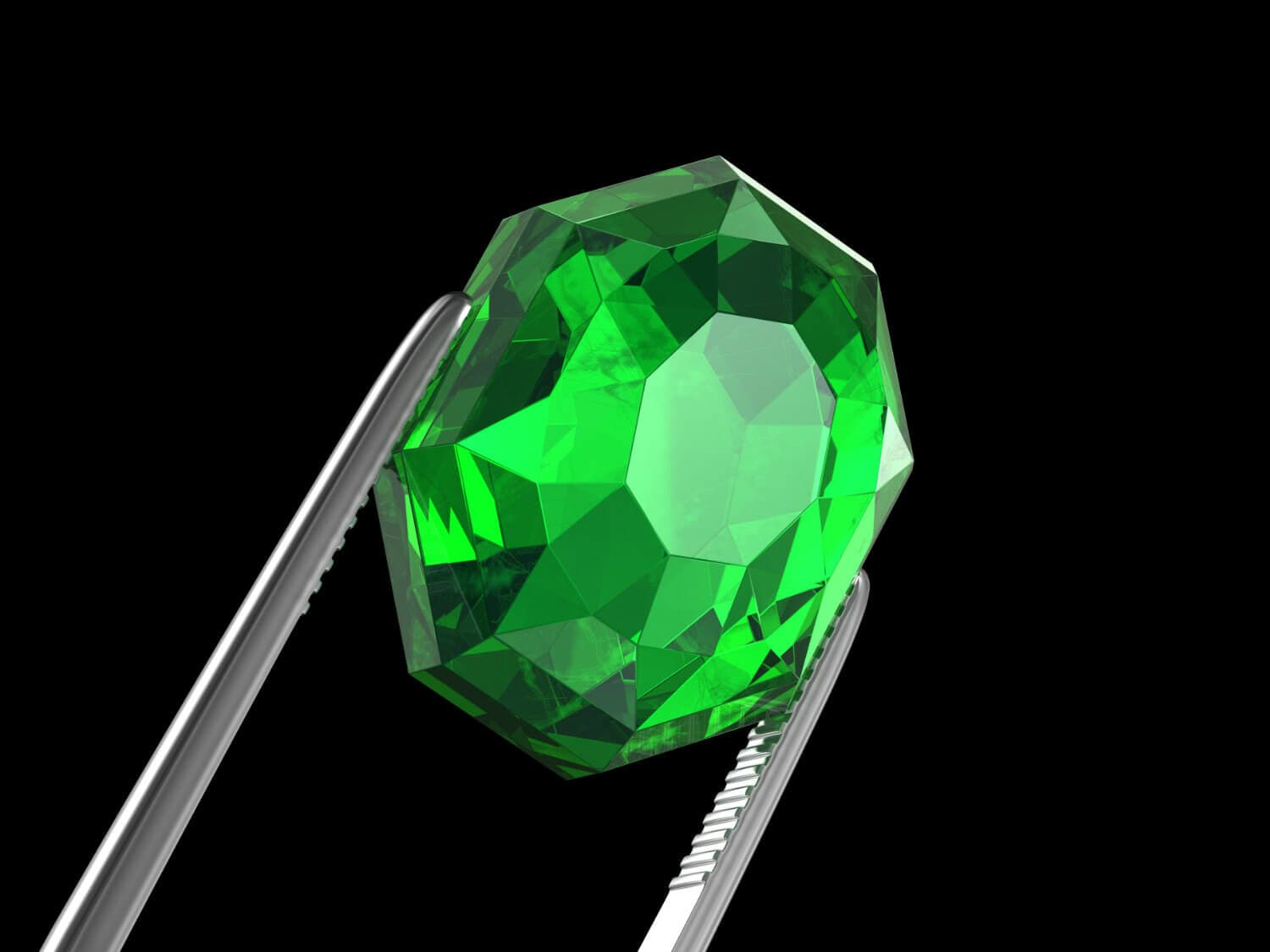
For thousands of years, people have mined and treasured opals. These striking stones are the traditional October birthstone and have inspired a rich body of folklore. (So rich, in fact, opal gems have been considered both the luckiest and unluckiest stones you can wear). Nevertheless, some scholars believe many ancient references to opal may actually have been to other gems, such as the iridescent iris agate.
Opals can be shattered or damaged beyond repair much more easily than other popular gemstones. In addition to being sensitive to moisture and changes in temperature, they have a hardness of only 5.5 to 6.5, which makes them very susceptible to scratching. Opals aren't recommended for ring stones, unless the stone is placed in a protective setting or a triplet or reserved for occasional wear.
However, if you take the appropriate precautions, opal gems can make unique, exquisite jewelry pieces.
Opal is an amorphous form of silica, chemically similar to quartz, but containing 3% to 21% water within its mineral structure. Gem grade opals usually have 6% to 10% water content.
Opal is a sedimentary stone. Under the proper conditions, water percolates through the earth, becoming rich in dissolved silicates. When water enters a cavity, it deposits the silicates as microscopic spheres, forming opals.
If the spheres are uniform in size and shape and neatly stacked, they will diffract light. These stones are called precious opals. If the spheres are random in size, shape, and arrangement, the results are common opals.
Common opals can have an opaque or glassy appearance with a waxy luster. Seldom cut, these stones come in a wide range of colors. Common opals are often fluorescent.
Precious opals, also known as "noble opals," display fire or play of colors.
Opal's characteristic fire, or play of colors, was long thought to be the result of iridescence. However, with the advent of scanning electron microscopes, we now know it's a result of diffraction. This phenomenon of flashing or moving colors due to diffraction isn't related to the body color of the opal.
The particular colors seen in an opal's fire depend on the size of the spheres and the angle of viewing. For example, black opal gets its color from volcanic ash, but inclusions have nothing to do with the play of color. That is due entirely to the tiny silicate spheres. They must be smaller than 1,500 angstroms (Å) for blue and violet colors, but no larger than 3,500 Å to produce oranges and reds. To put that in perspective, 20,000 spheres are about the size of the period at the end of this sentence. (An angstrom is one ten-billionth of a meter).
Please note that the term "fire" typically refers to a gemstone's dispersion. While it's acceptable to refer to an opal's play of color as fire, it's not acceptable to refer to gemstone dispersion as "play of fire." Only opals show play of color.
Since opals grow by filling in cavities in the earth, sometimes they take the shapes of pieces of wood, bone, and seashells buried in the ground. In effect, opal replaces these organic materials. These opals are called pseudomorphs, materials with shapes unrelated to their chemical content.
Opalized wood is also called xylopal or zeasite.
Gem cutters can take opal pieces too thin to use as a solid gemstones and assemble them into doublets and triplets.
A doublet consists of a thin layer of precious opal glued to a black base. A triplet adds a transparent quartz cap and makes a good ring stone, because the hard quartz keeps the softer opal from scratching.
While purists prefer common opal for the base material, jewelers use many black materials, including old phonograph records.
Black opals have a black body color with fire, which is often spectacular against a dark background. Body colors can also be very dark bluish, greenish, or brownish. Please note that the term "black opal" may also refer to black potch (inferior opal material) covered with a thin layer of crystal opal, which lets the black show through later.
A black opal from Australia, illuminated from two positions. (Stone in ring approximately 10 cts). Photo © Joel E. Arem, PhD, FGA. Used with permission.
Gray or semi-black opal has light to dark body color with fire.
White body color with fire.
A transparent or colorless body that may have fire in it.
Colorless and transparent to semi-transparent in transmitted light, crystal opals have a rich play of colors in reflected light. Black crystal opals are transparent to semi-transparent with dark body color and play of color.
These translucent, milk white stones may also have yellowish or greenish color.
Translucent to transparent with a yellow, orange, or red body color, these stones may or may not display a play of colors. The "fire" in their name refers to their body color, not to play of color. These stones are also called Mexican or sun opals.
Thin seams of opal that form in ironstone, these gems come in many colors and show dazzling fire, backed by their brown ironstone matrix.
Very rare, contraluz opals are usually found in Mexico but have also been found in Australia. These transparent opals show a play of color in both transmitted and reflected light.
A contraluz opal from Mexico, illuminated from front and back (approximately 4 cts). Photo © Joel E. Arem, PhD, FGA. Used with permission.
Hyalites or jelly opals are transparent to translucent, colorless or white, with a glassy luster and little to no play of color.
This brilliant cushion-cut, colorless hyalite lacks any play of color. However, it does have an interesting feature. It has a very strong green reaction to SW UV and even shows a slight yellow-green reaction in daylight. 7.08 cts, 16.9 x 10.9 mm, Brazil. © The Gem Trader. Used with permission.
White to brownish and opaque, moss opals contain dendritic inclusions that resemble moss.
Light-colored and opaque, hydrophane opals become transparent and show a play of color when soaked in water or oil. Sometimes they're called "magic stones."
Siliceous sinter or geyserite is glassy opal that forms around hot springs and geysers. These massive formations aren't faceted for jewelry.
Tripoli or diatomaceous earth consists of fine-grained, powdery masses of opal or the siliceous remains of microscopic marine animals called diatoms. This material is often used in polishing agents and fillers.
Often bluish white, translucent to opaque, and very porous, cacholong opals resemble porcelain. This stone, also called kalmuck agate opal, will actually stick to your tongue.
These reddish brown and opaque opals resemble jaspers.
These green to yellowish green, translucent to opaque, common opals resemble chrysoprase. Chrysopal refers to a golden green variety.
An opaque gray to brown opal with a concretionary structure.
An opaline (opal-like) silica found in the joints of some bamboo.
Semi-transparent to translucent with a moving, billowy light effect, girasol opals resemble moonstones.
These opals get their blue color from finely disseminated inclusions of chrysocolla, a copper phyllosilicate mineral.
Sometimes refers to brown, common opals.
Yellowish brown common opals with a waxy to resinous luster.
Red to yellow common opals.
Composed of quartz, opal, and pyrite, these gems occur in the state of Louisiana.
These opals have small black or brown spherical inclusions resembling fish roe and an over play of color.
Yellowish opals with a waxy luster.
Extremely rare, the asterism or star effect these opals display is caused by imperfections in the arrangement of their silicate spheres. Thus, their star effect differs from that of other gems such as sapphires, caused by inclusions.
The term "opalite" usually refers to a plastic or glass opal simulant. However, there is a variety of natural opal sometimes called opalite. This common variety of opal comes in green, lavender, or purple colors and can also show a cat's eye. To avoid confusion, don't refer to this opal variety as "opalite," due to the name's strong association with simulants.
Opal may also fluoresce brownish. Black opal is generally inert. Fire opal luminesces greenish brown. Common opal often fluoresces green. Natural opals may also have phosphorescence.
Descriptions of opal gems are as broad as the human imagination. The patterns seen in opals may resemble stained glass windows, butterflies, birds, and other natural and human-made forms. The most commonly used terms include the following:
| Chaff, thin, linear bands of color. |
| Chinese writing resembles Asian script. Usually in gold and green, somewhat rare. |
| Fern leaf lacy patterns resemble a fern leaf. Mostly in larger green gems, rarely red. |
| Flagstone features large, broad patches of color, set close together. Much like harlequin, only with larger patterns. Rare and highly valued. |
| Flame opal, bands or streaks of red fire that move across the surface. |
Flash opal is a play of color that quickly flashes off and on as the stone is moved.
These stones have alternating layers of precious and common opal. In chatoyant or cat's eye opal, the color play is concentrated in the form of an eye or band.
Matrix opal consists of specks of precious opal in a rock matrix, usually sandstone. This type of opal is often dyed black to enhance the color play. Ironstone opal forms in a hard, brown, compact type of sandstone.
Matrix opal may also consist of layers or stringers of opal in a rock matrix. Also called mass opal.
Also gold opal (gold fire), blue opal (bluish fire), lechosos opal (green colors).
Synthetic or lab-created opals are real opals, but they're grown in laboratories instead of underground. They undergo the same formation processes, only at an accelerated rate in controlled settings.
Synthetic opals may show a strong display of color, usually in a mosaic pattern. With high magnification and top or backlighting, you can find a cellular, scale-like, snake skin, or chicken wire structure in the pattern. Under high magnification with transmitted light, synthetics may show a dendritic structure.
Synthetic opals don't phosphoresce. They may also stick to the tongue. Synthetic white opal can show columnar structures from the side.
For more information on different varieties of synthetics, read our guide to synthetic opals.
Unlike lab-created opals, imitations only simulate the appearance of opals. These imitations are typically made from plastic or glass.
Plastic imitations or simulants are soft and can be probed with a sharp needle. They don't phosphoresce.
Glass simulants typically contain glass bubbles and swirl marks. They also don't phosphoresce. Their specific gravity (SG) and refractive index (RI) are usually higher than natural opal.
Vendors may treat low-quality opals to improve their appearance (and increase their prices). Although these processes may create beautiful gems, some of these enhancements may not last long. All of these enhancements should be disclosed before any sale. For more information, consult our guide to detecting opal treatments.
Improves play of color, disguises crazing. Common, but stability poor for oil and wax. Detectable with a hot point test. Plastic usually requires major lab equipment.
Gives appearance of black opal, disguises crazing. Somewhat common with excellent stability. Detectable because the treated pieces have too low SG values and the concentration of color in cracks. May require major lab equipment.
Darkens body color. Common, but only poor to fair stability. Detectable through magnification and low SG (may float in water until it absorbs enough to sink). Loses play of color when wet but returns when dry. Unusually low RI, 1.38 to 1.39.
Darkens body color. Common with good stability. Magnification shows black concentrations.
Hydrophane opals will absorb water and chemicals, which can have a negative effect on their appearance. Keep them dry and away from all sources of contamination.
Australia is the best known opal-producing area in the world. However, the deposits have been worked so intensely that they're becoming depleted. Fewer miners are now working the opal fields compared to 10 years ago, and new discoveries are rare. These factors, plus worldwide demand, place tremendous pressure on opal prices.
The first discoveries of the modern Australian opal trade probably occurred around 1850, but Queensland yielded major finds around 1872.
Australia produces various types of opals:
Major finds of Australian opal are best known from specific localities, including the following:
Opal occurs in sandstone in Piaui Slate, northern Brazil, and also near Manaus, northern Brazil. The material is white and fiery and sometimes resembles good-quality Australian white opal. It ranks perhaps as the most durable opal, low in water and not heat sensitive. (Dr. Joel Arem reports seeing a cut gem held for 30 seconds over a candle flame with no adverse effects). The material seems to be abundant, and much of it is shipped to Hong Kong where it's cut and sold, often as Australian opal.
A source known in Ancient Roman times, near the village of Červenica (formerly in Hungary), produces opal as seams in grayish brown andesite rock. This opal has a mosaic of strong colors and appears very attractive against a milky white background color. Much of this is harlequin-patterned opal.
An ancient source of opals, Ethiopia has also had recent discoveries of precious opal in 1994 and 2008. The opal found near the town of Wegel Tena displays a remarkable play of color.
Deposits known since before 1843, perhaps much older than that. Occurs as veins in dark reddish to black trachyte rock. White opal contrasts strongly with the dark-colored matrix. Pieces not large, seldom very spectacular.
Very little known material, as thin seams in dark rock. Much of it is water opal and resembles material from Mexico. The white opal resembles poor-grade Australian. Indonesia produces some very unusual black opal that consists of reddish flecks of color swimming in a translucent but very dark brown body. Most gems are very small (less than 10 carats) from this locality, and production is very small.
Mexican opal occurs in siliceous volcanic lavas, in cavities, and in many localities. Yellow and red fire opal comes from a trachyte porphyry at Zimapan in Hidalgo. Hyalite and precious opal that is completely transparent, colorless, and rich in fire occurs at San Luis Potosi. Queretaro is also a well-known opal-producing locality. Fine Mexican opal is very rare in large sizes (over 50 carats) but is among the most beautiful.
Green prase opal, colored by nickel.
Nickeliferous opal resembling chrysoprase occurs in Tanzania, associated with brown limonite. The RI (1.452) is lower than that of chrysoprase (1.535), as is the gravity (2.125 versus 2.620). Stone sizes tend to be small.
Discovered around 1900 in Virgin Valley, Humboldt County, Nevada, opal occurs here as cracks and seams in opalized wood. Magnificent but very hydrous, this opal has a strong tendency to crack due to loss of water when exposed to the air. Whole skeletons of extinct animals have been replaced by fine precious opal at this locality. Similar opal occurs in Idaho.
Spencer, Idaho has produced star opals.
Other opal sources in the United States include Arizona, Louisiana, Oregon, and Wyoming.
Other notable sources of opal gems include the following:
A few large and fine specimens, both opal gems and rough, have received individual names, like diamonds. Some of the most well-known pieces include the following:
Opals are delicate but well worth the extra care. They have a great sensitivity to changes in temperature as well as a "crazing" tendency, which means they can easily develop cracks or "craze" as they dehydrate. (Cracks on the surface are called "checking").
Opals kept in water must be dried carefully before cutting.
Sometimes opals in rings can become chalk white and lifeless. This may be due to a network of scratches on the opal surface that destroys the polish and dulls the color play, but a simple re-polishing can usually correct this.
Consult our care guide for opals for cleaning, setting, and storage recommendations.



| Floral, a variety of repeated designs and colors, reminiscent of floral dress material. |
| Harlequin or mosaic, close-set broad patches with angular play of color. Highly desirable, adds considerable value. |
| Palette has a variety of colors, resembling an artist's paint palette. |
| Peacock opal, predominantly green and blue play of color, with some resemblance to a peacock tail. |
| Pinfire or pinpoint, very small areas of fire set close together. Common and one of the less valuable patterns. |
| Rolling fire, a rare phenomenon where the fire moves across the surface rather than flashing on and off. |
| Ribbon, slightly curved, parallel bands of color. Usually parallel and on black or dark base. Rare. |
| Straw resembles flattened straws, crisscrossing each other. Rare. |
| Windmill, a pattern of fire that radiates around a central point. Very rare. |
Opals are in a class by themselves. As a species, opal is so unique it has its own descriptive vocabulary. More than any other gem, each opal is distinctly individual. Opals are also the most delicate gemstones commonly worn and require special care.
Evaluating precious opal is a highly refined art. For details, see our articles on Appraising Opals and our Opal Buying Guide.