Richard Hughes has been a leading ruby expert for decades. Learn how he got started and his tips for newcomers to the world of rubies.
5 Minute Read
When I graduated from high school, a friend of mine and I set out for Europe. Our original plan was to spend the winter in Israel. My friend was Jewish, and that was his personal pilgrimage. At one point, I met an Australian who had just come from Asia. He described Europe as "a bit tame" and started spinning yarns about his trip overland from Australia. It sounded so exotic, so exciting, and when he mentioned Nepal, I was hooked. I had seen documentaries in school about "marching to Everest," and the thought of walking in those footsteps was extremely exciting to me. My friend and I parted ways in Greece, he to Israel and I to Asia.
It was on the road to Nepal that my interest in gems was first kindled. The British Crown Jewels in the Tower of London had previously sparked my interest, but in Iran, Afghanistan and India, I was exposed to gems as a business. It seemed both fascinating and exotic. Later, after trekking to the base camp of Everest, I continued east to Myanmar. In Mandalay, I saw my first fine ruby and my first piece of jade.
Eventually, I settled in Bangkok and began studying gemology at AIGS. When I finished, they offered me a job. The Thai gem trade subsisted almost exclusively on ruby and sapphire at that time, so that's what I was exposed to and that's what I focused on. But on weekends, I also made many visits to the Myanmar border, mostly to Mae Sot, where ruby, sapphire, spinel, and jade would enter Thailand.
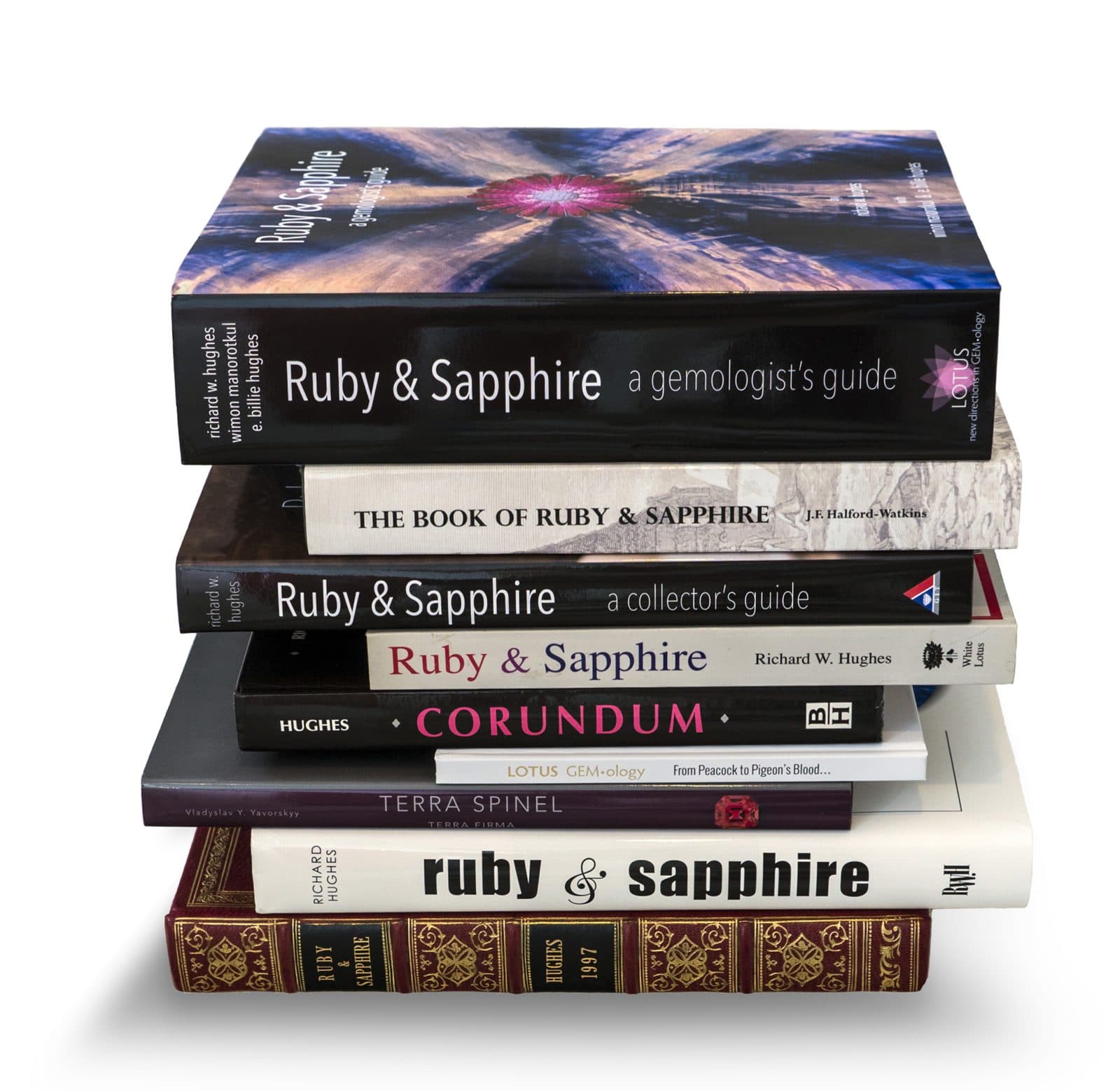
After several years of working in the trade in Bangkok, I noticed that there were virtually no books specifically written on ruby and sapphire, so I wrote one, Corundum, and published it in 1990. But I wasn't really happy with the result, so I spent several more years working on a book that would be full color and without compromise. The result was Ruby & Sapphire, which was published in 1997. In 2014, I published Ruby & Sapphire: A Collector's Guide and, in 2017, Ruby & Sapphire: A Gemologist's Guide. The latter is probably the most comprehensive book ever written on a single gem species.
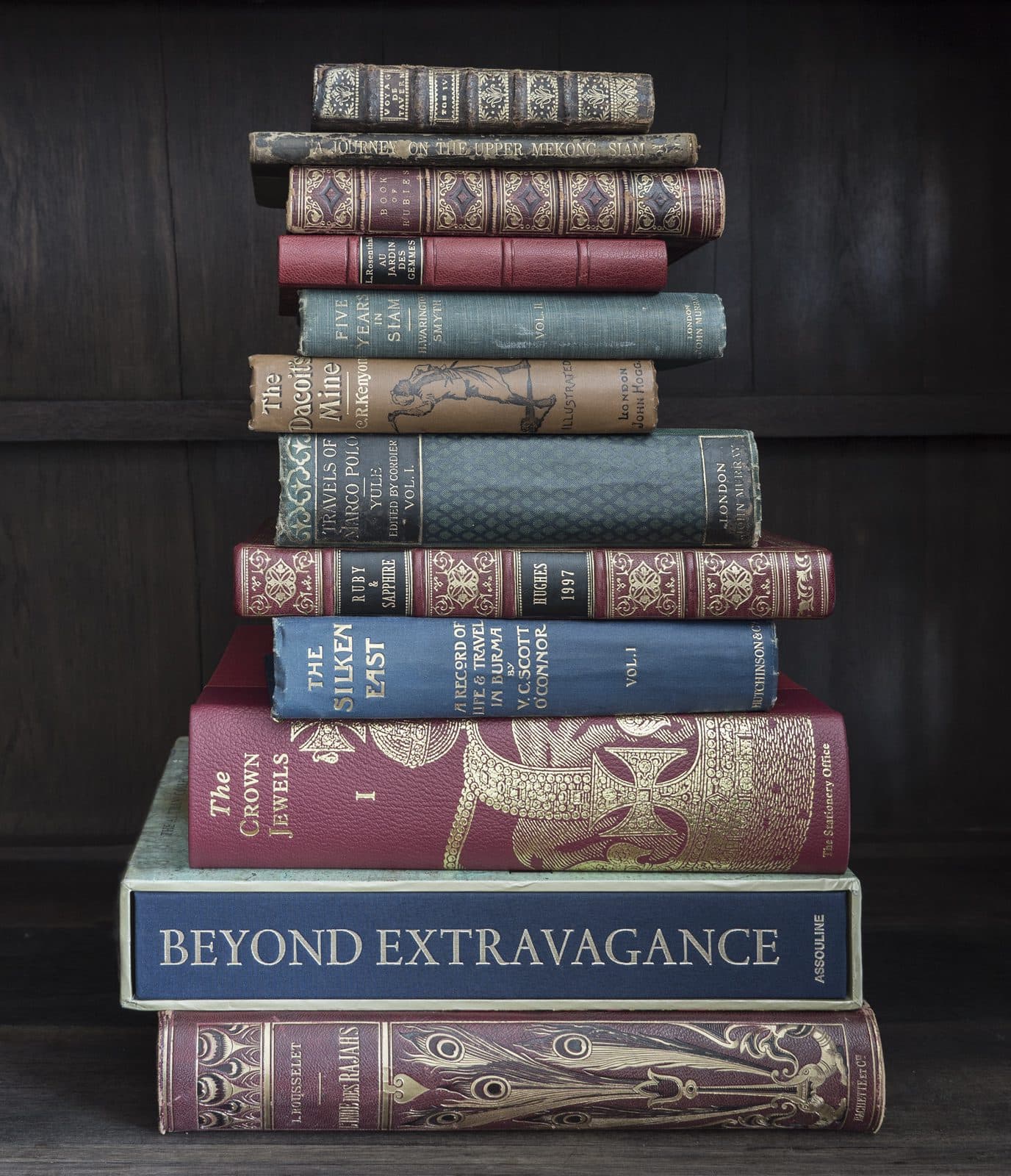
My books are based on my own experience, both in the lab and traveling (I've visited over 70 countries on all continents except Antarctica; it's on my list), as well as a tremendous amount of research. I have one of the largest gemological libraries outside of the GIA; my last book had over 3,000 references.
Like classifying "Pigeon's Blood", this is a judgement call. It's actually a problem created by our language. To a color scientist, pink refers to the lighter tones of red. Historically, people considered both red and pink stones rubies. But in the late 19th century, someone incorrectly decided that pink is not red, and the problems began. Interestingly enough, in the Thai language, they divide blue in the same way we divide red. See fah means light blue and see num ngun refers to a deep blue. We don't have a problem with blue sapphire, light or dark, it's still sapphire. But we have a problem with ruby vs. pink sapphire because of our language. We always emphasize to our clients that they should buy gems, not paper. Meaning they should make judgements with their eyes, not by what a lab report says.
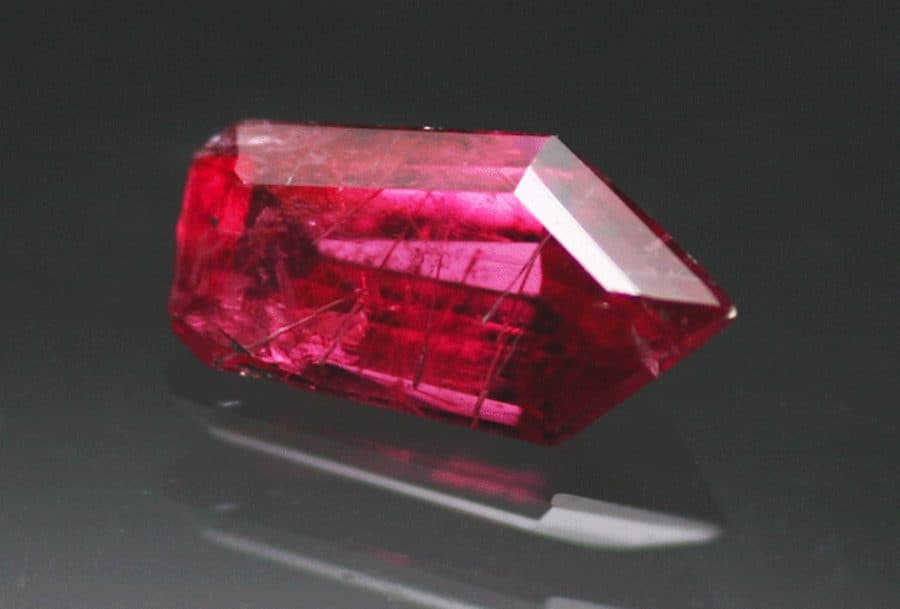
"Pigeon's Blood" is a term used in Myanmar that refers to the finest color of ruby. Of course, I saw fine rubies from the beginning of my career. The best stones are red-red and glow, something like a red stop light.
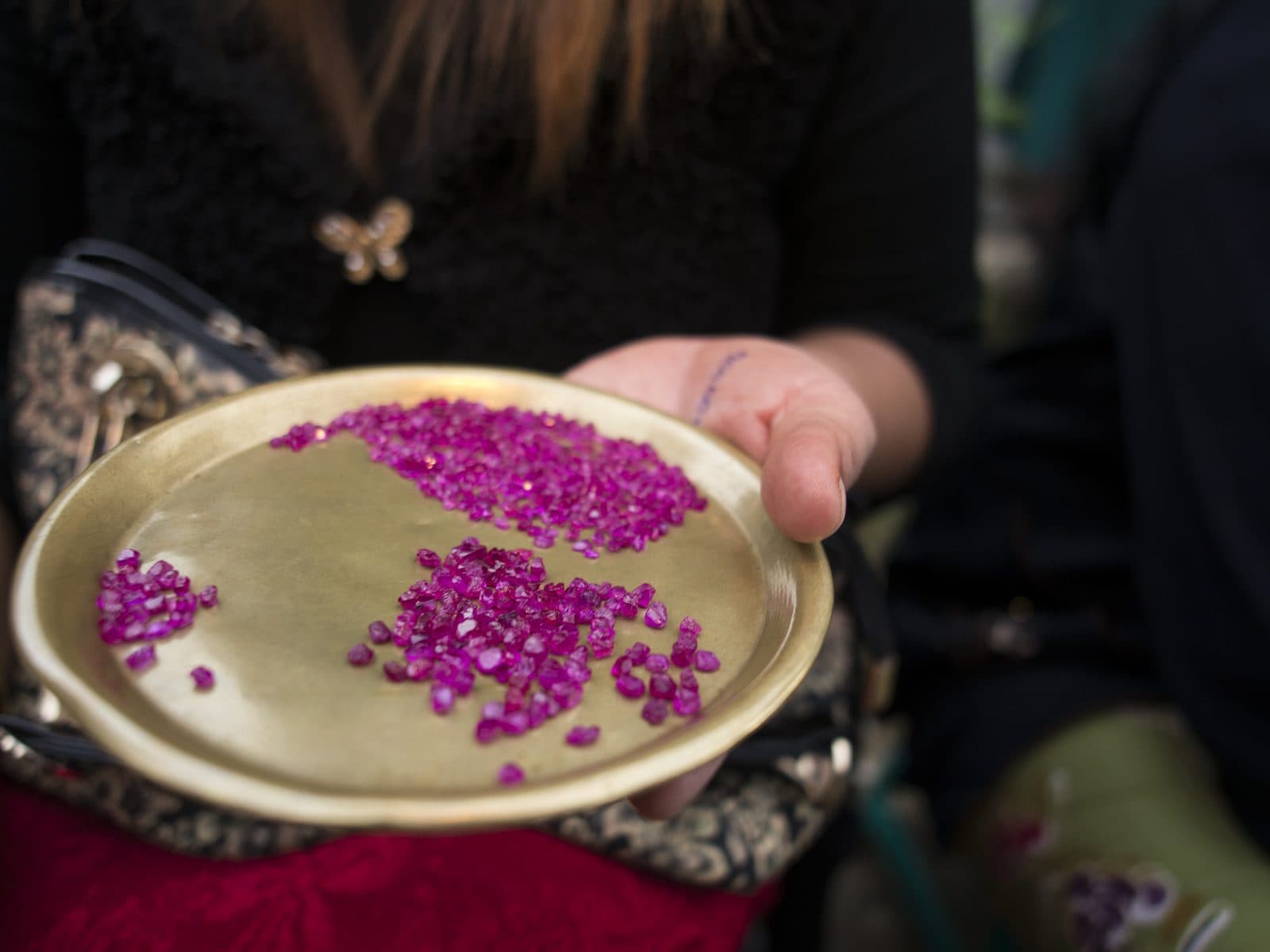
When I was younger, I was drawn towards stones that had the most vivid color. Now, 40 years on, I tend to look for balance, stones that are eye clean, nicely cut, and with a color that is not too dark or light. I would rather have a stone with life, as opposed to a piece with vivid color but on the dark side.
Actually no, because there is no perfect ruby, at least in any size above one carat. Ruby is so rare and there is always something that could be better, in terms of color, clarity or cutting.
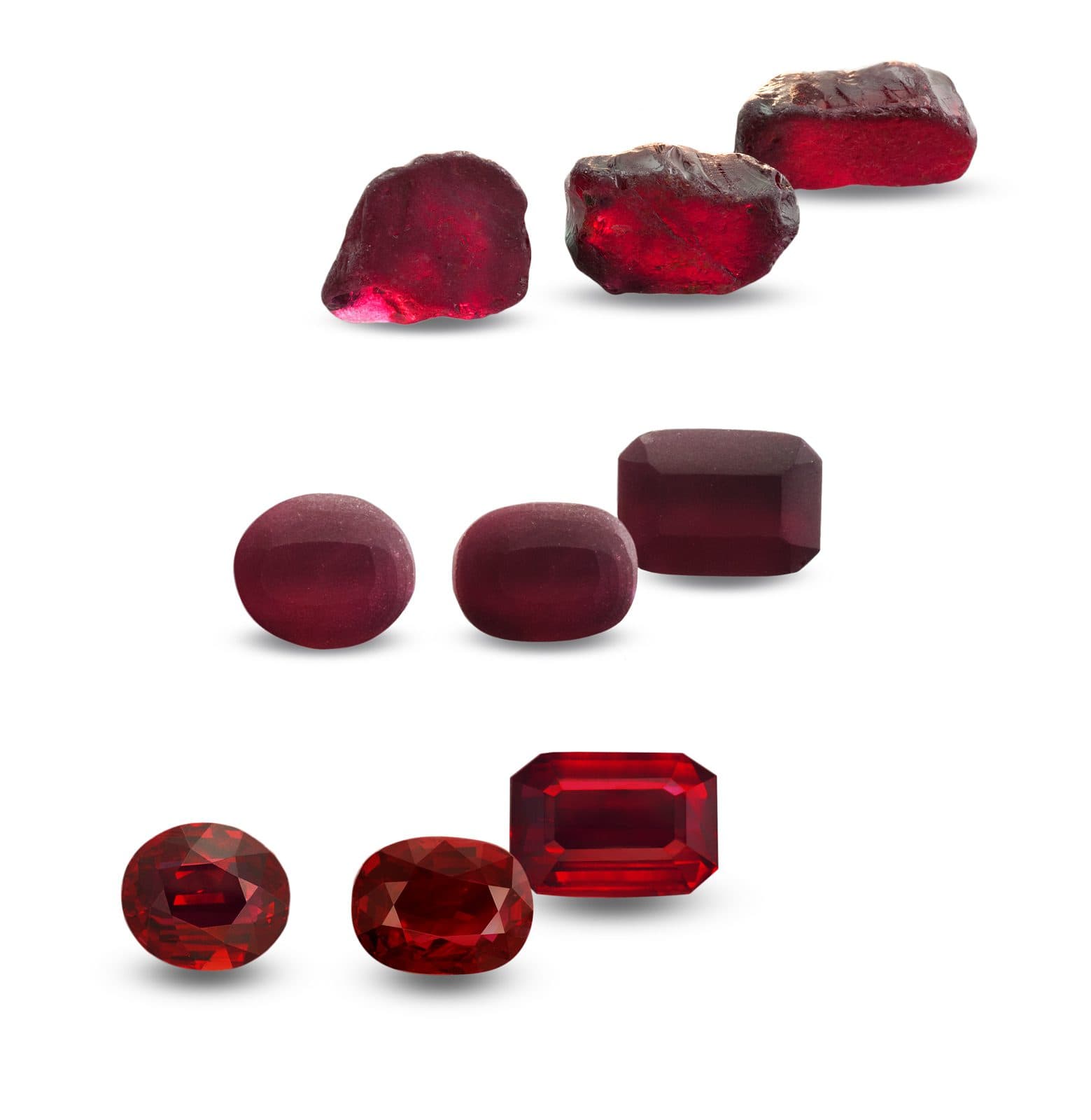
Gems have been treated since the beginning of time, and I have no problem with treated stones or synthetics. But the customer should be clearly informed about what they are buying. As for myself, I would generally avoid spending serious money on a treated stone, and obviously you should never spend serious money on a synthetic.
Not really. I've led a blessed life and have had a chance to do almost everything I've wanted to do. Of course, there are always more places to go.
I think the biggest highlight of my life is having my daughter, Billie, join our company, Lotus Gemology, and watching her grow into the job. She is doing great things, particularly in the realm of photomicrography, so much so that people often refer to me now as "Billie's father."

First, you need to educate yourself, to learn as much about the subject as possible. You can do this by visiting shows, dealers' offices, markets, museums, etc.
When it comes to buying, unless you have unlimited funds, it's best to start slow. You can often learn the same lessons from buying a $100 gem as a $10,000 gem, so move slowly up the food chain. Catch a few guppies before going shark fishing.


When you join the IGS community, you get trusted diamond & gemstone information when you need it.
When I graduated from high school, a friend of mine and I set out for Europe. Our original plan was to spend the winter in Israel. My friend was Jewish, and that was his personal pilgrimage. At one point, I met an Australian who had just come from Asia. He described Europe as "a bit tame" and started spinning yarns about his trip overland from Australia. It sounded so exotic, so exciting, and when he mentioned Nepal, I was hooked. I had seen documentaries in school about "marching to Everest," and the thought of walking in those footsteps was extremely exciting to me. My friend and I parted ways in Greece, he to Israel and I to Asia.
It was on the road to Nepal that my interest in gems was first kindled. The British Crown Jewels in the Tower of London had previously sparked my interest, but in Iran, Afghanistan and India, I was exposed to gems as a business. It seemed both fascinating and exotic. Later, after trekking to the base camp of Everest, I continued east to Myanmar. In Mandalay, I saw my first fine ruby and my first piece of .
Eventually, I settled in Bangkok and began studying gemology at AIGS. When I finished, they offered me a job. The Thai gem trade subsisted almost exclusively on ruby and sapphire at that time, so that's what I was exposed to and that's what I focused on. But on weekends, I also made many visits to the Myanmar border, mostly to Mae Sot, where ruby, sapphire, spinel, and jade would enter Thailand.
After several years of working in the trade in Bangkok, I noticed that there were virtually no books specifically written on ruby and sapphire, so I wrote one, Corundum, and published it in 1990. But I wasn't really happy with the result, so I spent several more years working on a book that would be full color and without compromise. The result was Ruby & Sapphire, which was published in 1997. In 2014, I published Ruby & Sapphire: A Collector's Guide and, in 2017, Ruby & Sapphire: A Gemologist's Guide. The latter is probably the most comprehensive book ever written on a single gem species.
My books are based on my own experience, both in the lab and traveling (I've visited over 70 countries on all continents except Antarctica; it's on my list), as well as a tremendous amount of research. I have one of the largest gemological libraries outside of the GIA; my last book had over 3,000 references.
Like classifying "Pigeon's Blood", this is a judgement call. It's actually a problem created by our language. To a color scientist, pink refers to the lighter tones of red. Historically, people considered both red and pink stones rubies. But in the late 19th century, someone incorrectly decided that pink is not red, and the problems began. Interestingly enough, in the Thai language, they divide blue in the same way we divide red. See fah means light blue and see num ngun refers to a deep blue. We don't have a problem with blue sapphire, light or dark, it's still sapphire. But we have a problem with ruby vs. pink sapphire because of our language. We always emphasize to our clients that they should buy gems, not paper. Meaning they should make judgements with their eyes, not by what a lab report says.
"Pigeon's Blood" is a term used in Myanmar that refers to the finest color of ruby. Of course, I saw fine rubies from the beginning of my career. The best stones are red-red and glow, something like a red stop light.
When I was younger, I was drawn towards stones that had the most vivid color. Now, 40 years on, I tend to look for balance, stones that are eye clean, nicely cut, and with a color that is not too dark or light. I would rather have a stone with life, as opposed to a piece with vivid color but on the dark side.
Actually no, because there is no perfect ruby, at least in any size above one carat. Ruby is so rare and there is always something that could be better, in terms of color, clarity or cutting.
Gems have been treated since the beginning of time, and I have no problem with treated stones or synthetics. But the customer should be clearly informed about what they are buying. As for myself, I would generally avoid spending serious money on a treated stone, and obviously you should never spend serious money on a synthetic.
Not really. I've led a blessed life and have had a chance to do almost everything I've wanted to do. Of course, there are always more places to go.
I think the biggest highlight of my life is having my daughter, Billie, join our company, Lotus Gemology, and watching her grow into the job. She is doing great things, particularly in the realm of photomicrography, so much so that people often refer to me now as "Billie's father."
First, you need to educate yourself, to learn as much about the subject as possible. You can do this by visiting shows, dealers' offices, markets, museums, etc.
When it comes to buying, unless you have unlimited funds, it's best to start slow. You can often learn the same lessons from buying a $100 gem as a $10,000 gem, so move slowly up the food chain. Catch a few guppies before going shark fishing.