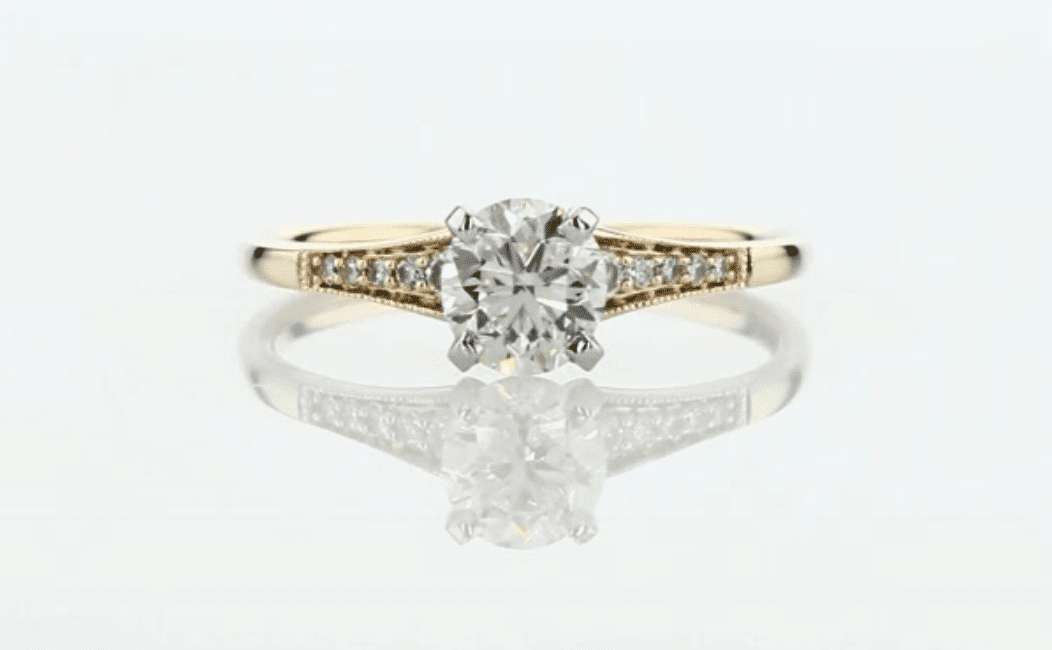
How does the GIA diamond cut grading system work? Our guide will explain what the grades mean and how gemologists evaluate round brilliant diamond cuts.
3 Minute Read
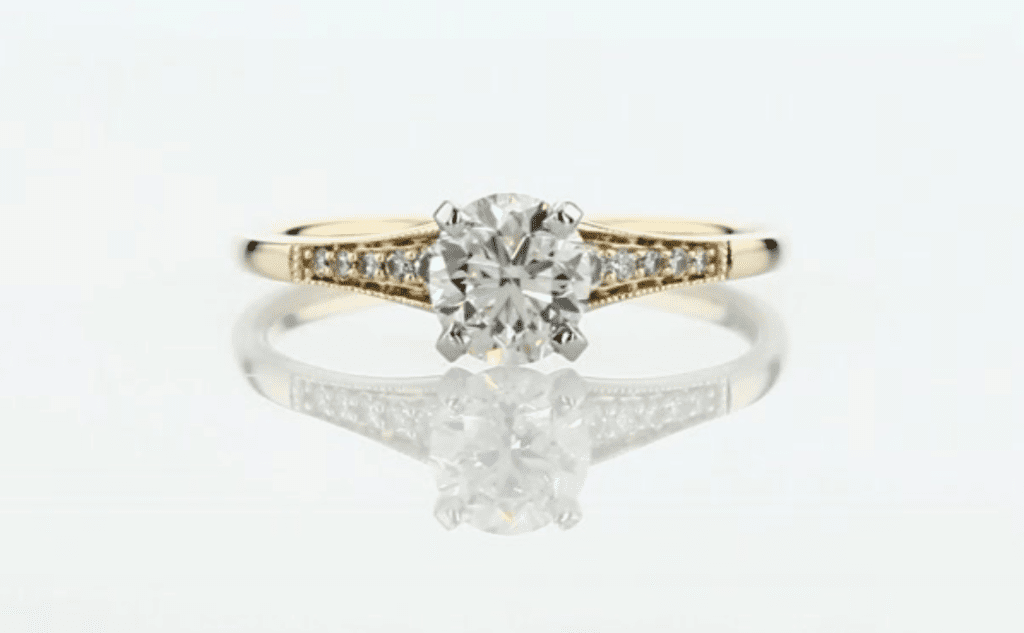
In the 1950s, the GIA established a system for grading diamonds based on the Four Cs — color, clarity, cut, and carat, which proved to be a great asset to the diamond industry. This system greatly improved the standards for evaluating color and clarity. However, the standards for evaluating the cut left something to be desired. To be fair, establishing a simple and usable system that would cover all the variables involved in the cut was very challenging.
The 2005 GIA diamond cut grading system finally accomplished this. Rather than placing cuts into four classes by calculating how close a cut stone came to an ideal set of proportions, the new system evaluates how the individual elements of the cut combine to affect the appearance of the diamond. There are now five grades, which indicate how well the cut affects a stone's performance. In addition, the GIA allowed some flexibility in the system for personal preferences. Table size is a prime example of this.
The GIA assigns the cut of a diamond one of the following grades:
The following details will help you understand the GIA's diamond cut grading system and what distinguishes, for example, an "Excellent" from a "Good" or "Fair" cut.
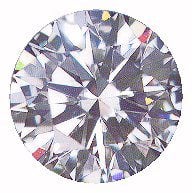
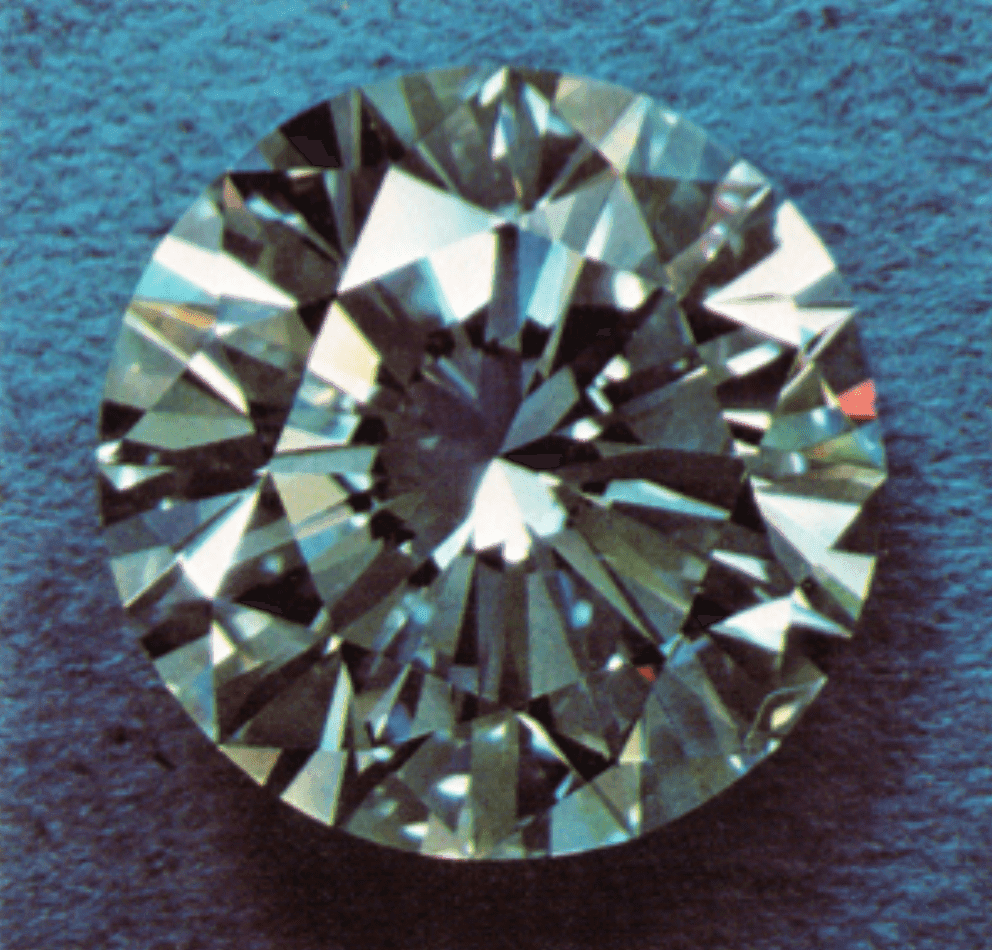
An Excellent grade diamond has high brilliance, scintillation, and an even pattern of light and dark areas.
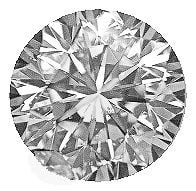
Diamonds with this cut grade also have high brilliance and scintillation, but expect them to be a bit darker in the center or around the edges. In some cases, a diamond can have top brilliance and scintillation but still receive a lower grade due to its pattern. The stone above has a splintery pattern that prevents it from receiving an Excellent grade.
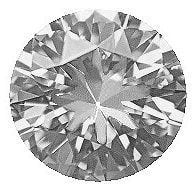
Generally, stones with this grade will be a bit darker or lacking in scintillation. The stone above appears dark around its girdle. A stone can also be graded down by its pattern or its weight ratio. In other words, if it weighs more than an average gem of its diameter, it will be graded down one step.
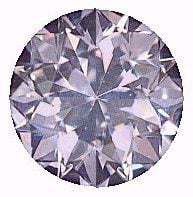
A stone in this category will have very little brilliance or scintillation. The stone pictured above has a very dark ring around the girdle and a dark table area.
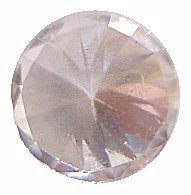
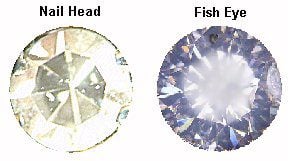
Diamonds in this category have very poor proportions and show very little brilliance or scintillation. Expect to see "nail heads" (a black center) and "fish eyes" (all brilliance washed out in the center).
Many stones with poor grades may have a decent appearance, but their weight ratio will lower their grade.
The 2005 GIA system is based on seven components. The first three are visual; the others physical.
Although inclusions (fractures and tiny mineral crystals trapped inside a stone) can affect brilliance, they don't fall under the criteria for cut grades. Instead, the stone's clarity grade addresses the impact of inclusions on a diamond's performance.
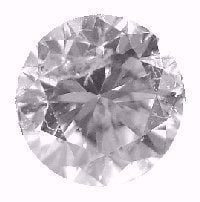
These cut grades only apply to round brilliant-cut diamonds — and only to colorless diamonds (those with color grades from D to Z). Fancy cuts, such as ovals, hearts, and emeralds, as well as fancy colored diamonds, are graded differently.


When you join the IGS community, you get trusted diamond & gemstone information when you need it.
In the 1950s, the GIA established a system for grading diamonds based on the Four Cs — color, clarity, cut, and carat, which proved to be a great asset to the diamond industry. This system greatly improved the standards for evaluating color and clarity. However, the standards for evaluating the cut left something to be desired. To be fair, establishing a simple and usable system that would cover all the variables involved in the cut was very challenging.
The 2005 GIA diamond cut grading system finally accomplished this. Rather than placing cuts into by calculating how close a cut stone came to an ideal set of proportions, the new system evaluates how the individual elements of the cut combine to affect the appearance of the diamond. There are now five grades, which indicate how well the cut affects a stone's performance. In addition, the GIA allowed some flexibility in the system for personal preferences. size is a prime example of this.
The GIA assigns the cut of a diamond one of the following grades:
The following details will help you understand the GIA's diamond cut grading system and what distinguishes, for example, an "Excellent" from a "Good" or "Fair" cut.
An Excellent grade diamond has high brilliance, scintillation, and an even pattern of light and dark areas.
Diamonds with this cut grade also have high brilliance and scintillation, but expect them to be a bit darker in the center or around the edges. In some cases, a diamond can have top brilliance and scintillation but still receive a lower grade due to its pattern. The stone above has a splintery pattern that prevents it from receiving an Excellent grade.
Generally, stones with this grade will be a bit darker or lacking in scintillation. The stone above appears dark around its girdle. A stone can also be graded down by its pattern or its weight ratio. In other words, if it weighs more than an average gem of its diameter, it will be graded down one step.
A stone in this category will have very little brilliance or scintillation. The stone pictured above has a very dark ring around the girdle and a dark table area.
Diamonds in this category have very poor proportions and show very little brilliance or scintillation. Expect to see "nail heads" (a black center) and "fish eyes" (all brilliance washed out in the center).
Many stones with poor grades may have a decent appearance, but their weight ratio will lower their grade.
The 2005 GIA system is based on seven components. The first three are visual; the others physical.
Although inclusions (fractures and tiny mineral crystals trapped inside a stone) can affect brilliance, they don't fall under the criteria for cut grades. Instead, the stone's clarity grade addresses the impact of inclusions on a diamond's performance.
These cut grades only apply to round brilliant-cut diamonds — and only to colorless diamonds (those with color grades from D to Z). Fancy cuts, such as ovals, hearts, and emeralds, as well as fancy colored diamonds, are graded differently.