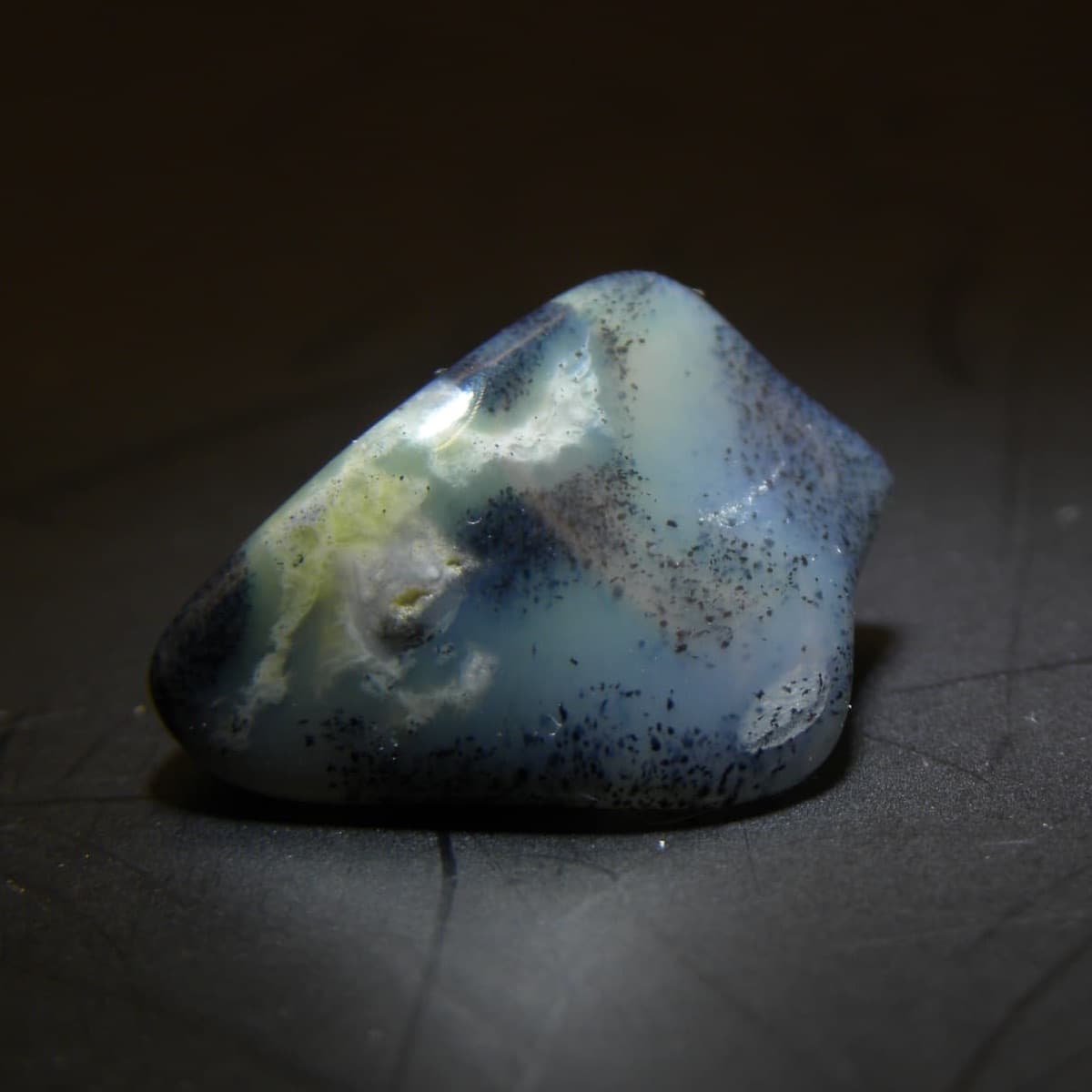
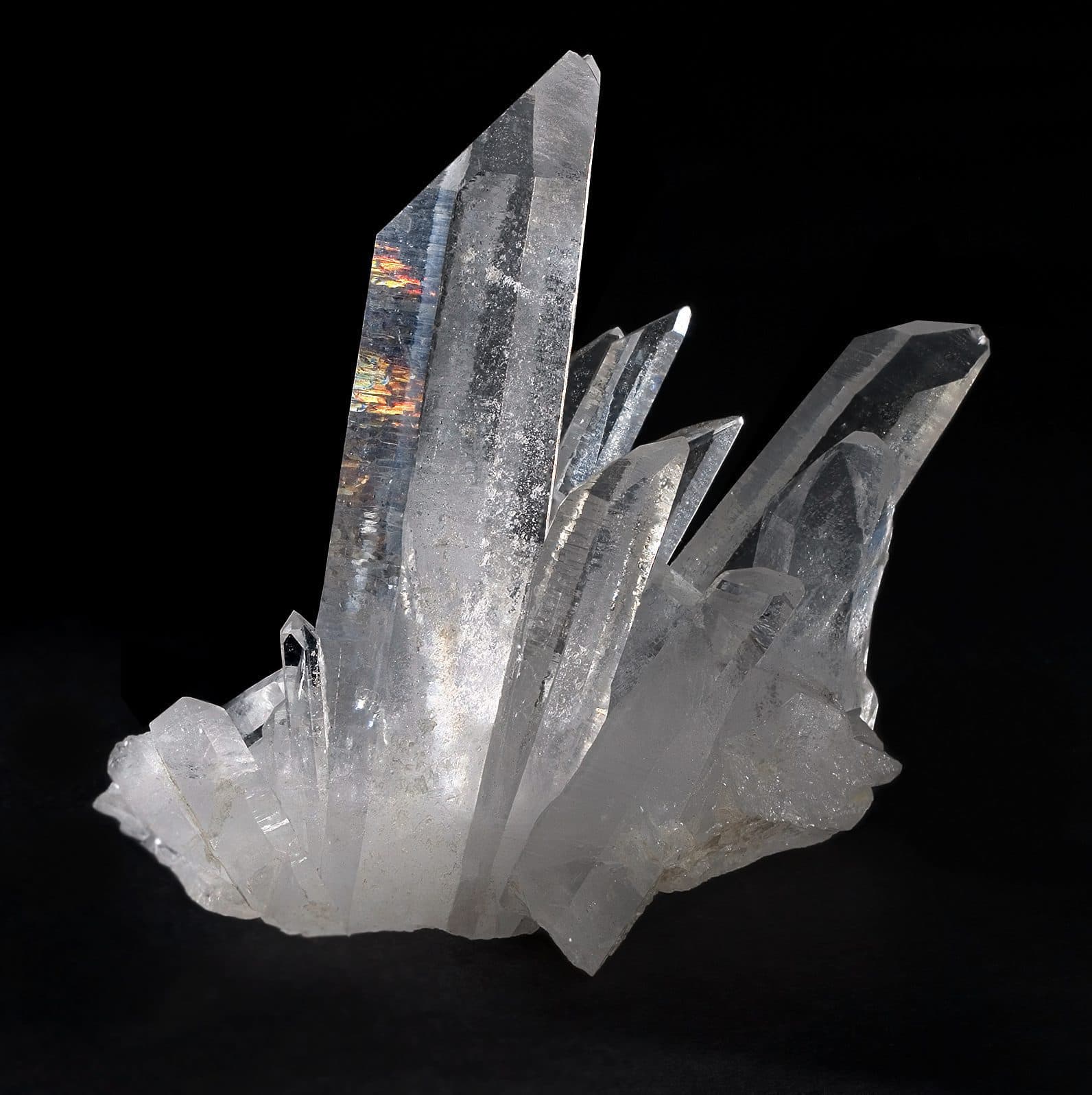
An overview on Quartz Jewelry and Gemstones. Covers details and essential information on the physical properties and characteristics of a Quartz mineral.
15 Minute Read
Quartz is one of the most common minerals on earth. (See The X Factor.) It is well loved as amethyst, citrine, rose, and smoky quartz. There are many other natural varieties, plus synthetic quartz that comes in every color of the rainbow.
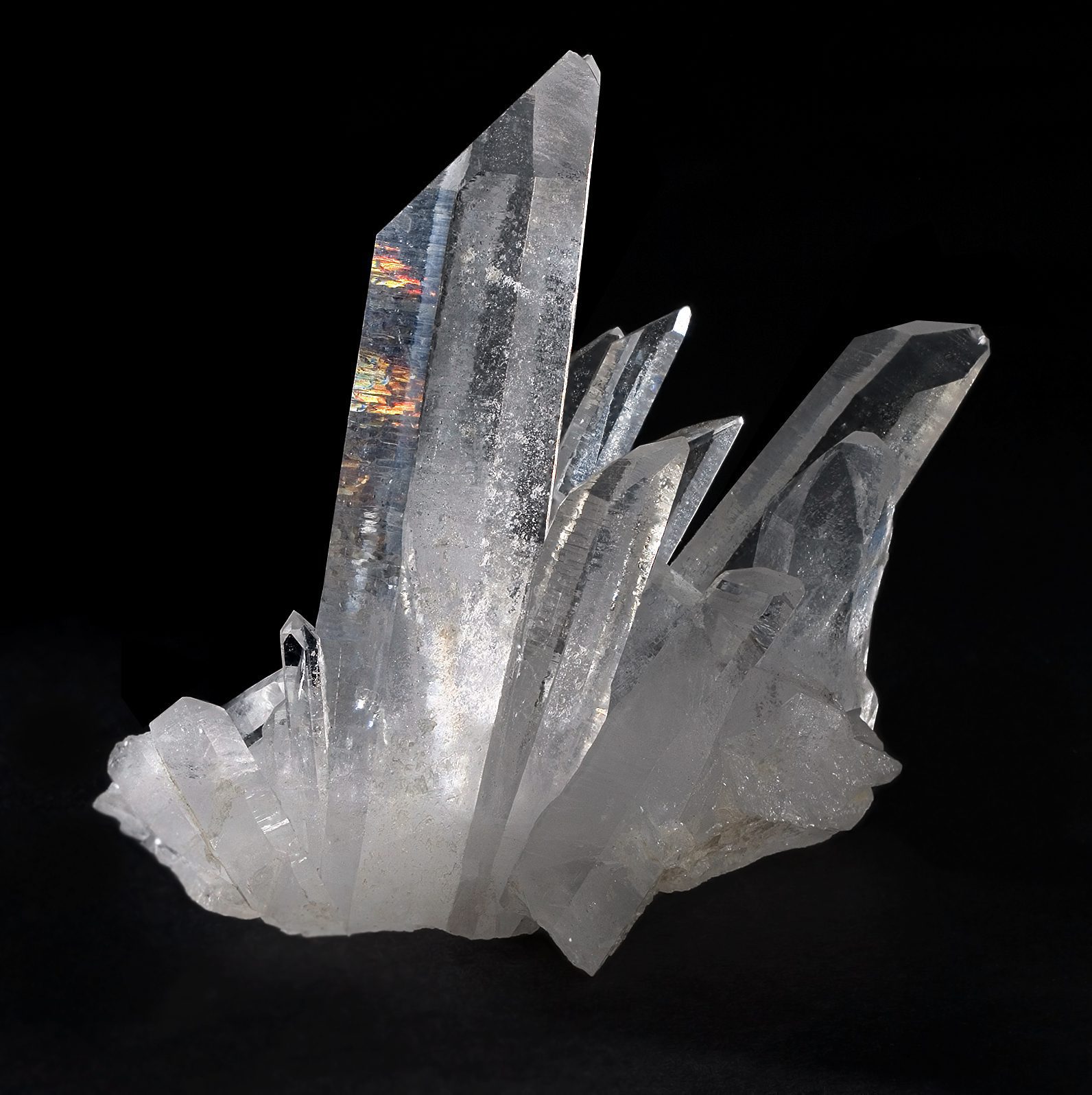
Rock crystal, colorless quartz, is rarely used as a gem. However, it is prized by carvers and frequently used as caps for triplets.
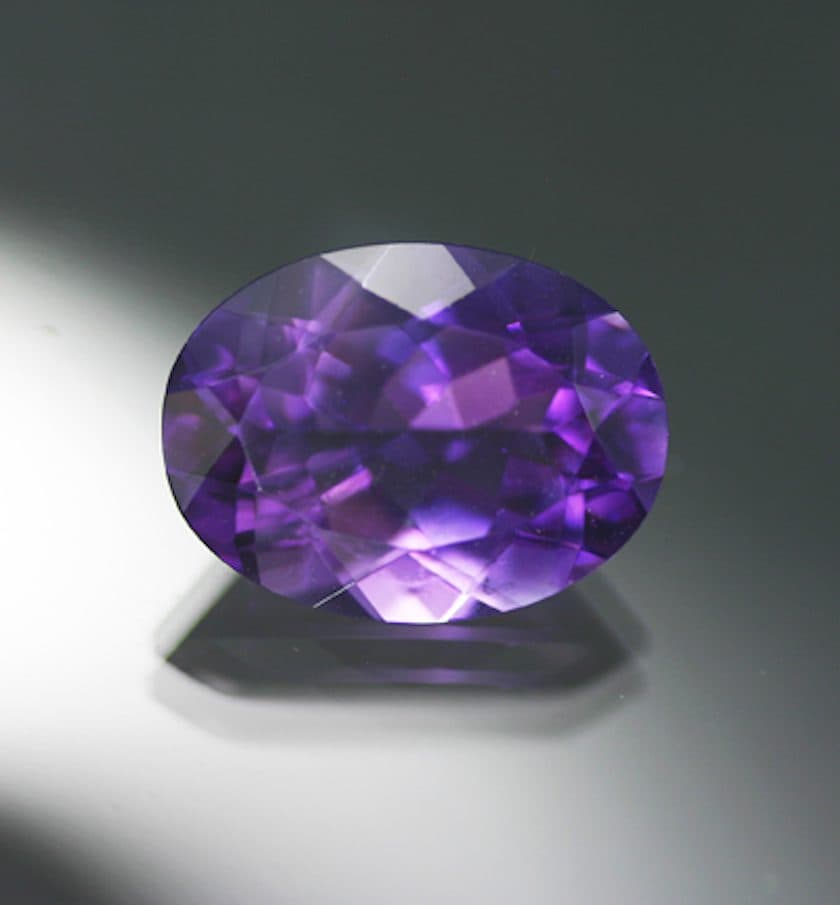
Amethyst ranges from a light, pinkish violet to an opaque purple. The lightest shades are called "Rose de France." While currently out of vogue, they have traditionally been very fashionable. Today, the variety most in demand is "Siberian." That does not refer to its origin, but to dark purple coloring, with flashes of red or blue.

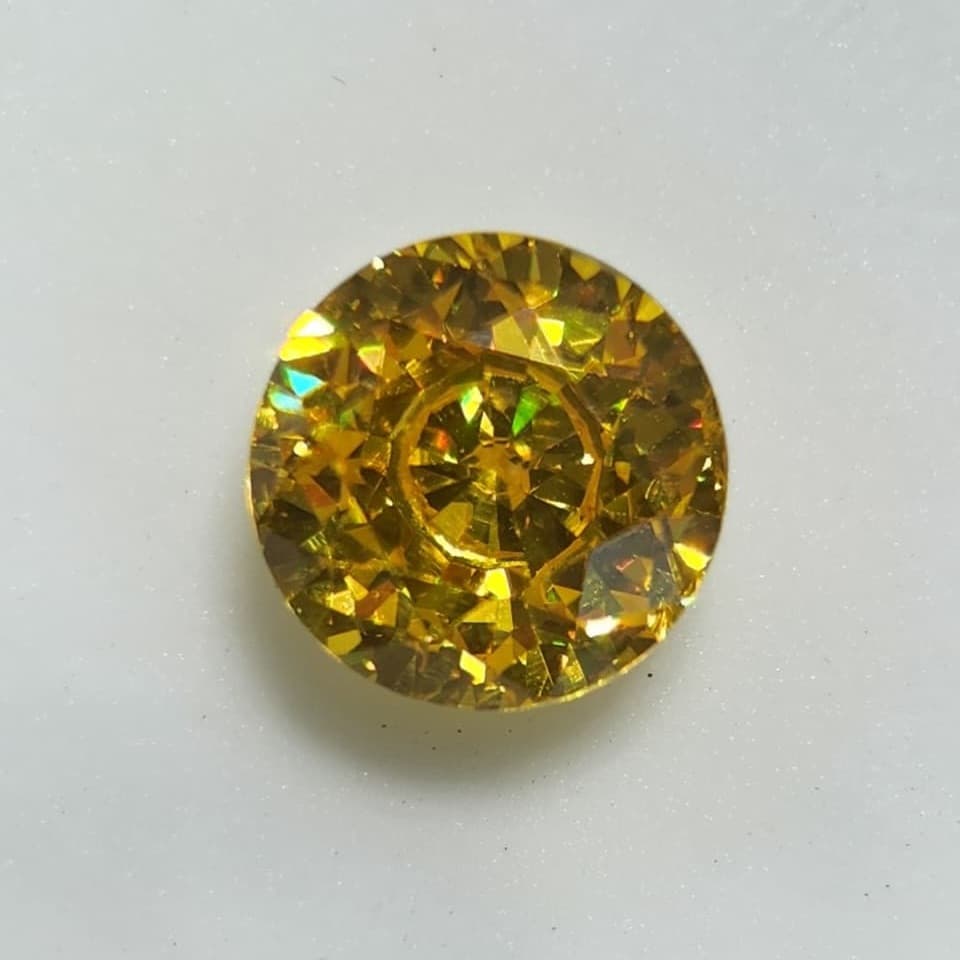
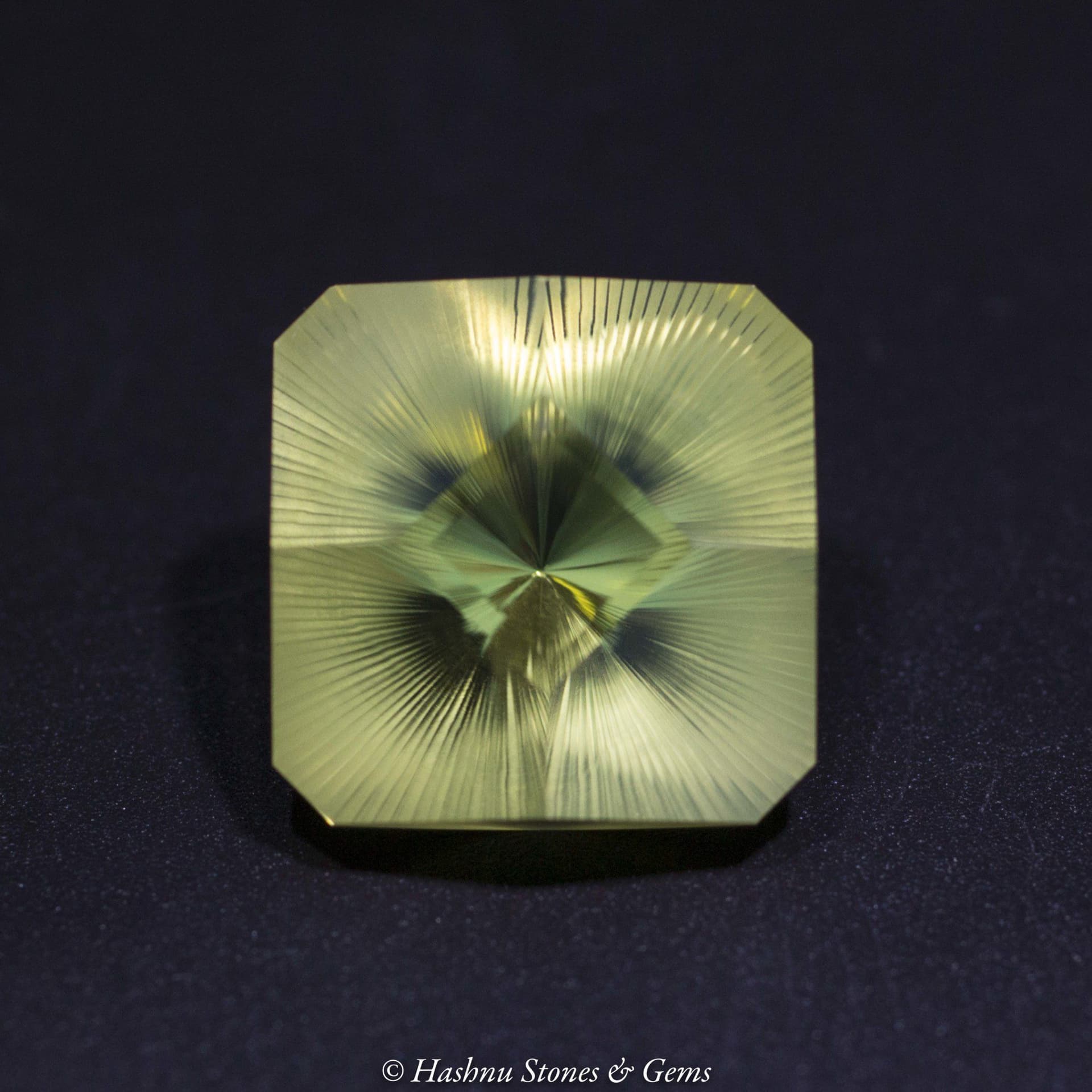
Citrine is the yellow to orange variety of quartz. These are the colors traditionally associated with topaz, and they are still confused by many. Its color ranges from a light lemon yellow, to a rich orange. "Madeira" citrine is a strong orange color, with red flashes. It is created by heat treating citrine with the proper iron content and demands the highest price.
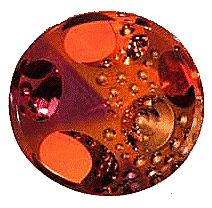
Relatively new on the market is ametrine, with zones of both purple and yellow. The colors only reach a medium level of saturation and are never very dark. Cutting the material so both color show is sometimes a challenge for the lapidary. However, a well cut, bi-colored gem is a real delight. Ametrine is only found in Bolivia.
Smoky quartz is also mistaken for topaz. It comes in every shade of brown, from a light tan to nearly black. "Chocolate citrine" is a pleasant brownish/yellow color. Smoky quartz is known for its large sizes. The person who wants a really big gem, without a really big budget, often ends up with one of these.
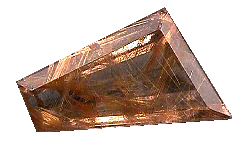
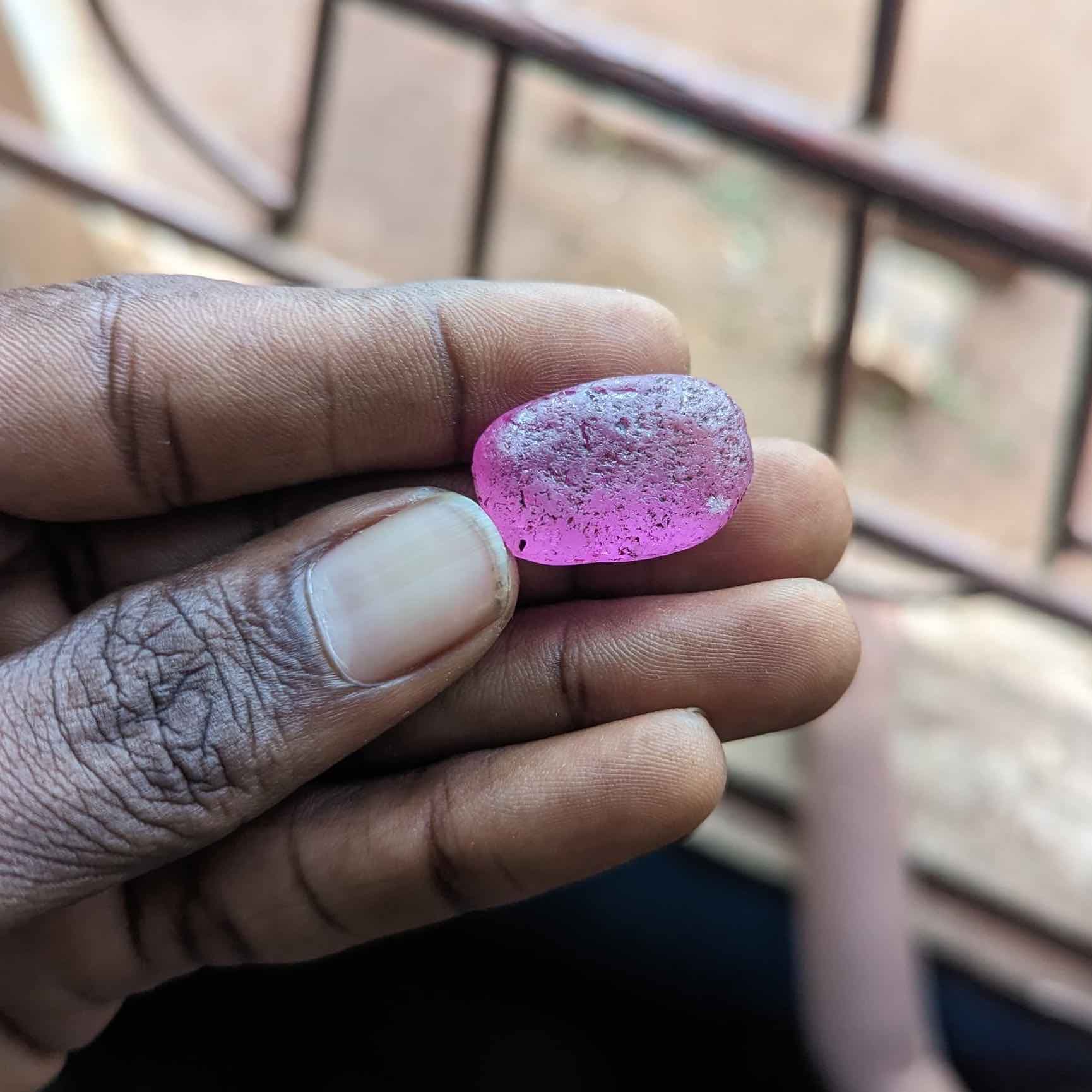
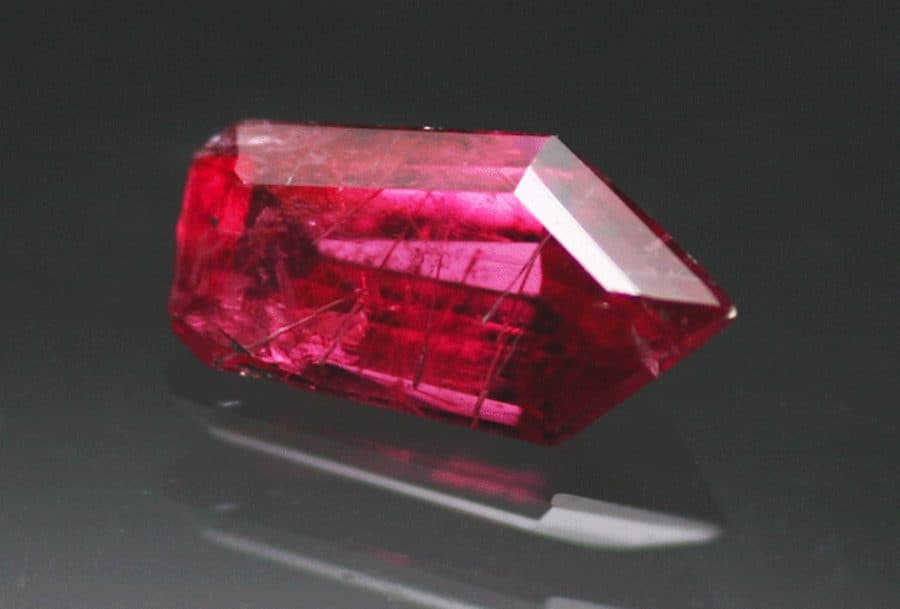
Rose quartz receives its coloring from fibrous inclusions of a mineral similar to dumortierite. It is always a light to medium pink, but sometimes is influenced by amethyst and picks up a violet shade. Until the 1980s, when a new deposit was discovered in Madagascar, it was never found completely transparent. Indeed, one of its best uses is for star cabs and spheres.
Tyndall scattering is one of the rarest phenomena in gemology, but it is relatively common in Madagascar rose quartz. Tyndall scattering is where light is dispersed by fine particles and produces a blue color. This is the same as what happens when sunlight hits dust particles in the air and why the is sky blue. In rose quartz, you see both pink and blue in the same tone.
While these are the most common varieties, they in no way exhaust the range of crystalline quartz. With the addition of inclusions, the list is nearly endless. In addition, there are stars and cat's eye gems in this rich family of gemstones.
o= 1.544; e= 1.553 (very constant). Uniaxial (+).
Crystalline Quartz
Crystalline quartz is separated here from cryptocrystalline or microcrystalline quartz. The crystalline varieties are those that occur in distinct, visible crystals: amethyst, smoky quartz, citrine, rose quartz, and milky quartz. The color origins in crystalline quartz are complex and are only now beginning to be fully understood.
The stable form of quartz below a temperature of 573°C is known as a-quartz. Between 573° and 870° another silica mineral, tridymite, forms. At 1470°, tridymite undergoes a structural rearrangement, resulting in the appearance of a new silica type called cristobalite, which is isometric. Finally, at 1710°, cristobalite melts to an extremely viscous liquid. If this liquid is chilled quickly, a glass forms (silica glass) that has many useful properties but no regular internal structure.
Cristobalite has no gem significance but appears in some types of volcanic glass as white globules and crystals resembling snowflakes. These form as a result of rapid cooling from high temperature.
The colored, crystalline quartz varieties generally occur in pegmatites and veins, having been deposited from water solutions over a long period of time. As a result of slow crystal growth, many such crystals achieve great internal perfection and yield enormous pieces of faceting rough. The only color varieties that do not form such large crystals are amethyst and rose quartz.
Cryptocrystalline Quartz
Cryptocrystalline quartz varieties are colored chiefly by mineral impurities in the growth environment, including oxides of Fe, Mn, Ti, Cr, Ni, and other elements. They form either as gelatinous masses that slowly dehydrate and crystallize or by deposition from slowly percolating ground waters, depositing silica over a long period of time. This latter type of deposition results in banding that is seen in certain types of agate. Deposition within a spherical cavity, such as a gas pocket in basalt or other volcanic rock, results in concentric banding also seen in agates.
Cryptocrystalline quartz varieties offer a huge diversity of patterns and colors. The most generally widespread of these materials is composed of tiny fibers of silica and is known as chalcedony. Names within the cryptocrystalline quartz family are generally based on colors and patterns. The solid-colored materials are mostly chalcedony stained by oxides and are referred to as jaspers. Banded varieties, or materials with moss-like inclusions, are known as agate.
Patterned Chalcedony
The name quartz comes from the Greek, "krystallos," meaning ice. Amethyst also comes from a Greek word. "Amethystos," meaning "not drunk." It was believed one could drink all night and remain sober if they had an amethyst in their mouth. Citrine is from the French, "citrin," meaning yellow.
Quartz is an unusual mineral. It is stable below 573 degrees Centigrade, but between 573 and 870 degrees, tridymite, (another silica mineral,) forms. At 1470 degrees, tridymite undergoes a structural rearrangement and becomes cristobalite, which is isometric. At 1710 degrees, cristobalite melts to a viscous liquid. If cooled quickly, it forms silica glass with no internal structure.
Tridymite and cristobalite have no gem significance; except that the "snowflakes" sometimes found in obsidian are cristobalite.
Quartz grows in primarily in pegmatites, but is hydrothermal grown in laboratories. Quartz grows very large, with cut gems in the thousands of carats. The exceptions are amethyst, which rarely produces a clean gem of 100 carats, and rose quartz, which rarely exceeds 30 carats in a transparent gem. Translucent specimens can weigh several pounds.
Quartz is one of the first gems to be synthetically grown on a large scale. Major development was done during World War II, to supply crystals for radios. Today, our computer industry is based on synthetic quartz. Not that there is a shortage of natural crystals, but the synthetics are always clean and are less time consuming to trim into the necessary pieces.
Rock crystal is from the Greek krystallos, meaning ice, because the Greeks thought it was ice frozen forever hard by an unnatural frost created by the gods. Amethyst comes from the Greek amethystos, as mentioned. Citrine is in allusion to the color citron (yellow). Chalcedony is an ancient name, perhaps from Chalcedon, a seaport in Asia Minor. Agate is from the Greek achate, the name of a river in southwestern Sicily where the material was found. Onyx is from the Greek word for nail or claw. Sard is from Sardis, the ancient locality reputed to be the origin of the stone. Carnelian is from the Latin carnis (flesh), in allusion to the red color. Plasma is from the Greek for something molded or imitated because it was used for making intaglios. Prase is from the Greek prason, meaning leek, in allusion to the color. Heliotrope is from Greek words helios (sun) and tropein (turn) because according to Pliny, it gives a red reflection when turned to face the sun while immersed in water. Flint and chert are of uncertain origin.
Natural quartz, Color zoning, twinning, liquid, 2 and 3 phase inclusions, negative crystals, zebra stripes. May show bulls-eye or Airys spiral.
Synthetic quartz is identified breadcrumbs or by a lack of natural inclusions. May also show 2-phase spicule inclusions or a seed. Cobalt blue, greenish yellow and grayish green, not found in nature.
Polariscope testing is no longer relevant, as some synthetics now duplicate natural twinning.

When you join the IGS community, you get trusted diamond & gemstone information when you need it.
Quartz is one of the most common minerals on earth. (See The X Factor.) It is well loved as amethyst, citrine, rose, and smoky quartz. There are many other natural varieties, plus synthetic quartz that comes in every color of the rainbow.
Rock crystal, colorless quartz, is rarely used as a gem. However, it is prized by carvers and frequently used as caps for triplets.
Amethyst ranges from a light, pinkish violet to an opaque purple. The lightest shades are called "Rose de France." While currently out of vogue, they have traditionally been very fashionable. Today, the variety most in demand is "Siberian." That does not refer to its origin, but to dark purple coloring, with flashes of red or blue.
Citrine is the yellow to orange variety of quartz. These are the colors traditionally associated with topaz, and they are still confused by many. Its color ranges from a light lemon yellow, to a rich orange. "Madeira" citrine is a strong orange color, with red flashes. It is created by heat treating citrine with the proper iron content and demands the highest price.
Relatively new on the market is ametrine, with zones of both purple and yellow. The colors only reach a medium level of saturation and are never very dark. Cutting the material so both color show is sometimes a challenge for the lapidary. However, a well cut, bi-colored gem is a real delight. Ametrine is only found in Bolivia.
Smoky quartz is also mistaken for topaz. It comes in every shade of brown, from a light tan to nearly black. "Chocolate citrine" is a pleasant brownish/yellow color. Smoky quartz is known for its large sizes. The person who wants a really big gem, without a really big budget, often ends up with one of these.
Rose quartz receives its coloring from fibrous inclusions of a mineral similar to dumortierite. It is always a light to medium pink, but sometimes is influenced by amethyst and picks up a violet shade. Until the 1980s, when a new deposit was discovered in Madagascar, it was never found completely transparent. Indeed, one of its best uses is for star cabs and spheres.
Tyndall scattering is one of the rarest phenomena in gemology, but it is relatively common in Madagascar rose quartz. Tyndall scattering is where light is dispersed by fine particles and produces a blue color. This is the same as what happens when sunlight hits dust particles in the air and why the is sky blue. In rose quartz, you see both pink and blue in the same tone.
While these are the most common varieties, they in no way exhaust the range of crystalline quartz. With the addition of inclusions, the list is nearly endless. In addition, there are stars and cat's eye gems in this rich family of gemstones.
o= 1.544; e= 1.553 (very constant). Uniaxial (+).
Crystalline Quartz
Crystalline quartz is separated here from cryptocrystalline or microcrystalline quartz. The crystalline varieties are those that occur in distinct, visible crystals: amethyst, smoky quartz, citrine, rose quartz, and milky quartz. The color origins in crystalline quartz are complex and are only now beginning to be fully understood.
The stable form of quartz below a temperature of 573°C is known as a-quartz. Between 573° and 870° another silica mineral, tridymite, forms. At 1470°, tridymite undergoes a structural rearrangement, resulting in the appearance of a new silica type called cristobalite, which is isometric. Finally, at 1710°, cristobalite melts to an extremely viscous liquid. If this liquid is chilled quickly, a glass forms (silica glass) that has many useful properties but no regular internal structure.
Cristobalite has no gem significance but appears in some types of volcanic glass as white globules and crystals resembling snowflakes. These form as a result of rapid cooling from high temperature.
The colored, crystalline quartz varieties generally occur in pegmatites and veins, having been deposited from water solutions over a long period of time. As a result of slow crystal growth, many such crystals achieve great internal perfection and yield enormous pieces of faceting rough. The only color varieties that do not form such large crystals are amethyst and rose quartz.
Cryptocrystalline Quartz
Cryptocrystalline quartz varieties are colored chiefly by mineral impurities in the growth environment, including oxides of Fe, Mn, Ti, Cr, Ni, and other elements. They form either as gelatinous masses that slowly dehydrate and crystallize or by deposition from slowly percolating ground waters, depositing silica over a long period of time. This latter type of deposition results in banding that is seen in certain types of agate. Deposition within a spherical cavity, such as a gas pocket in basalt or other volcanic rock, results in concentric banding also seen in agates.
Cryptocrystalline quartz varieties offer a huge diversity of patterns and colors. The most generally widespread of these materials is composed of tiny fibers of silica and is known as chalcedony. Names within the cryptocrystalline quartz family are generally based on colors and patterns. The solid-colored materials are mostly chalcedony stained by oxides and are referred to as jaspers. Banded varieties, or materials with moss-like inclusions, are known as agate.
Patterned Chalcedony
The name quartz comes from the Greek, "krystallos," meaning ice. Amethyst also comes from a Greek word. "Amethystos," meaning "not drunk." It was believed one could drink all night and remain sober if they had an amethyst in their mouth. Citrine is from the French, "citrin," meaning yellow.
Quartz is an unusual mineral. It is stable below 573 degrees Centigrade, but between 573 and 870 degrees, tridymite, (another silica mineral,) forms. At 1470 degrees, tridymite undergoes a structural rearrangement and becomes cristobalite, which is isometric. At 1710 degrees, cristobalite melts to a viscous liquid. If cooled quickly, it forms silica glass with no internal structure.
Tridymite and cristobalite have no gem significance; except that the "snowflakes" sometimes found in obsidian are cristobalite.
Quartz grows in primarily in pegmatites, but is hydrothermal grown in laboratories. Quartz grows very large, with cut gems in the thousands of carats. The exceptions are amethyst, which rarely produces a clean gem of 100 carats, and rose quartz, which rarely exceeds 30 carats in a transparent gem. Translucent specimens can weigh several pounds.
Quartz is one of the first gems to be synthetically grown on a large scale. Major development was done during World War II, to supply crystals for radios. Today, our computer industry is based on synthetic quartz. Not that there is a shortage of natural crystals, but the synthetics are always clean and are less time consuming to trim into the necessary pieces.
Rock crystal is from the Greek krystallos, meaning ice, because the Greeks thought it was ice frozen forever hard by an unnatural frost created by the gods. Amethyst comes from the Greek amethystos, as mentioned. Citrine is in allusion to the color citron (yellow). Chalcedony is an ancient name, perhaps from Chalcedon, a seaport in Asia Minor. Agate is from the Greek achate, the name of a river in southwestern Sicily where the material was found. Onyx is from the Greek word for nail or claw. Sard is from Sardis, the ancient locality reputed to be the origin of the stone. Carnelian is from the Latin carnis (flesh), in allusion to the red color. Plasma is from the Greek for something molded or imitated because it was used for making intaglios. Prase is from the Greek prason, meaning leek, in allusion to the color. Heliotrope is from Greek words helios (sun) and tropein (turn) because according to Pliny, it gives a red reflection when turned to face the sun while immersed in water. Flint and chert are of uncertain origin.
Natural quartz, Color zoning, twinning, liquid, 2 and 3 phase inclusions, negative crystals, zebra stripes. May show bulls-eye or Airys spiral.
Synthetic quartz is identified breadcrumbs or by a lack of natural inclusions. May also show 2-phase spicule inclusions or a seed. Cobalt blue, greenish yellow and grayish green, not found in nature.
Polariscope testing is no longer relevant, as some synthetics now duplicate natural twinning.


An overview on Quartz Jewelry and Gemstones. Covers details and essential information on the physical properties and characteristics of a Quartz mineral.
Quartz is common, except Dumortierite quartz which is somewhat rare.