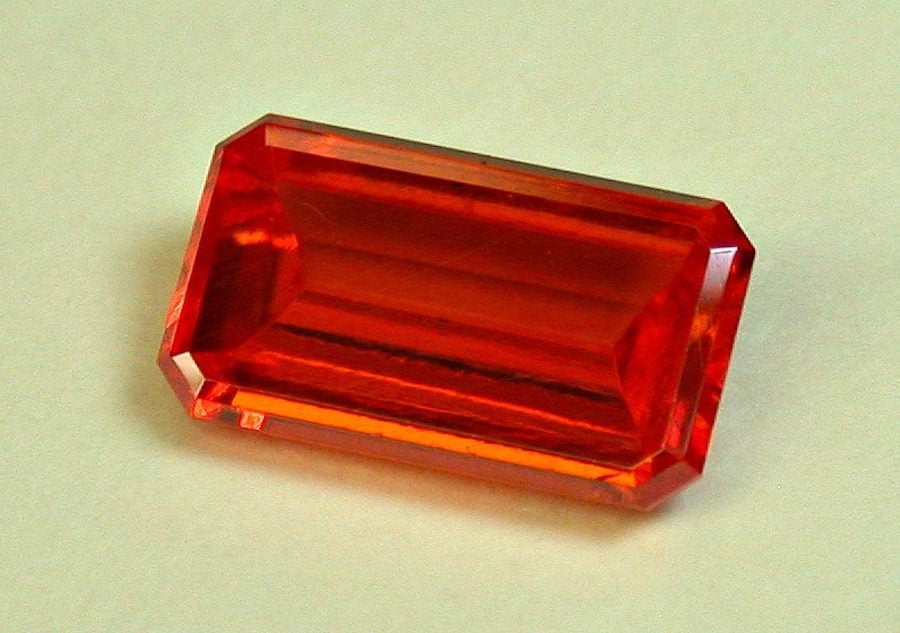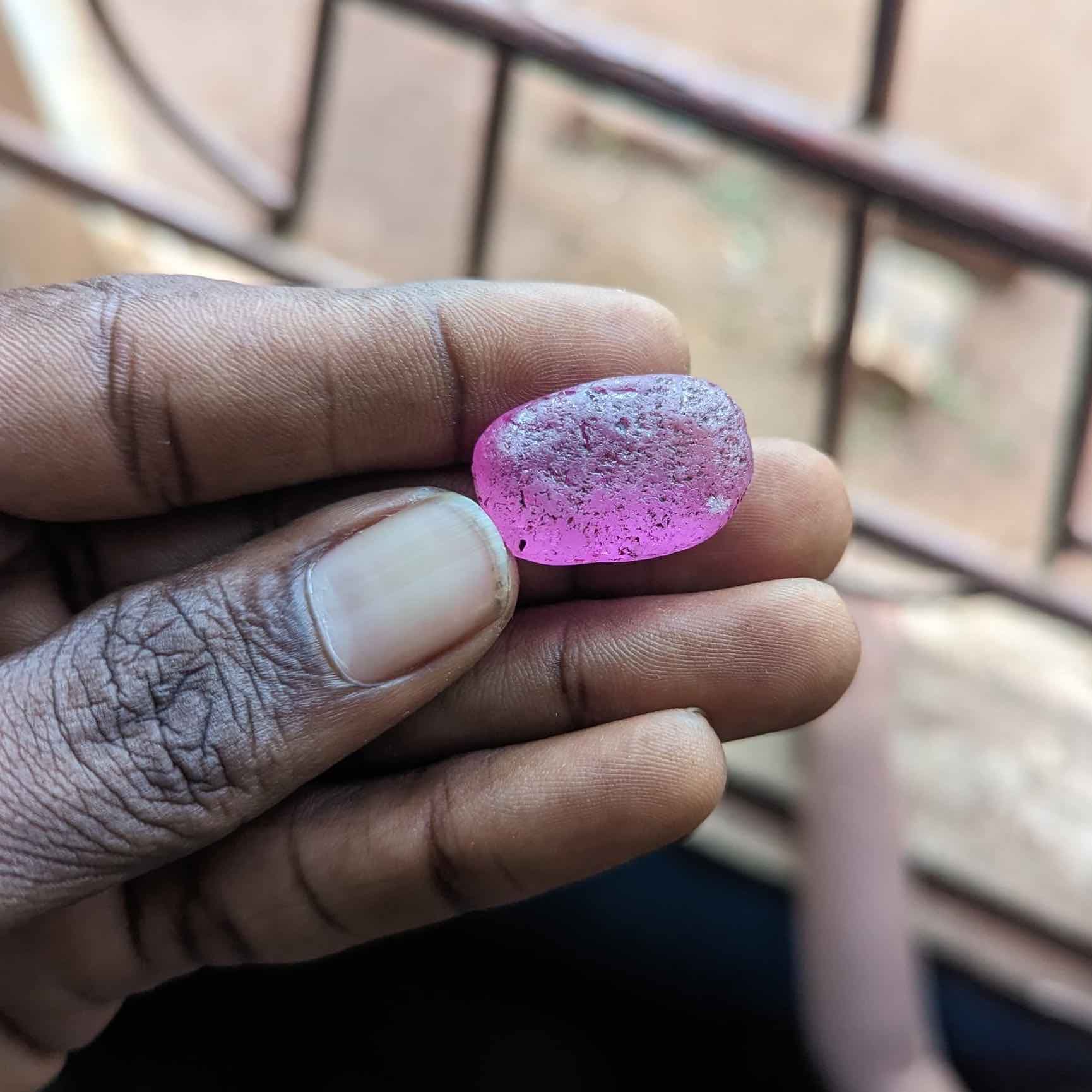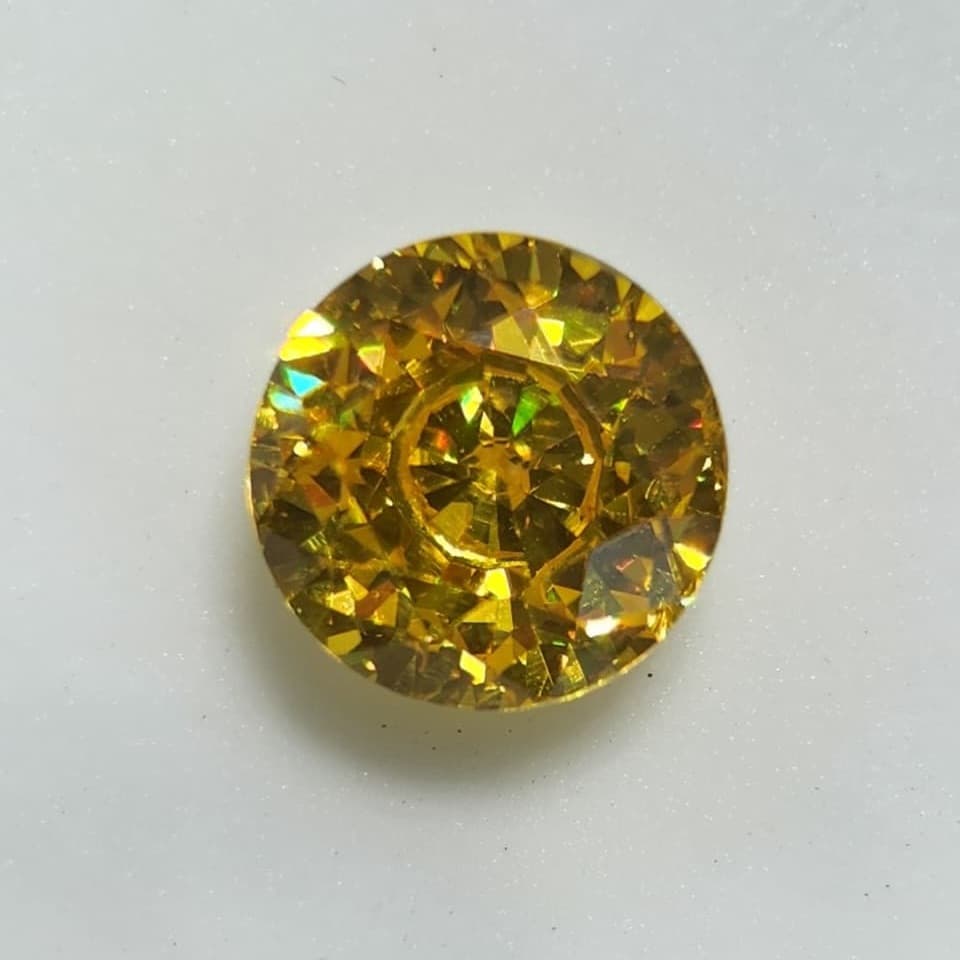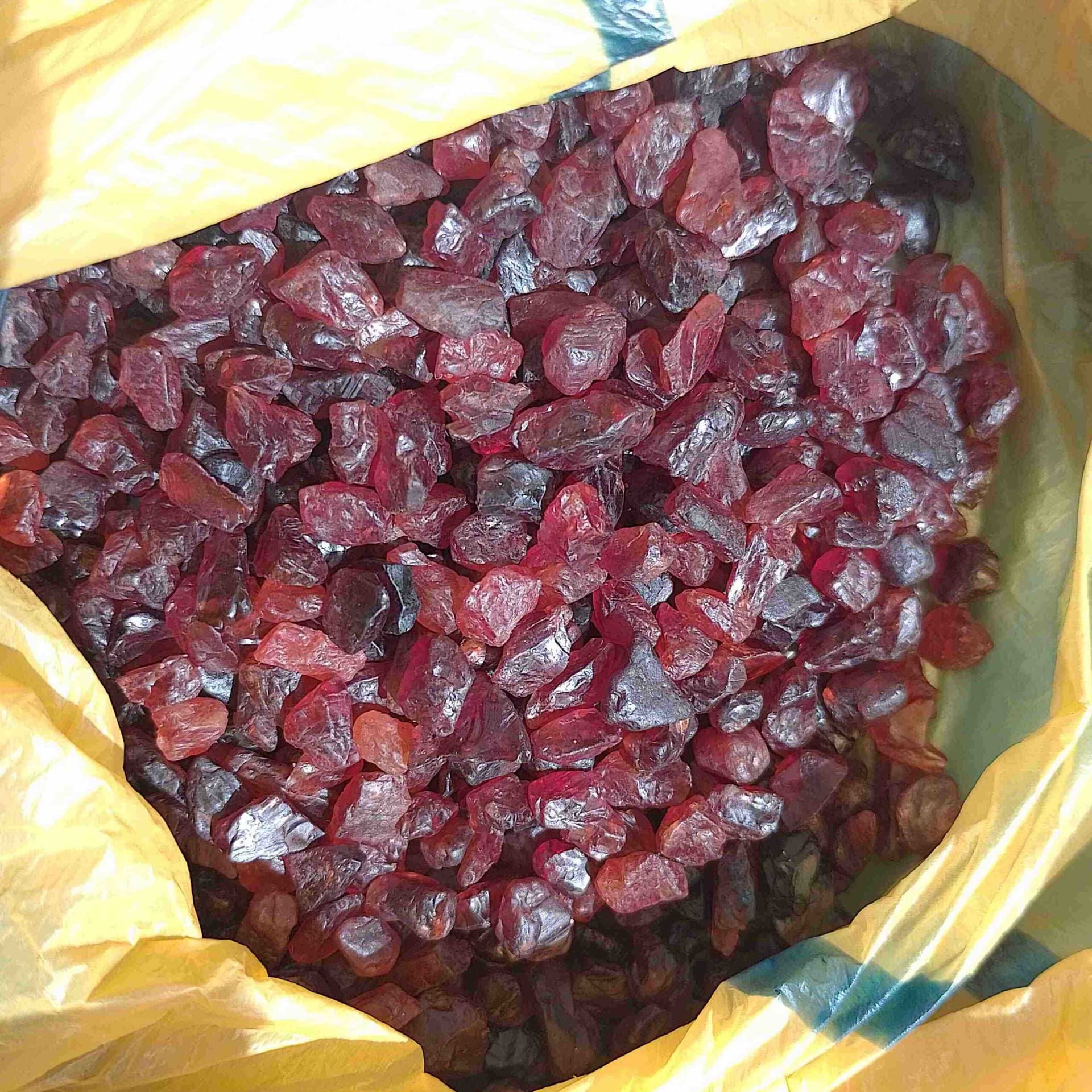
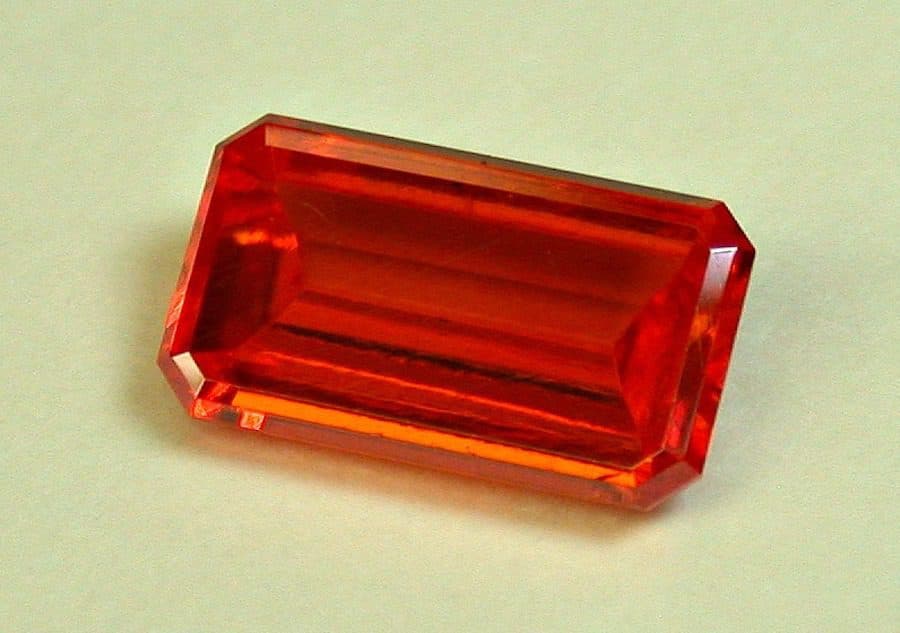
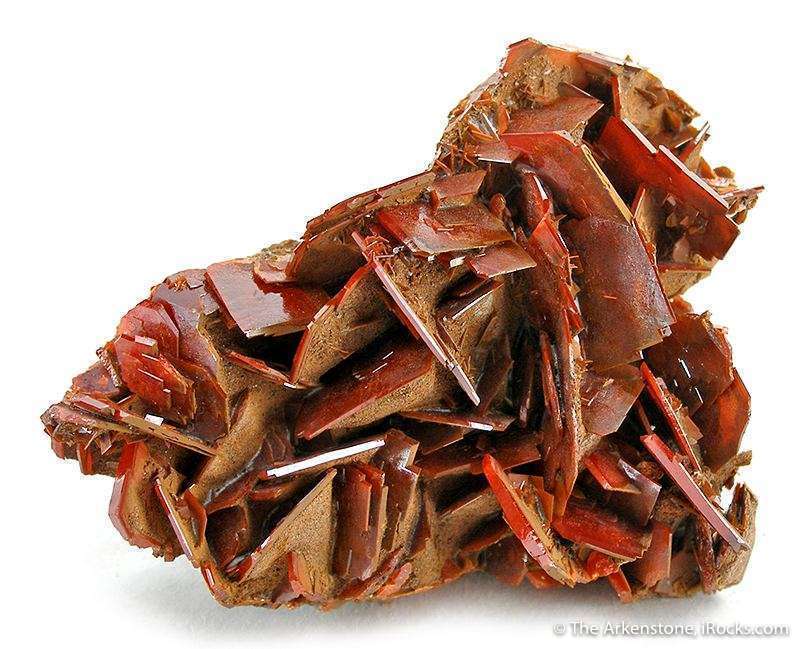
Although aesthetically magnificent wulfenite crystals are often too thin, soft, and sensitive to cut for jewelry, rare faceted pieces are greatly prized by collectors. The red of wulfenite, especially from the Red Cloud Mine in Arizona, is one of the richest colors in nature.
2 Minute Read
Wulfenite and stolzite form a mineral series, as the molybdenum (Mo) and tungsten (W) analogues, respectively.
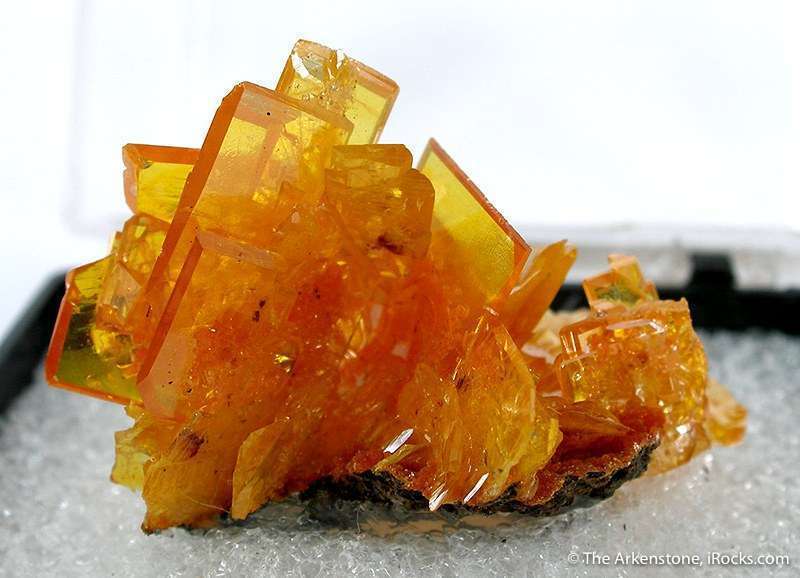
Many localities across the globe produce wulfenites. However, cuttable material is very rare, indeed. Individual crystals usually have a tabular structure. As a result, they're frequently too thin to find a fragment suitable for cutting.
Should a faceter acquire a suitable piece, even more challenges await. These beautiful gems combine very low hardness (2.5 to 3) with sensitivities to both heat and vibration. You're more likely to find wulfenites in mineral collections than in jewelry collections.
Any faceted wulfenites in jewelry should have protective settings. Although not well suited for jewelry use, faceted pieces make stunning collector's gems.
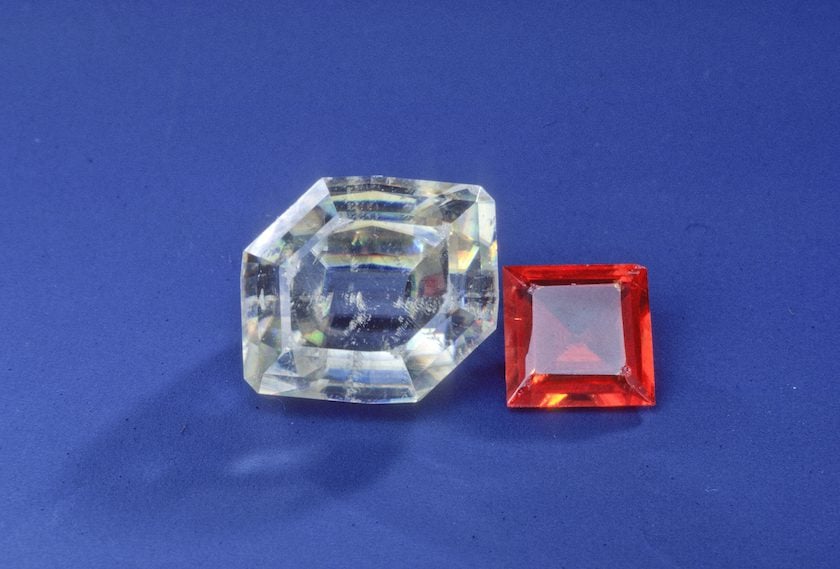
Wulfenites may show an anomalous biaxial optic character.
Under physical pressure, some wulfenite crystals may generate an electric charge. This is known as the piezoelectric effect.
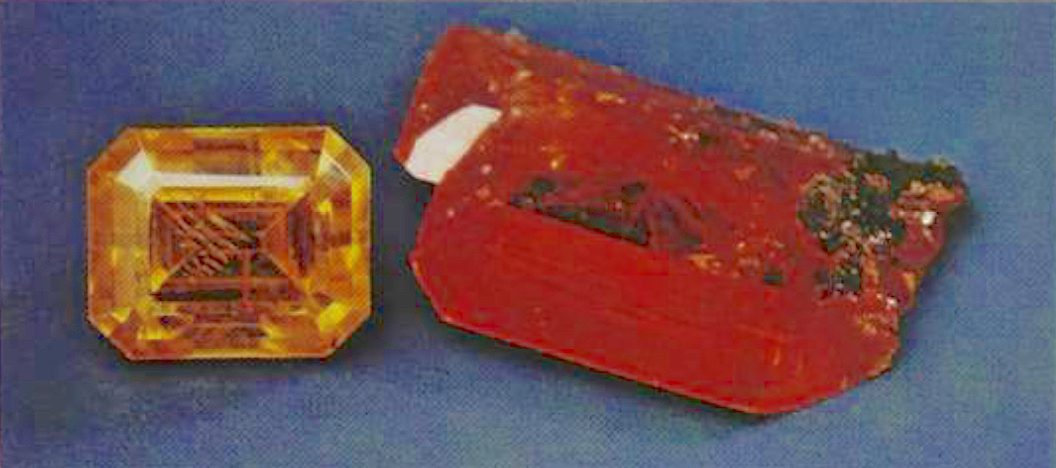
Laboratories have synthesized both wulfenites and stolzites through pulled (Czochralski) and flux methods. Sintering cerussite with molybdite (a mineral source of Mo) has also produced synthetic wulfenites. While these synthetics have industrial uses, they have also appeared as attractive crystals and even faceted pieces.
There are no known gemstone treatments or enhancements for wulfenites.
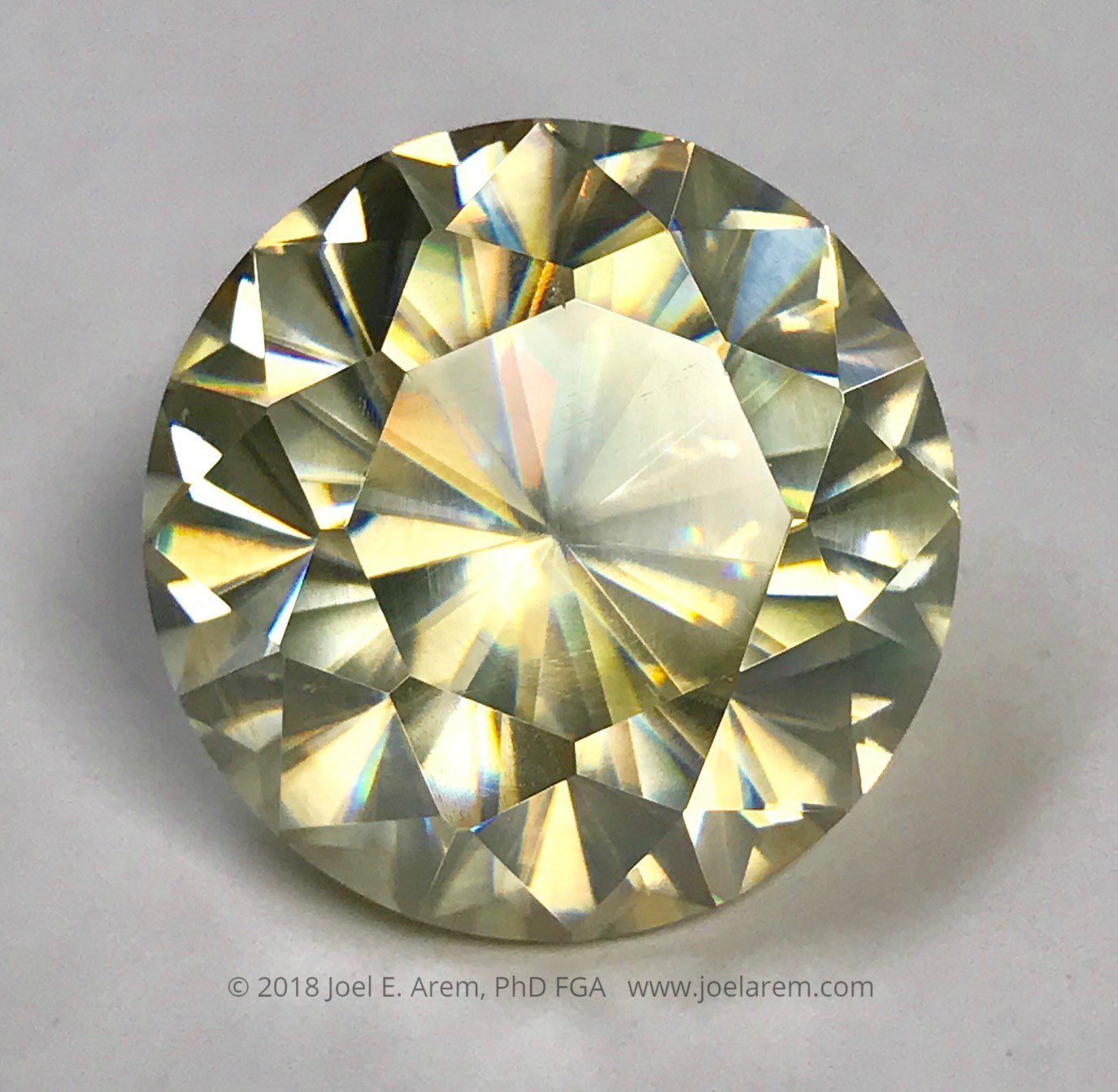
Notable gem-quality sources include the following:
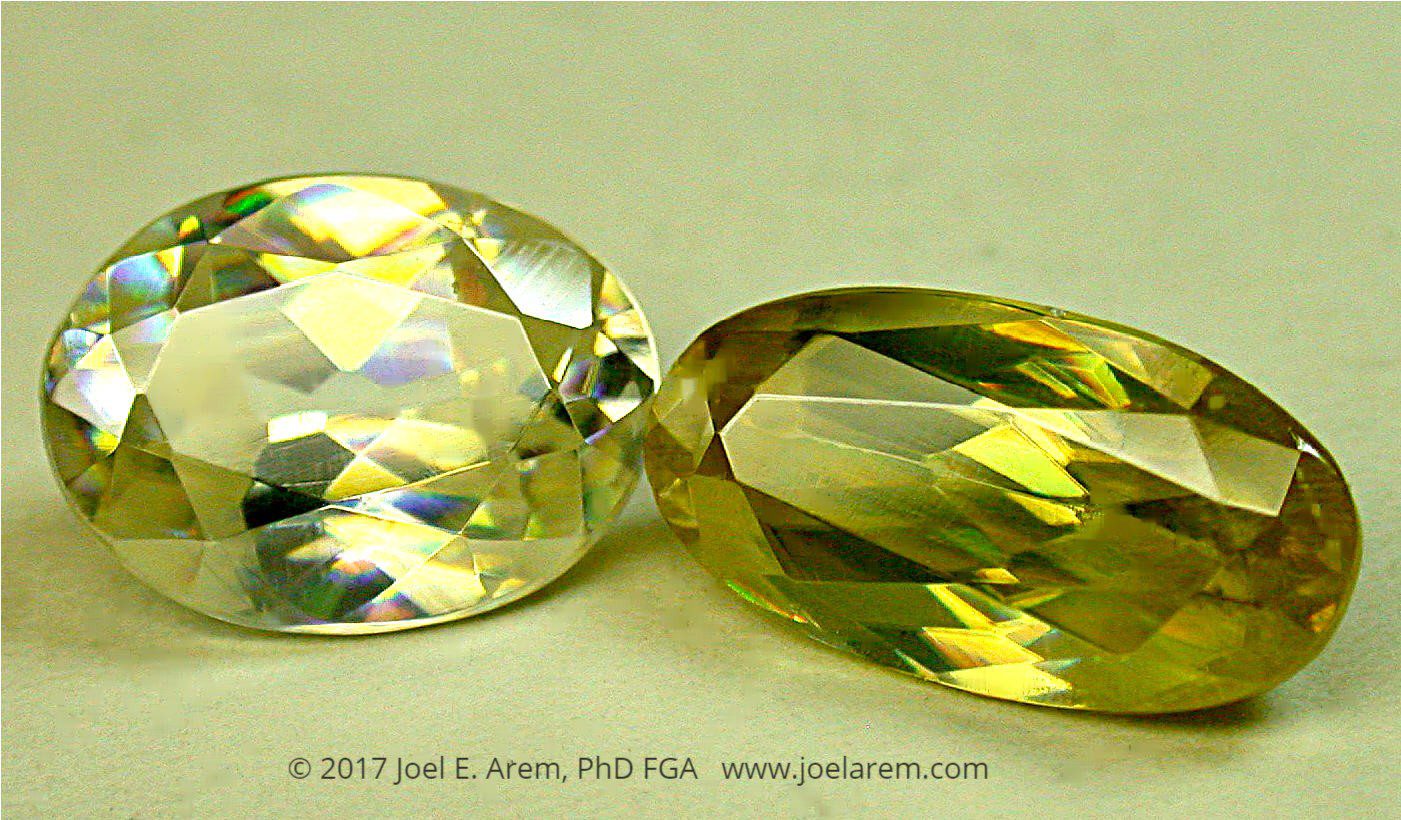
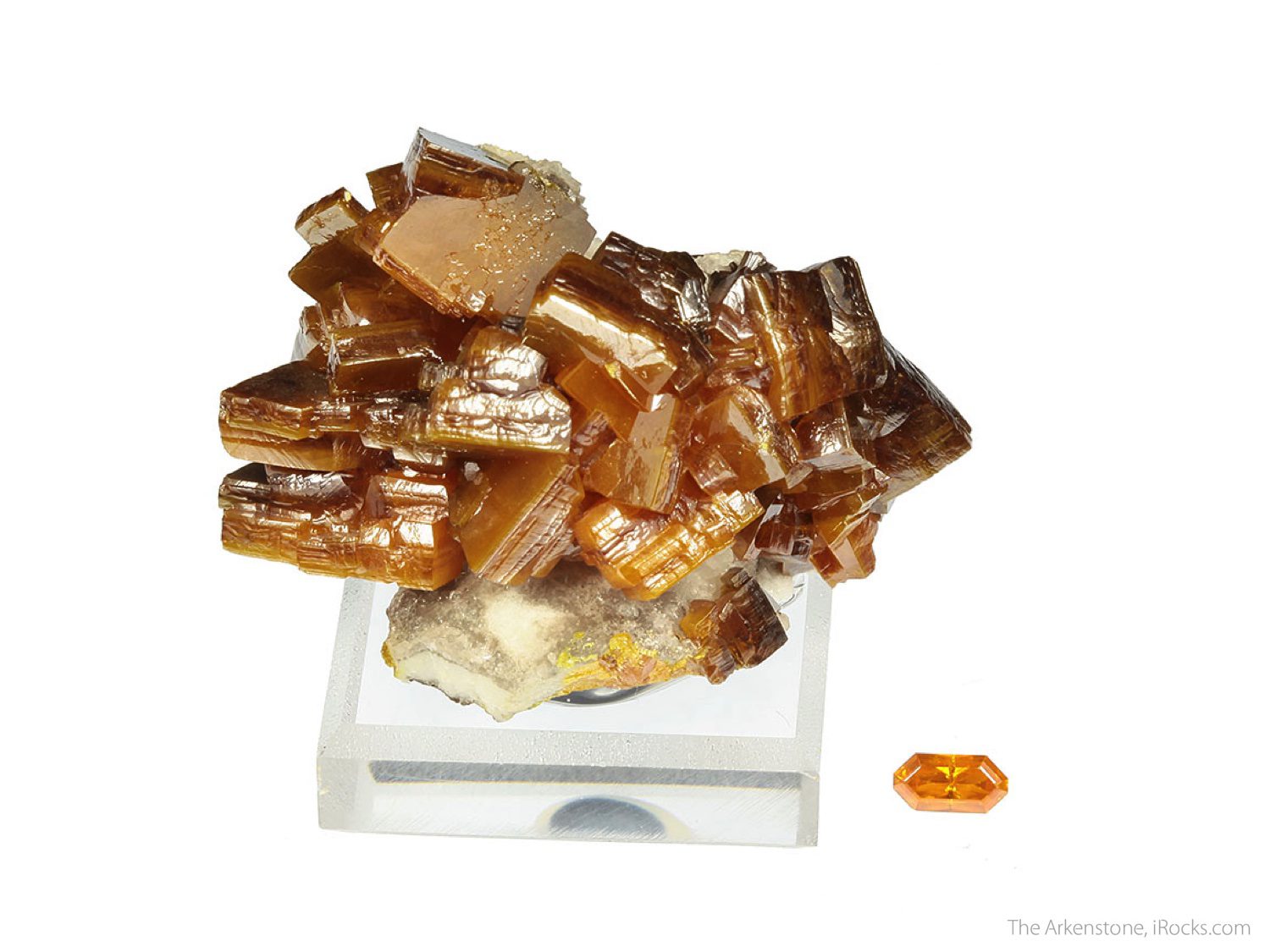
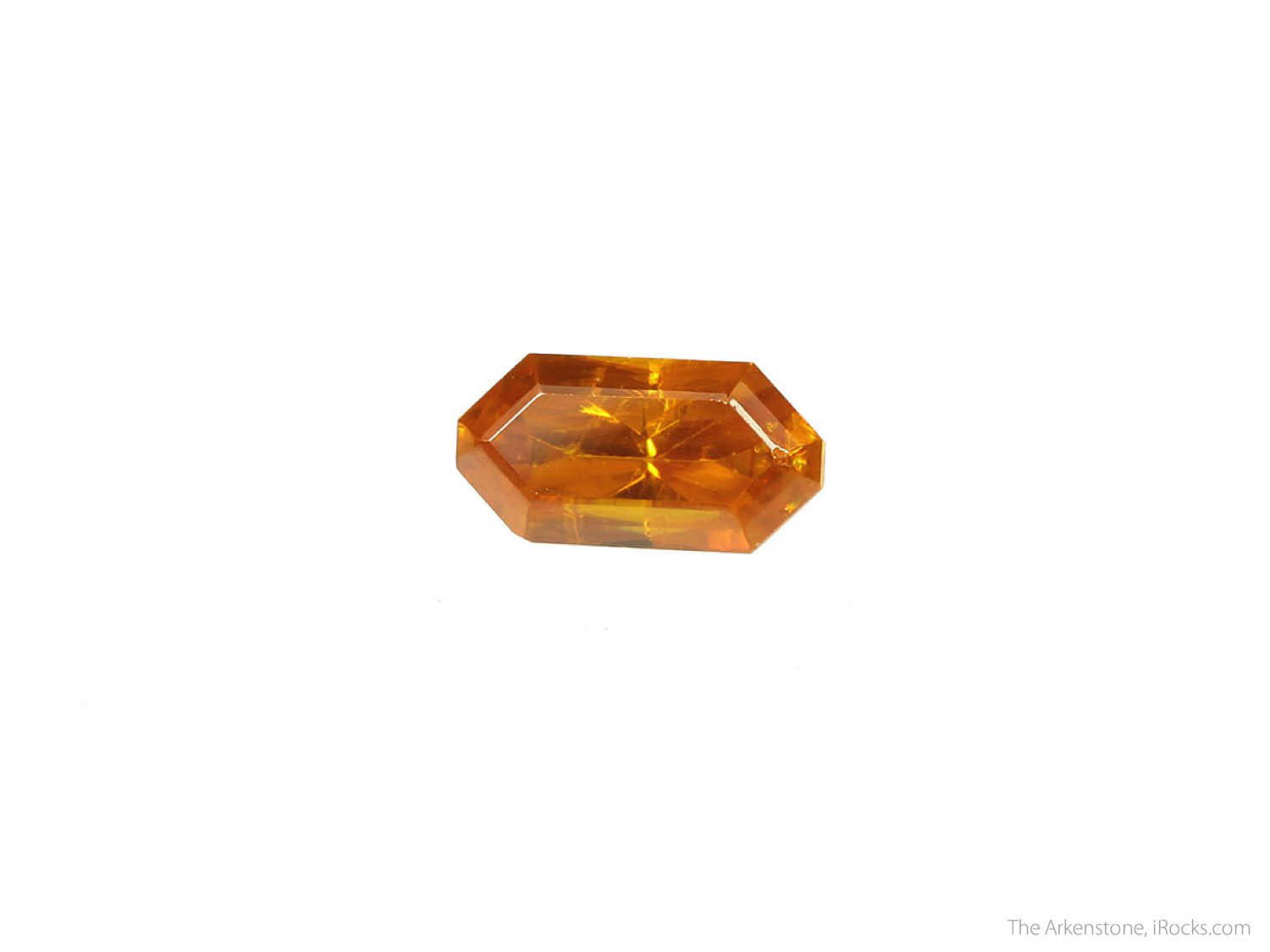
Rough and cut set, wulfenite crystal and modified octagonal-cut gem, 4.3 x 3.2 x 2.7 cm (crystal), 1.32 cts (gem). Ahumada Mine, Los Lamentos, Chihuahua, Mexico. © Rob Lavinsky, www.iRocks.com. Used with permission.
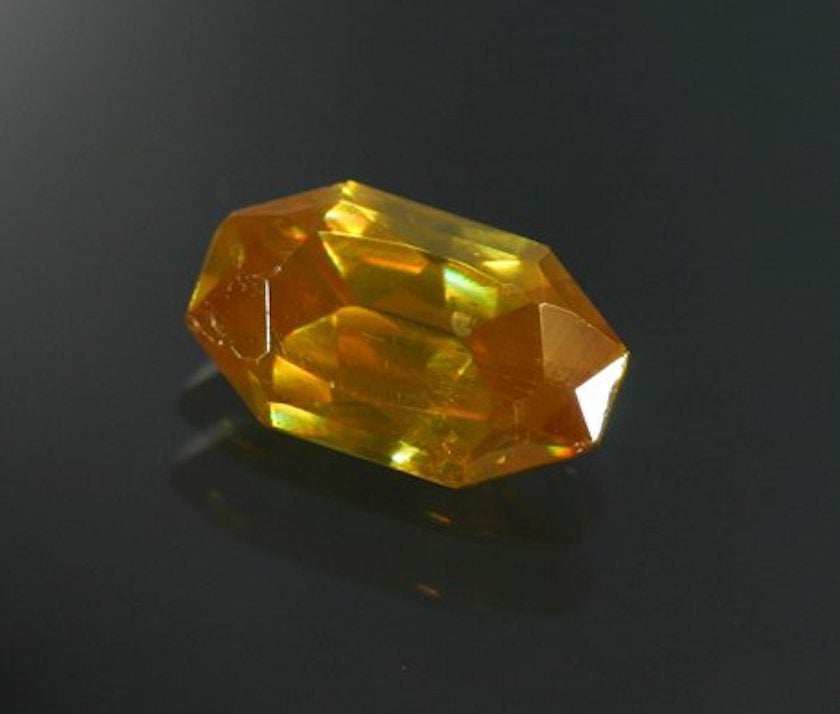
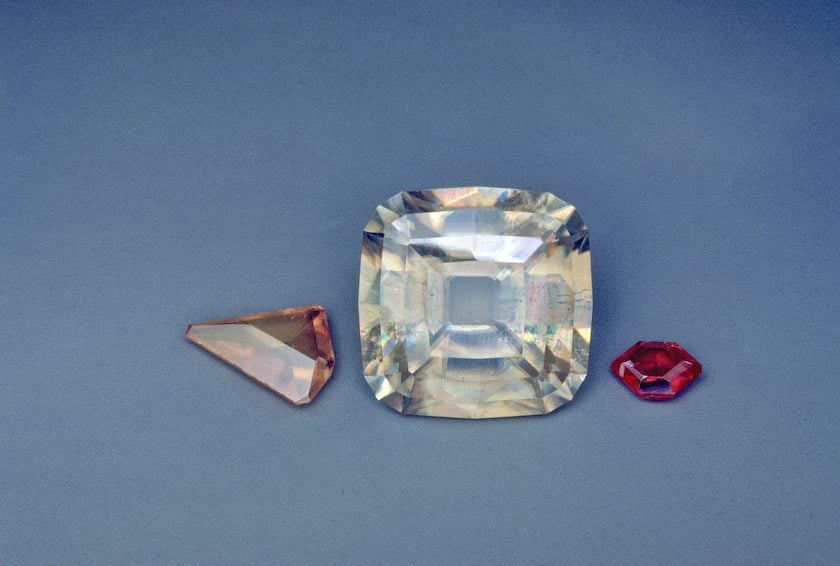
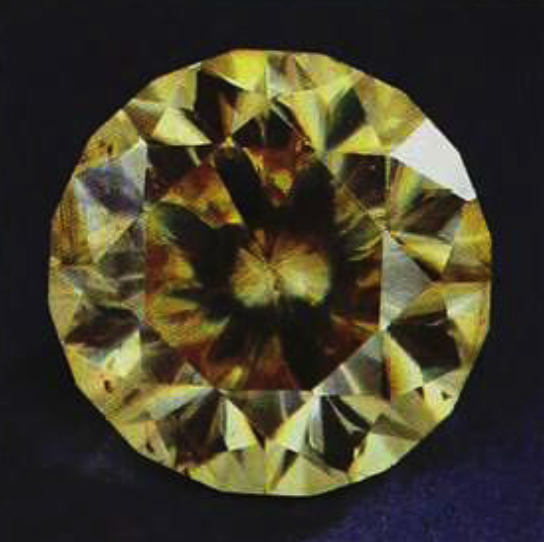
Red wulfenites over one carat and yellowish or orange stones over two carats are extremely scarce. The only larger stones come from rough from Tsumeb, Namibia, which has produced crystals several inches across. This material has yielded faceted gems over 50 carats in size. However, this locality produces very few facetable gems very infrequently. Thus, faceters have cut very few stones from this source.
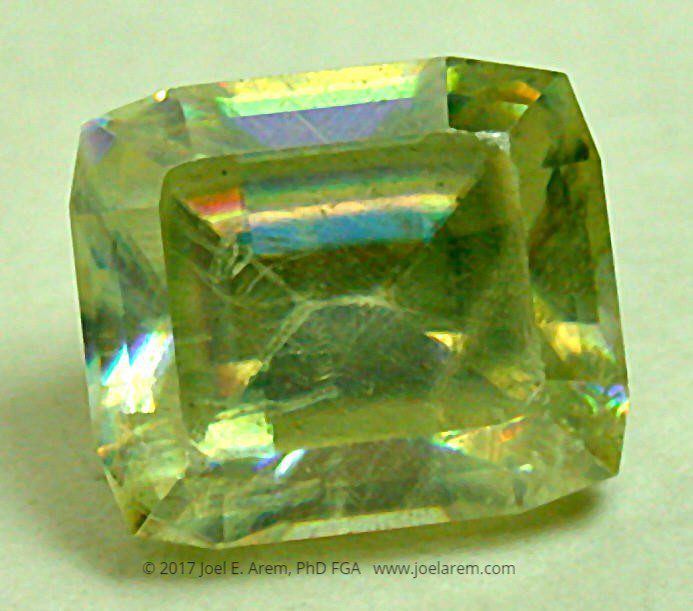
Occasionally, U.S. localities produce crystals both thick and transparent enough for faceting. These include, most notably, the Red Cloud Mine and the Seventy-Nine Mine in Arizona as well as other sources. Some of these crystals have yielded gems up to about five carats.
Wulfenites are so soft, copper coins can scratch them. Household dust, which contains silicon quartz, will scratch them even more easily. Treat any wulfenites, whether gems or crystals, very delicately. Resist the urge to just wipe dust off their surfaces. Instead, pat them clean with a lint-free cloth.
Consult our gemstone jewelry cleaning guide for more care recommendations.
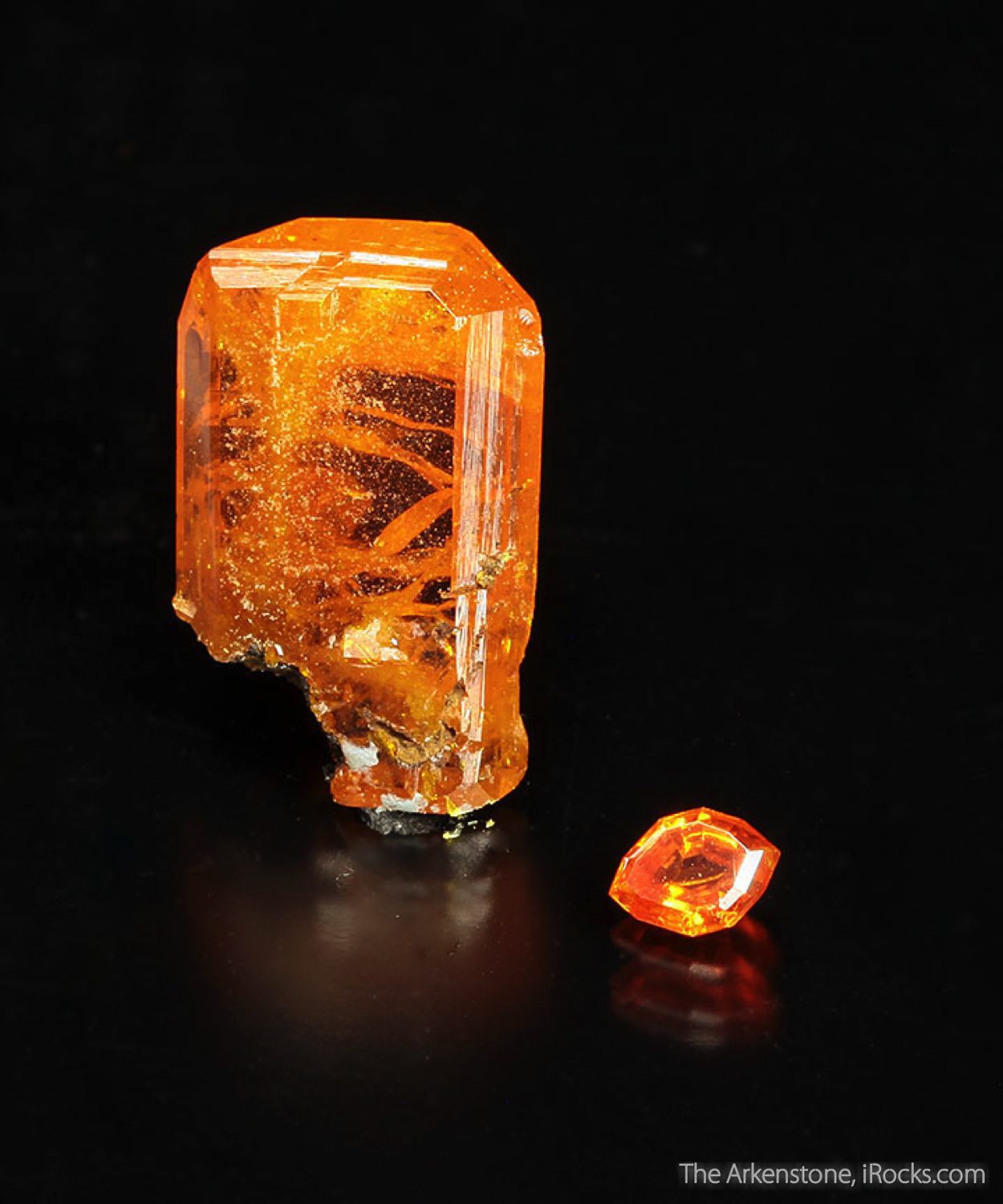
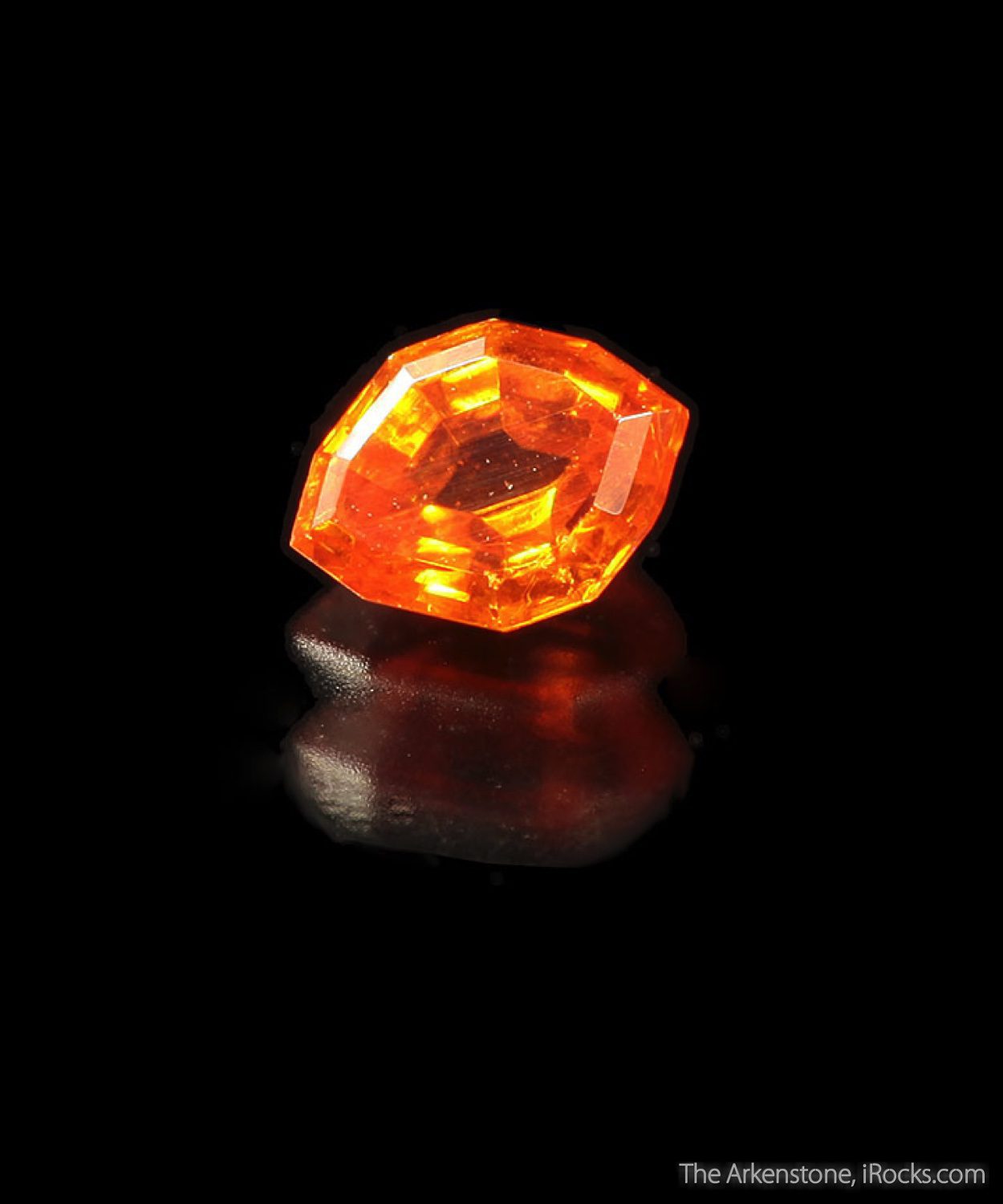
Rough and cut set, wulfenite crystal and freeform step eye-cut, 2.0 x 1.1 x 0.3 cm (crystal), 1.02 cts (gem). Red Cloud Mine, La Paz County, Arizona. © Rob Lavinsky, www.iRocks.com. Used with permission.


When you join the IGS community, you get trusted diamond & gemstone information when you need it.
Wulfenite and stolzite form a mineral series, as the molybdenum (Mo) and tungsten (W) analogues, respectively.
Many localities across the globe produce wulfenites. However, cuttable material is very rare, indeed. Individual crystals usually have a tabular structure. As a result, they're frequently too thin to find a fragment suitable for cutting.
Should a faceter acquire a suitable piece, even more challenges await. These beautiful gems combine very low hardness (2.5 to 3) with sensitivities to both heat and vibration. You're more likely to find wulfenites in mineral collections than in jewelry collections.
Any faceted wulfenites in jewelry should have protective settings. Although not well suited for jewelry use, faceted pieces make stunning collector's gems.
Wulfenites may show an anomalous biaxial optic character.
Under physical pressure, some wulfenite crystals may generate an electric charge. This is known as the piezoelectric effect.
Laboratories have synthesized both wulfenites and stolzites through pulled (Czochralski) and flux methods. Sintering cerussite with molybdite (a mineral source of Mo) has also produced synthetic wulfenites. While these synthetics have industrial uses, they have also appeared as attractive crystals and even faceted pieces.
There are no known gemstone treatments or enhancements for wulfenites.
Notable gem-quality sources include the following:
Rough and cut set, wulfenite crystal and modified octagonal-cut gem, 4.3 x 3.2 x 2.7 cm (crystal), 1.32 cts (gem). Ahumada Mine, Los Lamentos, Chihuahua, Mexico. © Rob Lavinsky, www.iRocks.com. Used with permission.
Red wulfenites over one carat and yellowish or orange stones over two carats are extremely scarce. The only larger stones come from rough from Tsumeb, Namibia, which has produced crystals several inches across. This material has yielded faceted gems over 50 carats in size. However, this locality produces very few facetable gems very infrequently. Thus, faceters have cut very few stones from this source.
Occasionally, U.S. localities produce crystals both thick and transparent enough for faceting. These include, most notably, the Red Cloud Mine and the Seventy-Nine Mine in Arizona as well as other sources. Some of these crystals have yielded gems up to about five carats.
Wulfenites are so soft, copper coins can scratch them. Household dust, which contains silicon quartz, will scratch them even more easily. Treat any wulfenites, whether gems or crystals, very delicately. Resist the urge to just wipe dust off their surfaces. Instead, pat them clean with a lint-free cloth.
Consult our gemstone jewelry cleaning guide for more care recommendations.
Rough and cut set, wulfenite crystal and freeform step eye-cut, 2.0 x 1.1 x 0.3 cm (crystal), 1.02 cts (gem). Red Cloud Mine, La Paz County, Arizona. © Rob Lavinsky, www.iRocks.com. Used with permission.


Although aesthetically magnificent wulfenite crystals are often too thin, soft, and sensitive to cut for jewelry, rare faceted pieces are greatly prized by collectors. The red of wulfenite, especially from the Red Cloud Mine in Arizona, is one of the richest colors in nature.