The Mid-Victorian Period saw many changes in society and fashion. Learn what distinguishes Grand Period jewelry, particularly its opulent style and weight.
3 Minute Read
In 1879, the incandescent bulb placed jewelry in a whole different light, literally. Diamonds dazzled under electricity. The discovery of a diamond mine in South Africa in 1867 had created a great demand for the gems. The Grand Period also opened doors socially for women. As men were called to war, women filled the jobs they vacated.
Queen Victoria mourned her husband until her death in 1901. This set the tone for Grand Period jewelry manufacturing. However, her subjects buckled under the heavy gloom. By 1885, they eventually turned to the lighter jewelry and clothing styles of the Late Victorian Aesthetic Period.
Heavy, massive jewelry reflected the opulence of the time, as industry boomed and created millionaires overnight.
Jewelry makers used silver enthusiastically after its discovery in Nevada in 1860.
Grand Period jewelry often featured gemstones in hammer or so-called "gypsy" style settings. The gems were almost embedded into the pieces, with minute prongs holding them in place. Pavé settings, also popular, featured stones set with almost invisible prongs, creating pieces "paved" with gems.
Brooches now contained a lever catch in the "C" design clasp for improved security.
Jewelry metals commonly used during this period included the following:
Popular motifs included included the following:
Geometric patterns were common. Enameling remained popular.
Archeological digs continued during this period, generating great public curiosity. Thus, Ancient Greek, Roman, and Egyptian designs remained popular and inspired cameo use. Excavations of Ancient Etruscan cities in Italy brought about a revival of Etruscan designs in jewelry. In particular, an ancient metal technique featuring fine, beaded granulation was resurrected.
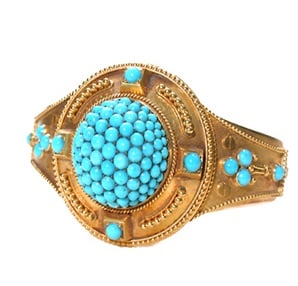
Popular stones included:
"Carbuncles," or cabochon-cut garnets, commonly appeared in pendants, brooches, and necklaces.
Materials such as bog oak, coral, ivory, and tortoiseshell were also used as gems.
Goldstone, a glass gem simulant, was widely used.
Notable gem cutting styles included the following:
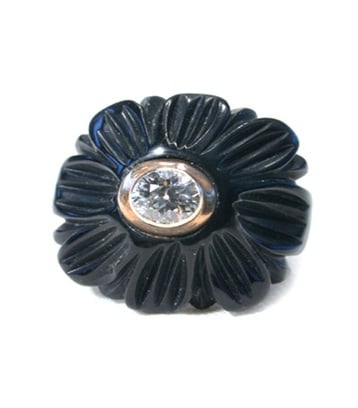
Earring of all sizes were popular. Post earrings were introduced during this time period.
Other popular items included the following:
Jewelers would sometimes embed smaller gem designs in the center of cabochons.
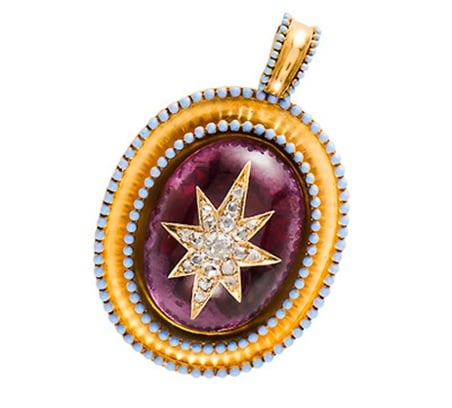
For example, this locket features a 0.25-ct cabochon-cut amethyst with an embedded starburst of eighteen rose-cut diamonds surrounding a centered, Old Mine-cut diamond, 0.37-ct total weight. The blue beads reflect the Etruscan revival. This piece boasts a substantial amount of gems and exquisite craftsmanship. The combination makes this locket a rare find.
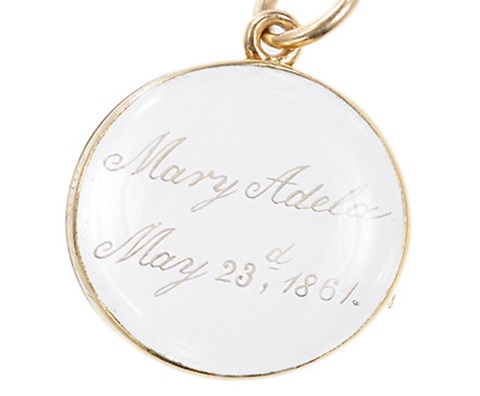
This locket features two round and clear rock quartz discs hinged at the top in 15k yellow gold. With the name of a loved one and the date of death engraved on the front, this piece exemplifies the memorial jewelry popular during this period. The locket's excellent condition and engraving make it valuable.
Fabricated in Florence, Rome, and Venice, these pieces assembled tiny tiles of gemstones and glass (tesserae) into artistic designs.
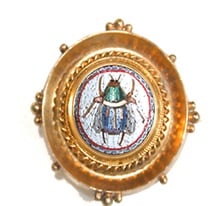
For example, this micro-mosaic brooch features an Egyptian scarab beetle fashioned entirely out of tiny glass tiles. A 15k yellow gold mounting houses the micro-mosaic. How closely the tiles fit together and whether they're free from chips or cracks set the value of micro-mosaics.
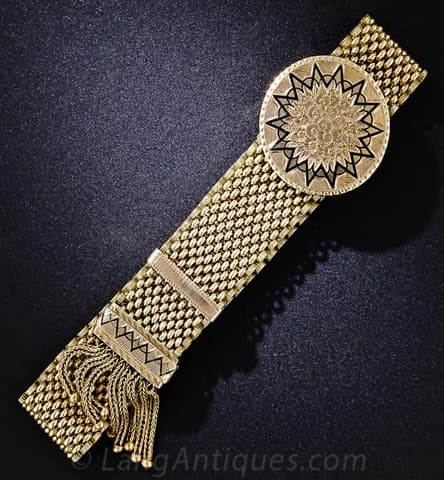
Popular styles included the following: bracelets with buckles; wide mesh bracelets with enameling and foxtails; and wide bangle bracelets.
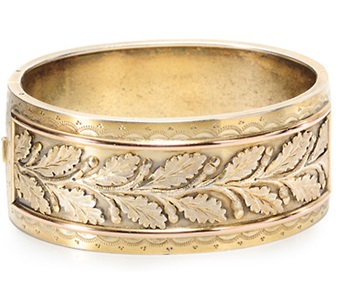
For example, the wide bangle bracelet below serves as an excellent example of Grand Period jewelry style. Silver with gold overlay, the bangle features acorns and leaves as motifs. This substantial piece is in excellent condition.
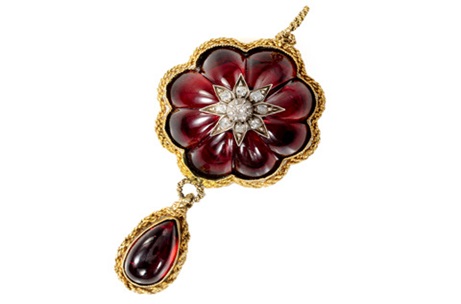
This locket features carbuncles surrounding a star of nine Old Mine-cut diamonds. These gems are set in a 15k yellow gold mounting with scalloped edges. The locket also has a hinged, garnet drop. The perfectly matched and cut garnets, along with the number of diamonds, make this piece valuable.


When you join the IGS community, you get trusted diamond & gemstone information when you need it.
In 1879, the incandescent bulb placed jewelry in a whole different light, literally. Diamonds dazzled under electricity. The discovery of a diamond mine in South Africa in 1867 had created a great demand for the gems. The Grand Period also opened doors socially for women. As men were called to war, women filled the jobs they vacated.
Queen Victoria mourned her husband until her death in 1901. This set the tone for Grand Period jewelry manufacturing. However, her subjects buckled under the heavy gloom. By 1885, they eventually turned to the lighter jewelry and clothing styles of the Aesthetic Period.
Heavy, massive jewelry reflected the opulence of the time, as industry boomed and created millionaires overnight.
Jewelry makers used silver enthusiastically after its discovery in Nevada in 1860.
Grand Period jewelry often featured gemstones in hammer or so-called "gypsy" style settings. The gems were almost embedded into the pieces, with minute prongs holding them in place. Pavé settings, also popular, featured stones set with almost invisible prongs, creating pieces "paved" with gems.
Brooches now contained a lever catch in the "C" design clasp for improved security.
Jewelry metals commonly used during this period included the following:
Popular motifs included included the following:
Geometric patterns were common. Enameling remained popular.
Archeological digs continued during this period, generating great public curiosity. Thus, Ancient Greek, Roman, and Egyptian designs remained popular and inspired cameo use. Excavations of Ancient Etruscan cities in Italy brought about a revival of Etruscan designs in jewelry. In particular, an ancient metal technique featuring fine, beaded granulation was resurrected.
Popular stones included:
"Carbuncles," or cabochon-cut garnets, commonly appeared in pendants, brooches, and necklaces.
Materials such as bog oak, coral, ivory, and tortoiseshell were also used as gems.
Goldstone, a glass gem simulant, was widely used.
Notable gem cutting styles included the following:
Earring of all sizes were popular. Post earrings were introduced during this time period.
Other popular items included the following:
Jewelers would sometimes embed smaller gem designs in the center of cabochons.
For example, this locket features a 0.25-ct cabochon-cut amethyst with an embedded starburst of eighteen rose-cut diamonds surrounding a centered, Old Mine-cut diamond, 0.37-ct total weight. The blue beads reflect the Etruscan revival. This piece boasts a substantial amount of gems and exquisite craftsmanship. The combination makes this locket a rare find.
This locket features two round and clear rock quartz discs hinged at the top in 15k yellow gold. With the name of a loved one and the date of death engraved on the front, this piece exemplifies the memorial jewelry popular during this period. The locket's excellent condition and engraving make it valuable.
Fabricated in Florence, Rome, and Venice, these pieces assembled tiny tiles of gemstones and glass (tesserae) into artistic designs.
For example, this micro-mosaic brooch features an Egyptian scarab beetle fashioned entirely out of tiny glass tiles. A 15k yellow gold mounting houses the micro-mosaic. How closely the tiles fit together and whether they're free from chips or cracks set the value of micro-mosaics.
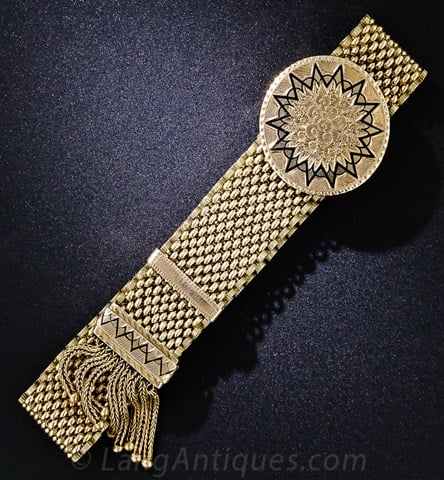
Popular styles included the following: bracelets with buckles; wide mesh bracelets with enameling and foxtails; and wide bangle bracelets.
For example, the wide bangle bracelet below serves as an excellent example of Grand Period jewelry style. Silver with gold overlay, the bangle features acorns and leaves as motifs. This substantial piece is in excellent condition.
This locket features carbuncles surrounding a star of nine Old Mine-cut diamonds. These gems are set in a 15k yellow gold mounting with scalloped edges. The locket also has a hinged, garnet drop. The perfectly matched and cut garnets, along with the number of diamonds, make this piece valuable.