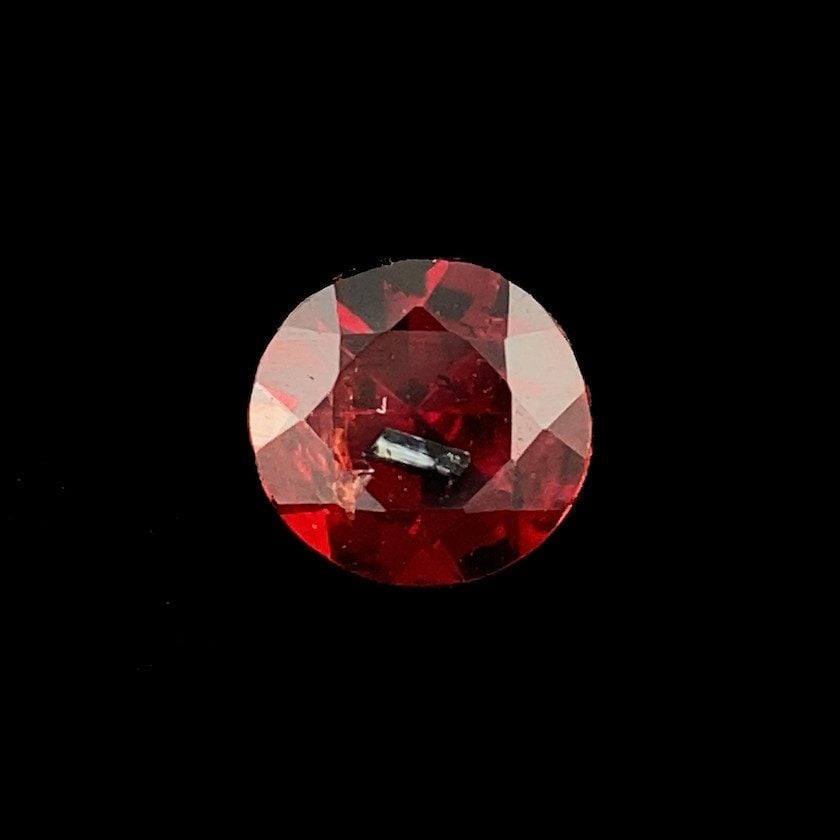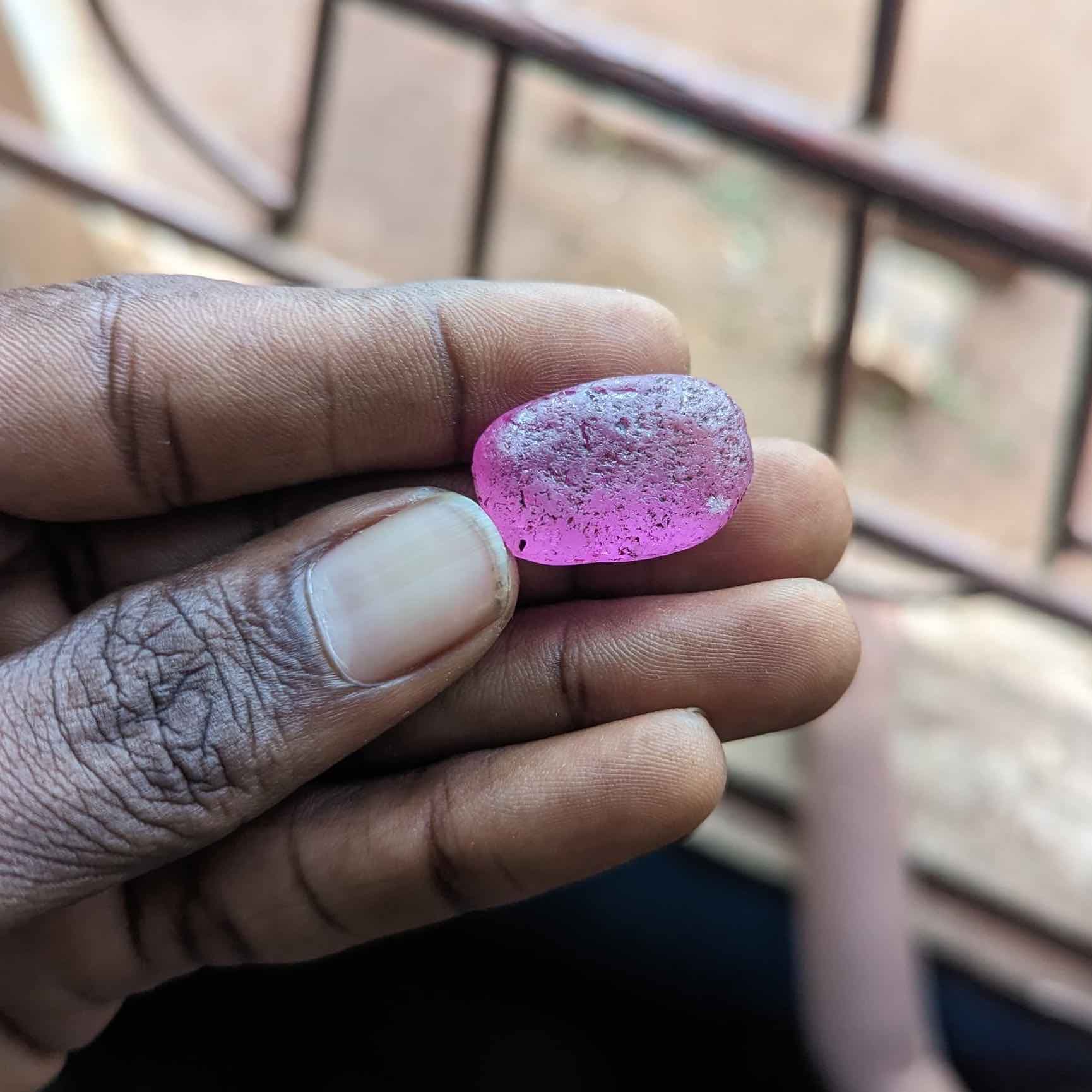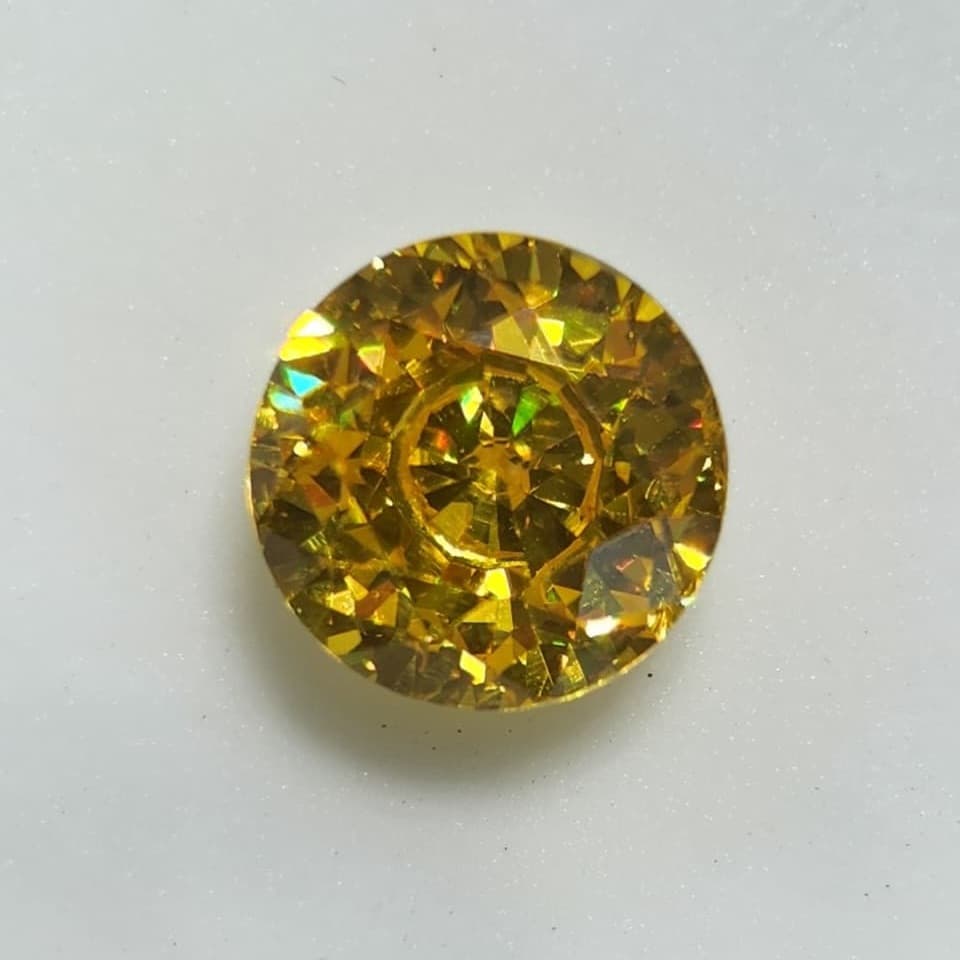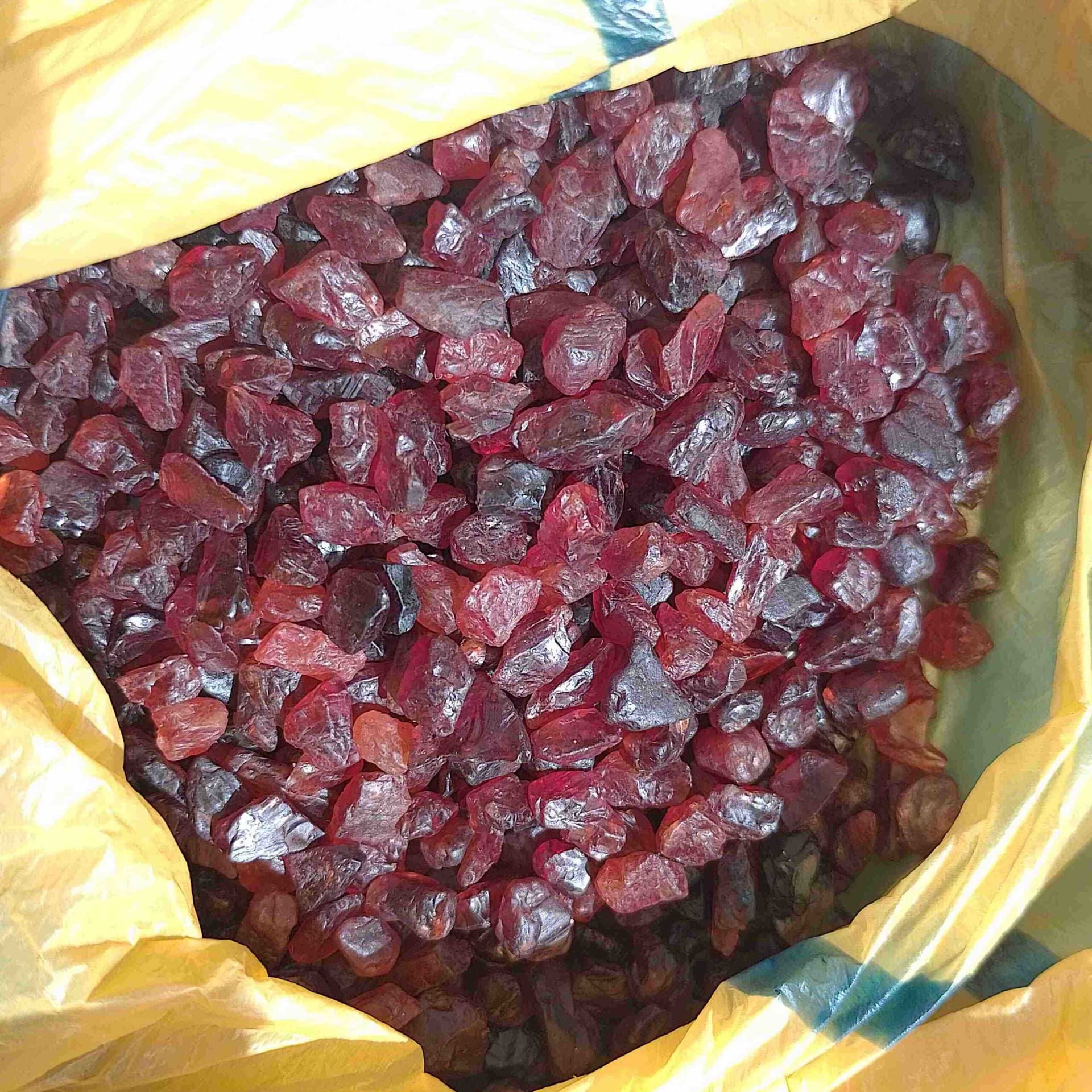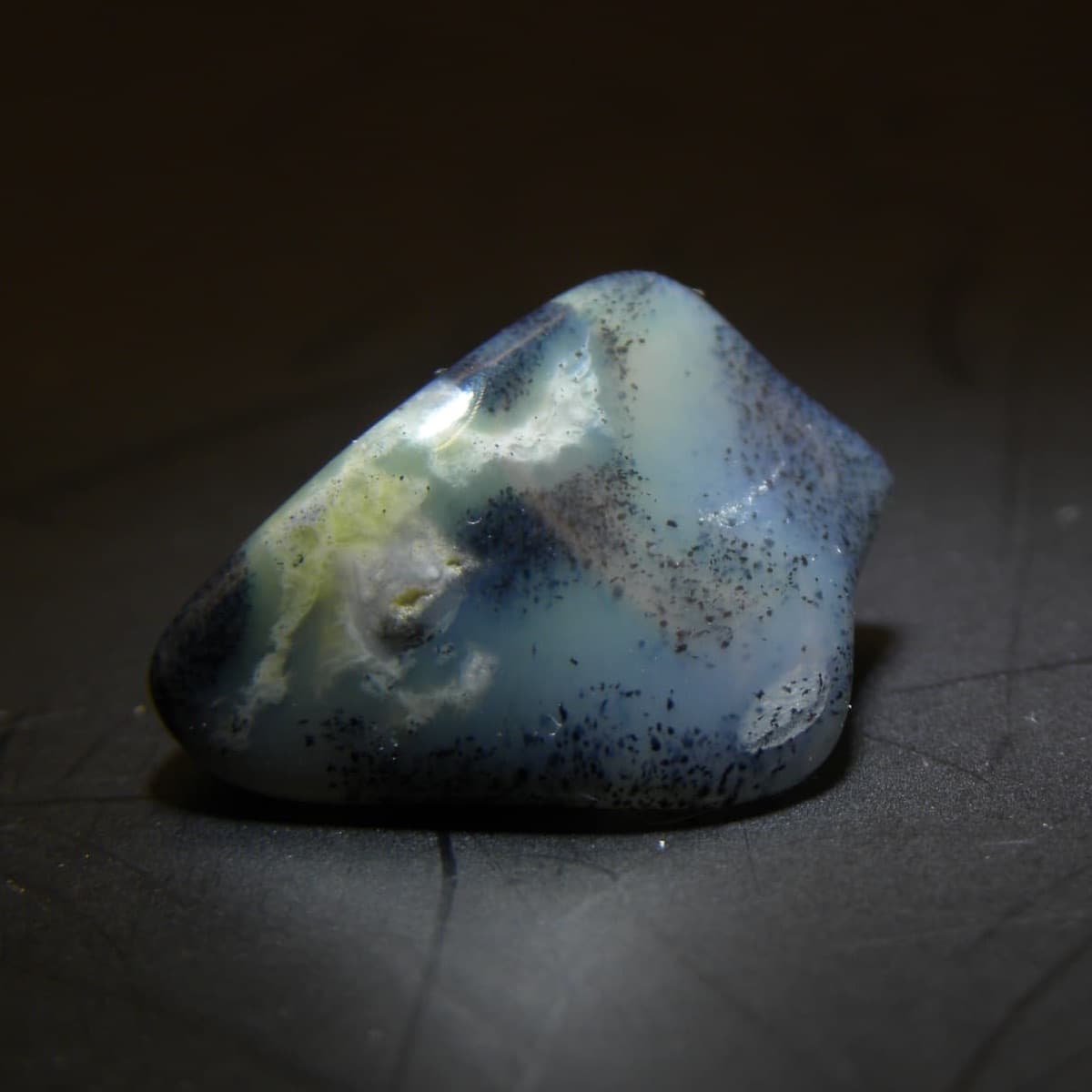
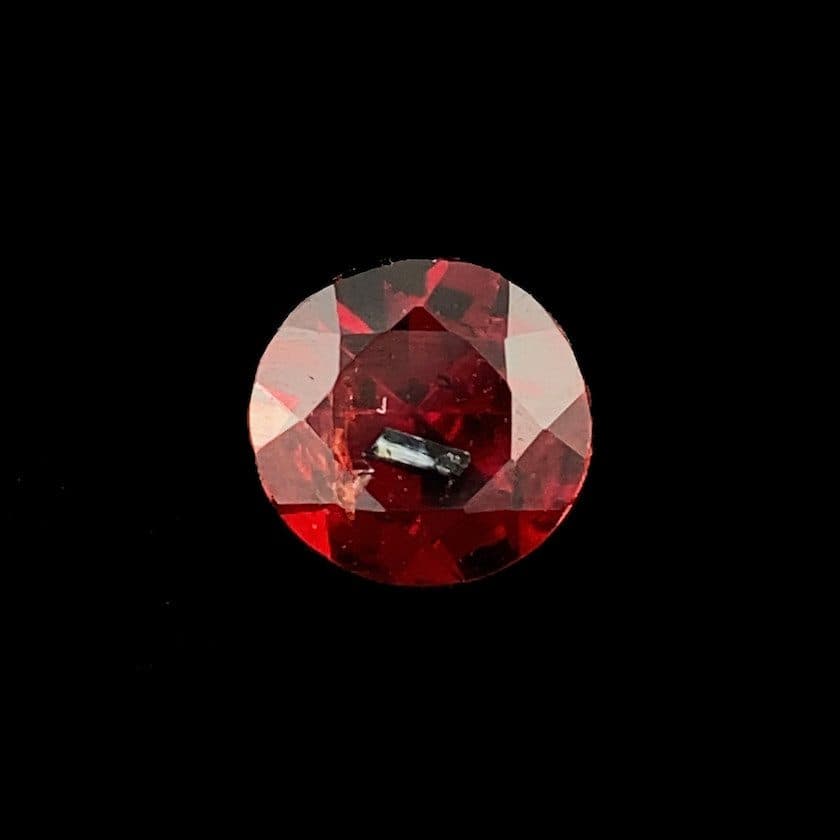
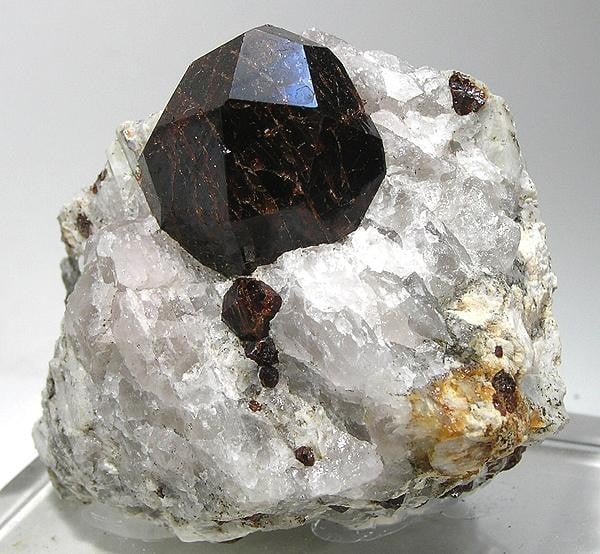
Almandine is perhaps the most common garnet species. Forming series with pyrope and spessartine garnets, these gems occur in the deep brownish or purplish reds most often associated with garnets. They make affordable and durable jewelry stones.
4 Minute Read
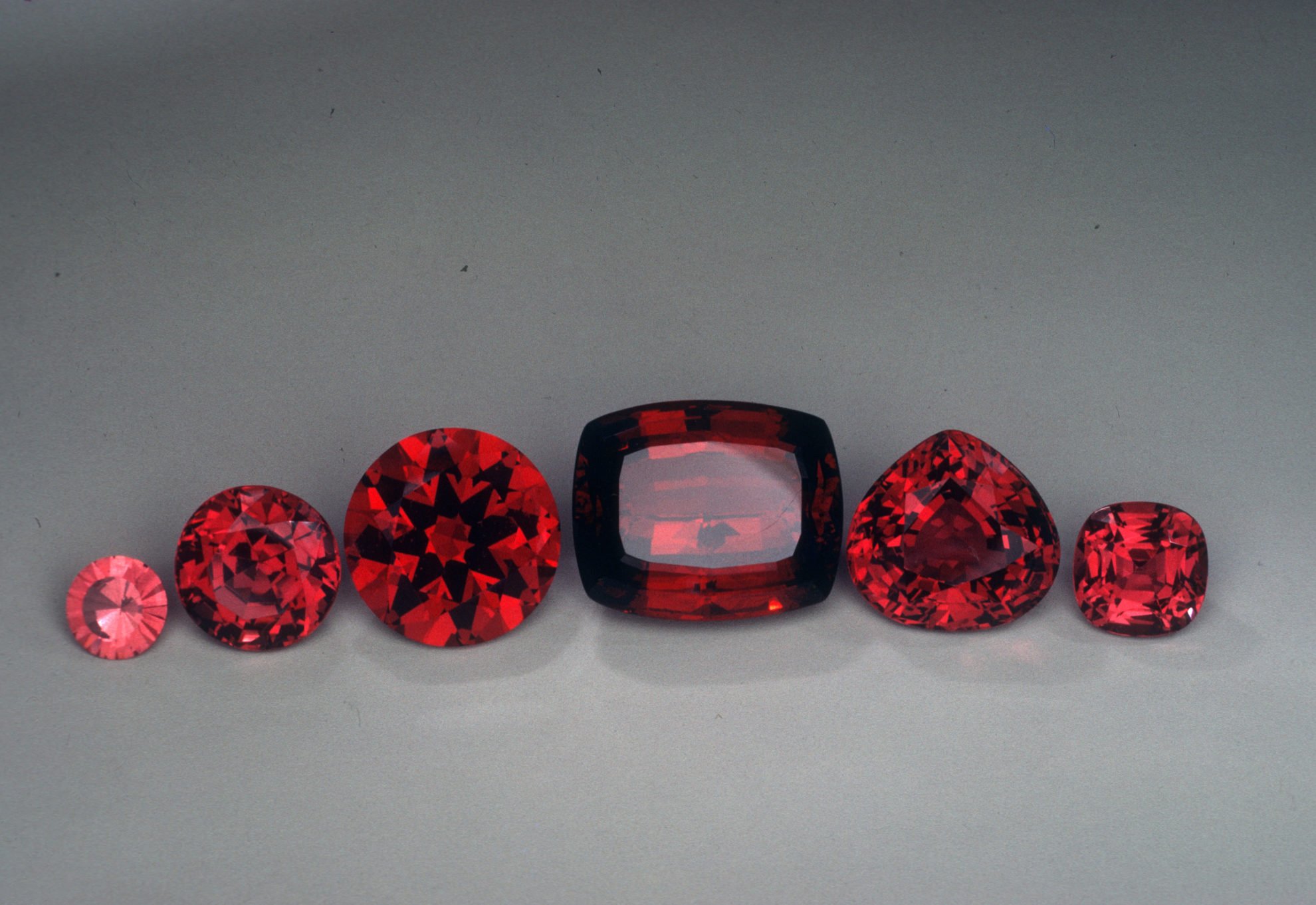
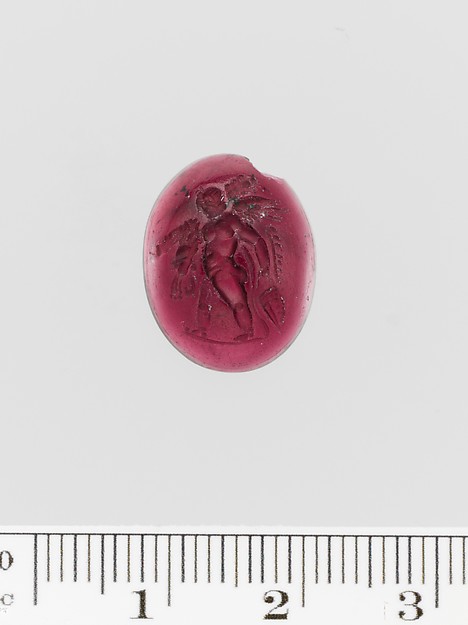
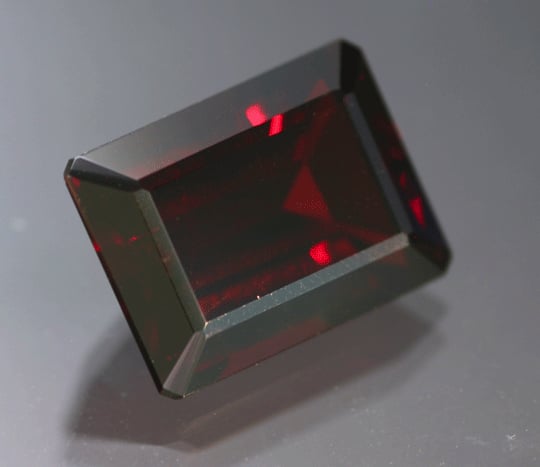
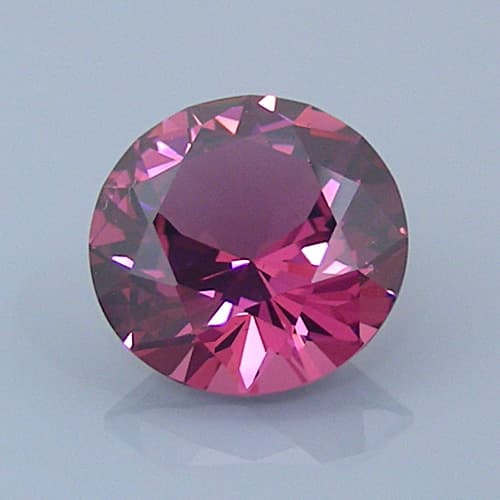
Like all garnets, iron-dominant (Fe) almandine virtually always occurs in series with other garnet species. Most frequently, with magnesium-dominant (Mg) pyrope, it forms the deep red garnets often encountered in commercial jewelry. With manganese-dominant (Mn) spessartine, it forms more brownish to orangish red garnets. Almandines can also show purplish red, wine red, and purple colors.
Known also as almandite (chiefly a British usage), almandine has been popular throughout history. The Ancient Egyptians used almandines in jewelry as early as 3,500 BCE. The Classical Roman scholar Pliny the Elder called the finest red gemstones with "brilliancy like fire" carbunculus, a grouping which included almandines and likely red spinels and rubies as well.
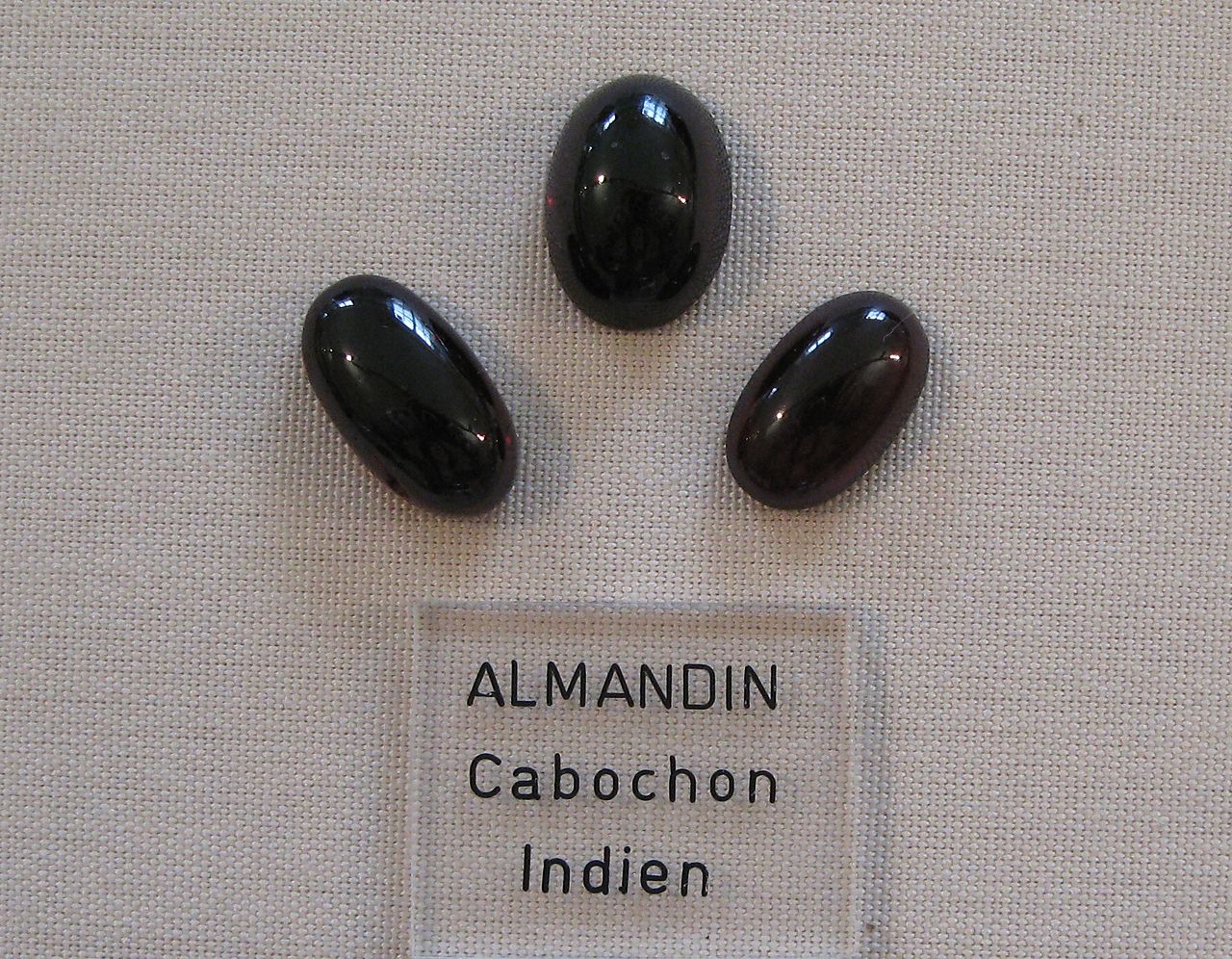
Although no longer used professionally by gemologists, the term "carbuncle" persisted into the 19th century and came to refer to cabochon-cut red gems, most commonly almandine garnets. You might still encounter this term in descriptions of antique jewelry.
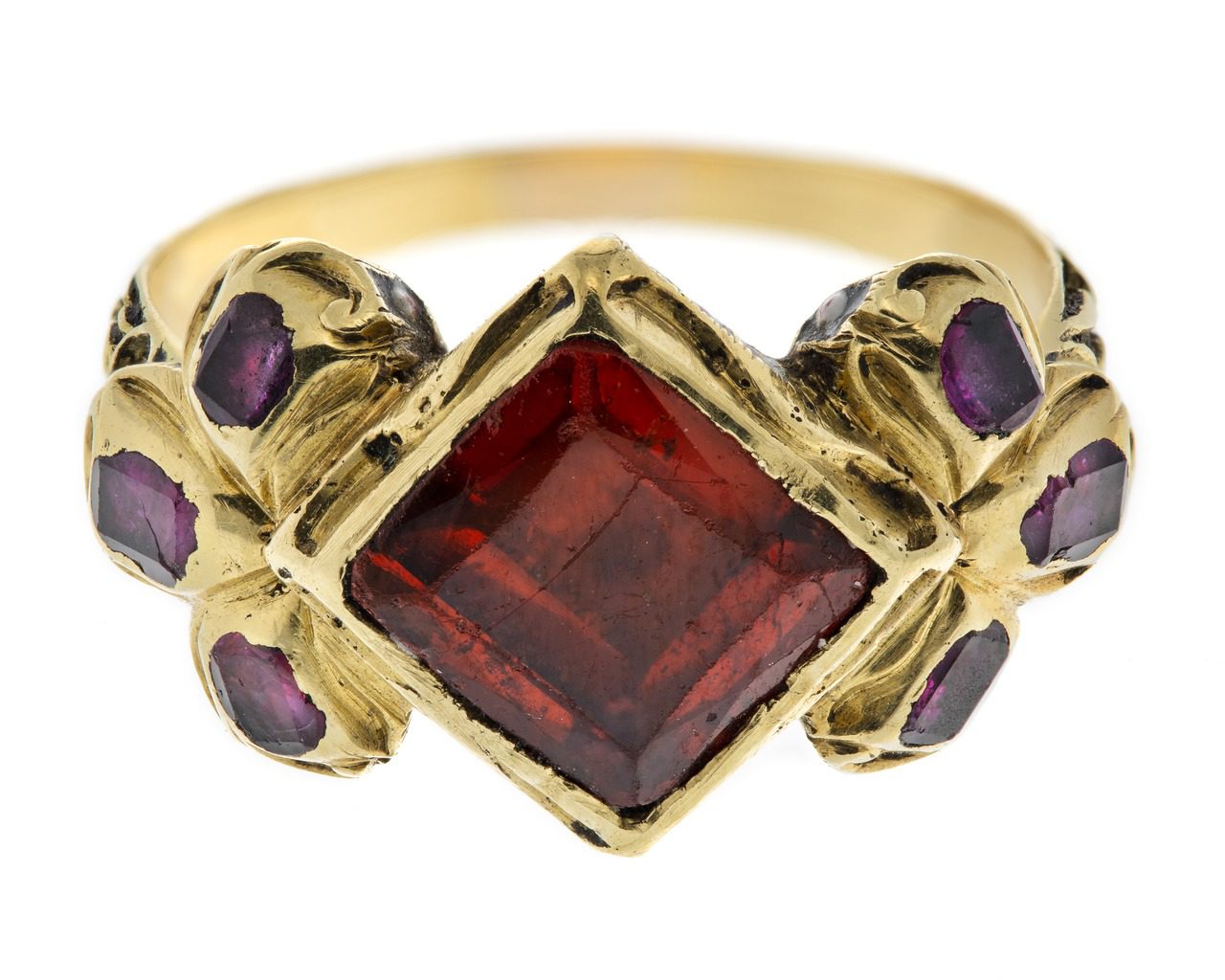
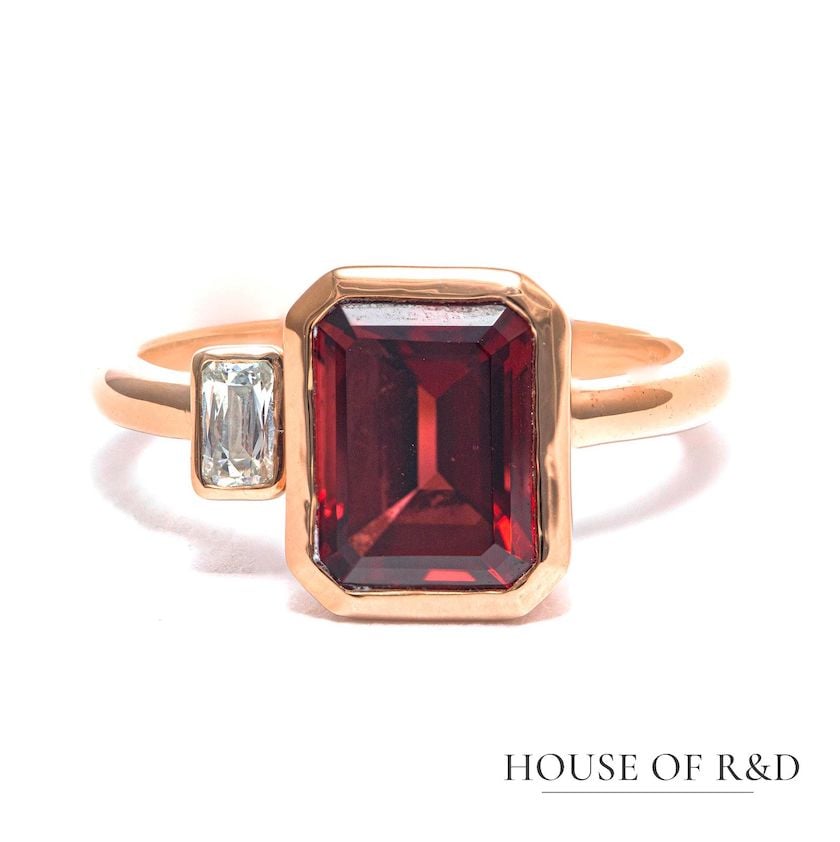
As an affordable garnet species, almandines make an excellent choice for January birthstone jewelry. With no cleavage and a hardness of 7-7.5, almandines make durable stones for any type of jewelry setting.
For almandine gem design ideas, see Jeff Graham's faceting recommendations.
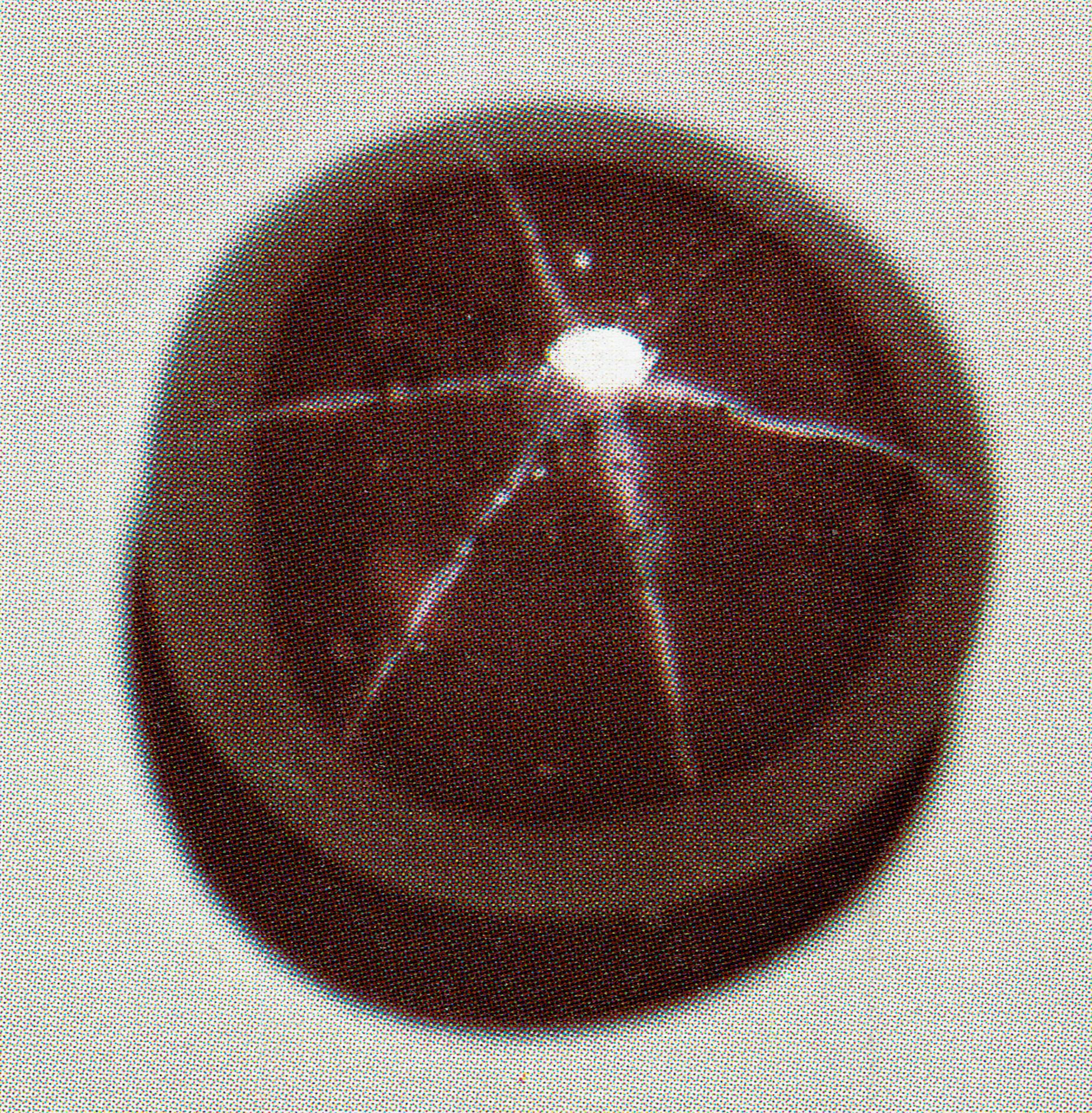
Rare star garnets come primarily from India and the U.S. state of Idaho. (The star garnet is the Idaho state gem).
When properly cabbed, almandines with inclusions of asbestiform minerals (pyroxene or amphibole) may yield a 4 or 6-ray asterism effect. The Idaho material has a refractive index(N) of 1.808 and a specific gravity (SG) of 4.07. (Due to inclusions, the SG can reach up to 4.76).
Highly prized by collectors, star garnets rank among the most difficult gems to cut.
Most color change garnets have a pyrope-spessartine composition. However, Idaho almandine-pyropes can show a strong red to purplish red color shift under incandescent and LED light.
The purplish almandine-pyrope blend known as rhodolite is generally considered its own garnet variety, with its own sub-varieties.
An analysis of RI, hue, and SG can help distinguish almandines from other garnets.
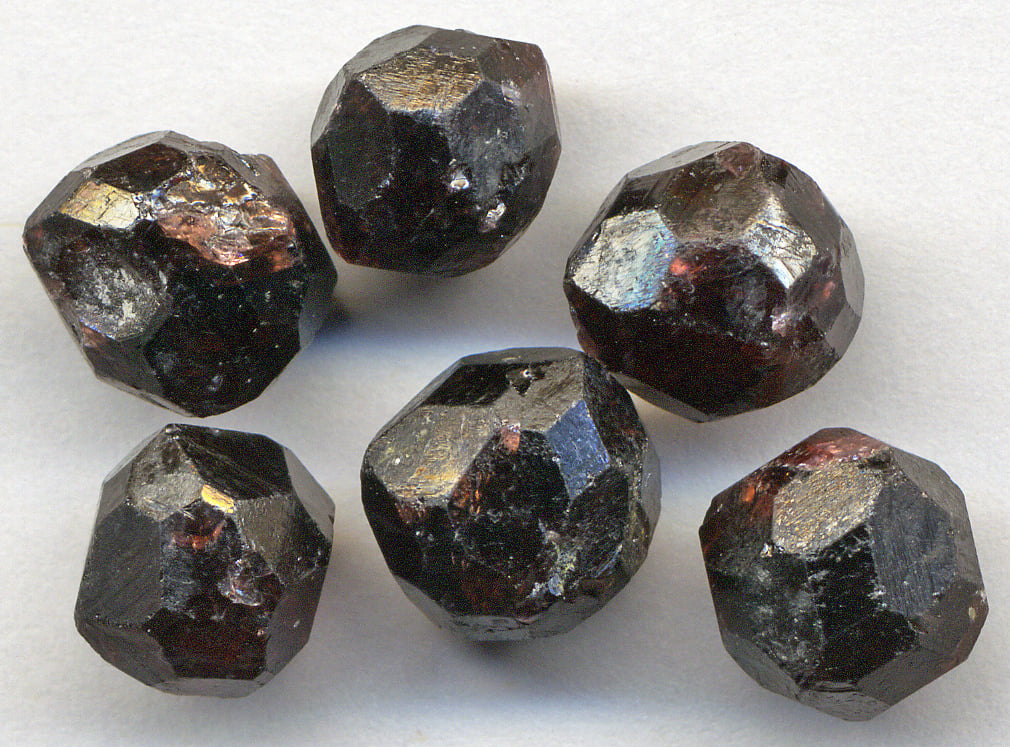
Almandines have a distinctive, diagnostic absorption spectrum:
With a spectroscope, you'll see this pattern of three (or sometimes five) bands in all almandines as well as most garnets with a significant almandine component.
Although isometric like all garnets, almandines may show anomalous double refraction (ADR) due to strain.
Usually eye clean, faceted almandines may still contain a wide but unobtrusive variety of inclusions. This holds true especially for silk, which becomes visible often only under magnification.
Almandine inclusions may include the following:
Via the hydrothermal method, geologists have manufactured pure synthetic almandine crystals as well as almandine-pyrope blends. Synthetic almandines have appeared on the gem market. A gemologist should look for telltale signs of hydrothermal growth, including seed plates.
For other synthetic garnet varieties, consult the "Synthetics" section of the main garnet gem listing.
Although garnets typically receive no gem treatments, enhancements do occur. For example, heating an almandine-spessartine garnet in air to 920° C produces a dark gray metallic coating of hematite on its surface. Metallic coatings have been noted on garnets since 1975. Decades ago, almandine-pyropes with a metallic coating were marketed as so-called "Proteus garnets."
For more information on this and other possible garnet treatments, consult the Enhancements section of our garnet buying guide.
Major gem-quality sources include the following:
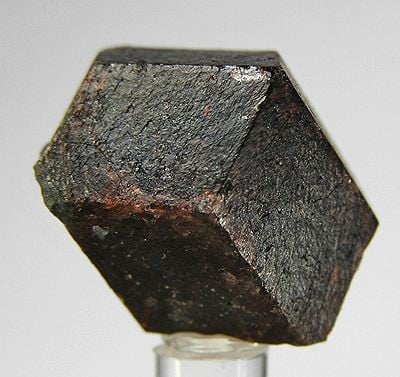
Very large crystals exist, but due to the material's dark tone, gem cutters usually facet only small to medium-size gems. If cut shallow, these let light pass through. The condition of the rough also limits finished sizes. For example, the Barton Mine in New York has produced 60 cm crystals in rock. However, this material is so badly shattered that stones only up to two carats can be cut from the fragments.
Indian and Brazilian almandines constitute the bulk of material on the marketplace.
Although almandines are very durable, exercise care when cleaning these gems. Almandine's microscopic inclusions may burst due to extreme heat or ultrasound, fracturing the gem. Thus, avoid these mechanical cleaning systems and stick to a soft brush, mild detergent, and warm water, instead.
See our gemstone care guide for recommended cleaning methods.


When you join the IGS community, you get trusted diamond & gemstone information when you need it.
Like all garnets, iron-dominant (Fe) almandine virtually always occurs in series with other garnet species. Most frequently, with magnesium-dominant (Mg) pyrope, it forms the deep red garnets often encountered in commercial jewelry. With manganese-dominant (Mn) spessartine, it forms more brownish to orangish red garnets. Almandines can also show purplish red, wine red, and purple colors.
Known also as almandite (chiefly a British usage), almandine has been popular throughout history. The Ancient Egyptians used almandines in jewelry as early as 3,500 BCE. The Classical Roman scholar Pliny the Elder called the finest red gemstones with "brilliancy like fire" carbunculus, a grouping which included almandines and likely red spinels and rubies as well.
Although no longer used professionally by gemologists, the term "carbuncle" persisted into the 19th century and came to refer to cabochon-cut red gems, most commonly almandine garnets. You might still encounter this term in descriptions of antique jewelry.
As an affordable garnet species, almandines make an excellent choice for January birthstone jewelry. With no cleavage and a hardness of 7-7.5, almandines make durable stones for any type of jewelry setting.
For almandine gem design ideas, see Jeff Graham's faceting recommendations.
Rare star garnets come primarily from India and the U.S. state of Idaho. (The star garnet is the Idaho state gem).
When properly cabbed, almandines with inclusions of asbestiform minerals (pyroxene or amphibole) may yield a 4 or 6-ray asterism effect. The Idaho material has a refractive index(N) of 1.808 and a specific gravity (SG) of 4.07. (Due to inclusions, the SG can reach up to 4.76).
Highly prized by collectors, star garnets rank among the most difficult gems to cut.
Most color change garnets have a pyrope-spessartine composition. However, Idaho almandine-pyropes can show a strong red to purplish red color shift under incandescent and LED light.
The purplish almandine-pyrope blend known as rhodolite is generally considered its own garnet variety, with its own sub-varieties.
An analysis of RI, hue, and SG can help distinguish almandines from other garnets.
Almandines have a distinctive, diagnostic absorption spectrum:
With a spectroscope, you'll see this pattern of three (or sometimes five) bands in all almandines as well as most garnets with a significant almandine component.
Although isometric like all garnets, almandines may show anomalous double refraction (ADR) due to strain.
Usually eye clean, faceted almandines may still contain a wide but unobtrusive variety of inclusions. This holds true especially for silk, which becomes visible often only under magnification.
Almandine inclusions may include the following:
Via the hydrothermal method, geologists have manufactured pure synthetic almandine crystals as well as almandine-pyrope blends. Synthetic almandines have appeared on the gem market. A gemologist should look for telltale signs of hydrothermal growth, including seed plates.
For other synthetic garnet varieties, consult the "Synthetics" section of the main garnet gem listing.
Although garnets typically receive no gem treatments, enhancements do occur. For example, heating an almandine-spessartine garnet in air to 920° C produces a dark gray metallic coating of hematite on its surface. Metallic coatings have been noted on garnets since 1975. Decades ago, almandine-pyropes with a metallic coating were marketed as so-called "Proteus garnets."
For more information on this and other possible garnet treatments, consult the Enhancements section of our garnet buying guide.
Major gem-quality sources include the following:
Very large crystals exist, but due to the material's dark tone, gem cutters usually facet only small to medium-size gems. If cut shallow, these let light pass through. The condition of the rough also limits finished sizes. For example, the Barton Mine in New York has produced 60 cm crystals in rock. However, this material is so badly shattered that stones only up to two carats can be cut from the fragments.
Indian and Brazilian almandines constitute the bulk of material on the marketplace.
Although almandines are very durable, exercise care when cleaning these gems. Almandine's microscopic inclusions may burst due to extreme heat or ultrasound, fracturing the gem. Thus, avoid these mechanical cleaning systems and stick to a soft brush, mild detergent, and warm water, instead.
See our gemstone care guide for recommended cleaning methods.



Almandine is perhaps the most common garnet species. Forming series with pyrope and spessartine garnets, these gems occur in the deep brownish or purplish reds most often associated with garnets. They make affordable and durable jewelry stones.
Due to their abundance and occurrence worldwide, almandines generally fetch low prices. The purplish-red almandine-pyrope blend rhodolite is an exception. See our garnet buying guide for information on value factors for almandines and other garnets.