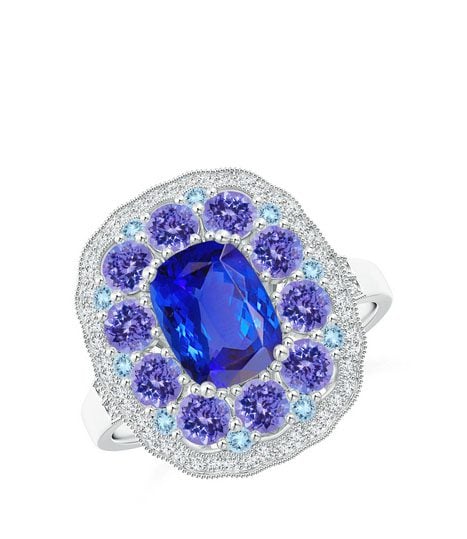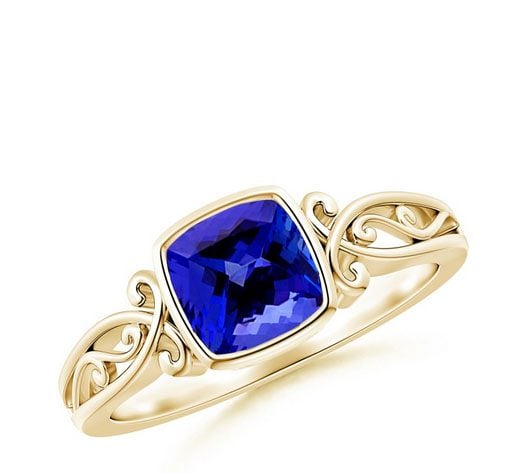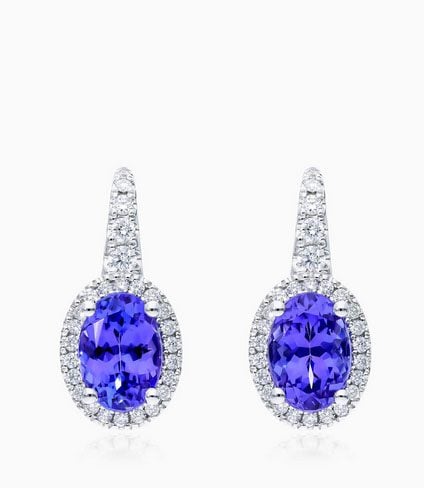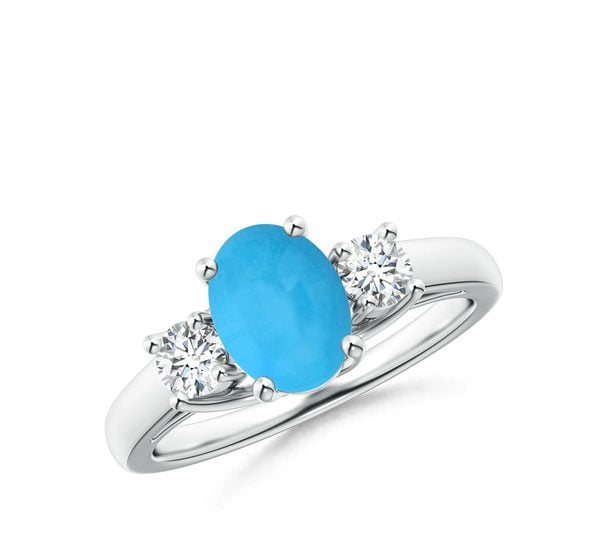
Discover December birthstones: blue topaz, blue zircon, tanzanite, and turquoise. Explore their meanings, origins, and jewelry options in this guide!
21 Minute Read
Welcome to the enchanting world of December birthstones, where the cool hues of blue topaz, blue zircon, tanzanite, and turquoise shine brightly! If you're wondering "what is December's birthstone" or seeking the perfect December birthstone jewelry, this article is your ultimate resource. Dive into the fascinating details of these gemstones and uncover their unique stories, properties, and allure.
Here's what you'll learn by reading this guide:
Those born in December are fortunate to have a choice of four gorgeous blue gemstones as their birthstones: Blue Topaz, Blue Zircon, Tanzanite, and Turquoise. Each of these December birthstones offers its own unique characteristics, history, and symbolism.
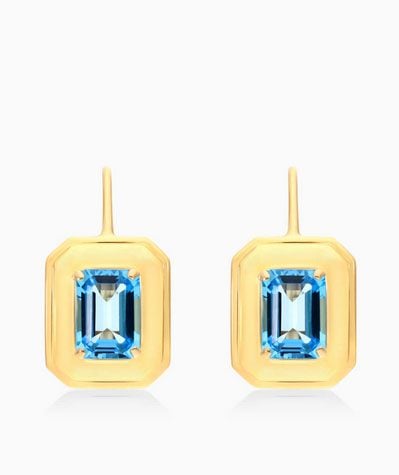
Blue topaz is one of the modern birthstones for the month of December. Blue topaz is a silicate mineral composed of aluminum and fluorine with a glass-like luster and deep cleavage, making it somewhat delicate despite its hardness. Its color range spans from dark inky blues to cooler light blue shades. Depending on the depth of color, blue topaz varieties include:
The name "topaz" derives from the Sanskrit word for "fire." Most commercially available blue topaz is produced by irradiating naturally colorless topaz. Treated blue topaz remains a favorite among jewelers and designers for its versatility, affordability, and availability in numerous shapes and sizes.
Blue topaz has the chemical formula Al2SiO4(F,OH)4, with strong chemical bonding that makes it harder than most silicate minerals.
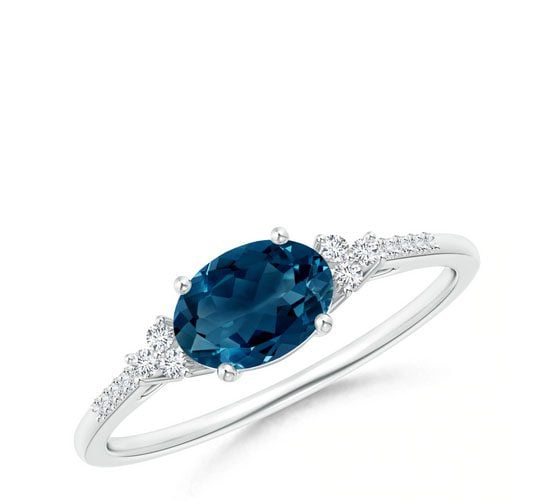
London blue topaz boasts a unique, inky medium blue color that distinguishes it from other varieties. It represents the darkest, richest blue topaz color available on today's market. The name "London blue topaz" originated because London houses the largest blue topaz ever discovered—a massive 9,381 carats—displayed in the UK Natural History Museum.
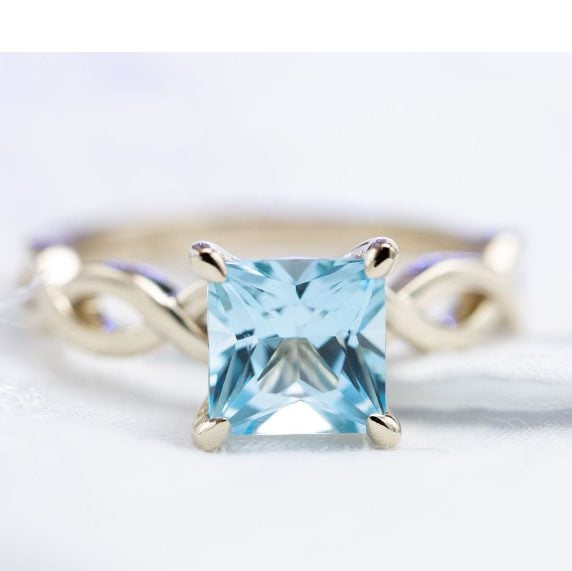
Color is the key differentiating factor between London Blue, Swiss Blue, and Sky Blue varieties:
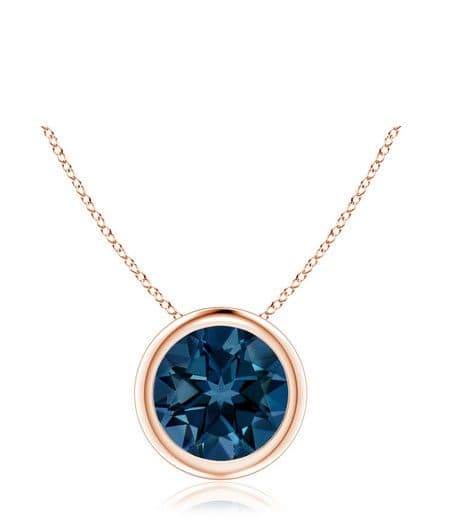
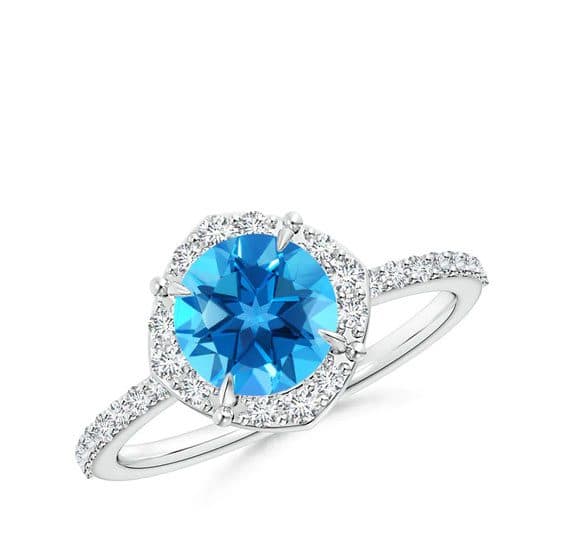
Blue topaz remains among the most affordable topaz varieties on the market. The cut often adds as much value to the stone as the color itself. Of all blue varieties, London blue topaz is most sought after and commands the highest prices, typically retailing between 10-30 US dollars per carat.
Known as the "clarity stone," blue topaz is believed to stimulate open communication and encourage positive action. This December birthstone carries several symbolic meanings:
Some traditional beliefs suggest blue topaz helps relieve stress, ease migraines, soothe sore throats, and alleviate body aches. Associated with the throat chakra, blue topaz worn near the throat is said to provide relief from throat-related ailments.
Blue Topaz was first discovered over two thousand years ago by Romans in the Greek Islands of Topazios in the Red Sea. Today, natural blue topaz sources include:
Blue topaz registers 8 on the Mohs scale, making it harder than sapphire and substantially tougher than tanzanite. However, blue topaz is somewhat brittle and should be handled with care, especially when set in jewelry that might receive impacts.
London blue topaz exhibits perfect cleavage, which contributes to its brittleness and susceptibility to scratches.
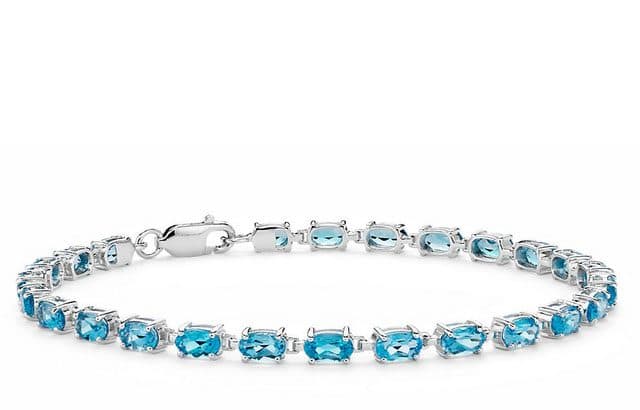
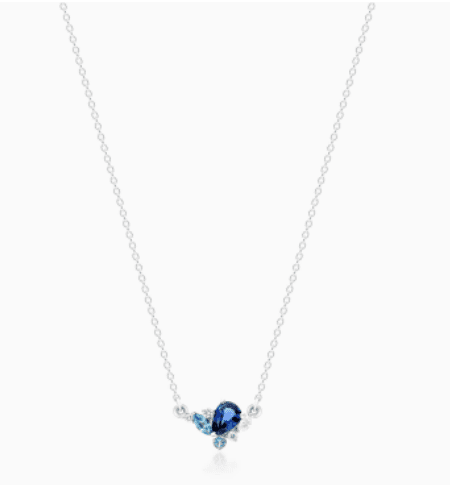
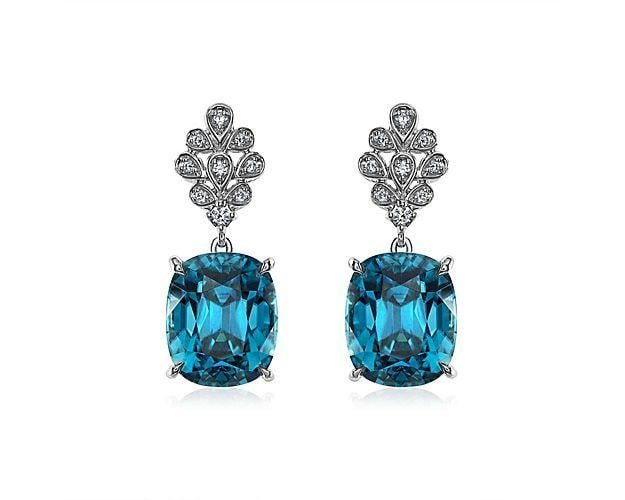
Blue Topaz jewelry is widely available both in brick-and-mortar stores and from reputable online retailers including Blue Nile, Blue Nile, CustomMade, Angara or White Flash. These retailers offer various settings and styles to showcase this beautiful December birthstone.
Blue topaz is prized for its stunning range of blue hues, affordability, and availability. Its vibrant colors—from light Sky Blue to deep London Blue—make it a versatile and attractive gemstone for both casual and formal jewelry.
The main difference lies in color depth: London Blue is the darkest and most saturated, Swiss Blue is bright and vivid, while Sky Blue is pale and airy. London Blue is also the most valuable and sought after.
Yes, blue topaz is known as the "clarity stone." It symbolizes open communication, wisdom, and emotional honesty. Some also believe it helps reduce stress and supports throat health when worn near the neck.
Blue zircon counts among the modern December birthstones alongside blue topaz and tanzanite, while the more traditional December birthstones include lapis lazuli and turquoise.
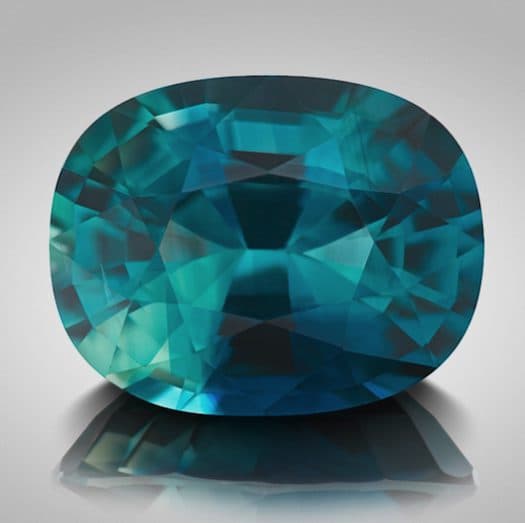
Known by the mineral name, zirconium silicate, zircon is not to be confused with cubic zirconia, a synthetic diamond simulant. Zircon has the chemical formula ZrSiO4 and boasts a tetragonal crystal structure. Cubic zirconia, by contrast, is made of zirconium oxide and has a cubic crystal structure.
Zircon possesses a high refractive index, making well-cut specimens exceptionally bright. In fact, zircon ranks among the gemstones most resembling diamonds. Its fire and luster can approximate diamond's brilliance and exceed those of sapphire, ruby, and tanzanite.
Zircons often form naturally with a brown color, which transforms to blue after heat treatment. These treated stones can exhibit stable and vivid blue to sky blue colors. The finest blue zircons display hues with strong green components and medium tones. Some trade names for blue zircons include "starlites" or "stremlites."
Heat treatments can also produce other colors in zircon:
Traditionally, blue zircons are associated with wisdom, confidence, and prosperity. When worn as jewelry, they are believed to:
Blue zircon is also believed to assist with meditation practices and help improve organizational abilities.
According to Western astrology, those with zodiac signs including Cancer, Gemini, Virgo, Capricorn, or Aquarius may particularly benefit from blue zircon. In Indian astrological traditions, Libra and Taurus signs are also considered compatible with this gemstone.
Blue zircon is especially recommended for creative professionals, as it's believed to:
Natural blue zircons occur extremely rarely. Virtually all gem-quality blue zircons on the market receive their color through heat treatment. The best zircons for blue heat treatment come from:
Zircons can achieve a hardness of up to 7.5 on the Mohs scale, making them highly resistant to scratching and suitable for jewelry. However, all zircons are very brittle, making them vulnerable to chipping and breaking from impacts. Protective settings that shield edges and facets are strongly recommended, especially for ring settings where the stone may receive more impact.
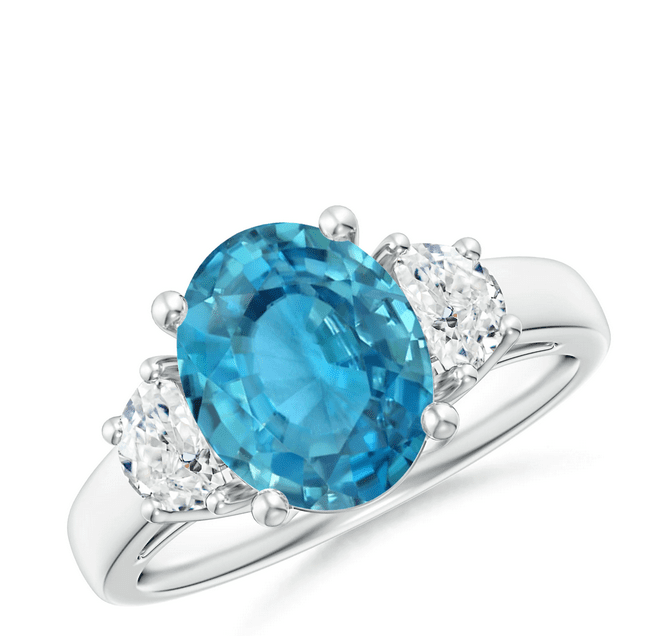
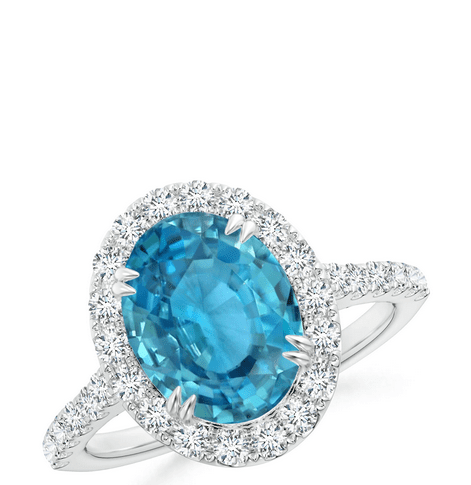
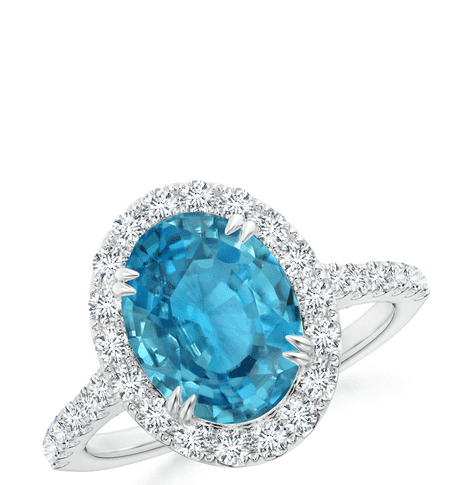
Blue zircon jewelry can be difficult to find in physical jewelry stores but is available from select online retailers including Blue Nile, Blue Nile, and Angara. Prices vary based on size, hue, and tone quality.
Fine blue zircon gemstones typically range in price:
For complete pricing information on zircons of various sizes and colors, consult the comprehensive zircon price guide.
Generally speaking, blue zircon is more expensive than blue topaz. Topaz is a naturally occurring mineral that comes in a variety of colors, but it doesn't come as close as zircon to mimicking the luster and fire of a diamond.
Blue zircon is rarer than diamond, though it is less valuable because of the perception that zircon is the same as cubic zirconia. In fact, zircon and cubic zirconia are completely different!
Blue zircon is prized for its exceptional brilliance and fire, often resembling diamonds. It's a natural gemstone (not to be confused with cubic zirconia) and offers a vivid, bright alternative to other December stones like blue topaz or tanzanite.
Blue zircon ranks up to 7.5 on the Mohs scale, making it fairly hard. However, it is brittle and can chip easily, so it's best used in protective settings — especially for rings or frequently worn pieces.
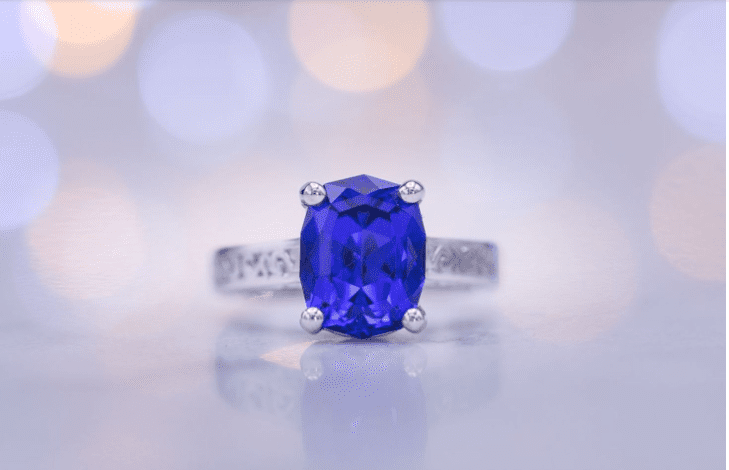
Another modern birthstone representing December is tanzanite, a richly colored pleochroic gemstone displaying blue and violet hues, often with purple highlights, that shift depending on viewing angle. Tanzanite entered the gemstone market relatively recently, first discovered in 1967. Initially mistaken for sapphire, tanzanite's unique multidimensional appearance suggested something entirely new. Gemologists soon identified it as a previously unknown variety of the mineral zoisite.
Tiffany & Co. named tanzanite after recognizing its market potential immediately following discovery. To promote consumer recognition of this unfamiliar stone, they named it after its country of origin, Tanzania. Due to its popularity, tanzanite officially joined the December birthstone lineup (alongside turquoise and zircon) in 2002. Tanzanite also commemorates 24th wedding anniversaries.
Tanzanite's color question has a more complex answer than most birthstones. Tanzanite refers to transparent zoisite with a body color combining blue and violet hues. What makes tanzanite extraordinary is its pleochroism—the ability to show multiple colors simultaneously depending on viewing direction.
Tanzanite exhibits strong pleochroism with three distinct colors from three different angles:
This creates a mesmerizing, multidimensional effect that continually changes as you move the stone, further affected by ambient lighting. Every viewing of tanzanite jewelry reveals something new and dynamic.
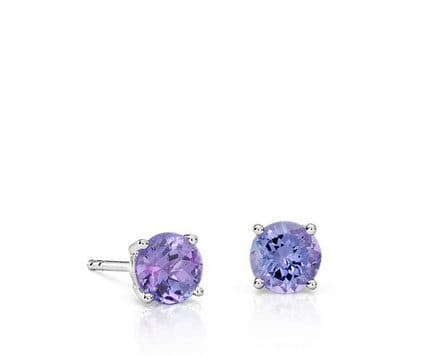
The finest tanzanite stones may resemble sapphires with predominantly blue color from certain angles. Thanks to pleochroism, exceptional tanzanite may show isolated flashes of red. Gems with significant purple tend to cost less but remain popular and beautiful.
Because of tanzanite's color variability, quality and value depend largely on color saturation rather than specific hue. Unfortunately, paler crystals occur more commonly than deeply colored specimens, making richly saturated examples quite rare.
Gemstone size also affects color saturation. In most cases:
Gem cutters face important decisions when faceting tanzanite rough because their orientation choice determines which pleochroic colors dominate from the face-up position. Cutters must decide on taking one of two approaches given below:
Since larger tanzanites command higher prices, cutters typically prioritize size, explaining why most tanzanite jewelry emphasizes violet to purple colors.
Tanzanite typically exhibits perfect, eye-clean clarity, meaning no inclusions are visible without magnification. Given the abundance of eye-clean stones, those with visible inclusions have lower value.
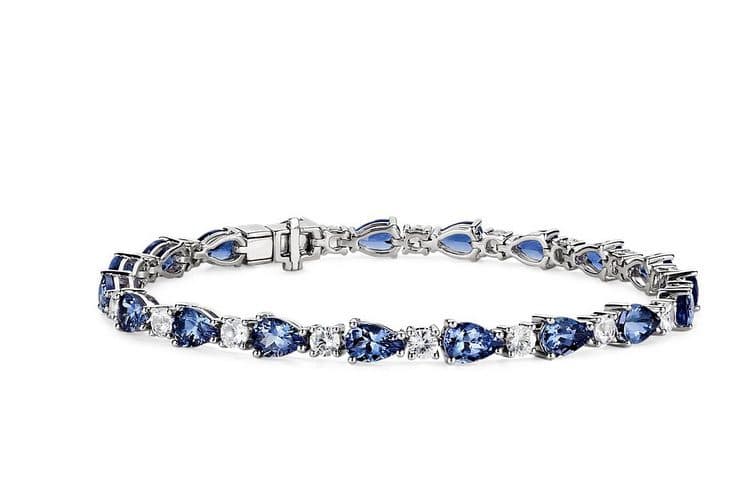
Interestingly, newly mined tanzanite usually displays brown or yellow-green coloration. Heat treatment removes these unwanted hues and enhances the signature blue and violet colors. Unlike some gemstones whose value decreases with treatment, heated tanzanite maintains its value because:
Being relatively new, tanzanite lacks the extensive historical lore of other birthstones. However, this hasn't diminished its popularity, with demand sometimes rivaling the "Big 3" gemstones: diamond, sapphire, and ruby.
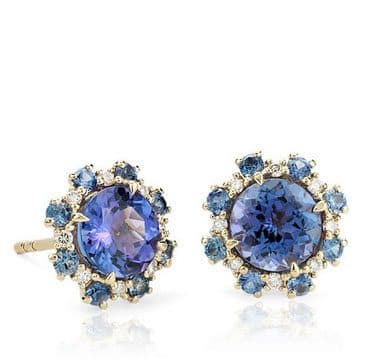
Tanzanite's discovery has its own lore. A Masai tribesman found unusually colored crystals that shouldn't have been visible in their natural state. Some believe a lightning strike caused a wildfire that naturally heat-treated the gems, revealing their vibrant colors. This origin connects tanzanite to the wild power and magic of nature.
The colors tanzanite displays carry their own symbolic meanings:
With potential to display all three colors simultaneously, tanzanite offers special spiritual significance.
Masai tribesman Ali Juuyawatu discovered tanzanite while traveling in Tanzania in 1967. He found beautiful gem clusters in the Merelani Hills region of the Lelatema Mountains. After contacting local prospector Manuel d'Souza, mining began before the gems were even identified. This small area near Mount Kilimanjaro remains the only known tanzanite source globally.
While the Merelani Hills have yielded enough tanzanite to establish global popularity, supply remains limited, making tanzanite rarer than diamond, sapphire, or ruby. Experts advise treasuring tanzanite jewelry because:
Tanzanite ranks 6 to 7 on the Mohs hardness scale, making it softer than diamond and sapphire but harder than some opal varieties. Tanzanite surfaces can scratch if rubbed against other objects and may chip from impacts. Protective settings help shield stones during wear, but it's advisable to remove tanzanite rings and bracelets during physical activities.
Tanzanite jewelry requires gentle cleaning:
Be sure to be gentle with your tanzanite jewelry during cleaning. It is best to use mild, soapy water with a soft cloth to avoid scratching the surface of the gem. Because tanzanite is sensitive to high temperatures, avoid ultrasonic machines and steam cleaners.
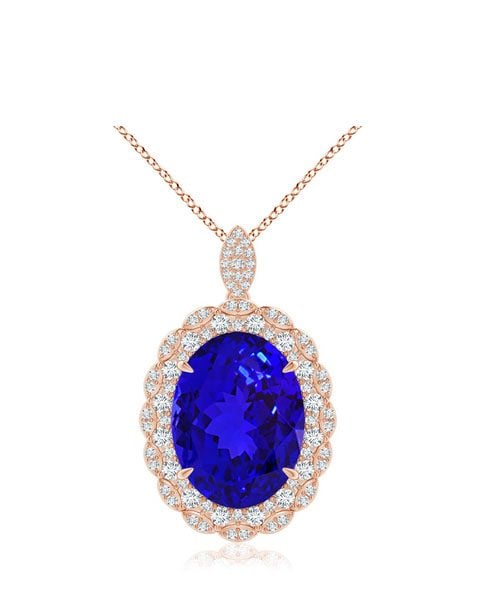
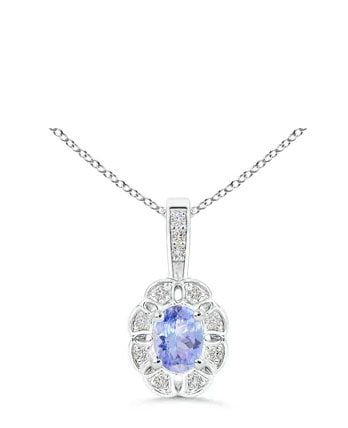
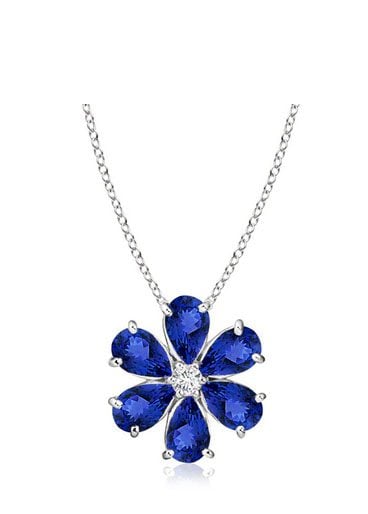
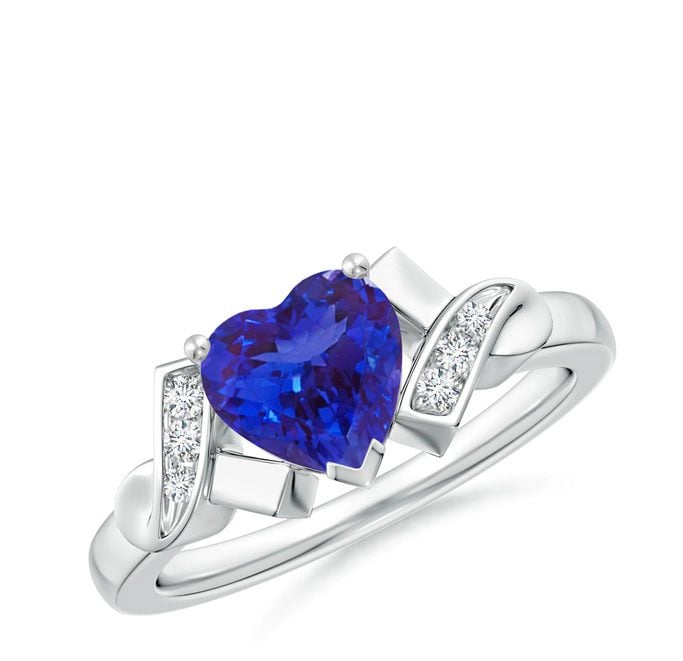
While daily wear of tanzanite rings and bracelets requires caution, tanzanite jewelry designs can be breathtaking. The rich color and excellent clarity create stunning pieces perfect for special occasions. Earrings and pendants face minimal damage risk and can be worn with confidence. Fortunately, tanzanite is available across price ranges, accommodating various budgets.
Unlike diamonds, tanzanite lacks standardized grading, so laboratory reports will describe color, clarity, and cut quality rather than formal grades. If sellers use systems like A-AAAA, request specific explanations about what these designations mean for your stone.
Common tanzanite shapes include:
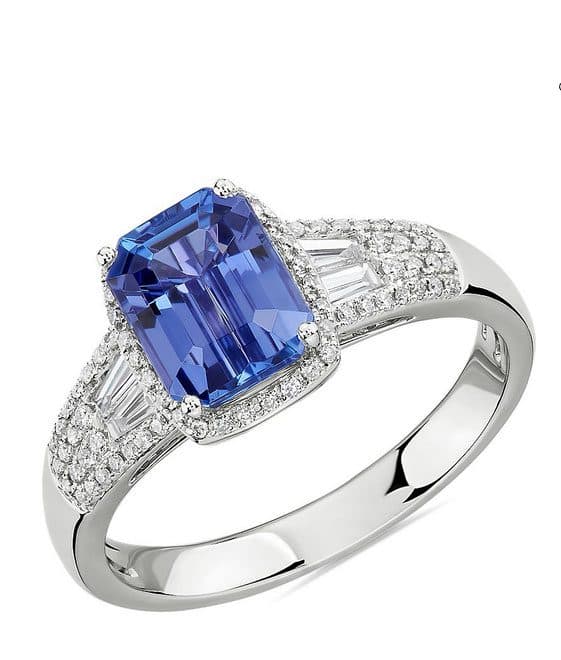
Cut quality is crucial for enhancing tanzanite's multidimensional color, so choose stones faceted with precision and care.
Industry professionals consider heat treatment acceptable for tanzanite, with approximately 95% of market stones heat-treated. Lower-quality tanzanites might be coated with compounds containing cobalt or titanium to enhance color and luster. These coated stones make poor jewelry choices because:
Tanzanite is unique for its rich blue-violet color and pleochroism—the ability to show different hues from different angles. First discovered in 1967, it's rarer than diamonds and only found in one place on Earth: Tanzania.
Tanzanite displays a mix of blue, violet, and sometimes purple or red depending on lighting and viewing angle. This shifting effect is due to pleochroism, which gives the stone its dynamic and mesmerizing color play.
Tanzanite ranks 6-7 on the Mohs scale, so it's softer than many gems and can scratch or chip. Protective settings and gentle cleaning methods are the most secure—especially for rings and bracelets worn daily.
Tanzanite represents spiritual growth, emotional vitality, and intuitive wisdom. Its mix of blue and violet connects to the Crown Chakra and symbolizes both serenity and strength.
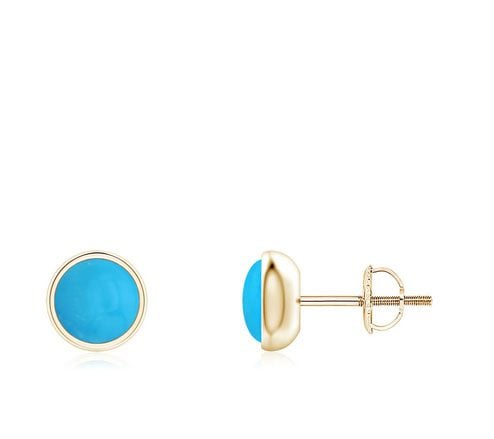
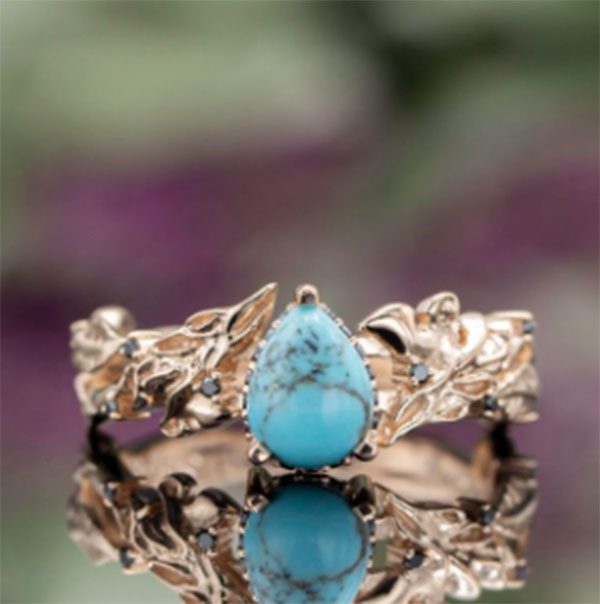
Turquoise is the traditional December birthstone. This opaque blue-green mineral consists of hydrated copper phosphate and aluminum with a distinct tri-clinic structure. Turquoise can have a waxy touch or glassy to dull appearance.
Turquoise has been treasured as an ornamental stone for thousands of years across many cultures. Due to its relatively poor wearability, the highest grades are typically reserved for inlay work and carving. However, beautiful cabochon turquoise stones are available for jewelry including rings, necklaces, earrings, and bracelets. For jewelry applications, a strong setting like a bezel is recommended to protect this softer gemstone.
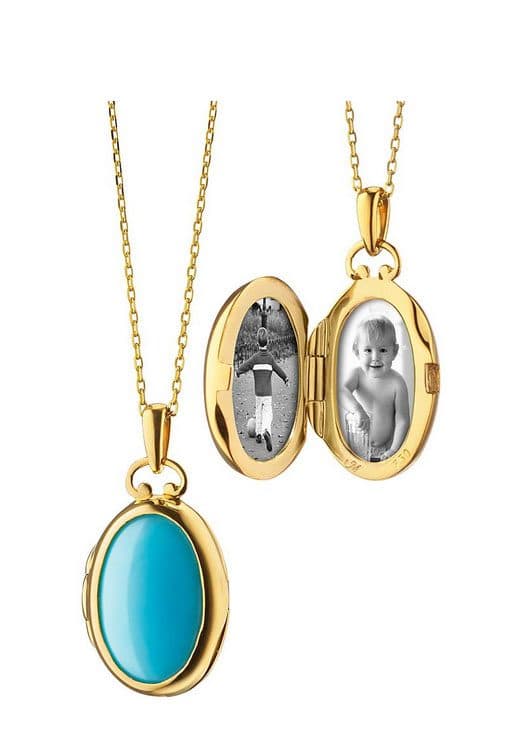
Turquoise is most famous for its signature blue hues, but these can vary considerably across specimens. Most popular options include:
The word "turquoise" derives from the French term "pierre tourques" or "Turkish stone," likely referring to the stone's Turkish trading origins. Turquoise has one of the longest histories among gemstones:
Turquoise symbolizes prosperity, love, and good fortune. Those interested in gemstone healing properties wear turquoise to:
Rich turquoise deposits occur in several regions worldwide:
Turquoise stone registers 5-6 on the Mohs scale, making it relatively soft for jewelry purposes. This softness presents several considerations:
Turquoise jewelry is widely available in various retail stores and can be conveniently purchased online from reputable sellers including Blue Nile and Angara. For those seeking a unique design, CustomMade offers bespoke turquoise jewelry created to your specifications.
When shopping for turquoise, consider:
The most valuable turquoise stones are bright blue with no spots or streaks; in other words, the color saturation and evenness drive the stone's value. However, some stones have patterns that are attractive and desirable to some consumers. Turquoise that appears green (from impurities) is less valuable but retains some popularity due to its unique color. Stones with a yellow tone (from iron) are the least valuable. Turquoise prices vary depending on the quality of the stone.Is turquoise a valuable gemstone? While not as expensive as diamonds or precious gems, high-quality natural turquoise can be quite valuable, especially pieces with vivid blue color, minimal matrix, and good hardness. Persian turquoise is particularly valuable.
Real turquoise has a specific gravity between 2.6-2.9 and registers 5-6 on the Mohs scale. It shouldn't feel like plastic, shouldn't smell of plastic when heated with a pin, and shouldn't dissolve in acetone. Professional gemological testing provides the most reliable authentication.
Yes, turquoise can change color over time due to its porous nature. It may absorb oils, soaps, and cosmetics, potentially darkening or developing a greenish tint. This process of "greening" is most common in untreated stones.
Clean turquoise gently with mild soap and water using a soft cloth. Avoid ultrasonic cleaners, harsh chemicals, and prolonged sun exposure. Store separately from harder gemstones to prevent scratching, and remove before swimming or using household cleaners.
Yes, prolonged exposure to direct sunlight can cause turquoise to fade or change color over time, particularly lighter blue varieties. It's advisable to store turquoise jewelry away from direct sunlight when not being worn.

When you join the IGS community, you get trusted diamond & gemstone information when you need it.
Welcome to the enchanting world of December birthstones, where the cool hues of blue topaz, blue zircon, tanzanite, and turquoise shine brightly! If you're wondering "what is December's birthstone" or seeking the perfect December birthstone jewelry, this article is your ultimate resource. Dive into the fascinating details of these gemstones and uncover their unique stories, properties, and allure.
Here's what you'll learn by reading this guide:
Those born in December are fortunate to have a choice of four gorgeous blue gemstones as their birthstones: Blue Topaz, Blue Zircon, Tanzanite, and Turquoise. Each of these December birthstones offers its own unique characteristics, history, and symbolism.
Blue topaz is one of the modern birthstones for the month of December. Blue topaz is a silicate mineral composed of aluminum and fluorine with a glass-like luster and deep cleavage, making it somewhat delicate despite its hardness. Its color range spans from dark inky blues to cooler light blue shades. Depending on the depth of color, blue topaz varieties include:
The name "topaz" derives from the Sanskrit word for "fire." Most commercially available blue topaz is produced by irradiating naturally colorless topaz. Treated blue topaz remains a favorite among jewelers and designers for its versatility, affordability, and availability in numerous shapes and sizes.
Blue topaz has the chemical formula Al2SiO4(F,OH)4, with strong chemical bonding that makes it harder than most silicate minerals.
London blue topaz boasts a unique, inky medium blue color that distinguishes it from other varieties. It represents the darkest, richest blue topaz color available on today's market. The name "London blue topaz" originated because London houses the largest blue topaz ever discovered—a massive 9,381 carats—displayed in the UK Natural History Museum.
Color is the key differentiating factor between London Blue, Swiss Blue, and Sky Blue varieties:
Blue topaz remains among the most affordable topaz varieties on the market. The cut often adds as much value to the stone as the color itself. Of all blue varieties, London blue topaz is most sought after and commands the highest prices, typically retailing between 10-30 US dollars per carat.
Known as the "clarity stone," blue topaz is believed to stimulate open communication and encourage positive action. This December birthstone carries several symbolic meanings:
Some traditional beliefs suggest blue topaz helps relieve stress, ease migraines, soothe sore throats, and alleviate body aches. Associated with the throat chakra, blue topaz worn near the throat is said to provide relief from throat-related ailments.
Blue Topaz was first discovered over two thousand years ago by Romans in the Greek Islands of Topazios in the Red Sea. Today, natural blue topaz sources include:
Blue topaz registers 8 on the Mohs scale, making it harder than sapphire and substantially tougher than tanzanite. However, blue topaz is somewhat brittle and should be handled with care, especially when set in jewelry that might receive impacts.
London blue topaz exhibits perfect cleavage, which contributes to its brittleness and susceptibility to scratches.
Blue Topaz jewelry is widely available both in brick-and-mortar stores and from reputable online retailers including Blue Nile, Blue Nile, CustomMade, Angara or White Flash. These retailers offer various settings and styles to showcase this beautiful December birthstone.
Blue topaz is prized for its stunning range of blue hues, affordability, and availability. Its vibrant colors—from light Sky Blue to deep London Blue—make it a versatile and attractive gemstone for both casual and formal jewelry.
The main difference lies in color depth: London Blue is the darkest and most saturated, Swiss Blue is bright and vivid, while Sky Blue is pale and airy. London Blue is also the most valuable and sought after.
Yes, blue topaz is known as the "clarity stone." It symbolizes open communication, wisdom, and emotional honesty. Some also believe it helps reduce stress and supports throat health when worn near the neck.
Blue zircon counts among the modern December birthstones alongside blue topaz and tanzanite, while the more traditional December birthstones include lapis lazuli and turquoise.
Known by the mineral name, zirconium silicate, zircon is not to be confused with cubic zirconia, a synthetic diamond simulant. Zircon has the chemical formula ZrSiO4 and boasts a tetragonal crystal structure. Cubic zirconia, by contrast, is made of zirconium oxide and has a cubic crystal structure.
Zircon possesses a high refractive index, making well-cut specimens exceptionally bright. In fact, zircon ranks among the gemstones most resembling diamonds. Its fire and luster can approximate diamond's brilliance and exceed those of sapphire, ruby, and tanzanite.
Zircons often form naturally with a brown color, which transforms to blue after heat treatment. These treated stones can exhibit stable and vivid blue to sky blue colors. The finest blue zircons display hues with strong green components and medium tones. Some trade names for blue zircons include "starlites" or "stremlites."
Heat treatments can also produce other colors in zircon:
Traditionally, blue zircons are associated with wisdom, confidence, and prosperity. When worn as jewelry, they are believed to:
Blue zircon is also believed to assist with meditation practices and help improve organizational abilities.
According to Western astrology, those with zodiac signs including Cancer, Gemini, Virgo, Capricorn, or Aquarius may particularly benefit from blue zircon. In Indian astrological traditions, Libra and Taurus signs are also considered compatible with this gemstone.
Blue zircon is especially recommended for creative professionals, as it's believed to:
Natural blue zircons occur extremely rarely. Virtually all gem-quality blue zircons on the market receive their color through heat treatment. The best zircons for blue heat treatment come from:
Zircons can achieve a hardness of up to 7.5 on the Mohs scale, making them highly resistant to scratching and suitable for jewelry. However, all zircons are very brittle, making them vulnerable to chipping and breaking from impacts. Protective settings that shield edges and facets are strongly recommended, especially for ring settings where the stone may receive more impact.
Blue zircon jewelry can be difficult to find in physical jewelry stores but is available from select online retailers including Blue Nile, Blue Nile, and Angara. Prices vary based on size, hue, and tone quality.
Fine blue zircon gemstones typically range in price:
For complete pricing information on zircons of various sizes and colors, consult the comprehensive zircon price guide.
Generally speaking, blue zircon is more expensive than blue topaz. Topaz is a naturally occurring mineral that comes in a variety of colors, but it doesn't come as close as zircon to mimicking the luster and fire of a diamond.
Blue zircon is rarer than diamond, though it is less valuable because of the perception that zircon is the same as cubic zirconia. In fact, zircon and cubic zirconia are completely different!
Blue zircon is prized for its exceptional brilliance and fire, often resembling diamonds. It's a natural gemstone (not to be confused with cubic zirconia) and offers a vivid, bright alternative to other December stones like blue topaz or tanzanite.
Blue zircon ranks up to 7.5 on the Mohs scale, making it fairly hard. However, it is brittle and can chip easily, so it's best used in protective settings — especially for rings or frequently worn pieces.
Another modern birthstone representing December is tanzanite, a richly colored pleochroic gemstone displaying blue and violet hues, often with purple highlights, that shift depending on viewing angle. Tanzanite entered the gemstone market relatively recently, first discovered in 1967. Initially mistaken for sapphire, tanzanite's unique multidimensional appearance suggested something entirely new. Gemologists soon identified it as a previously unknown variety of the mineral zoisite.
Tiffany & Co. named tanzanite after recognizing its market potential immediately following discovery. To promote consumer recognition of this unfamiliar stone, they named it after its country of origin, Tanzania. Due to its popularity, tanzanite officially joined the December birthstone lineup (alongside turquoise and zircon) in 2002. Tanzanite also commemorates 24th wedding anniversaries.
Tanzanite's color question has a more complex answer than most birthstones. Tanzanite refers to transparent zoisite with a body color combining blue and violet hues. What makes tanzanite extraordinary is its pleochroism—the ability to show multiple colors simultaneously depending on viewing direction.
Tanzanite exhibits strong pleochroism with three distinct colors from three different angles:
This creates a mesmerizing, multidimensional effect that continually changes as you move the stone, further affected by ambient lighting. Every viewing of tanzanite jewelry reveals something new and dynamic.
The finest tanzanite stones may resemble sapphires with predominantly blue color from certain angles. Thanks to pleochroism, exceptional tanzanite may show isolated flashes of red. Gems with significant purple tend to cost less but remain popular and beautiful.
Because of tanzanite's color variability, quality and value depend largely on color saturation rather than specific hue. Unfortunately, paler crystals occur more commonly than deeply colored specimens, making richly saturated examples quite rare.
Gemstone size also affects color saturation. In most cases:
Gem cutters face important decisions when faceting tanzanite rough because their orientation choice determines which pleochroic colors dominate from the face-up position. Cutters must decide on taking one of two approaches given below:
Since larger tanzanites command higher prices, cutters typically prioritize size, explaining why most tanzanite jewelry emphasizes violet to purple colors.
Tanzanite typically exhibits perfect, eye-clean clarity, meaning no inclusions are visible without magnification. Given the abundance of eye-clean stones, those with visible inclusions have lower value.
Interestingly, newly mined tanzanite usually displays brown or yellow-green coloration. Heat treatment removes these unwanted hues and enhances the signature blue and violet colors. Unlike some gemstones whose value decreases with treatment, heated tanzanite maintains its value because:
Being relatively new, tanzanite lacks the extensive historical lore of other birthstones. However, this hasn't diminished its popularity, with demand sometimes rivaling the "Big 3" gemstones: diamond, sapphire, and ruby.
Tanzanite's discovery has its own lore. A Masai tribesman found unusually colored crystals that shouldn't have been visible in their natural state. Some believe a lightning strike caused a wildfire that naturally heat-treated the gems, revealing their vibrant colors. This origin connects tanzanite to the wild power and magic of nature.
The colors tanzanite displays carry their own symbolic meanings:
With potential to display all three colors simultaneously, tanzanite offers special spiritual significance.
Masai tribesman Ali Juuyawatu discovered tanzanite while traveling in Tanzania in 1967. He found beautiful gem clusters in the Merelani Hills region of the Lelatema Mountains. After contacting local prospector Manuel d'Souza, mining began before the gems were even identified. This small area near Mount Kilimanjaro remains the only known tanzanite source globally.
While the Merelani Hills have yielded enough tanzanite to establish global popularity, supply remains limited, making tanzanite rarer than diamond, sapphire, or ruby. Experts advise treasuring tanzanite jewelry because:
Tanzanite ranks 6 to 7 on the Mohs hardness scale, making it softer than diamond and sapphire but harder than some opal varieties. Tanzanite surfaces can scratch if rubbed against other objects and may chip from impacts. Protective settings help shield stones during wear, but it's advisable to remove tanzanite rings and bracelets during physical activities.
Tanzanite jewelry requires gentle cleaning:
Be sure to be gentle with your tanzanite jewelry during cleaning. It is best to use mild, soapy water with a soft cloth to avoid scratching the surface of the gem. Because tanzanite is sensitive to high temperatures, avoid ultrasonic machines and steam cleaners.
While daily wear of tanzanite rings and bracelets requires caution, tanzanite jewelry designs can be breathtaking. The rich color and excellent clarity create stunning pieces perfect for special occasions. Earrings and pendants face minimal damage risk and can be worn with confidence. Fortunately, tanzanite is available across price ranges, accommodating various budgets.
Unlike diamonds, tanzanite lacks standardized grading, so laboratory reports will describe color, clarity, and cut quality rather than formal grades. If sellers use systems like A-AAAA, request specific explanations about what these designations mean for your stone.
Common tanzanite shapes include:
Cut quality is crucial for enhancing tanzanite's multidimensional color, so choose stones faceted with precision and care.
Industry professionals consider heat treatment acceptable for tanzanite, with approximately 95% of market stones heat-treated. Lower-quality tanzanites might be coated with compounds containing cobalt or titanium to enhance color and luster. These coated stones make poor jewelry choices because:
Tanzanite is unique for its rich blue-violet color and pleochroism—the ability to show different hues from different angles. First discovered in 1967, it's rarer than diamonds and only found in one place on Earth: Tanzania.
Tanzanite displays a mix of blue, violet, and sometimes purple or red depending on lighting and viewing angle. This shifting effect is due to pleochroism, which gives the stone its dynamic and mesmerizing color play.
Tanzanite ranks 6-7 on the Mohs scale, so it's softer than many gems and can scratch or chip. Protective settings and gentle cleaning methods are the most secure—especially for rings and bracelets worn daily.
Tanzanite represents spiritual growth, emotional vitality, and intuitive wisdom. Its mix of blue and violet connects to the Crown Chakra and symbolizes both serenity and strength.
Turquoise is the traditional December birthstone. This opaque blue-green mineral consists of hydrated copper phosphate and aluminum with a distinct tri-clinic structure. Turquoise can have a waxy touch or glassy to dull appearance.
Turquoise has been treasured as an ornamental stone for thousands of years across many cultures. Due to its relatively poor wearability, the highest grades are typically reserved for inlay work and carving. However, beautiful cabochon turquoise stones are available for jewelry including rings, necklaces, earrings, and bracelets. For jewelry applications, a strong setting like a bezel is recommended to protect this softer gemstone.
Turquoise is most famous for its signature blue hues, but these can vary considerably across specimens. Most popular options include:
The word "turquoise" derives from the French term "pierre tourques" or "Turkish stone," likely referring to the stone's Turkish trading origins. Turquoise has one of the longest histories among gemstones:
Turquoise symbolizes prosperity, love, and good fortune. Those interested in gemstone healing properties wear turquoise to:
Rich turquoise deposits occur in several regions worldwide:
Turquoise stone registers 5-6 on the Mohs scale, making it relatively soft for jewelry purposes. This softness presents several considerations:
Turquoise jewelry is widely available in various retail stores and can be conveniently purchased online from reputable sellers including Blue Nile and Angara. For those seeking a unique design, CustomMade offers bespoke turquoise jewelry created to your specifications.
When shopping for turquoise, consider:
The most valuable turquoise stones are bright blue with no spots or streaks; in other words, the color saturation and evenness drive the stone's value. However, some stones have patterns that are attractive and desirable to some consumers. Turquoise that appears green (from impurities) is less valuable but retains some popularity due to its unique color. Stones with a yellow tone (from iron) are the least valuable. Turquoise prices vary depending on the quality of the stone.Is turquoise a valuable gemstone? While not as expensive as diamonds or precious gems, high-quality natural turquoise can be quite valuable, especially pieces with vivid blue color, minimal matrix, and good hardness. Persian turquoise is particularly valuable.
Real turquoise has a specific gravity between 2.6-2.9 and registers 5-6 on the Mohs scale. It shouldn't feel like plastic, shouldn't smell of plastic when heated with a pin, and shouldn't dissolve in acetone. Professional gemological testing provides the most reliable authentication.
Yes, turquoise can change color over time due to its porous nature. It may absorb oils, soaps, and cosmetics, potentially darkening or developing a greenish tint. This process of "greening" is most common in untreated stones.
Clean turquoise gently with mild soap and water using a soft cloth. Avoid ultrasonic cleaners, harsh chemicals, and prolonged sun exposure. Store separately from harder gemstones to prevent scratching, and remove before swimming or using household cleaners.
Yes, prolonged exposure to direct sunlight can cause turquoise to fade or change color over time, particularly lighter blue varieties. It's advisable to store turquoise jewelry away from direct sunlight when not being worn.