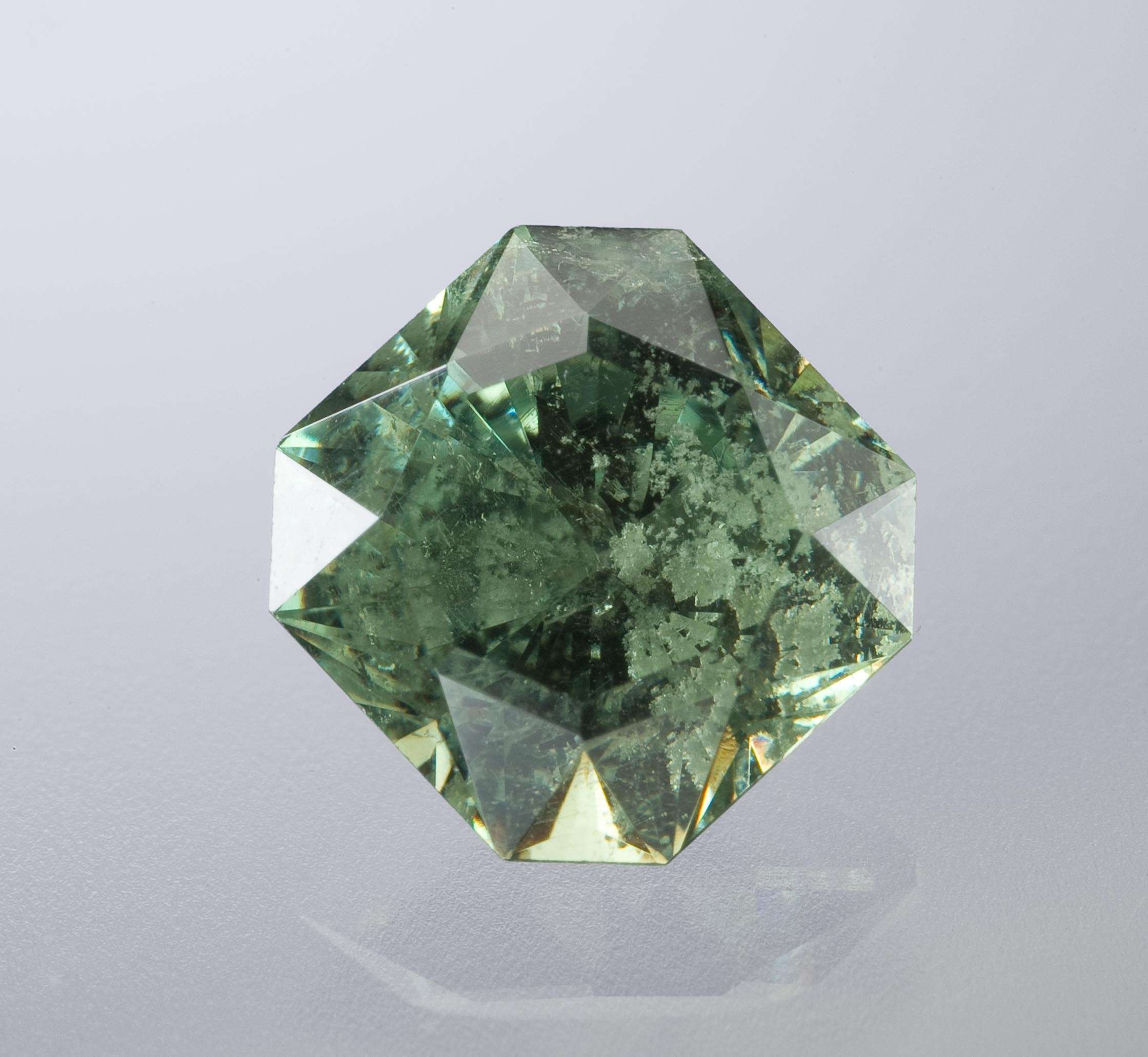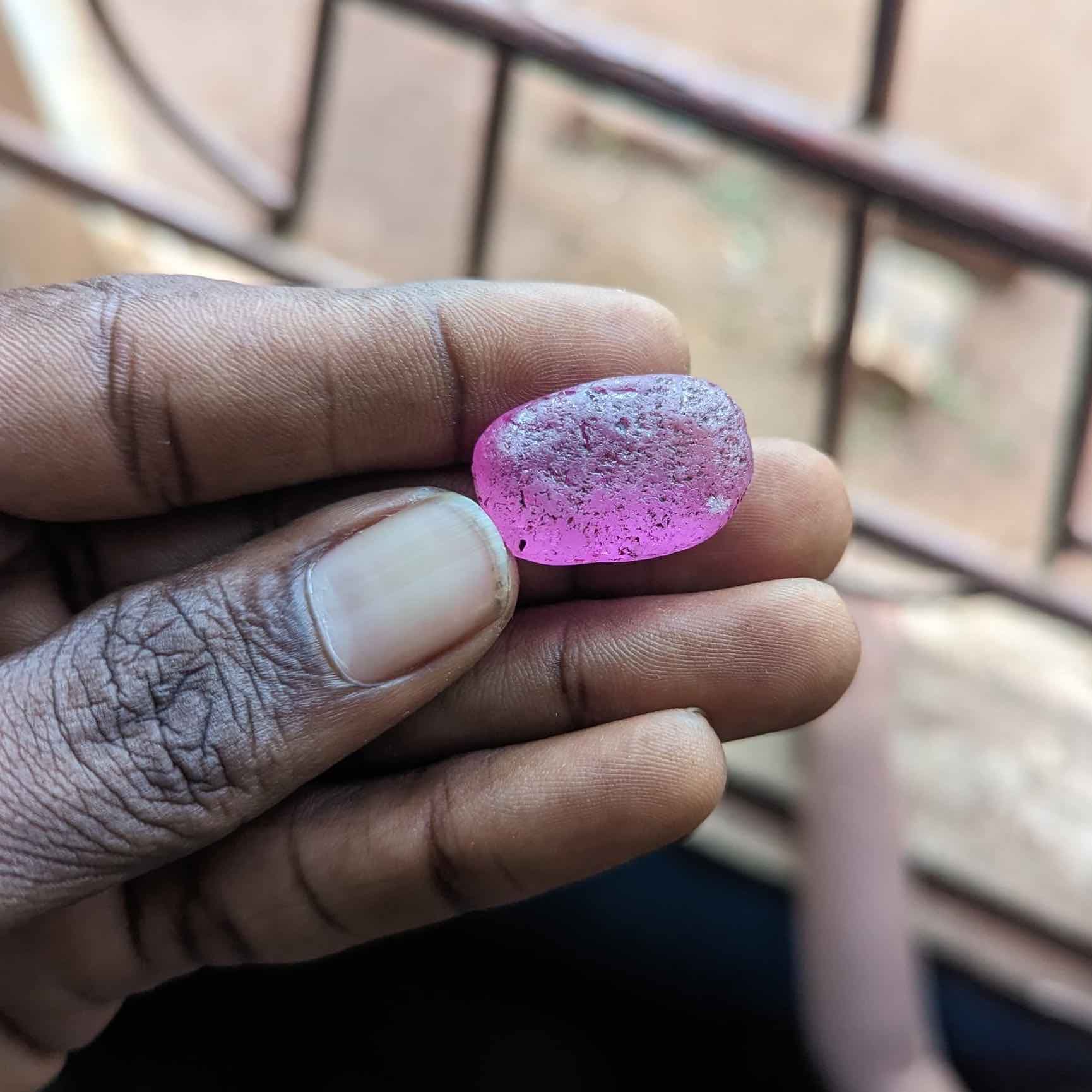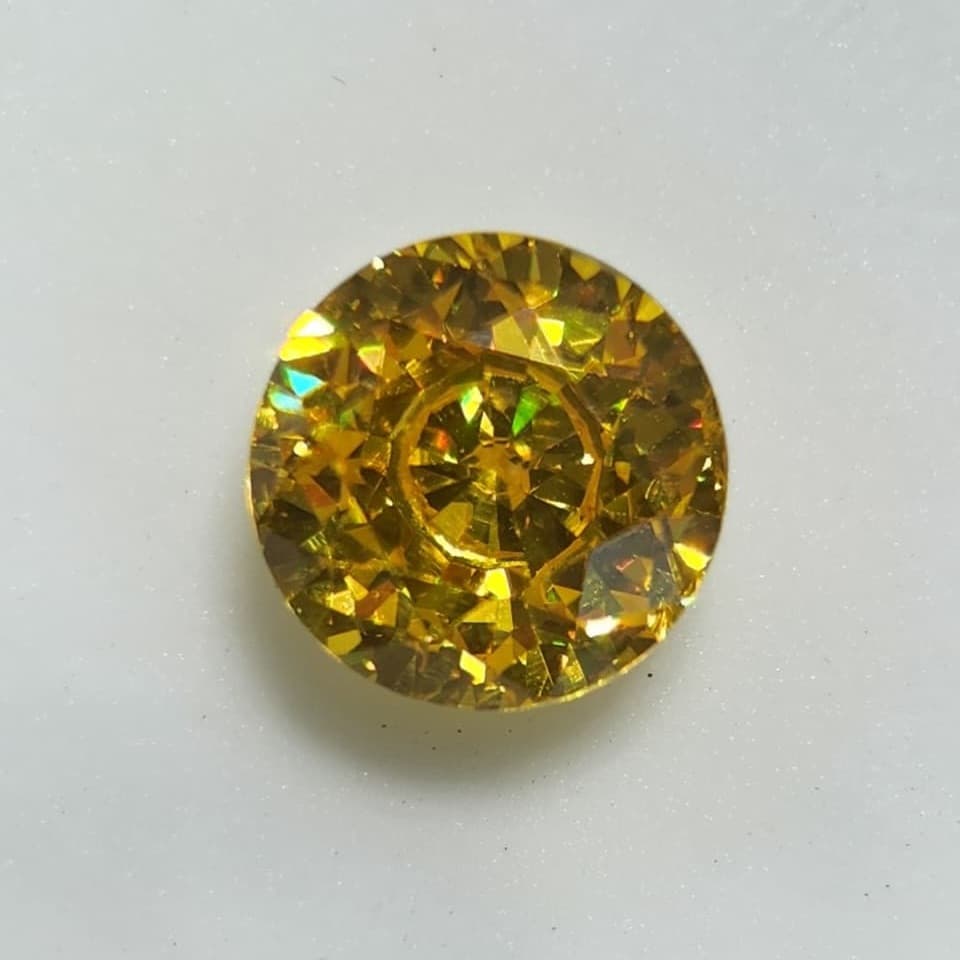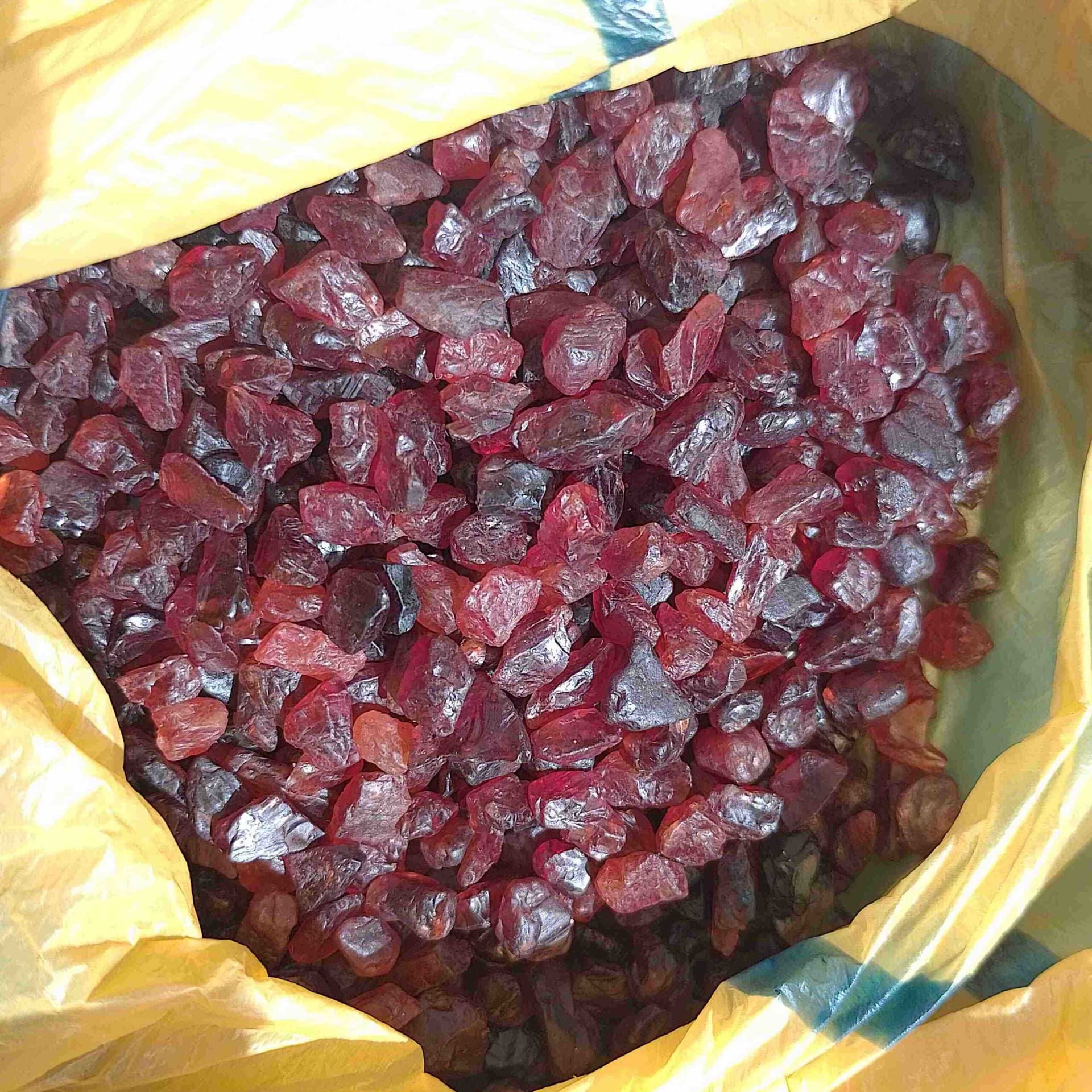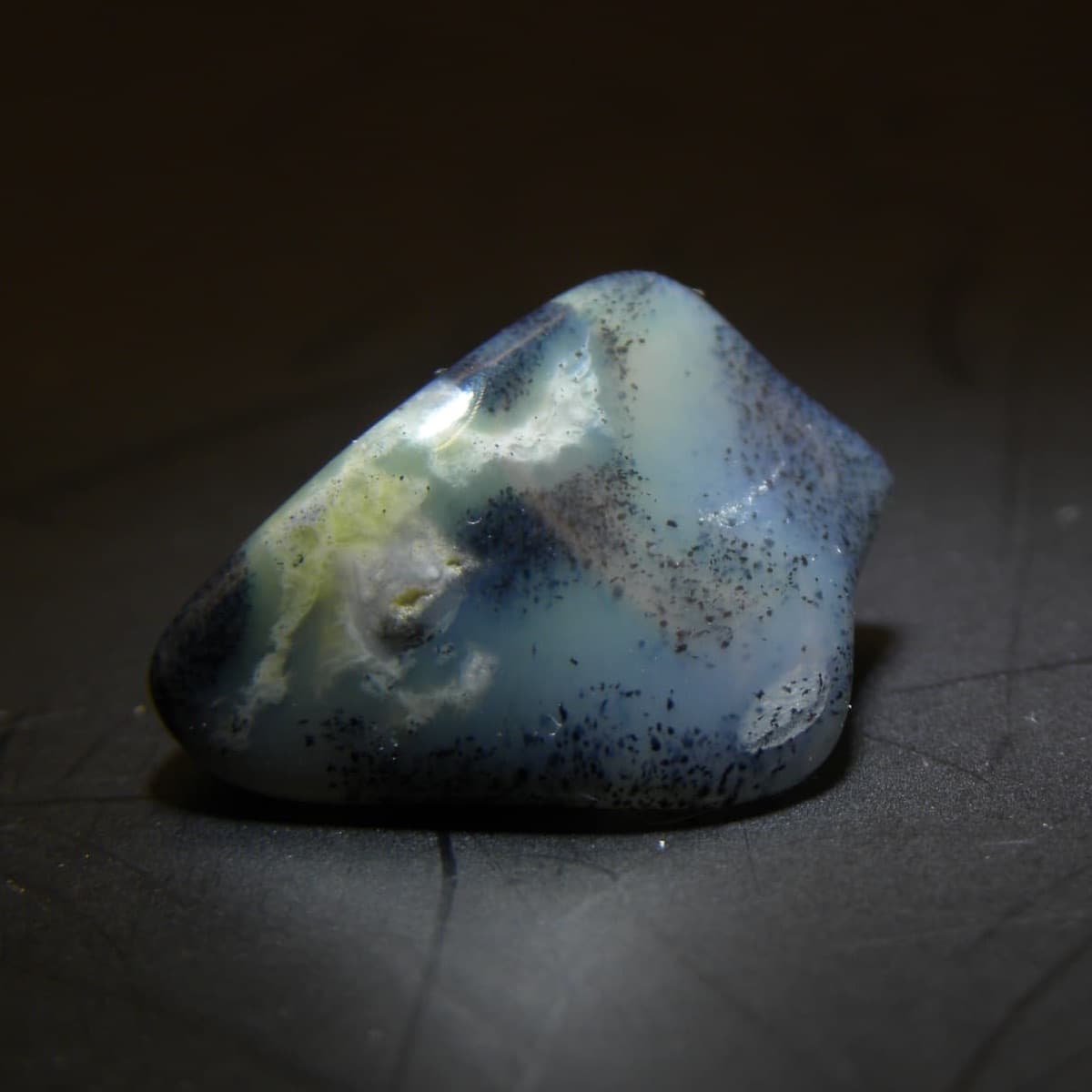
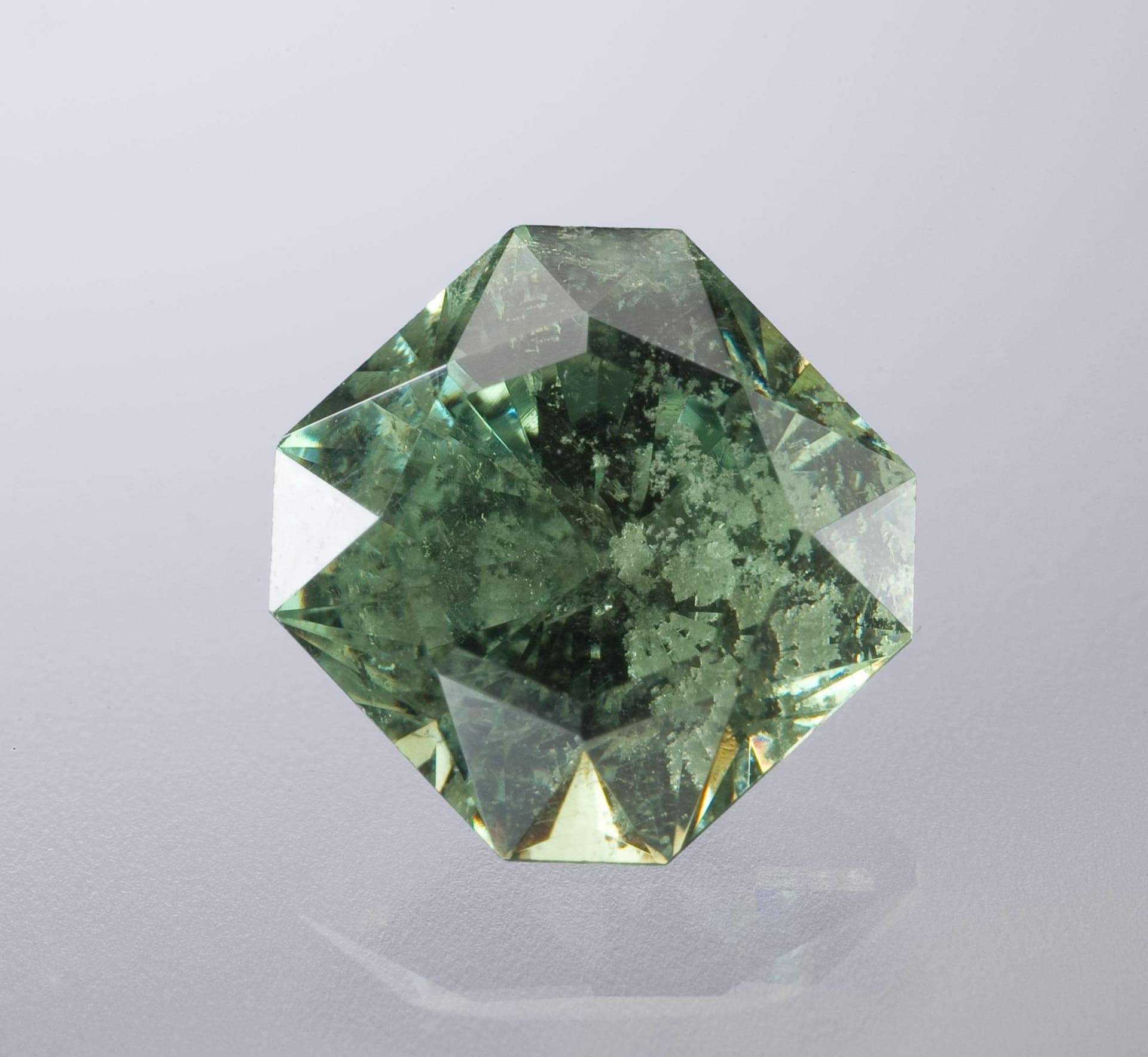
One of the rarest garnet varieties, demantoid can have a green color that rivals emerald and a fire that exceeds diamond. Demantoids are highly prized by both gem collectors and jewelry enthusiasts.
3 Minute Read
Demantoid was discovered in Russia in the early 19th century. In 1854, the noted mineralogist Nils Gustaf Nordenskiöld identified this gem as a variety of andradite garnet. These stones had such exceptional brilliance and dispersion or "fire" that they inspired Nordenskiöld to name demantoid after its "diamond-like" appearance.
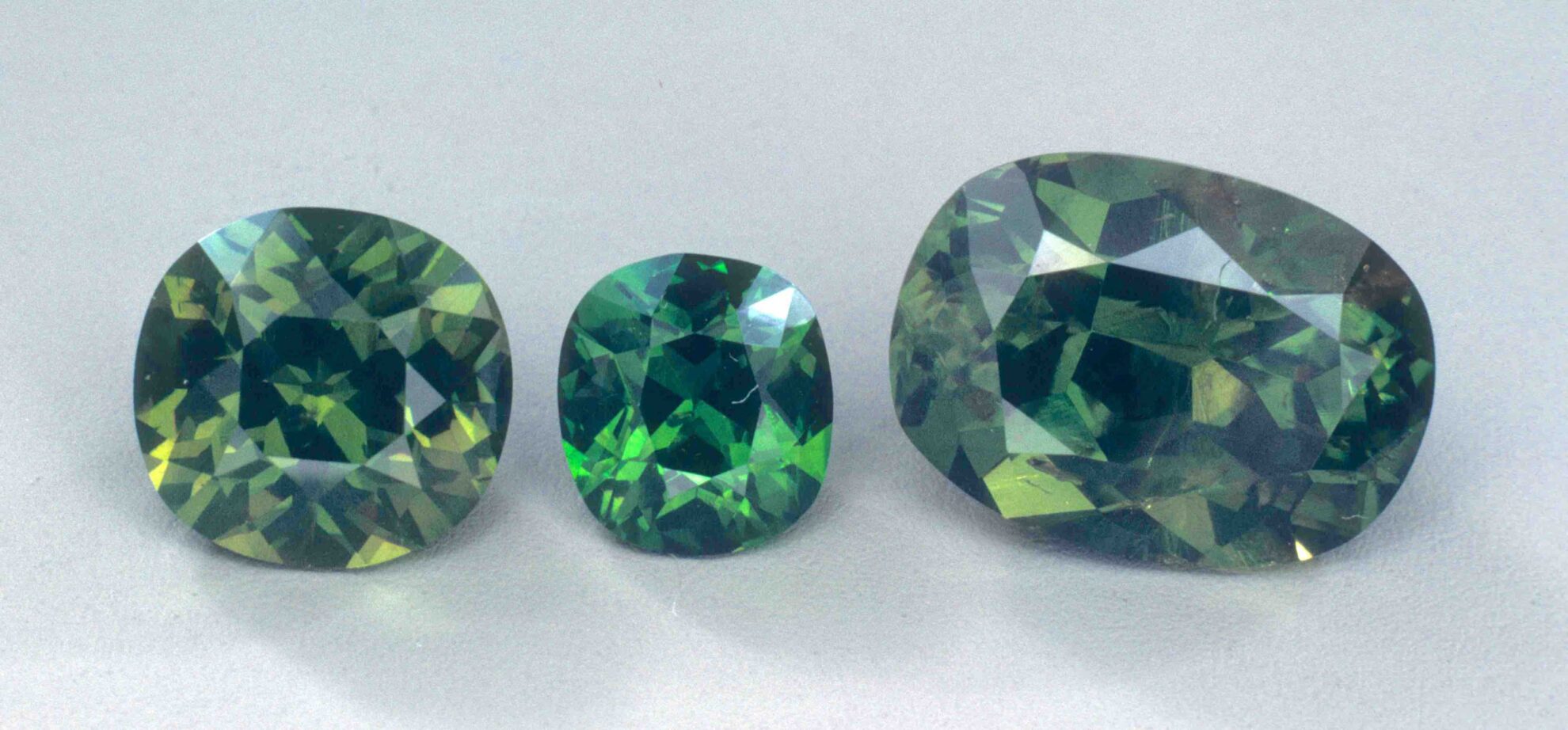
In fact, demantoid has greater brilliance and a higher dispersion than its diamond namesake as well as other well-known green gemstones, such as emerald and peridot. Although dark body colors can mask their dispersion, small demantoids with light colors are quite dazzling.
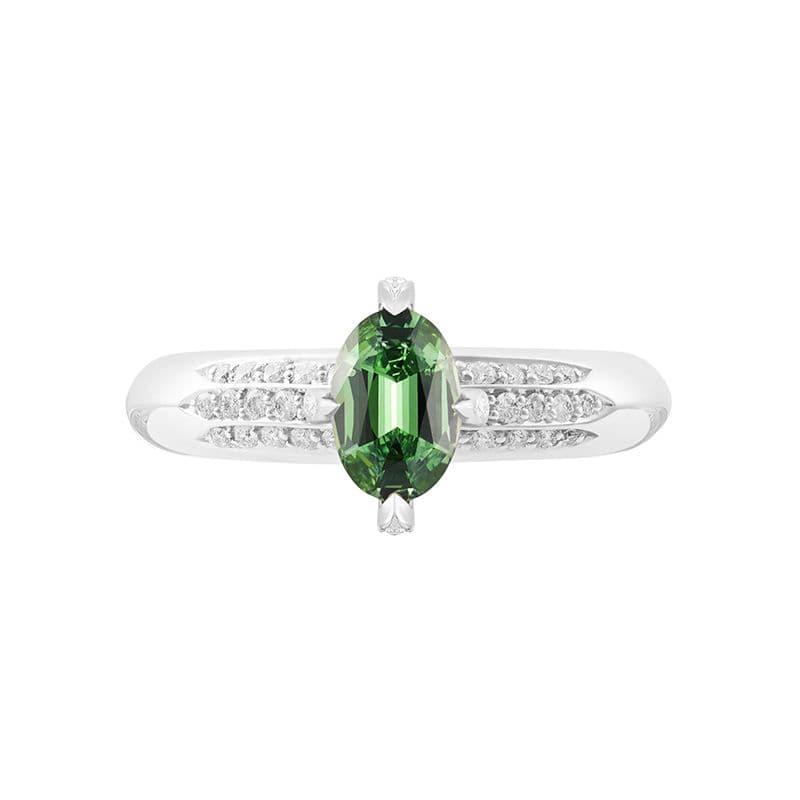
Like most garnets, demantoids can make excellent jewelry stones. However, some demantoids may have a hardness of 6.5, somewhat lower than most other garnets. This means they're somewhat susceptible to scratching. Therefore, use protective settings for these gems, especially if used as ring stones.
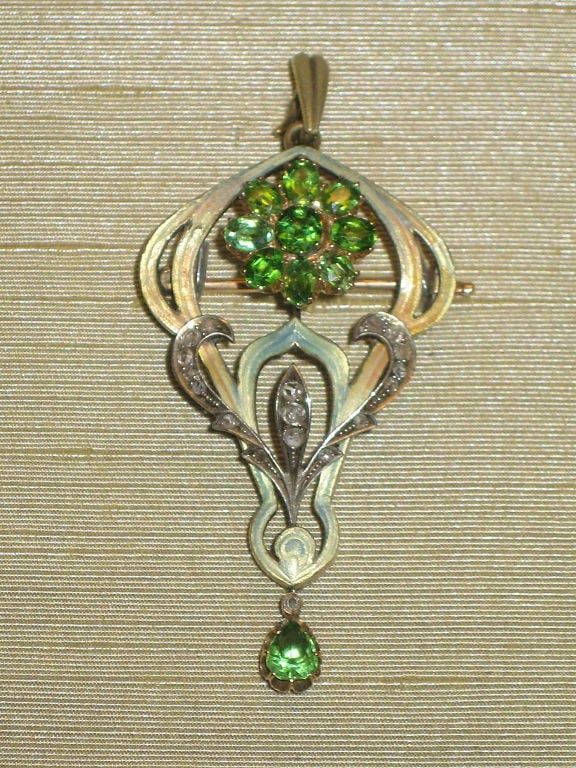
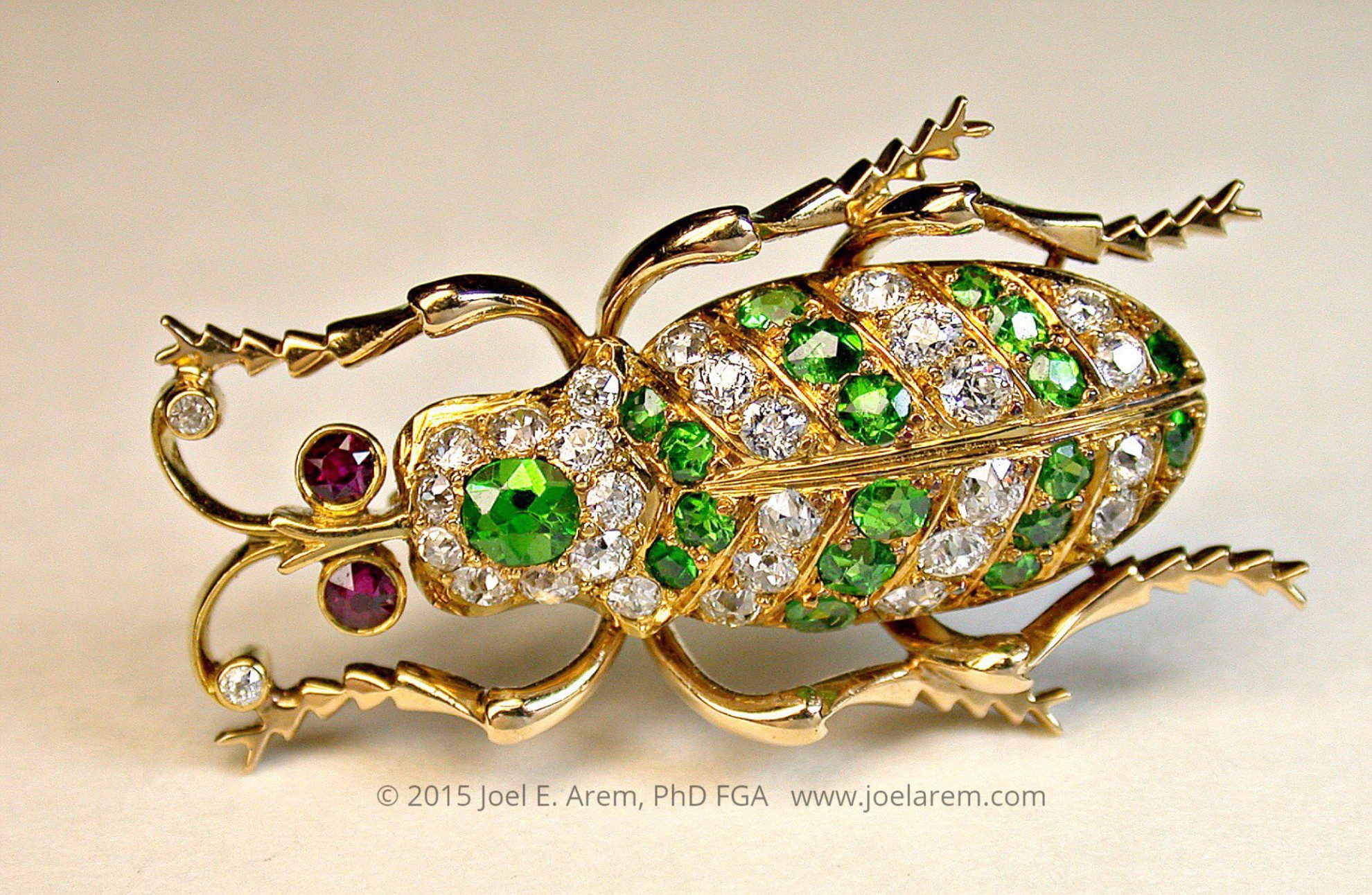
Demantoid was a popular gemstone during the Belle Époque period (1890-1915), especially in Art Nouveau jewelry. The Russian Czars particularly favored this gem.
Russia was long the only source of demantoids, but supplies ran so low, these gems were usually seen only in antique jewelry pieces. However, since the 1990s, new discoveries in Namibia, Madagascar, and other locations, as well as renewed mining in Russia, have made the gem more available. Today, demantoids are still desirable, but very expensive, jewelry stones.
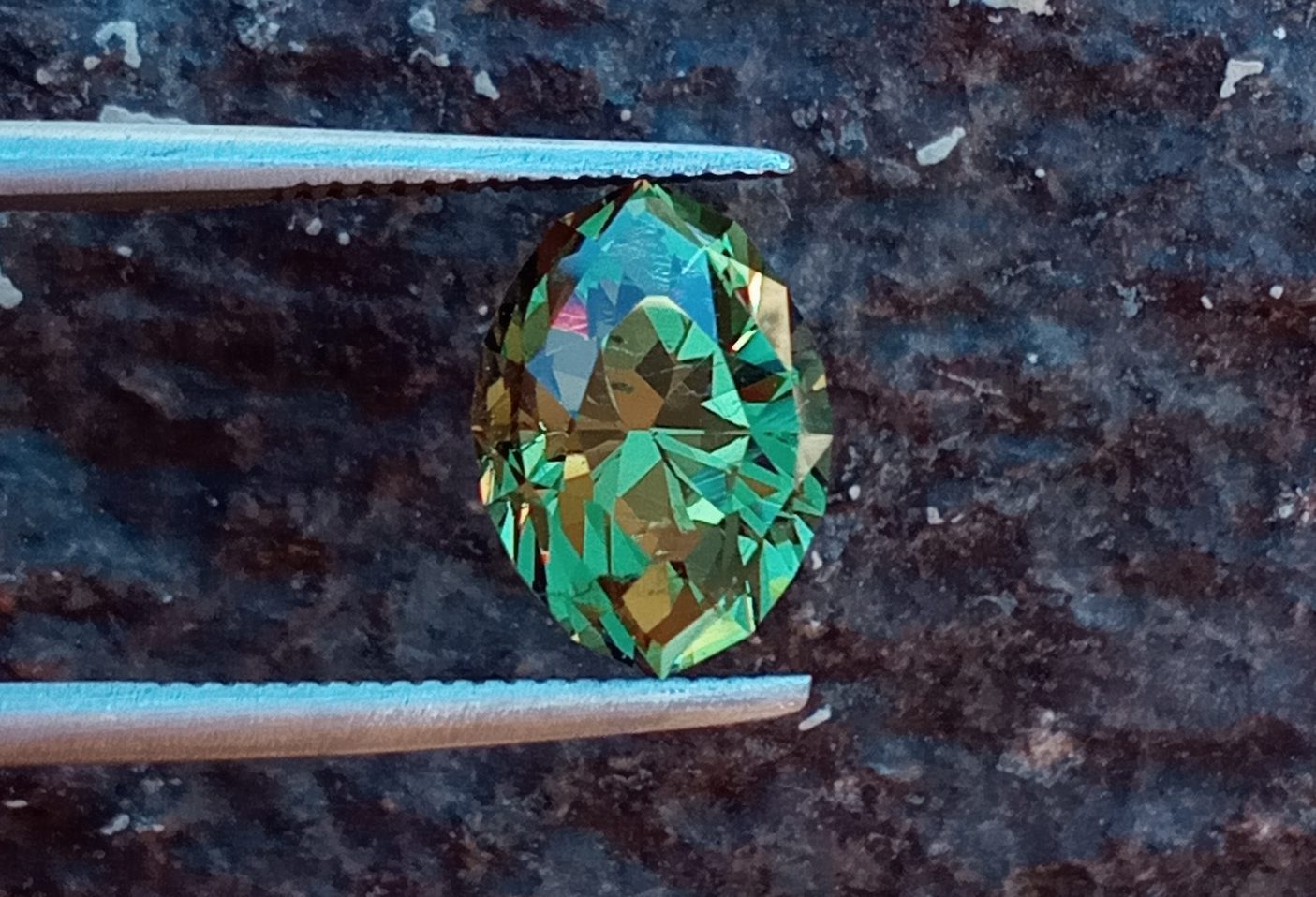
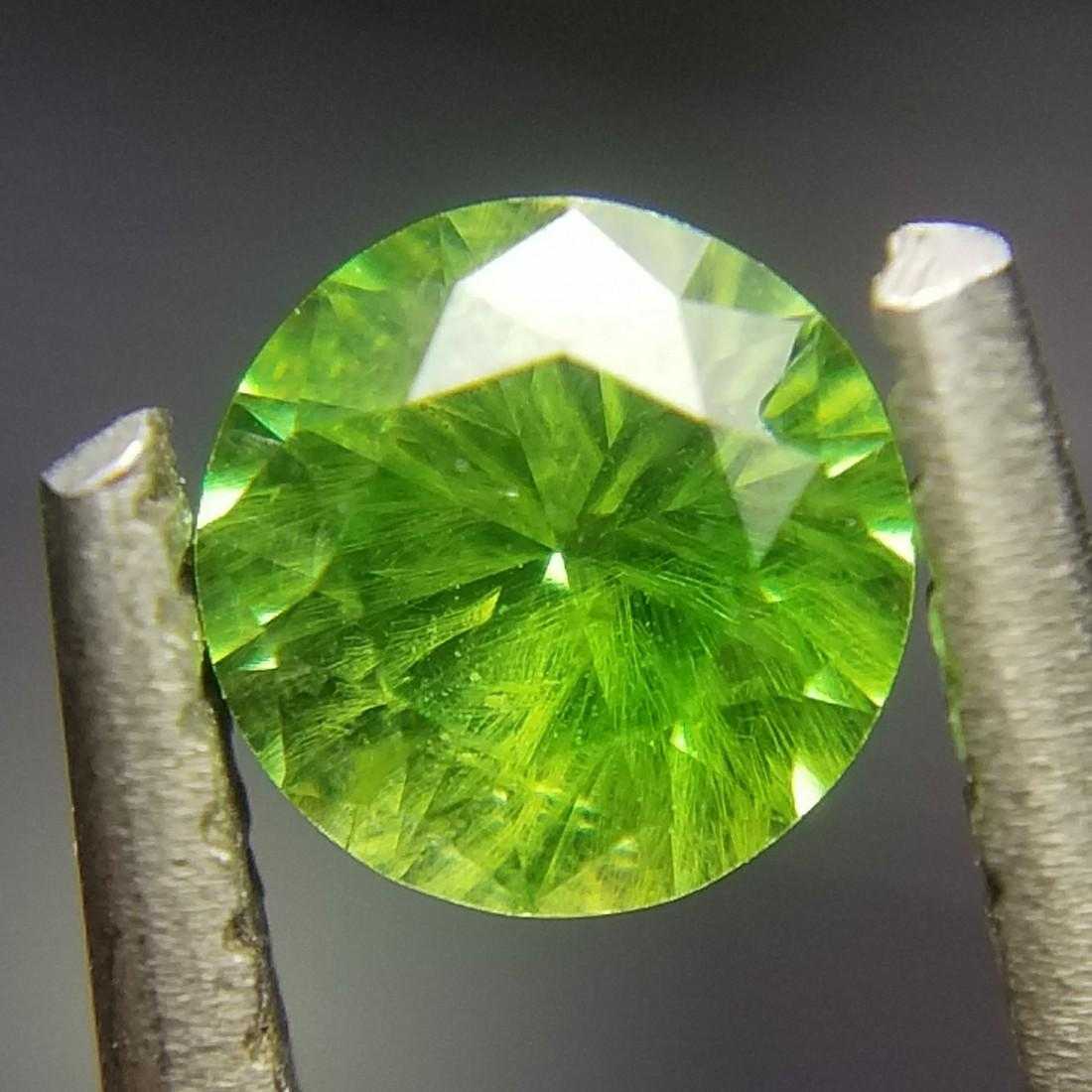
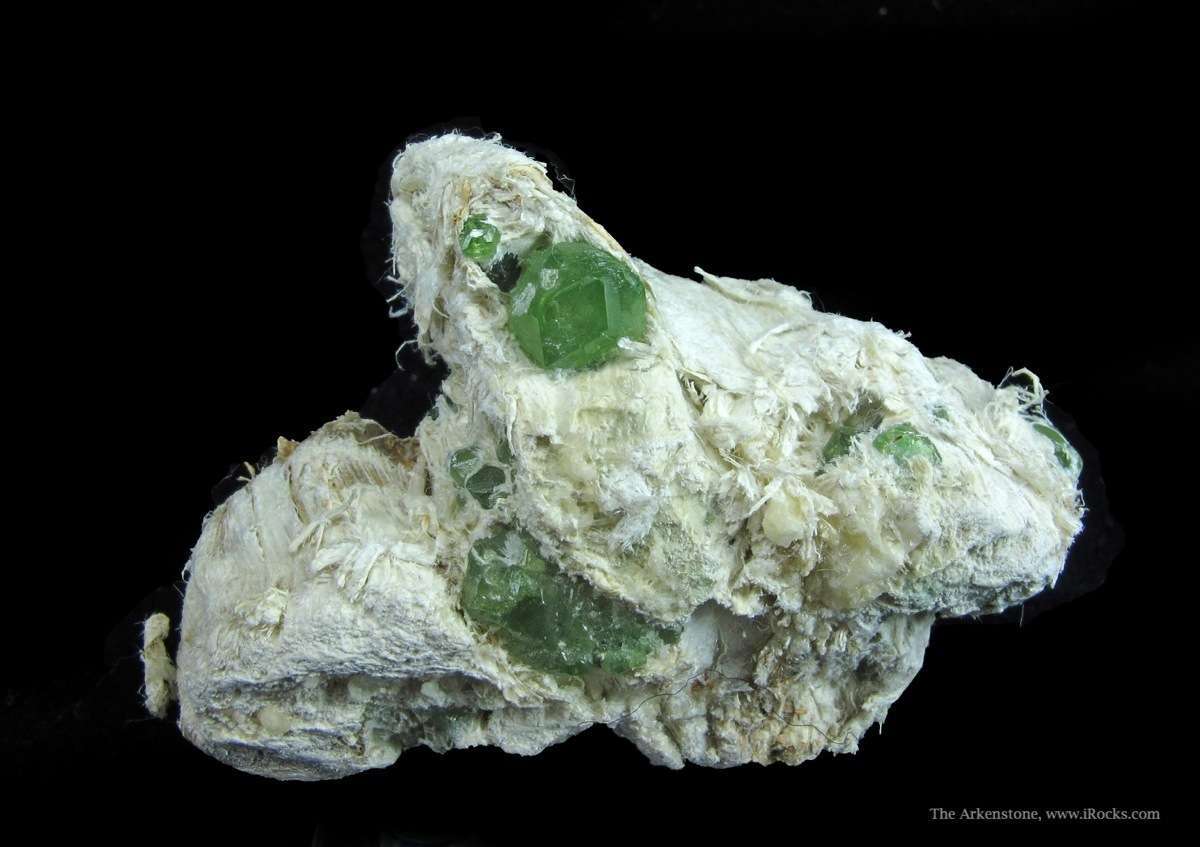
Horsetail inclusions of byssolite or chrysotile, usually golden in color, are named after their long, wavy appearance. These inclusions have long been considered diagnostic for identifying demantoids. However, a 2018 study found horsetail inclusions in non-demantoid (brown) andradite. Thus, horsetails may not be sufficient in and of themselves for identifying demantoids, nor do all demantoids have horsetails.
On very rare occasions, inclusions in demantoids may produce cat's eye gems.
Although demantoids may have an emerald-like color and included appearance, the optical and physical properties of these two distinct gem species differ considerably. Most visibly, demantoids have greater dispersion and no birefringence. (Note that some demantoids may show anomalous birefringence. A polariscope examination can help determine if a stone is truly birefringent).
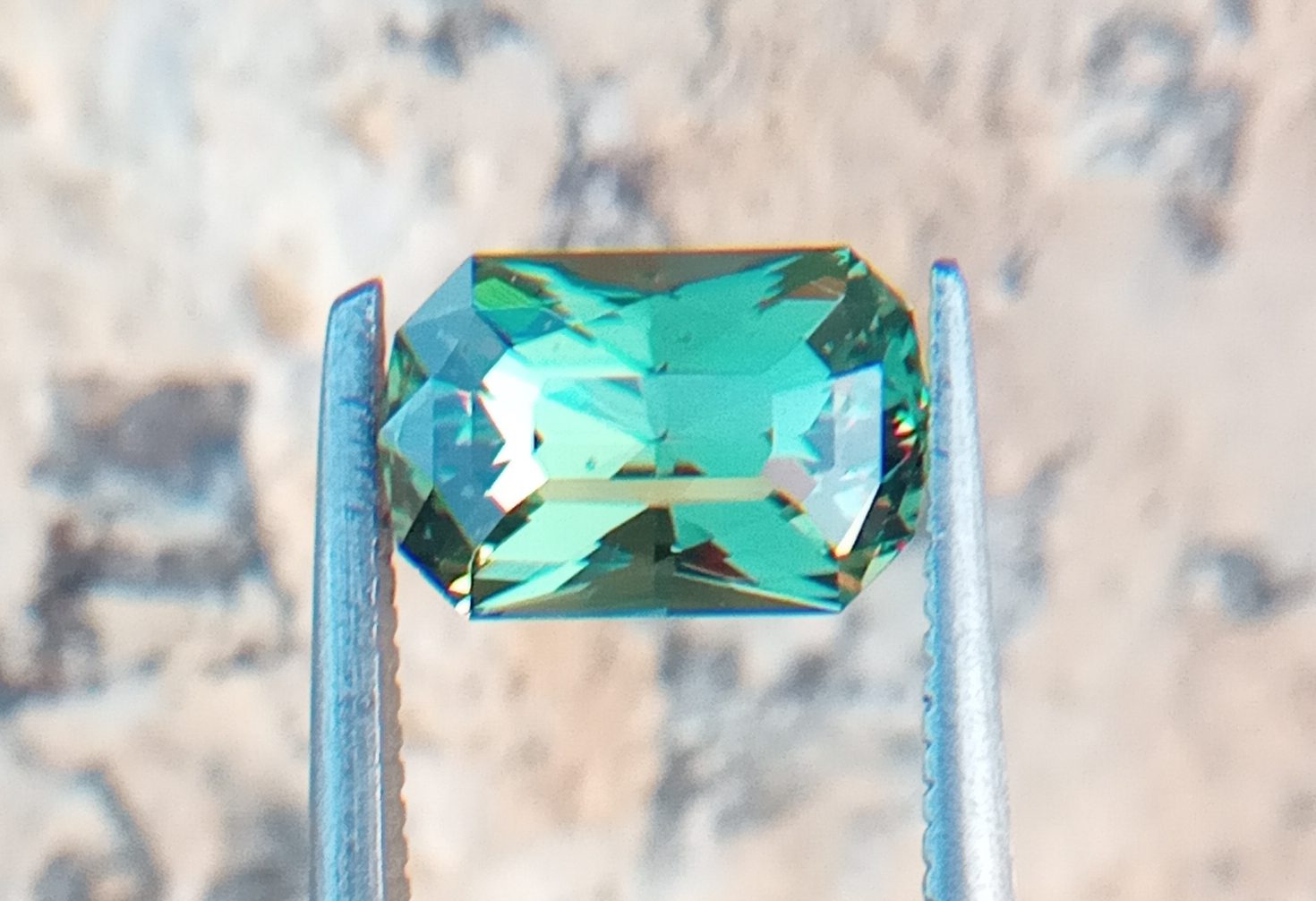
Like demantoids, tsavorites and uvarovites are rare garnet varieties with emerald-like color. However, the specific gravity (SG) and dispersion of demantoid exceed that of its green garnet brethren.
Demantoid hasn't been synthesized, but green glass as well as green yttrium aluminum garnet (YAG), a synthetic garnet, have been used as simulants.
Heating may improve demantoid color. This is a stable and undetectable treatment.
Historically and currently, Russia has been an important producer of demantoids. Notable gem sources include the Ural Mountains region, the Koryakskoe plateau, and the Kola Peninsula.
Since 1996 and 2009, respectively, Namibia and Madagascar have become commercially important sources.
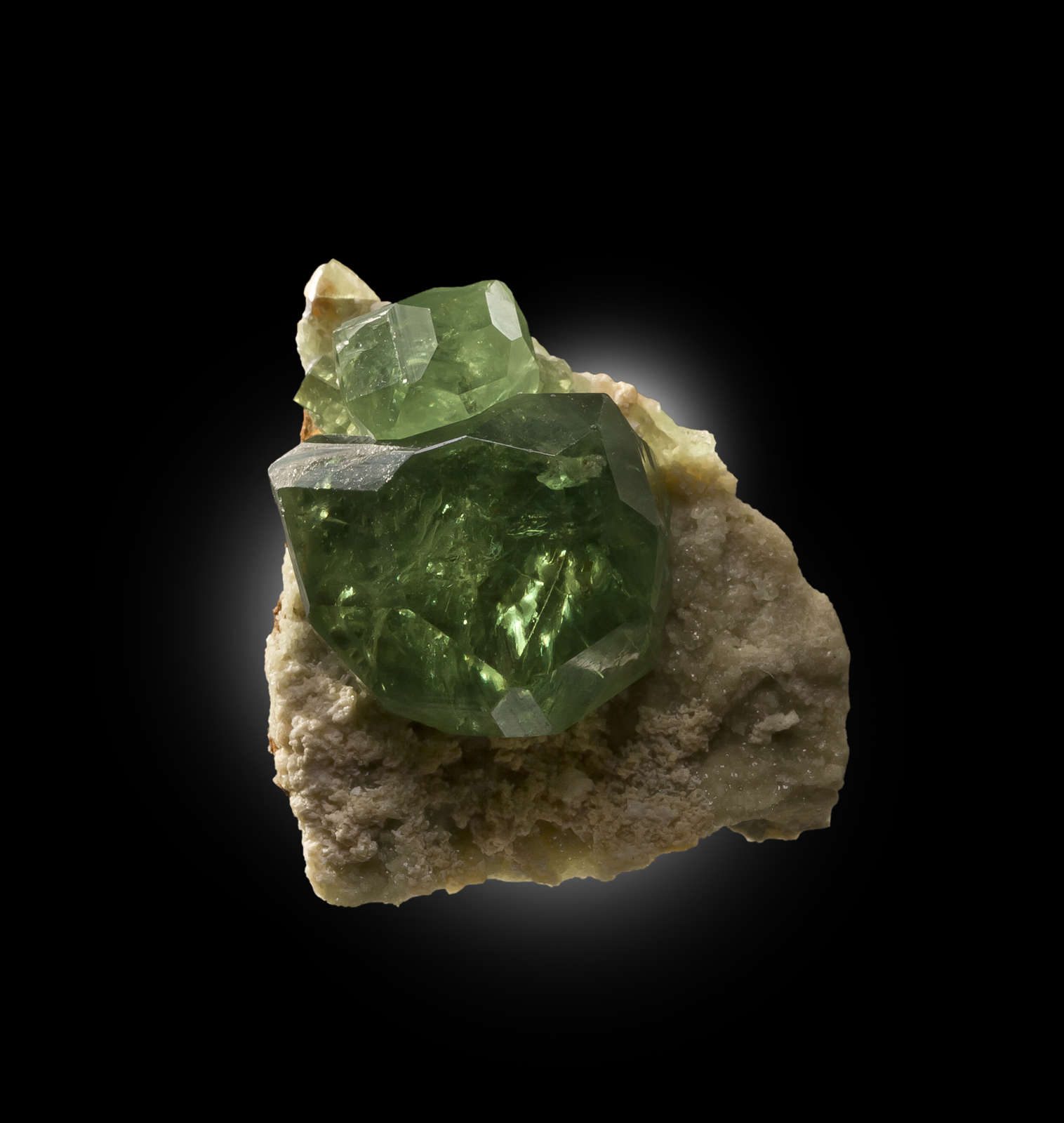
In Italy, Ala, Piedmont produces dark, apple-green material. Val Malenco, Sondrio Province also produces demantoids.
Other notable sources of gem-quality demantoids include the following:
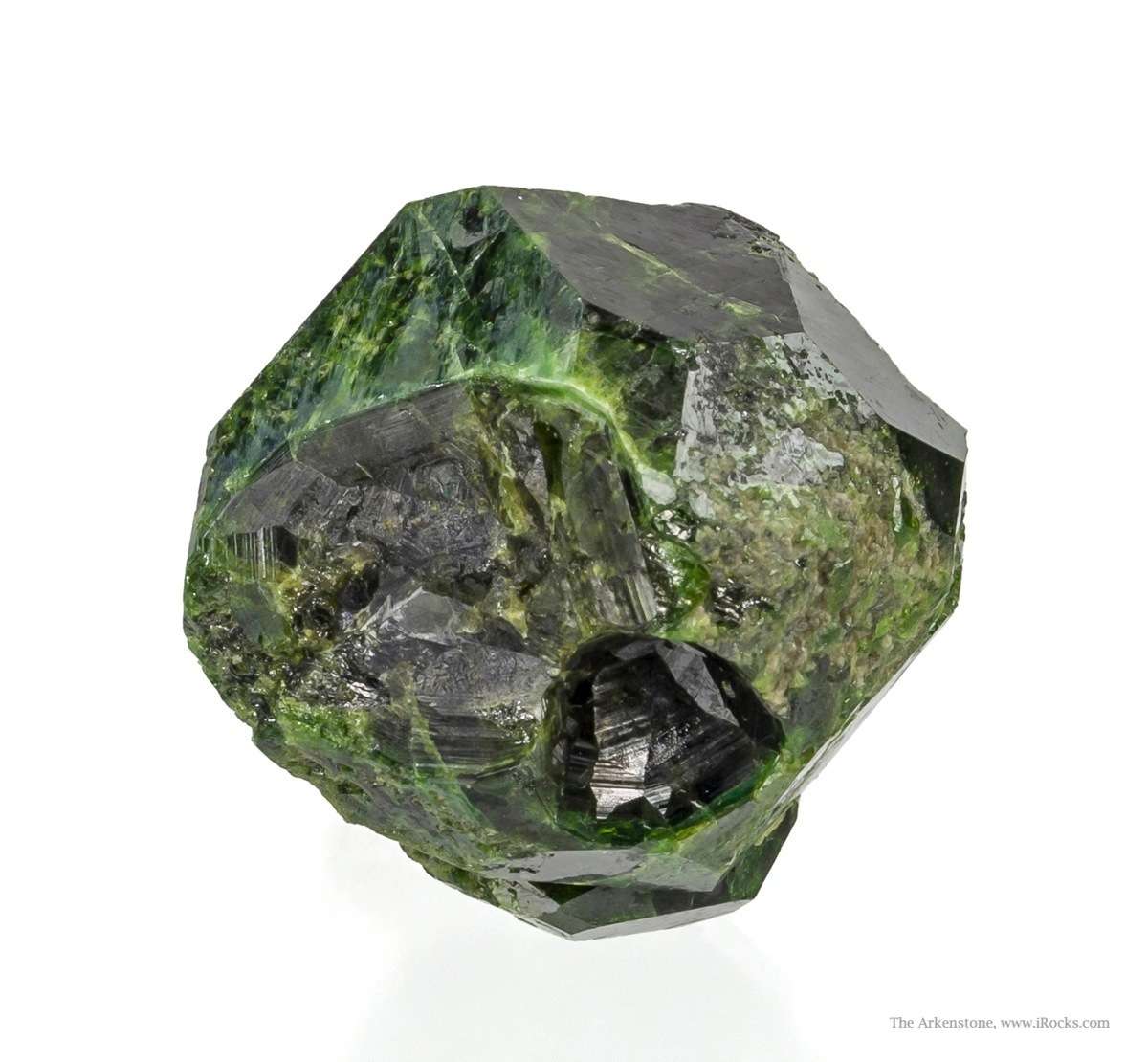
Demantoids are typically small stones. Stones larger than 10 carats are very rare. Faceted stones greater than 1 carat are rarely seen. The largest demantoid ever found hailed from the Russian Urals and weighed 252.5 carats or 50.5 grams.
The Smithsonian Institution has a faceted 11.24-carat specimen on display.
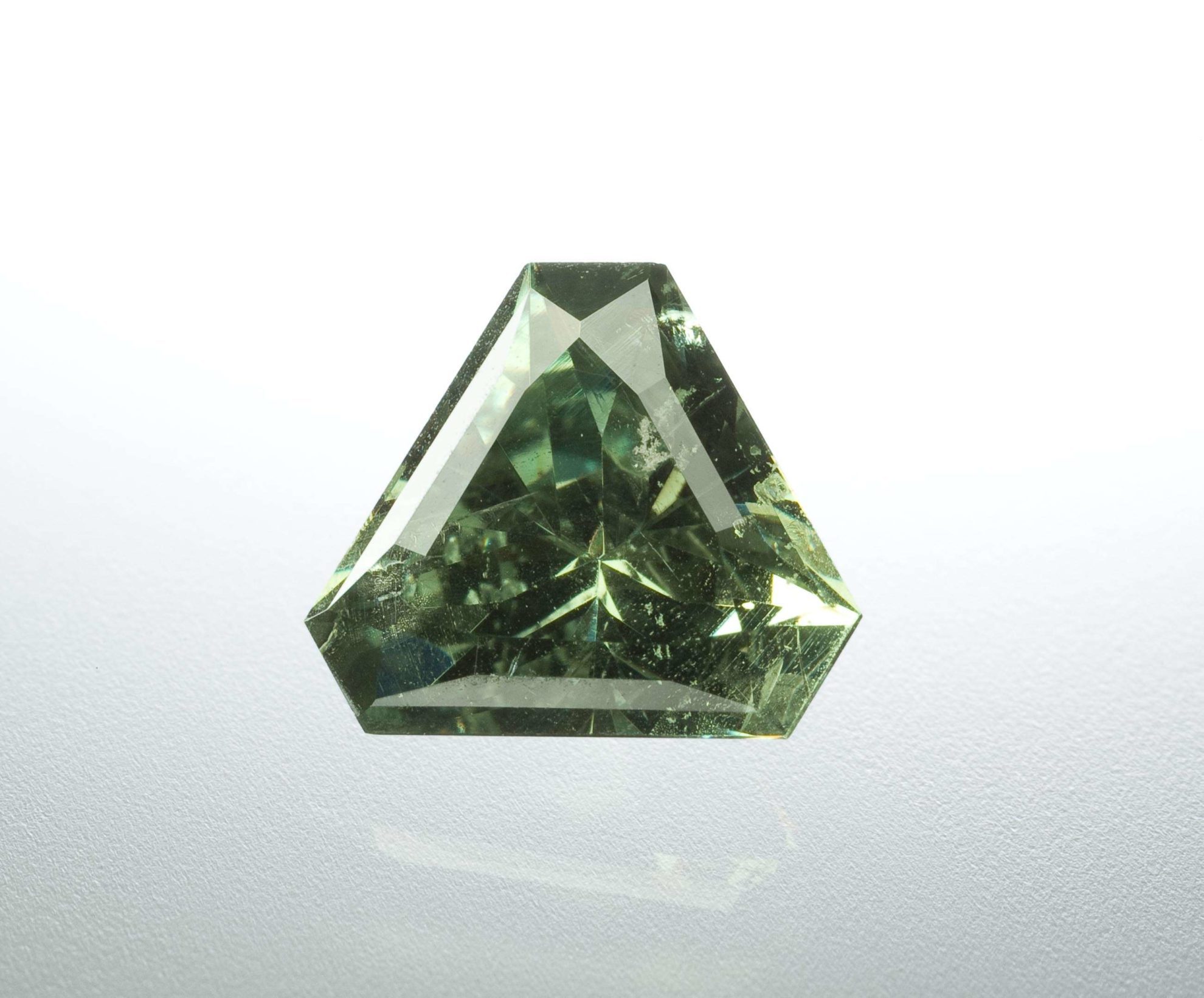
Consumers may encounter demantoids offered for sale under such names as "Siberian emeralds," "Siberian chrysolites," and "Ural chrysolites." Of course, garnets constitute a distinct group of gem species from emeralds. "Chrysolite" is an archaic term for green to yellow-green gems that has been applied to peridots as well as chrysoberyls and prehnites. These gems also constitute species distinct from demantoids.
For more examples, consult our article on false or misleading gemstone names.
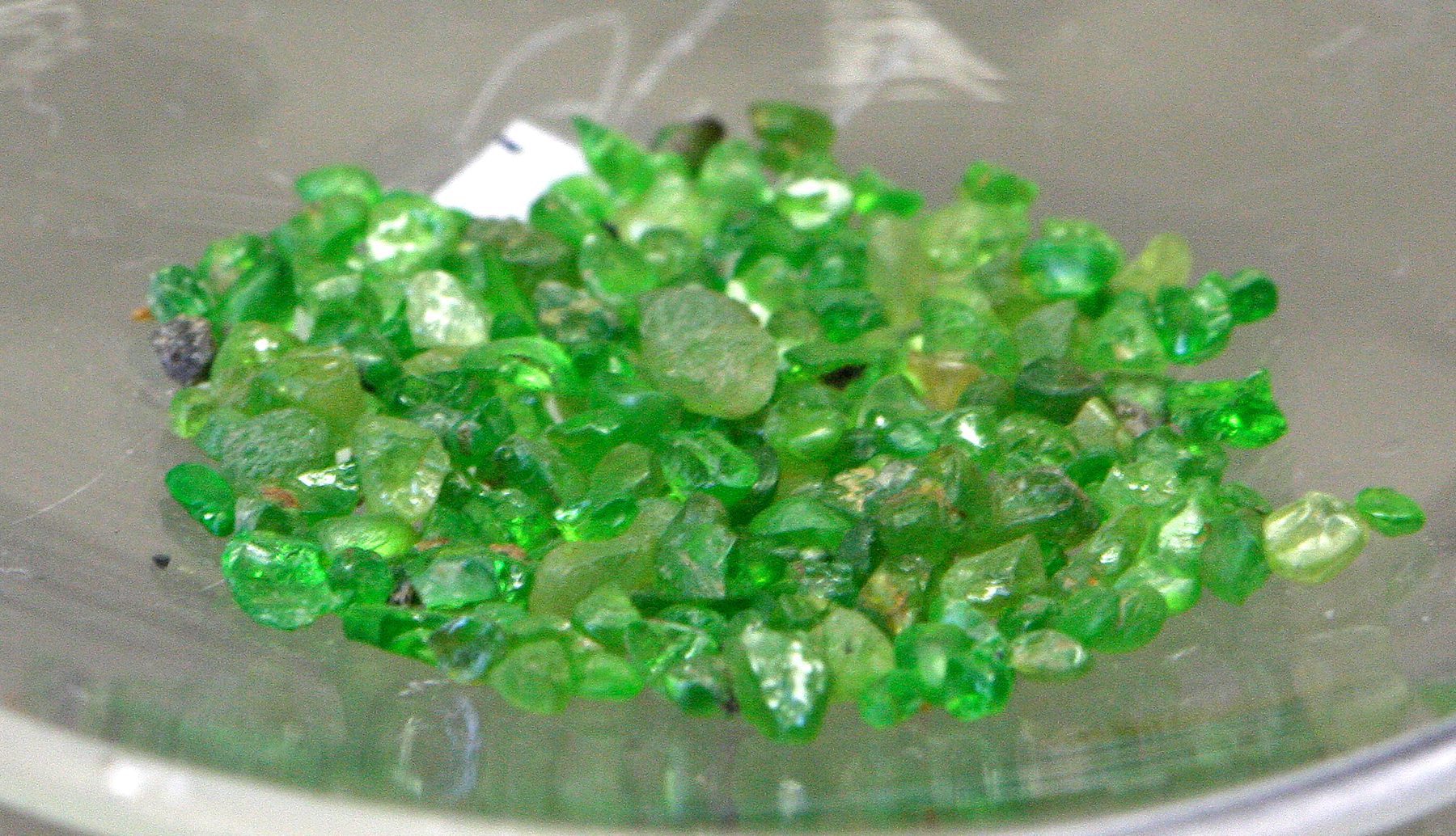
Heat sensitive garnets, like demantoids, should be cleaned with warm water, detergent, and a soft brush. Avoid mechanical cleaning and exposure to extreme heat.
Consult our gemstone care guide and jewelry cleaning guide for more information.

When you join the IGS community, you get trusted diamond & gemstone information when you need it.
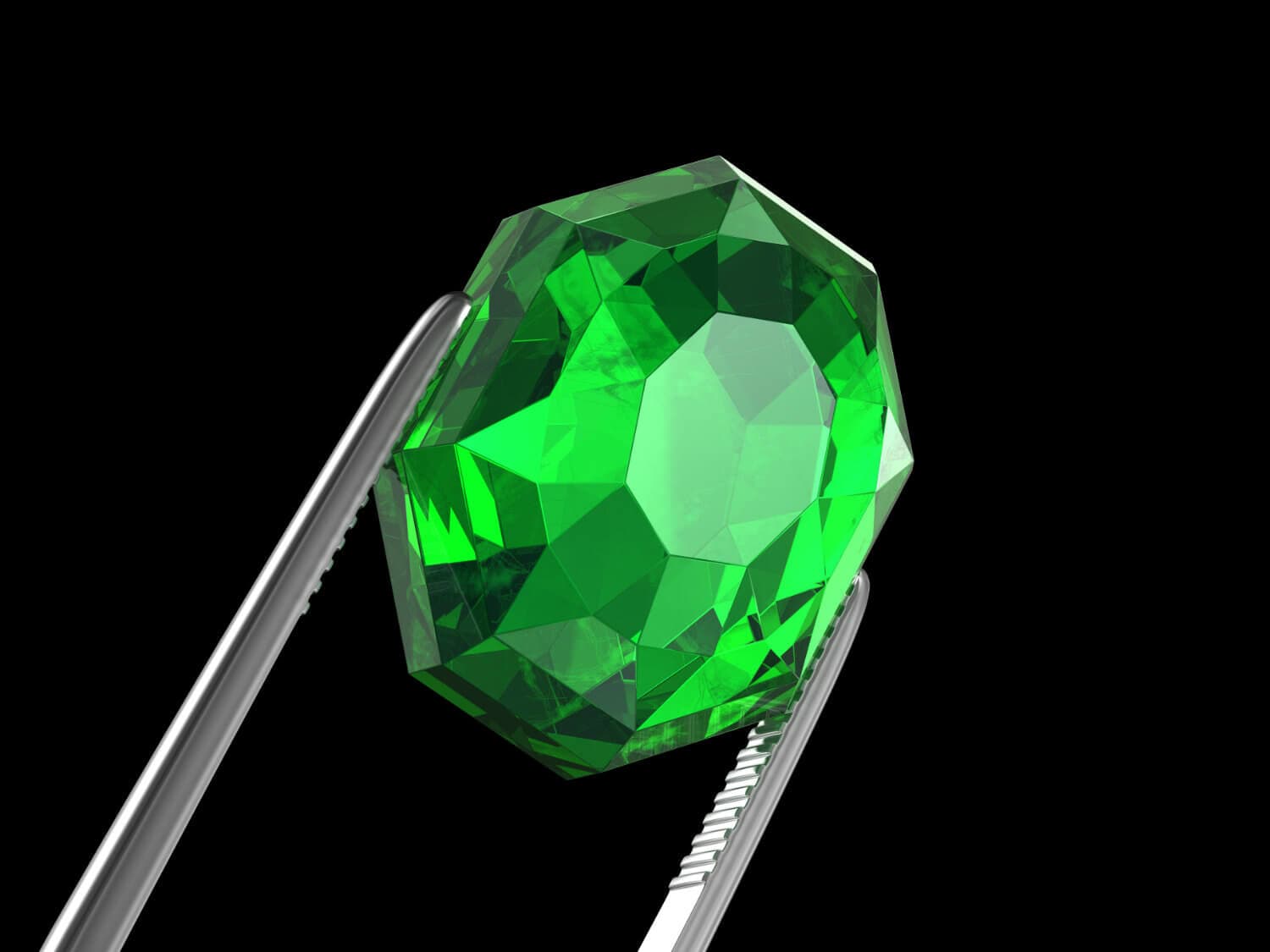
Demantoid was discovered in Russia in the early 19th century. In 1854, the noted mineralogist Nils Gustaf Nordenskiöld identified this gem as a variety of andradite garnet. These stones had such exceptional brilliance and dispersion or "fire" that they inspired Nordenskiöld to name demantoid after its "diamond-like" appearance.
In fact, demantoid has greater brilliance and a higher dispersion than its diamond namesake as well as other well-known green gemstones, such as emerald and peridot. Although dark body colors can mask their dispersion, small demantoids with light colors are quite dazzling.
Like most garnets, demantoids can make excellent jewelry stones. However, some demantoids may have a hardness of 6.5, somewhat lower than most other garnets. This means they're somewhat susceptible to scratching. Therefore, use protective settings for these gems, especially if used as ring stones.
Demantoid was a popular gemstone during the Belle Époque period (1890-1915), especially in Art Nouveau jewelry. The Russian Czars particularly favored this gem.
Russia was long the only source of demantoids, but supplies ran so low, these gems were usually seen only in antique jewelry pieces. However, since the 1990s, new discoveries in Namibia, Madagascar, and other locations, as well as renewed mining in Russia, have made the gem more available. Today, demantoids are still desirable, but very expensive, jewelry stones.
Horsetail inclusions of byssolite or chrysotile, usually golden in color, are named after their long, wavy appearance. These inclusions have long been considered diagnostic for identifying demantoids. However, a 2018 study found horsetail inclusions in non-demantoid (brown) andradite. Thus, horsetails may not be sufficient in and of themselves for identifying demantoids, nor do all demantoids have horsetails.
On very rare occasions, inclusions in demantoids may produce cat's eye gems.
Although demantoids may have an emerald-like color and included appearance, the optical and physical properties of these two distinct gem species differ considerably. Most visibly, demantoids have greater dispersion and no birefringence. (Note that some demantoids may show anomalous birefringence. A polariscope examination can help determine if a stone is truly birefringent).
Like demantoids, tsavorites and uvarovites are rare garnet varieties with emerald-like color. However, the specific gravity (SG) and dispersion of demantoid exceed that of its green garnet brethren.
Demantoid hasn't been synthesized, but green glass as well as green yttrium aluminum garnet (YAG), a synthetic garnet, have been used as simulants.
Heating may improve demantoid color. This is a stable and undetectable treatment.
Historically and currently, Russia has been an important producer of demantoids. Notable gem sources include the Ural Mountains region, the Koryakskoe plateau, and the Kola Peninsula.
Since 1996 and 2009, respectively, Namibia and Madagascar have become commercially important sources.
In Italy, Ala, Piedmont produces dark, apple-green material. Val Malenco, Sondrio Province also produces demantoids.
Other notable sources of gem-quality demantoids include the following:
Demantoids are typically small stones. Stones larger than 10 carats are very rare. Faceted stones greater than 1 carat are rarely seen. The largest demantoid ever found hailed from the Russian Urals and weighed 252.5 carats or 50.5 grams.
The Smithsonian Institution has a faceted 11.24-carat specimen on display.
Consumers may encounter demantoids offered for sale under such names as "Siberian emeralds," "Siberian chrysolites," and "Ural chrysolites." Of course, garnets constitute a distinct group of gem species from emeralds. "Chrysolite" is an archaic term for green to yellow-green gems that has been applied to peridots as well as chrysoberyls and prehnites. These gems also constitute species distinct from demantoids.
For more examples, consult our article on false or misleading gemstone names.
Heat sensitive garnets, like demantoids, should be cleaned with warm water, detergent, and a soft brush. Avoid mechanical cleaning and exposure to extreme heat.
Consult our gemstone care guide and jewelry cleaning guide for more information.



One of the rarest garnet varieties, demantoid can have a green color that rivals emerald and a fire that exceeds diamond. Demantoids are highly prized by both gem collectors and jewelry enthusiasts.
Even with the discovery of new sources since the 1990s, demantoid remains very rare. It’s the most well-known andradite garnet and one of the most valuable garnets of any variety. Clean, facetable stones command very high prices per carat. However, demantoids with horsetail inclusions — wavy, golden, and fibrous — are especially coveted by collectors.
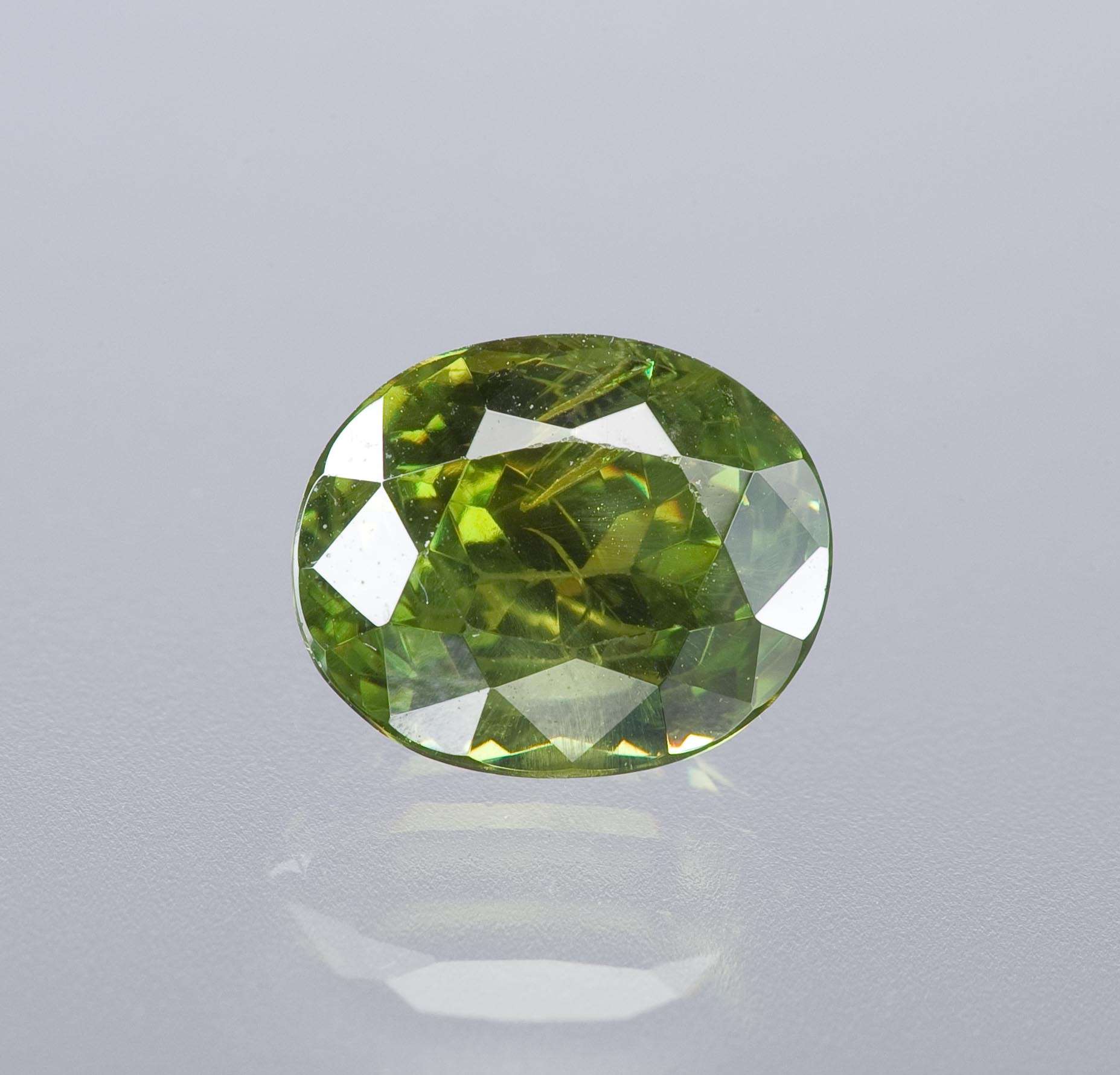
For more information on value and quality factors for demantoids, consult our buying guide.