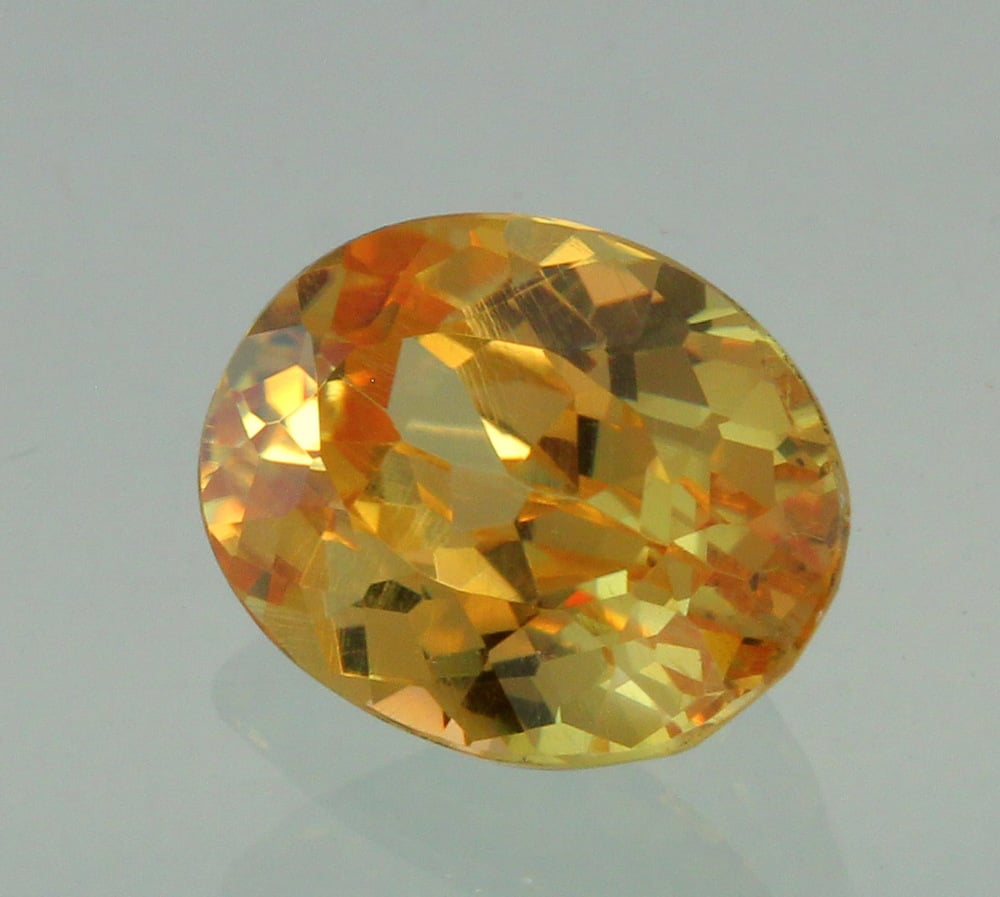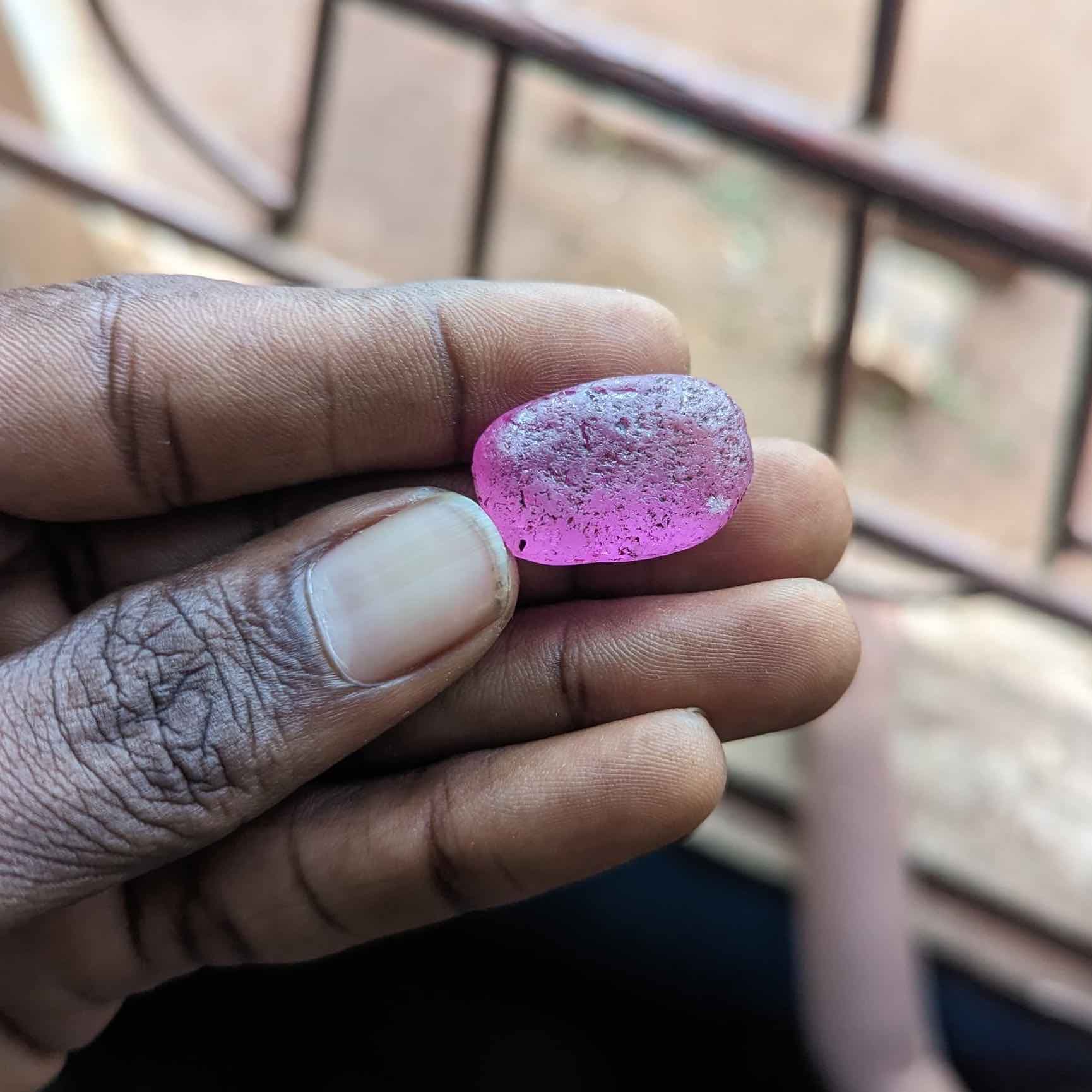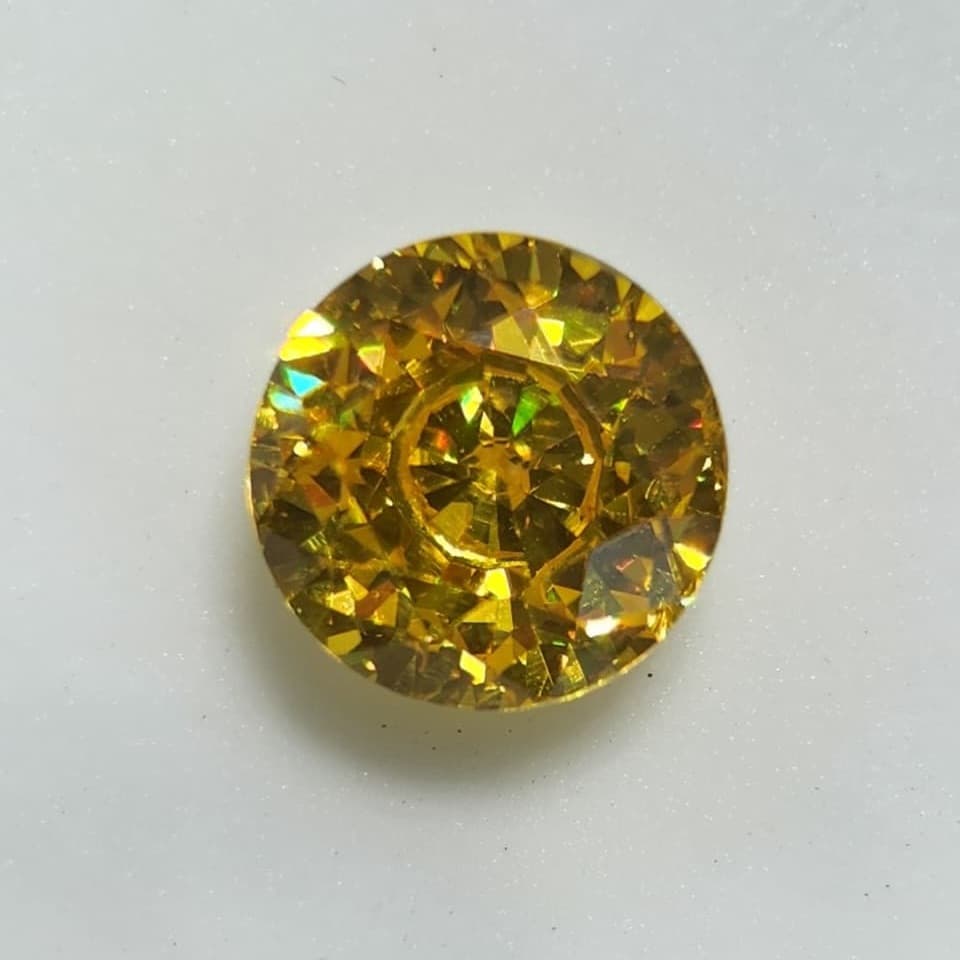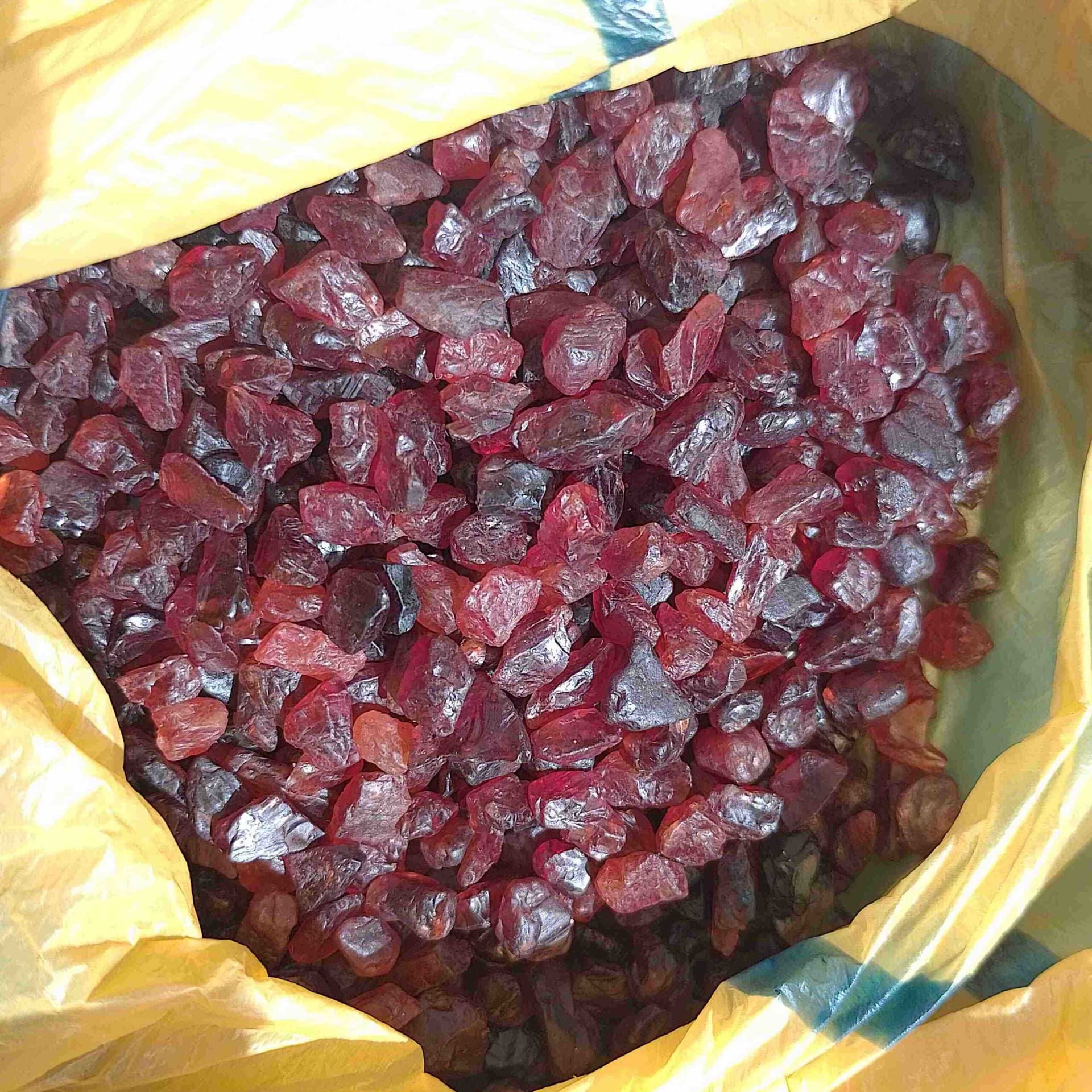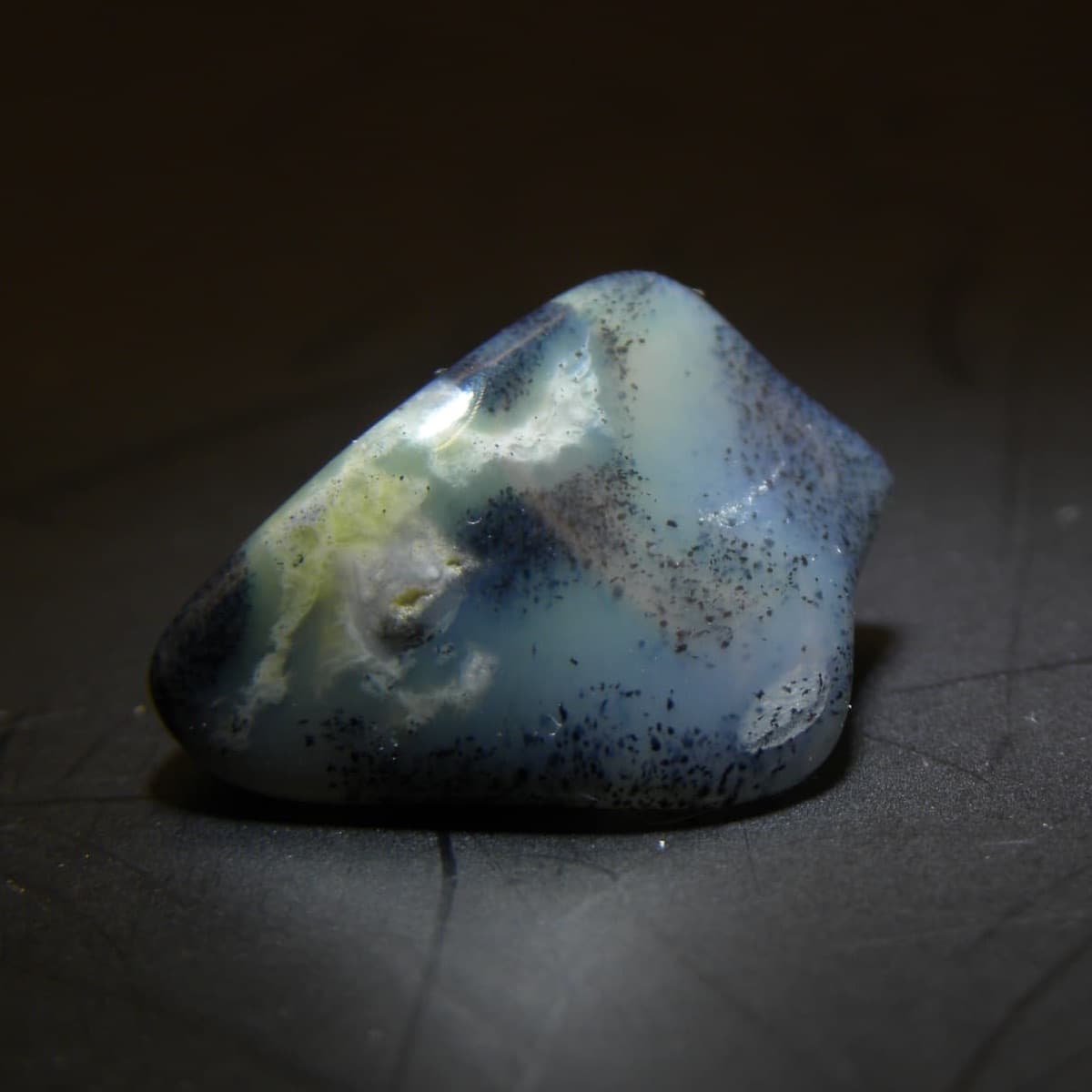
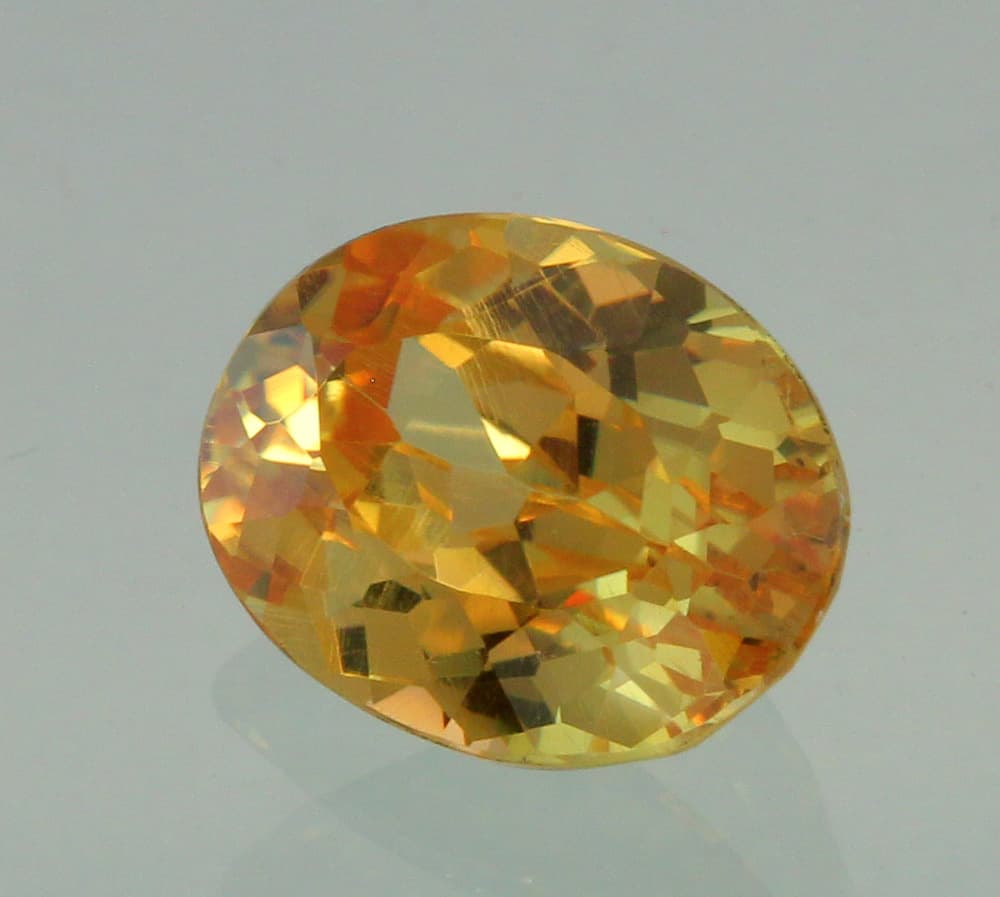
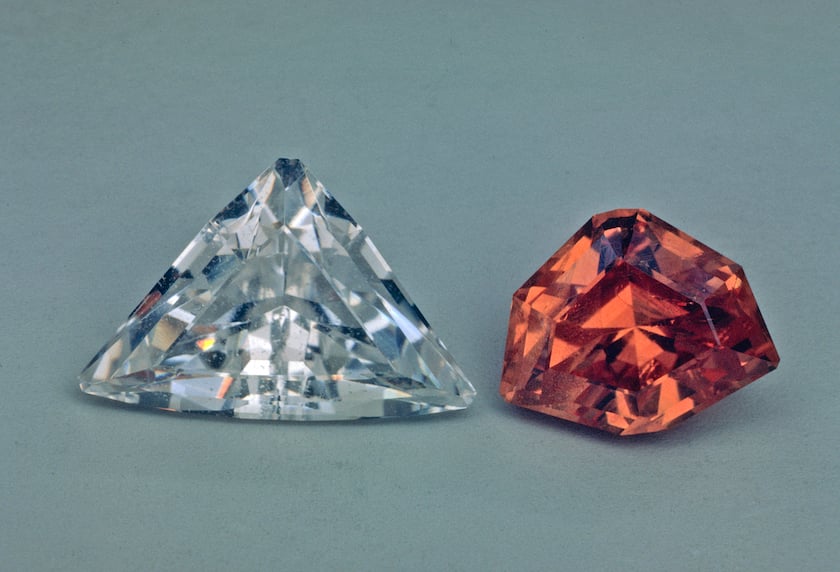
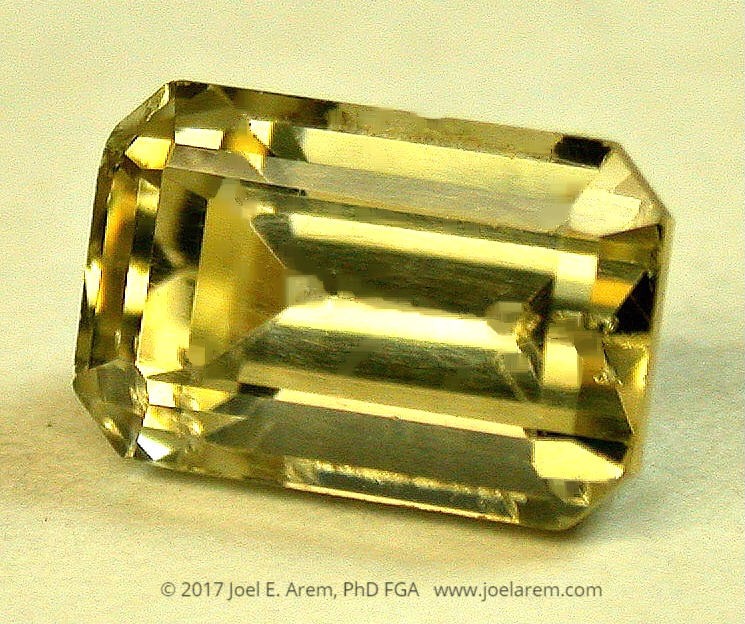
Large, faceted scheelites are among the most beautiful of all collector’s gemstones. They occur in many colors and fluoresce very brightly. If cut properly, scheelites can have tremendous fire.
5 Minute Read
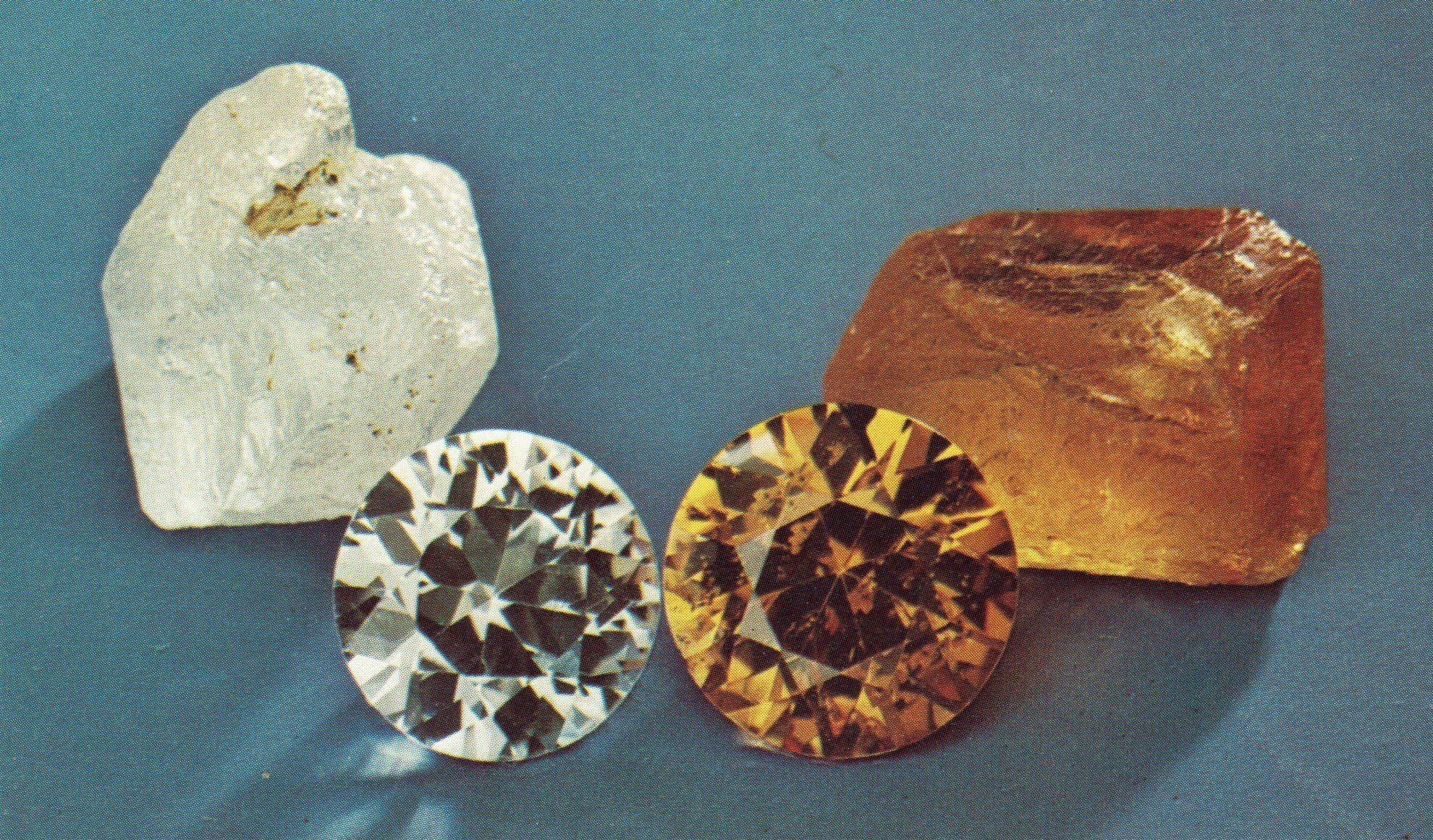
An ore of tungsten (W), the mineral scheelite occurs in localities all over the world. However, gem-quality crystals are rare. Scheelite itself belongs to the scheelite mineral group, which also includes powellite, stolzite, and wulfenite, and forms a series as the W end-member with powellite, the molybdenum (Mo) end-member. All these minerals are rarely seen as faceted gems, but scheelites are probably the most commonly cut of the group.
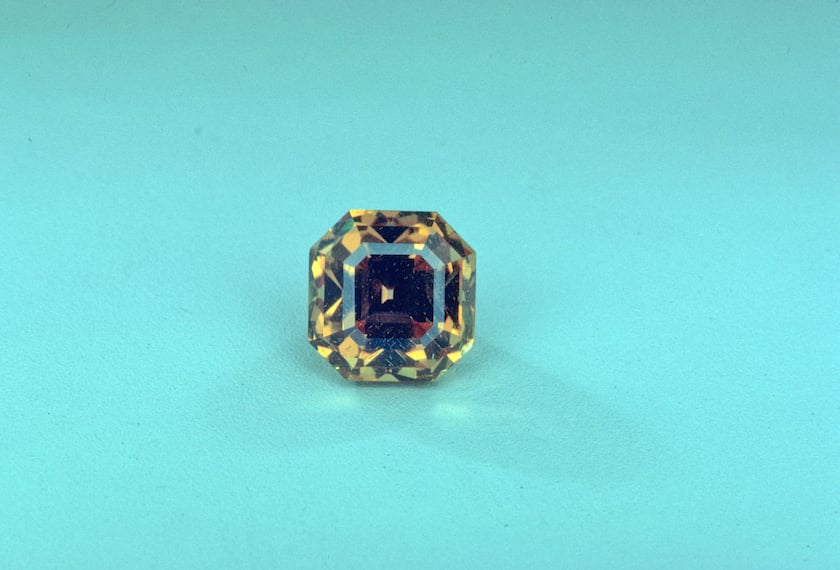
You're more likely to find faceted scheelites in mineral collections than jewelry collections. Scheelite's combination of low hardness (4.5-5), distinct and good cleavage, and brittle tenacity makes it a poor choice for jewelry use. Such fragile gems would require protective settings, especially as ring stones.
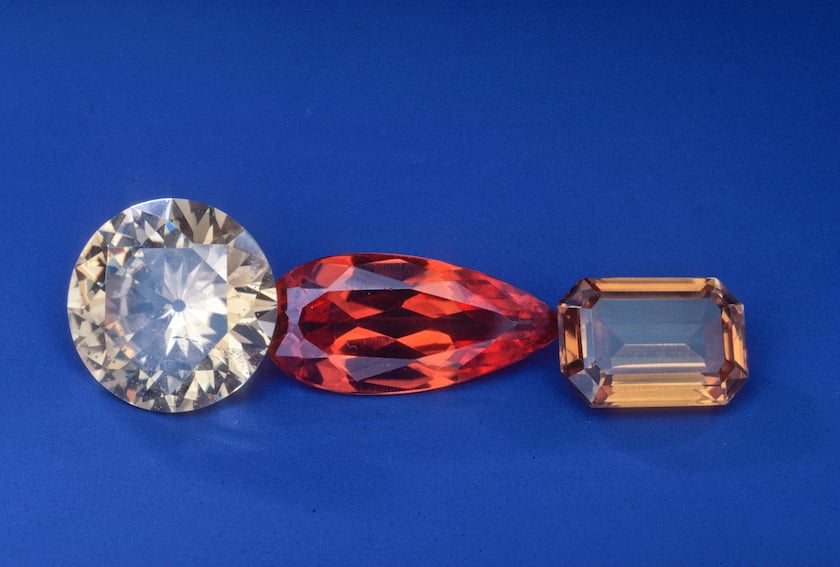
Nevertheless, collectors prize faceted scheelites for their rarity and beauty. Since scheelites have high dispersion and refractive indices (RI), the right gem design can create lively, sparkly gems with high brilliance. They occur in a wide variety of colors, too. In addition, these gems have extremely bright fluorescence under shortwave (SW) ultraviolet (UV) light, which makes them spectacular specimens for display, whether as gems or raw crystals.
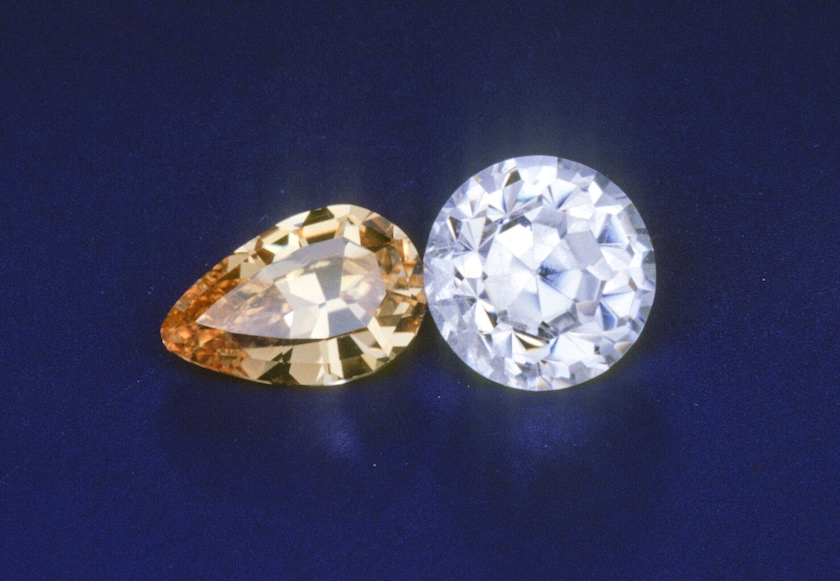
Before the commercial production of cubic zirconia, scheelite's dispersion, RI, and colors (including colorless) also made it a good diamond simulant. Of course, scheelites can look like diamonds but can never match their much greater durability.
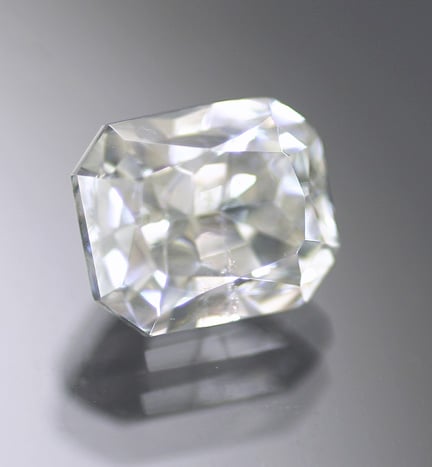
Very rarely, Sri Lanka has produced scheelites that show asterism and chatoyancy, the "star stone" and "cat's eye" effects, respectively. "Star stone" scheelites have 4-rayed stars.
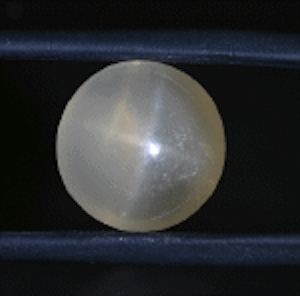
In a 2001 GIA investigation into new methods for imitating asterism, one of the star stones submitted for analysis was represented as scheelite. However, under further analysis, it proved to be a different species, possibly a samarskite. Nevertheless, the results of this investigation remain relevant. Apparently, these false stars were deliberately and manually created by scratching tightly packed, parallel coarse lines on the domed surfaces of cabochons. Although some specimens looked very convincing, most appeared unnatural, with asymmetrical rays in unusual numbers. The star effects also lacked depth. (2001)
While asterism and chatoyancy can occur in scheelites, buyer beware whenever purchasing any gem with a rarely seen optical display.
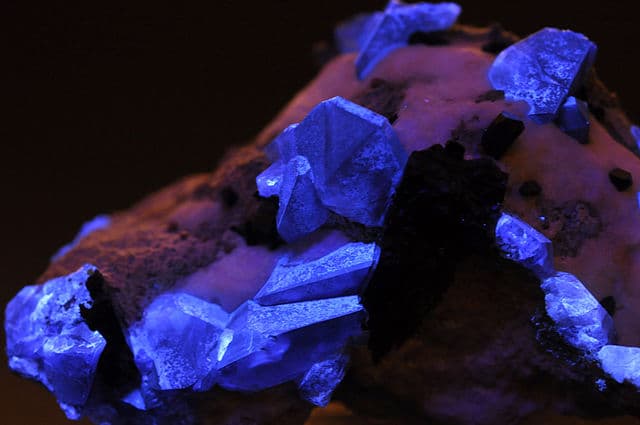
Scheelite's intense fluorescence under SW UV light and X-rays can help distinguish it from other stones of similar appearance.
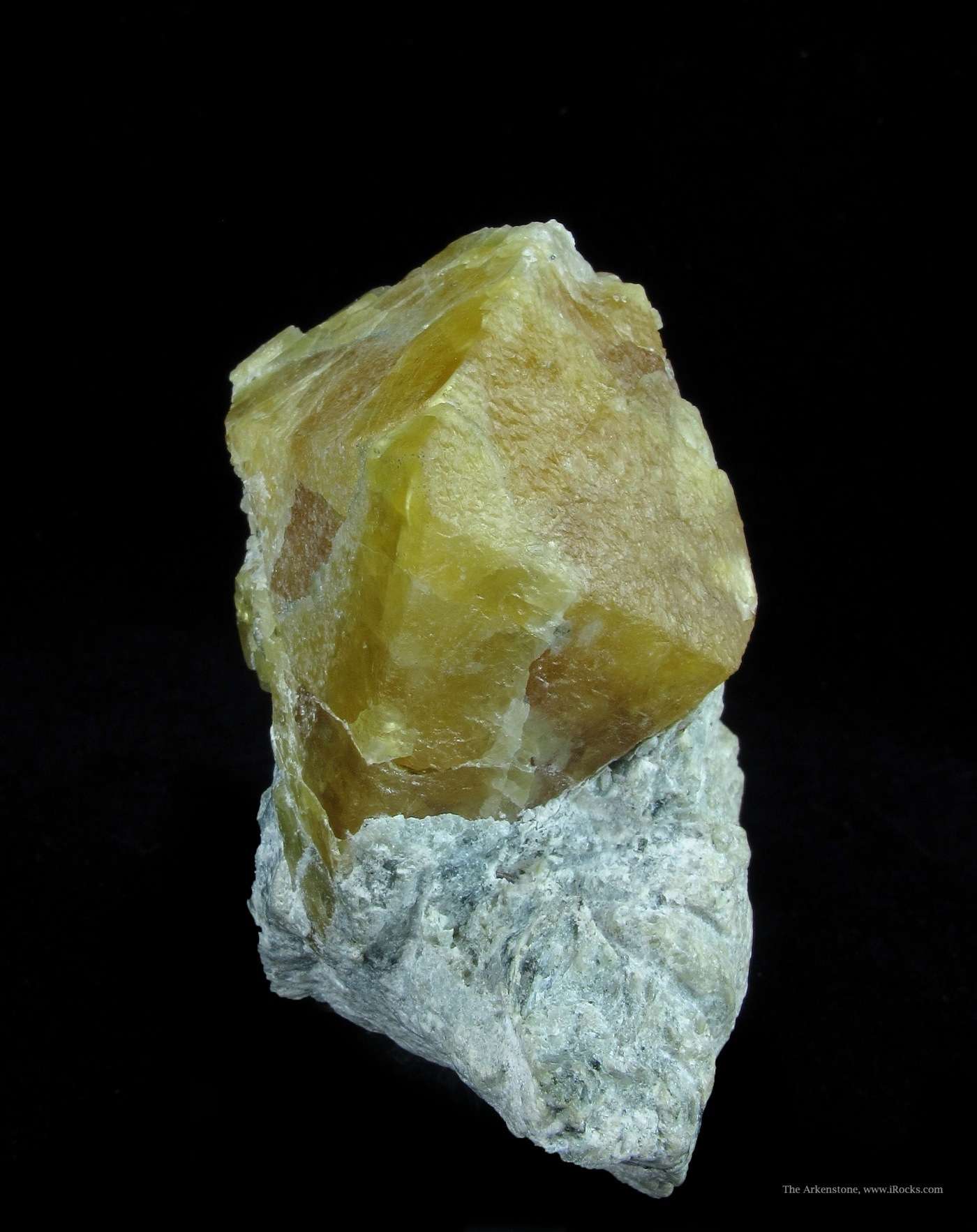
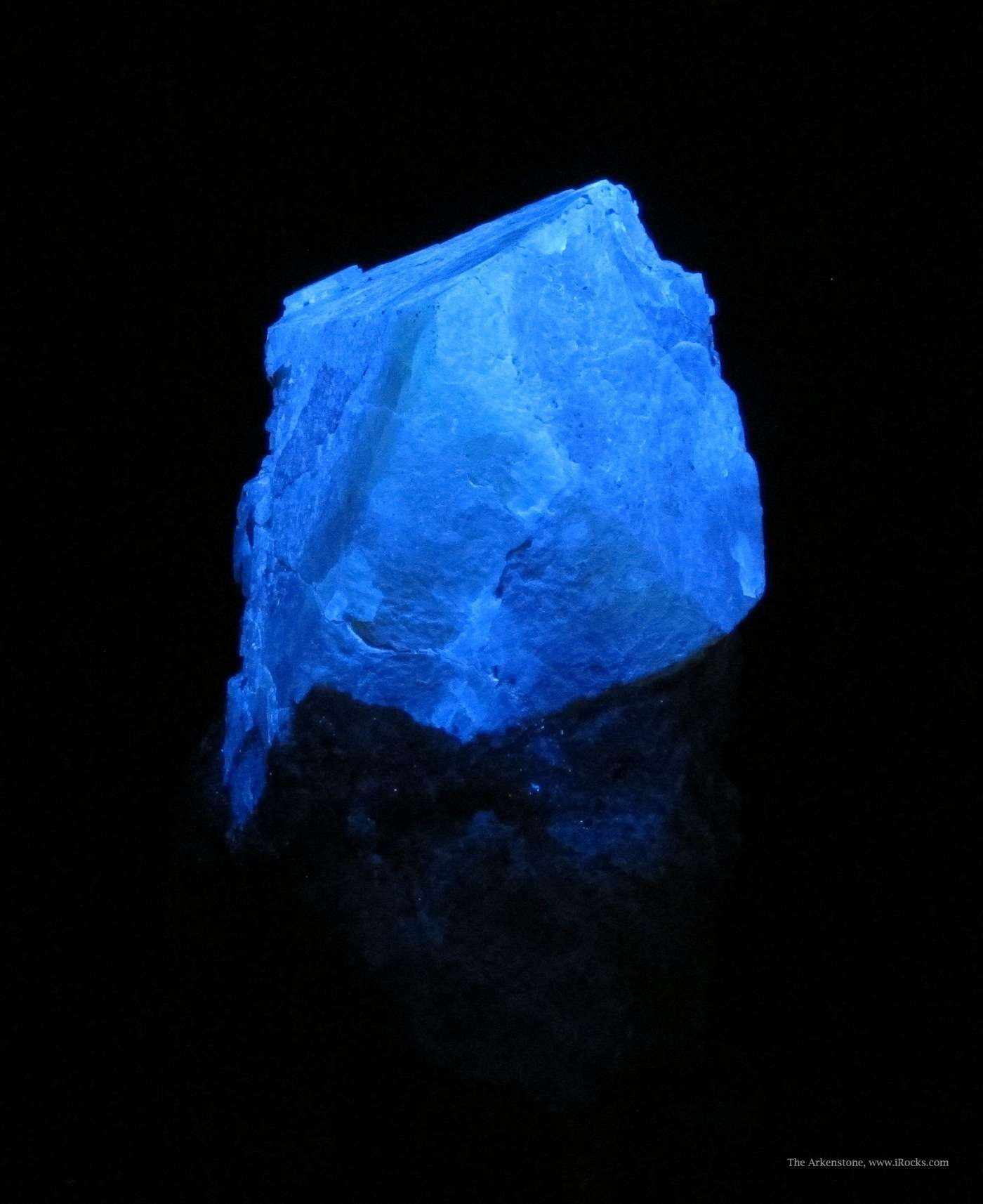
This large, tan scheelite crystal (4 x 4 x 3.2 cm) on matrix shows strong whitish blue fluorescence under SW UV light. Specimen 7.8 x 5.5 x 3.5 cm, Traversella, Piedmont, Italy. © Rob Lavinsky, www.iRocks.com. Used with permission.
Although they typically glow an intense bluiesh white or whitish blue, scheelites that contain some molybdenum can fluoresce a creamy yellow in SW. This variety is known as molybdoscheelite. (Powellite, the Mo-dominant series end-member, fluoresces yellowish to golden yellow in both SW and LW UV).
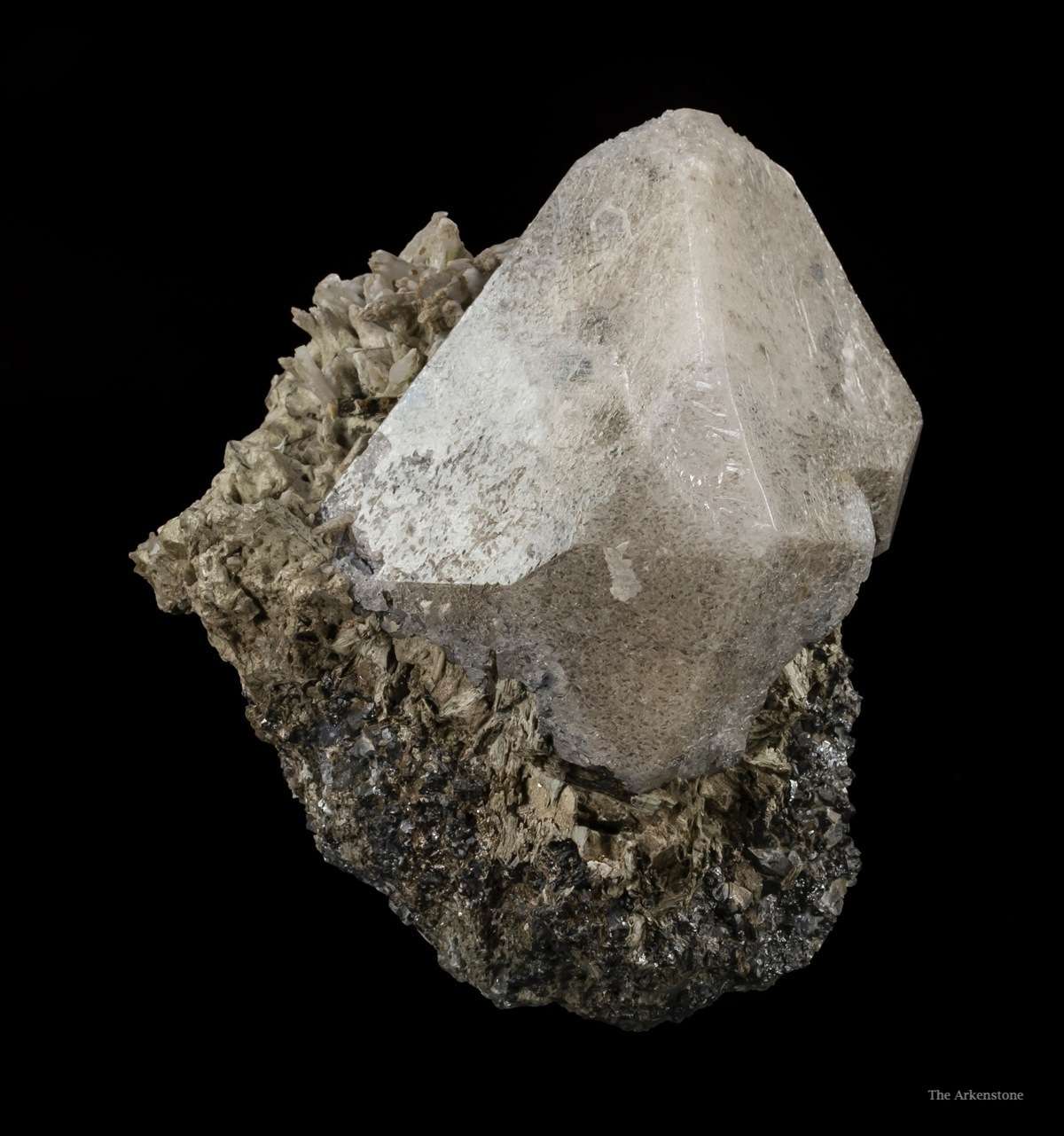
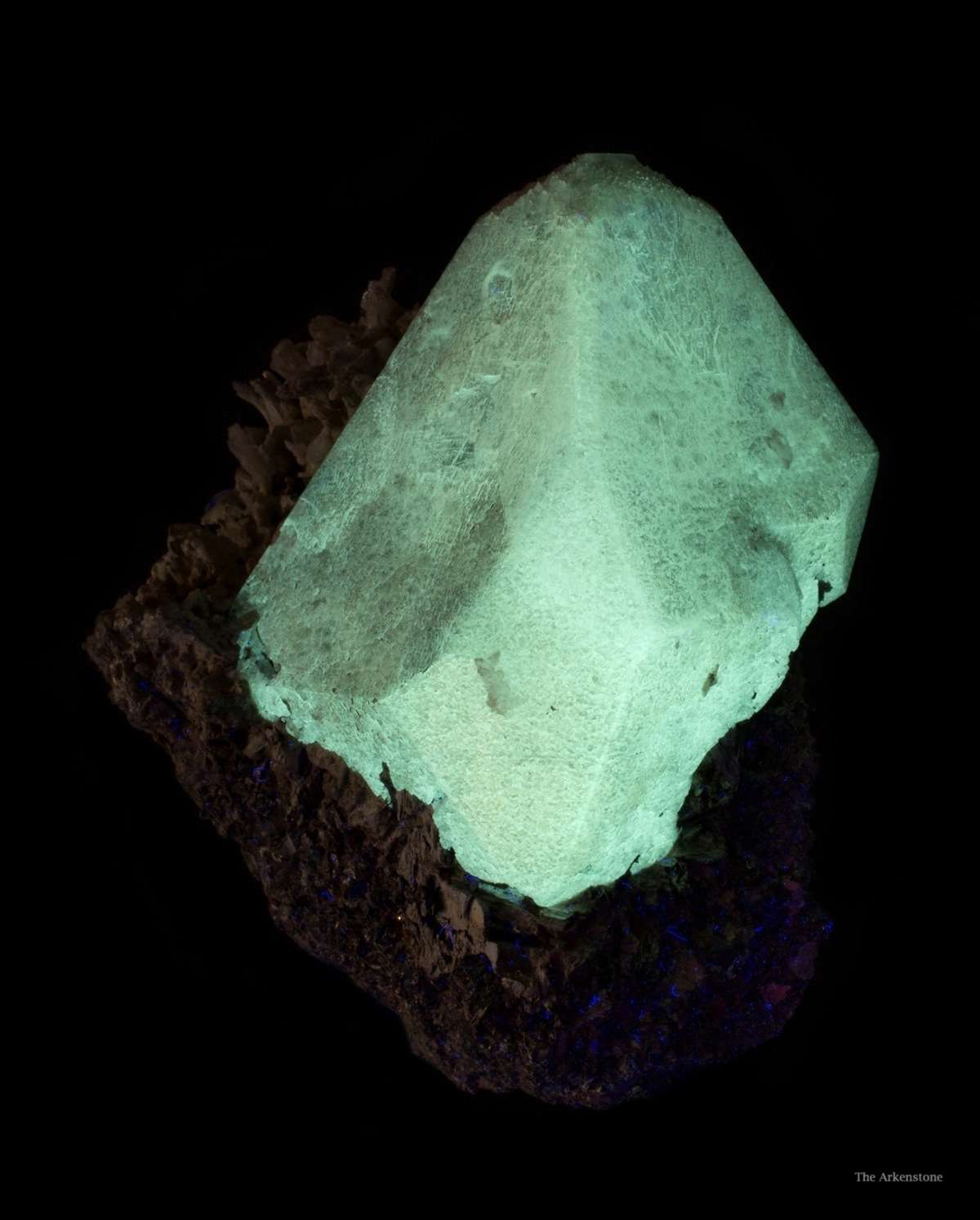
This 6.7-cm long scheelite crystal on a sulfide and quartz matrix most likely contains some molybdenum. It has a yellowish fluorescence under SW UV. Specimen 9.0 x 8.0 x 5.2 cm, Huanggang mines, Keshiketeng, Inner Mongolia A.R., China. © Rob Lavinsky, www.iRocks.com. Used with permission.
Scheelites also show thermoluminescence. They fluoresce when heated.
Synthetic scheelites may show different fluorescent properties. See the section on "Synthetic Scheelite Fluorescence" below.
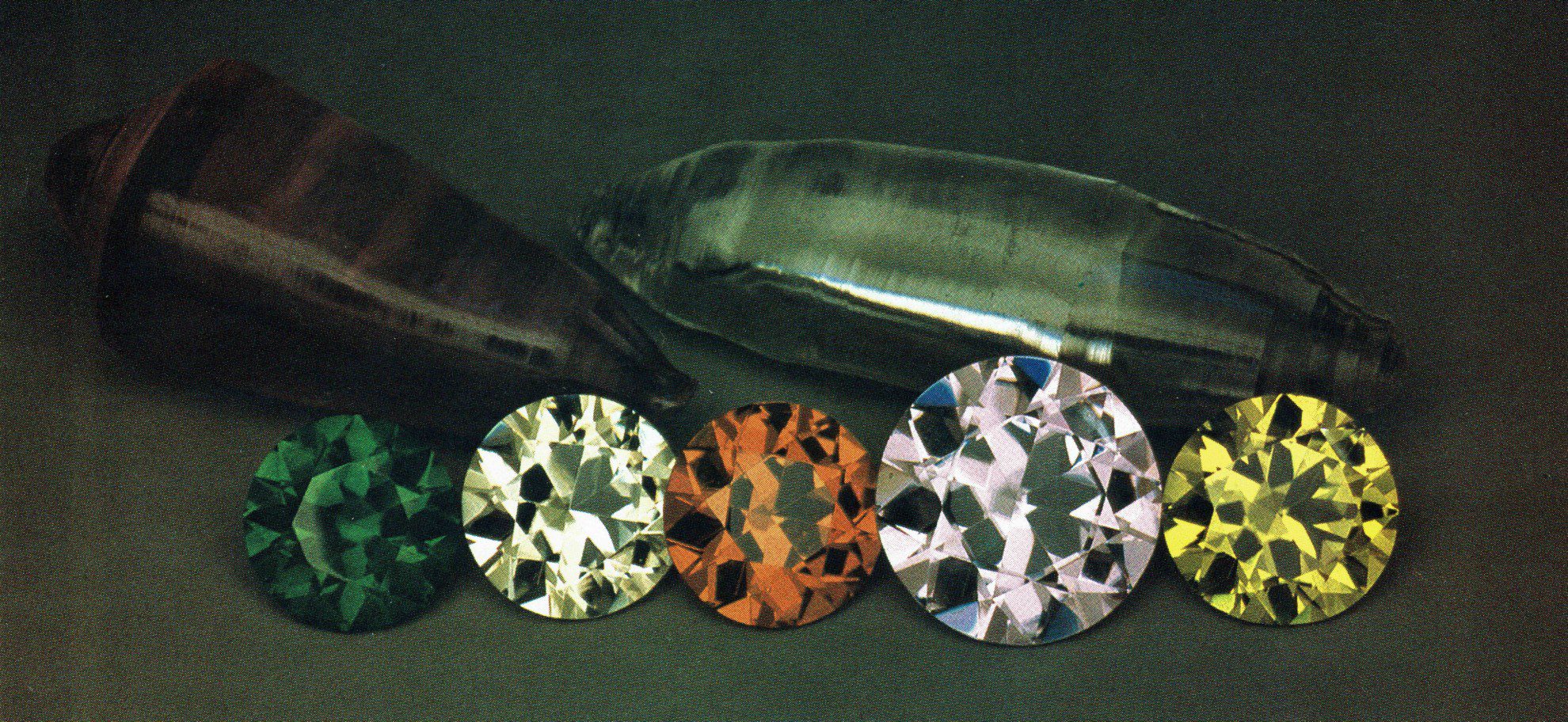
Synthetic or lab-created scheelites have industrial uses, especially in laser technology. In the 1960s and 70s, synthetic scheelites were also frequently sold as diamond lookalikes. While no longer commonly used as diamond simulants, faceted synthetic scheelites may still be offered as rare, faceted natural scheelites to unwary collectors.
The colors of synthetic scheelites can vary widely, depending on the rare-earth elements used as dopants. They may show purple, red-brown, pale green, pale yellow, yellow-brown, dark red, and dark yellow-green colors. Without any dopants, synthetic scheelites are colorless.
Gemologists can also use natural or synthetic scheelites to help them distinguish between Type I and Type II diamonds. In a darkened room, they place a scheelite behind a shield with a hole in it. Then, they place a diamond over the hole and shine a SW UV light through it. Type I diamonds are opaque to SW UV light (200 to 280 nm), while Type II are transparent to this light. Thus, if the scheelite shows its dramatic fluorescence, the diamond is a Type II.
Of course, synthetics resemble natural scheelites. However, they may still have some slight differences in the following properties:
Synthetic scheelites can be grown using pull, flux, and vapor methods. Pulled crystals generally have flawless clarity. However, they may display gas bubbles, curved striae, and, occasionally, inclusions of rhodium (Rh) or iridium (Ir) metals. In contrast, natural scheelites may contain fingerprint-like liquid inclusions, feathers, and two-phase inclusions.
Depending on the rare-earth dopants used, the absorption spectra of synthetic scheelites may differ considerably from those of their natural counterparts. For example, a neodymium-doped purple stone has a distinctive spectrum, with strong lines at 6670 and 4340 and a distinct band at 5690-5590. Some synthetics may not even show absorption spectra. A Gems & Gemology article from 1968 contains photos of the absorption spectra of synthetic scheelites of various colors. (pp. 339-342)
Pale green synthetics may fluoresce pink in SW UV. Other colors generally fluoresce in shades of blue to blue-white in SW. Some synthetics may also fluoresce red to orange-red under LW.
There are no known gemstone treatments or enhancements for scheelites.
Notable crystal and gem-quality sources include the following:
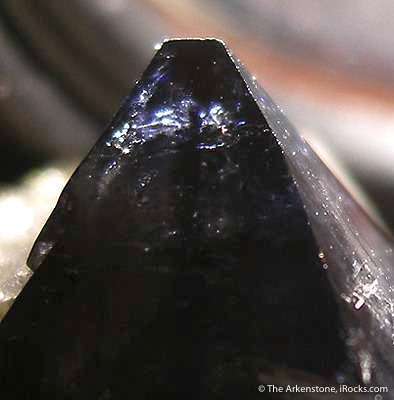
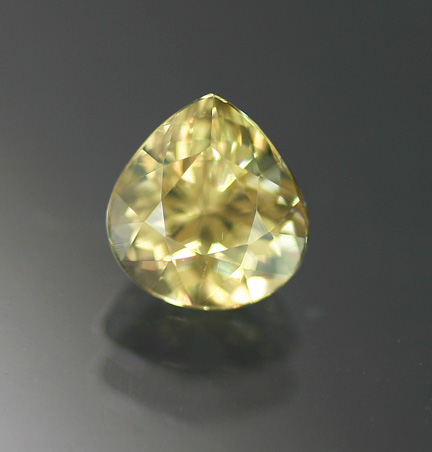
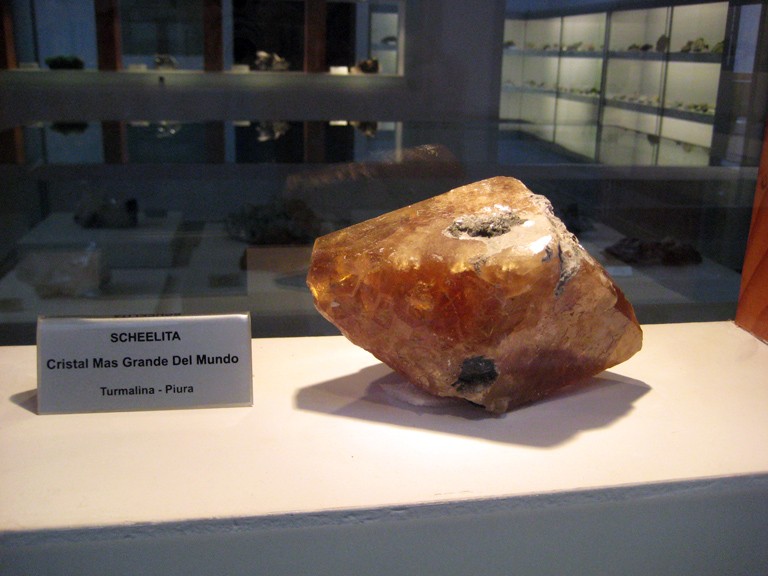
Large scheelites are very rare. Some crystals held in museums could yield stones over 100 carats. Smaller, clean gems are available commercially.
Crystals from Arizona, Korea, Peru, and other localities may be very large (4 inches on an edge) and are cuttable in sections. California gems may reach 70 carats. Mexican and Arizona stones usually reach up to about 10 carats, but an orange Mexican stone has been cut over 100 carats. Utah crystals rarely cut stones over 7 carats. Korea has produced crystals up to 13 inches, but none of this size have been cuttable.
Clean scheelites only with a soft brush, mild detergent, and warm water. Consult our gemstone jewelry care guide for more recommendations.

When you join the IGS community, you get trusted diamond & gemstone information when you need it.
An ore of tungsten (W), the mineral scheelite occurs in localities all over the world. However, gem-quality crystals are rare. Scheelite itself belongs to the scheelite mineral group, which also includes powellite, stolzite, and wulfenite, and forms a series as the W end-member with powellite, the molybdenum (Mo) end-member. All these minerals are rarely seen as faceted gems, but scheelites are probably the most commonly cut of the group.
You're more likely to find faceted scheelites in mineral collections than jewelry collections. Scheelite's combination of low hardness (4.5-5), distinct and good cleavage, and brittle tenacity makes it a poor choice for jewelry use. Such fragile gems would require protective settings, especially as ring stones.
Nevertheless, collectors prize faceted scheelites for their rarity and beauty. Since scheelites have high dispersion and refractive indices (RI), the right gem design can create lively, sparkly gems with high brilliance. They occur in a wide variety of colors, too. In addition, these gems have extremely bright fluorescence under shortwave (SW) ultraviolet (UV) light, which makes them spectacular specimens for display, whether as gems or raw crystals.
Before the commercial production of cubic zirconia, scheelite's dispersion, RI, and colors (including colorless) also made it a good diamond simulant. Of course, scheelites can look like diamonds but can never match their much greater durability.
Very rarely, Sri Lanka has produced scheelites that show asterism and chatoyancy, the "star stone" and "cat's eye" effects, respectively. "Star stone" scheelites have 4-rayed stars.
In a 2001 GIA investigation into new methods for imitating asterism, one of the star stones submitted for analysis was represented as scheelite. However, under further analysis, it proved to be a different species, possibly a samarskite. Nevertheless, the results of this investigation remain relevant. Apparently, these false stars were deliberately and manually created by scratching tightly packed, parallel coarse lines on the domed surfaces of cabochons. Although some specimens looked very convincing, most appeared unnatural, with asymmetrical rays in unusual numbers. The star effects also lacked depth. (2001)
While asterism and chatoyancy can occur in scheelites, buyer beware whenever purchasing any gem with a rarely seen optical display.
Scheelite's intense fluorescence under SW UV light and X-rays can help distinguish it from other stones of similar appearance.
This large, tan scheelite crystal (4 x 4 x 3.2 cm) on matrix shows strong whitish blue fluorescence under SW UV light. Specimen 7.8 x 5.5 x 3.5 cm, Traversella, Piedmont, Italy. © Rob Lavinsky, www.iRocks.com. Used with permission.
Although they typically glow an intense bluiesh white or whitish blue, scheelites that contain some molybdenum can fluoresce a creamy yellow in SW. This variety is known as molybdoscheelite. (Powellite, the Mo-dominant series end-member, fluoresces yellowish to golden yellow in both SW and LW UV).
This 6.7-cm long scheelite crystal on a sulfide and quartz matrix most likely contains some molybdenum. It has a yellowish fluorescence under SW UV. Specimen 9.0 x 8.0 x 5.2 cm, Huanggang mines, Keshiketeng, Inner Mongolia A.R., China. © Rob Lavinsky, www.iRocks.com. Used with permission.
Scheelites also show thermoluminescence. They fluoresce when heated.
Synthetic scheelites may show different fluorescent properties. See the section on "Synthetic Scheelite Fluorescence" below.
Synthetic or lab-created scheelites have industrial uses, especially in laser technology. In the 1960s and 70s, synthetic scheelites were also frequently sold as diamond lookalikes. While no longer commonly used as diamond simulants, faceted synthetic scheelites may still be offered as rare, faceted natural scheelites to unwary collectors.
The colors of synthetic scheelites can vary widely, depending on the rare-earth elements used as dopants. They may show purple, red-brown, pale green, pale yellow, yellow-brown, dark red, and dark yellow-green colors. Without any dopants, synthetic scheelites are colorless.
Gemologists can also use natural or synthetic scheelites to help them distinguish between Type I and Type II diamonds. In a darkened room, they place a scheelite behind a shield with a hole in it. Then, they place a diamond over the hole and shine a SW UV light through it. Type I diamonds are opaque to SW UV light (200 to 280 nm), while Type II are transparent to this light. Thus, if the scheelite shows its dramatic fluorescence, the diamond is a Type II.
Of course, synthetics resemble natural scheelites. However, they may still have some slight differences in the following properties:
Synthetic scheelites can be grown using pull, flux, and vapor methods. Pulled crystals generally have flawless clarity. However, they may display gas bubbles, curved striae, and, occasionally, inclusions of rhodium (Rh) or iridium (Ir) metals. In contrast, natural scheelites may contain fingerprint-like liquid inclusions, feathers, and two-phase inclusions.
Depending on the rare-earth dopants used, the absorption spectra of synthetic scheelites may differ considerably from those of their natural counterparts. For example, a neodymium-doped purple stone has a distinctive spectrum, with strong lines at 6670 and 4340 and a distinct band at 5690-5590. Some synthetics may not even show absorption spectra. A Gems & Gemology article from 1968 contains photos of the absorption spectra of synthetic scheelites of various colors. (pp. 339-342)
Pale green synthetics may fluoresce pink in SW UV. Other colors generally fluoresce in shades of blue to blue-white in SW. Some synthetics may also fluoresce red to orange-red under LW.
There are no known gemstone treatments or enhancements for scheelites.
Notable crystal and gem-quality sources include the following:
Large scheelites are very rare. Some crystals held in museums could yield stones over 100 carats. Smaller, clean gems are available commercially.
Crystals from Arizona, Korea, Peru, and other localities may be very large (4 inches on an edge) and are cuttable in sections. California gems may reach 70 carats. Mexican and Arizona stones usually reach up to about 10 carats, but an orange Mexican stone has been cut over 100 carats. Utah crystals rarely cut stones over 7 carats. Korea has produced crystals up to 13 inches, but none of this size have been cuttable.
Clean scheelites only with a soft brush, mild detergent, and warm water. Consult our gemstone jewelry care guide for more recommendations.


Large, faceted scheelites are among the most beautiful of all collector’s gemstones. They occur in many colors and fluoresce very brightly. If cut properly, scheelites can have tremendous fire.