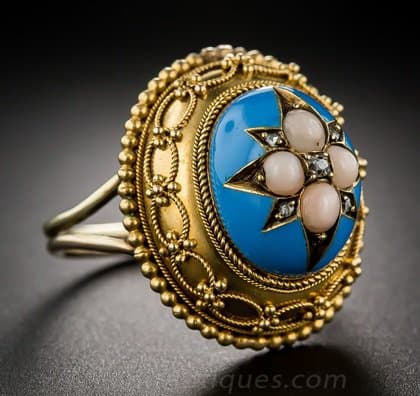
You can find many amazing antique engagement rings from a variety of time periods. Before you shop, learn more about these styles and how to identify them.
8 Minute Read
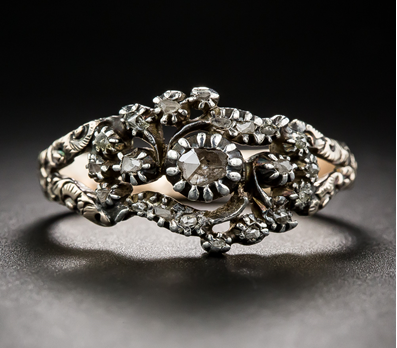
Let's start with three basic questions:
This question has generated quite a bit of debate in the jewelry world. In the past, jewelry appraisers said a ring must be 100 years old to be labeled an antique. This year of demarcation has been relaxed in recent times. Now, appraisers declare a ring must be only 50 years old.
We'll compromise. In this article, we'll cover rings made before 1930, which marks the end of the Art Deco jewelry design period.
Qualified appraisers and gemologists can assist with dating a ring. If you want to purchase an authentic ring from a design period, deal only with a reputable antique jewelry store. Be wary of rings marked as reproductions, modern rings made to resemble antiques. A reputable vintage ring dealer will guide you in the identifying the difference.
Below are some of the characteristics that can help identify a ring's age.
The first calling card of a ring's production date is its overall style, ornamentation, and symbolism. Graceful lines, bold patterns, and depicted scenes can help pinpoint age. Historical and cultural events can also drive motif. For example, the 1800s saw an influx of designs inspired by archeological finds from the opening of Egyptian and Etruscan tombs.
Faceting styles and the shapes of cut diamonds and other gemstones in rings will help pinpoint their era. Watch for these important cutting styles when examining antique engagement rings.
Many varieties of gems have been available as ring stones for centuries. However, their popularity waxes and wanes based on color and fashion. For example, Queen Victoria liked blue. Thus, turquoise was en vogue during her reign. On the other hand, some gems appear to have unwavering interest. Rubies, sapphires, and emeralds enjoyed great popularity throughout the eras we'll cover.
The metals or combinations of metals used in jewelry fabrication can also help date the ring. For example, in the 1700s, jewelers sometimes used silver to set diamonds.
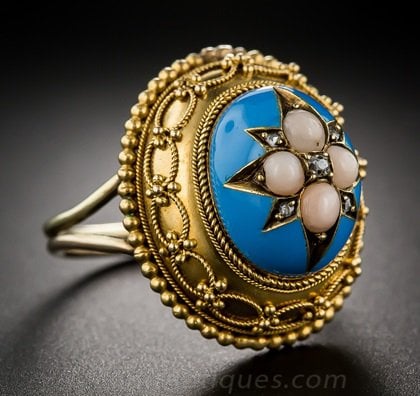
While an antique ring can make a beautiful alternative to a modern ring, consider these three important differences between them.
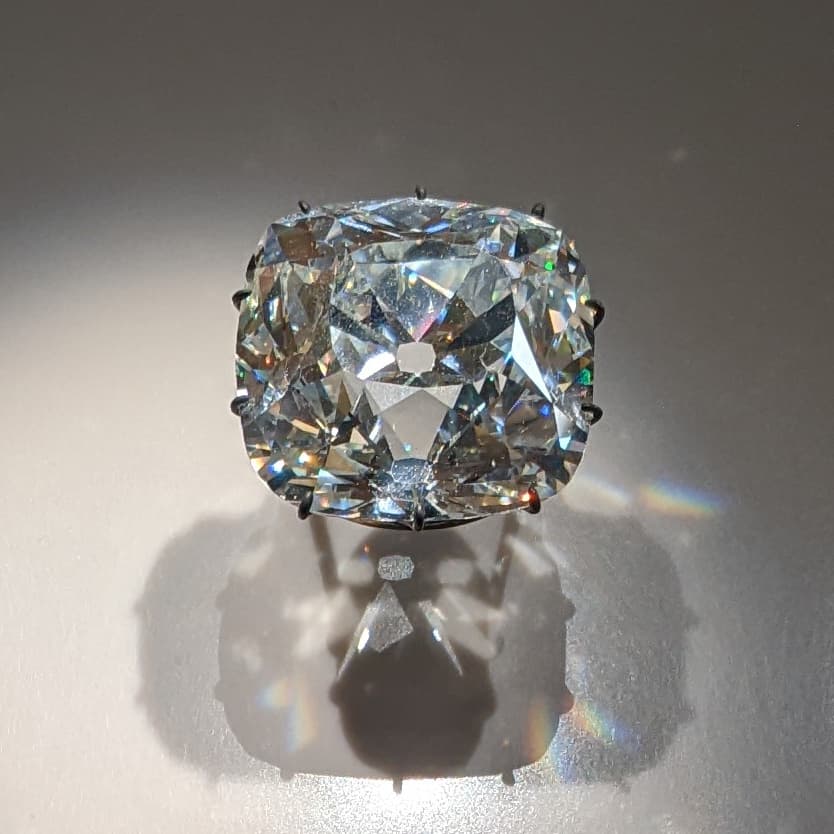
Today, the famous Four Cs of diamond grading constitutes a common diamond language between buyer and seller. However, the Gemological Institute of America (GIA) established this standard in the 1950s. Diamonds in antique engagement rings created prior to that were evaluated differently. For example, in the 1700s, diamond rings only came out to play by candlelight. Yellower diamonds were common. The technology to cut diamonds to today's exacting proportions didn't exist. Thus, old rose cuts, flat on the bottom and domed on the top with few facets, seriously hampered diamond brilliance. In contrast, today's round brilliant cut has 58 facets, laser cut to specified proportions to unleash maximum brilliance.
Having gemological laboratory reports accompany all center diamonds in engagement rings is an even newer phenomenon. Most likely, you won't find reports extolling the color, clarity, carat, and cut grades of diamonds in an antique ring. Some antique rings will have a report, but only if the center diamond can be removed from the mounting without damaging the setting.
Antique jewelry may show signs of being "loved." The owners of these pieces have probably handed them down through generations. They will most likely show some wear. However, this also aids in establishing the authenticity of the ring. Careful, though. Too much "love" can also devalue the ring.
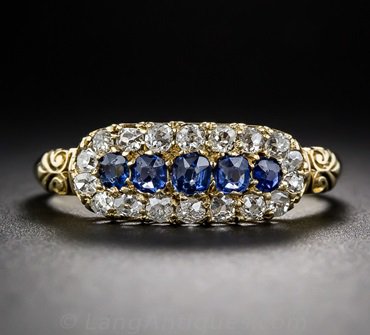
Now, let's get an overview of the chief characteristics of some of the most well-known jewelry design periods. This can help you focus your search for the antique engagement rings perfect for you.
During the Georgian Period, intricate metal work depicting natural themes came into fashion. This was called repoussé. In addition, the use of faceted gemstones became the new rage.
Flowers, butterflies, ribbons, and scrolls.
Table, rose, and Old Mine cuts.
Popular ring stones included diamond, garnet, emerald, topaz, and amber. Jewelers often set gems in closed settings with foil backing for enhancement. (If you acquire such a foil-backed Georgian ring, take special precautions. Contact with water can ruin the foil).
Silver over 18k gold; 10k, 18k, and 22k yellow gold; and pinchbeck (83% copper and 17% zinc).
Rings from the Georgian Period are very rare.
Queen Victoria reigned for a long time. Thus, jewelry historians usually break down this era into three periods: Early (or Romantic), Middle, and Late Victorian.
The rings of the Early Victorian Period reflected the love the young queen had for her husband, Albert. Victoria's love of diamonds fueled their popularity. During this period, placing the bride-to-be's birthstone in the engagement ring became fashionable.
The 1840s saw the start of large-scale jewelry manufacturing. However, jewelers were still making many pieces by hand. Based on detail and condition, hand-fabricated pieces will command a higher price in today's antique market.
Popular ring motifs included snakes as symbols of eternal love. (No, really). Other fashionable motifs included: angels, love knots, and crosses; Celtic, Greek, and Roman designs; and clovers and flowers.
Rose, Old Mine, and step cuts.
Diamond, amethyst, pink and gold topaz, coral, turquoise, ruby, and carved cameos.
Silver; 18k and 22k gold in various colors; rolled gold (gold plating over a base metal); and pinchbeck.
During this tumultuous period, Queen Victoria's husband passed away, and the Civil War raged in America. Dark and heavy rings often reflected a state of mourning. After the discovery of diamonds in South Africa in 1867, jewelers used them frequently. In addition, the California gold rush flooded the market with gold.
Acorns, bees, birds, flowers, geometric patterns, and stars; Etruscan (fine granulations) and Egyptian designs; and enameling.
Rose, Old Mine, and step cuts.
Garnet, diamond, emerald, black onyx, pearl, opal, jet, and black glass.
Silver, steel, and 9k, 10k, and 15k gold. Rose-colored gold in all karats became exceedingly popular.
During this design period, rings became more airy and light compared to Mid-Victorian pieces. Up to this point, most engagement rings were clusters of gems. 1895 saw the solitaire engagement ring gain popularity. Platinum entered the scene as the luxury metal of choice.
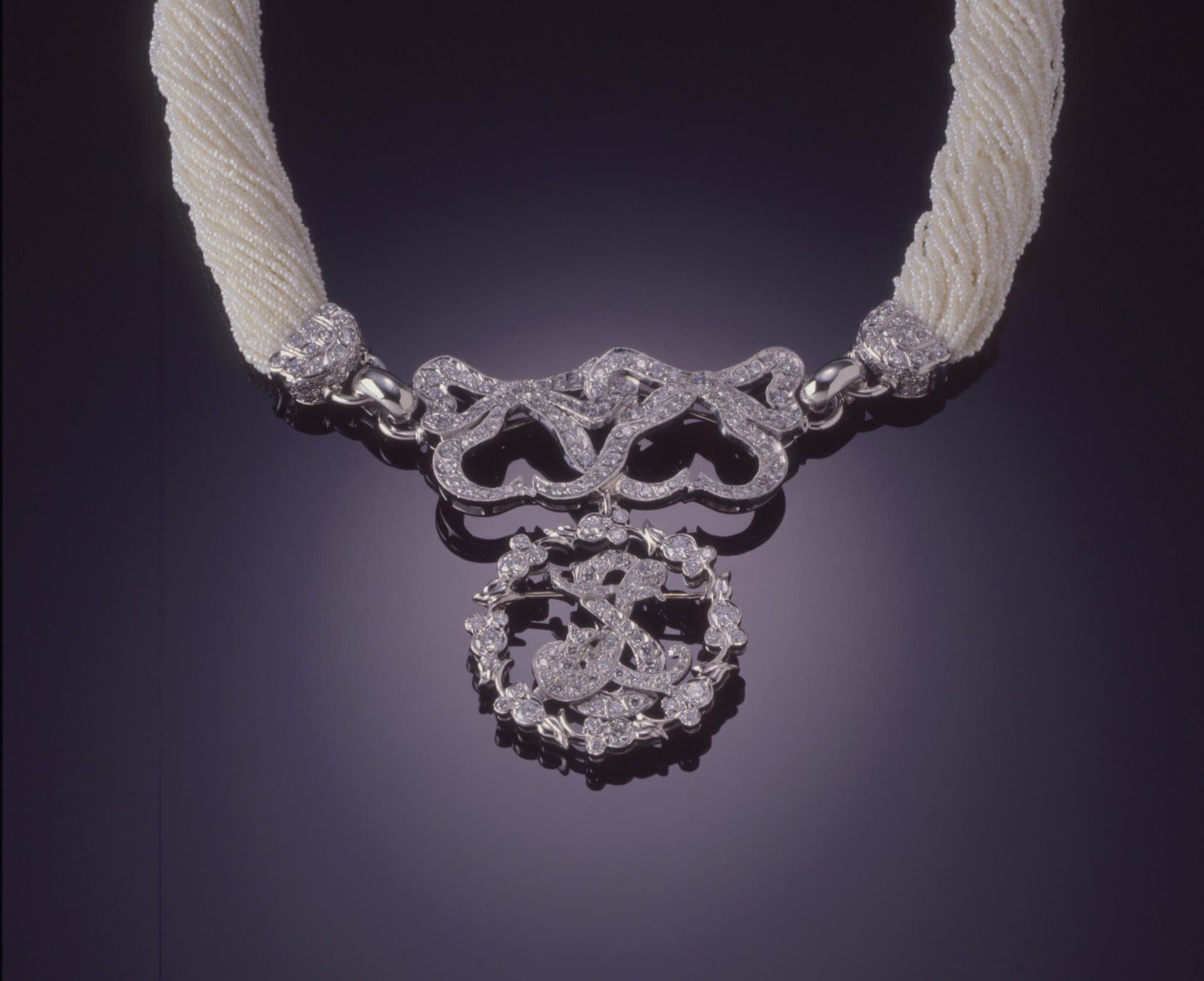
Crescents, horseshoes, moons, oak leaves, and trefoils; double hearts with crowns or knots; bows and ribbons; and navette or marquise-shaped rings.
Old Mine and rose cuts.
Amethyst, aquamarine, emerald, peridot, chrysoberyl, ruby, sapphire, moonstone, and opal.
Platinum, silver, gold, and rolled gold
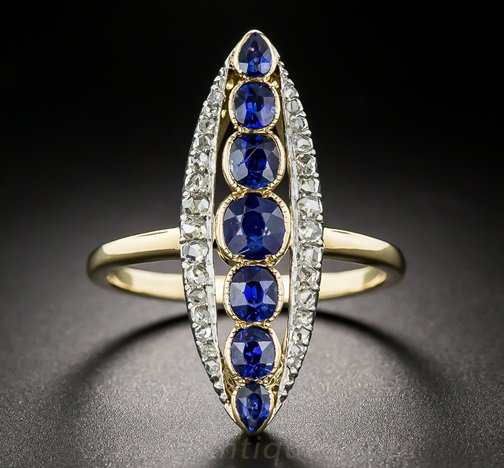
In this age of the artisan, jewelers considered themselves artists. Their beautiful creations were fluid and graceful. Although jewelry pieces such as pins, necklaces, and hair combs better capture the beauty of Art Nouveau, you still find wonderful rings in the antique market.
Popular motifs included fluid lines and depictions of nature. Enameling, especially plique-a-jour, was a popular technique.
Old Mine and Old European cuts.
Tourmaline, small diamonds, pearl, emerald, opal, amber, lapis lazuli, moonstone, carnelian, and synthetic gems.
Platinum, silver, and white and yellow 14k and 18k gold.
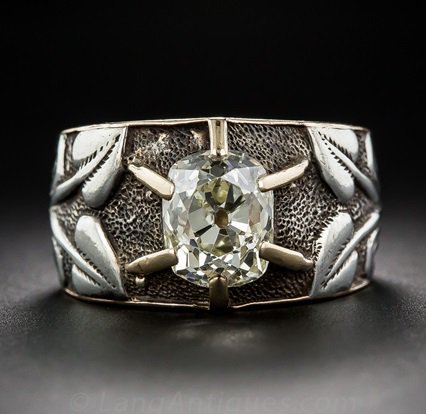
Although the Edwardian Period overlaps Art Nouveau, each gets treated as its own design period due to their distinctive styles. Known for their graceful and airy nuances, Edwardian rings used open wire designs and filigree. Platinum use surged due to the metal's unparalleled strength. It enabled jewelers to create delicate and lacy mountings. Enameling became immensely popular.
Rings from the Edwardian Period should have a hallmark (metal purity) and/or a maker's mark (firm responsible for production). You'll find them stamped inside the shank.
Bows, ribbons, moon and stars, flowers, leaves, and shamrocks.
Rose, Old Mine, and Old European cuts.
Pearl, diamond, peridot, emerald, sapphire, ruby, opal, moonstone, and mother of pearl.
Silver, platinum, rolled gold, and gold (especially 18k) in multi-colors.
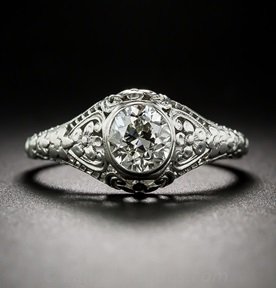
Currently, Art Deco rings rank as the most popular (and abundant) antique engagement rings on the market. These pieces feature bold geometric patterns and colors, filigree and milgrain work, and lots of resplendent diamonds! Nothing exemplified this era of unheralded opulence, wild abandon, and faith in progress more than sprays of diamonds.
Popular motifs included geometric patterns as well as designs influenced by Egyptian, African, Oriental, and American Indian art. Enamel accents were popular.
Old Mine, Old European, and step cuts, as well as new styles of shield shapes and caliber cuts.
Diamond, emerald, sapphire, ruby, black onyx, crystal (quartz), ivory, jade, mother of pearl, and synthetic gems.
Platinum, silver, white gold, chrome, and marcasite.
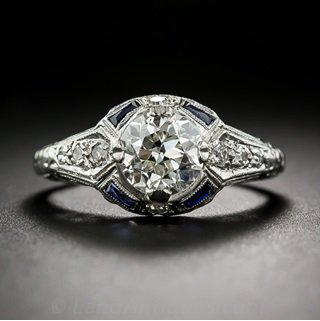
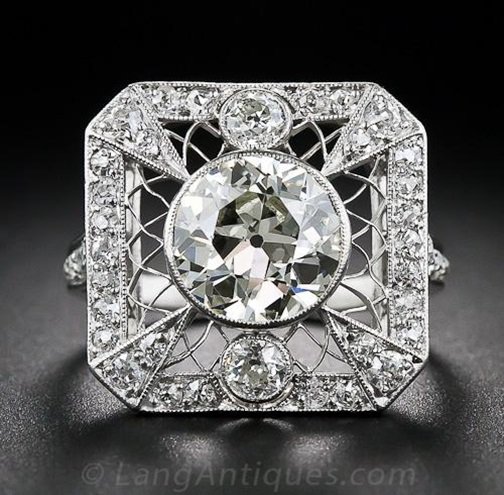
Do you like the look of the Art Deco ring above but want to replace that Old European-cut diamond with a modern brilliant round?
Just move along, then.
Replacing the center diamond would compromise the integrity of the piece and destroy its aura of timelessness. Perhaps you should consider a modern engagement ring with an antique look. Tacori engagement rings capture this beautifully.
A whole new world of antique jewelry awaits you. Make sure you shop at reputable stores, whether brick-and mortar or online. Remember, you'll likely encounter many reproductions on the market. Gemologists and appraisers can help you select an authentic piece.
Lang Antiques is knowledgeable, accessible, and has an immense collection.
Brilliant Earth also has an extensive collection of vintage and antique engagement rings.
If you prefer a new, unique ring in an antique style, check out the custom jewelry makers listed in the IGS Business Directory.
Happy hunting!


When you join the IGS community, you get trusted diamond & gemstone information when you need it.
Let's start with three basic questions:
This question has generated quite a bit of debate in the jewelry world. In the past, jewelry appraisers said a ring must be 100 years old to be labeled an antique. This year of demarcation has been relaxed in recent times. Now, appraisers declare a ring must be only 50 years old.
We'll compromise. In this article, we'll cover rings made before 1930, which marks the end of the Art Deco jewelry design period.
Qualified appraisers and gemologists can assist with dating a ring. If you want to purchase an authentic ring from a design period, deal only with a reputable antique jewelry store. Be wary of rings marked as reproductions, modern rings made to resemble antiques. A reputable vintage ring dealer will guide you in the identifying the difference.
Below are some of the characteristics that can help identify a ring's age.
The first calling card of a ring's production date is its overall style, ornamentation, and symbolism. Graceful lines, bold patterns, and depicted scenes can help pinpoint age. Historical and cultural events can also drive motif. For example, the 1800s saw an influx of designs inspired by archeological finds from the opening of Egyptian and Etruscan tombs.
Faceting styles and the shapes of cut diamonds and other gemstones in rings will help pinpoint their era. Watch for these important cutting styles when examining antique engagement rings.
Many varieties of gems have been available as ring stones for centuries. However, their popularity waxes and wanes based on color and fashion. For example, Queen Victoria liked blue. Thus, turquoise was en vogue during her reign. On the other hand, some gems appear to have unwavering interest. Rubies, sapphires, and emeralds enjoyed great popularity throughout the eras we'll cover.
The metals or combinations of metals used in jewelry fabrication can also help date the ring. For example, in the 1700s, jewelers sometimes used silver to set diamonds.
While an antique ring can make a beautiful alternative to a modern ring, consider these three important differences between them.
Today, the famous Four Cs of diamond grading constitutes a common diamond language between buyer and seller. However, the Gemological Institute of America (GIA) established this standard in the 1950s. Diamonds in antique engagement rings created prior to that were evaluated differently. For example, in the 1700s, diamond rings only came out to play by candlelight. Yellower diamonds were common. The technology to cut diamonds to today's exacting proportions didn't exist. Thus, old rose cuts, flat on the bottom and domed on the top with few facets, seriously hampered diamond brilliance. In contrast, today's round brilliant cut has 58 facets, laser cut to specified proportions to unleash maximum brilliance.
Having gemological laboratory reports accompany all center diamonds in engagement rings is an even newer phenomenon. Most likely, you won't find reports extolling the color, clarity, carat, and cut grades of diamonds in an antique ring. Some antique rings will have a report, but only if the center diamond can be removed from the mounting without damaging the setting.
Antique jewelry may show signs of being "loved." The owners of these pieces have probably handed them down through generations. They will most likely show some wear. However, this also aids in establishing the authenticity of the ring. Careful, though. Too much "love" can also devalue the ring.
Now, let's get an overview of the chief characteristics of some of the most well-known jewelry design periods. This can help you focus your search for the antique engagement rings perfect for you.
During the Georgian Period, intricate metal work depicting natural themes came into fashion. This was called repoussé. In addition, the use of faceted gemstones became the new rage.
Flowers, butterflies, ribbons, and scrolls.
Table, rose, and Old Mine cuts.
Popular ring stones included diamond, garnet, emerald, topaz, and amber. Jewelers often set gems in closed settings with foil backing for enhancement. (If you acquire such a foil-backed Georgian ring, take special precautions. Contact with water can ruin the foil).
Silver over 18k gold; 10k, 18k, and 22k yellow gold; and pinchbeck (83% copper and 17% zinc).
Rings from the Georgian Period are very rare.
Queen Victoria reigned for a long time. Thus, jewelry historians usually break down this era into three periods: Early (or Romantic), Middle, and Late Victorian.
The rings of the Early Victorian Period reflected the love the young queen had for her husband, Albert. Victoria's love of diamonds fueled their popularity. During this period, placing the bride-to-be's birthstone in the engagement ring became fashionable.
The 1840s saw the start of large-scale jewelry manufacturing. However, jewelers were still making many pieces by hand. Based on detail and condition, hand-fabricated pieces will command a higher price in today's antique market.
Popular ring motifs included snakes as symbols of eternal love. (No, really). Other fashionable motifs included: angels, love knots, and crosses; Celtic, Greek, and Roman designs; and clovers and flowers.
Rose, Old Mine, and step cuts.
Diamond, amethyst, pink and gold topaz, coral, turquoise, ruby, and carved cameos.
Silver; 18k and 22k gold in various colors; rolled gold (gold plating over a base metal); and pinchbeck.
During this tumultuous period, Queen Victoria's husband passed away, and the Civil War raged in America. Dark and heavy rings often reflected a state of mourning. After the discovery of diamonds in South Africa in 1867, jewelers used them frequently. In addition, the California gold rush flooded the market with gold.
Acorns, bees, birds, flowers, geometric patterns, and stars; Etruscan (fine granulations) and Egyptian designs; and enameling.
Rose, Old Mine, and step cuts.
Garnet, diamond, emerald, black onyx, pearl, opal, jet, and black glass.
Silver, steel, and 9k, 10k, and 15k gold. Rose-colored gold in all karats became exceedingly popular.
During this design period, rings became more airy and light compared to Mid-Victorian pieces. Up to this point, most engagement rings were clusters of gems. 1895 saw the solitaire engagement ring gain popularity. Platinum entered the scene as the luxury metal of choice.
Crescents, horseshoes, moons, oak leaves, and trefoils; double hearts with crowns or knots; bows and ribbons; and navette or marquise-shaped rings.
Old Mine and rose cuts.
Amethyst, aquamarine, emerald, peridot, chrysoberyl, ruby, sapphire, moonstone, and opal.
Platinum, silver, gold, and rolled gold
In this age of the artisan, jewelers considered themselves artists. Their beautiful creations were fluid and graceful. Although jewelry pieces such as pins, necklaces, and hair combs better capture the beauty of Art Nouveau, you still find wonderful rings in the antique market.
Popular motifs included fluid lines and depictions of nature. Enameling, especially plique-a-jour, was a popular technique.
Old Mine and Old European cuts.
Tourmaline, small diamonds, pearl, emerald, opal, amber, lapis lazuli, moonstone, carnelian, and synthetic gems.
Platinum, silver, and white and yellow 14k and 18k gold.
Although the Edwardian Period overlaps Art Nouveau, each gets treated as its own design period due to their distinctive styles. Known for their graceful and airy nuances, Edwardian rings used open wire designs and filigree. Platinum use surged due to the metal's unparalleled strength. It enabled jewelers to create delicate and lacy mountings. Enameling became immensely popular.
Rings from the Edwardian Period should have a hallmark (metal purity) and/or a maker's mark (firm responsible for production). You'll find them stamped inside the shank.
Bows, ribbons, moon and stars, flowers, leaves, and shamrocks.
Rose, Old Mine, and Old European cuts.
Pearl, diamond, peridot, emerald, sapphire, ruby, opal, moonstone, and mother of pearl.
Silver, platinum, rolled gold, and gold (especially 18k) in multi-colors.
Currently, Art Deco rings rank as the most popular (and abundant) antique engagement rings on the market. These pieces feature bold geometric patterns and colors, filigree and milgrain work, and lots of resplendent diamonds! Nothing exemplified this era of unheralded opulence, wild abandon, and faith in progress more than sprays of diamonds.
Popular motifs included geometric patterns as well as designs influenced by Egyptian, African, Oriental, and American Indian art. Enamel accents were popular.
Old Mine, Old European, and step cuts, as well as new styles of shield shapes and caliber cuts.
Diamond, emerald, sapphire, ruby, black onyx, crystal (quartz), ivory, jade, mother of pearl, and synthetic gems.
Platinum, silver, white gold, chrome, and marcasite.
Do you like the look of the Art Deco ring above but want to replace that Old European-cut diamond with a modern brilliant round?
Just move along, then.
Replacing the center diamond would compromise the integrity of the piece and destroy its aura of timelessness. Perhaps you should consider a modern engagement ring with an antique look. Tacori engagement rings capture this beautifully.
A whole new world of antique jewelry awaits you. Make sure you shop at reputable stores, whether brick-and mortar or online. Remember, you'll likely encounter many reproductions on the market. Gemologists and appraisers can help you select an authentic piece.
Lang Antiques is knowledgeable, accessible, and has an immense collection.
Brilliant Earth also has an extensive collection of vintage and antique engagement rings.
If you prefer a new, unique ring in an antique style, check out the custom jewelry makers listed in the IGS Business Directory.
Happy hunting!