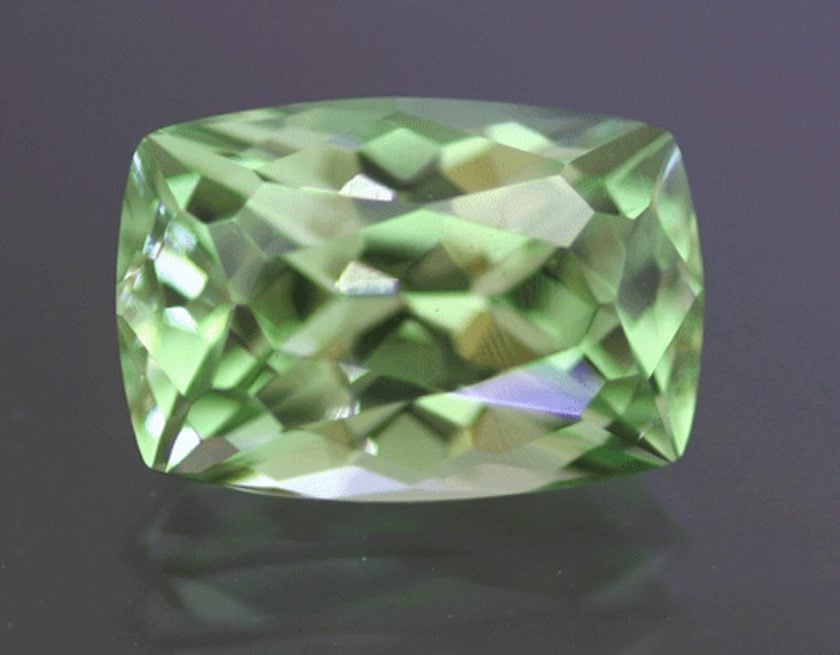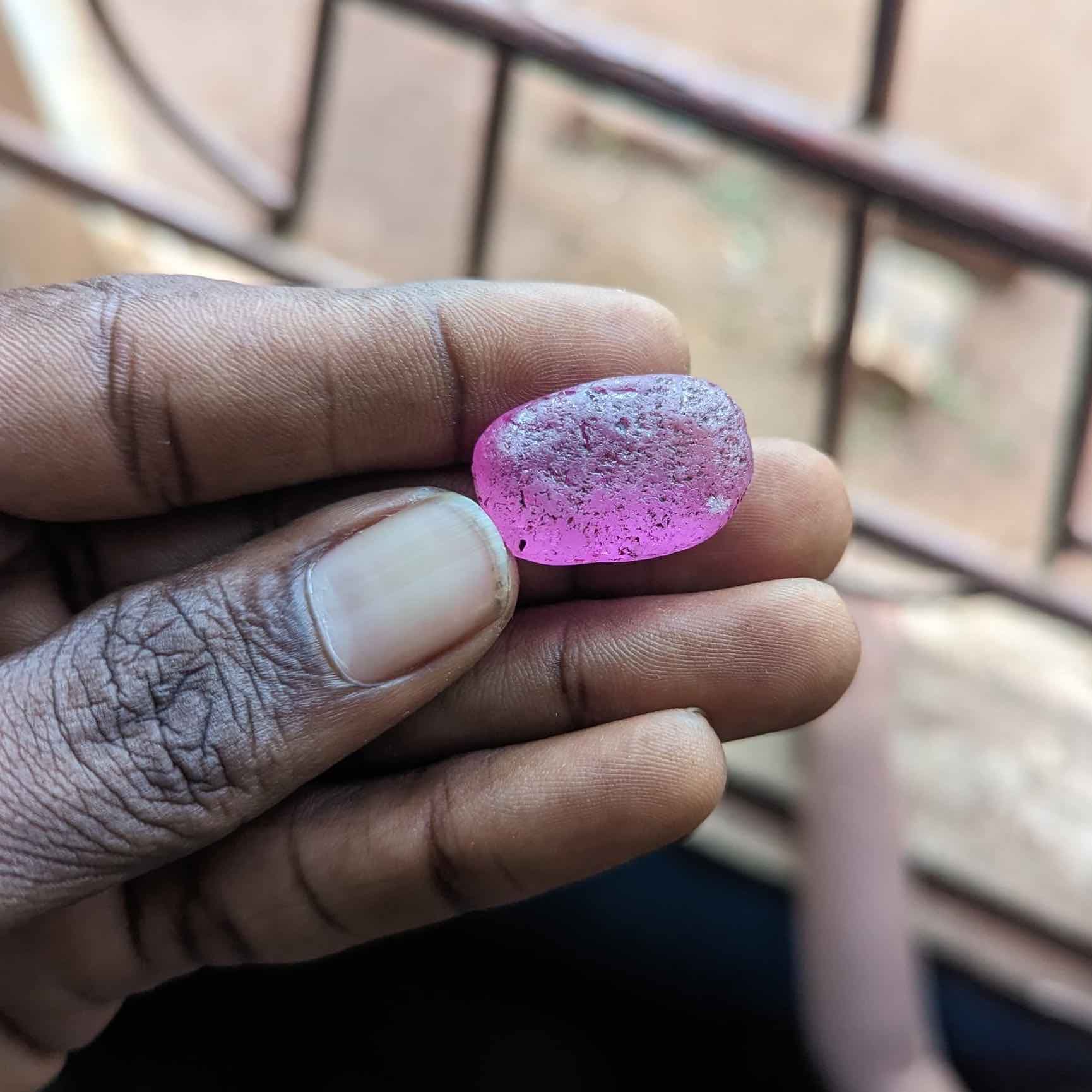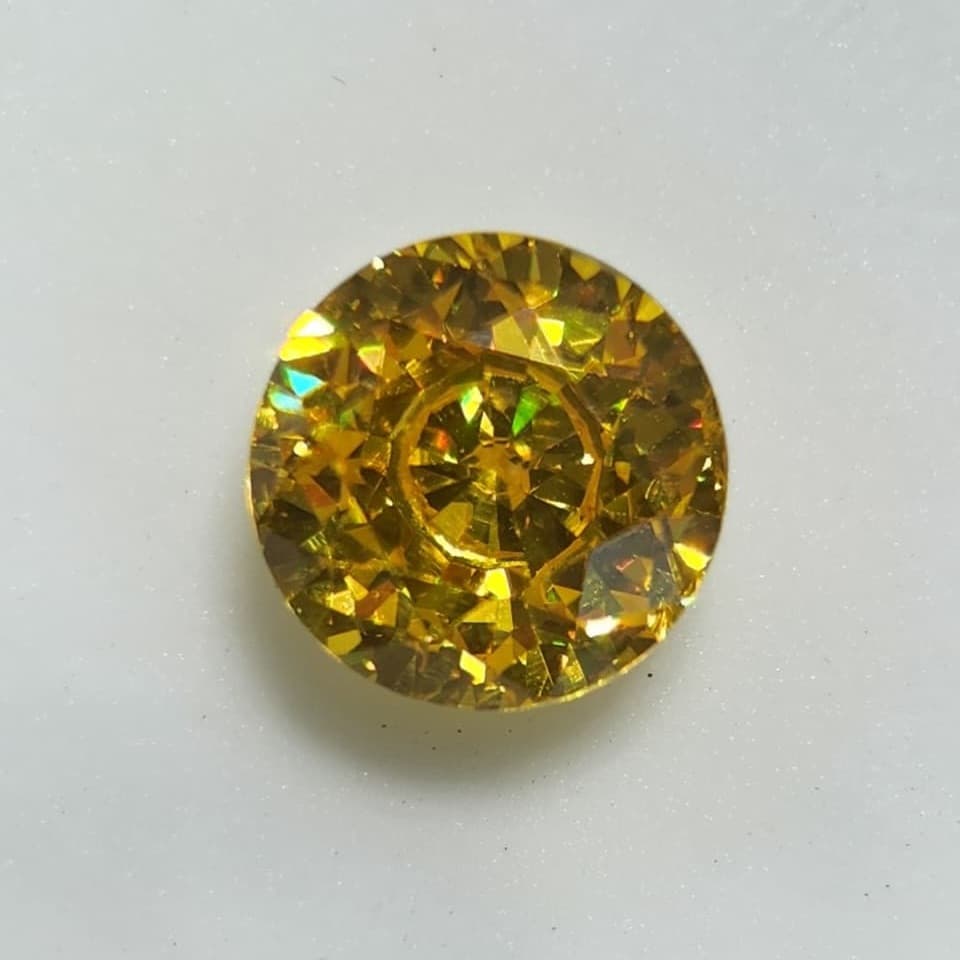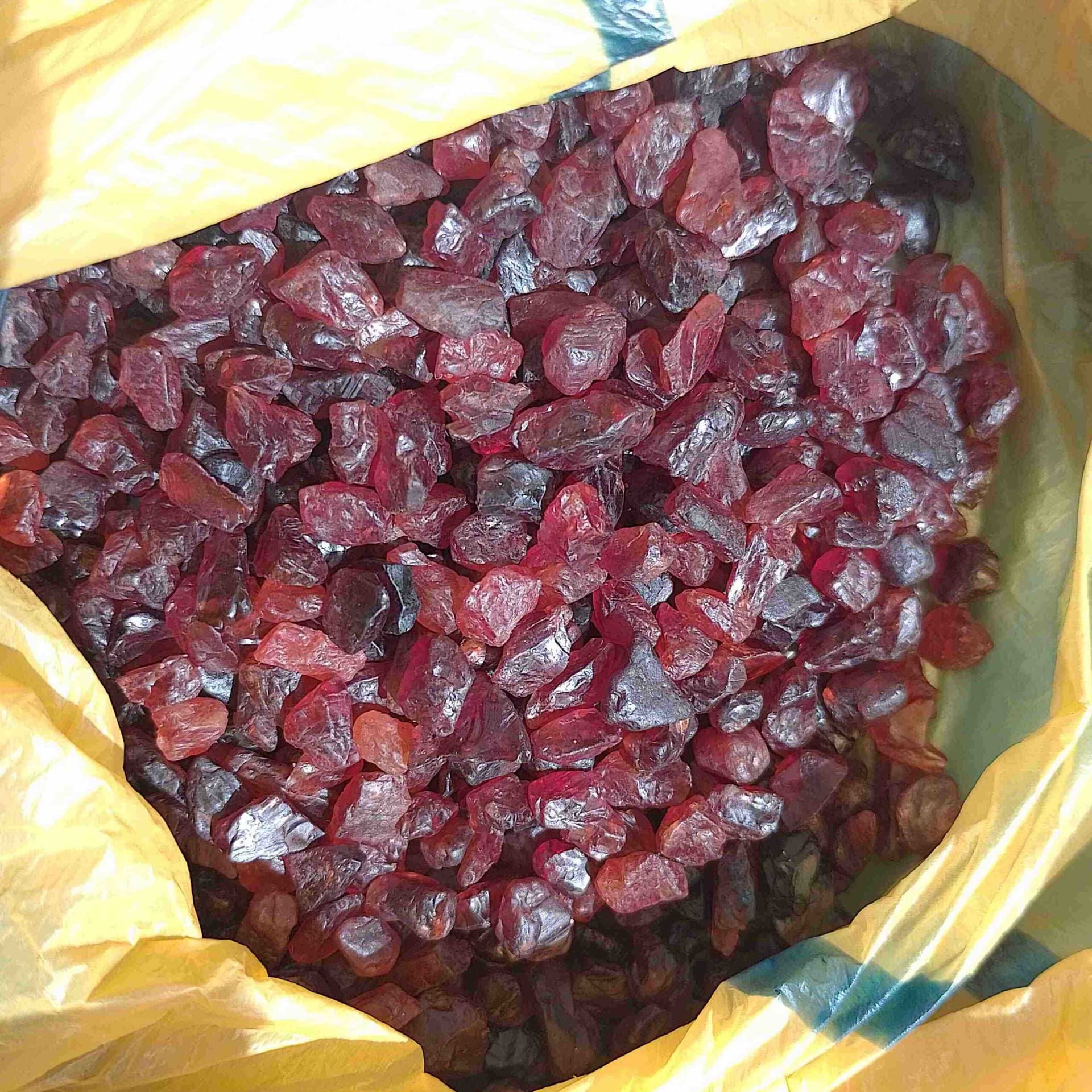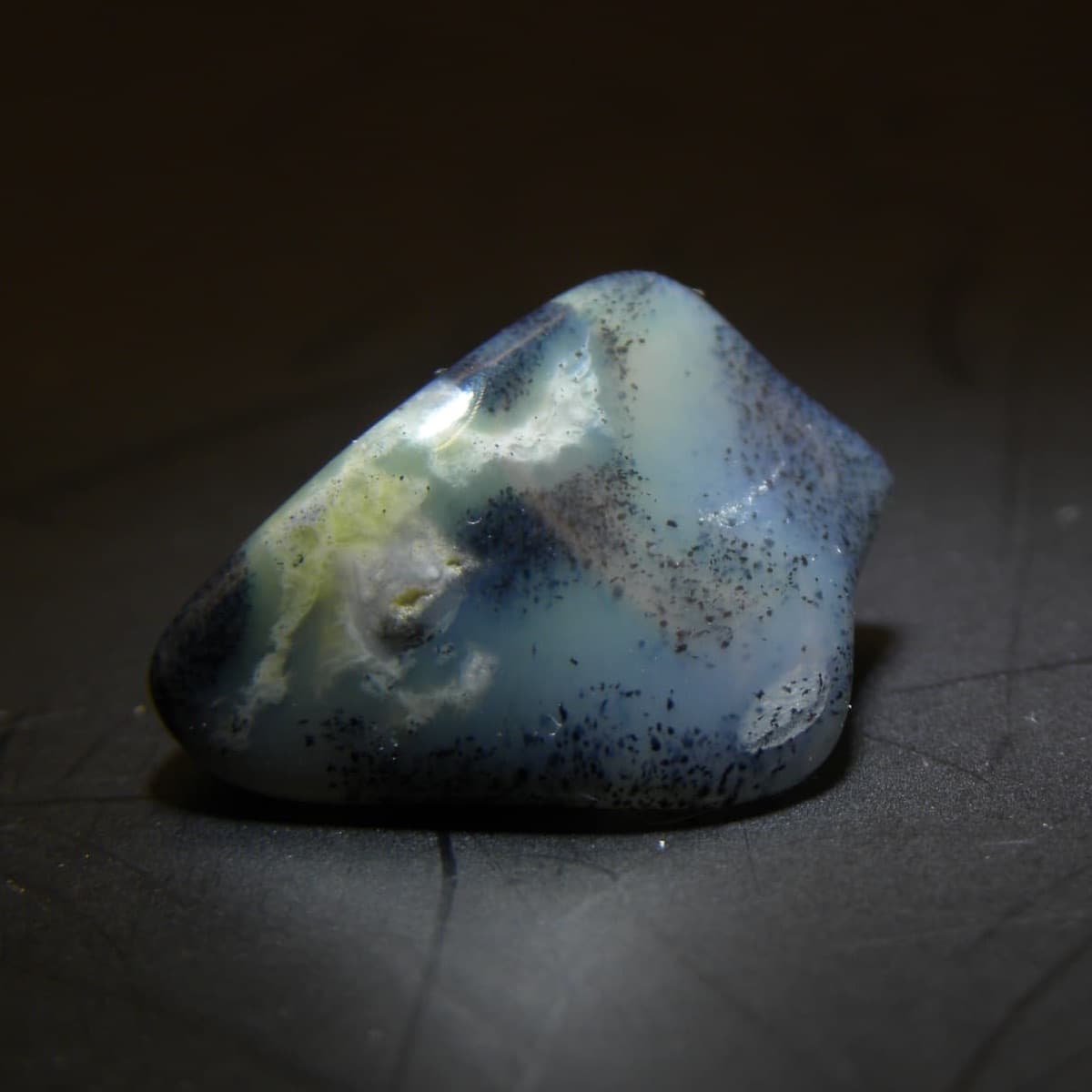
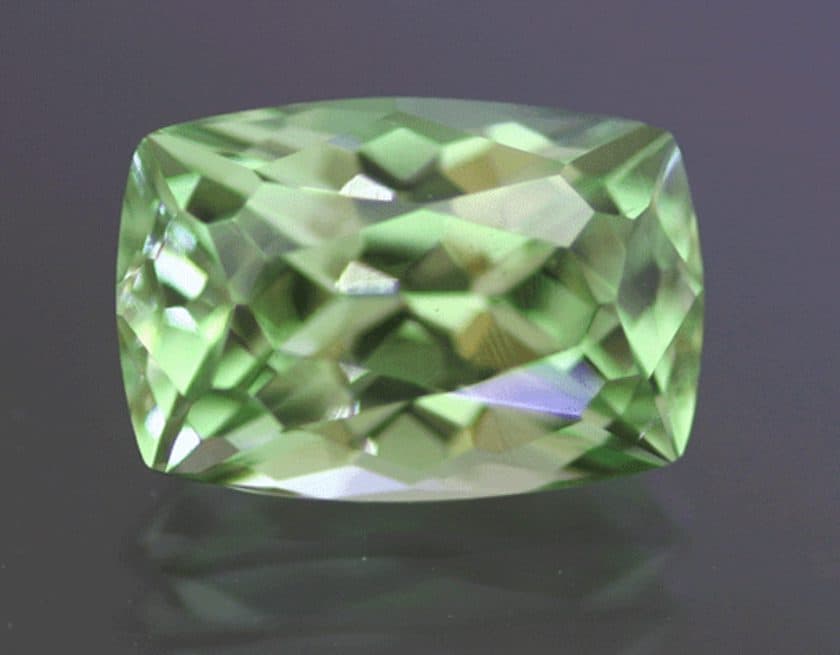
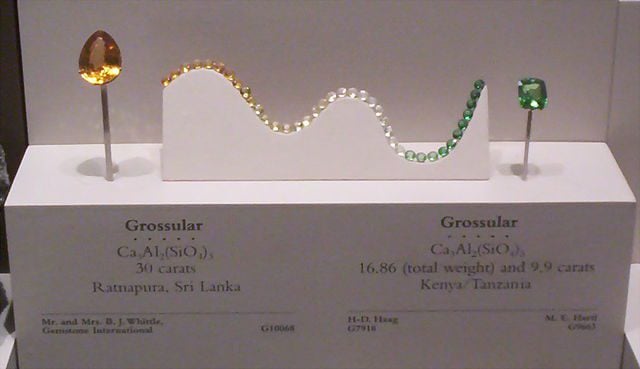
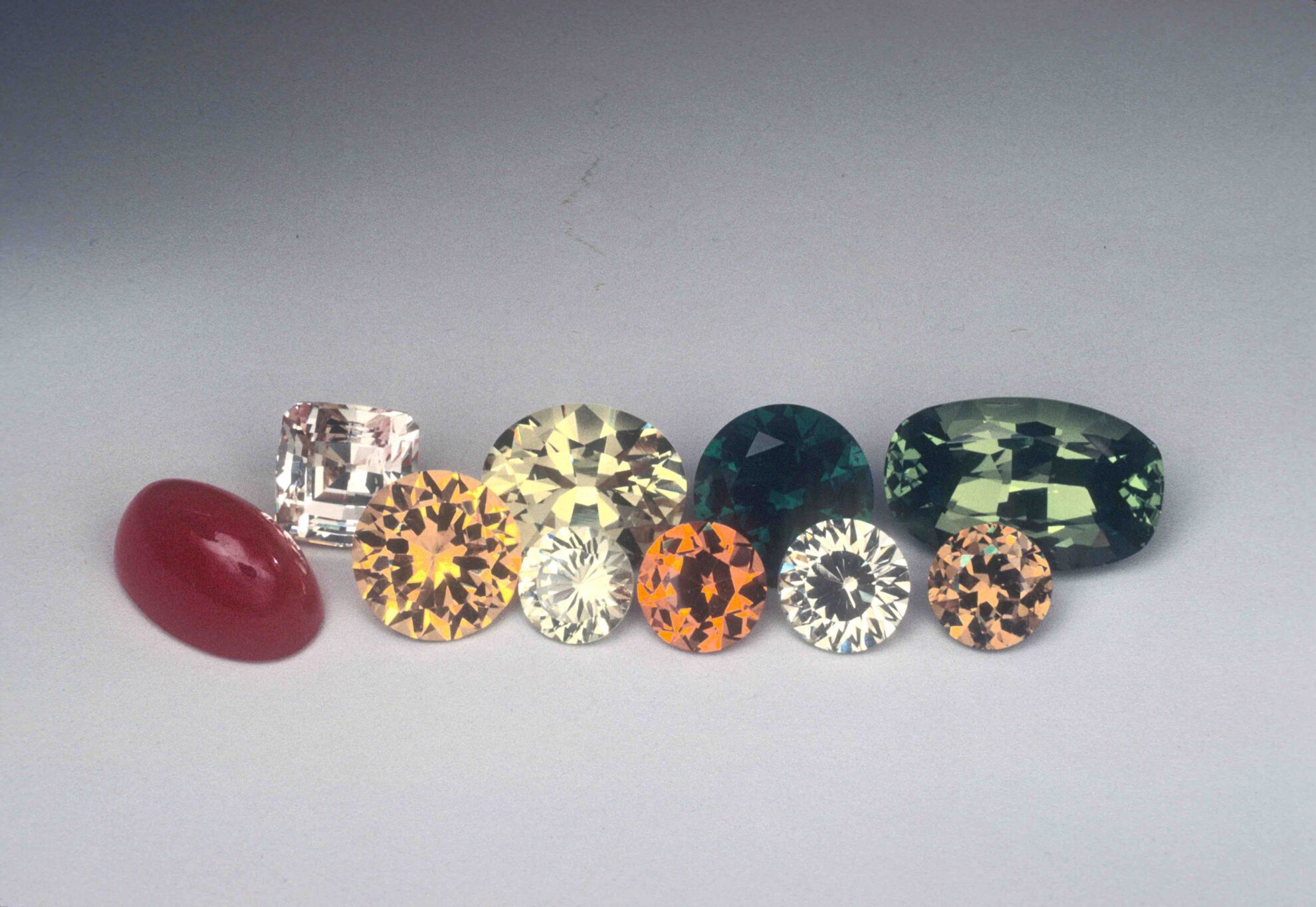
Grossular garnets come in almost every color, even colorless, except blue. However, unlike other garnets, they’re rarely red or dark. Often light to medium in tone, they make brilliant, vibrant jewelry stones.
6 Minute Read
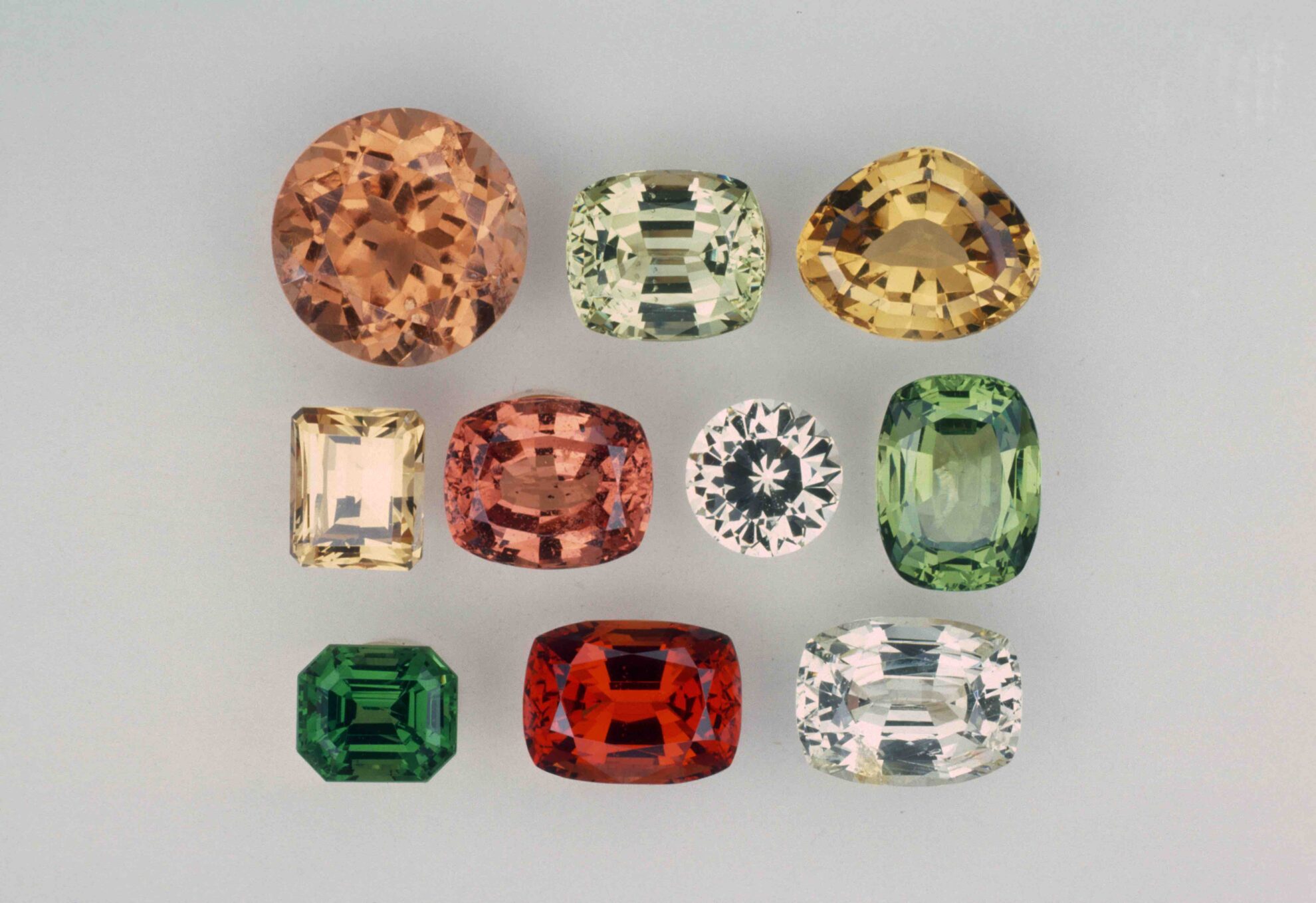
Although you might still encounter the term "grossularite," especially in older reference works, "grossular" is the more commonly used term for this species of garnet.
Grossulars have a granular appearance under the microscope, sometimes referred to as treacle. This swirled look comes from inclusions of diopside crystals and irregular streaks at grain boundaries. Some grossulars also have zircon crystal inclusions. Material from Tanzania may have actinolite and apatite inclusions as well.
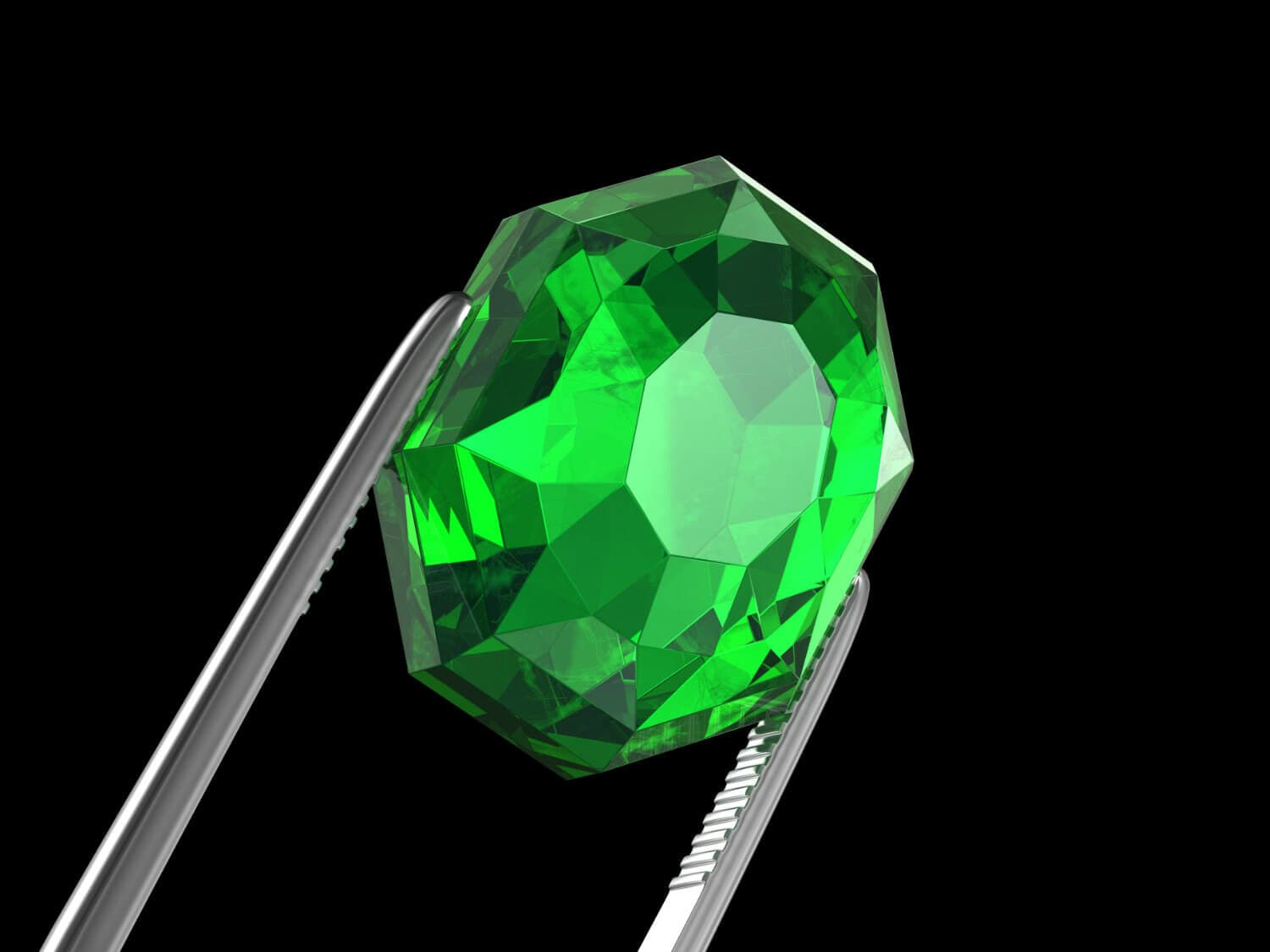
The color of grossulars depends on iron (Fe) and manganese (Mn) content. If a stone has less than 2% Fe, it shows pale colors or no color. Greater amounts of Fe produce brown and green colors. Chromium (Cr) produces a rich green shade. (Tsavorites receive their prized emerald-green color principally from vanadium).
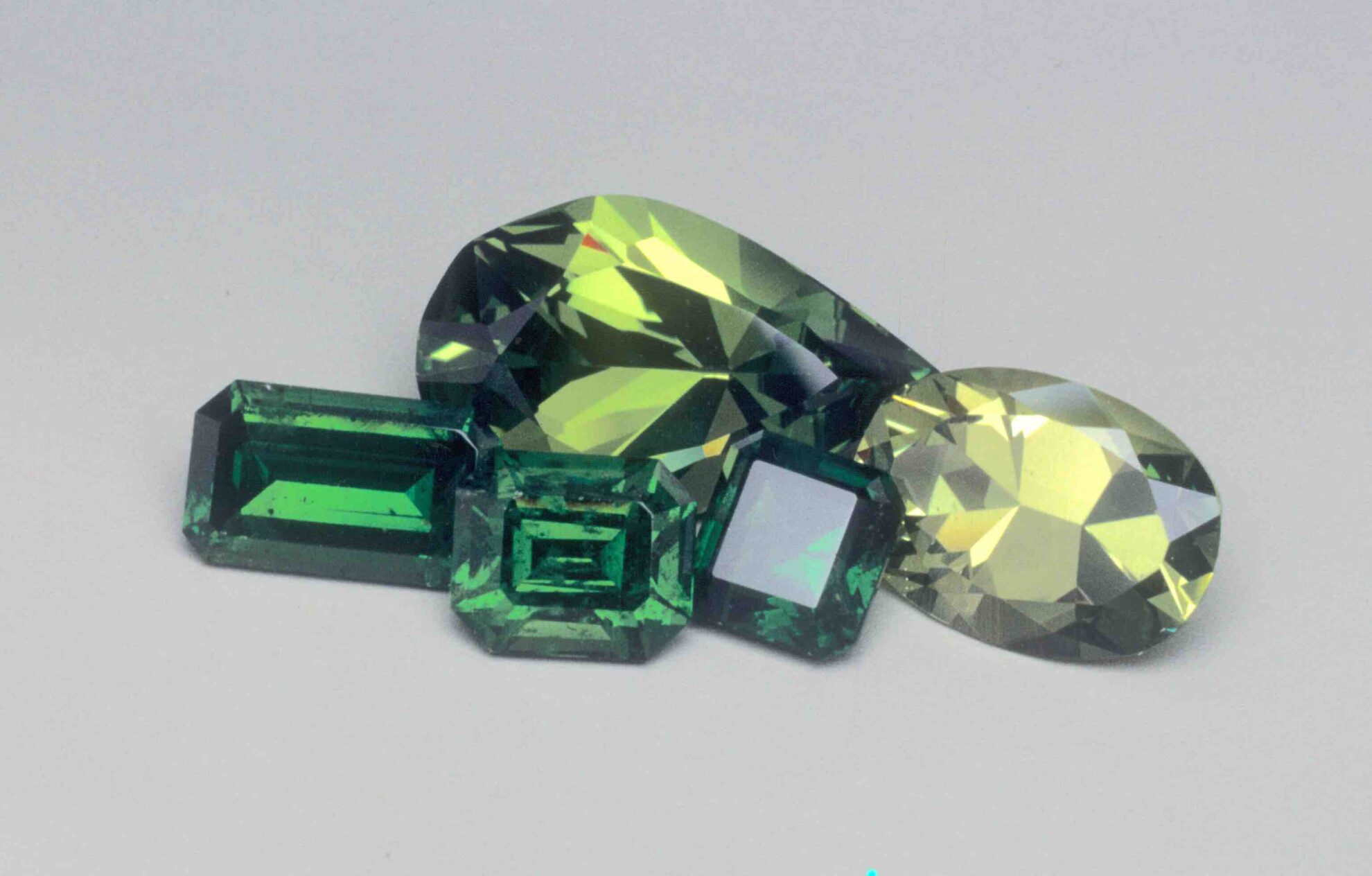
Although garnets can make beautiful jewelry stones, grossulars straddle the hardness range of 6.5 to 7.5. Thus, some specimens may resist scratching from household dust while others won't. Before choosing a jewelry setting for your grossular, ask your vendor or a gemologist about its hardness. Use protective settings for any grossulars with a low-range hardness, especially if used as ring stones.
Smithsonian bars and brilliant pears make good design choices for faceting light-tone grossulars. Tic tacs and checkerboards make good choices for dark-tone grossulars, like tsavorites.
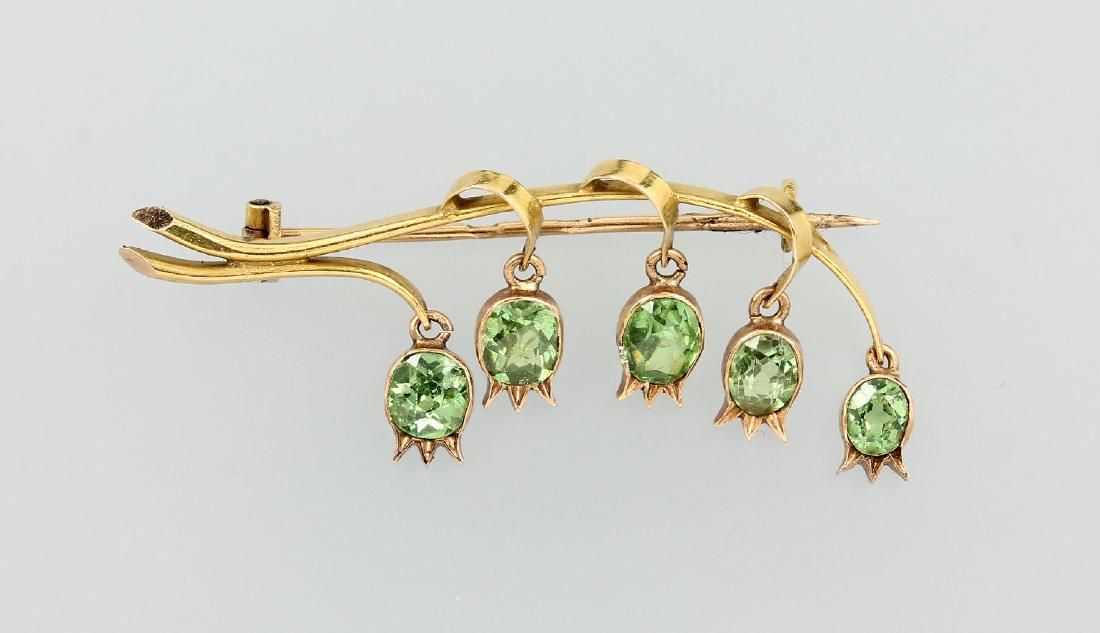
The two most well-known gem grossulars are hessonite and tsavorite. For more information on these varieties, consult their individual gem listings.
Like all garnets, grossulars can form series with other garnet species. For example, Mali garnets are a grossular-andradite blend.
Another popular gem grossular, this gem gets its name from its source, Merelani, Tanzania and, of course, its light minty green color.
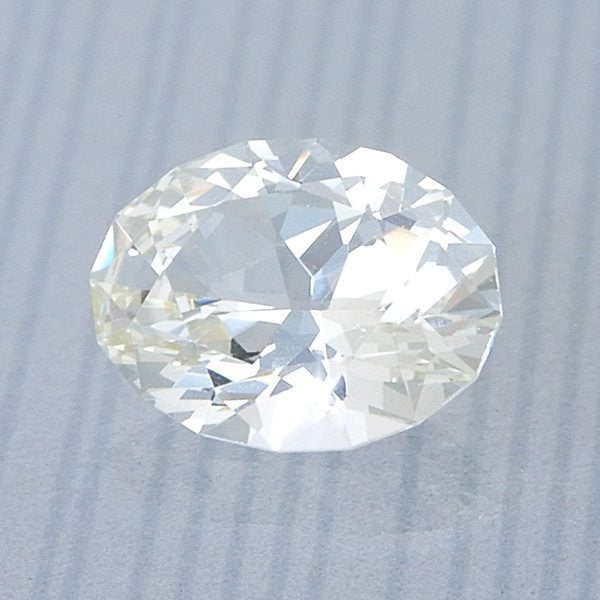
These colorless grossulars occur in California, Canada, Mexico, Myanmar, and Tanzania. Material from Georgetown, California has a refractive index (RI) of 1.737 and a specific gravity (SG) of 3.506.
Hydrogrossular can be a component of the massive grossulars. So-called Transvaal jade is the green, massive hydrogrossular material from South Africa. However, not all massive grossulars are hydrogrossular. Pakistan massive grossular has an RI of 1.738-1.742 and an SG of 3.63, with a Cr absorption spectrum. Similar material from Tanzania has an RI of 1.742-1.744 and an SG of 3.68.
A mixture of idocrase (vesuvianite) and grossular garnet. Usually pale to medium green in color, it comes from California, Pakistan, and South Africa.
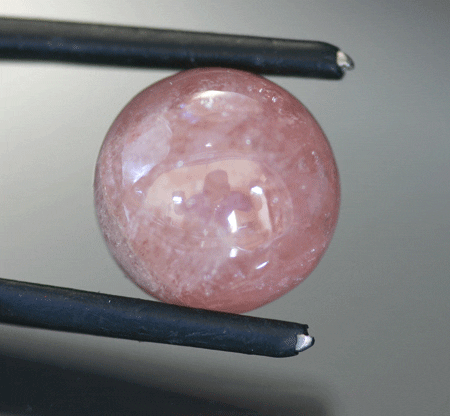
Also known as xalostocite and landerite, this pinkish grossular in marble comes from Mexico.
Almost always zoned and often twinned, grossulars appear distinctly not isotropic under the microscope. Specimens can show anomalous double refraction (ADR) due to strain.
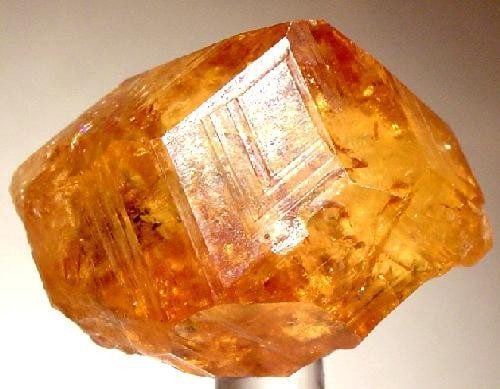
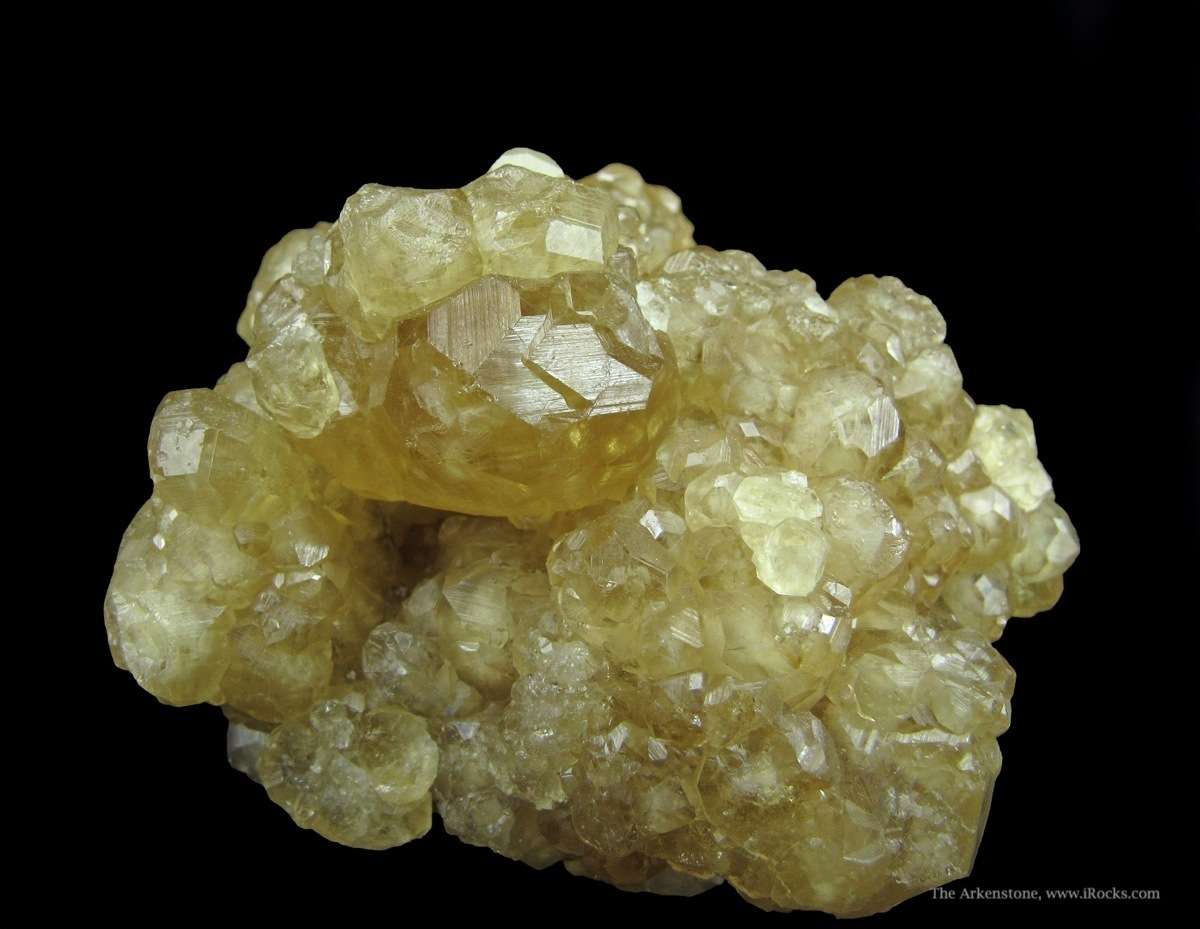
Crystal specimens often show striations.
For information on distinguishing garnet species and blends, consult our article on identifying garnets.
Usually none in ultraviolet light (UV). Some specimens may fluoresce weakly golden yellow under shortwave (SW) or longwave (LW) UV, yellowish green or pink under SW UV, or orangish under LW UV.
All massive material glows orange in X-rays, as do many faceted gems. Yellow grossulars from Tanzania fluoresce orange in X-rays and also UV. (RI = 1.734, SG = 3.604).
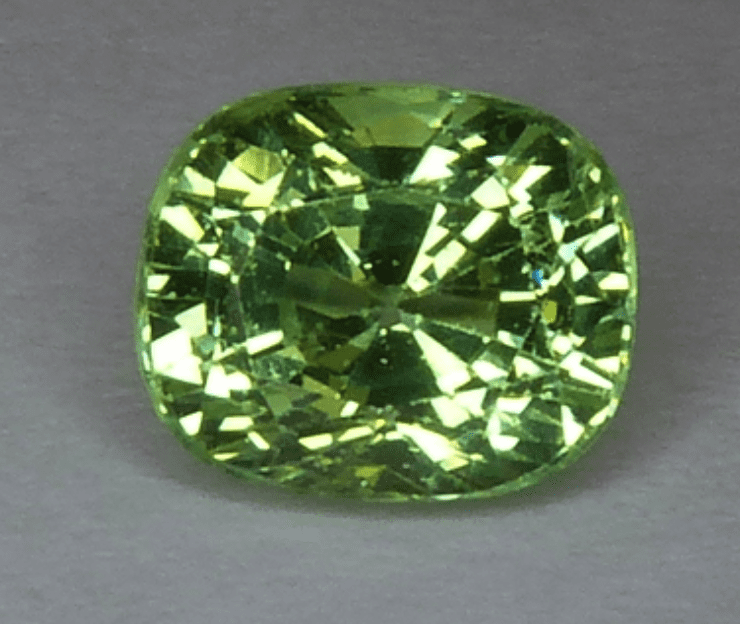
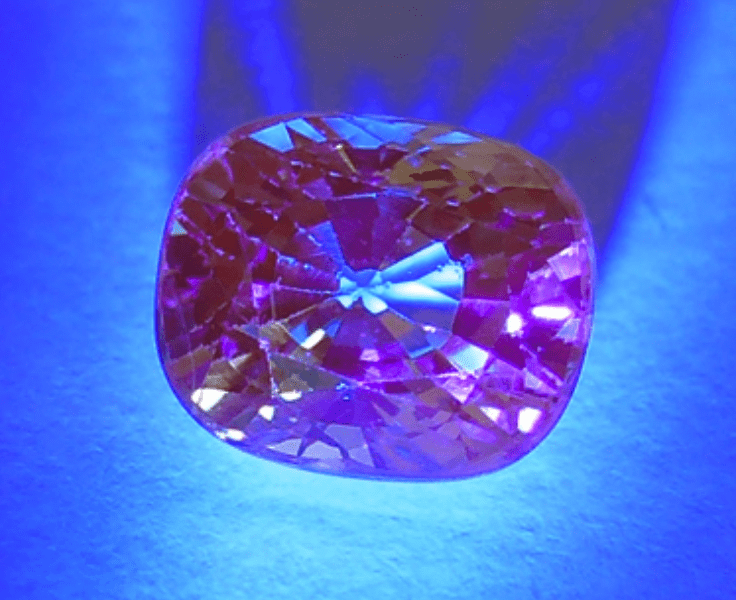
A very lively green 2.40-ct African grossular garnet with a high polish, under normal light. When placed under UV light, it shows a pink glow. © All That Glitters. Used with permission. (Slide show created to demonstrate the stone's fluorescence).
None in pale-colored, faceted gems. A trace of almandine garnet may produce a faint iron spectrum.
A trace of Cr may produce a chrome spectrum in green varieties.
Massive grossular may show a weak line at 4610 or a band at 6300. Green, massive grossular from Pakistan shows a line at 6970 (weak) with weak lines in the orange, plus a strong band at 6300 and diffuse lines at 6050 and 5050.
Orange stones may have bands at 4070 and 4030.
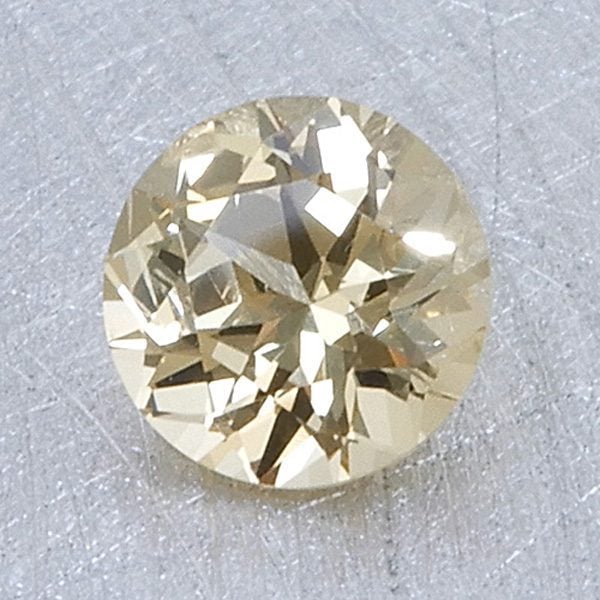
Scientists have synthesized grossulars for research into geological history as well as the thermodynamic properties of this garnet. However, there is no known jewelry use of this material.
However, you might encounter simulants, gems that look like grossulars, offered as genuine specimens of the more expensive grossular gems. These may even include lab-created garnets. For example, gemologist and gem dealer Edward Boehm recalls examining a supposed tsavorite, only to find it was a piece of yttrium aluminum garnet (YAG), a synthetic garnet, "fashioned" to appear "fresh from the mine."
For more information on YAG and other synthetic garnets, see the "Synthetics" section of our main garnet gem listing.
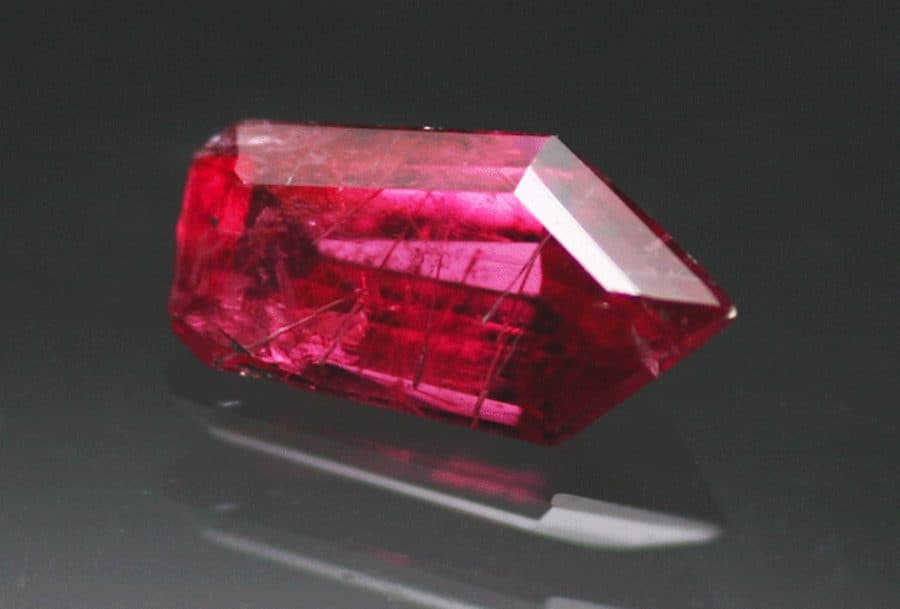
Although garnets have a reputation for typically receiving no treatments, this does occur. As it so happens, grossulars have received some unusual enhancements. In one odd case, a rare colorless grossular was dyed to appear like a ruby.
A 1992 experiment demonstrated that gamma radiation can induce an unstable yellow-green color in colorless and pale hued East African grossulars. In sunlight, the color fades within hours to days. In the dark, within a week. Thus, this process has no commercial viability. However, examining yellow-green grossulars in sunlight is advisable.
For information on additional possible garnet gem treatments, consult the "Enhancements" section of our garnet buying guide.
Numerous localities produce gem-quality grossulars around the world. Some notable sources include
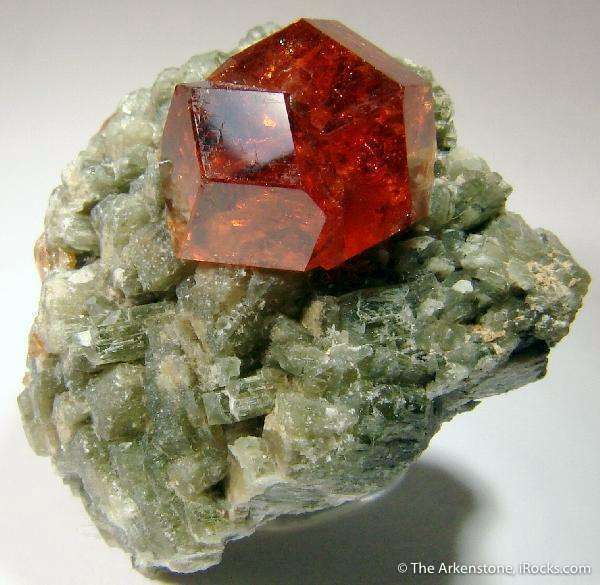
Lapidaries cut massive grossular varieties as cabochons of large size, including green shades and also pink, translucent material. Massive white material from China has also been carved.
The Sri Lankan gem gravels have produced orange and brown grossulars (hessonite) up to several hundred carats. Although clean only in small sizes, the fine cinnamon colored hessonites from Quebec have yielded good cut gems up to about 25 carats.
While rare in clean gems over 1 carat, tsavorites in the size range of 10 to 20 carats do occur. A tsavorite crystal weighing 925 cts yielded a faceted 325-ct gem!
Grossulars have some heat sensitivity and may contain inclusions. Thus, avoid mechanical cleaning systems and exposing them to extreme heat. Instead, use warm water, detergent, and a soft brush for cleaning. Consult our jewelry cleaning guide for more recommendations.


When you join the IGS community, you get trusted diamond & gemstone information when you need it.
Although you might still encounter the term "grossularite," especially in older reference works, "grossular" is the more commonly used term for this species of garnet.
Grossulars have a granular appearance under the microscope, sometimes referred to as treacle. This swirled look comes from inclusions of diopside crystals and irregular streaks at grain boundaries. Some grossulars also have zircon crystal inclusions. Material from Tanzania may have and inclusions as well.
The color of grossulars depends on iron (Fe) and manganese (Mn) content. If a stone has less than 2% Fe, it shows pale colors or no color. Greater amounts of Fe produce brown and green colors. Chromium (Cr) produces a rich green shade. (Tsavorites receive their prized emerald-green color principally from vanadium).
Although garnets can make beautiful jewelry stones, grossulars straddle the hardness range of 6.5 to 7.5. Thus, some specimens may resist scratching from household dust while others won't. Before choosing a jewelry setting for your grossular, ask your vendor or a gemologist about its hardness. Use protective settings for any grossulars with a low-range hardness, especially if used as ring stones.
Smithsonian bars and brilliant pears make good design choices for faceting light-tone grossulars. Tic tacs and checkerboards make good choices for dark-tone grossulars, like tsavorites.
The two most well-known gem grossulars are hessonite and tsavorite. For more information on these varieties, consult their individual gem listings.
Like all garnets, grossulars can form series with other garnet species. For example, Mali garnets are a grossular-andradite blend.
Another popular gem grossular, this gem gets its name from its source, Merelani, Tanzania and, of course, its light minty green color.
These colorless grossulars occur in California, Canada, Mexico, Myanmar, and Tanzania. Material from Georgetown, California has a refractive index (RI) of 1.737 and a specific gravity (SG) of 3.506.
Hydrogrossular can be a component of the massive grossulars. So-called Transvaal jade is the green, massive hydrogrossular material from South Africa. However, not all massive grossulars are hydrogrossular. Pakistan massive grossular has an RI of 1.738-1.742 and an SG of 3.63, with a Cr absorption spectrum. Similar material from Tanzania has an RI of 1.742-1.744 and an SG of 3.68.
A mixture of idocrase (vesuvianite) and grossular garnet. Usually pale to medium green in color, it comes from California, Pakistan, and South Africa.
Also known as xalostocite and landerite, this pinkish grossular in marble comes from Mexico.
Almost always zoned and often twinned, grossulars appear distinctly not isotropic under the microscope. Specimens can show anomalous double refraction (ADR) due to strain.
Crystal specimens often show striations.
For information on distinguishing garnet species and blends, consult our article on identifying garnets.
Usually none in ultraviolet light (UV). Some specimens may fluoresce weakly golden yellow under shortwave (SW) or longwave (LW) UV, yellowish green or pink under SW UV, or orangish under LW UV.
All massive material glows orange in X-rays, as do many faceted gems. Yellow grossulars from Tanzania fluoresce orange in X-rays and also UV. (RI = 1.734, SG = 3.604).
A very lively green 2.40-ct African grossular garnet with a high polish, under normal light. When placed under UV light, it shows a pink glow. © All That Glitters. Used with permission. (Slide show created to demonstrate the stone's fluorescence).
None in pale-colored, faceted gems. A trace of almandine garnet may produce a faint iron spectrum.
A trace of Cr may produce a chrome spectrum in green varieties.
Massive grossular may show a weak line at 4610 or a band at 6300. Green, massive grossular from Pakistan shows a line at 6970 (weak) with weak lines in the orange, plus a strong band at 6300 and diffuse lines at 6050 and 5050.
Orange stones may have bands at 4070 and 4030.
Scientists have synthesized grossulars for research into geological history as well as the thermodynamic properties of this garnet. However, there is no known jewelry use of this material.
However, you might encounter simulants, gems that look like grossulars, offered as genuine specimens of the more expensive grossular gems. These may even include lab-created garnets. For example, gemologist and gem dealer Edward Boehm recalls examining a supposed tsavorite, only to find it was a piece of yttrium aluminum garnet (YAG), a synthetic garnet, "fashioned" to appear "fresh from the mine."
For more information on YAG and other synthetic garnets, see the "Synthetics" section of our main garnet gem listing.
Although garnets have a reputation for typically receiving no treatments, this does occur. As it so happens, grossulars have received some unusual enhancements. In one odd case, a rare colorless grossular was dyed to appear like a ruby.
A 1992 experiment demonstrated that gamma radiation can induce an unstable yellow-green color in colorless and pale hued East African grossulars. In sunlight, the color fades within hours to days. In the dark, within a week. Thus, this process has no commercial viability. However, examining yellow-green grossulars in sunlight is advisable.
For information on additional possible garnet gem treatments, consult the "Enhancements" section of our garnet buying guide.
Numerous localities produce gem-quality grossulars around the world. Some notable sources include
Lapidaries cut massive grossular varieties as cabochons of large size, including green shades and also pink, translucent material. Massive white material from China has also been carved.
The Sri Lankan gem gravels have produced orange and brown grossulars (hessonite) up to several hundred carats. Although clean only in small sizes, the fine cinnamon colored hessonites from Quebec have yielded good cut gems up to about 25 carats.
While rare in clean gems over 1 carat, tsavorites in the size range of 10 to 20 carats do occur. A tsavorite crystal weighing 925 cts yielded a faceted 325-ct gem!
Grossulars have some heat sensitivity and may contain inclusions. Thus, avoid mechanical cleaning systems and exposing them to extreme heat. Instead, use warm water, detergent, and a soft brush for cleaning. Consult our jewelry cleaning guide for more recommendations.



Grossular garnets come in almost every color, even colorless, except blue. However, unlike other garnets, they’re rarely red or dark. Often light to medium in tone, they make brilliant, vibrant jewelry stones.
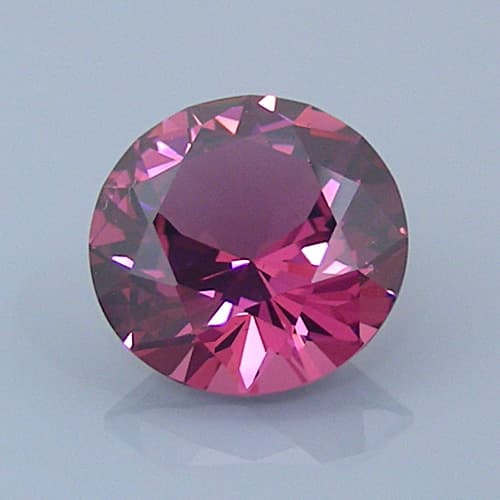
For information on quality factors for grossular and other garnets, consult our garnet buying guide.