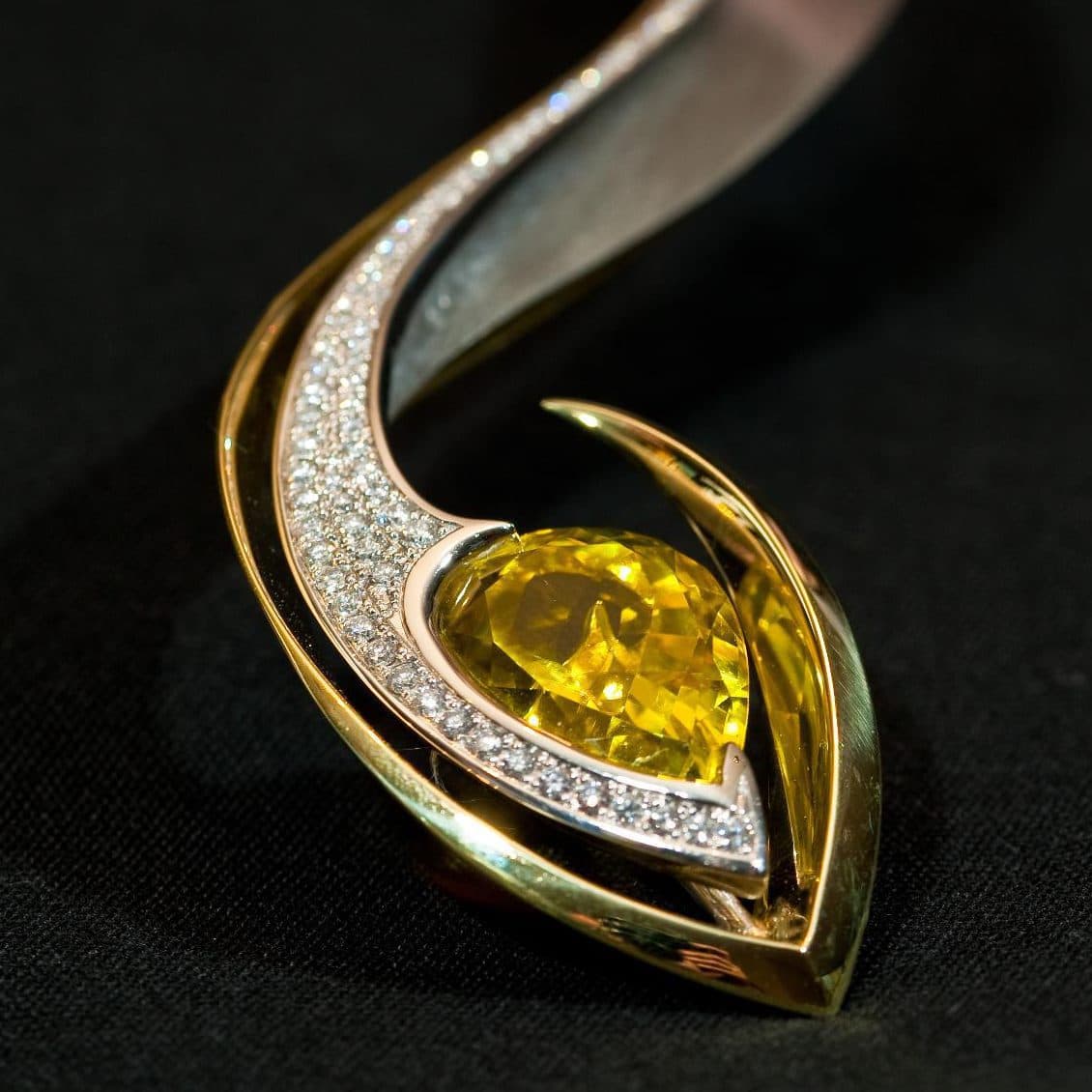
From bright, sunny colors to deep golden hues, yellow gemstones are warm and inviting. Learn how to assess the quality of yellow gems and find out which ones won't scratch or break in a ring.
13 Minute Read
Yellow gemstones bring warmth, positivity, and sunshine to any jewelry collection. From bright citrine crystals to rare yellow diamonds, these gems offer options for every budget and preference. In this comprehensive guide, you'll discover everything you need to know about yellow gemstones and how to select the perfect one for your jewelry.
In this article, you'll learn:
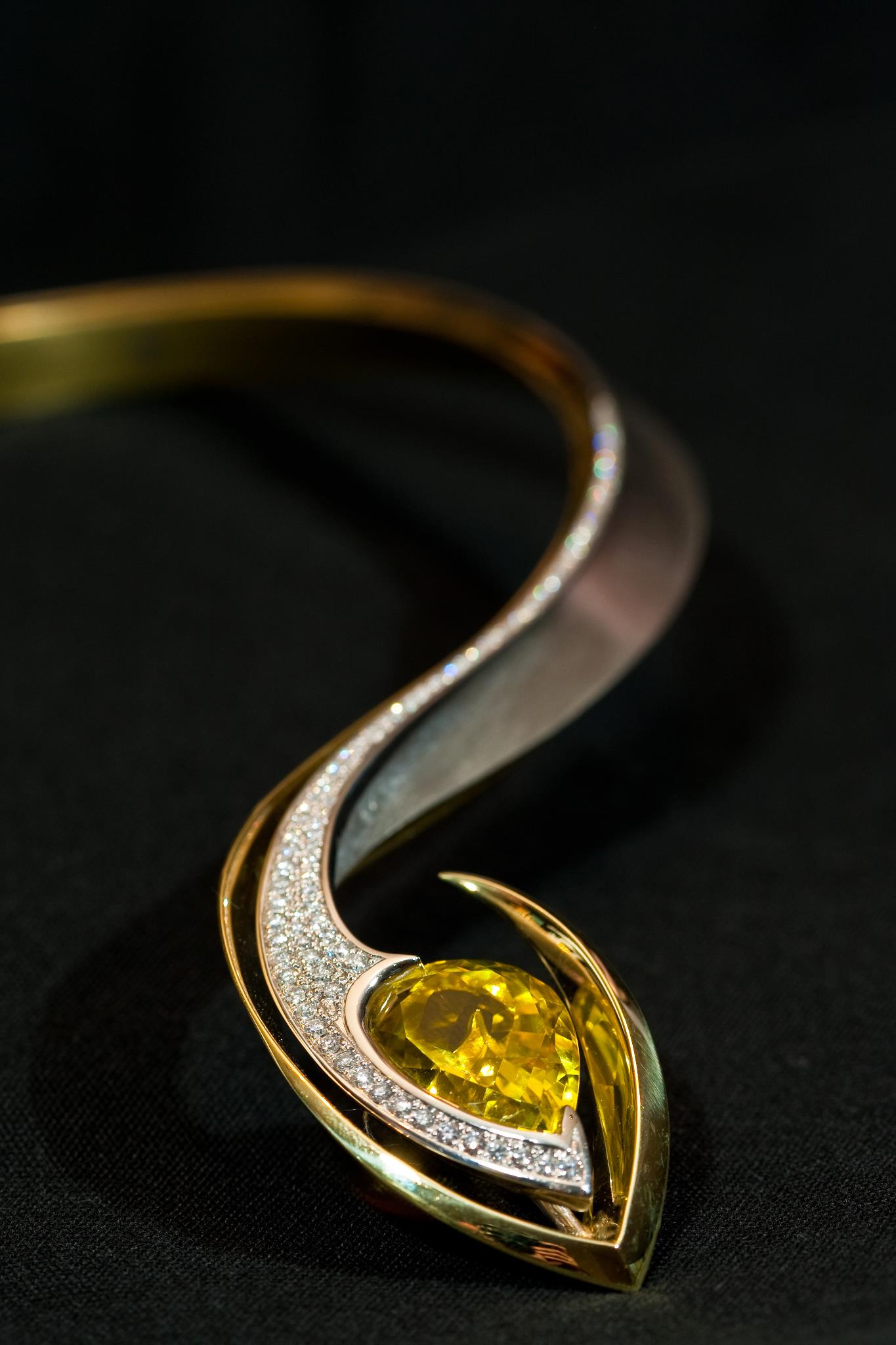
Gemologists evaluate yellow gemstones using specific criteria to determine their quality and value. Understanding these factors will help you make an informed purchase decision:
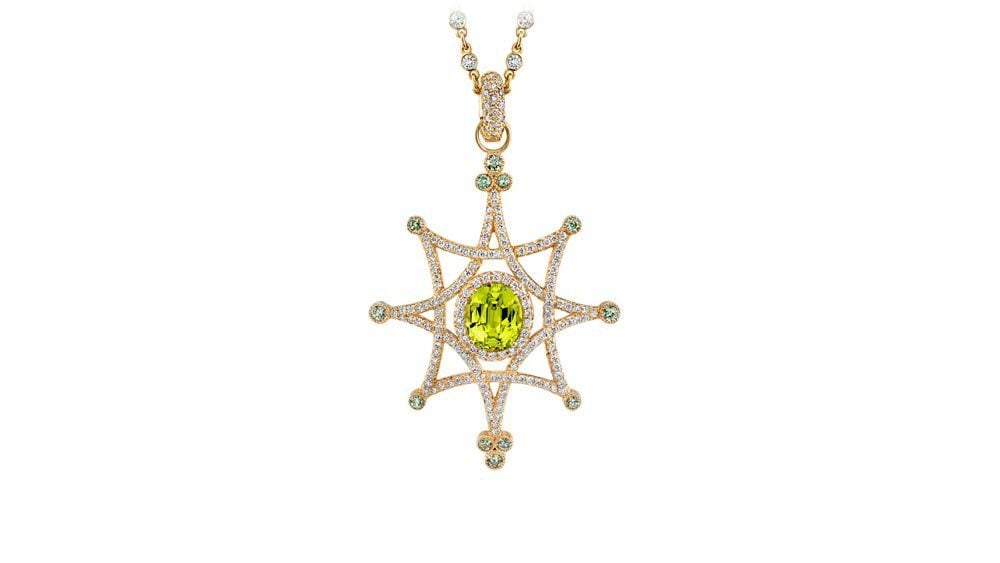
Unlike many other colored gemstones, yellow stones reach their gamut limit (maximum color saturation) at relatively light tones. A vibrant, highly saturated yellow typically occurs at only 20-30% tone depth. However, extremely light yellow tones may appear simply as off-color white stones, reducing their value.
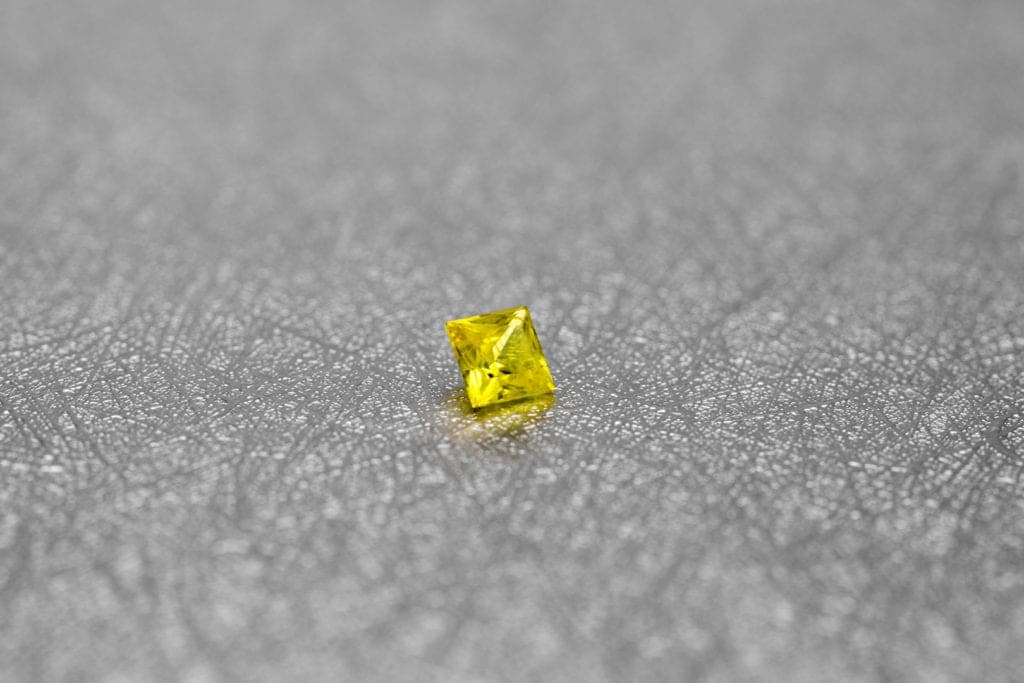
Because the tone is lighter in yellow gems than in other colored stones, imperfections in the gem are more visible. This means that a higher clarity grade is more important in yellow gems relative to other colored stones. Large or dark inclusions are particularly undesirable, as these have the greatest impact on a gem's appearance.
If you're considering a yellow gemstone for an engagement ring or fine jewelry, consider designing a unique piece with CustomMade. Their experts can help you find a top-quality stone, and you'll avoid the poor quality that most major retailers offer (like this sapphire with washed-out color from Blue Nile).
Some gemstones are significantly tougher than others, making them ideal for daily wear. The yellow gemstones in this section all possess a Mohs hardness value of at least 6.5, providing excellent scratch resistance. Additionally, these gems have good tenacity, making them less likely to break if accidentally dropped or knocked against hard surfaces.
Citrine is undoubtedly the most widely available and popular yellow gemstone on the market. As the modern November birthstone, this variety of quartz offers:
While natural-color citrines are relatively rare, many commercial citrine crystals are produced through heating smoky quartz to create vibrant yellow-orange hues. Additionally, a combination of irradiation and heat treatment can transform colorless quartz into bright lemon quartz with intense yellow coloration.
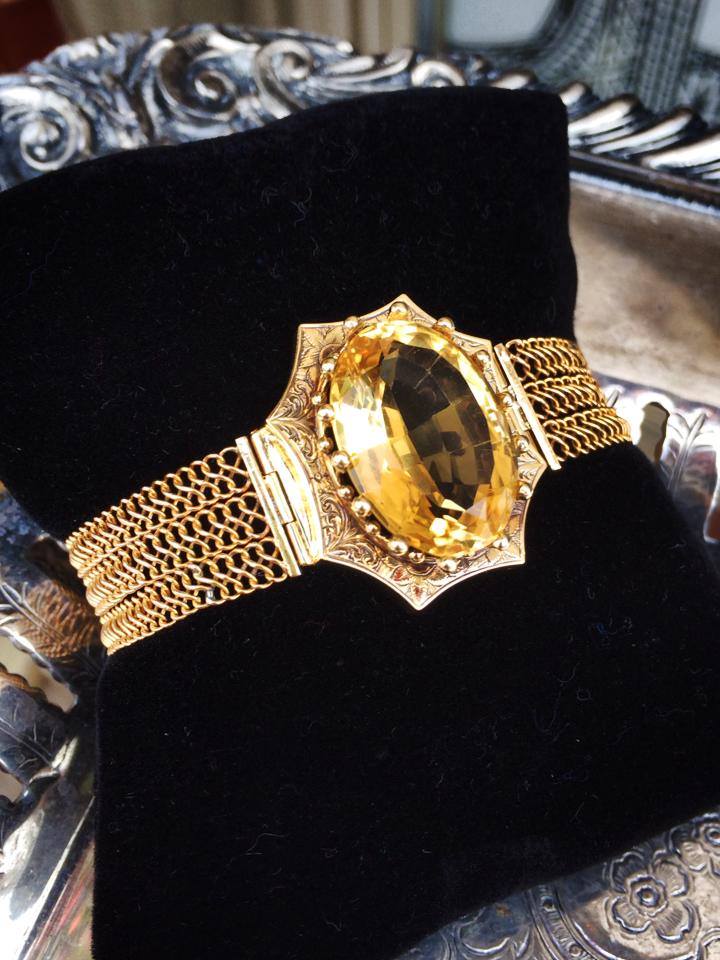
For those with larger budgets, yellow diamonds offer exceptional beauty and prestige. While most consumers associate the April birthstone with colorless gems, some experts believe that a diamond's proper color is actually yellow:
For more budget-conscious shoppers, consider irradiated diamonds or those treated with high pressure and high temperature (HPHT) processes. These treatments are completely safe for wear and significantly more affordable than natural fancy yellow diamonds of similar appearance.
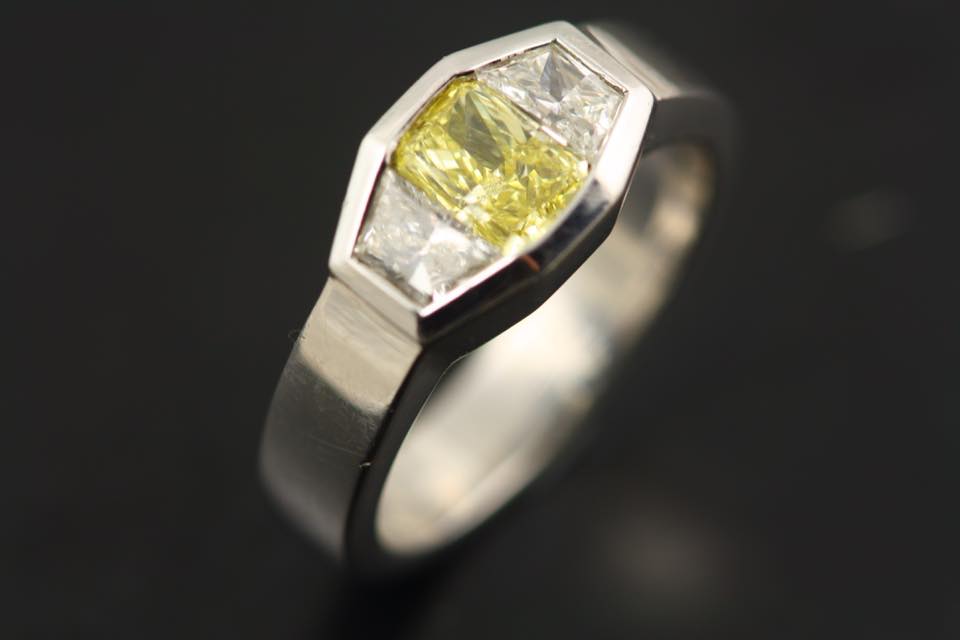
While most people associate sapphires with blue hues, these versatile gems can occur in nearly any color except red. Yellow sapphires offer exceptional durability and beauty:
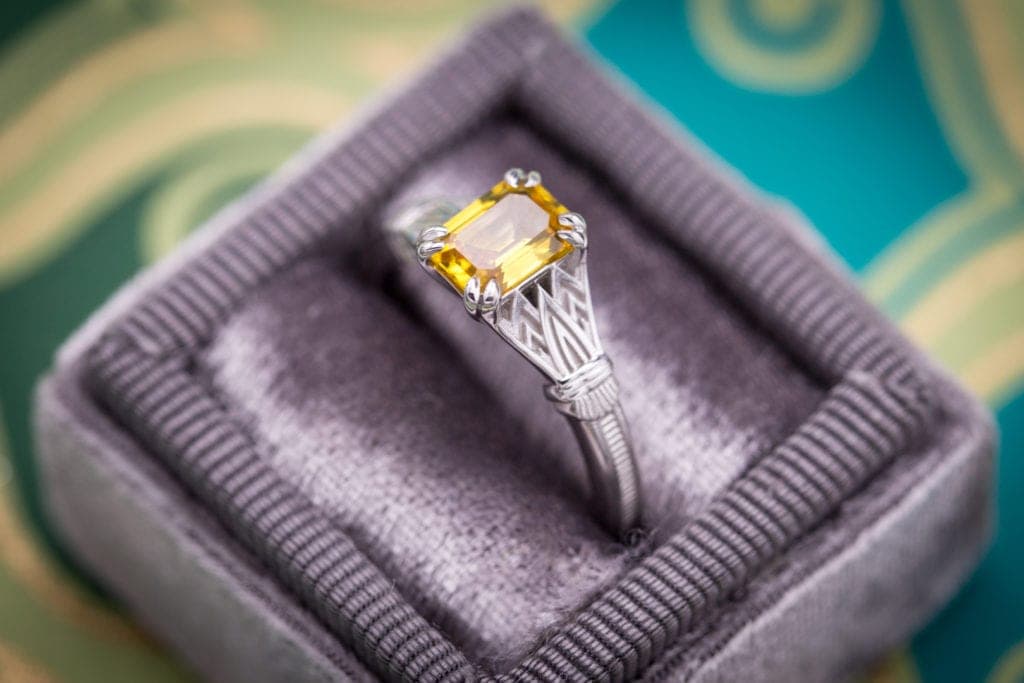
Heliodor, also known as golden beryl, belongs to the same mineral family as emerald. These stunning yellow gemstones offer:
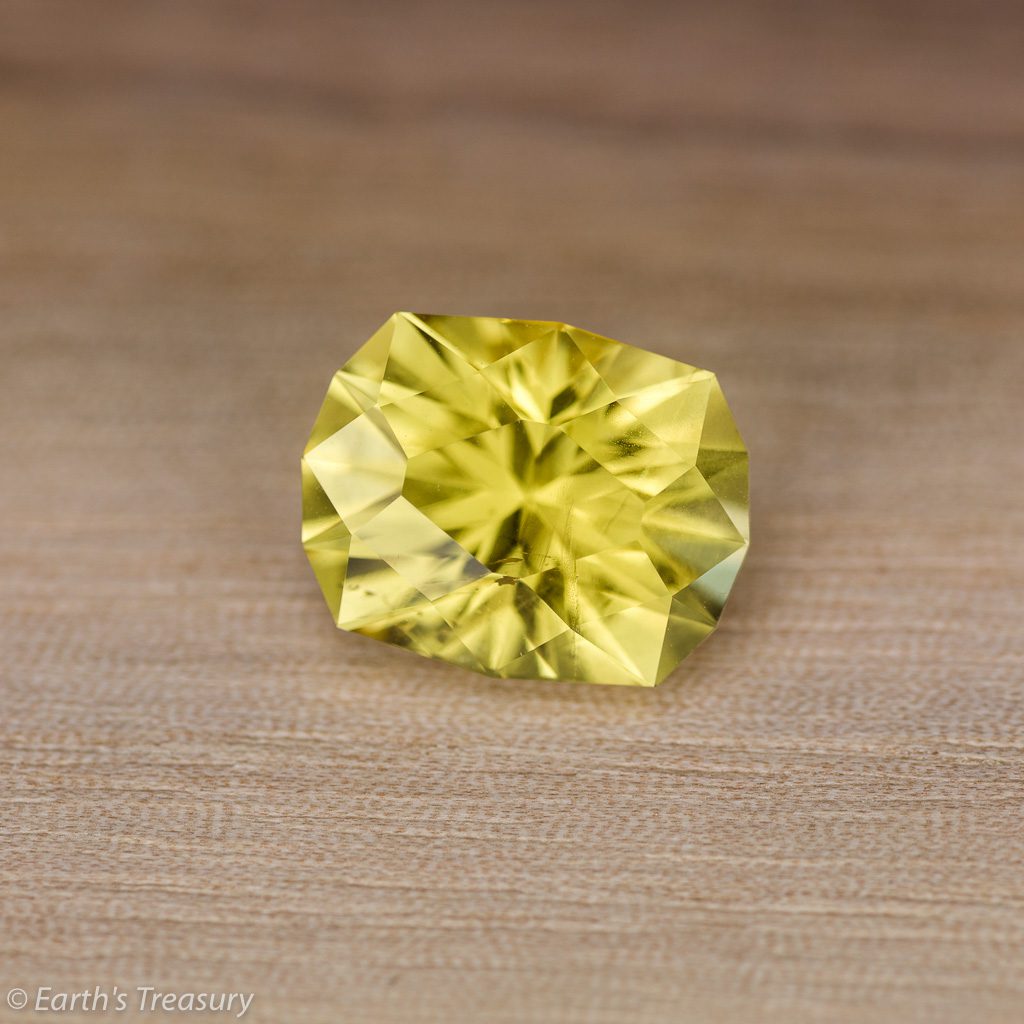
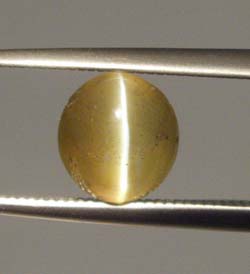
Chrysoberyl is most famous for its color-changing variety, alexandrite. However, most chrysoberyl specimens display beautiful yellow hues that shouldn't be overshadowed by their more famous cousin:
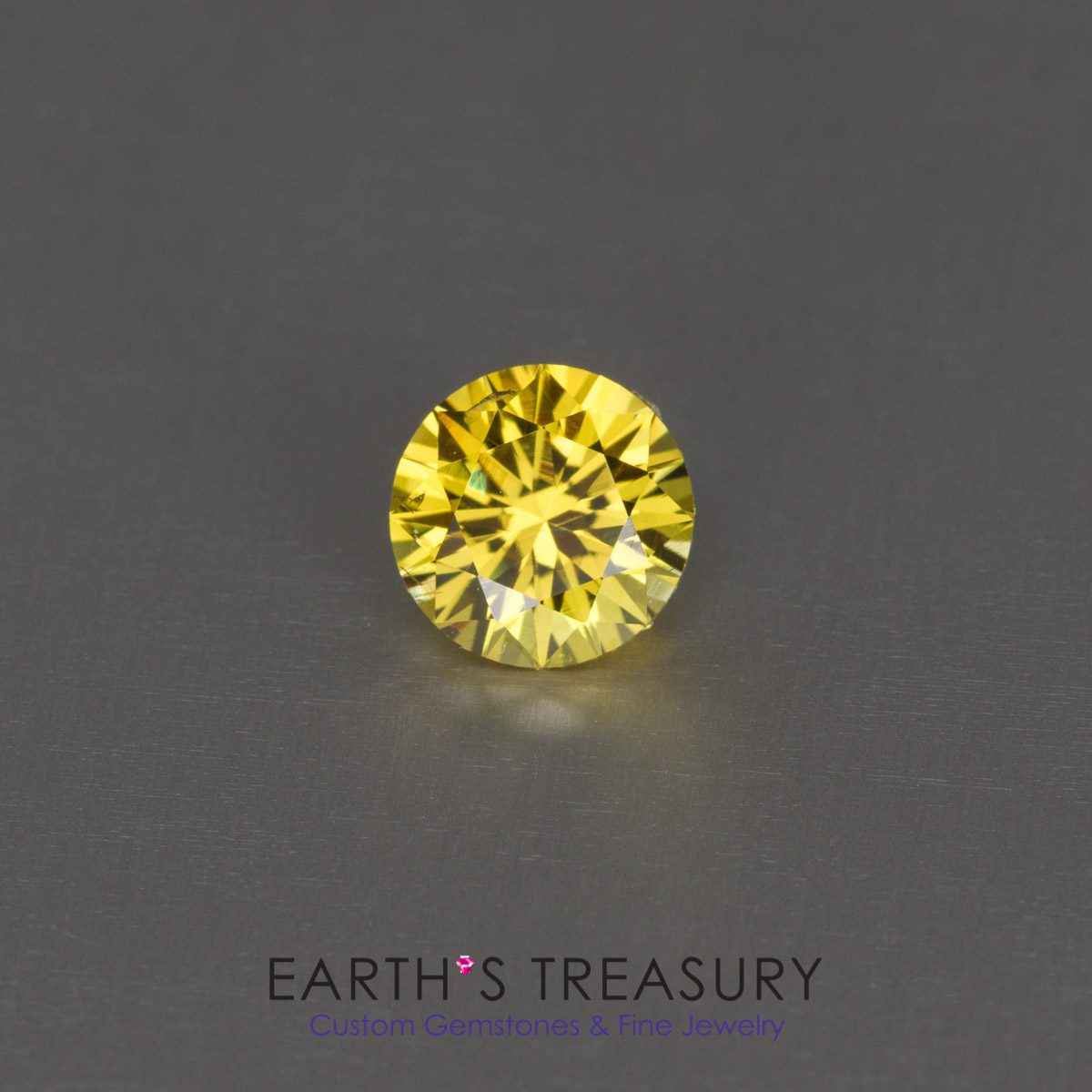
Garnet, the January birthstone, offers some truly spectacular yellow varieties that often go unrecognized by consumers familiar only with red garnets:
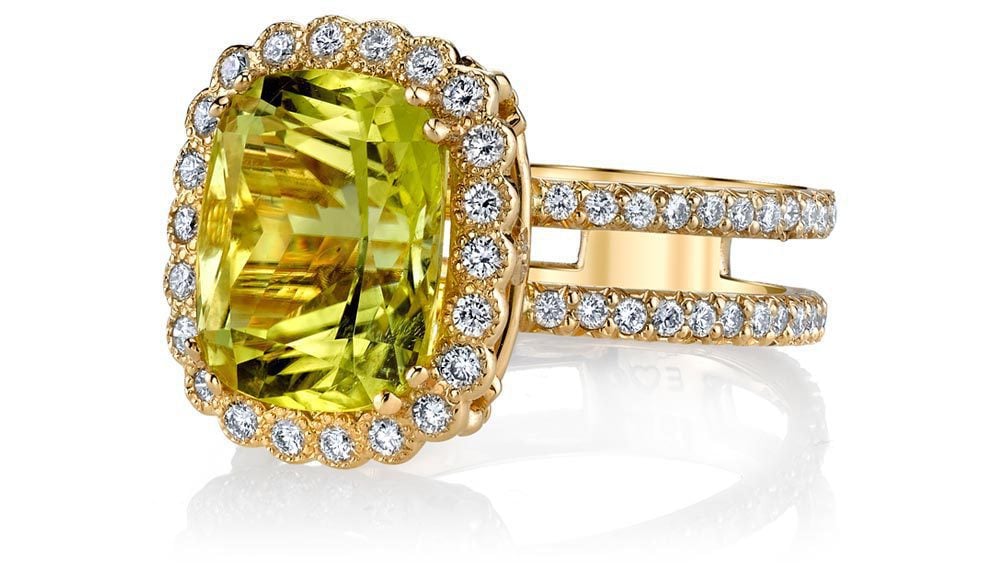
Despite tourmalines occurring in virtually every color imaginable, yellow specimens of this October birthstone are exceptionally rare:
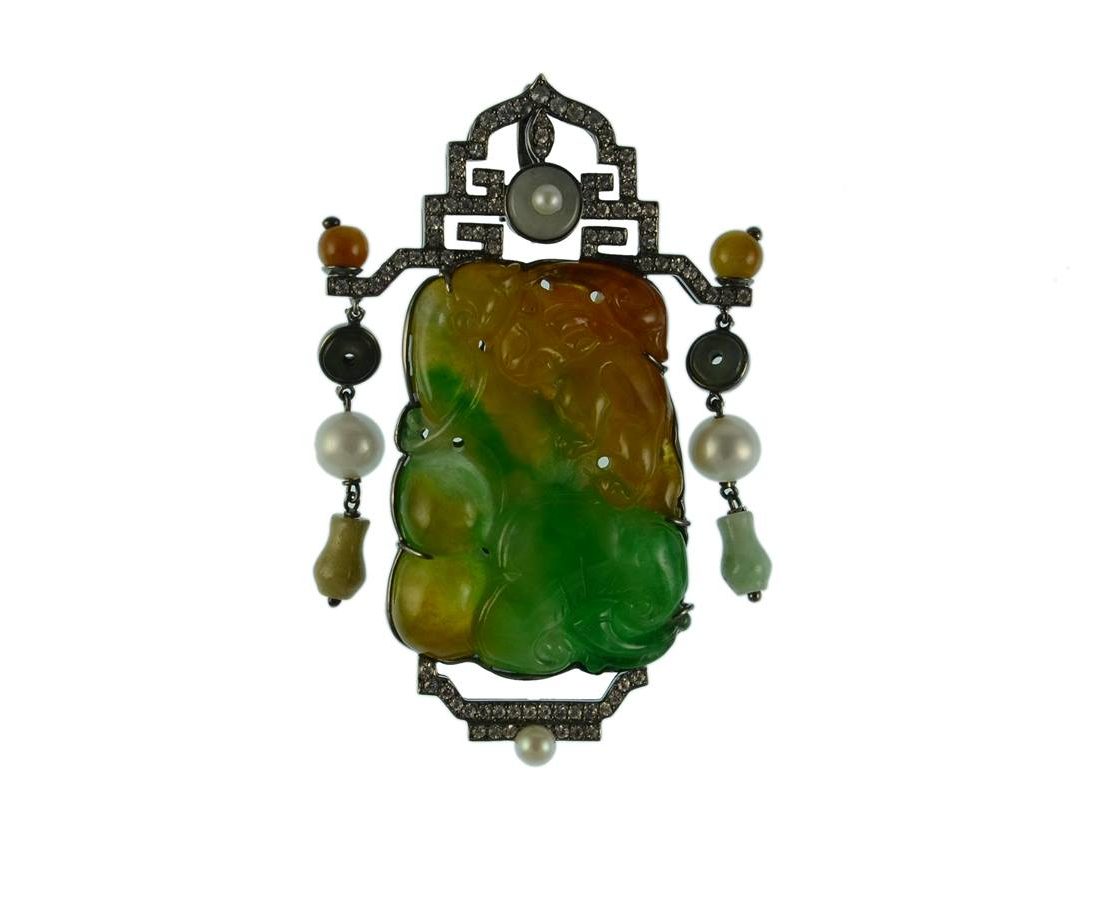
Often called the enigmatic gem, jade can actually refer to two distinct minerals: nephrite or jadeite. Both can occur in yellow hues but possess different properties:
Bright canary hues of danburite remain relatively unknown to many gem enthusiasts, but these gemstones offer several advantages:
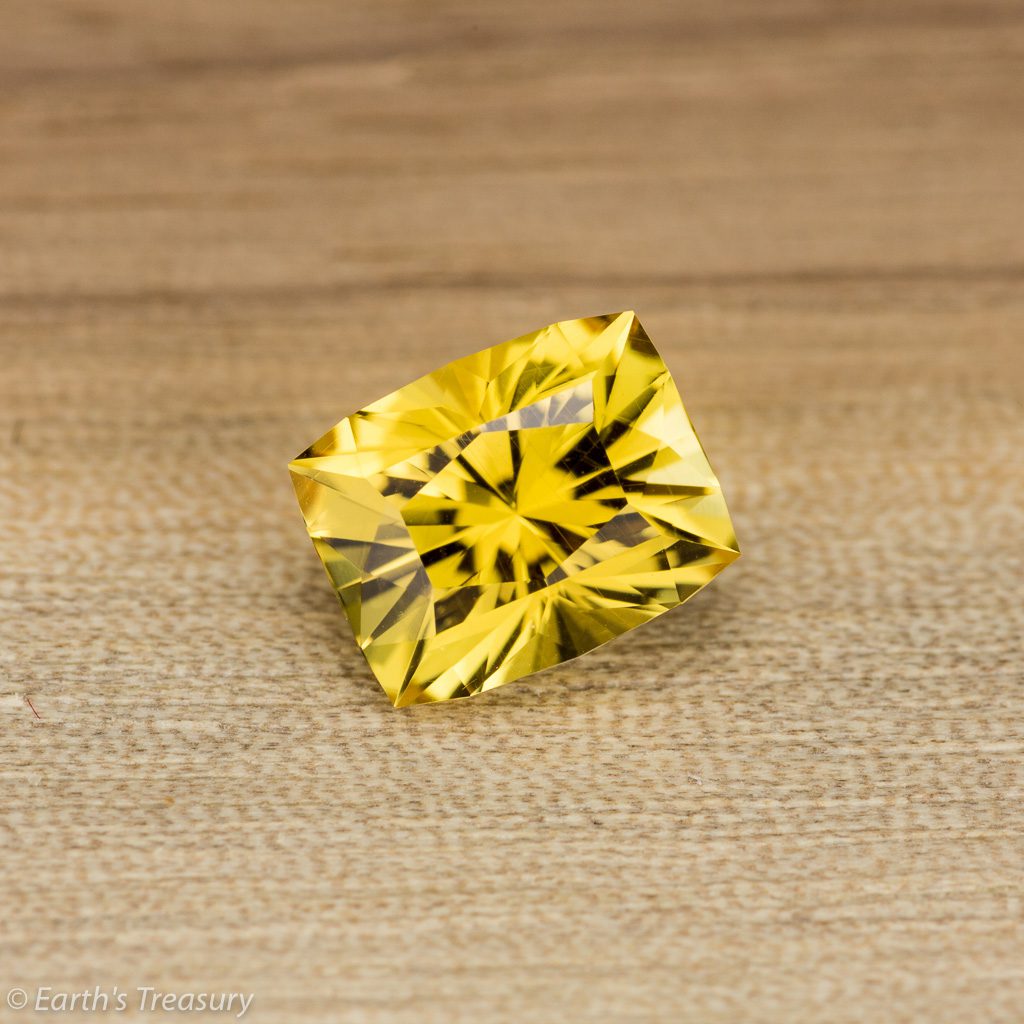
Some yellow gemstones possess characteristics that make them less suitable for daily wear. Whether due to softness or brittleness, these gems may develop scratches or chips over time when worn in rings. However, they make excellent choices for earrings, pendants, and brooches where they face less physical contact. Using a protective jewelry setting can also help prevent damage if you choose to use these in ring designs.
Topaz, the traditional November birthstone, makes an excellent yellow gemstone choice with some considerations:
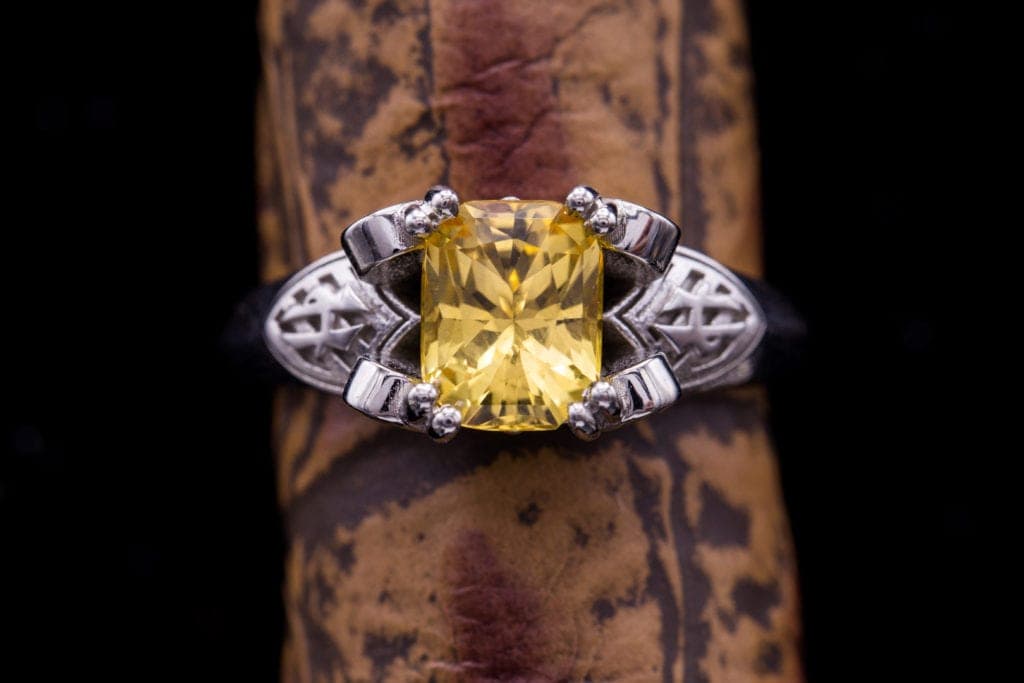
Often associated with blue varieties, zircon as a December birthstone can display nearly any color, including beautiful yellow hues:
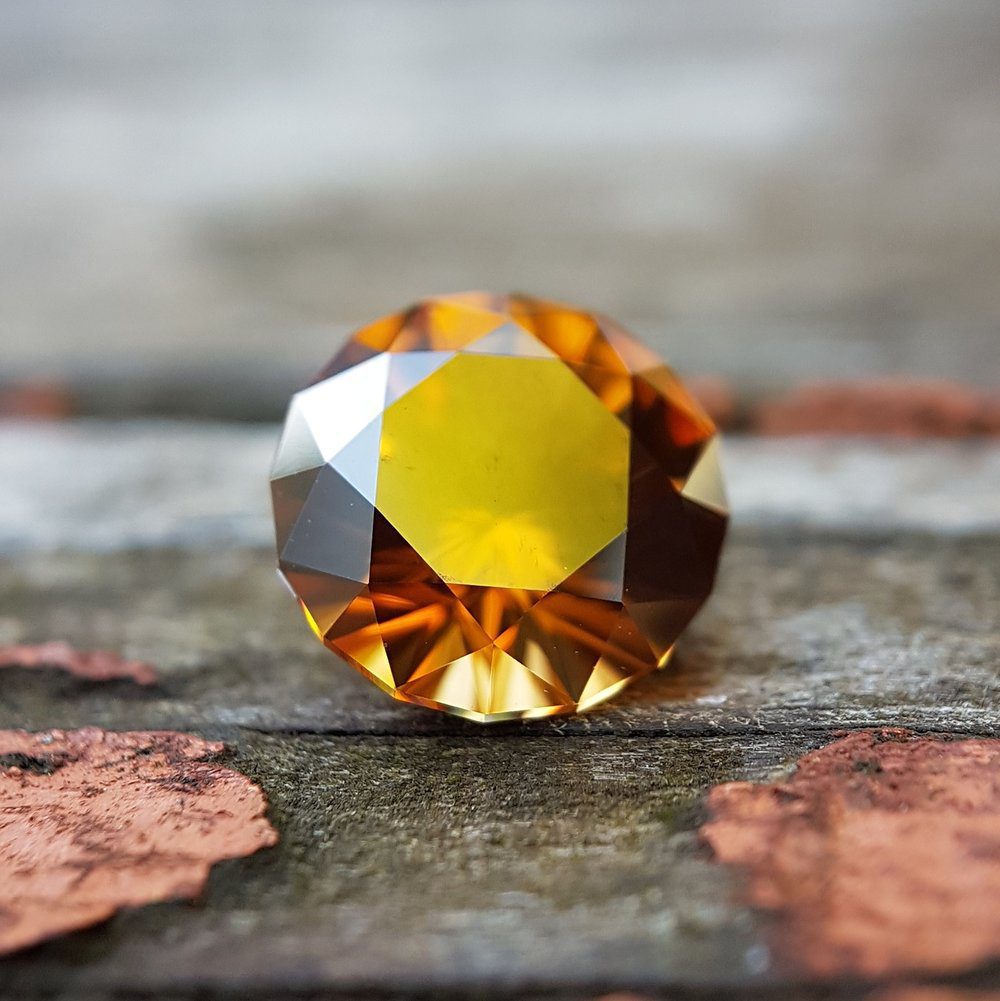
With their beautiful, satiny luster, golden South Sea pearls grow significantly larger than most other pearl varieties:
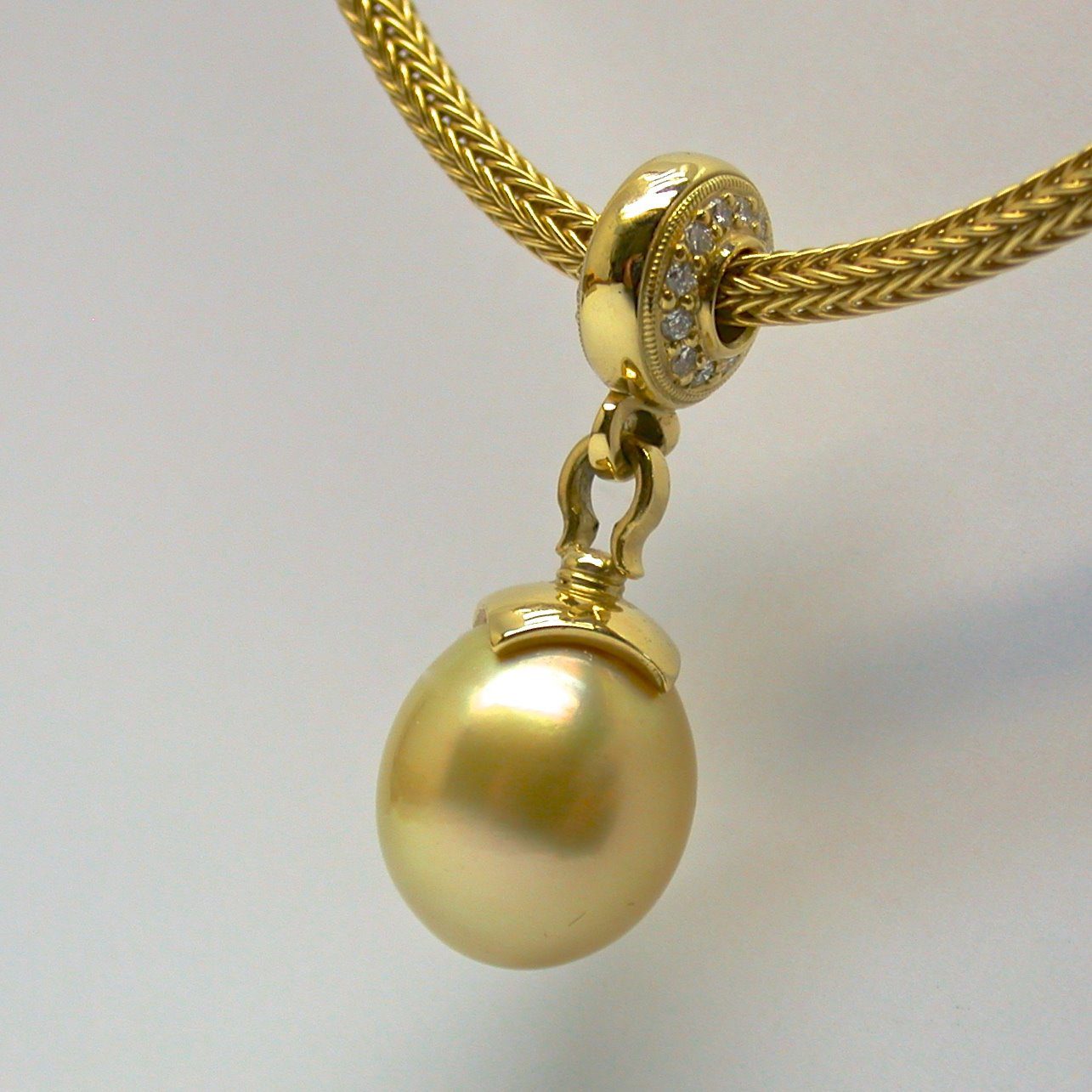
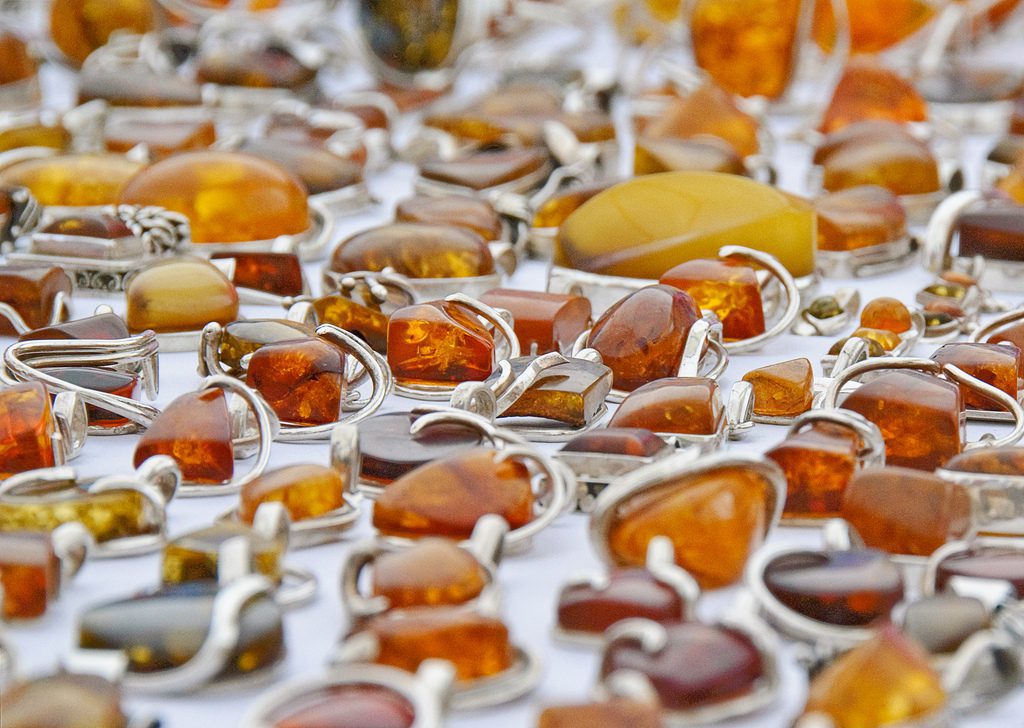
Famous for occasional insect inclusions, amber began as tree sap that fossilized over millions of years:
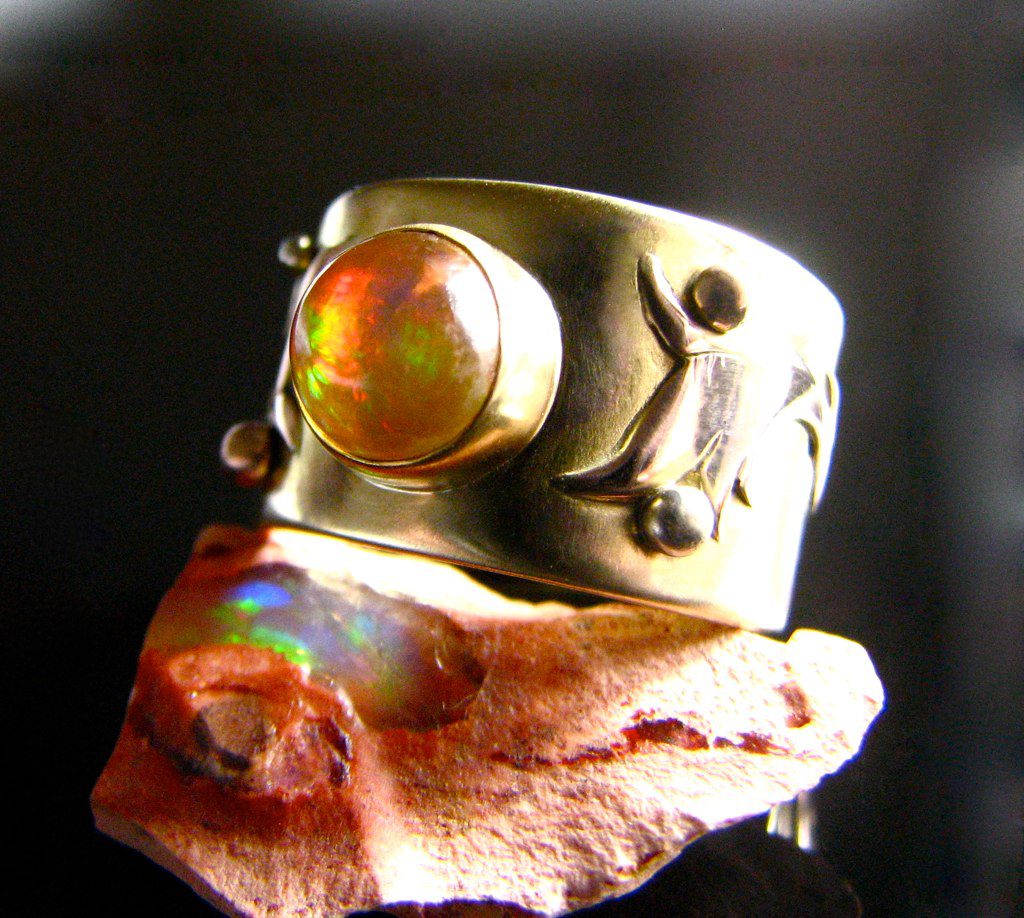
The "fire" in fire opal refers to the gem's body color, which ranges from yellow to red:
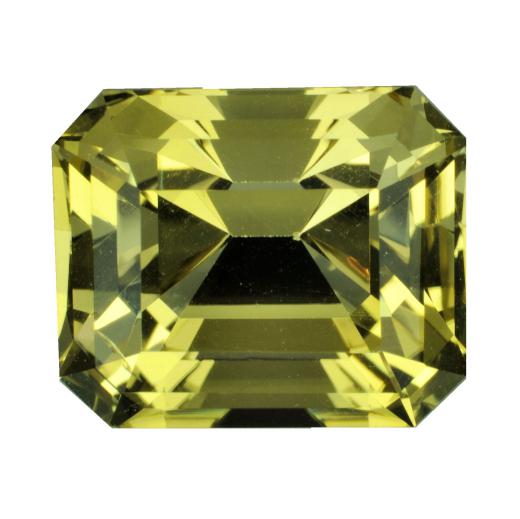
Though easily confused with citrine, scapolite is a much rarer gemstone with distinctive characteristics:
Some yellow gemstones present significant challenges for jewelry use. Whether too soft, water-soluble, or extremely brittle, these specimens are best appreciated in a viewing collection rather than worn as jewelry.
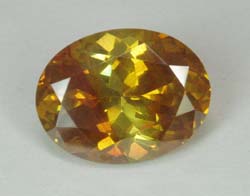
With dispersion exceeding that of diamond, sphene (titanite) is a favorite among gem collectors:
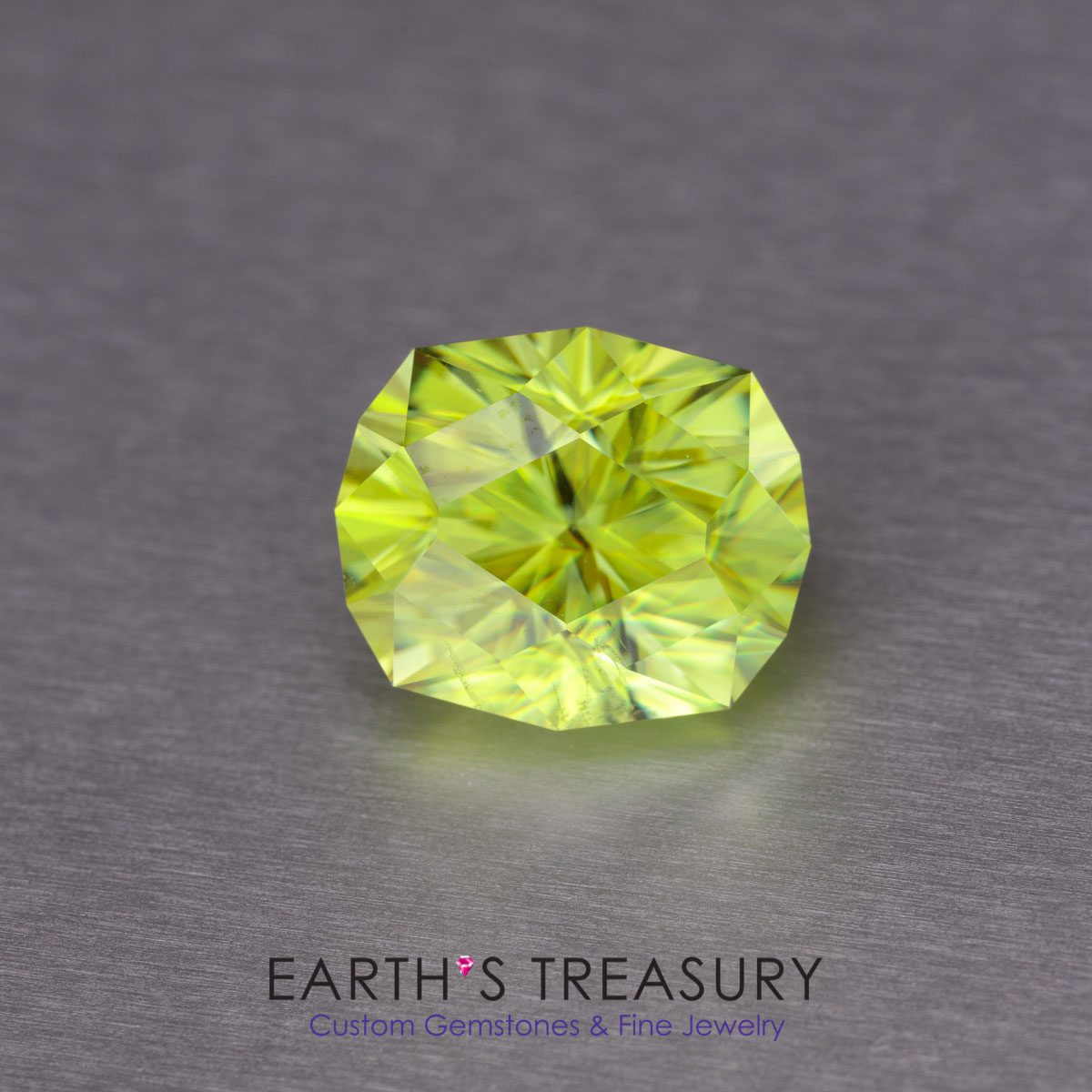
Another fiery favorite among collectors, sphalerite displays dispersion three times greater than diamond:
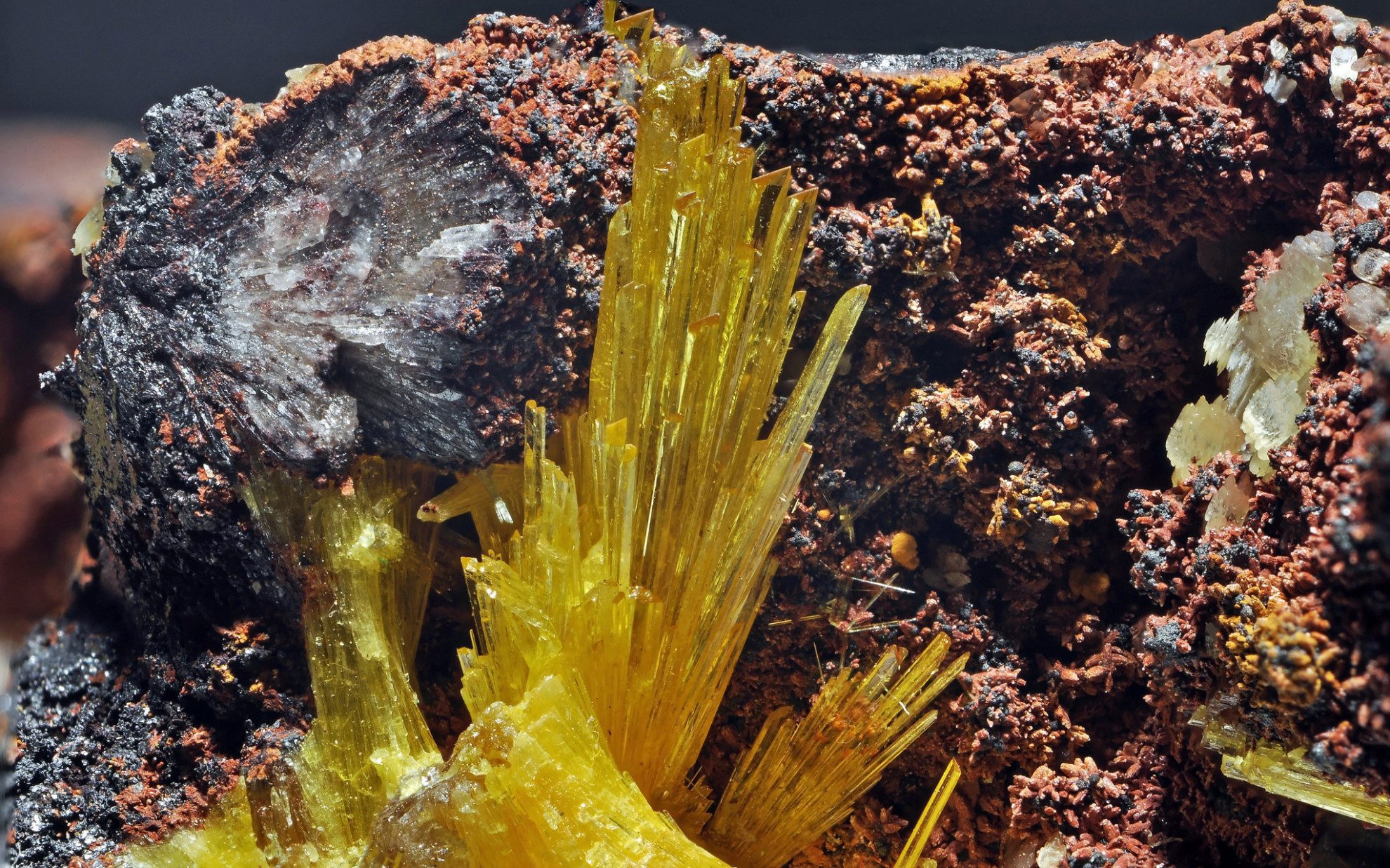
For collectors seeking something truly unusual, bright yellow legrandite offers striking color and rarity:
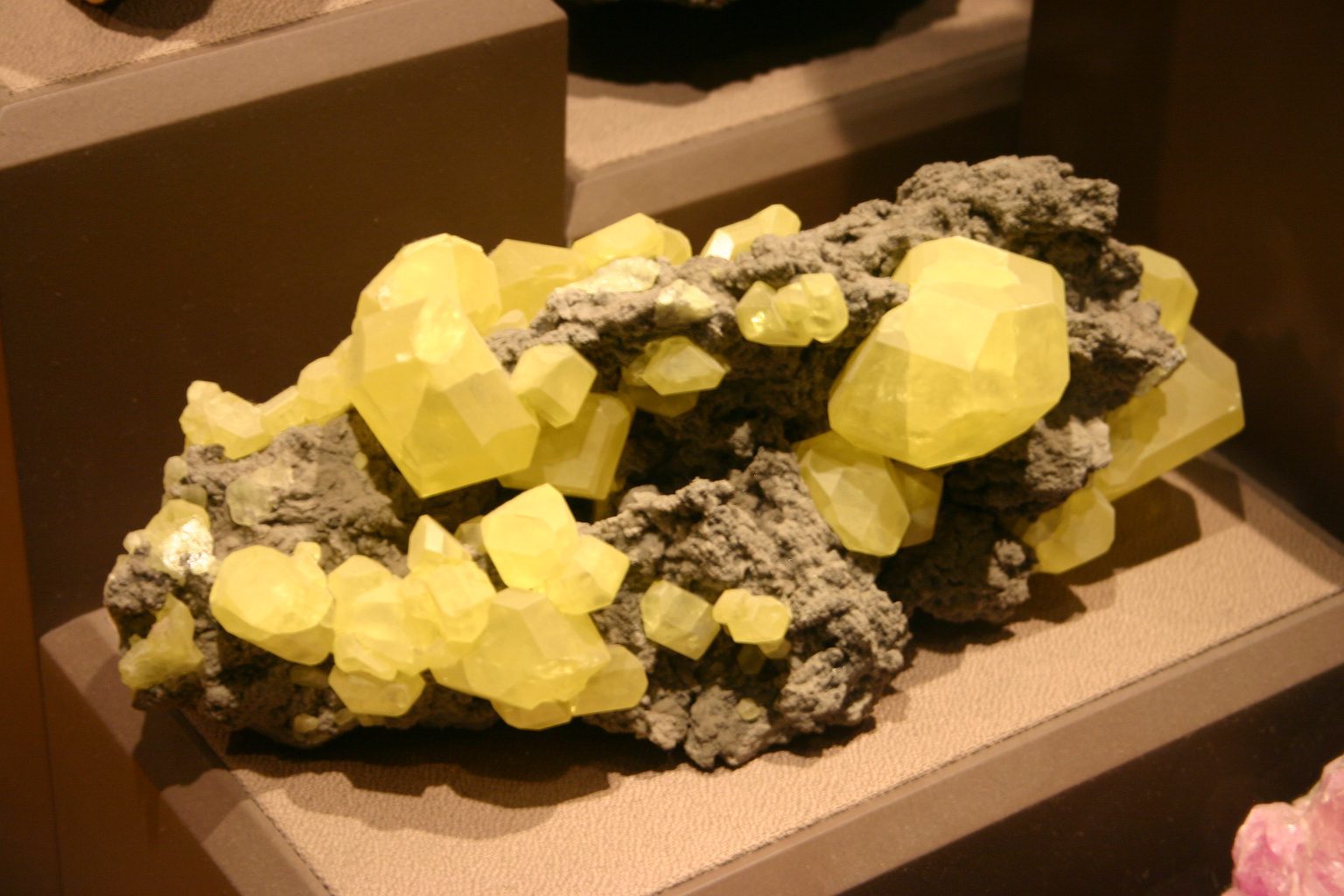
Sulfur crystals present extreme challenges for lapidaries due to their sensitivity to thermal shock:
Whether you're seeking a durable yellow gemstone for a ring, an occasional wear piece for special events, or a rare specimen for your collection, the world of yellow gems offers something for every preference and budget. From affordable citrine crystals to rare yellow diamonds, these sunny treasures bring warmth and brilliance to jewelry designs and collections.
Consider your intended use, budget, and color preferences when selecting your perfect yellow gemstone. For daily wear in rings, focus on durable options like citrine, yellow sapphire, or chrysoberyl. For occasional wear, explore yellow topaz or zircon. And for a truly unique collection, don't overlook collector's gems like sphene or legrandite that might not work in jewelry but offer exceptional beauty and rarity.
The value of yellow gemstones depends primarily on color quality, rarity, and durability. The most valuable yellow gemstones display pure yellow hues with high saturation at appropriate tone levels (typically 20-30% for yellows). Stones with secondary orange hues are generally more desirable than those with greenish or brownish secondary hues. Rarity also significantly impacts value—natural yellow diamonds and yellow tourmalines command higher prices due to their scarcity compared to more common yellow gemstones like citrine.
For engagement rings, which face daily wear, the most suitable yellow gemstones include yellow diamonds, yellow sapphires, and chrysoberyl. These gems offer exceptional hardness (diamond at 10, sapphire at 9, and chrysoberyl at 8.5 on the Mohs scale) and good tenacity, making them resistant to both scratching and breaking. Citrine is also popular for engagement rings at a more affordable price point, though with slightly lower durability at 7 on the Mohs scale.
Both natural and treated yellow gemstones are available on the market. While some yellow gems like many fancy yellow diamonds, heliodor, and chrysoberyl often occur naturally with their yellow coloration, others commonly undergo treatment. Citrine is frequently produced by heating smoky or amethyst quartz, and yellow sapphires may receive heat treatment to enhance their color. Yellow zircon is often heat-treated, while amber may be heated to improve its yellow hue. Always ask your jeweler about any treatments applied to yellow gemstones before purchasing.
Despite sometimes being confused by consumers, citrine and yellow topaz are entirely different minerals. Citrine is a variety of quartz with a hardness of 7, while topaz is a distinct mineral with a hardness of 8. Topaz has greater brilliance but is prone to chipping due to its perfect cleavage plane, while citrine is more durable against breakage but slightly softer. Natural citrine is relatively rare, with most commercial citrine being heat-treated smoky quartz, while natural yellow topaz is more common. Citrine is generally more affordable than genuine topaz of similar quality.
Some yellow gemstones can indeed fade with prolonged exposure to sunlight or heat. Irradiated yellow sapphires are known to potentially fade in sunlight, while properly heat-treated sapphires maintain stable color. Certain yellow tourmalines may also show color instability with prolonged exposure to light. Natural yellow diamonds, citrine, and chrysoberyl generally maintain their color well over time. To preserve the color of any yellow gemstone, it's advisable to store jewelry away from direct sunlight and excessive heat when not being worn.
Citrine is generally the most affordable yellow gemstone suitable for jewelry, offering good durability at a reasonable price point due to the abundance of quartz in the Earth's crust. Heat-treated citrine provides vibrant yellow to orange colors that make attractive jewelry pieces without the high cost of rarer yellow gemstones. Lemon quartz, produced through irradiation and heat treatment of colorless quartz, offers another budget-friendly option with bright yellow coloration. Yellow jade (particularly nephrite) and danburite also provide relatively affordable options for yellow gemstone jewelry.

When you join the IGS community, you get trusted diamond & gemstone information when you need it.
Yellow gemstones bring warmth, positivity, and sunshine to any jewelry collection. From bright citrine crystals to rare yellow diamonds, these gems offer options for every budget and preference. In this comprehensive guide, you'll discover everything you need to know about yellow gemstones and how to select the perfect one for your jewelry.
In this article, you'll learn:
Gemologists evaluate yellow gemstones using specific criteria to determine their quality and value. Understanding these factors will help you make an informed purchase decision:
Unlike many other colored gemstones, yellow stones reach their gamut limit (maximum color saturation) at relatively light tones. A vibrant, highly saturated yellow typically occurs at only 20-30% tone depth. However, extremely light yellow tones may appear simply as off-color white stones, reducing their value.
Because the tone is lighter in yellow gems than in other colored stones, imperfections in the gem are more visible. This means that a higher clarity grade is more important in yellow gems relative to other colored stones. Large or dark inclusions are particularly undesirable, as these have the greatest impact on a gem's appearance.
If you're considering a yellow gemstone for an engagement ring or fine jewelry, consider designing a unique piece with CustomMade. Their experts can help you find a top-quality stone, and you'll avoid the poor quality that most major retailers offer (like this sapphire with washed-out color from Blue Nile).
Some gemstones are significantly tougher than others, making them ideal for daily wear. The yellow gemstones in this section all possess a Mohs hardness value of at least 6.5, providing excellent scratch resistance. Additionally, these gems have good tenacity, making them less likely to break if accidentally dropped or knocked against hard surfaces.
Citrine is undoubtedly the most widely available and popular yellow gemstone on the market. As the modern November birthstone, this variety of quartz offers:
While natural-color citrines are relatively rare, many commercial citrine crystals are produced through heating smoky quartz to create vibrant yellow-orange hues. Additionally, a combination of irradiation and heat treatment can transform colorless quartz into bright lemon quartz with intense yellow coloration.
For those with larger budgets, yellow diamonds offer exceptional beauty and prestige. While most consumers associate the April birthstone with colorless gems, some experts believe that a diamond's proper color is actually yellow:
For more budget-conscious shoppers, consider irradiated diamonds or those treated with high pressure and high temperature (HPHT) processes. These treatments are completely safe for wear and significantly more affordable than natural fancy yellow diamonds of similar appearance.
While most people associate sapphires with blue hues, these versatile gems can occur in nearly any color except red. Yellow sapphires offer exceptional durability and beauty:
Heliodor, also known as golden beryl, belongs to the same mineral family as emerald. These stunning yellow gemstones offer:
Chrysoberyl is most famous for its color-changing variety, alexandrite. However, most chrysoberyl specimens display beautiful yellow hues that shouldn't be overshadowed by their more famous cousin:
Garnet, the January birthstone, offers some truly spectacular yellow varieties that often go unrecognized by consumers familiar only with red garnets:
Despite tourmalines occurring in virtually every color imaginable, yellow specimens of this October birthstone are exceptionally rare:
Often called the enigmatic gem, jade can actually refer to two distinct minerals: nephrite or jadeite. Both can occur in yellow hues but possess different properties:
Bright canary hues of danburite remain relatively unknown to many gem enthusiasts, but these gemstones offer several advantages:
Some yellow gemstones possess characteristics that make them less suitable for daily wear. Whether due to softness or brittleness, these gems may develop scratches or chips over time when worn in rings. However, they make excellent choices for earrings, pendants, and brooches where they face less physical contact. Using a protective jewelry setting can also help prevent damage if you choose to use these in ring designs.
Topaz, the traditional November birthstone, makes an excellent yellow gemstone choice with some considerations:
Often associated with blue varieties, zircon as a December birthstone can display nearly any color, including beautiful yellow hues:
With their beautiful, satiny luster, golden South Sea pearls grow significantly larger than most other pearl varieties:
Famous for occasional insect inclusions, amber began as tree sap that fossilized over millions of years:
The "fire" in fire opal refers to the gem's body color, which ranges from yellow to red:
Though easily confused with citrine, scapolite is a much rarer gemstone with distinctive characteristics:
Some yellow gemstones present significant challenges for jewelry use. Whether too soft, water-soluble, or extremely brittle, these specimens are best appreciated in a viewing collection rather than worn as jewelry.
With dispersion exceeding that of diamond, sphene (titanite) is a favorite among gem collectors:
Another fiery favorite among collectors, sphalerite displays dispersion three times greater than diamond:
For collectors seeking something truly unusual, bright yellow legrandite offers striking color and rarity:
Sulfur crystals present extreme challenges for lapidaries due to their sensitivity to thermal shock:
Whether you're seeking a durable yellow gemstone for a ring, an occasional wear piece for special events, or a rare specimen for your collection, the world of yellow gems offers something for every preference and budget. From affordable citrine crystals to rare yellow diamonds, these sunny treasures bring warmth and brilliance to jewelry designs and collections.
Consider your intended use, budget, and color preferences when selecting your perfect yellow gemstone. For daily wear in rings, focus on durable options like citrine, yellow sapphire, or chrysoberyl. For occasional wear, explore yellow topaz or zircon. And for a truly unique collection, don't overlook collector's gems like sphene or legrandite that might not work in jewelry but offer exceptional beauty and rarity.
The value of yellow gemstones depends primarily on color quality, rarity, and durability. The most valuable yellow gemstones display pure yellow hues with high saturation at appropriate tone levels (typically 20-30% for yellows). Stones with secondary orange hues are generally more desirable than those with greenish or brownish secondary hues. Rarity also significantly impacts value—natural yellow diamonds and yellow tourmalines command higher prices due to their scarcity compared to more common yellow gemstones like citrine.
For engagement rings, which face daily wear, the most suitable yellow gemstones include yellow diamonds, yellow sapphires, and chrysoberyl. These gems offer exceptional hardness (diamond at 10, sapphire at 9, and chrysoberyl at 8.5 on the Mohs scale) and good tenacity, making them resistant to both scratching and breaking. Citrine is also popular for engagement rings at a more affordable price point, though with slightly lower durability at 7 on the Mohs scale.
Both natural and treated yellow gemstones are available on the market. While some yellow gems like many fancy yellow diamonds, heliodor, and chrysoberyl often occur naturally with their yellow coloration, others commonly undergo treatment. Citrine is frequently produced by heating smoky or amethyst quartz, and yellow sapphires may receive heat treatment to enhance their color. Yellow zircon is often heat-treated, while amber may be heated to improve its yellow hue. Always ask your jeweler about any treatments applied to yellow gemstones before purchasing.
Despite sometimes being confused by consumers, citrine and yellow topaz are entirely different minerals. Citrine is a variety of quartz with a hardness of 7, while topaz is a distinct mineral with a hardness of 8. Topaz has greater brilliance but is prone to chipping due to its perfect cleavage plane, while citrine is more durable against breakage but slightly softer. Natural citrine is relatively rare, with most commercial citrine being heat-treated smoky quartz, while natural yellow topaz is more common. Citrine is generally more affordable than genuine topaz of similar quality.
Some yellow gemstones can indeed fade with prolonged exposure to sunlight or heat. Irradiated yellow sapphires are known to potentially fade in sunlight, while properly heat-treated sapphires maintain stable color. Certain yellow tourmalines may also show color instability with prolonged exposure to light. Natural yellow diamonds, citrine, and chrysoberyl generally maintain their color well over time. To preserve the color of any yellow gemstone, it's advisable to store jewelry away from direct sunlight and excessive heat when not being worn.
Citrine is generally the most affordable yellow gemstone suitable for jewelry, offering good durability at a reasonable price point due to the abundance of quartz in the Earth's crust. Heat-treated citrine provides vibrant yellow to orange colors that make attractive jewelry pieces without the high cost of rarer yellow gemstones. Lemon quartz, produced through irradiation and heat treatment of colorless quartz, offers another budget-friendly option with bright yellow coloration. Yellow jade (particularly nephrite) and danburite also provide relatively affordable options for yellow gemstone jewelry.