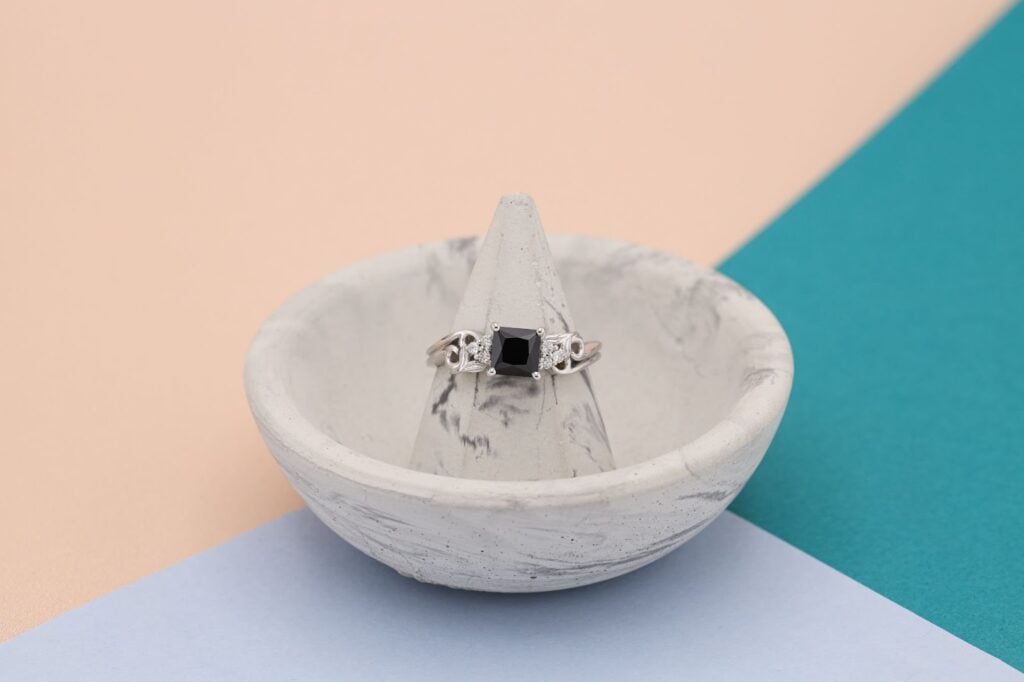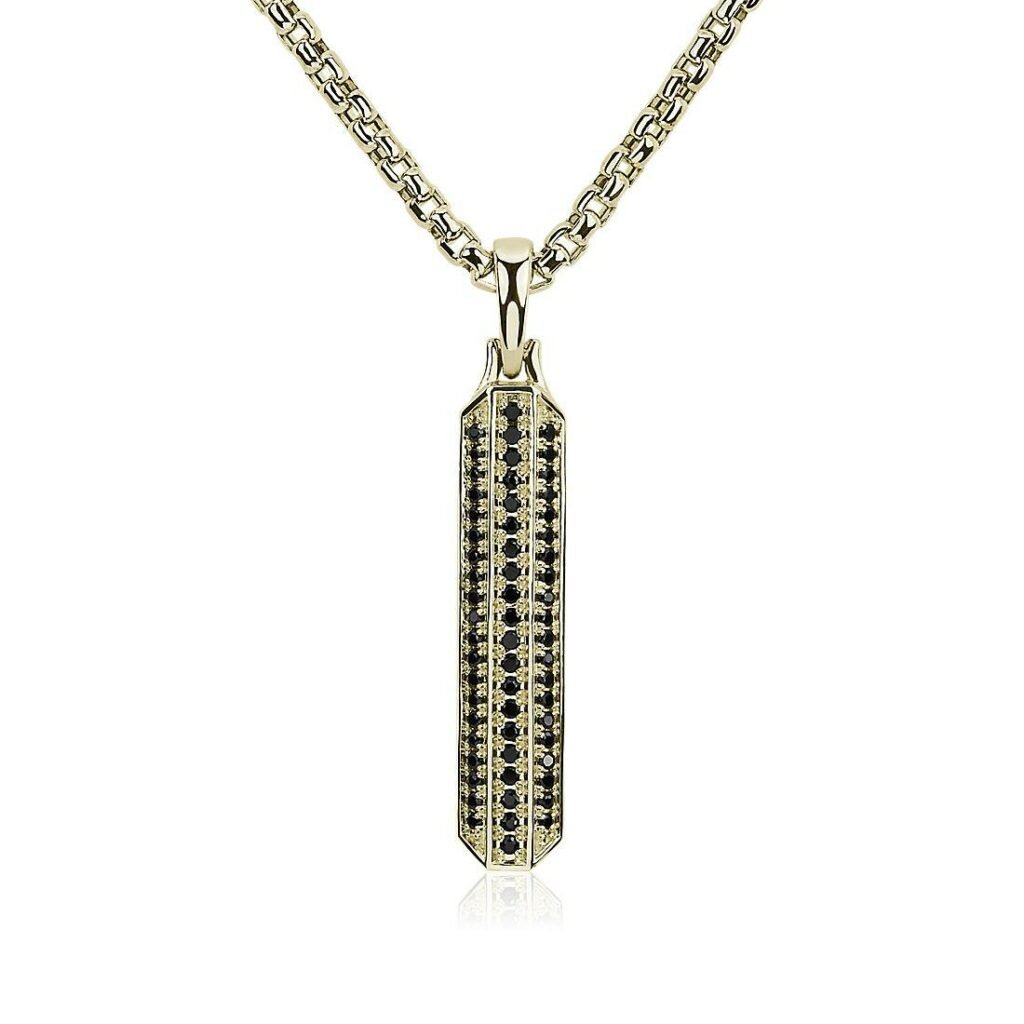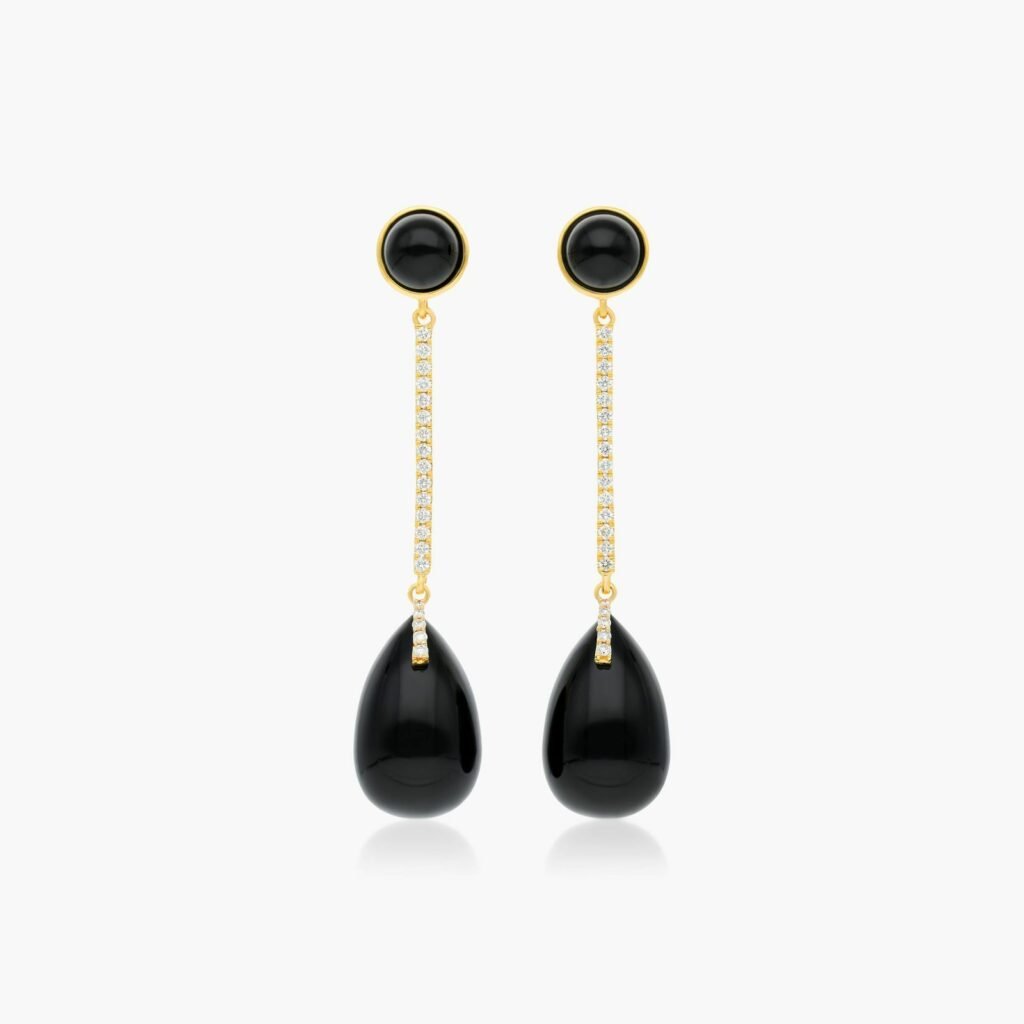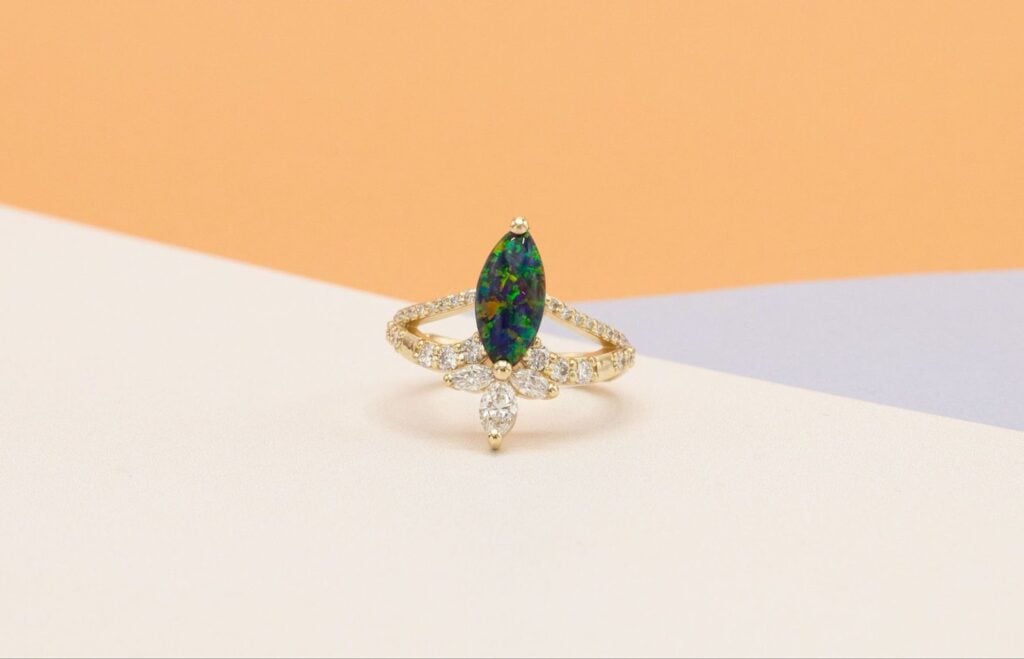
Discover 16 stunning black gemstones from black diamonds to obsidian. Learn about their properties, rarity, and value in this comprehensive guide to black gems.
16 Minute Read
Are you familiar with the mysterious beauty of black gemstones? While some black gems have become synonymous with darkness itself, others remain hidden treasures unknown to most jewelry enthusiasts. This comprehensive guide explores 16 fascinating black gemstones, their unique properties, and what makes each one special.
In this article, you'll learn:
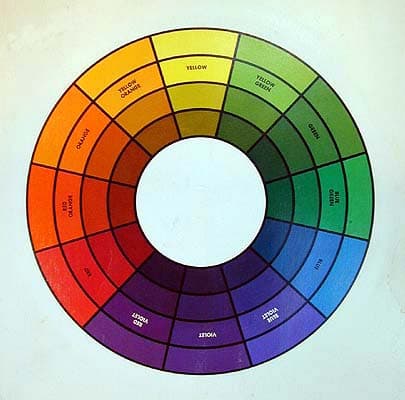
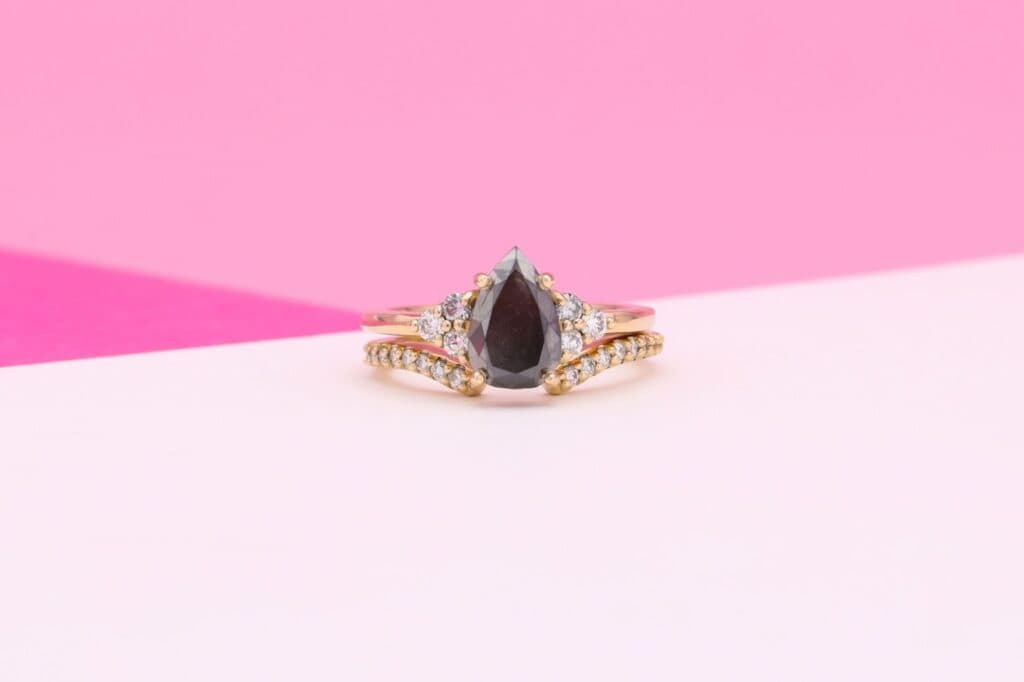
Technically, black isn't a color. Gemologists describe gemstone color through three main components: hue, tone, and saturation. Hues represent what most people commonly call colors (red, blue, green, etc.), while black and white actually refer to tone, which describes the relative darkness or brightness of a hue. Black represents the darkest possible tone a gemstone can exhibit.
Despite this technical distinction, both gem enthusiasts and professional jewelers regularly use "black" as a color description when discussing gemstones. The appeal of black gemstones lies in their:
When selecting black gemstones for everyday jewelry, durability is paramount. The following gems offer excellent hardness and resistance to daily wear and tear, making them ideal choices for rings, bracelets, and other pieces subject to regular use. These stones can withstand exposure to the elements and frequent contact with surfaces without significant damage.
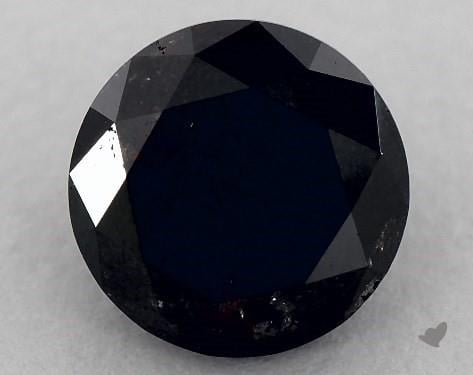
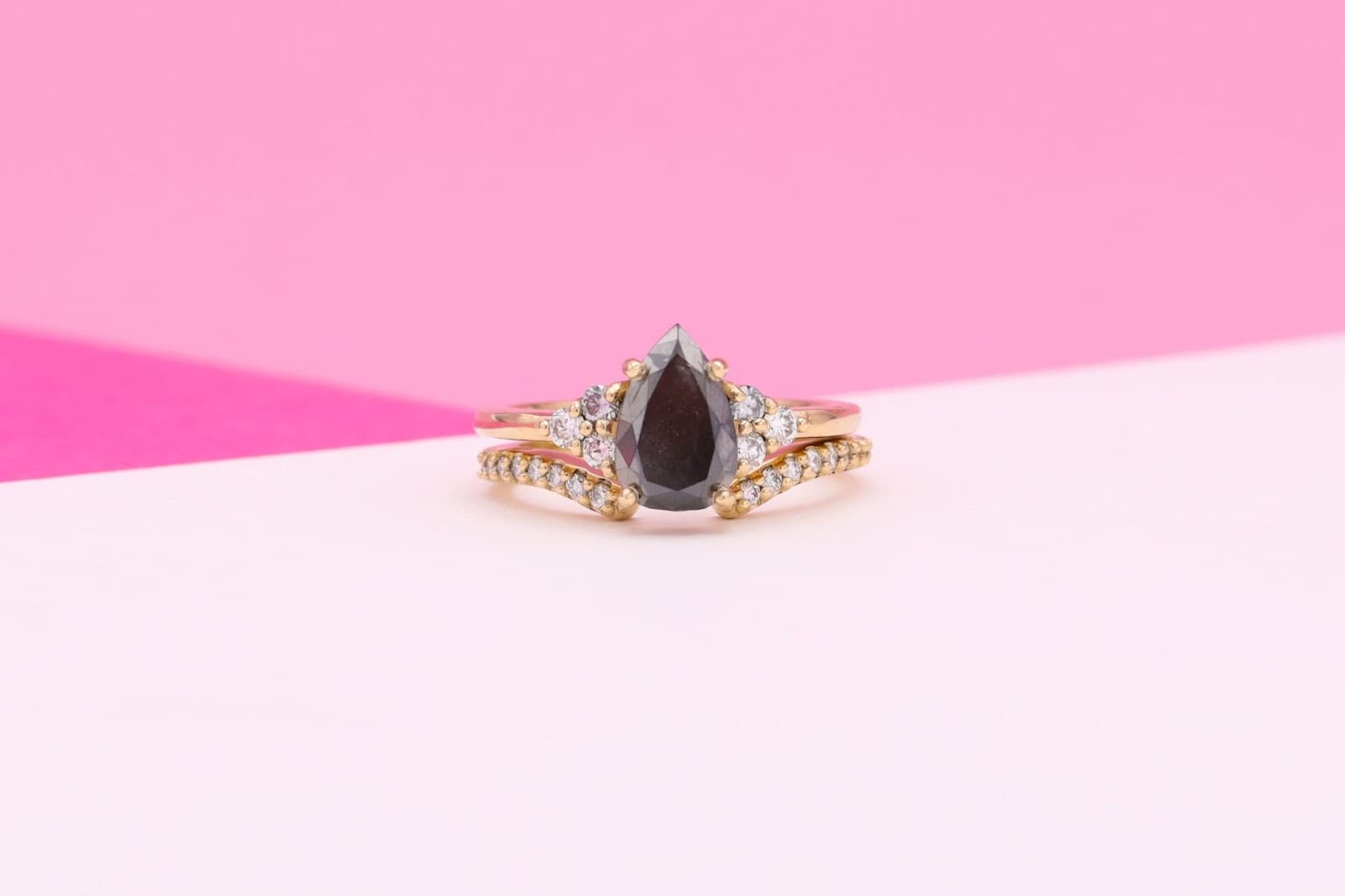
Unlike other fancy colored diamonds that get their hues from chemical impurities (like yellow diamonds containing nitrogen or blue diamonds containing boron), black diamonds derive their distinctive appearance differently. Instead of chemical elements, black diamonds contain numerous inclusions within their crystal structure.
These inclusions are primarily tiny specks of black graphite—a soft carbon form that develops when Earth's pressure isn't sufficient to create diamond. The diamond itself isn't actually black; rather, it contains so many graphite crystals throughout that it appears black to the observer. Some producers enhance this effect by using radiation to amplify the graphite content, deepening the apparent black color.
Black diamonds possess some interesting characteristics:
While often referred to as "black diamonds," carbonados are actually quite different. They are polycrystalline materials composed of amorphous carbon, graphite, and diamond. Traditional diamonds used in jewelry, including black diamonds, are crystalline materials with organized atomic structures.
Carbonados possess even greater durability than regular diamonds but have historically been used primarily for industrial applications rather than jewelry. However, their reputation is changing—in 2022, Sotheby's sold a 555.55-ct faceted carbonado for more than four million US dollars, demonstrating their growing appeal as collector's items.
The term "black sapphire" commonly describes ultra-dark sapphires of various underlying hues, whether blue, brown, or green. These gemstones appear black because they're so dark that light barely travels through their crystal structure. However, truly black sapphires do occur naturally, with Australia being their primary source.
Some black sapphires contain precisely aligned rutile inclusions that create a fascinating optical phenomenon called asterism. This star-like effect produces a shimmering light pattern that moves across the gemstone's surface. To highlight this effect:
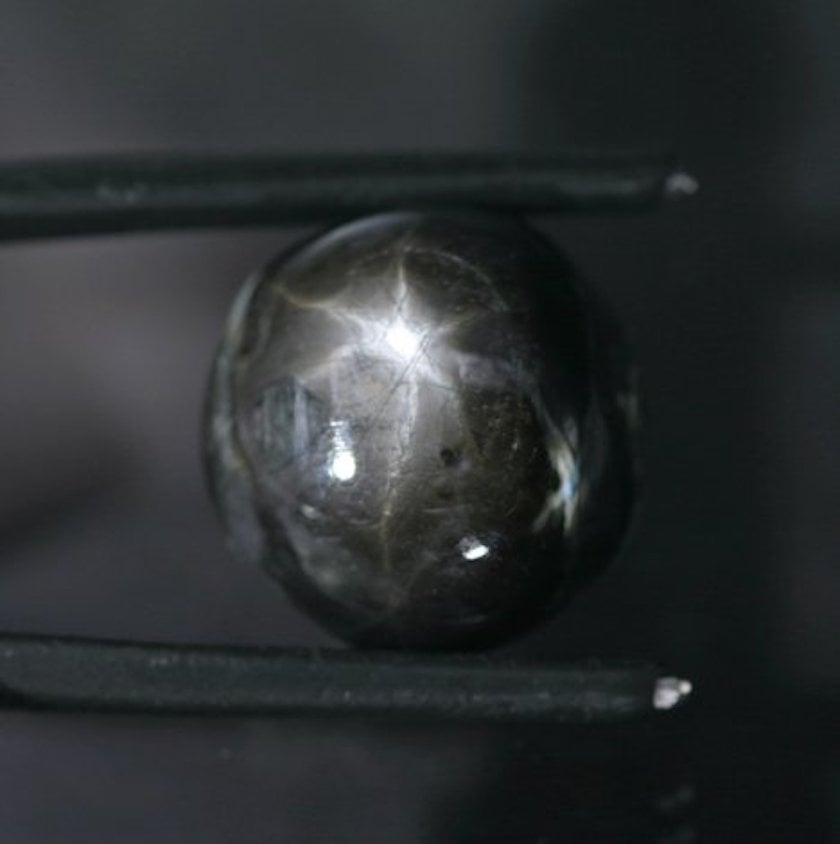
While collectors prize the vibrant blues of paraíba tourmaline and the rich greens of chrome tourmaline, the schorl variety of tourmaline offers a beautiful jet-black color all its own. This black gemstone gets its distinctive coloration from high iron content and takes its name from the German village where it was first identified.
Historically, faceted schorl tourmaline was extensively used in mourning jewelry. Today, you can find black tourmaline in various forms:
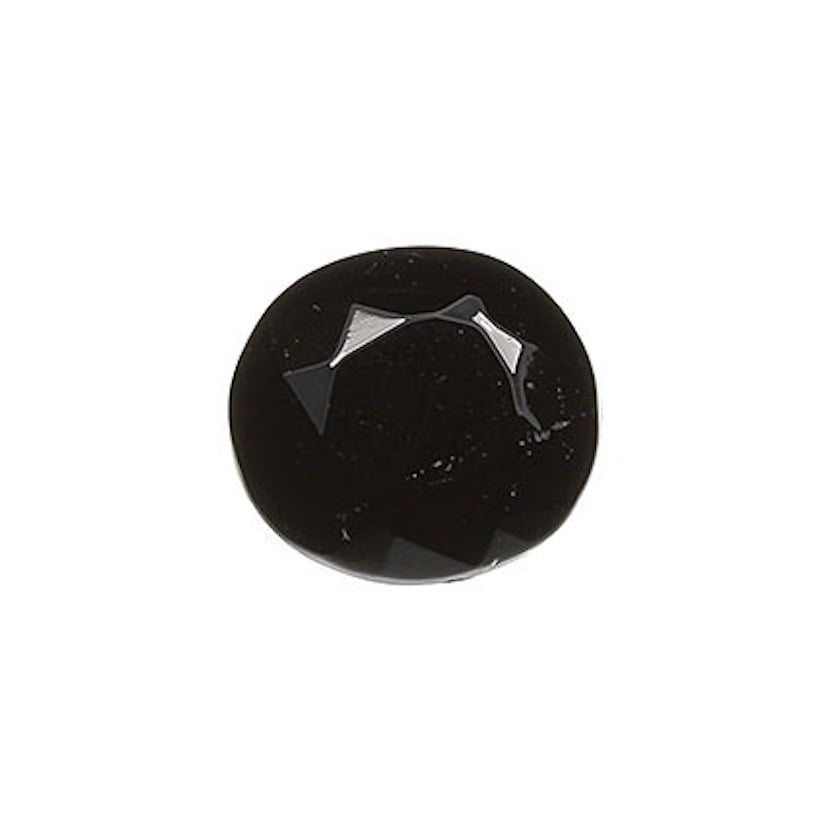
Though spinel gemstones are renowned for their bright, vivid colors, they also naturally occur in an elegant black variety. Black spinel gems possess several desirable qualities:
For budget-conscious shoppers, black spinel offers a significant advantage — black isn't the most popular spinel color. This lower demand translates to more affordable prices compared to other spinels, making black spinel an excellent value in terms of price-per-carat for those seeking bold black gemstones without a hefty investment.
Melanite represents a subset of the rare andradite variety of garnet and stands as the only naturally black andradite garnet. Its unique coloration comes from traces of titanium oxide in its chemical composition. The name "melanite" derives from the Greek word "melanos," meaning "black."
During the Victorian Era, melanite garnets were popular choices for mourning jewelry. Unlike other garnet varieties that are relatively common in today's market, melanite gems remain quite scarce. Jewelry enthusiasts seeking black garnet stones should expect limited availability, as they won't be found in typical jewelry establishments.
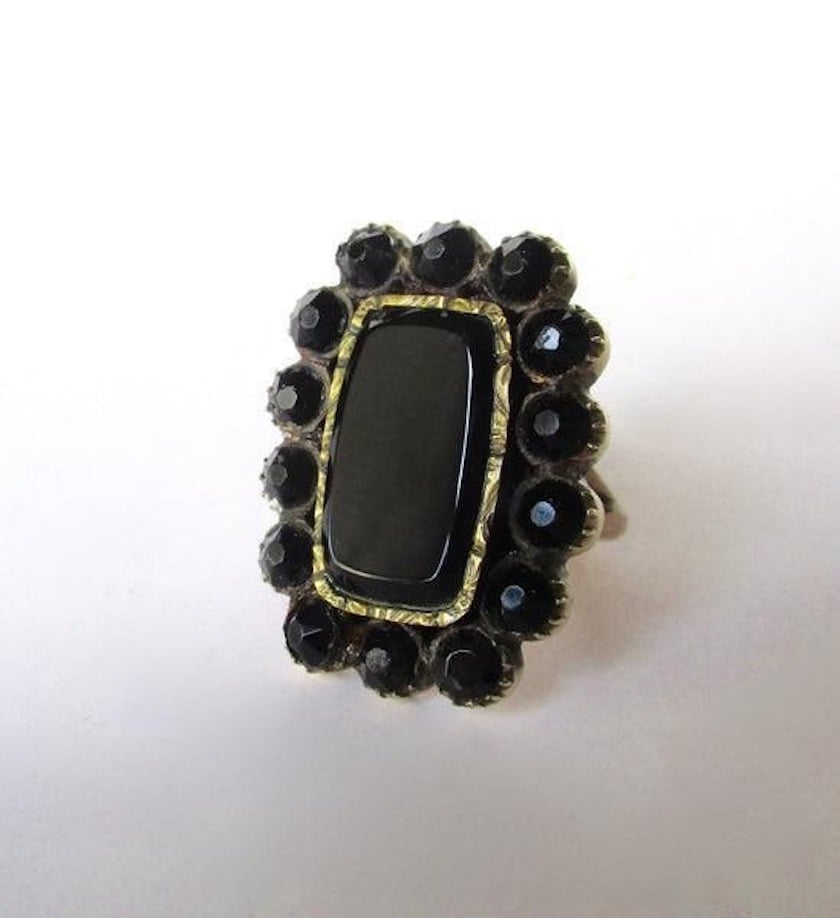
A common type of quartz, chalcedony features an internal structure composed of extremely tiny cryptocrystalline pieces. These microscopic crystals create a material that both looks and feels remarkably smooth. Given chalcedony's abundance in nature, this gem appears in numerous colors and patterns, including black.
Some confusion exists within the gem trade regarding black chalcedony:
To further complicate matters, most black chalcedony in today's market is actually dyed to enhance or create its black color rather than being naturally black.
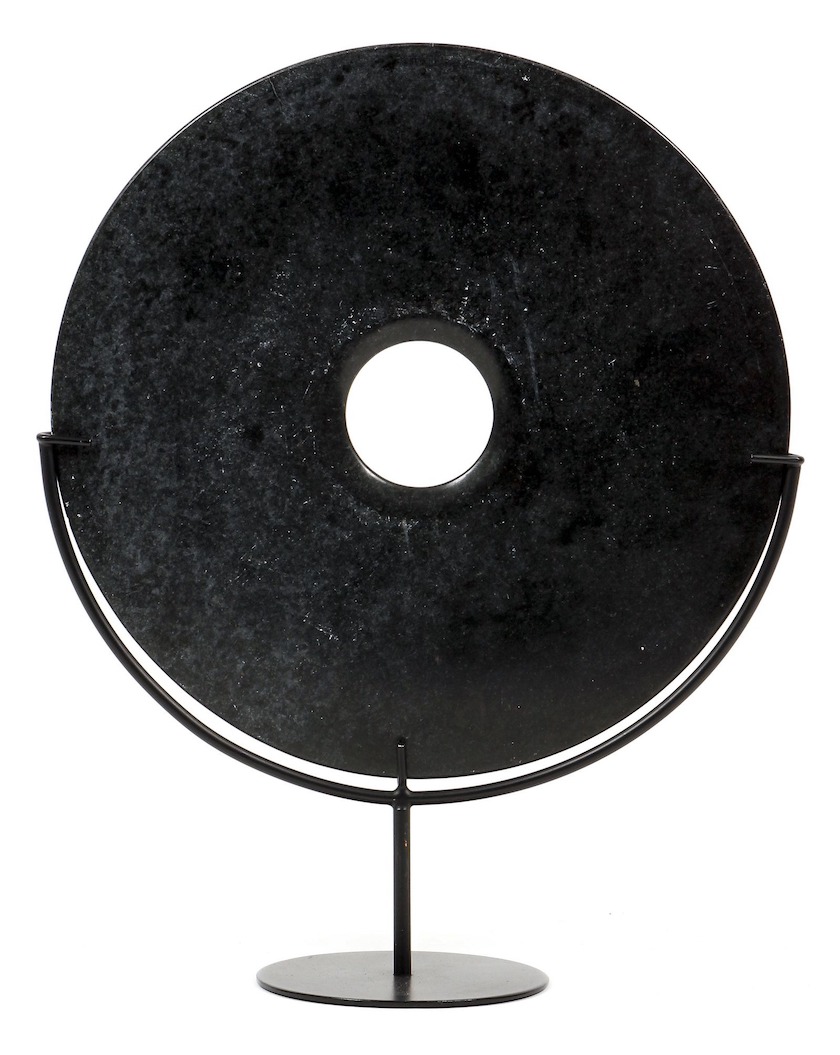
The term "jade" encompasses two distinct minerals: jadeite and nephrite. Both can naturally occur with black coloration. Since black isn't the most desired jade color, black jade varieties typically cost significantly less than the highly prized green and lavender jade varieties.
Jade typically forms in massive boulders, allowing lapidaries to occasionally carve rings and bracelets from a single stone block. These single-stone pieces, called hololiths, represent special achievements in jade carving craftsmanship.
These black gemstones require more careful handling and are best reserved for special occasions rather than everyday use. While beautiful and distinctive, they may be more vulnerable to damage from impacts, chemicals, or temperature changes. With proper care and appropriate settings, these gems can still provide years of enjoyment when worn thoughtfully.
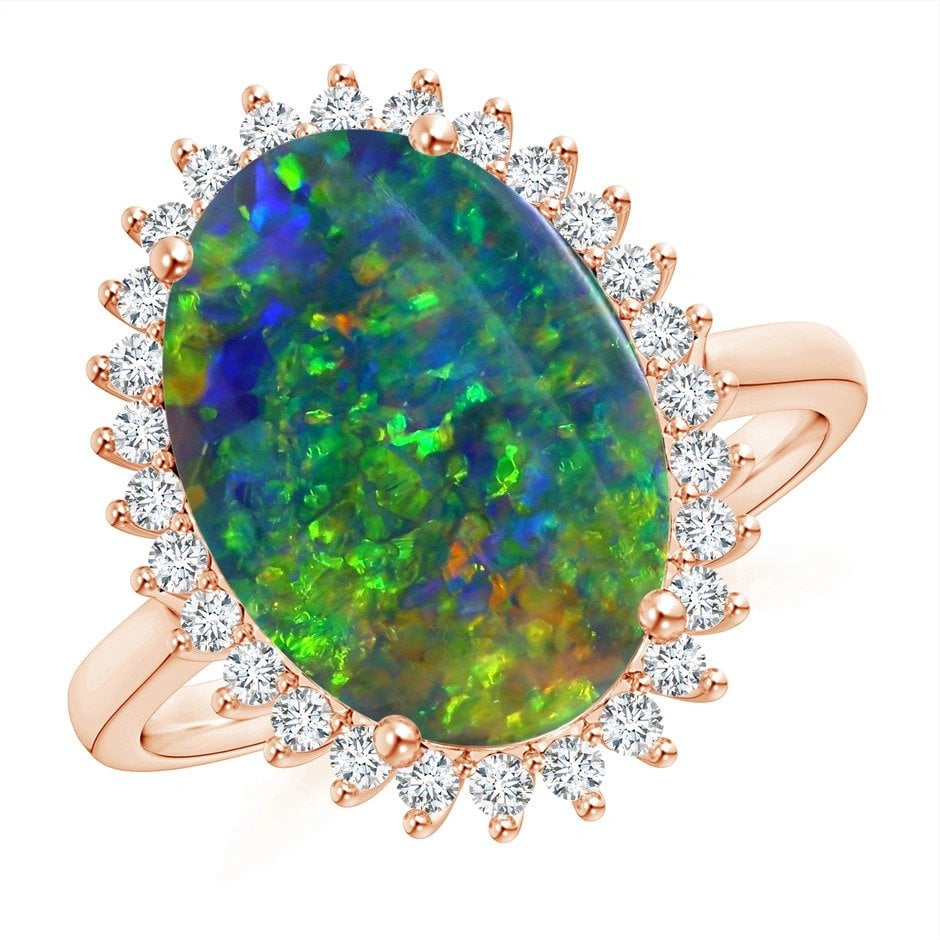
In the world of opals, black color commands the highest prices — a striking contrast to most other gemstone varieties. However, it's important to understand that the "black" in black opal refers specifically to the body color or background. Against this dark backdrop, the opal's famous play-of-color effect appears particularly spectacular.
Black opals come in three primary subcategories:
All these varieties must appear black under reflected light, though their actual body color may be dark gray, green, brown, or blue. Black crystal opal represents the most coveted type due to its transparency and extraordinary color play. The world's most famous source of black opals is Lightning Ridge in Australia.
All opals require special care considerations:
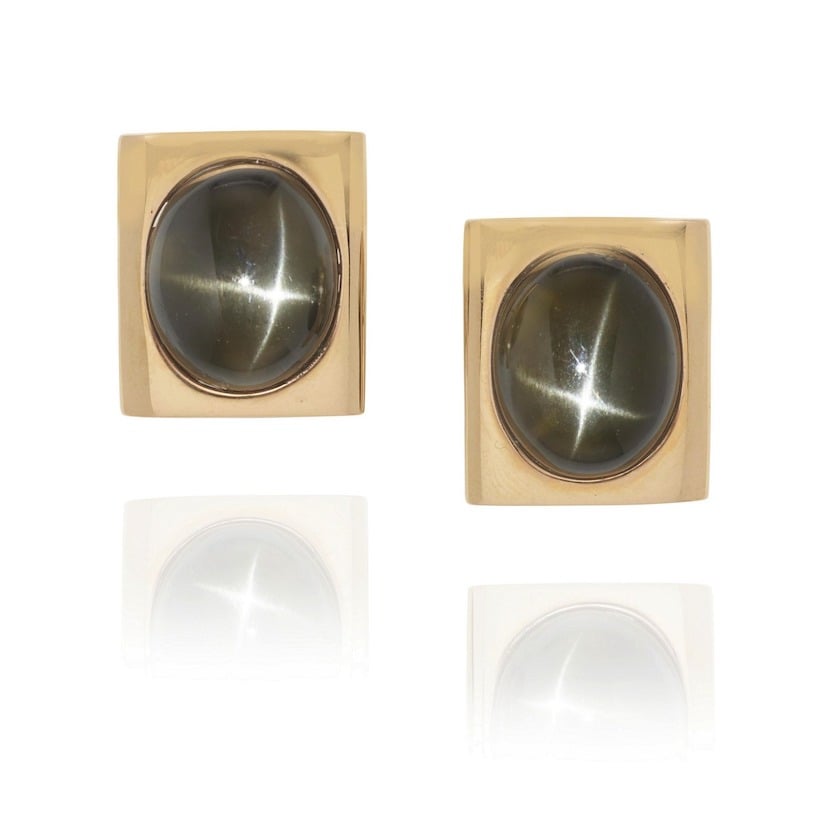
Though relatively unknown to many gem enthusiasts, diopside can occur with a natural black color that creates beautiful jewelry stones. What makes black diopside particularly special is its potential to display phenomenal optical effects:
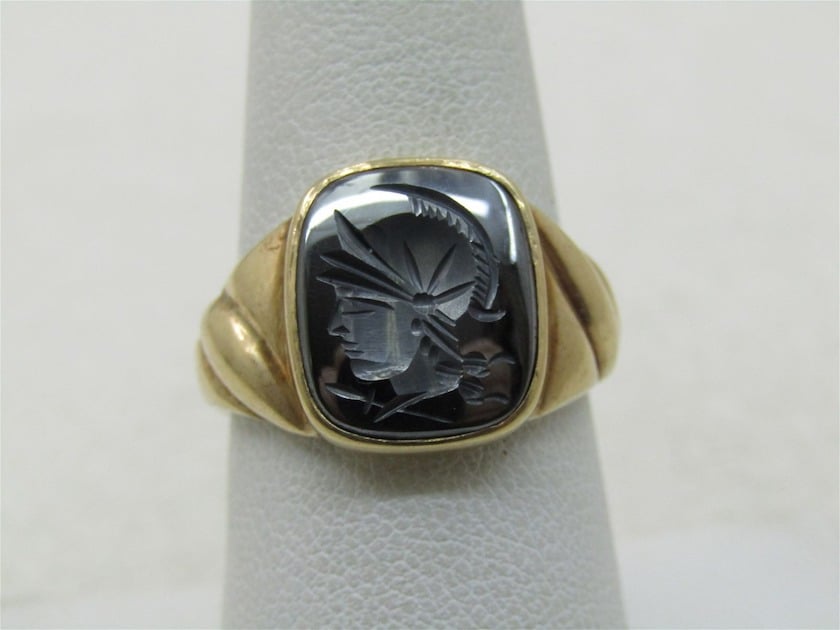
Hematite is a distinctive black stone whose name derives from a Greek word for blood. This connection comes from the stone's tendency to rust over time, developing a dark reddish color on its surface. As rare red and gray hematites sometimes occur, the black variety is specifically identified as black hematite.
This mineral possesses several unique characteristics:
Fortunately for those attracted to its lustre, hematite remains one of the most affordable black gemstones available.
The next five black gemstones share an organic origin, meaning they were naturally created by living organisms. Black pearls develop within the bodies of certain mollusk species in both saltwater and freshwater environments.
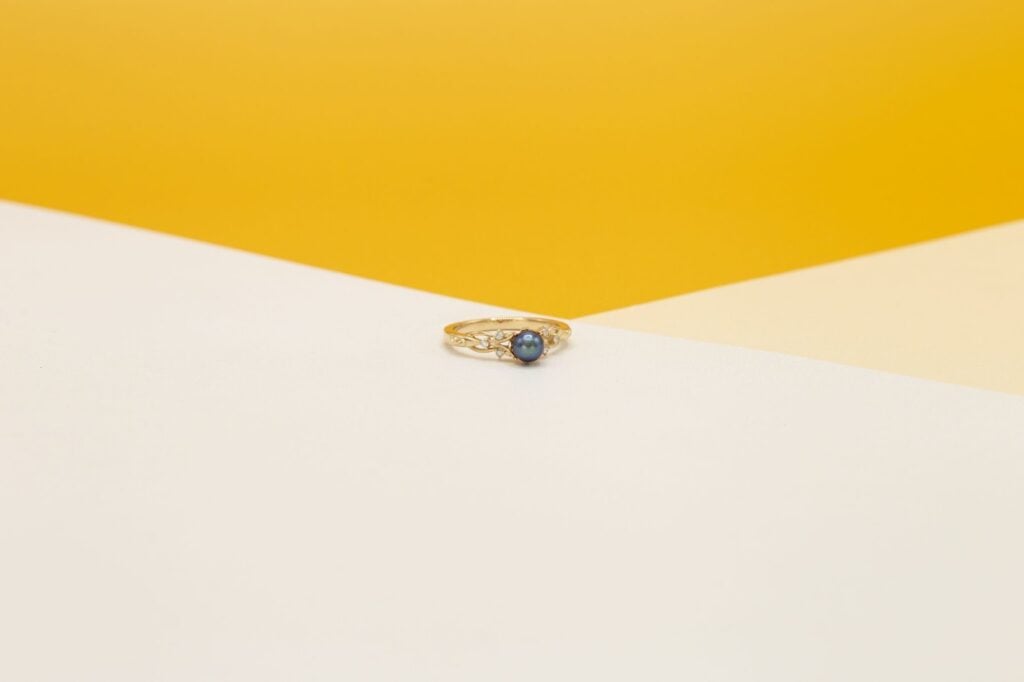
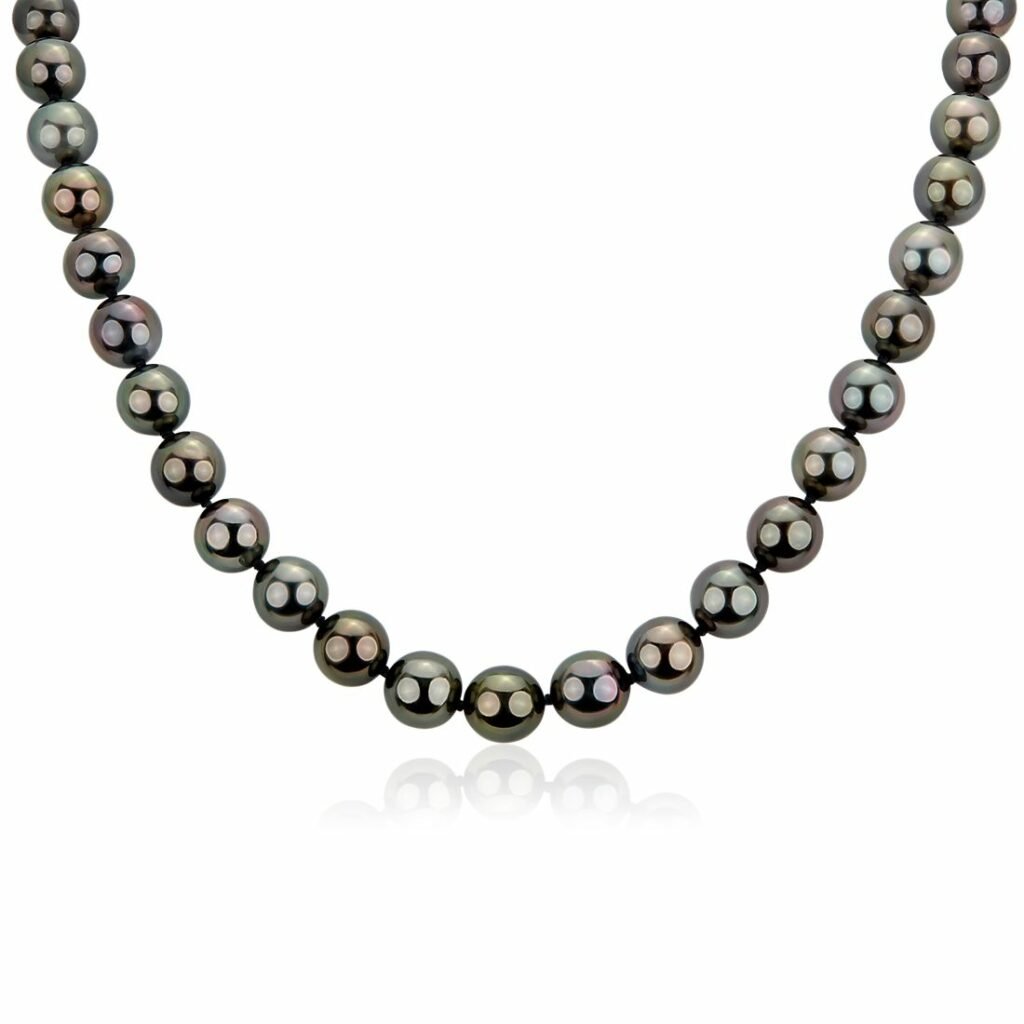
Naturally-formed black pearls without human intervention are extremely rare. However, cultured Tahitian pearls can develop truly black body colors through careful cultivation techniques. Some less expensive options undergo color modification:
These black gemstones are best appreciated as collection pieces rather than jewelry stones. Due to their fragility, rarity, or conservation concerns, they are better suited for display cases than regular wear. Collectors value these materials for their unique properties, historical significance, or natural beauty rather than their practical applications in jewelry.
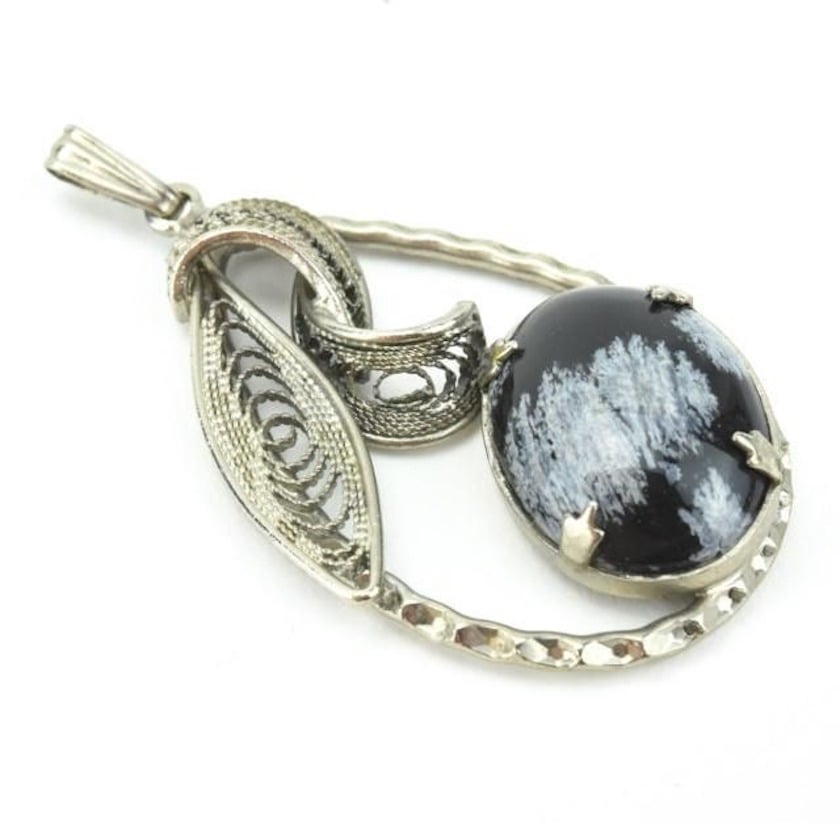
Obsidian is a naturally occurring black glass formed through volcanic activity. Its unique formation process often creates distinctive features:
The term "obsidian" has become so synonymous with blackness that it frequently appears as a descriptor for the color black itself in modern language.
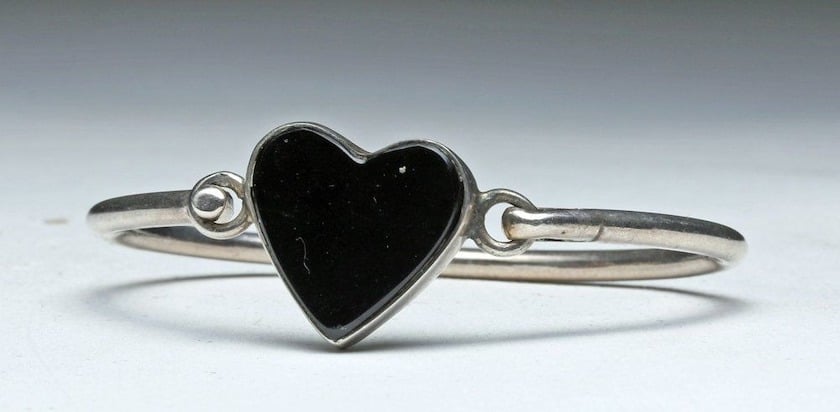
Jet forms from buried wood logs saturated with natural oils through a process similar to coal formation but results in a stronger, smoother material. Despite these improvements over coal, jet remains notoriously soft compared to mineral gemstones.
As a soft, opaque material, jet typically appears in jewelry as carvings or beads rather than faceted gems. Being essentially condensed and preserved wood, jet pieces feel remarkably light and warm to the touch — characteristics that help distinguish it from other black gemstones.
Gem-quality jet occurs in several global locations, but the most famous source is Whitby, England. Archaeological evidence reveals that humans in that region used jet for ornamentation even in Neolithic times. However, jet's popularity reached unprecedented heights in the 1860s when Queen Victoria wore it as mourning jewelry following Prince Albert's death.
The phrase "jet black" has become such a common color descriptor that many people recognize the term without knowing about the actual gemstone.
While coral typically evokes images of bright pinkish-orange or exotic blue colors, black coral exists as a distinctive variety. Black coral reefs grow primarily off the coasts of Hawaii and Queensland, Australia—both regions have implemented laws restricting or banning black coral exportation to protect these endangered ecosystems.
Due to these conservation efforts, most black coral jewelry available today is likely vintage rather than newly harvested. Within the coral family:
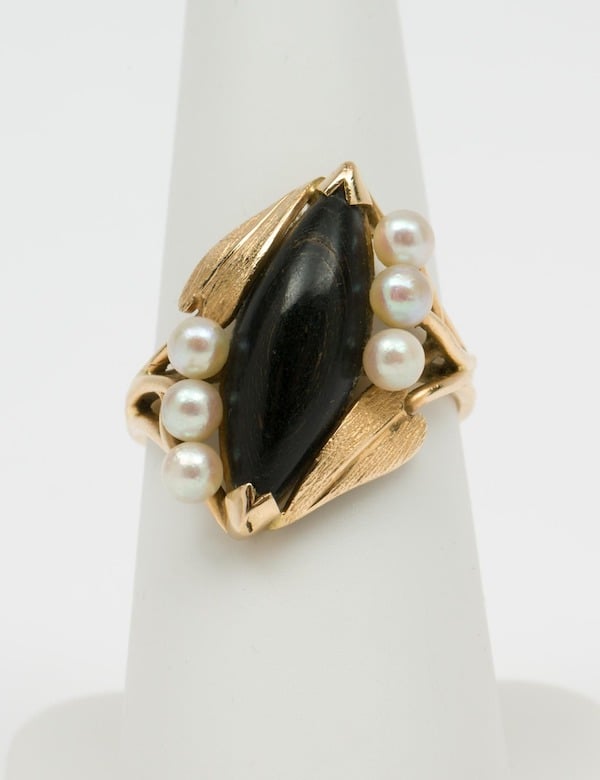
Amber, the hardened resin of ancient trees, typically occurs in yellow, brown, or reddish hues. Its famous ability to trap and preserve prehistoric vegetation and insects has fascinated humans for millennia. Archaeological findings indicate that people have used amber for at least 10,000 years for both decoration and practical purposes like burning as incense. In fact, the German name for amber is bernstein, which literally means "burn stone."
While amber doesn't naturally start black, it can darken significantly through oxidation when its outer protective layer gets removed through polishing or cutting. Additionally:
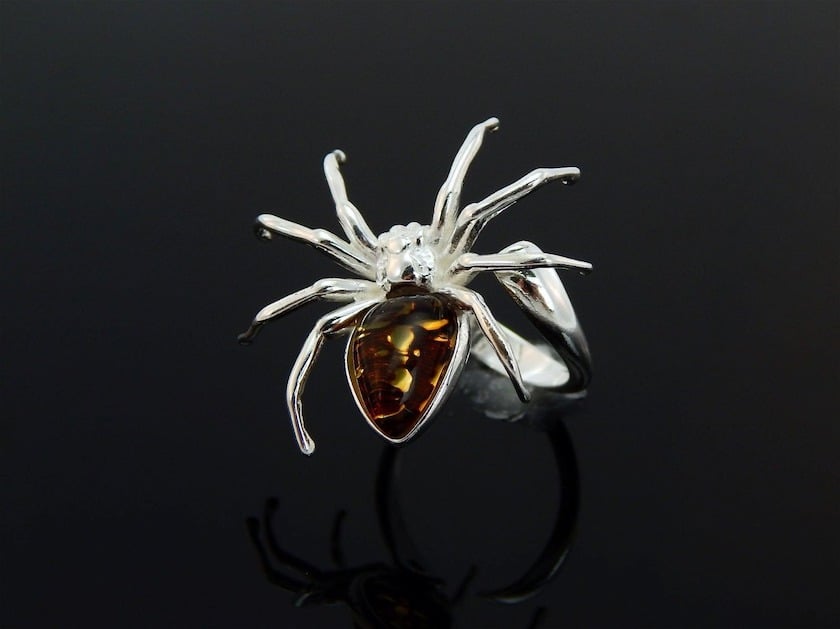
Humans have utilized animal horns as adornment materials for many thousands of years. Conservation laws now strictly regulate their use in modern jewelry. Most horn naturally exhibits yellowish to brown coloration, but some exceptionally dark specimens appear nearly black.
Vintage jewelry collections may feature large, polished horn pieces that showcase this organic black material's distinctive grain patterns and natural luster. These pieces represent historical jewelry traditions rather than contemporary production due to current conservation restrictions.
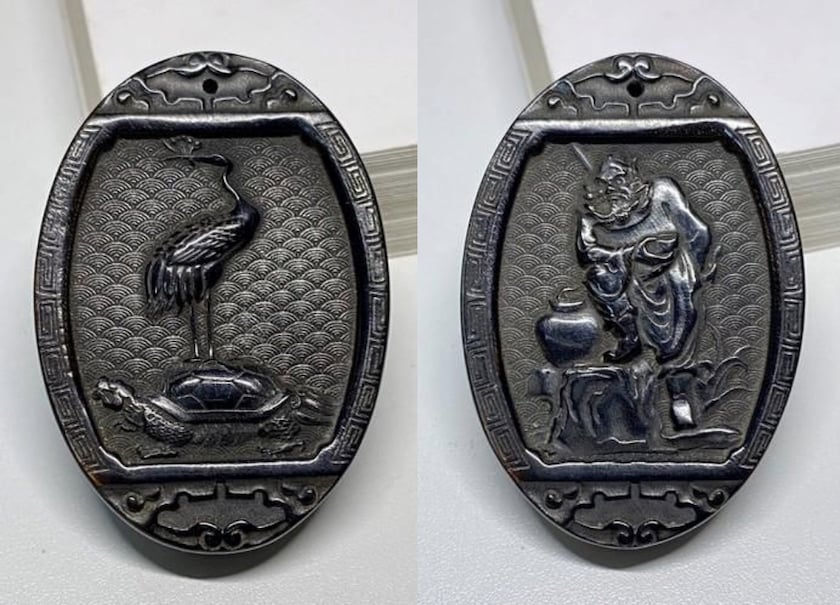
Unlike other colored diamonds that get their hues from chemical impurities, black diamonds get their color from numerous inclusions within the stone. These inclusions are mostly tiny specks of black graphite. The diamond itself isn't actually black, but contains so many graphite crystals that it appears black to the observer.
While black diamonds have the same hardness rating of 10 as all diamonds, they aren't as durable. The presence of so many inclusions weakens their crystal structure, making them more prone to splitting than other diamonds. Their surface may appear pitted, and they require protective settings in jewelry.
Black opal is generally considered the most valuable black gemstone. In the world of opals, black color commands the highest prices—unlike most other gem varieties where black typically sells for less. Black crystal opal, distinguished by its transparency and exceptional play-of-color, is the most coveted type.
The most famous source of black opals is Lightning Ridge in Australia. Black opals must appear black under reflected light but may actually be dark gray, green, brown, or blue in their body color.
No, not all black gemstones are naturally black. Some, like black chalcedony, are often dyed to enhance or create their black color. Black amber doesn't start naturally black but can darken significantly through oxidation when its outer protective layer is removed during polishing or cutting.
There is often confusion about these terms. Strictly speaking, solid black chalcedony should simply be called "black chalcedony." True onyx refers only to chalcedonies with straight or nearly parallel layers of color, not solid black material. "Arabic onyx" specifically refers to onyx with black and white bands.
Pearls that form in nature without human intervention rarely show black color. Cultured Tahitian pearls can have a truly black body color. Some pearls, especially inexpensive freshwater pearls, may be treated with silver nitrate dye or gamma-ray radiation to create black body colors.
Black coral reefs are found primarily off the coasts of Hawaii and Queensland, Australia. Both locations have enacted laws restricting or banning the exportation of black coral to protect their endangered reefs. As a result, most black coral jewelry available today is likely vintage rather than newly made.


When you join the IGS community, you get trusted diamond & gemstone information when you need it.
Are you familiar with the mysterious beauty of black gemstones? While some black gems have become synonymous with darkness itself, others remain hidden treasures unknown to most jewelry enthusiasts. This comprehensive guide explores 16 fascinating black gemstones, their unique properties, and what makes each one special.
In this article, you'll learn:
Technically, black isn't a color. Gemologists describe gemstone color through three main components: hue, tone, and saturation. Hues represent what most people commonly call colors (red, blue, green, etc.), while black and white actually refer to tone, which describes the relative darkness or brightness of a hue. Black represents the darkest possible tone a gemstone can exhibit.
Despite this technical distinction, both gem enthusiasts and professional jewelers regularly use "black" as a color description when discussing gemstones. The appeal of black gemstones lies in their:
When selecting black gemstones for everyday jewelry, durability is paramount. The following gems offer excellent hardness and resistance to daily wear and tear, making them ideal choices for rings, bracelets, and other pieces subject to regular use. These stones can withstand exposure to the elements and frequent contact with surfaces without significant damage.
Unlike other fancy colored diamonds that get their hues from chemical impurities (like yellow diamonds containing nitrogen or blue diamonds containing boron), black diamonds derive their distinctive appearance differently. Instead of chemical elements, black diamonds contain numerous inclusions within their crystal structure.
These inclusions are primarily tiny specks of black graphite—a soft carbon form that develops when Earth's pressure isn't sufficient to create diamond. The diamond itself isn't actually black; rather, it contains so many graphite crystals throughout that it appears black to the observer. Some producers enhance this effect by using radiation to amplify the graphite content, deepening the apparent black color.
Black diamonds possess some interesting characteristics:
While often referred to as "black diamonds," carbonados are actually quite different. They are polycrystalline materials composed of amorphous carbon, graphite, and diamond. Traditional diamonds used in jewelry, including black diamonds, are crystalline materials with organized atomic structures.
Carbonados possess even greater durability than regular diamonds but have historically been used primarily for industrial applications rather than jewelry. However, their reputation is changing—in 2022, Sotheby's sold a 555.55-ct faceted carbonado for more than four million US dollars, demonstrating their growing appeal as collector's items.
The term "black sapphire" commonly describes ultra-dark sapphires of various underlying hues, whether blue, brown, or green. These gemstones appear black because they're so dark that light barely travels through their crystal structure. However, truly black sapphires do occur naturally, with Australia being their primary source.
Some black sapphires contain precisely aligned rutile inclusions that create a fascinating optical phenomenon called asterism. This star-like effect produces a shimmering light pattern that moves across the gemstone's surface. To highlight this effect:
While collectors prize the vibrant blues of paraíba tourmaline and the rich greens of chrome tourmaline, the schorl variety of tourmaline offers a beautiful jet-black color all its own. This black gemstone gets its distinctive coloration from high iron content and takes its name from the German village where it was first identified.
Historically, faceted schorl tourmaline was extensively used in mourning jewelry. Today, you can find black tourmaline in various forms:
Though spinel gemstones are renowned for their bright, vivid colors, they also naturally occur in an elegant black variety. Black spinel gems possess several desirable qualities:
For budget-conscious shoppers, black spinel offers a significant advantage — black isn't the most popular spinel color. This lower demand translates to more affordable prices compared to other spinels, making black spinel an excellent value in terms of price-per-carat for those seeking bold black gemstones without a hefty investment.
Melanite represents a subset of the rare andradite variety of garnet and stands as the only naturally black andradite garnet. Its unique coloration comes from traces of titanium oxide in its chemical composition. The name "melanite" derives from the Greek word "melanos," meaning "black."
During the Victorian Era, melanite garnets were popular choices for mourning jewelry. Unlike other garnet varieties that are relatively common in today's market, melanite gems remain quite scarce. Jewelry enthusiasts seeking black garnet stones should expect limited availability, as they won't be found in typical jewelry establishments.
A common type of quartz, chalcedony features an internal structure composed of extremely tiny cryptocrystalline pieces. These microscopic crystals create a material that both looks and feels remarkably smooth. Given chalcedony's abundance in nature, this gem appears in numerous colors and patterns, including black.
Some confusion exists within the gem trade regarding black chalcedony:
To further complicate matters, most black chalcedony in today's market is actually dyed to enhance or create its black color rather than being naturally black.
The term "jade" encompasses two distinct minerals: jadeite and nephrite. Both can naturally occur with black coloration. Since black isn't the most desired jade color, black jade varieties typically cost significantly less than the highly prized green and lavender jade varieties.
Jade typically forms in massive boulders, allowing lapidaries to occasionally carve rings and bracelets from a single stone block. These single-stone pieces, called hololiths, represent special achievements in jade carving craftsmanship.
These black gemstones require more careful handling and are best reserved for special occasions rather than everyday use. While beautiful and distinctive, they may be more vulnerable to damage from impacts, chemicals, or temperature changes. With proper care and appropriate settings, these gems can still provide years of enjoyment when worn thoughtfully.
In the world of opals, black color commands the highest prices — a striking contrast to most other gemstone varieties. However, it's important to understand that the "black" in black opal refers specifically to the body color or background. Against this dark backdrop, the opal's famous play-of-color effect appears particularly spectacular.
Black opals come in three primary subcategories:
All these varieties must appear black under reflected light, though their actual body color may be dark gray, green, brown, or blue. Black crystal opal represents the most coveted type due to its transparency and extraordinary color play. The world's most famous source of black opals is Lightning Ridge in Australia.
All opals require special care considerations:
Though relatively unknown to many gem enthusiasts, diopside can occur with a natural black color that creates beautiful jewelry stones. What makes black diopside particularly special is its potential to display phenomenal optical effects:
Hematite is a distinctive black stone whose name derives from a Greek word for blood. This connection comes from the stone's tendency to rust over time, developing a dark reddish color on its surface. As rare red and gray hematites sometimes occur, the black variety is specifically identified as black hematite.
This mineral possesses several unique characteristics:
Fortunately for those attracted to its lustre, hematite remains one of the most affordable black gemstones available.
The next five black gemstones share an organic origin, meaning they were naturally created by living organisms. Black pearls develop within the bodies of certain mollusk species in both saltwater and freshwater environments.
Naturally-formed black pearls without human intervention are extremely rare. However, cultured Tahitian pearls can develop truly black body colors through careful cultivation techniques. Some less expensive options undergo color modification:
These black gemstones are best appreciated as collection pieces rather than jewelry stones. Due to their fragility, rarity, or conservation concerns, they are better suited for display cases than regular wear. Collectors value these materials for their unique properties, historical significance, or natural beauty rather than their practical applications in jewelry.
Obsidian is a naturally occurring black glass formed through volcanic activity. Its unique formation process often creates distinctive features:
The term "obsidian" has become so synonymous with blackness that it frequently appears as a descriptor for the color black itself in modern language.
Jet forms from buried wood logs saturated with natural oils through a process similar to coal formation but results in a stronger, smoother material. Despite these improvements over coal, jet remains notoriously soft compared to mineral gemstones.
As a soft, opaque material, jet typically appears in jewelry as carvings or beads rather than faceted gems. Being essentially condensed and preserved wood, jet pieces feel remarkably light and warm to the touch — characteristics that help distinguish it from other black gemstones.
Gem-quality jet occurs in several global locations, but the most famous source is Whitby, England. Archaeological evidence reveals that humans in that region used jet for ornamentation even in Neolithic times. However, jet's popularity reached unprecedented heights in the 1860s when Queen Victoria wore it as mourning jewelry following Prince Albert's death.
The phrase "jet black" has become such a common color descriptor that many people recognize the term without knowing about the actual gemstone.
While coral typically evokes images of bright pinkish-orange or exotic blue colors, black coral exists as a distinctive variety. Black coral reefs grow primarily off the coasts of Hawaii and Queensland, Australia—both regions have implemented laws restricting or banning black coral exportation to protect these endangered ecosystems.
Due to these conservation efforts, most black coral jewelry available today is likely vintage rather than newly harvested. Within the coral family:
Amber, the hardened resin of ancient trees, typically occurs in yellow, brown, or reddish hues. Its famous ability to trap and preserve prehistoric vegetation and insects has fascinated humans for millennia. Archaeological findings indicate that people have used amber for at least 10,000 years for both decoration and practical purposes like burning as incense. In fact, the German name for amber is bernstein, which literally means "burn stone."
While amber doesn't naturally start black, it can darken significantly through oxidation when its outer protective layer gets removed through polishing or cutting. Additionally:
Humans have utilized animal horns as adornment materials for many thousands of years. Conservation laws now strictly regulate their use in modern jewelry. Most horn naturally exhibits yellowish to brown coloration, but some exceptionally dark specimens appear nearly black.
Vintage jewelry collections may feature large, polished horn pieces that showcase this organic black material's distinctive grain patterns and natural luster. These pieces represent historical jewelry traditions rather than contemporary production due to current conservation restrictions.
Unlike other colored diamonds that get their hues from chemical impurities, black diamonds get their color from numerous inclusions within the stone. These inclusions are mostly tiny specks of black graphite. The diamond itself isn't actually black, but contains so many graphite crystals that it appears black to the observer.
While black diamonds have the same hardness rating of 10 as all diamonds, they aren't as durable. The presence of so many inclusions weakens their crystal structure, making them more prone to splitting than other diamonds. Their surface may appear pitted, and they require protective settings in jewelry.
Black opal is generally considered the most valuable black gemstone. In the world of opals, black color commands the highest prices—unlike most other gem varieties where black typically sells for less. Black crystal opal, distinguished by its transparency and exceptional play-of-color, is the most coveted type.
The most famous source of black opals is Lightning Ridge in Australia. Black opals must appear black under reflected light but may actually be dark gray, green, brown, or blue in their body color.
No, not all black gemstones are naturally black. Some, like black chalcedony, are often dyed to enhance or create their black color. Black amber doesn't start naturally black but can darken significantly through oxidation when its outer protective layer is removed during polishing or cutting.
There is often confusion about these terms. Strictly speaking, solid black chalcedony should simply be called "black chalcedony." True onyx refers only to chalcedonies with straight or nearly parallel layers of color, not solid black material. "Arabic onyx" specifically refers to onyx with black and white bands.
Pearls that form in nature without human intervention rarely show black color. Cultured Tahitian pearls can have a truly black body color. Some pearls, especially inexpensive freshwater pearls, may be treated with silver nitrate dye or gamma-ray radiation to create black body colors.
Black coral reefs are found primarily off the coasts of Hawaii and Queensland, Australia. Both locations have enacted laws restricting or banning the exportation of black coral to protect their endangered reefs. As a result, most black coral jewelry available today is likely vintage rather than newly made.